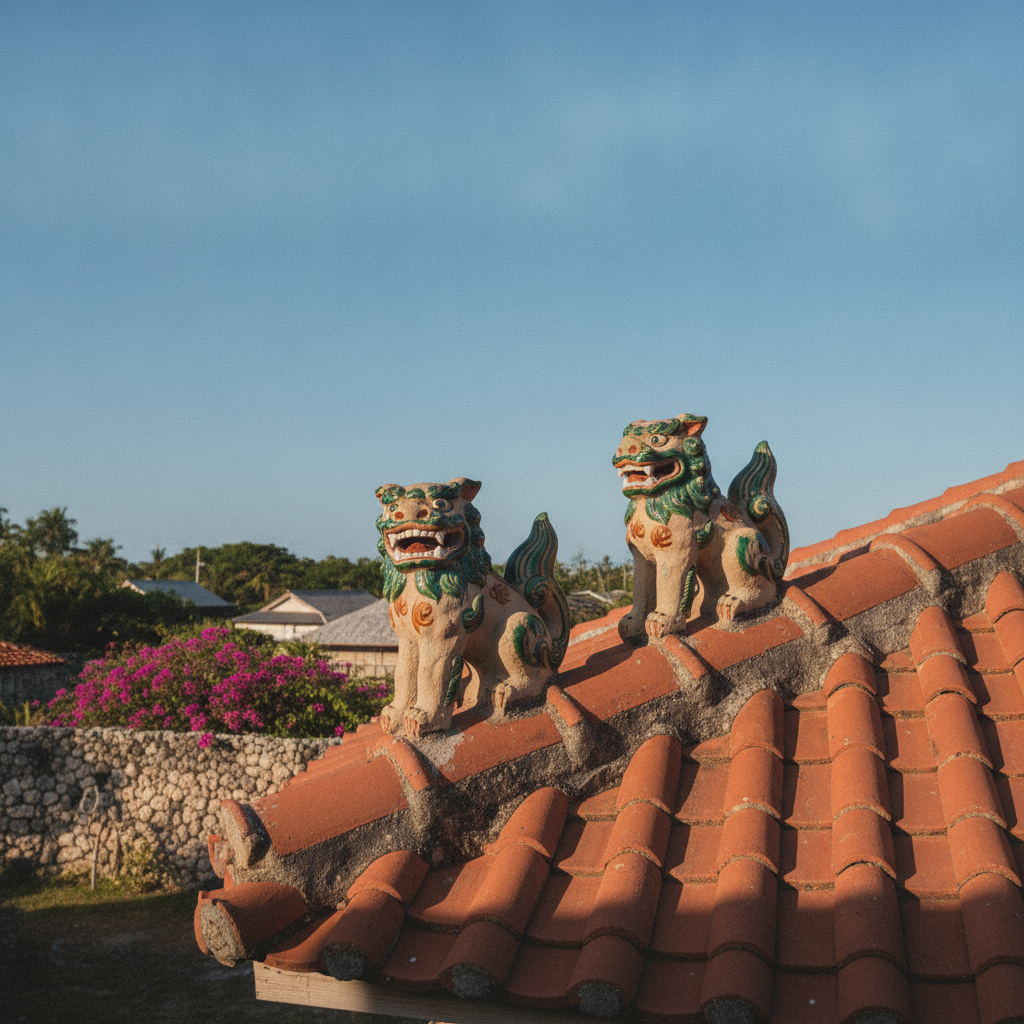


The Shisa That Has Kept Closed Mouth Since 1689, the Flightless Bird That Never Met a Predator Until 1910 & the Humpback Whales Passing Through the Kerama in February
The 1689 Tomori Village stone shisa still in community care as the oldest surviving example; the Yambaru Kuina's evolutionary flightlessness destroyed by the mongoose introduced to control habu snakes; the hammerhead shark school at Yonaguni 110 km from Taiwan; the sanshin's 50,000 registered players and the Ryukyu Classical Dance at the National Theatre; the five Okinawan ingredients (goya, sōki, mozuku, beni-imo, Spam) as a political history map; and the January–March humpback whale passage through the Kerama as Japan's most accessible whale-watching.

The ¥2,000 Note Gate, the Battle That Killed 20–33% of the Island's Population & the World's Only Successfully Bred Captive Manta Rays
The Ryukyu Kingdom's unique dual-tributary position serving both Beijing and Edo simultaneously until 1879; the Cornerstone of Peace listing 241,000 names from all nations without hierarchy; the Churaumi's 3 captive whale sharks and the world's first bred manta rays; the Kerama Blue water that became a trademark colour term in Japanese travel writing; the Makishi Market's bring-your-own-to-the-upstairs-cook format unique in Japan; and the 30+ daily Tokyo–Naha ANA/JAL flights as the only Shinkansen-free major Japanese destination.

The Oldest Distilled Spirit in Japan (Made from Thai Rice Imported via Siam in 1450), the Yonaguni Underwater Monument Nobody Can Agree On & the Language UNESCO Lists as Endangered with 10,000 Speakers
The awamori's 15th-century Thai origin via the Ryukyu Kingdom's Siamese trade route predating mainland shochu by 50 years; the Yonaguni Monument's unresolved human-vs-natural origin debate as the world's most argued dive site; the hammerhead school of 500–1,000 individuals at 30 metres in the Yonaguni channel; the Yui Rail's 13 stations as the only rail in Okinawa Prefecture; Uchinaaguchi as a UNESCO endangered language related to but not derived from Japanese; and the Nuchimasu Miyako Island salt as the highest mineral-content sea salt in Japan.

The Sanshin That Became the Shamisen, the Base That Covers 70.6% of Japan's US Military Land on 0.6% of Japan's Territory & the Village Where 80 Is Still Youth
The sanshin's journey from 16th-century Okinawa to Osaka traders to mainland Japanese shamisen; the US military base land use paradox and the Futenma relocation that has been ongoing since 1996 without resolution; Ogimi village's 3× centenarian rate and the Hara Hachi Bu 80%-full eating principle; the Bingata stencil-dyeing workshop and the Tsuboya ceramics lane; the 1984 taco rice invention near Kin Town base as direct American occupation culinary heritage; and Taketomi Island's complete traditional Okinawan village as Japan's most remote historic preservation district.

The 222 Student Nurses Dismissed into a Live Battle Zone, the Mongoose That Failed to Kill the Habu but Destroyed the Flightless Bird & the Memorial That Lists American and Japanese Dead on the Same Panel
The Himeyuri dissolution order of 22 June 1945 that sent 15–18-year-old student nurses into an active battle zone with no protection (61% died in the following week); the Cornerstone of Peace's equality principle listing 241,632 names from all nations without hierarchy; the habu-mongoose introduction paradox where the mongoose failed its ecological task but succeeded in devastating the endemic Yambaru Kuina; the Gyokusendo Cave's 5,000-metre stalactite system at 300,000 years old; the Okinawan music fusion (BEGIN, Nenes) as the only Japanese regional culture to produce internationally recognised acts on regional aesthetic terms; and the 5-day itinerary with the 9:00 whale shark feeding timing at Churaumi.

The Cat Nobody Knew Existed Until 1965, the Westernmost Japanese Island Where You Can See Taiwan & the 1,800 Tonnes of Unexploded Ordnance Still in Okinawan Soil
The Iriomote cat's 1965 discovery as one of the 20th century's most significant mammal finds (now 100–120 individuals remain); the Yonaguni westernmost Japan point 110 km from Taiwan; the Yonaguni Monument's unresolved academic debate with peer-reviewed papers on both sides; the 2,000 unexploded shells recovered annually in Okinawan construction sites; the Henoko protest camp as the longest-running sit-in protest in postwar Japan; and the Peach Aviation ¥3,990 sale fare as the cheapest domestic air ticket in Japan per km.