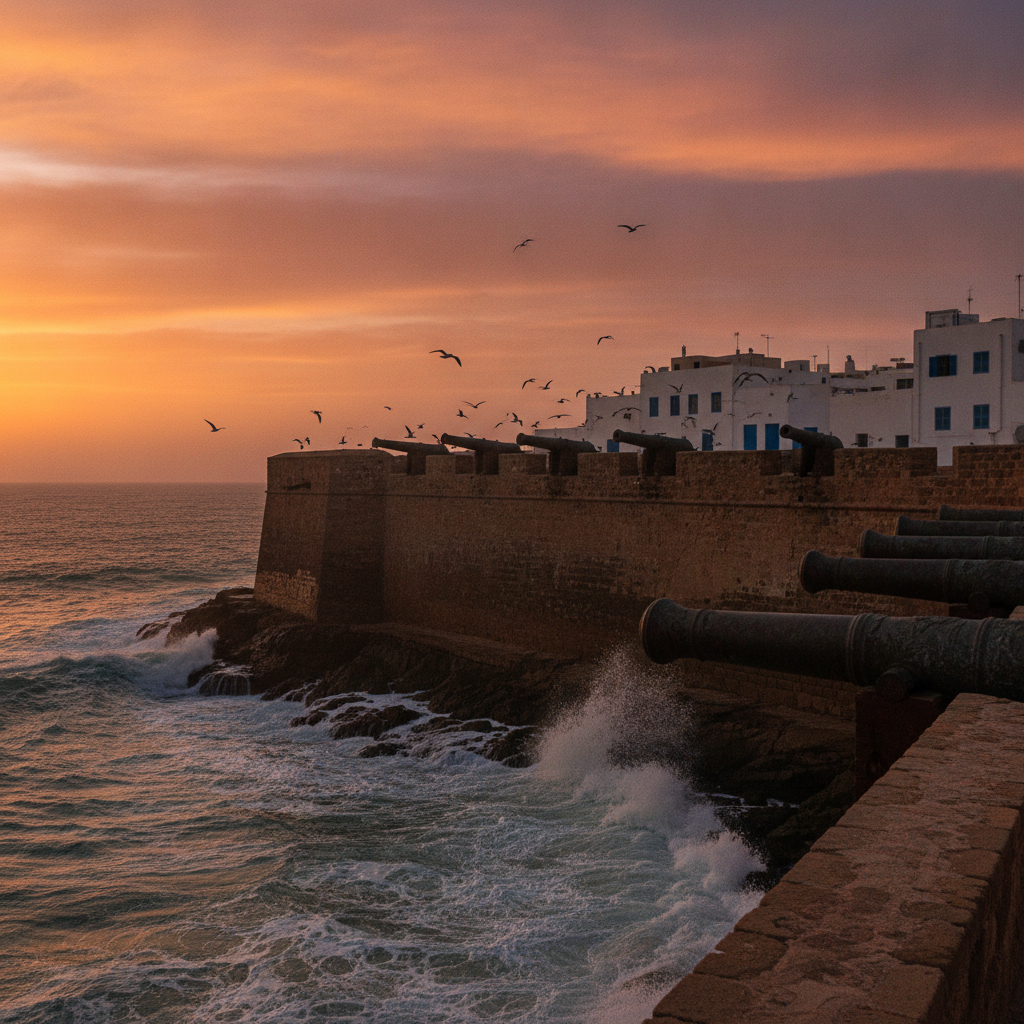
Essaouira – Marrakeschs Atlantik-Ausflug
Essaouira (die Atlantik-Küstenstadt 180 km westlich von Marrakesch (2,5-3 Stunden mit Bus oder Privattransfer) – die vom Wind gepeitschte Festungsstadt an der Atlantikküste, UNESCO-Weltkulturerbe seit 2001): Essaouira (der Name bedeutet im Amazigh „die gut gestaltete“) wurde 1765 vom Alaouiten-Sultan Mohammed III. als neue Stadt erbaut, entworfen vom französischen Militärarchitekten Théodore Cornut, wodurch eine europäisch gestaltete Medina mit breiten, geraden Straßen in einem marokkanischen Kontext entstand – einzigartig in Marokko; Essaouira war vom 18. bis zum frühen 20. Jahrhundert der wichtigste Hafen Marokkos, eine kosmopolitische Stadt jüdischer, europäischer, arabischer und Amazigh-Gemeinschaften.
- 1
Essaouira Medina – UNESCO-Mauerhafenstadt am Atlantik
Essaouira (2,5 Stunden von Marrakesch mit dem CTM-Bus oder 3 Stunden mit dem Sammeltaxi) ist eine von der UNESCO gelistete Medina (1765, entworfen vom französischen Architekten Théodore Cornut für Sultan Mohammed III.) mit portugiesischen, maurischen und französischen Kolonialarchitektur-Schichten – die blau bemalten Boote der Sardinenfischerflotte (noch aktiv), die massiven Stadtmauern mit Blick auf den Atlantischen Ozean und der ständige 30 km/h Wind, der die Stadt zu einer Welt-Kitesurf-Hauptstadt macht, prägen den Ort.
- 2
Skala de la Ville – Stadtmauern und Atlantikkanonen
Die Skala de la Ville (die meerseitigen Stadtmauern, 18. Jahrhundert) ist mit spanischen und portugiesischen Bronzekanonen gesäumt, die auf den Atlantik zeigen – die Kanonenrohre sind mit den Wappen der Monarchen graviert, die sie gestiftet haben; die Stadtmauern sind zu jeder Stunde frei zugänglich; der Blick nach Süden über den Atlantikstrand (Playa Sidi Kaouki, 5km, erreichbar mit Calèche) erstreckt sich bis zu den Diabat-Dünen, die durch Jimi Hendrix berühmt wurden.
- 3
Gnawa-Musik – Essaouiras spirituelles musikalisches Erbe
Essaouira ist das globale Zentrum der Gnawa-Musik – eine heilende rituelle Musiktradition, die von subsaharischen Sklaven im 15.–18. Jahrhundert nach Marokko gebracht wurde; die Musik (pentatonisch, Call-and-Response, angetrieben vom Guembri (3-saitige Basslaute) und Metallkastagnetten (Qraqeb)) wird in Trancezeremonien (Lila) und beim jährlichen Gnawa- und Weltmusikfestival (Juni, 400.000 Besucher, freier Eintritt) an den Strand- und Rampen-Bühnen aufgeführt.
- 4
Arganöl – Marokkos flüssiges Gold von Ziegen-gekletterten Bäumen
Der Argania spinosa Baum (endemisch im Südwesten Marokkos, um Essaouira und Agadir) produziert Argan-Nüsse, aus denen Arganöl gepresst wird – die Bäume haben tiefe Wurzeln, die der Wüstenbildung der Sahara vorbeugen; Ziegen klettern bekanntermaßen auf die Bäume, um die Früchte zu fressen (eine Touristenattraktion an der Straße Essaouira-Agadir); Frauenkooperativen pressen das Öl manuell; kulinarisches Arganöl (zum Eintauchen von Brot mit Honig) und kosmetisches Arganöl (Marokkos wichtigstes Export-Schönheitsprodukt) unterscheiden sich in der Röstbehandlung.
- 5
Essaouira Meeresfrüchte – Gegrillte Sardinen am Hafen
Der Fischmarkt im Hafen von Essaouira (geöffnet 8am–1pm) verkauft frisch angelandete Sardinen, Wolfsbarsch, Dorade und Hummer direkt von den Booten – die angrenzende „Grillgasse“ (5 Restaurants, geöffnet 9am–4pm) wiegt den Fisch, grillt ihn über Holzkohle und serviert ihn mit Salat, Brot und Harissa; ein komplettes Fischmittagessen für zwei (500–700g Sardinen + Wolfsbarsch + Salat + Brot) kostet 80–120 DH; es ist eines der besten günstigen Meeresfrüchte-Mittagessen in der Mittelmeerwelt.
- 6
Windsport – Kitesurfen bei 35 km/h Atlantikpassatwinden
Essaouiras Lage an der Atlantikküste empfängt von Mai bis September konstante Nordost-Passatwinde (Alizée) mit durchschnittlich 30–35 km/h – die Kombination aus flachem Wasser (Bucht geschützt durch die Essaouira-Inseln) und konstant starkem Wind hat den Sidi Kaouki Strand der Stadt (5km südlich) zu einem der weltweit führenden Kitesurf-Ziele gemacht; Ocean Vagabond und Explora Essaouira bieten 3-tägige Anfängerkurse (200€) mit Ausrüstung und Anleitung an.
Walk this route with audio
Stories play automatically as you reach each stop — no tapping needed.
Mehr in marrakech
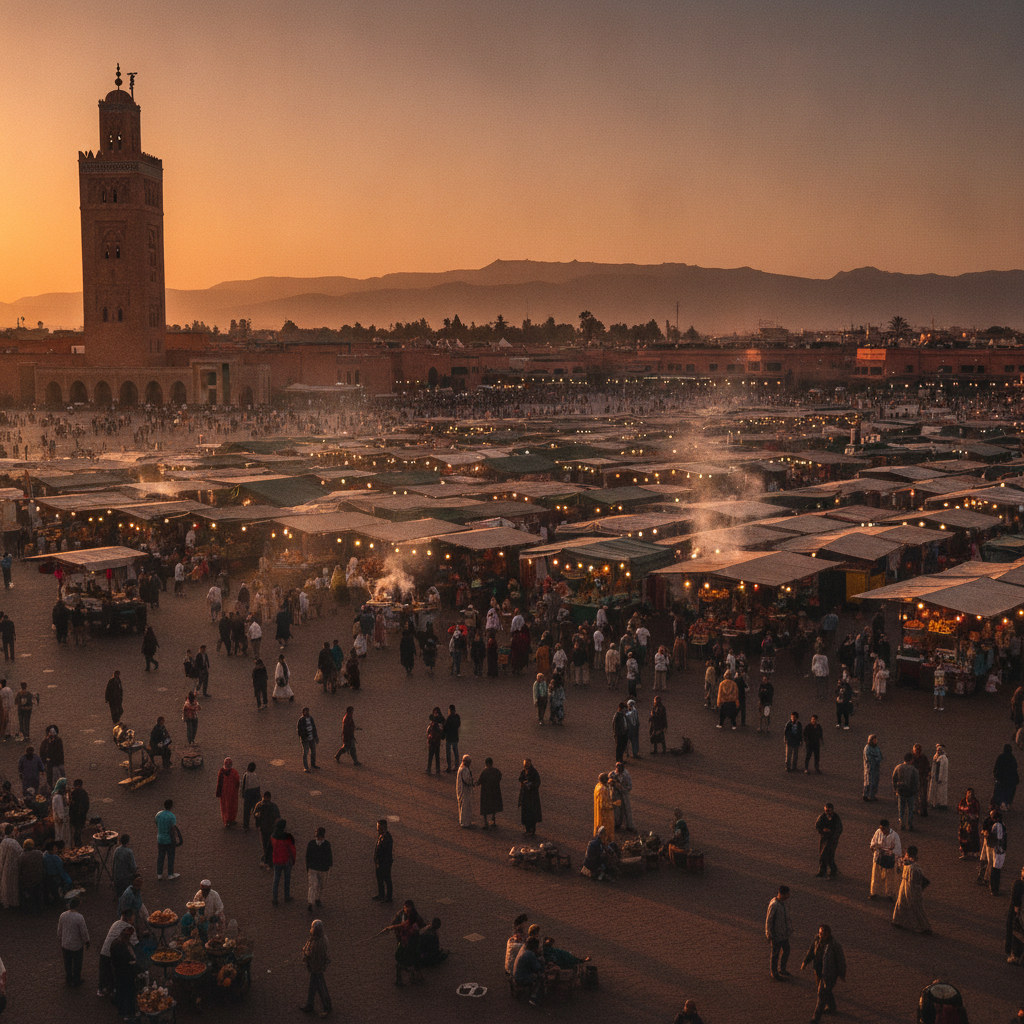
Djemaa el-Fna, die Medina & die Souks — Marrakeschs lebendiges UNESCO-Erbe
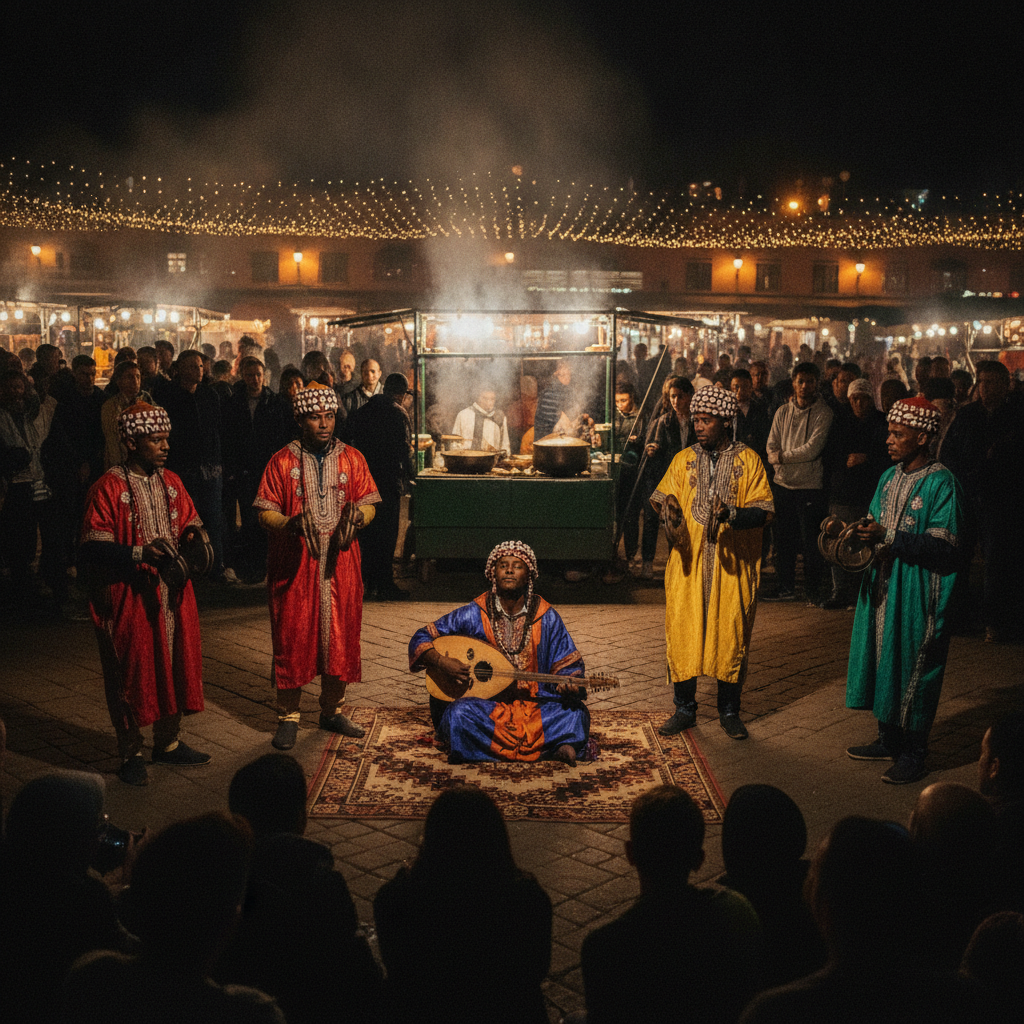
Gnawa-Musik, Sufi-Kultur & das spirituelle Herz von Marrakech
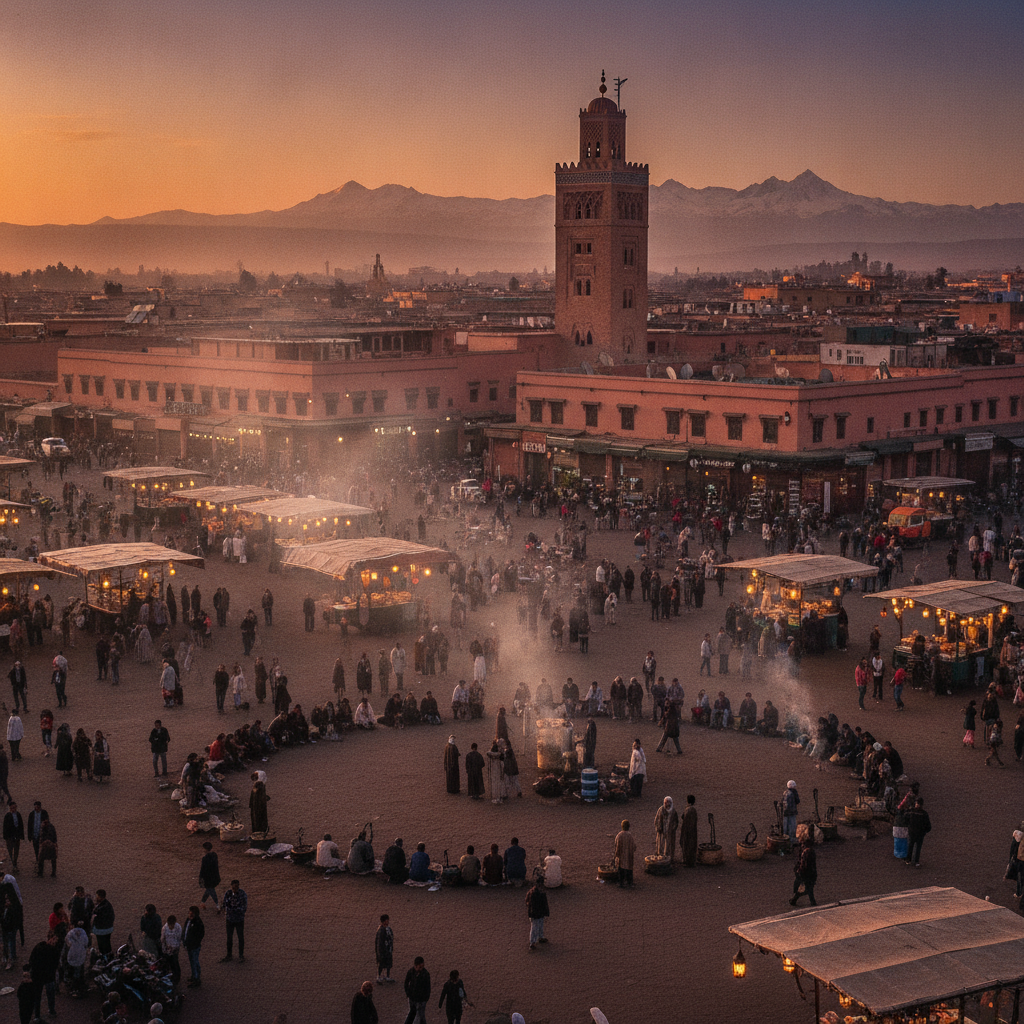
Marrakesch Essential: Djemaa el-Fna, der lebendige Platz, die Medina-Souks, die Koutoubia-Moschee, der Bahia-Palast, die Saadier-Gräber und die „Pink City“-Figur
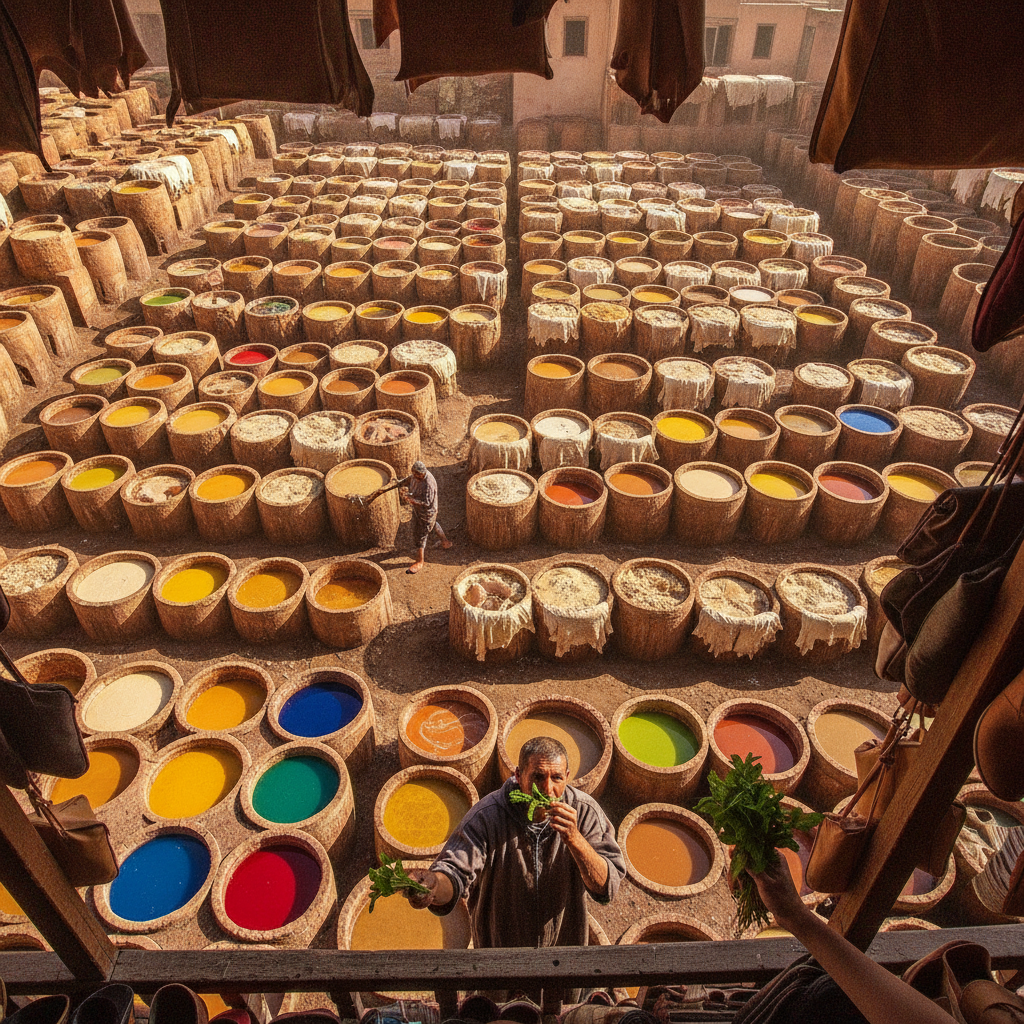
Marokkanisches Handwerk – Ledergerbereien, Töpfereien & Kunsthandwerker

Wellness in Marrakesch: Das Hammam-Ritualbad, die Riad-Spa-Kultur, die Arganöl-Schönheitstradition, das marokkanische Gastfreundschaftsritual, die Henna-Kunst und der Wellness-Tourismus
