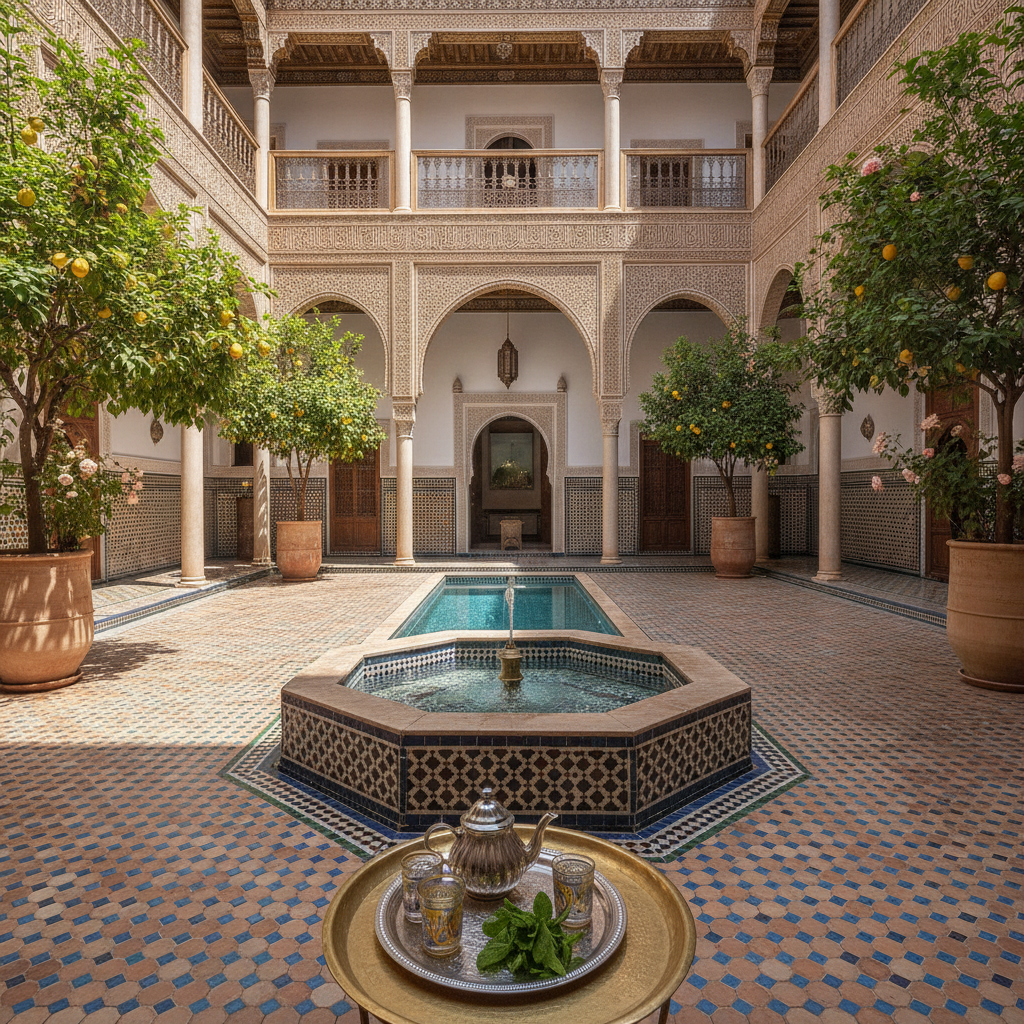
Riad Living — Traditionelle marokkanische Hofhäuser
Das Riad (das traditionelle marokkanische Hofhaus der Medina — vom arabischen Riad, was Garten bedeutet) ist die prägende architektonische Form von Marrakesch: Das nach innen gerichtete Design (blanke Außenwände, alle Zimmer öffnen sich zu einem zentralen Hofgarten mit Brunnen oder Pool) spiegelt sowohl die islamische Vorliebe für privaten Wohnraum als auch die Notwendigkeit von Schatten und Kühlung im nordafrikanischen Klima wider; die Umwandlung von Riads in Boutique-Hotels begann in den 1990er Jahren und hat die Beherbergungsbranche in Marrakesch verändert, wobei heute über 1.000 Riad-Gästehäuser in der Medina betrieben werden.
- 1
Riad — Die introvertierte Architektur des Islam
Ein Riad (Arabisch: riyad, 'Garten') ist ein traditionelles marokkanisches Haus, das um einen zentralen Hof mit einem Brunnen organisiert ist — das Äußere präsentiert eine blanke Wand zur Straße (Privatsphäre, Sicherheit, religiöse Bescheidenheit); alle Zimmer blicken nach innen zum Hof; das Mikroklima des Hofes (Verdunstungskühlung durch den Brunnen, Schatten durch den zentralen Orangen- oder Zitronenbaum) senkt die Innentemperaturen um 10°C im Vergleich zur Medinastraße draußen.
- 2
Riad-Restaurierungsökonomie — Von Ruinen zu Boutique-Hotels
In den 1990er Jahren begannen europäische Käufer (hauptsächlich Franzosen, Briten und Italiener), verfallene Riads in Marrakeschs Medina für €5,000–30,000 zu erwerben und sie als Boutique-Hotels oder private Residenzen zu restaurieren — bis 2010 waren über 700 Riads umgewandelt worden; die Restaurierungsökonomie bildete eine Generation marokkanischer Handwerker in traditionellen Techniken (Tadelakt-Putzarbeiten, Zellij-Fliesenschneiden, geschnitzte Gips-Moucharabieh-Gitter) aus, die im Niedergang begriffen waren; durchschnittlicher aktueller Verkaufspreis für ein Riad: €500,000–2,000,000.
- 3
Tadelakt — Marrakeschs charakteristischer wasserdichter Putz
Tadelakt (vom Arabischen für 'glatt, gerieben') ist ein Kalkputz, der mit Flusssteinen poliert und mit schwarzer Seife wasserdicht gemacht wird — er verwandelt Oberflächen in glatte, leicht reflektierende Flächen, die fast flüssig erscheinen; die Technik ist einzigartig in Marrakesch und wird traditionell für Hammam-Wände und Badewannen verwendet; ein erfahrener Tadelakt-Handwerker benötigt 3–5 Jahre, um die Poliertechnik zu meistern; das Handwerk ist im immateriellen Kulturerbe der UNESCO gelistet.
- 4
Riad Kniza — Das Riad-Museumserlebnis
Riad Kniza (34 Derb l'Hôtel, Medina, 7 Suiten) ist ein Palast aus dem 18. Jahrhundert, der zu einem Boutique-Hotel umfunktioniert wurde und auch als Antiquitäten-Showroom dient — der Besitzer (Mohammed Bouskri) ist einer der führenden Antiquitätenhändler Marokkos; der Hof, das Hammam, die Dachterrasse und die einzelnen Zimmer sind mit marokkanischen Antiquitäten und Textilien aus dem 18.–19. Jahrhundert ausgestattet, die nirgendwo anders erhältlich sind; Besuche für Nicht-Gäste (nach Vereinbarung, S/150 DH) beinhalten Tee und eine Führung durch die Sammlung.
- 5
Das Hammam-Ritual — Traditionelles marokkanisches Bad
Das traditionelle marokkanische Hammam folgt einer Abfolge von Hitzeexposition, Kessa (Grobhandschuh-Peeling), Savon Beldi (Peeling mit schwarzer Olivenseife) und Ghassoul (Rhassoul-Ton-Haar- und Hautmaske, die im Dampfbad aufgetragen wird) — öffentliche Hammams (10–30 DH) finden sich in jedem Medina-Viertel; traditionelle Hammams sind nicht touristisch, sondern zutiefst pragmatisch (vielen älteren Medina-Häusern fehlen private Bäder); das touristische Hammam (Hammam de la Rose, Maison de la Photographie Hammam) kostet 200–400 DH.
- 6
Kochkurskultur — Marokkanische Küche in einer Riad-Küche
Marrakeschs Riad-Kochkurse (La Maison Arabe, Souk Cuisine, Dar Les Cigognes) lehren traditionelle marokkanische Küche im Kontext einer Riad-Küche — die Kurse (3–4 Stunden, 600–800 DH) umfassen typischerweise: das Einlegen von Zitronen und Oliven, die Zubereitung der Gewürzmischung Ras el Hanout von Grund auf, die Zubereitung eines Lamm-Tajine mit eingelegter Zitrone und grünen Oliven, das Backen von Msemen (geschichtetes Grieß-Fladenbrot) und die Zubereitung von Bastilla (Tauben- oder Hühner-Filoteigpastete mit Mandel und Zimt).
Walk this route with audio
Stories play automatically as you reach each stop — no tapping needed.
Mehr in marrakech
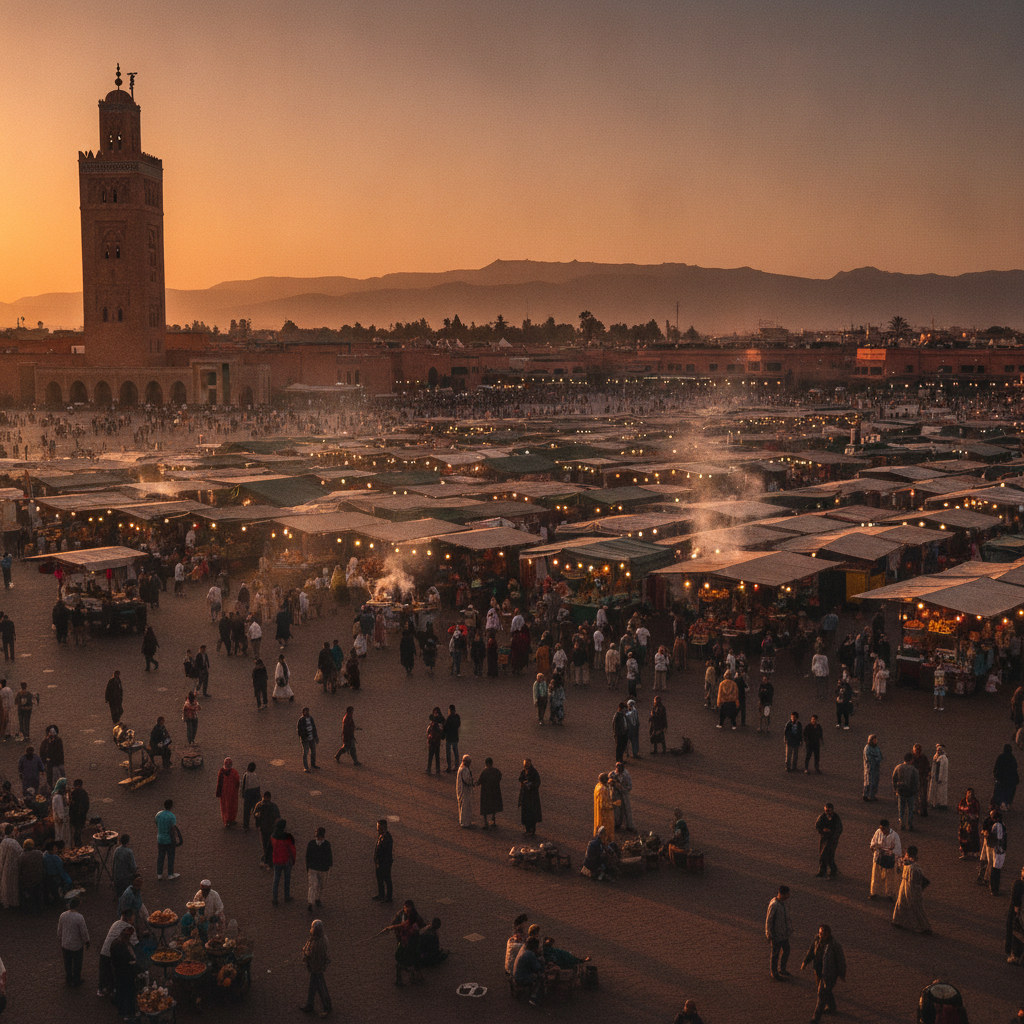
Djemaa el-Fna, die Medina & die Souks — Marrakeschs lebendiges UNESCO-Erbe
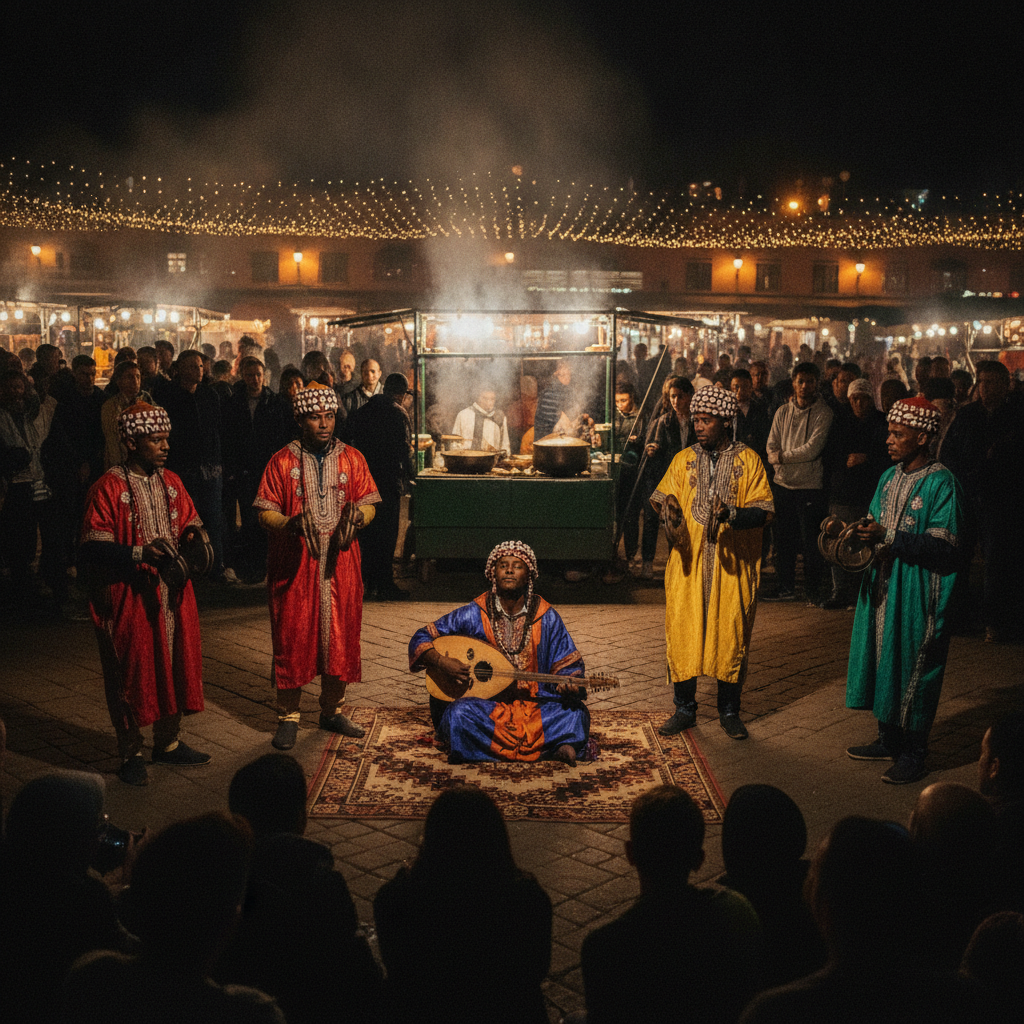
Gnawa-Musik, Sufi-Kultur & das spirituelle Herz von Marrakech
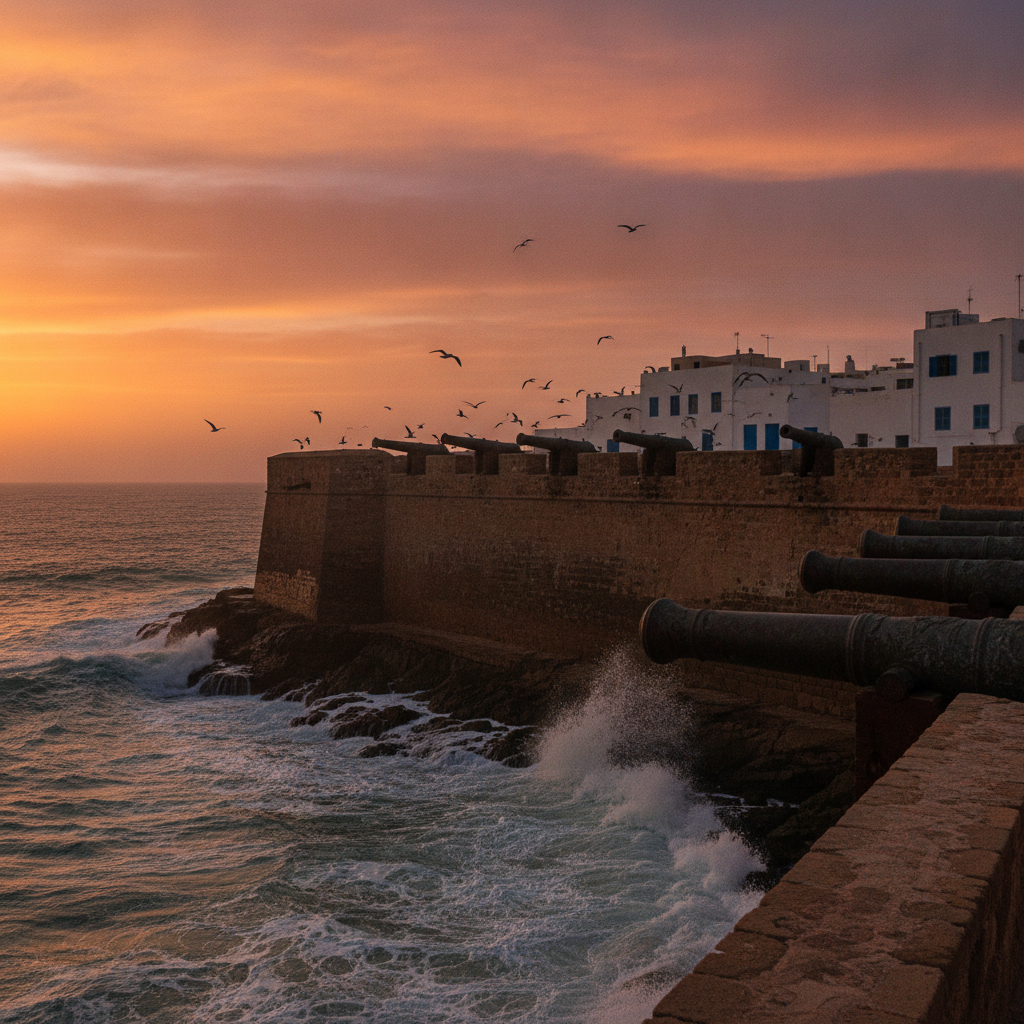
Essaouira – Marrakeschs Atlantik-Ausflug
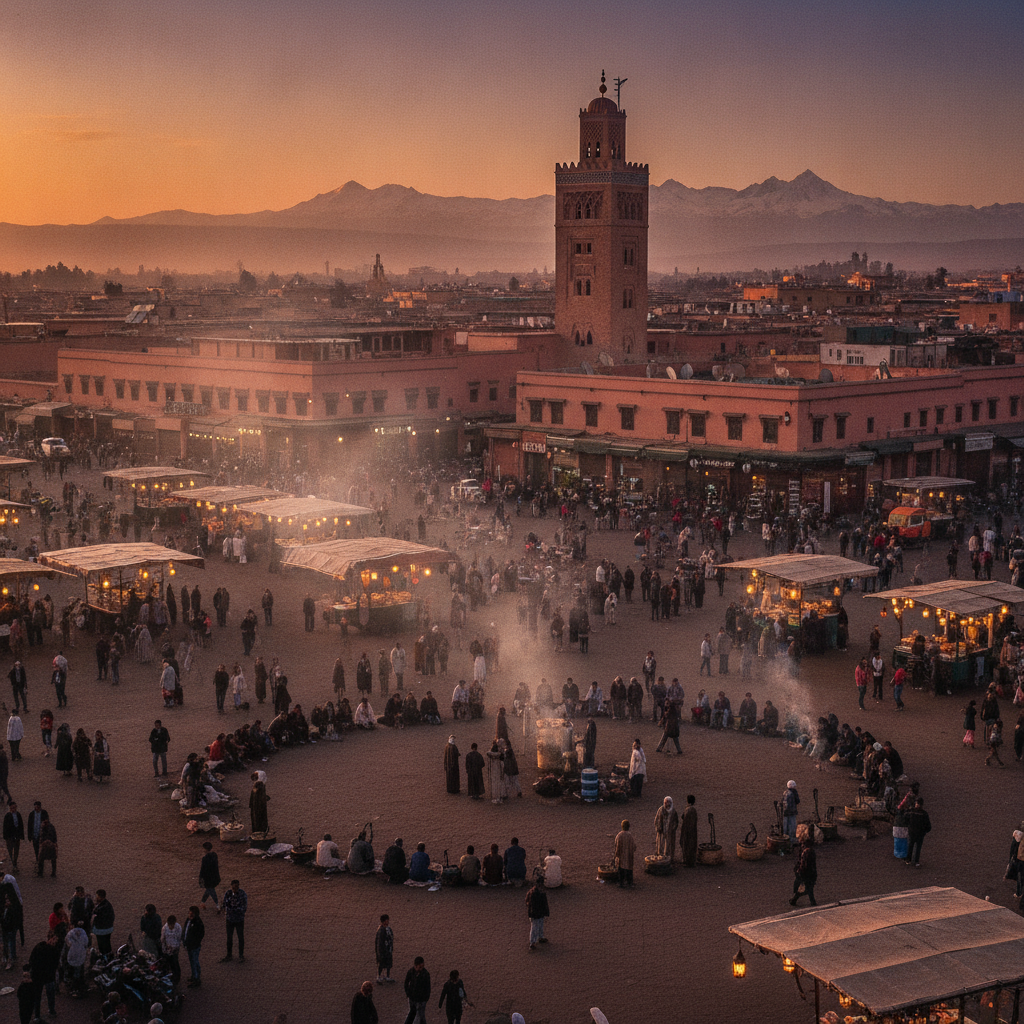
Marrakesch Essential: Djemaa el-Fna, der lebendige Platz, die Medina-Souks, die Koutoubia-Moschee, der Bahia-Palast, die Saadier-Gräber und die „Pink City“-Figur
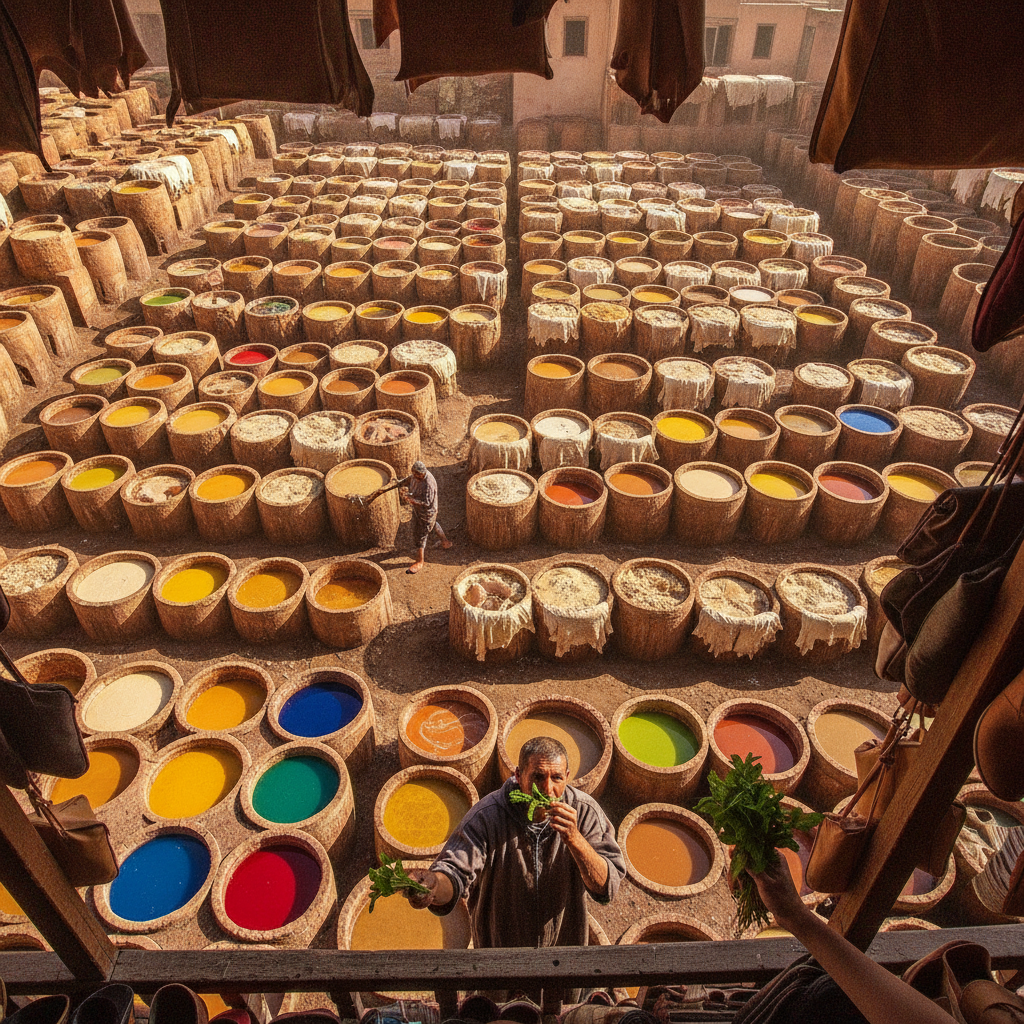
Marokkanisches Handwerk – Ledergerbereien, Töpfereien & Kunsthandwerker
