Amalfiküste, Positano & Ravello — UNESCOs malerischste Fahrt
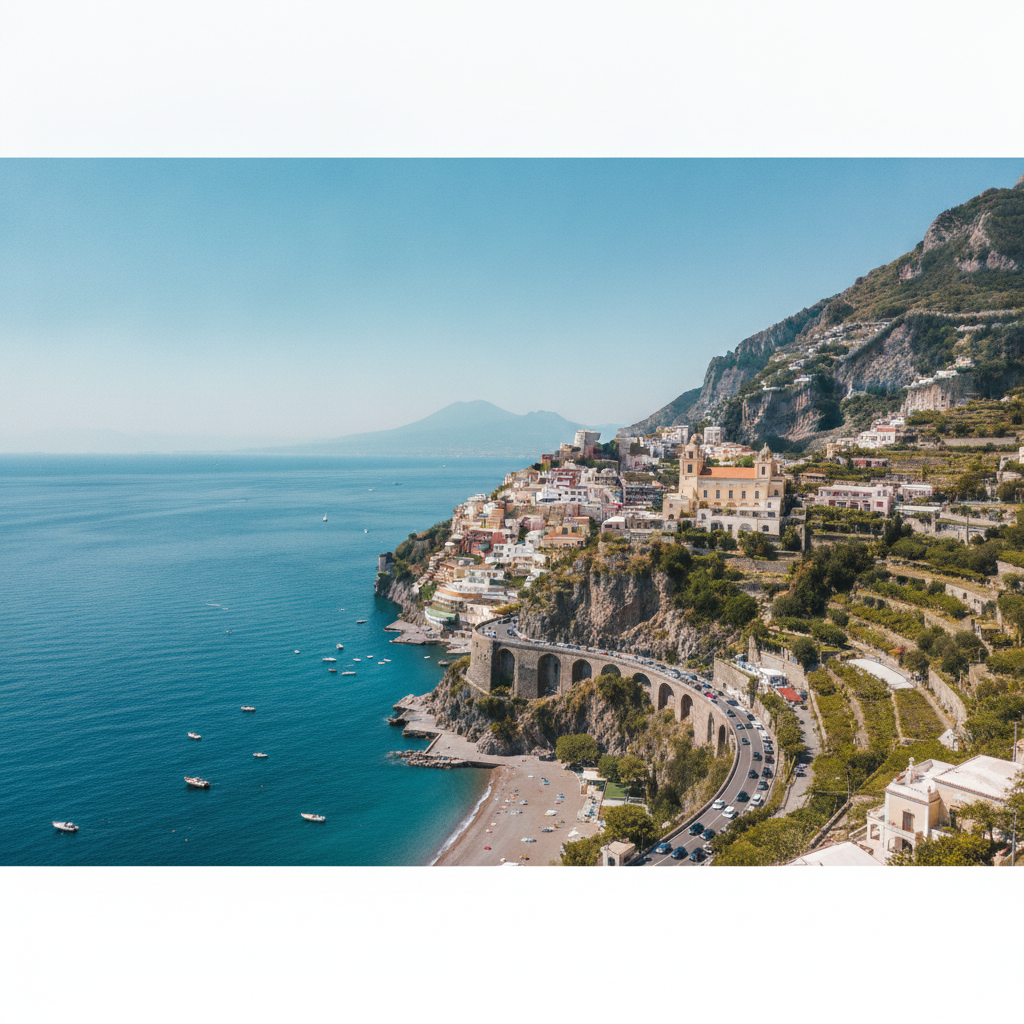
Die Amalfiküste (die „Costiera Amalfitana“ – die UNESCO-Weltkulturerbe-Küste auf der Halbinsel von Sorrent südlich von Neapel, die 50 km lange Küstenstraße, die sich zwischen den Klippendörfern (Positano, Amalfi, Ravello) und dem Mittelmeer schlängelt, die malerischste Küstenstraße Europas) liegt 60 km südlich von Neapel und ist das beliebteste Ziel für Tagesausflüge oder längere Exkursionen von der Stadt aus.
- 1
Positano — Das vertikale Dorf der Amalfiküste
Positano (45 km südlich von Neapel, Amalfiküste, UNESCO) ist vertikal an einem Berghang gebaut – die über 4.000 Einwohner des Dorfes sind durch über 1.500 Stufen und die einzige Haarnadelkurvenstraße (SS163) verbunden; der Strand (Spiaggia Grande, kieselig, Liegestuhlverleih €25/Tag) wird von der Kuppel der Kirche Santa Maria Assunta dominiert; John Steinbeck schrieb 1953 über Positano, dass es „ein Traumort ist, der nicht ganz real ist, wenn man dort ist, und verlockend real wird, nachdem man gegangen ist“; Sommerbevölkerung über 50.000.
- 2
Ravello — Gärten über den Wolken
Ravello (350 m über der Amalfiküste, erreichbar von Amalfi mit dem Bus oder 1.500 Stufen zu Fuß) ist die Kulturhauptstadt der Küste – Villa Rufolo (1270, arabisch-normannischer Garten, die Terrasse, auf der Wagner 1880 zur Schaffung von Klingsors Garten in Parsifal inspiriert wurde) und Villa Cimbrone (1904, das Belvedere der Terrasse der Unendlichkeit, der meistfotografierte Balkon Italiens, mit Blick auf Positano) sind die beiden wesentlichen Sehenswürdigkeiten; das Ravello Festival (Juli) veranstaltet Konzerte auf der Terrasse der Villa Rufolo.
- 3
Amalfi — Die mittelalterliche Seerepublik
Amalfi (die Stadt, 5.000 Einwohner, der Sitz einer der vier antiken Seerepubliken Italiens 839–1073 n. Chr.) hat das dramatischste Stadtbild an der Küste – die Kathedrale des Heiligen Andreas (9. Jahrhundert byzantinisch, im arabisch-normannischen Stil renoviert, vergoldete Bronzetüren aus Konstantinopel, 1066) erhebt sich über der zentralen Piazza am Ende einer 62-stufigen Treppe; das Papiermuseum (Museo della Carta, funktionierende Papiermühle aus dem 13. Jahrhundert) demonstriert die Amalfianer Tradition der handgemachten Papierherstellung.
- 4
Pfad der Götter — Der Sentiero degli Dei
Der Pfad der Götter (Sentiero degli Dei, 7,8 km Wanderweg, Bomerano nach Nocelle oberhalb von Positano, 3 Stunden) bietet die spektakulärsten Ausblicke auf die Amalfiküste – der Weg verläuft an Klippen über dem Meer mit kontinuierlichen Panoramen auf Capri, die Li Galli Inseln und die Küstendörfer darunter; der Weg erfordert gutes Schuhwerk und steigt 600 m vertikal nach Nocelle ab, von wo aus eine Treppe oder ein Bus Positano erreicht; der Weg ist nach starkem Regen (Januar–März) unpassierbar; am besten April–Oktober.
- 5
Praiano und Furore — Die weniger bekannten Dörfer der Amalfiküste
Praiano (zwischen Positano und Amalfi, Bevölkerung 2.000) ist das ruhigste und am wenigsten touristische Dorf an der Küste – die Vettica Maggiore und Marina di Praia (eine fjordähnliche Bucht 100 m unterhalb der Straße, erreichbar über einen Pfad) sind zwei unterschiedliche Abschnitte; Furore (der „Fjord von Furore“ ist eine 40 m breite, schmale Schlucht mit einem Strand, der nur mit dem Boot oder einer steilen Treppe erreichbar ist) wird häufig fotografiert, aber selten besucht; die Smaragdgrotte (Grotta dello Smeraldo, Meereshöhle, zugänglich mit dem Boot oder Lift von der SS163) liegt zwischen Praiano und Amalfi.
- 6
Fährnetz — Die Amalfiküste auf dem Seeweg verbinden
Die Amalfiküste lässt sich am besten vom Wasser aus erleben – ALILAURO- und Travelmar-Fähren verbinden Salerno, Positano, Amalfi und Capri (April–Oktober); die 35-minütige Positano-Amalfi-Fähre (€8) umgeht den Verkehr der SS163 vollständig; ein privater Bootsverleih von Positano (€300/Tag, inklusive Skipper) ist das Premium-Erlebnis; der Blick auf die Küste aus 500 m Entfernung (die Dörfer so zu sehen, wie sie vom Meer aus erscheinen, wie Reisende seit 2.000 Jahren) ist die wesentliche Perspektive der Amalfiküste.
Walk this route with audio
Stories play automatically as you reach each stop — no tapping needed.
Mehr in naples
Historisches Zentrum von Neapel, Spaccanapoli & die UNESCO Untergrundstadt
Via Toledo, Spanisches Viertel & neapolitanisches Straßenleben
Pizza Margherita, Street Food & Neapel als gastronomische Hauptstadt Italiens
Königspalast von Caserta — Das Versailles Italiens
Pompeji, Vesuv & Herculaneum — Städte eingefroren in der Zeit