Tal der Tempel, Agrigent & Antikes Griechisches Sizilien
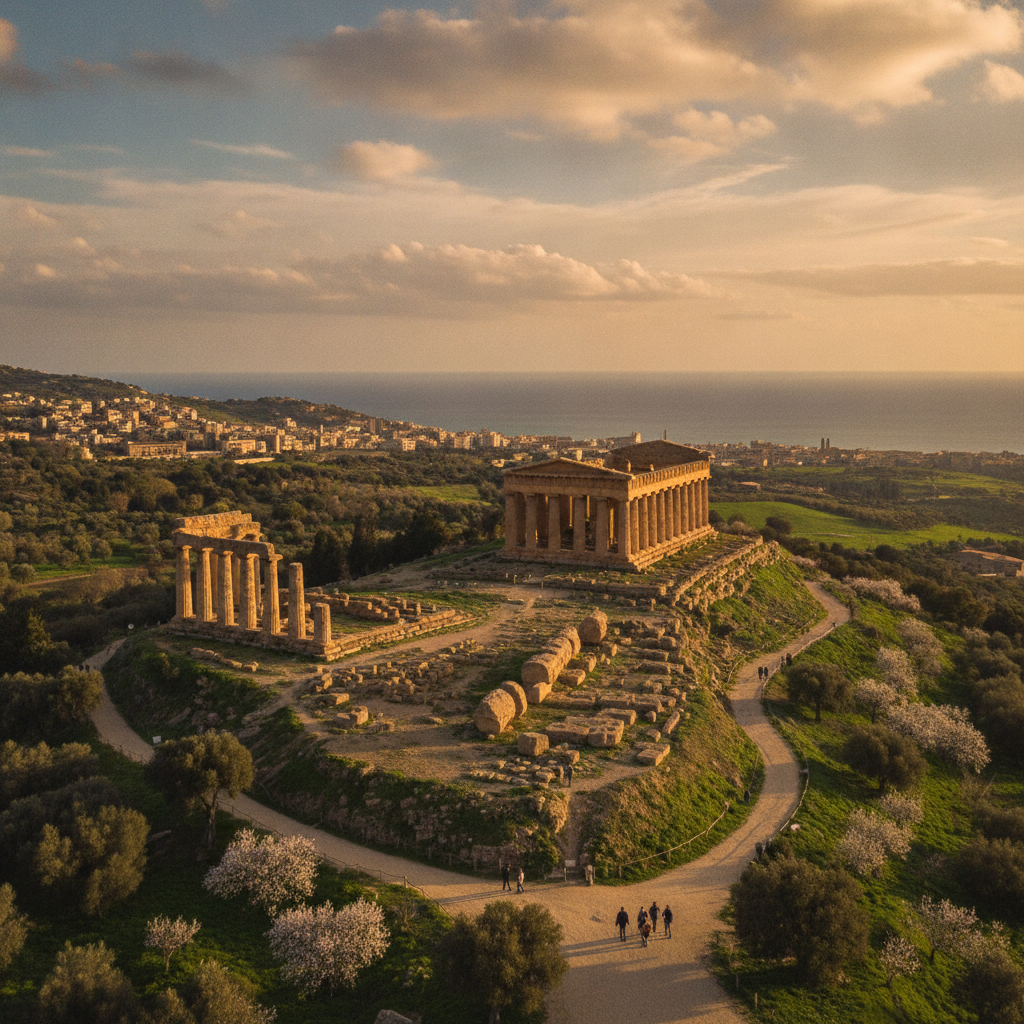
Das Tal der Tempel ('Valle dei Templi' — die UNESCO-Weltkulturerbe-Archäologiepark bei Agrigento an der Südküste Siziliens, 2,5 Stunden südlich von Palermo) ist die bedeutendste griechische Ausgrabungsstätte außerhalb Griechenlands — der Ort der antiken griechischen Stadt Akragas (gegründet 580 v. Chr., eine der größten griechischen Städte der Antike mit einer Bevölkerung von 200.000-300.000 auf ihrem Höhepunkt), der Ort, an dem 9 dorische Tempel aus dem 5. Jahrhundert v. Chr. im vollständigsten Zustand aller griechischen Tempel weltweit erhalten sind.
- 1
Valle dei Templi — Sieben griechische Tempel auf einem Kamm
Das Tal der Tempel (Valle dei Templi, Agrigent, 2,5 Stunden von Palermo mit dem Bus, UNESCO, die Stätte des antiken Akragas, gegründet 582 v. Chr. von Gela-Kolonisten) ist die umfangreichste antike griechische Ausgrabungsstätte außerhalb Griechenlands — 7 griechische dorische Tempel auf einem Kalksteinkamm mit Blick auf das Mittelmeer (die Tempel wurden gebaut, um vom Meer aus gesehen zu werden); der Concordia-Tempel (430 v. Chr., der am besten erhaltene griechische Tempel der Welt außerhalb des Hephaistos-Tempels in Athen) ist das Hauptmonument; kombiniertes Gelände- und Museumsticket 13,50 €, täglich 8:30–19:30 Uhr.
- 2
Concordia-Tempel — Der am besten erhaltene griechische Tempel
Der Concordia-Tempel (430 v. Chr., 6×13 Säulen, Kalkstein mit originalen Stuckspuren, im 6. Jahrhundert n. Chr. in eine christliche Kirche umgewandelt — die in die Cella-Wände geschnittenen Innenräume für Fenster erklären sein Überleben, als heidnische Tempel anderswo abgerissen wurden) ist der strukturell vollständigste griechische dorische Tempel der Welt — 34 der ursprünglich 38 Säulen sind in voller Höhe erhalten; die christliche Umgestaltung (Umwandlung des Pronaos in eine Apsis und Hinzufügen von Türen) bewahrte die Struktur für 1.500 Jahre.
- 3
Museo Archeologico Regionale Pietro Griffo — Die Giganten von Akragas
Das Archäologische Regionalmuseum Pietro Griffo (Contrada San Nicola, Agrigent, angrenzend an das Valle dei Templi, 8 €) beherbergt den Telamon (die Atlasfigur, 8m rekonstruiert, das einzige erhaltene Beispiel der Telamon-Karyatiden-Säulen, die im Zeustempel/Olympieion, dem größten Tempel der griechischen Welt während seiner Erbauung, verwendet wurden) — die Sammlung des Museums umfasst von Akragas geprägte Münzen (die schönsten griechischen Münzen Siziliens, die 'Dekadrachme' von Akragas, die einen Adler auf einer Schlange zeigt), Bronzeskulpturen und rotfigurige Keramik.
- 4
Scala dei Turchi — Weiße Mergelklippen an der sizilianischen Küste
Die Scala dei Turchi ('Treppe der Türken', 5 km westlich von Porto Empedocle, 45 Minuten von Agrigent mit dem Bus) ist eine Küstenformation aus weißem Mergelgestein (Biancone), das durch Wellenschlag zu abgestuften Stufen erodiert wurde — die weißen Terrassen (zugänglich durch einen 15-minütigen Spaziergang vom Parkplatz) sind das geologische Äquivalent des türkischen Pamukkale; das Meer an der Basis (zugänglich über die Felsstufen, türkisblau, 20°C im August) ist einer der klarsten Badeorte an der Südküste Siziliens; die Formation erodiert schnell (mehrere große Abschnitte stürzten 2016–2023 ein) und der Zugang ist saisonal.
- 5
Pirandellos Agrigent — Die Heimatstadt des Nobelpreisträgers
Luigi Pirandello (1867–1936, Literaturnobelpreis 1934, Sechs Personen suchen einen Autor, So ist es, wenn es Ihnen so scheint) wurde im Chaos-Viertel von Agrigent, 5 km westlich der Stadt, geboren — das Pirandello-Hausmuseum (Contrada Caos, Via Luigi Pirandello, 5 €, täglich außer montags geöffnet) bewahrt das Arbeitszimmer, die Bibliothek des Dramatikers und den Pinienbaum, unter dem seine Asche begraben liegt; Pirandellos Werk (das die objektive Realität, Identität und Wahrheit in Frage stellt) wurde durch seine sizilianische Erziehung geprägt (die Philosophie der agrigentinischen Identität, Isolation und Selbstzweifel).
- 6
Agrigents Historisches Zentrum — Die mittelalterliche Stadt über den Tempeln
Agrigents mittelalterliches historisches Zentrum (die Hügelstadt oberhalb des Valle dei Templi, die mittelalterliche Stadt, die auf den Überresten der antiken griechischen Akropolis erbaut wurde) wird von den meisten Besuchern übersehen, die sich auf die darunter liegenden Tempel konzentrieren — die Via Atenea (die Hauptgeschäftsstraße) und die Piazza Pirandello (der Hauptplatz mit einer Marmorstatue des Nobelpreisträgers) sind der Mittelpunkt der Stadt; die Kathedrale von Agrigent (12. Jahrhundert, normannisch, die Krypta enthält den Sarkophag von König Ludwig IX. von Frankreich, der 1270 auf dem Weg zum Kreuzzug in Tunis an der Pest starb) befindet sich an der Via Duomo.
Walk this route with audio
Stories play automatically as you reach each stop — no tapping needed.
Mehr in palermo
La Kalsa — Das Araberviertel und Palermos historischstes Viertel
Palermo Street Food, Capo Markt & die sizilianische Gastronomische Tradition
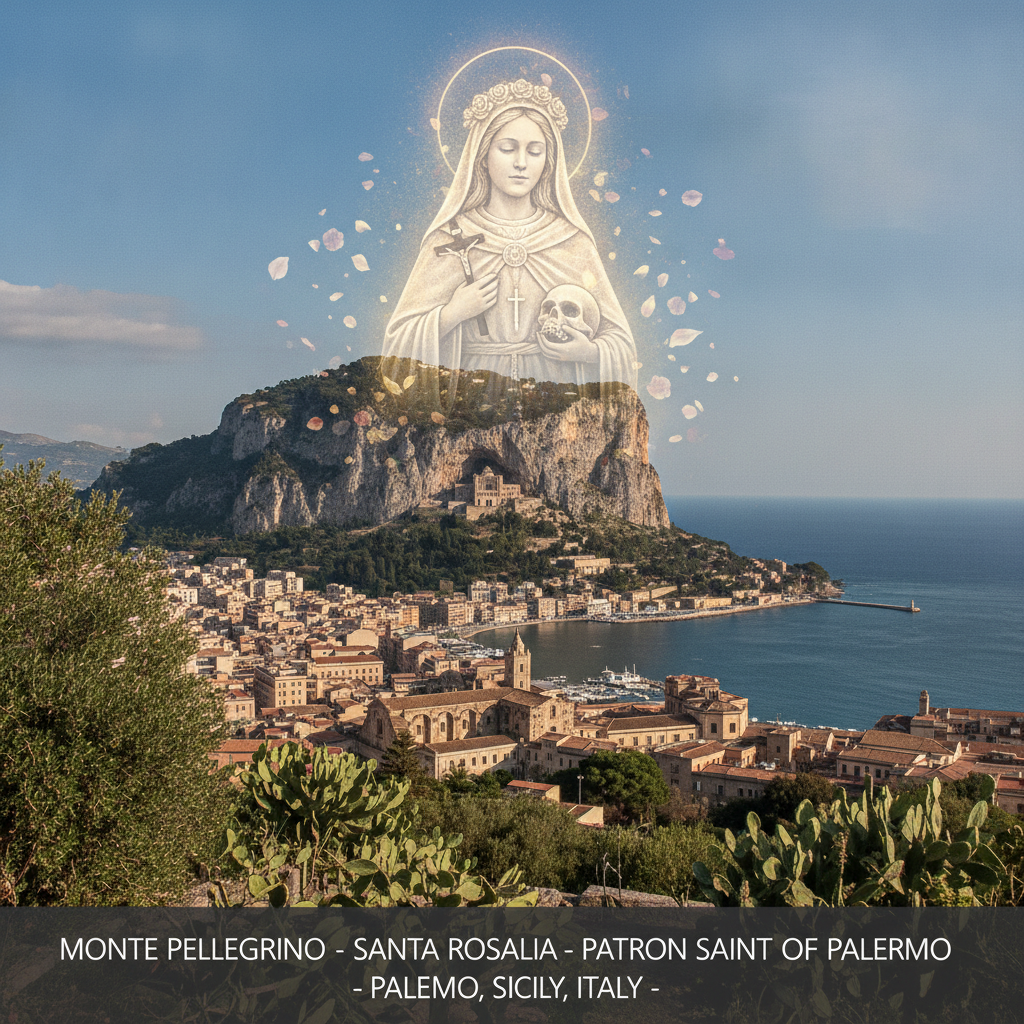
Monte Pellegrino, Santa Rosalia & die Schutzpatronin von Palermo
Cefalù — Normannendom, Strand & die perfekte sizilianische Stadt
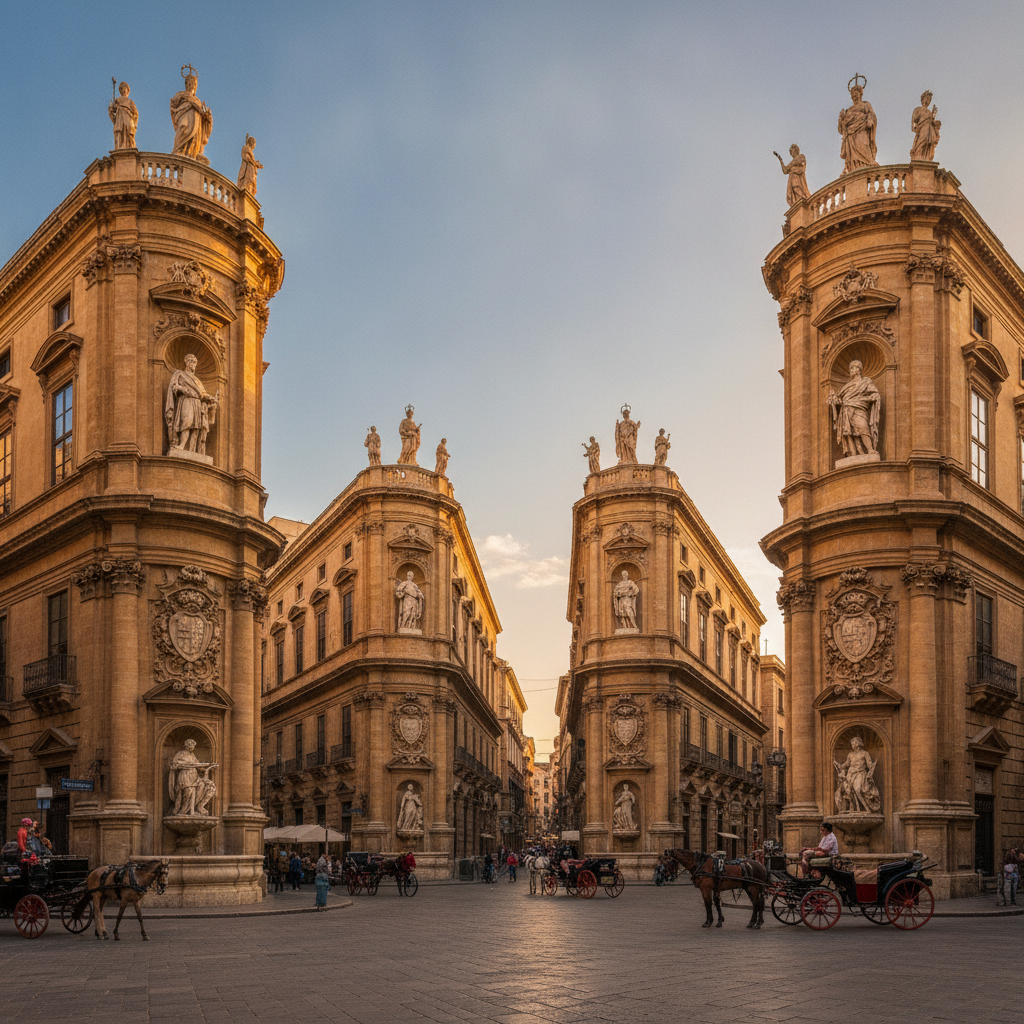
Quattro Canti, barockes Palermo und das Erbe der spanischen Vizekönigsherrschaft