Nob Hill, Grace Cathedral & die viktorianische Architektur von San Francisco
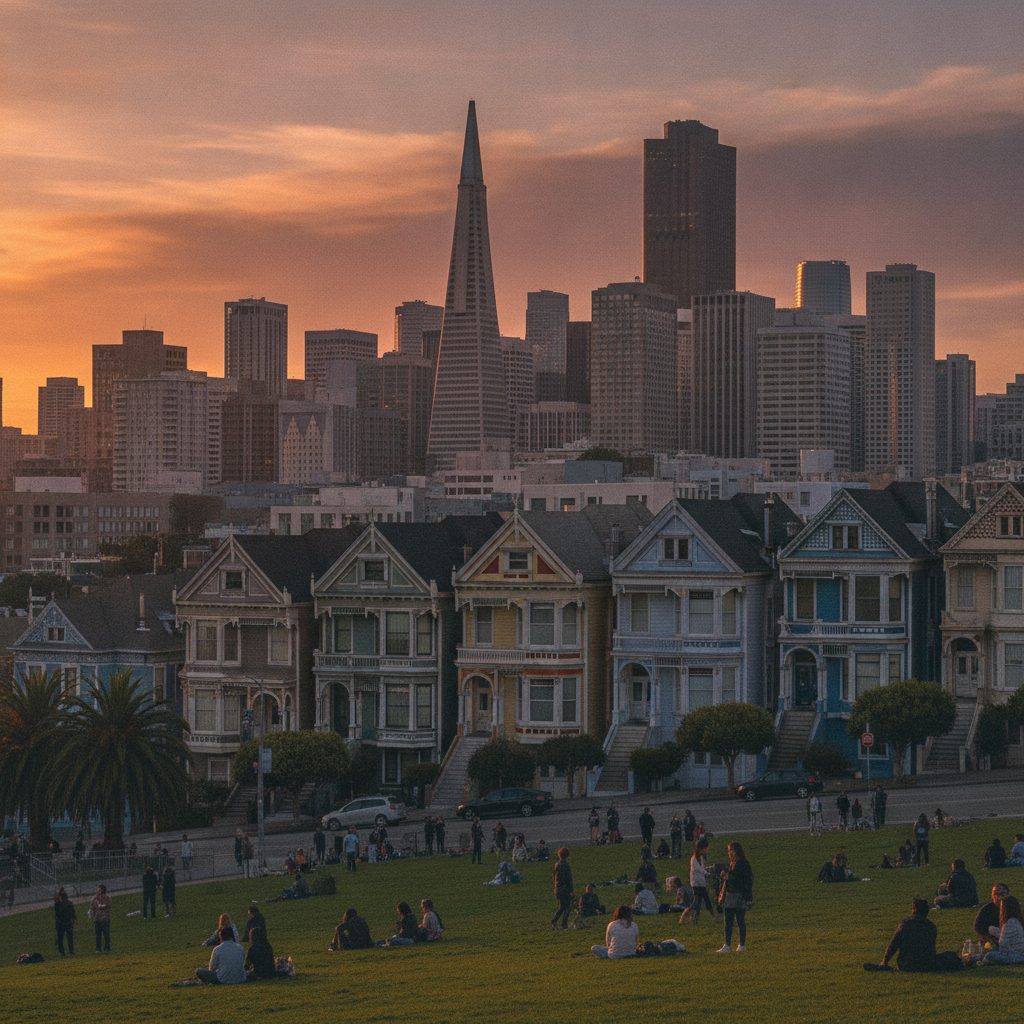
Die viktorianische Wohnarchitektur San Franciscos — die 'Painted Ladies' und viktorianische Häuser im Queen Anne-, Eastlake-, Italianate- und Stick-Stil, die in riesigen Mengen zwischen den 1860er Jahren und dem Erdbeben von 1906 (als etwa die Hälfte des Gebäudebestands der Stadt durch das Erdbeben und den anschließenden Brand zerstört wurde) gebaut wurden — ist das markanteste und gefeiertste Merkmal der gebauten Umgebung der Stadt und das visuelle Element, das San Francisco am unmittelbarsten von jeder anderen amerikanischen Stadt unterscheidet.
- 1
Grace Cathedral — Die amerikanische gotische Kathedrale mit einem Labyrinth
Die Grace Cathedral (1100 California Street, Nob Hill, Bau 1928–1964, die größte Bischofskathedrale westlich des Mississippi in den USA, Architekt Julian Morgan) bietet das vielfältigste Kulturprogramm aller Kathedralen in den USA — das Außenlabyrinth (Keith Harings AIDS Memorial Chapel und eine Replik des Labyrinths der Kathedrale von Chartres, das am häufigsten fotografierte architektonische Merkmal) und das Innenlabyrinth (Terrazzo, installiert 1994) bilden das Zentrum der kontemplativen Programme der Kathedrale; die Ghiberti-Türen (Bronzereplik der Baptisteriumstüren in Florenz) befinden sich am Haupteingang.
- 2
Huntington Park und die Spitze von Nob Hill
Huntington Park (1 Taylor Street, Nob Hill, der Park auf dem ehemaligen Gelände der Huntington-Villa, der schönste kleine Park in San Francisco) ist umgeben von den prestigeträchtigsten Adressen der Stadt — dem Fairmont Hotel (950 California Street, 1907, das Hotel, das 11 Tage nach dem Erdbeben von 1906 als Symbol für San Franciscos Erholung wiedereröffnet wurde), dem Mark Hopkins Inter-Continental (1 Nob Hill, die Top of the Mark Cocktail Lounge im 19. Stock, $20–25 Cocktails, aber die beste 360°-Aussicht von einer Indoor-Bar in San Francisco) und dem Pacific-Union Club (die ehemalige James Flood Villa, das einzige Brownstone-Gebäude in San Francisco).
- 3
Nob Hill Cable Car Wendestelle — Powell und California
Die Kreuzung Powell-California (Nob Hill, wo die Linien Powell-Hyde und Powell-Mason den Hügel erklimmen und die California Street-Linie im rechten Winkel kreuzt) ist die geschäftigste Seilbahn-Ecke in San Francisco — die manuell betriebenen Seilbahn-Drehscheiben (Endstation California Street an der Market Street und die Powell Street-Drehscheibe an der Market Street) erfordern, dass die Besatzung und wartende Passagiere den Wagen von Hand auf der kreisförmigen Schiene herumschieben; die Warteschlange an der Drehscheibe (an Powell und Market, 60–90 Minuten Wartezeit im Sommer) ist das typische San Francisco Touristenerlebnis.
- 4
Alamo Square Victorian Row — Der Kontext der Painted Ladies
Die Painted Ladies (sieben viktorianische Häuser an der Steiner und Hayes Streets gegenüber dem Alamo Square Park) sind die berühmteste viktorianische Häuserreihe der Stadt — die Häuser (gebaut von dem Bauträger Matthew Kavanaugh, 1892–1896, im italienischen Stil, in 3+ Farben gestrichen, wie es die viktorianische Mode vorschrieb) wurden für die Eröffnungssequenz von Full House (1987–1995) verwendet und wurden mehr als jeder andere Wohnblock in den USA fotografiert; das umliegende Viertel Alamo Square (40-Block historisches Viertel, 1.400 viktorianische Häuser) ist die am besten erhaltene großflächige viktorianische Wohngegend in Kalifornien; der Name 'Painted Ladies' wurde von den Journalisten Elizabeth Pomada und Michael Larsen in einem Buch von 1978 erfunden.
- 5
Pacific Heights — Die Architektur des reichsten Viertels
Pacific Heights (der Wohnkamm zwischen Van Ness und Divisadero, das exklusivste Viertel in San Francisco) beherbergt die feinste Konzentration von architektonisch gestalteten viktorianischen und edwardianischen Privathäusern in den USA — das Haas-Lilienthal House (2007 Franklin Street, 1886, das einzige private viktorianische Haus in San Francisco, das regelmäßig für Führungen geöffnet ist, $15) und die Spreckels Mansion (2080 Washington Street, die Beaux-Arts-Villa von 1913, in der der Zuckerbaron Adolph Spreckels lebte, jetzt im Besitz der Schriftstellerin Danielle Steel) repräsentieren die beiden Epochen; der Panoramablick auf die Bucht vom Broadway-Gipfel ist eine tägliche Belohnung für das Viertel.
- 6
Chinatown nach North Beach — Der Spaziergang entlang der Viertelgrenze
Die Grenze zwischen Chinatown (südlich des Broadways) und North Beach (nördlich des Broadways) ist eine der kulturell aufgeladensten Straßen San Franciscos — das Erdbeben von 1906 tötete schätzungsweise 3.000 Menschen im Chinatown-Distrikt (offizielle Aufzeichnungen unterschätzten die chinesischen Opfer absichtlich); der anschließende Wiederaufbau von Chinatown in einem exotisierten 'orientalischen' Architekturstil (Pagodendächer, Laternen und dekorative Tore) wurde von der Gemeinschaft entworfen, um Touristengelder anzuziehen und eine Umsiedlung durch Stadtbehörden zu verhindern, die das Land von Chinatown wollten; das Drachentor (Grant Avenue an der Bush Street, 1970) markiert den Eingang.
Walk this route with audio
Stories play automatically as you reach each stop — no tapping needed.
Mehr in san-francisco
Haight-Ashbury, Golden Gate Park & das Erbe der Gegenkultur der 1960er Jahre
Tagesausflug ins Silicon Valley — Stanford, Tech-Kultur & die Halbinsel
Der Mission District — Wandmalereien, Dolores Park & der San Francisco Burrito
Golden Gate Bridge, Marin Headlands & Baker Beach
The Ferry Building, Embarcadero & Bay Bridge — San Franciscos Uferpromenade