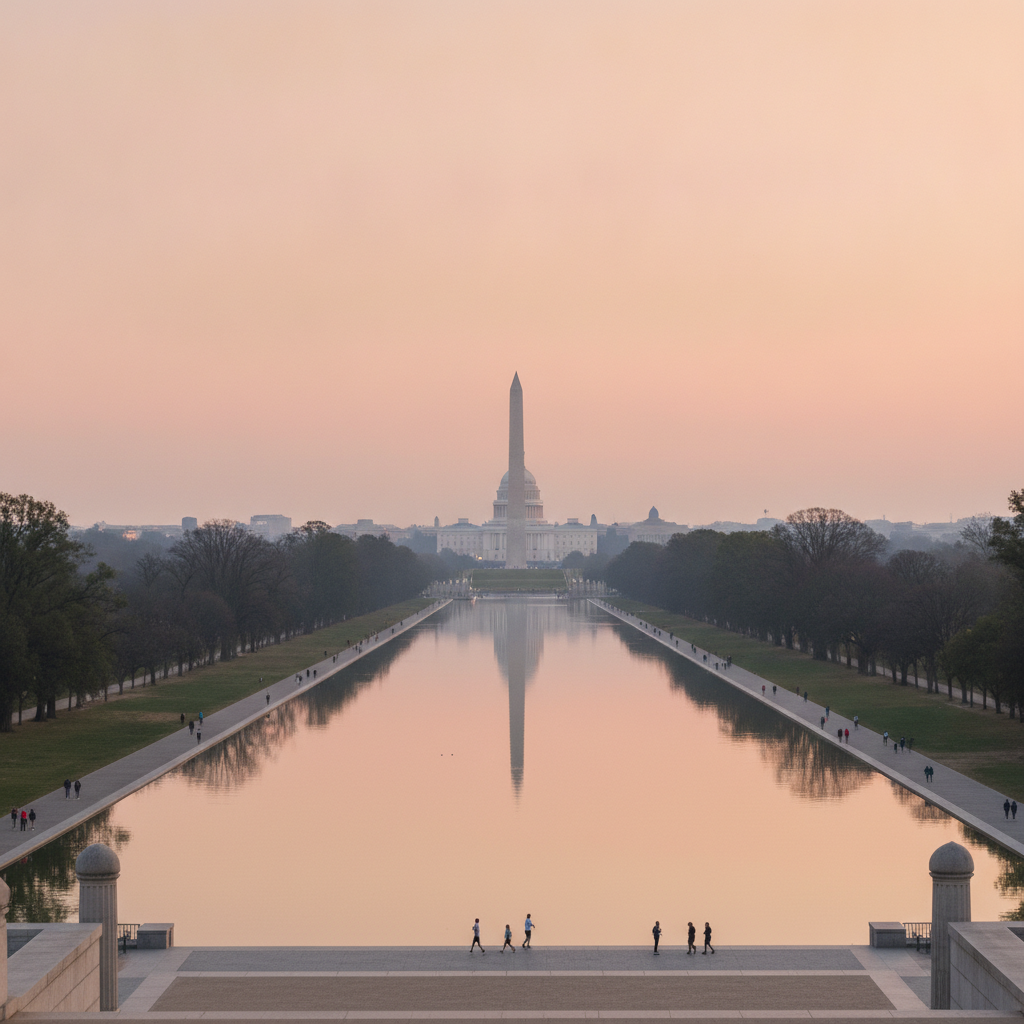
Kirschblüten & das Tidal Basin — Washington im Frühling
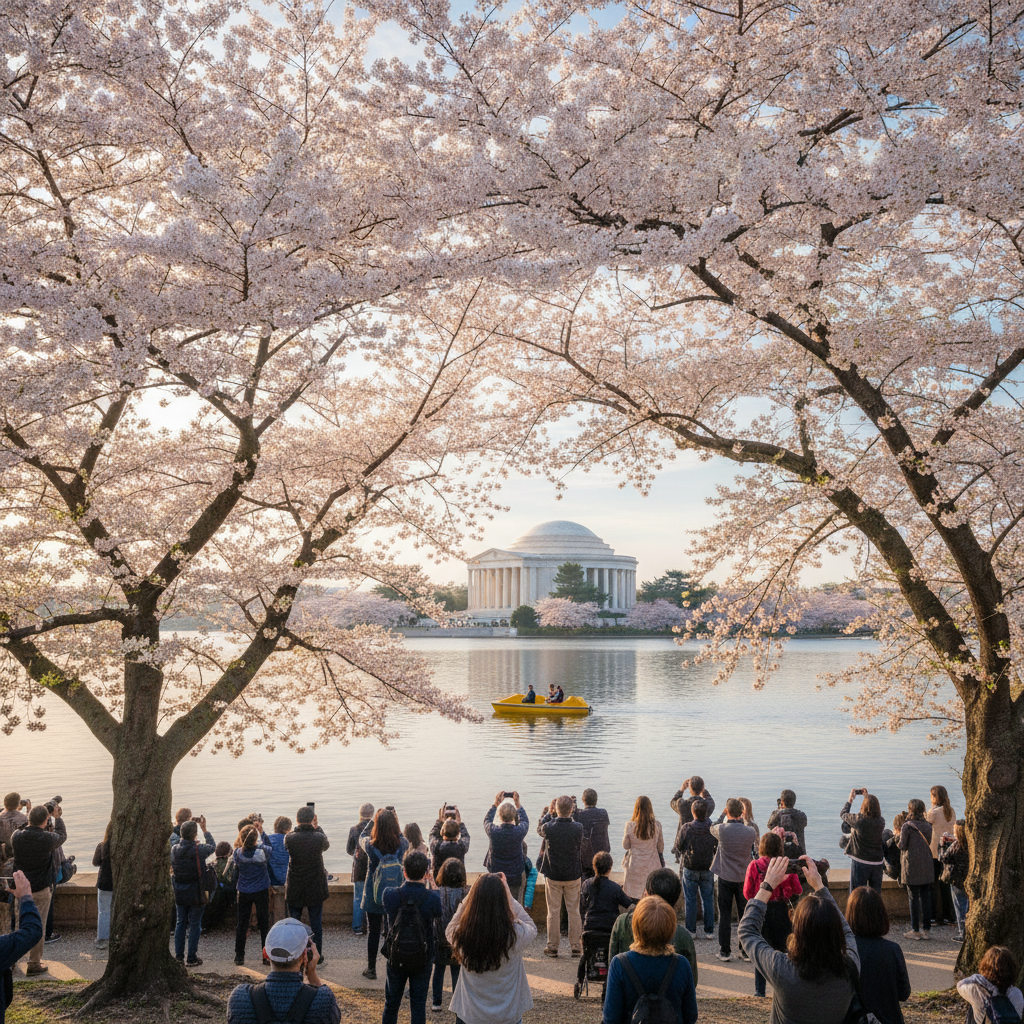
Das Kirschblütenfest (das Nationale Kirschblütenfest, das jährlich Ende März/Anfang April in Washington DC stattfindet – die meistbesuchte jährliche Veranstaltung in Washington DC, die etwa 1,5 Millionen Besucher pro Jahr anzieht): Die 3.800 Yoshino-Kirschbäume (Prunus × yedoensis), die das Tidal Basin und die National Mall umgeben, blühen jedes Frühjahr gleichzeitig für etwa 1-2 Wochen und schaffen die spektakulärste und schönste öffentliche Blumenpracht in den Vereinigten Staaten und eine der meistfotografierten Frühlingsausstellungen der Welt.
- 1
Tidal Basin Kirschblüten — 3.000 Bäume in voller Blüte
Die Kirschblüten des Tidal Basin (die 3.020 Yoshino-Kirschbäume, die das 107 Hektar große Tidal Basin umgeben, ein Geschenk des Tokioter Bürgermeisters Yukio Ozaki im Jahr 1912, das National Cherry Blossom Festival, das jährlich Ende März bis Mitte April stattfindet, die Höchstblüte dauert je nach Temperatur 5–7 Tage) ziehen während des zweiwöchigen Festivals 1,5 Millionen Besucher an — das Jefferson Memorial (die weiße Marmor-Pantheon-Replik, die vom gegenüberliegenden Ufer des Tidal Basin aufsteigt, die am häufigsten fotografierte Position während der Blütezeit) und das Morgenlicht (Besuche bei Sonnenaufgang, vor 7 Uhr morgens, vermeiden die Menschenmassen nach 9 Uhr, das Licht auf dem Wasser während der goldenen Stunde ist unübertroffen) sind die optimalen Betrachtungsbedingungen; die Vorhersage der Höchstblüte wird vom National Park Service 7–10 Tage im Voraus veröffentlicht.
- 2
Jefferson Memorial — Sonnenaufgang und die Südseite
Das Thomas Jefferson Memorial (Südufer des Tidal Basin, das neoklassizistische Kuppelgebäude, entworfen von John Russell Pope, geweiht 1943, 24 Stunden geöffnet, kostenlos, Nationalpark-Ranger anwesend von 9:30 Uhr bis 23:30 Uhr) beherbergt eine 19 Fuß hohe Bronzestatue von Jefferson, umgeben von Auszügen aus der Unabhängigkeitserklärung und seinen Schriften im Inneren der Kuppel — das Denkmal ist bei Sonnenaufgang am wenigsten überfüllt (der Sonnenaufgang über der Capitol-Kuppel auf der anderen Seite des Mall ist von den Nordstufen des Denkmals aus sichtbar) und vom Wassertaxi aus am dramatischsten (Tidal Basin Paddle Boats, ¥30/Stunde für ein Tretboot für 4 Personen, März–Oktober, die Aussicht vom Wasser zur Blütezeit ist das prägende Washingtoner Frühlingsbild).
Walk this route with audio
Stories play automatically as you reach each stop — no tapping needed.
Mehr in washington-dc
K Street, Think Tanks und die Welt der Macht in Washington DC
Washington DC Food Szene – Von äthiopisch bis Fine Dining
Weißes Haus, Capitol Hill & die Architektur der amerikanischen Macht
Arlington Cemetery, das Pentagon & DCs militärisches Erbe
Smithsonian Museen & Washington DCs kostenlose Weltklasse-Kultur