Rock Creek Park & DCs versteckter natürlicher Rückzugsort
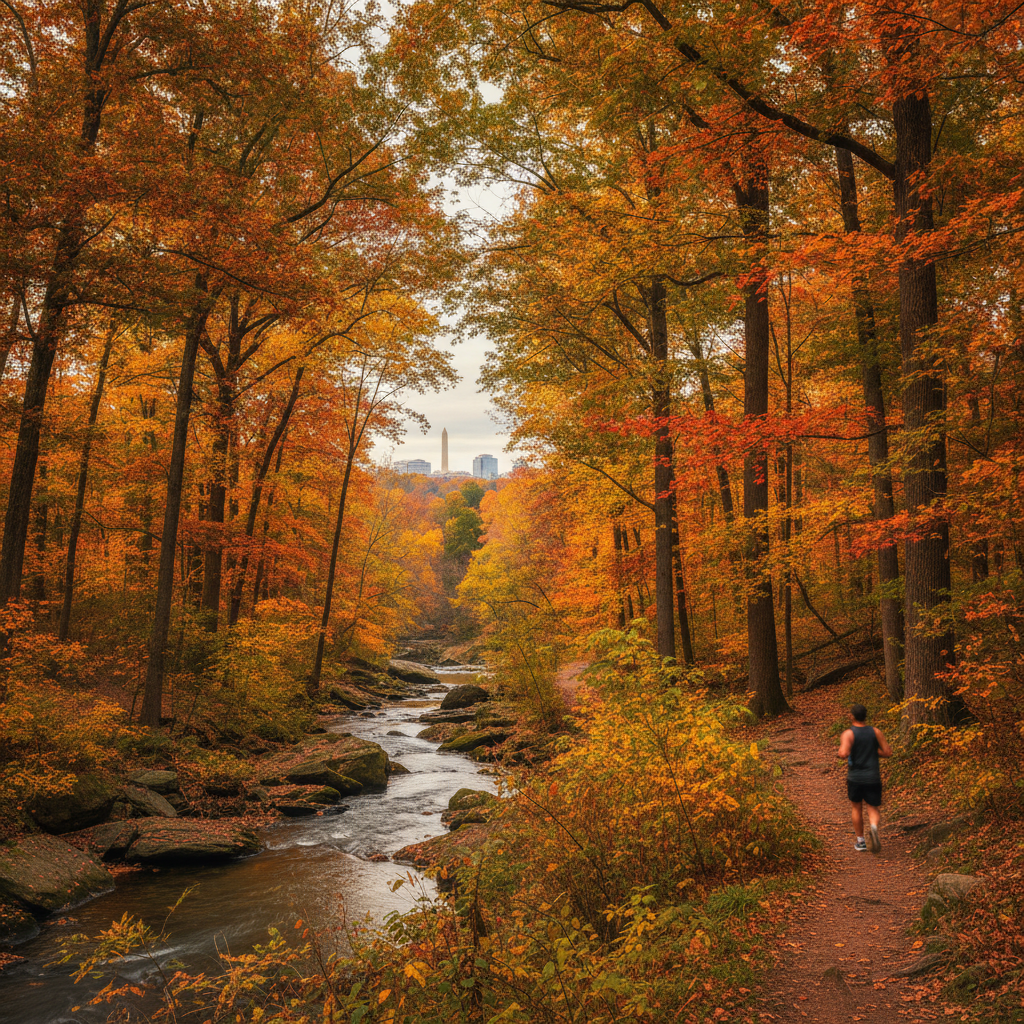
Der Rock Creek Park (der 1,754-acre (710 Hektar) große Nationalpark innerhalb der Grenzen des District of Columbia, gegründet 1890 – der drittälteste Nationalpark der Vereinigten Staaten (nach Yellowstone (1872) und Mackinac Island (1875))), und einer der größten Stadtparks der Vereinigten Staaten: Der Rock Creek Park (der dicht bewaldete Park, der dem Rock Creek Tal von der Grenze zu Maryland im Norden durch die Viertel Columbia Heights und Adams Morgan bis zum Potomac River im Süden folgt) ist der 'Central Park' von Washington DC – die primäre städtische Grünfläche für die Bewohner der Stadt.
- 1
Rock Creek Park — Der 2,800-Acre Wald in der Stadt
Der Rock Creek Park (der 2,800-acre große Nationalpark, der durch das Zentrum von Washington DC verläuft, vom National Mall-Gebiet im Norden bis zur Grenze zu Maryland, der größte städtische Nationalpark der Vereinigten Staaten, kostenlos, zugänglich von mehreren Punkten entlang des Rock Creek Parkway) ist der bedeutendste Stadtwald in jeder US-Hauptstadt — der Beach Drive (die Hauptparkway, an Wochenenden und Feiertagen nördlich der Military Road für Autos gesperrt, wird zu einem Rad- und Laufkorridor, der von über 100,000 Personen pro Woche genutzt wird), das Carter Barron Amphitheatre (die 4,200-Sitzplätze umfassende Open-Air-Konzertstätte im Park, Sommerkonzerte kostenlos durch das National Park Service Programm), und das Rock Creek Nature Center and Planetarium (5200 Glover Road, kostenlos, Dienstag–Sonntag 9am–5pm, die Planetariumsshows kostenlos am Samstag und Sonntag um 1pm) sind die Haupteinrichtungen.
- 2
National Zoo — Der kostenlose Smithsonian Zoo und die Riesenpandas
Der Smithsonian's National Zoological Park (3001 Connecticut Avenue NW, innerhalb des Rock Creek Park, freier Eintritt, Gelände täglich 8am–6pm geöffnet, Tiergebäude 9am–4pm, erreichbar mit der Metro Red Line Cleveland Park oder Woodley Park) ist einer von 3 kostenlosen großen Zoos weltweit — das Riesenpanda-Programm (die Pandas sind eine Leihgabe aus China, die Panda-Diplomatie-Leihgabe stammt aus dem Jahr 1972, als China Hsing-Hsing und Ling-Ling den USA als Geschenk nach Nixons China-Besuch überließ) und das Menschenaffenhaus (die Orang-Utan-O-line — das Luftseilsystem, das es den Orang-Utans ermöglicht, zwischen dem Menschenaffenhaus und dem Think Tank-Gebäude zu reisen, eine Luftüberquerung über Besucherpfade) sind die Besonderheiten; der 1.4km lange Haupttalweg von der Connecticut Avenue zum Rock Creek Park ist das Rückgrat des Zoos.
- 3
Historischer C&O Canal Treidelpfad — Wandern zur Chesapeake Bay
Der Chesapeake & Ohio Canal National Historical Park (der 184.5-mile lange Kanaltreidelpfad von Georgetown DC nach Cumberland Maryland, dem Potomac River durch die Ausläufer der Appalachen folgend, kostenlos, am Georgetown-Ende über den Thomas Jefferson Street NW Eingang zugänglich) ist der längste durchgehende lineare historische Park in den Vereinigten Staaten — der Abschnitt von Georgetown zu den Great Falls (14.4 miles pro Strecke, der beliebteste, die Great Falls des Potomac am 14.4-mile Punkt, wo der Fluss über eine Reihe von Wasserfällen 20m fällt, zugänglich mit dem Fahrrad oder zu Fuß) und die von Maultieren gezogenen Bootsfahrten von Georgetown (Sommer, kostenpflichtig) sind die Haupterlebnisse.
- 4
Georgetown Waterfront Park und der Potomac
Der Georgetown Waterfront Park (der 10-acre große Park am Potomac River am Fuße der M Street Georgetown, ganzjährig geöffnet, der Endpunkt des Capital Crescent Trail — der 11-mile lange gepflasterte Rad- und Laufweg nach Silver Spring Maryland) ist die beste Ufergrünfläche im Zentrum von Washington DC — die Georgetown Waterfront (Key Bridge im Osten) bietet Ausblicke nach Süden über den Potomac auf die Küste von Virginia und die Skyline von Rosslyn; die Verleihe für Paddleboarding und Kajaks (Key Bridge Boathouse, unter der Key Bridge am Park, ¥25/Stunde Kajak, April–Oktober) sind die primäre Freizeitnutzung.
- 5
Theodore Roosevelt Island — Das lebendige Denkmal im Fluss
Theodore Roosevelt Island (die 88.5-acre große bewaldete Insel im Potomac River zwischen Georgetown und Rosslyn Virginia, nur über eine Fußgängerbrücke vom Ufer Virginias abseits des GW Parkway zugänglich, kostenlos, von Sonnenaufgang bis Sonnenuntergang geöffnet) ist sowohl ein Nationalpark als auch ein lebendes Denkmal für Präsident Roosevelt — die Insel (die 17-foot große bronzene Roosevelt-Statue auf dem zentralen Platz, die 4 Granittafeln mit Roosevelt-Zitaten zu Demokratie, Natur, Männlichkeit und Jugend) ist umgeben von Gezeitenfeuchtgebieten und Wald; die Wege der Insel (2.5 miles, als Rundweg) bieten das abgelegenste Naturerlebnis, das ohne Auto im DC-Gebiet zugänglich ist; Hirsche, große Blaureiher und Rotschwanzbussarde sind zuverlässig zu sehen.
- 6
Das National Arboretum — Die Kapitolssäulen und Bonsai
Das United States National Arboretum (3501 New York Avenue NE, kostenlos, täglich 8am–5pm geöffnet, erreichbar mit dem Bus B2 von der Union Station oder mit dem Auto) ist die am wenigsten besuchte bedeutende Grünfläche in Washington DC — die Capitol Columns (die 22 originalen korinthischen Sandsteinsäulen vom Ostportikus des US-Kapitols, die während der Kapitolserweiterung von 1958 entfernt wurden und jetzt auf einer Wiese im Arboretum arrangiert sind) und das National Bonsai and Penjing Museum (die Sammlung von über 150 Bonsai-Bäumen, die bedeutendste öffentliche Bonsai-Sammlung in der westlichen Hemisphäre, einschließlich des Hiroshima-Überlebensbonsai — einer japanischen Weißkiefer, die 1 mile von der Atombombenexplosion im Jahr 1945 entfernt war und überlebte) sind die wesentlichen Stätten.
Walk this route with audio
Stories play automatically as you reach each stop — no tapping needed.
Mehr in washington-dc
K Street, Think Tanks und die Welt der Macht in Washington DC
Washington DC Food Szene – Von äthiopisch bis Fine Dining
Weißes Haus, Capitol Hill & die Architektur der amerikanischen Macht
Kirschblüten & das Tidal Basin — Washington im Frühling
Arlington Cemetery, das Pentagon & DCs militärisches Erbe