Cape Coast and the Slave Forts: The Door of No Return and the Transatlantic Slave Trade Legacy
Day trip from Accra to Cape Coast: Cape Coast Castle and Elmina Castle (UNESCO World Heritage Sites), the Door of No Return, the transatlantic slave trade history, the Kakum National Park canopy walkway, and the significance of the slave forts for the African diaspora.
- 1
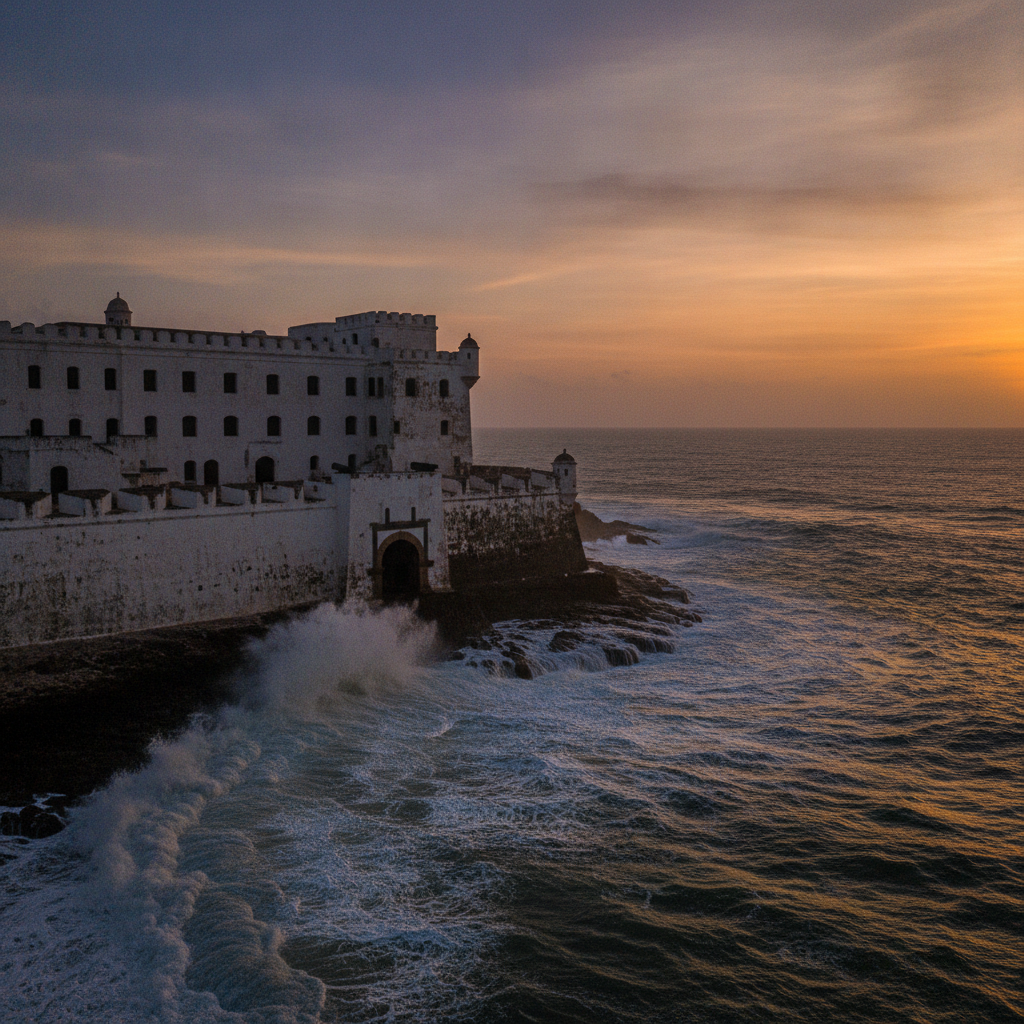
Cape Coast Castle - The Primary Slave Fort of British West Africa
Cape Coast Castle (Oguaa in Fante): the most historically significant slave fort in Africa. Originally a Swedish trading post in 1653, captured by the British in 1665 and expanded into the primary British slave trading fort on the West African coast. It served as headquarters of the British Gold Coast colony from 1664 to 1877. The dungeons below the castle held 1,000-1,500 enslaved people at a time in near-darkness with minimal air and sanitation. The Door of No Return: the door in the sea-facing wall through which enslaved people passed onto waiting slave ships, the final point of contact with Africa for approximately 10 million enslaved people who crossed the Atlantic. Cape Coast Castle and Elmina Castle are both UNESCO World Heritage Sites (designated 1979).
- 2
Elmina Castle - The Oldest European Building in Sub-Saharan Africa
Elmina Castle: built by the Portuguese in 1482 as Sao Jorge da Mina (Saint George of the Mine), the oldest permanent European structure in sub-Saharan Africa. The name Elmina comes from the Portuguese a mina (the mine), referring to the original gold trade purpose. The Dutch captured Elmina from the Portuguese in 1637 and held it until ceding the Gold Coast to the British in 1872. Under Dutch control Elmina became one of the largest slave trading forts in West Africa; the Dutch West India Company transported an estimated 30,000-40,000 enslaved Africans from here. The castle includes a church (a converted former mosque), the courtyard where enslaved women were selected by the castle governor, and its own Door of No Return above the water gate.
- 3
Kakum National Park - The Canopy Walkway Above the West African Rainforest
Kakum National Park: the 375 square kilometer protected rainforest in the Central Region of Ghana, approximately 35 km north of Cape Coast. One of the last remnants of the Upper Guinean rainforest (now reduced to approximately 10% of its original extent by agricultural conversion). Wildlife includes forest elephants, olive colobus monkeys, Diana monkeys, forest buffalo, and approximately 400 bird species. The canopy walkway: 7 suspension bridges at 30-40 meters above the forest floor spanning approximately 350 meters total, giving a bird perspective over the forest canopy. The tour takes 45 minutes to 1 hour and is open from early morning to approximately 4pm.
- 4
The Transatlantic Slave Trade - Scale, History, and the African Participation
The transatlantic slave trade (approximately 1500-1900): the most widely accepted estimates suggest approximately 12-12.5 million Africans were transported to the Americas as enslaved people, with an estimated 1.5-2 million dying during the Middle Passage. Source regions included the Gold Coast (modern Ghana), the Slave Coast (modern Benin, Togo, Nigeria), the Niger Delta, and the Kingdom of Kongo (modern Congo and Angola). African political entities including the Kingdom of Dahomey (modern Benin) and the Ashanti Kingdom participated as sellers of enslaved captives to European traders. The demographic impact of removing 12-15 million people over 4 centuries had significant negative effects on the affected regions. The moral complexity of African participation in the slave trade is an important part of the complete historical picture.
- 5
Diaspora Pilgrimage - The Slave Forts and the African American Experience
The Cape Coast Castle and Elmina Castle as sites of pilgrimage for the African diaspora. The tour takes visitors through the dungeons (the physical reality of the captivity: darkness, confined space, scratches on the walls) and culminates at the Door of No Return, looking out at the Atlantic Ocean from the perspective of the enslaved. For many African American visitors this is a transformative experience of confronting ancestral history. Famous visitors: President Barack Obama (2009) and President Bill Clinton (1998) both visited Cape Coast Castle. The Ghanaian Year of Return program (2019) framed the return of the African diaspora as a spiritual homecoming; the slave fort visit is typically a central element of diaspora heritage tourism programs.
- 6
Cape Coast Day Trip - Getting There from Accra and the Complete Reference
Cape Coast practical guide from Accra. Distance: approximately 165 km west of Accra, approximately 2.5-3.5 hours by car. Options: VIP Bus or STC coach from the central bus terminal (approximately 3-3.5 hours); private car and driver is most comfortable. Timing: arriving by 9-10am allows Cape Coast Castle (1.5-2 hours), lunch in town, and the Kakum canopy walkway (35 km north) before returning to Accra in late afternoon. Cape Coast Castle and Elmina Castle are 12 km apart; visiting both in one day is possible but makes Kakum difficult. The combined Cape Coast-Elmina-Kakum is the single most recommended day trip from Accra for heritage and nature tourism. Best visited on a weekday to avoid weekend crowds at the castle tours.
Walk this route with audio
Stories play automatically as you reach each stop — no tapping needed.
More in accra
Accra Culture: The Ga People, Ashanti Kingdom, Kente Cloth, Funerals, and Highlife Music
Accra: Black Star of Africa, Nkrumah, Jamestown, Labadi Beach, and the Ghana Guide
Accra Food and Nightlife: Osu, Chale Wote, Beach Clubs, Shopping, and the Ultimate Ghana Reference
Accra History and Politics: From the Gold Coast to Democratic Ghana, Rawlings, and the Modern Economy