Addis Ababa vs Africa Cities: Coffee Culture, Ethiopian Food, and the Visitor Practical Guide
Addis Ababa compared to other African capitals: the Ethiopian coffee ceremony and the coffee culture; injera and the traditional Ethiopian food scene; the tej (mead) and the azmari bet; practical information for the visitor.
- 1
The Ethiopian Coffee Ceremony - The Daily Ritual at the Heart of Ethiopian Culture
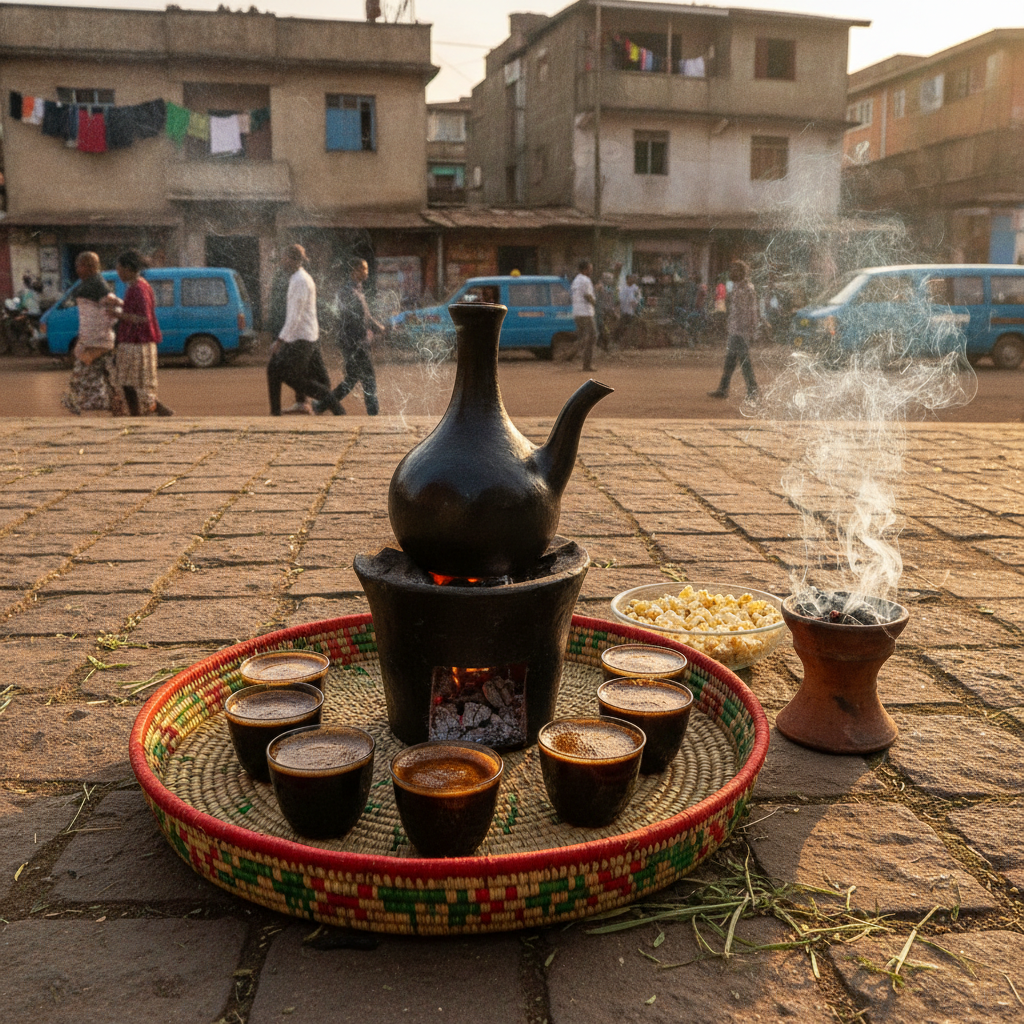
The Ethiopian coffee ceremony (the bunna mahber): the traditional Ethiopian way of preparing, serving, and drinking coffee that takes approximately one hour to complete from green bean to finished cup. The ceremony (the coffee ceremony is performed at home for guests, at coffee houses for the public, and in offices for colleagues: the ceremony is a social institution as much as a beverage preparation ritual): the participants (the ceremony is traditionally performed by a woman (the coffee ceremony is closely associated with women in Ethiopian culture): the host roasts green coffee beans in a long-handled roasting pan (the menkeshkesh) over charcoal or a small stove: the beans are roasted to a dark color and then ground by hand in a wooden mortar (the mukecha)): the brewing (the ground coffee is brewed in the clay jebena (the traditional Ethiopian coffee pot): the jebena (the pear-shaped clay pot with a straw filter in the spout to catch grounds): the brewed coffee is poured into small handleless cups (the sini) on a woven grass tray): the rounds (the coffee is served in three rounds (the abol (first round, the strongest), the tona (second round, slightly weaker), the baraka (third round, the lightest and considered a blessing)): the accompaniment (the ceremony is accompanied by popcorn (the kolo) and/or roasted barley: frankincense is burned during the ceremony to create the appropriate ceremonial atmosphere): the meaning (the coffee ceremony is a social ritual of hospitality, community, and respect: refusing an invitation to participate in a coffee ceremony is considered impolite in Ethiopian culture).
- 2
Injera and Ethiopian Food - The Shared Plate and the Art of Ethiopian Cuisine
Injera and the Ethiopian food tradition: the shared plate, the communal eating culture, and the distinctive flavors of Ethiopian cuisine. Injera (the injera is the foundation of Ethiopian cuisine: the large spongy fermented flatbread made from teff flour (the fermented batter is left to ferment for 2-3 days developing a characteristic sour taste): the injera is cooked on a large flat clay pan (the mitad) and has a distinctive spongy texture full of small holes (the holes are produced by the fermentation bubbles): the injera serves as both the plate and the eating implement: the wots and salads are placed on top of the injera and eaten by tearing off pieces of injera and wrapping them around the food). The wots (the Ethiopian stews served on injera): the doro wot (the most celebrated Ethiopian dish: chicken stew cooked in a slow-simmered sauce of berbere spice blend and clarified butter (the niter kibbeh): the dish contains hard-boiled eggs that have been scored to absorb the sauce): the tibs (sauteed meat (beef, lamb, or goat) with onions, garlic, and sometimes rosemary): the shiro (the ground chickpea or broad bean stew flavored with berbere: the everyday dish of ordinary Ethiopians and an excellent vegetarian option): the kitfo (Ethiopian beef tartare: minced raw beef seasoned with mitmita spice and niter kibbeh: served raw (leb leb) or lightly cooked): the vegetarian tradition (Ethiopian Orthodox fasting days (approximately 200 days per year for observant Christians) require vegetarian food: Ethiopia has an extraordinarily rich vegetarian food tradition including gomen (collard greens), fosolia (green bean and carrot stew), tikel gomen (spiced cabbage and carrots), and ater kik (split pea stew)).
- 3
Tej and Traditional Ethiopian Drinks - Mead, Tella Beer, and the Tej Bet
The traditional Ethiopian alcoholic drinks: tej (honey mead), tella (homemade beer), areki (Ethiopian distilled spirit), and the tej bet (the Ethiopian honey wine bar). Tej (the primary traditional Ethiopian alcoholic drink): the Ethiopian honey wine (mead): tej is made from honey, water, and gesho (the buckthorn plant Rhamnus prinoides: the bittering agent that gives Ethiopian tej its distinctive slightly bitter flavor): the fermentation process (the honey, water, and gesho are mixed and fermented for 1-4 weeks depending on desired sweetness and strength: the resulting drink ranges from sweet and lightly fermented (the commercial tej sold in bottles) to dry and strongly fermented (the traditional tej made at home or in traditional tej bets)): the tej bet (the traditional Ethiopian honey wine bar: a room with low benches and simple tables where tej is served in a berele (a glass flask shaped like a laboratory flask): the traditional tej bet is a simple, informal establishment serving only tej and perhaps simple food). Tella (the traditional Ethiopian homemade beer): brewed from barley, sorghum, or maize with gesho as the bittering agent: tella is cloudy, low in alcohol, and consumed fresh: the preparation is similar to African traditional beers (the African tradition of fermented grain beers): consumed in rural areas and at celebrations. Areki (the traditional Ethiopian distilled spirit): distilled from fermented grain or honey: similar to gin or vodka in effect: the informal areki is produced throughout rural Ethiopia: the commercial areki (the Awash areki is the primary commercial brand). St George beer (the primary commercial Ethiopian beer: St George (Kidus Giorgis) is the patron saint of Ethiopia: the St George Brewery in Addis Ababa (founded 1922) produces the flagship Ethiopian lager).
- 4
Addis Ababa vs Other African Capitals - The City in Continental Context
Addis Ababa compared to other major African capitals: the unique characteristics, the advantages, the challenges, and the continental context. Addis Ababa vs Nairobi (the two East African capitals are the primary comparison: Nairobi (population approximately 4-5 million, altitude 1,795m) and Addis Ababa (population approximately 5-6 million, altitude 2,355m): Nairobi advantages (better English-language infrastructure for international visitors, better established tourism industry, better air connections to European and American cities, stronger technology sector): Addis Ababa advantages (more authentic African city atmosphere with less Western influence, richer historical depth (3,000 years of history vs 130 years for Nairobi), more distinctive cuisine and cultural experience, lower prices (Addis is significantly cheaper than Nairobi for accommodation, food, and services), Ethiopian Airlines connectivity (the best African airline hub)). Addis Ababa vs Cairo (the two most populous cities in northeastern Africa): Cairo (population approximately 20 million) vs Addis Ababa (5-6 million): Cairo has the Nile, the Pyramids, and the ancient Egyptian civilization: Addis has the African Union, the UN Economic Commission for Africa, and the living Ethiopian civilization. Addis Ababa vs Lagos (the two most historically significant African cities for continental identity): Lagos (the commercial capital of Nigeria, population approximately 15 million) vs Addis (the diplomatic capital of Africa): Lagos wins on commerce, energy, and West African culture: Addis wins on history, organization, and diplomatic significance. The continental significance (Addis Ababa is the diplomatic capital of Africa: the headquarters of the African Union and the UN Economic Commission for Africa: the primary hub for African multilateral diplomacy: a city with a continental significance that Nairobi, Lagos, and Cairo lack in the same way).
- 5
Ethiopian Airlines - The Pride of Africa and the World Best African Carrier
Ethiopian Airlines: the continental airline hub connecting Africa to the world, and the best way to travel within Africa. Ethiopian Airlines (the national carrier of Ethiopia and the largest airline in Africa by passenger count and route network): the history (founded 1945 with assistance from TWA (the American airline Trans World Airlines): initial routes from Addis Ababa to Cairo and Asmara: grown over 80 years into the primary pan-African airline): the fleet (Ethiopian Airlines operates one of the youngest and most modern fleets in Africa: primarily Boeing 787 Dreamliners and Airbus A350s for long-haul routes: Boeing 737 MAX for regional routes): the network (Ethiopian Airlines flies to more African destinations than any other carrier (approximately 60 African cities (2024)): the intercontinental network (Europe, Asia, Americas, Middle East, Australia)). The Addis hub advantage (the Addis Ababa Bole International Airport (ADD): the location of Addis Ababa on the African continent (approximately central in the northeast-central region) makes it an efficient hub for traffic between Africa and the Middle East, Asia, and Europe): the transit experience (the Addis Ababa airport is frequently used as a transit point by travelers connecting between African cities that lack direct connections: the Ethiopian Airlines hub system means many African-to-African connections route through Addis). The award record (Ethiopian Airlines has been named best airline in Africa multiple times by Skytrax: the airline is state-owned and has remained consistently profitable despite global aviation challenges). Practical (the Ethiopian Airlines website and app: the frequent flyer program (Sheba Miles): the airport transit visa (travelers transiting through Addis Ababa airport are eligible for a free 48-hour or 72-hour transit visa to visit Addis during layovers): the Ethiopian Airlines lounge at Addis airport (one of the best airline lounges in Africa)).
- 6
Addis Ababa Six-Route Complete Legacy - The Essential Ethiopia Planning Guide
The complete Addis Ababa six-route summary and the essential Ethiopia planning guide. The six routes (Route 1: Never Colonized Africa, Lucy and human origins, Ethiopian cuisine introduction, the Lalibela rock churches, the Simien Mountains, and the complete practical reference: Route 2: Haile Selassie and Rastafari, the Kingdom of Axum and the obelisks, Ethiopian Orthodox Christianity and Timkat, the Gondar castles, the Danakil Depression and Erta Ale, and the runner nation legacy: Route 3: Omo Valley indigenous peoples, the Derg regime and Red Terror, Bale Mountains and the Ethiopian wolf, the Addis vs Nairobi comparison, teff grain and food politics, and the Pan-African legacy: Route 4: Ethio-Jazz and Mulatu Astatke, the azmari music tradition, the St George Cathedral and orthodox churches, the Bole area and modern Addis, and the photography guide: Route 5: The Ethiopian coffee ceremony, injera and Ethiopian cuisine, tej and traditional drinks, Addis vs other African capitals, Ethiopian Airlines: Route 6 (this route): the complete legacy). The Ethiopia in numbers (population: approximately 124 million (2024), the second most populous country in Africa: GDP: approximately USD 156 billion (2024), one of the fastest growing economies in Africa over the past two decades: average annual GDP growth approximately 8-10% 2004-2024: coffee (Ethiopia produces approximately 450,000-500,000 metric tons of coffee annually, approximately 5-7% of world production: coffee accounts for approximately 30% of Ethiopian export earnings)). The planning essentials (the Ethiopia visa (most nationalities require a visa: the e-Visa is available online at the Ethiopian e-Visa portal: the visa on arrival is available for most nationalities at Addis Ababa airport): the best time to visit (the Ethiopian dry season: October to May is the optimal travel period: the major Ethiopian rains are in July-August (the kiremt): the Timkat festival (the Ethiopian Epiphany: 19 January in the Gregorian calendar) is the finest festival in Ethiopia and the best time to visit Addis and the northern historic route).
Walk this route with audio
Stories play automatically as you reach each stop — no tapping needed.
More in addis-ababa

Addis Ababa: Never Colonized, Lucy the Fossil, Ethiopian Cuisine, Lalibela Rock Churches, Simien Mountains, and Complete Ethiopia Guide

Addis Ababa Music and Culture: Ethio-Jazz, Azmari Music, the Piazza, and the City Nightlife
Addis Ababa History: Haile Selassie, Rastafari, and the Ancient Kingdom of Axum

Addis Ababa Extended: Omo Valley Tribes, the Derg Regime, Bale Mountains, Addis vs Nairobi, and Final Legacy