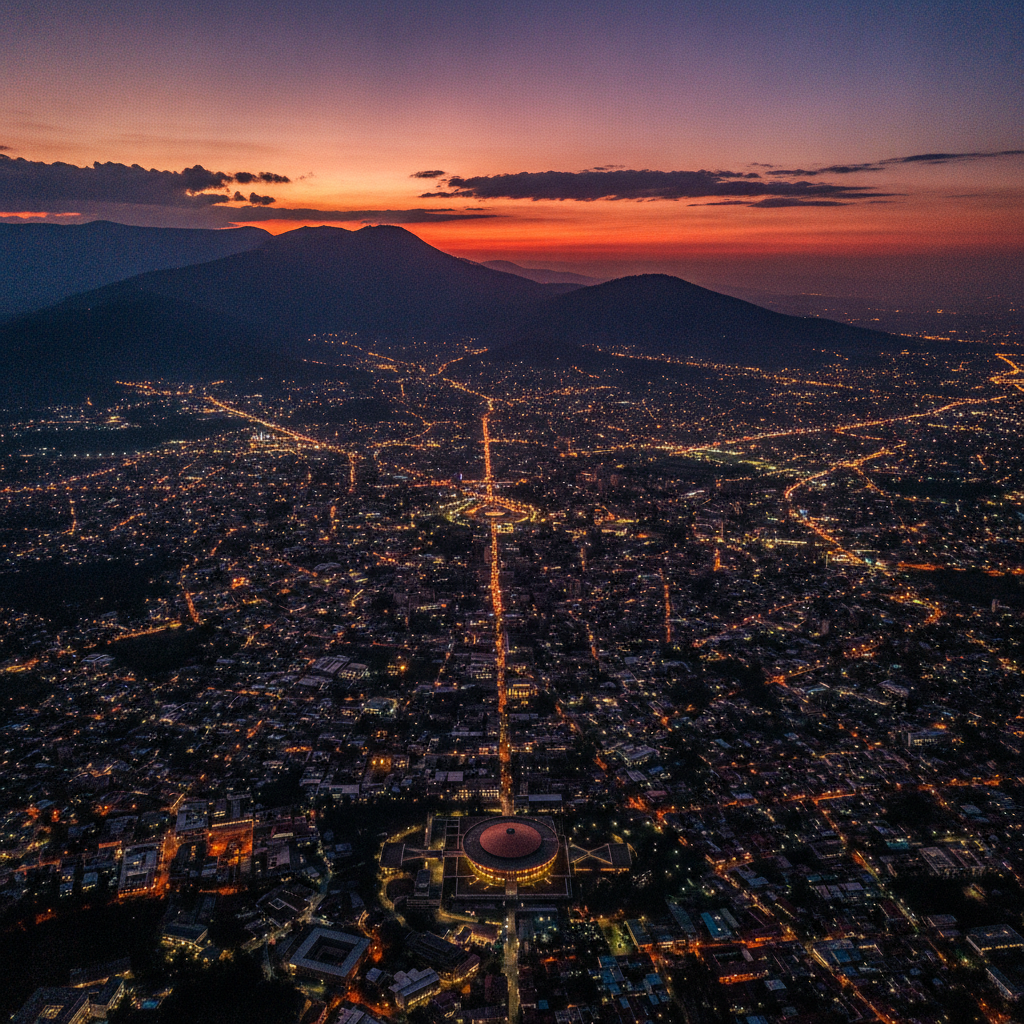
Addis Ababa History: Haile Selassie, Rastafari, and the Ancient Kingdom of Axum
Ethiopia deep history: Emperor Haile Selassie and his role as both god and tyrant; Rastafarianism and why Jamaica regards Ethiopia as the promised land; the ancient Kingdom of Aksum and its obelisks; the Queen of Sheba legend; the Ethiopian Orthodox Church and the Ark of the Covenant claim; and the Gondar castles.
- 1
Emperor Haile Selassie - God to Rastafari, Tyrant to His People
Emperor Haile Selassie I (1892-1975): the Ethiopian emperor who modernized Ethiopia, led the resistance against Italian invasion, addressed the League of Nations in 1936, became a god-figure for the Rastafari movement in Jamaica, and was eventually overthrown and possibly murdered by a Marxist military regime. The man (Ras Tafari Makonnen: born July 23, 1892 in Ejersa Goro, Harar Province: the son of Ras Makonnen (the cousin and general of Emperor Menelik II): he became regent in 1916 and Emperor in 1930: his throne name Haile Selassie means Power of the Trinity in Amharic: he ruled Ethiopia until September 12, 1974 when he was overthrown by the Derg military junta). The modernization (Haile Selassie modernized Ethiopia: he established the first constitution (1931): the first parliament: Addis Ababa University (now named after him): Ethiopian Airlines (founded 1945 with US assistance): he brought Ethiopia into the League of Nations and later the United Nations). The Italian invasion (October 1935: Mussolini Italy invaded Ethiopia (using poison gas against the Ethiopian population (the use of mustard gas against civilians was a war crime)): Haile Selassie addressed the League of Nations in Geneva (June 1936: his plea for collective security (If collective security does not exist in Ethiopia today... it is your turn tomorrow): the League failed to act: Ethiopia was occupied until 1941 (when British and Commonwealth forces liberated Ethiopia in Operation Compass)). The Rastafari (the Rastafari movement: a religious and cultural movement that emerged in Jamaica in the 1930s: the primary theological claim (that Haile Selassie is the returned messiah of the Bible (based on a prophecy attributed to Marcus Garvey (Look to Africa for the crowning of a Black King): the coronation of Haile Selassie (November 2, 1930) was interpreted by Jamaican Rastafari as the fulfillment of this prophecy): the name (Rastafari: from Ras (the title meaning head) Tafari (the pre-coronation name of Haile Selassie): Bob Marley (the most internationally famous Rastafari: his music spread Rastafari globally)). The downfall (the Derg (the Coordinating Committee of the Armed Forces): the Marxist military junta that overthrew Haile Selassie in 1974: the coup was triggered by a famine (1973-1974: approximately 200,000 people died of famine while Haile Selassie court lived in luxury): Haile Selassie was placed under house arrest and died on August 27, 1975 (possibly murdered by the Derg)).
- 2
The Ancient Kingdom of Axum and the Obelisks
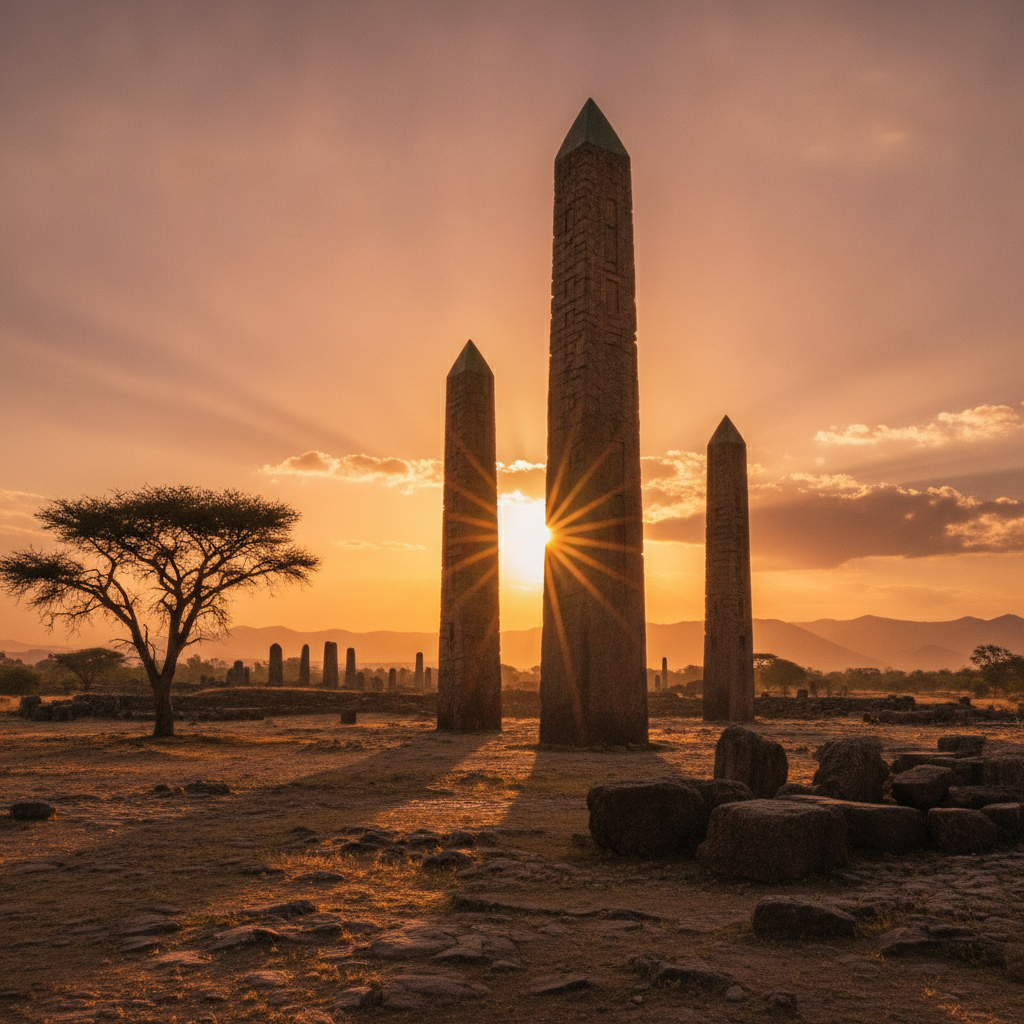
The Kingdom of Aksum (approximately 1st-7th century CE): one of the greatest empires of the ancient world, the home of the towering obelisks (stelae) of northern Ethiopia, and the empire that adopted Christianity as its state religion in the 4th century. The kingdom (the Kingdom of Aksum: centered in the northern Ethiopian Highlands in the region of Tigray and present-day Eritrea: at its height (approximately 3rd-6th century CE) Aksum controlled territory from the Red Sea coast of present-day Eritrea and Ethiopia through Yemen and parts of Sudan: the Aksumite economy (Aksum was a major commercial power in the Red Sea trade (trading ivory, gold, and enslaved people from the African interior for silks, spices, and manufactured goods from Arabia, India, and Rome): Axum minted its own gold, silver, and bronze coins (one of only a handful of African kingdoms to do so in the ancient period)). The stelae (the Aksumite stelae (obelisks): massive granite pillars carved to represent multi-story buildings with doors and windows: the stelae were funerary monuments placed over underground tomb chambers: the largest standing stele (Stele 4: 23 meters tall: the tallest standing ancient obelisk in the world (taller than any Egyptian obelisk still standing in situ)): the Stele of Axum (Stele 2: 24 meters tall: the largest stele ever erected (now fallen and broken)): the Rome Stele (Stele 2: looted by Mussolini forces in 1937 and erected in Rome near the Ministry of Colonies: returned to Ethiopia in 2005 and re-erected in Axum)). The Christianity (Aksum adopted Christianity as its state religion in approximately 340 CE under King Ezana (the first monarch in the world to put a Christian cross on coins): the Ethiopian Orthodox Church (the Tewahedo Church): one of the oldest Christian churches in the world (older than the Roman Catholic Church as an institutional entity in Ethiopia)). The Ark of the Covenant claim (the Ethiopian Orthodox Church claims to possess the original Ark of the Covenant from the Temple of Solomon in Jerusalem: the Ark is said to be kept in the Chapel of the Tablet adjacent to the Church of Our Lady Mary of Zion in Axum: only one guardian priest is allowed to see the Ark: the claim is unverifiable but deeply important to Ethiopian identity).
- 3
Ethiopian Orthodox Christianity - Timkat, Fasting, and the Ancient Church
Ethiopian Orthodox Christianity: the ancient Christian tradition that traces its origins to the 4th century, the most important religious force in Ethiopian society, and the source of the most spectacular religious festivals in Africa. The church (the Ethiopian Orthodox Tewahedo Church (EOTC): one of the oldest Christian churches in the world: founded approximately 340 CE under King Ezana of Aksum: the EOTC is a member of the Oriental Orthodox family of churches (the same family as the Coptic Church of Egypt, the Armenian Apostolic Church, and the Syriac Orthodox Church): the Tewahedo (meaning unity in Ge ez (the ancient Ethiopian language used in church liturgy): the term refers to the Miaphysite Christology (the belief that the human and divine natures of Christ are united in one nature)): the membership (approximately 45-50 million members: the largest Oriental Orthodox church in the world and the second largest Christian denomination in Africa after Roman Catholicism)). The fasting tradition (the Ethiopian Orthodox fasting calendar: Ethiopian Orthodox Christians observe one of the most extensive fasting regimes in world Christianity (approximately 250 fasting days per year for devout practitioners): the fasting (the primary fasting periods (the Great Lent (55 days before Ethiopian Easter): Wednesday and Friday fasts (weekly): the Apostles Fast: the Fast of the Prophets)): during fasting days no animal products (meat, dairy, eggs) are consumed (fasting food is vegan): the fasting food (the injera with vegan stews: lentils, chickpeas, split peas, and vegetable stews): the ethical implication (Ethiopia has one of the highest per capita legume consumption levels in the world (due to the fasting practice): the vegan Ethiopian cuisine is among the most developed and refined vegan cuisines in the world)). The Timkat festival (the Ethiopian Epiphany (Timkat): January 19 (Ethiopian calendar corresponds to January 19 in the Gregorian calendar for most years): the primary Ethiopian Christian festival: the ceremony (the tabots (the replica Ark of the Covenant kept in every Ethiopian Orthodox church) are carried from the church by the priests to a nearby water source: the tabots are wrapped in cloth and carried on the priests heads: a procession of white-robed worshippers accompanies the tabot with singing, drumming, and dancing: the water blessing ceremony (the priest blesses the water at midnight and the worshippers immerse themselves in the blessed water): the Timkat in Lalibela (the most spectacular Timkat in Ethiopia: the tabots are carried down into the Bete Medhane Alem church complex at night).
- 4
Gondar and the Ethiopian Camelot - The Castle City of Africa
Gondar: the 17th-18th century imperial capital of Ethiopia with its extraordinary cluster of medieval stone castles, one of the most unexpected architectural legacies in sub-Saharan Africa. The city (Gondar: in the Amhara Region of northwest Ethiopia: altitude approximately 2,133 meters: the imperial capital of Ethiopia from 1636 to 1855: founded by Emperor Fasilides (1632-1667): Gondar was the largest and most prosperous city in sub-Saharan Africa in the 17th century (with a population estimated at 60,000-70,000 at its peak)). The Royal Enclosure (the Fasil Ghebbi (the Royal Enclosure of Gondar): UNESCO World Heritage Site (1979): a walled compound (approximately 70,000 square meters) containing the palaces and castles of six successive Ethiopian emperors: the primary buildings (the Palace of Fasilides (the oldest and most intact palace in the enclosure: two stories with rectangular towers and crenellated battlements: a unique architecture that blends Ethiopian, Portuguese, Moorish, and Indian architectural elements): the Palace of Iyasu I (the son of Fasilides: his palace added a banqueting hall)). The Debre Berhan Selassie Church (the primary church of Gondar: the ceiling of the church is painted with a famous array of cherub faces (approximately 135 painted cherubs facing downward from the ceiling): one of the most celebrated examples of Ethiopian religious painting). The Fasilides Bath (the Fasilides Bath (the royal bathing pool): a large rectangular stone pool surrounded by a two-story stone building: the pool is flooded once a year for the Timkat festival (the Timkat celebrations in Gondar are famous for the flooding of the Fasilides Bath and the mass immersion of worshippers)). The historical context (the Zamana Masafent (Era of the Princes): the period (1769-1855) when the Gondar emperors were puppets of the warlord Ras class (the great feudal lords): the end of the Gondar era (Emperor Tewodros II (1818-1868) ended the Zamana Masafent and moved the Ethiopian capital away from Gondar)).
- 5
The Danakil Depression - The Hottest Place on Earth and the Erta Ale Lava Lake
The Danakil Depression: the lowest and hottest permanently inhabited place on Earth, the location of the Erta Ale active volcano with its permanent lava lake, and one of the most extreme landscapes on the planet. The depression (the Danakil Depression: the northeastern Ethiopia depression that is part of the Afar Triangle (the junction of three tectonic plates (the Nubian, Somali, and Arabian): the most tectonically active area in Africa and one of the most active in the world): the altitude (the Danakil Depression reaches 155 meters below sea level: the lowest point in Africa): the temperature (the average daily maximum temperature in the Danakil Depression is approximately 34-35 degrees C but temperatures regularly exceed 50 degrees C: the Danakil is the hottest permanent settlement on Earth and often cited as the hottest place on Earth)). The Afar people (the Afar people: the semi-nomadic pastoralist people who inhabit the Danakil Depression and surrounding Afar Region: one of the harshest inhabited environments on Earth: the Afar have adapted their lifestyle to the extreme conditions (seasonal movement following water and grazing): the Afar are primarily Muslim and have historically been isolated from the highland Ethiopian civilization). The Erta Ale volcano (the Erta Ale (Smoking Mountain in Afar): the most active volcano in Ethiopia: a shield volcano (101 km from the Danakil town of Ahmed Ela): altitude 613 meters: the permanent lava lake (one of only approximately 5-7 permanent lava lakes in the world: the lava lake of Erta Ale has been active since at least 1906 when it was first observed by European scientists: the lava lake glows brilliant orange-red at night (visible from a distance of several kilometers)). The Dallol (the Dallol hydrothermal field (the hottest place on Earth at ground level): the alien landscape of yellow sulfur deposits, salt formations, green acid pools, and crimson iron oxide deposits: the result of hydrothermal activity (volcanic heat meets underground brine)). The access (the Danakil Depression tours depart from Mekele (the regional capital of Tigray, now accessible by air from Addis Ababa): 4-day tours typical: requires the accompaniment of an armed Afar guide due to the presence of armed factions in the area).
- 6
Addis Ababa Final - Ethiopian Runner Nation, Merkato, and Complete City Legacy
Addis Ababa final legacy: the Ethiopian marathon running dominance, the Merkato (the largest market in Africa), the Piazza colonial quarter, and the complete Addis Ababa city overview. Ethiopian running (Ethiopia is one of the two great distance running nations of the world (with Kenya): the Ethiopian running dominance: the 10,000m and marathon (Ethiopia has dominated the Olympic and World Championship 10,000m and marathon events for decades): the Ethiopian champions (Haile Gebrselassie (born 1973: the greatest Ethiopian runner of the modern era: two-time Olympic 10,000m champion (1996, 2000): multiple world 10,000m champion: set 27 world records over his career: his marathon world record (2:03:59 at the Berlin Marathon in 2008) stood until 2011): Kenenisa Bekele (born 1982: the holder of the world records in the 5,000m and 10,000m for many years: two-time Olympic 10,000m champion: Olympic 5,000m champion): Tirunesh Dibaba (born 1985: three-time Olympic gold medalist in the 5,000m and 10,000m): the training (the Entoto Mountains above Addis Ababa (altitude approximately 3,000m) are the primary training ground for Ethiopian distance runners: the altitude training produces the physiological adaptations (increased red blood cell mass) that give Ethiopian and Kenyan runners their endurance advantage)). The Merkato (the Merkato (the Addis Mercato): the largest open-air market in Africa: located in the Mercato neighborhood of western Addis Ababa: the market covers several city blocks and is estimated to employ approximately 13,000 merchants: the goods (every conceivable product is sold at the Merkato (spices, textiles, electronics, hardware, food, traditional clothing, coffee, chat (khat: the mildly stimulant leaf plant widely used in Ethiopia and the Horn of Africa)): the experience (the Merkato is loud, chaotic, and overwhelming: the primary authentic urban experience of Addis Ababa). The Piazza (the Piazza neighborhood of Addis Ababa: the Italian-influenced commercial district built during the Italian occupation (1936-1941): the Italian colonial buildings (the fascist-era architecture of the Piazza: the Piazza market: the Piazza cafes serving the Italian-influenced Ethiopian coffee (the macchiato (the Addis macchiato: the Ethiopian take on the Italian coffee drink: a standard Addis breakfast))). The city overview (Addis Ababa is not the most beautiful city in Africa but it is one of the most historically and culturally layered: the diplomatic capital of the continent, the hub of the most pan-African airline, the home of Lucy the 3.2-million-year-old fossil, and the gateway to one of the most extraordinary natural and cultural circuits in Africa).
Walk this route with audio
Stories play automatically as you reach each stop — no tapping needed.
More in addis-ababa
Addis Ababa vs Africa Cities: Coffee Culture, Ethiopian Food, and the Visitor Practical Guide
Addis Ababa: Never Colonized, Lucy the Fossil, Ethiopian Cuisine, Lalibela Rock Churches, Simien Mountains, and Complete Ethiopia Guide
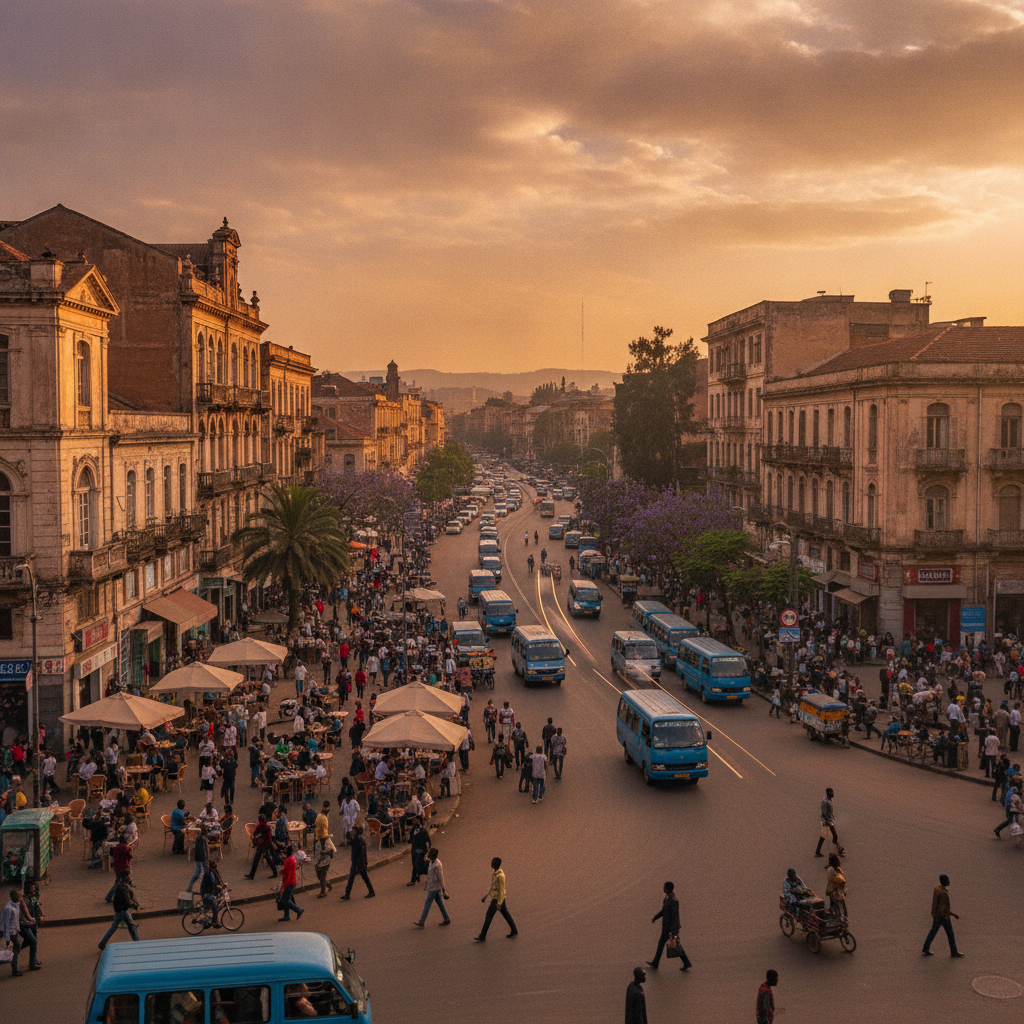
Addis Ababa Music and Culture: Ethio-Jazz, Azmari Music, the Piazza, and the City Nightlife
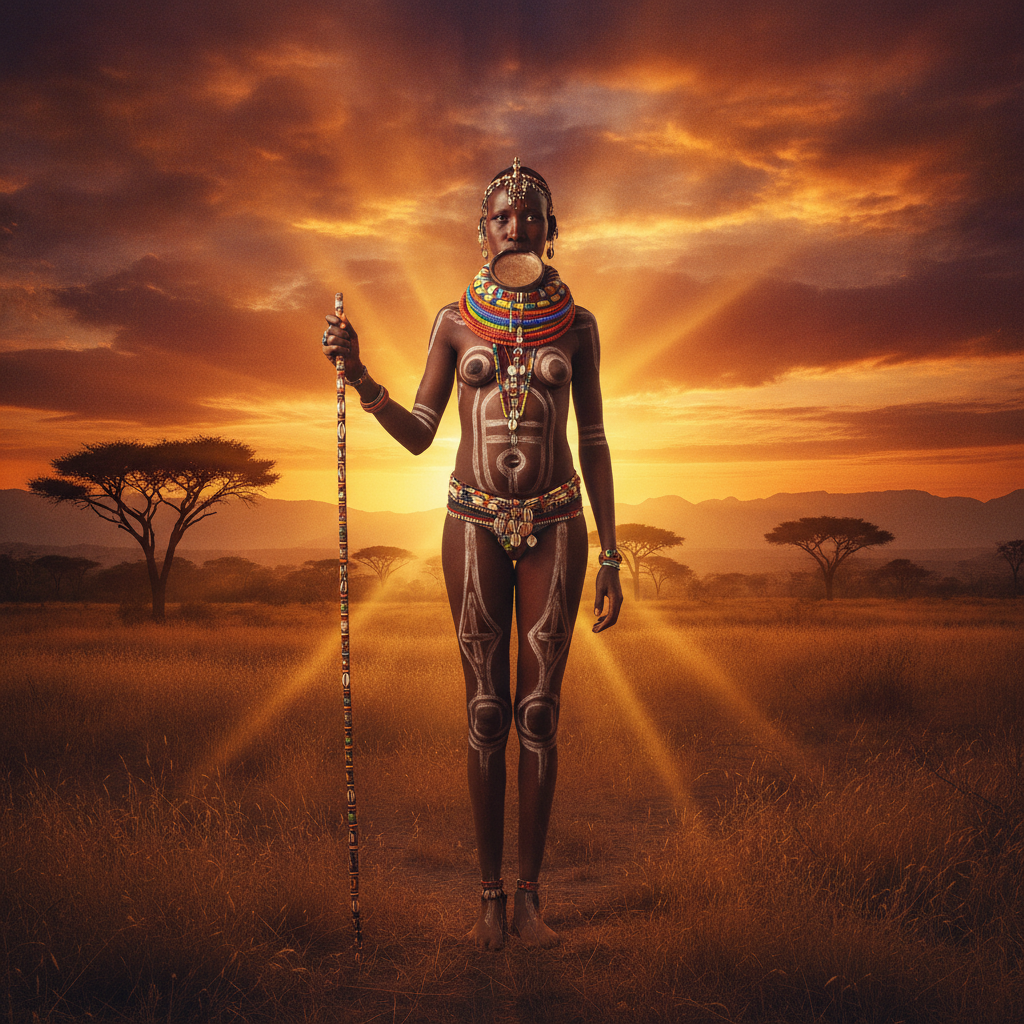
Addis Ababa Extended: Omo Valley Tribes, the Derg Regime, Bale Mountains, Addis vs Nairobi, and Final Legacy