Addis Ababa Ultimate Reference: Merkato, Piazza, Neighborhoods, the African Union, Safety, and the Complete Legacy
Addis Ababa complete reference: the Merkato (the largest market in Africa), the Piazza Italian colonial district, the urban neighborhoods, the African Union headquarters and the city role as diplomatic capital of Africa, the visitor safety and altitude guide, and the six-route ultimate legacy.
- 1
Merkato - The Largest Open-Air Market in Africa
Merkato in the Addis Ketema district: the largest open-air market in Africa by area. The market was established during the Italian occupation (1936-1941) when Italians designated this area for Ethiopian commercial use under their segregation policy. It covers approximately 4 square kilometers of dense commercial activity organized by trade: the spice section (berbere, mitmita, turmeric, cardamom), the frankincense and myrrh section, the green coffee bean section, gold, fabrics, electronics, and vehicle parts. The Merkato is overwhelming for first-time visitors due to its scale and density. Security note: keep valuables secure and consider a local guide as pickpocketing is common in the crowds.
- 2
Piazza - The Italian Colonial District and Addis Historic Heart
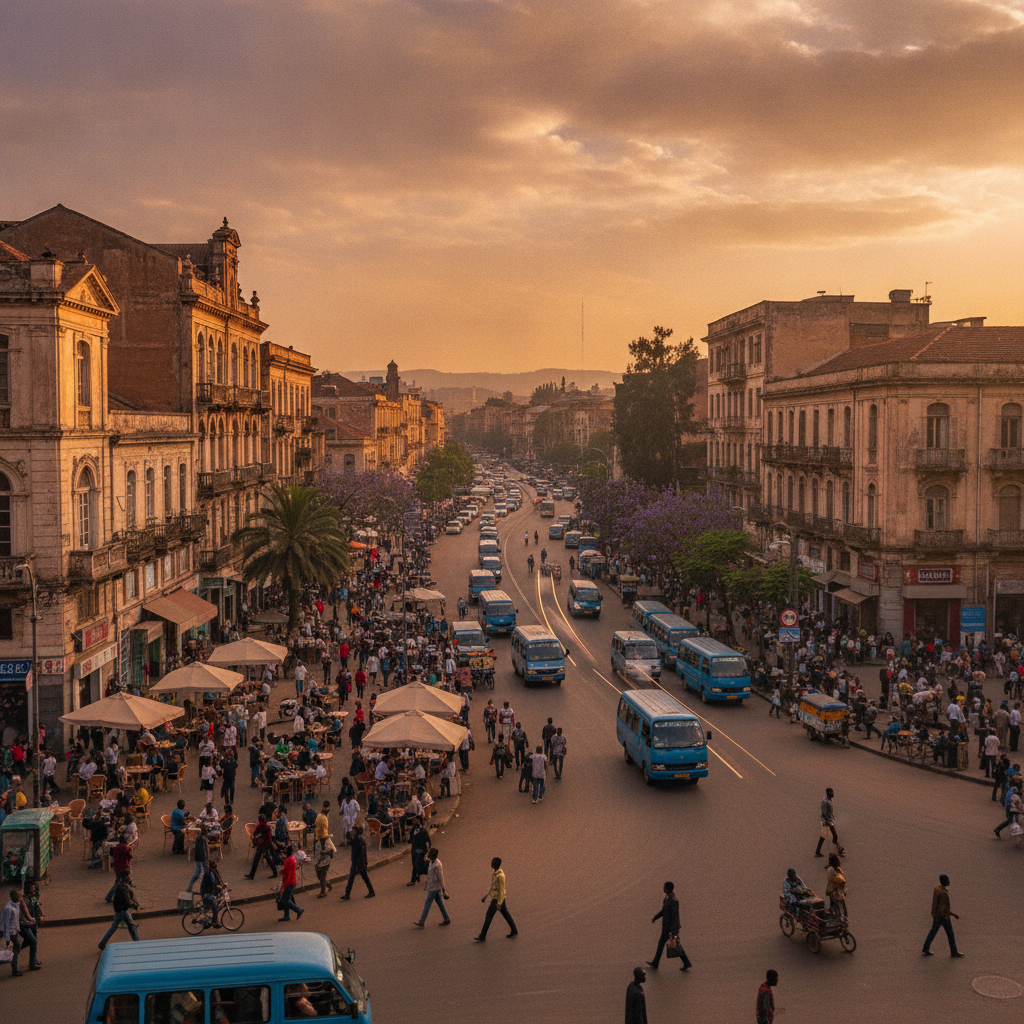
The Piazza district: the historic commercial center built by Italians during the occupation (1936-1941) with wide streets, colonnaded buildings, cafes, and Art Deco architecture. After liberation in 1941 the Italian commercial district was absorbed into the Ethiopian city and became one of the most vibrant neighborhoods in Addis. The Tomoca coffee house (founded 1953 by an Italian-Ethiopian family) is the oldest coffee shop in Addis Ababa and serves the iconic Addis macchiato from a building dating to the Italian colonial period. Today the Piazza has declined commercially as the Bole area has risen, but remains interesting for its architecture and dense street commercial life.
- 3
Addis Ababa Neighborhoods - Bole, Kazanchis, CMC, and the Urban Geography
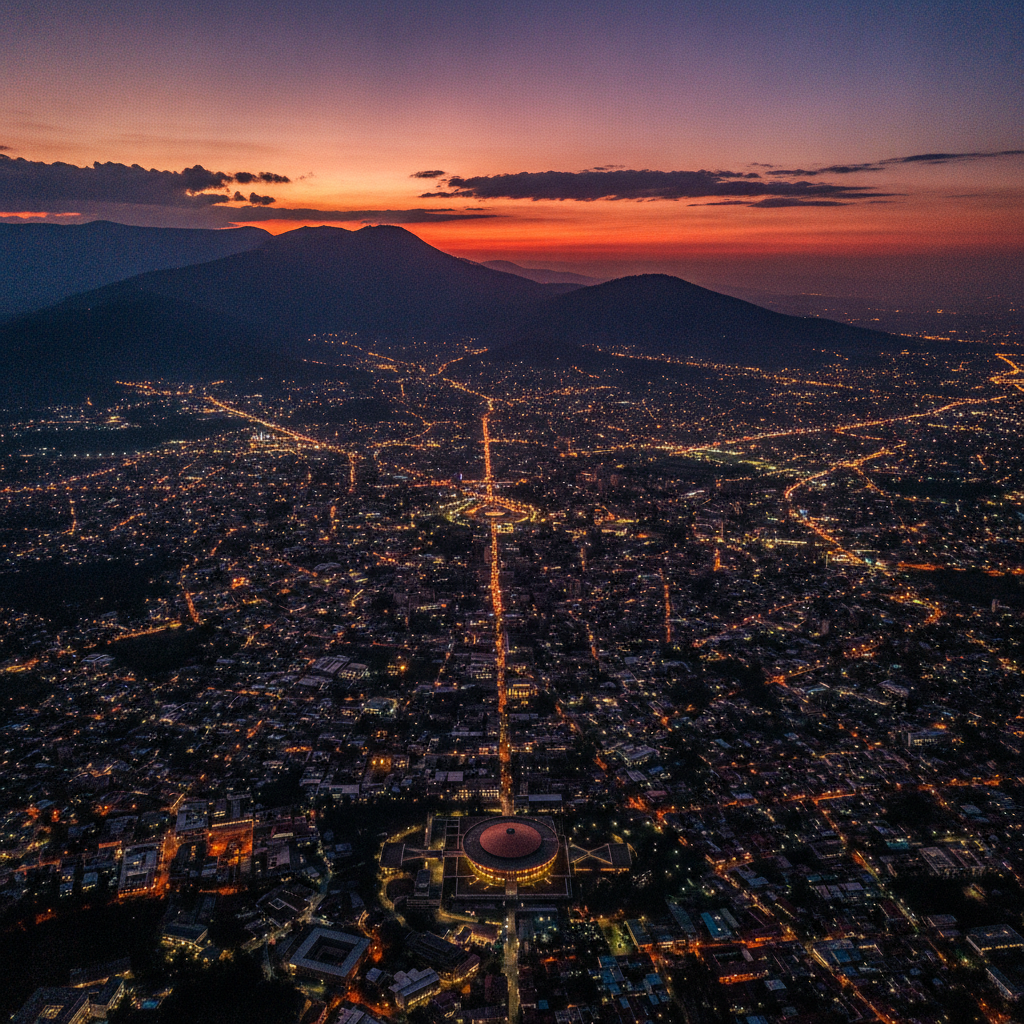
Addis Ababa is divided into 10 sub-cities and is organized in a radial pattern. Key neighborhoods: Piazza (Italian colonial commercial center), Merkato (market district), Kazanchis (diplomatic and international organization zone near the African Union), Bole (modern commercial district near the airport with international hotels and restaurants), CMC (newer northern residential area), and Mexico Square (the major minibus transport hub). The city has grown from approximately 1.5 million in 1990 to 5-6 million in 2024, expanding outward into former rural areas. The government condominium program since 2004 has built tens of thousands of affordable apartment units allocated by lottery to low-income residents.
- 4
The African Union Headquarters and Addis as the Diplomatic Capital of Africa
The African Union (55 member states, successor to the OAU founded 1963) has its headquarters in Addis Ababa in the Nelson Mandela Hall, a building constructed by China and gifted to the AU in 2012. The OAU was founded in Addis on 25 May 1963 (Africa Day) under the Pan-African leadership of Emperor Haile Selassie and Kwame Nkrumah of Ghana. The UN Economic Commission for Africa (UNECA) has been headquartered in Addis since 1958. With approximately 100 embassies and high commissions plus the major continental multilateral organizations, Addis Ababa functions as the diplomatic capital of Africa in a way no other African city can claim.
- 5
Security, Altitude, and Health - The Complete Addis Visitor Safety Guide
Addis Ababa is one of the safer major African capitals for foreign visitors. The primary risk is petty theft and pickpocketing in the Merkato, the central bus station, and crowded areas: keep valuables in inside pockets and use licensed taxis or ride-sharing apps (Ride, Feres) rather than minibuses. Altitude: Addis sits at 2,355m (7,726 feet). Mild symptoms (headache, fatigue) are possible in the first 24-48 hours: drink water, rest, and avoid heavy alcohol on arrival. Malaria: Addis itself is malaria-free but lowland Ethiopia is not; take anti-malarials for Omo Valley or Danakil visits. Do not drink tap water: Ambo sparkling mineral water is the distinctively Ethiopian bottled water option. Standard vaccines: hepatitis A and B, typhoid, yellow fever if arriving from a yellow fever country.
- 6
Addis Ababa Ultimate Reference - All Six Routes and Final Legacy
Six routes complete. Route 1: never-colonized Africa, Lucy and human origins, Ethiopian cuisine, the Lalibela rock churches, the Simien Mountains, and the practical reference. Route 2: Haile Selassie and Rastafari, the Kingdom of Axum, Ethiopian Orthodox Christianity and Timkat, the Gondar castles, the Danakil Depression. Route 3: Omo Valley indigenous peoples, the Derg regime and Red Terror, Bale Mountains and the Ethiopian wolf, teff grain, and the Pan-African legacy. Route 4: Ethio-Jazz and Mulatu Astatke, the azmari music tradition, St George Cathedral, the Bole area, and the photography guide. Route 5: the Ethiopian coffee ceremony, injera and the cuisine, tej and traditional drinks, Addis vs other African capitals, and Ethiopian Airlines. Route 6 (this route): Merkato, Piazza, neighborhoods, the African Union, visitor safety. Ethiopia superlatives: oldest hominid remains on earth (Lucy at 3.2 million years, Ardi at 4.4 million years); oldest Christian kingdom in the world (Kingdom of Axum, 330 CE); the only African country to defeat a colonial army and maintain full independence; the world best long-distance runners alongside Kenya; and coffee (Ethiopia produces approximately 450,000-500,000 metric tons annually, roughly 5-7 percent of world production). Addis Ababa is the capital of a civilization, not merely a country.
Walk this route with audio
Stories play automatically as you reach each stop — no tapping needed.
More in addis-ababa
Addis Ababa vs Africa Cities: Coffee Culture, Ethiopian Food, and the Visitor Practical Guide
Addis Ababa: Never Colonized, Lucy the Fossil, Ethiopian Cuisine, Lalibela Rock Churches, Simien Mountains, and Complete Ethiopia Guide
Addis Ababa Music and Culture: Ethio-Jazz, Azmari Music, the Piazza, and the City Nightlife
Addis Ababa History: Haile Selassie, Rastafari, and the Ancient Kingdom of Axum