Albuquerque: Balloon Fiesta, Nuclear Heritage and Green Chile Country
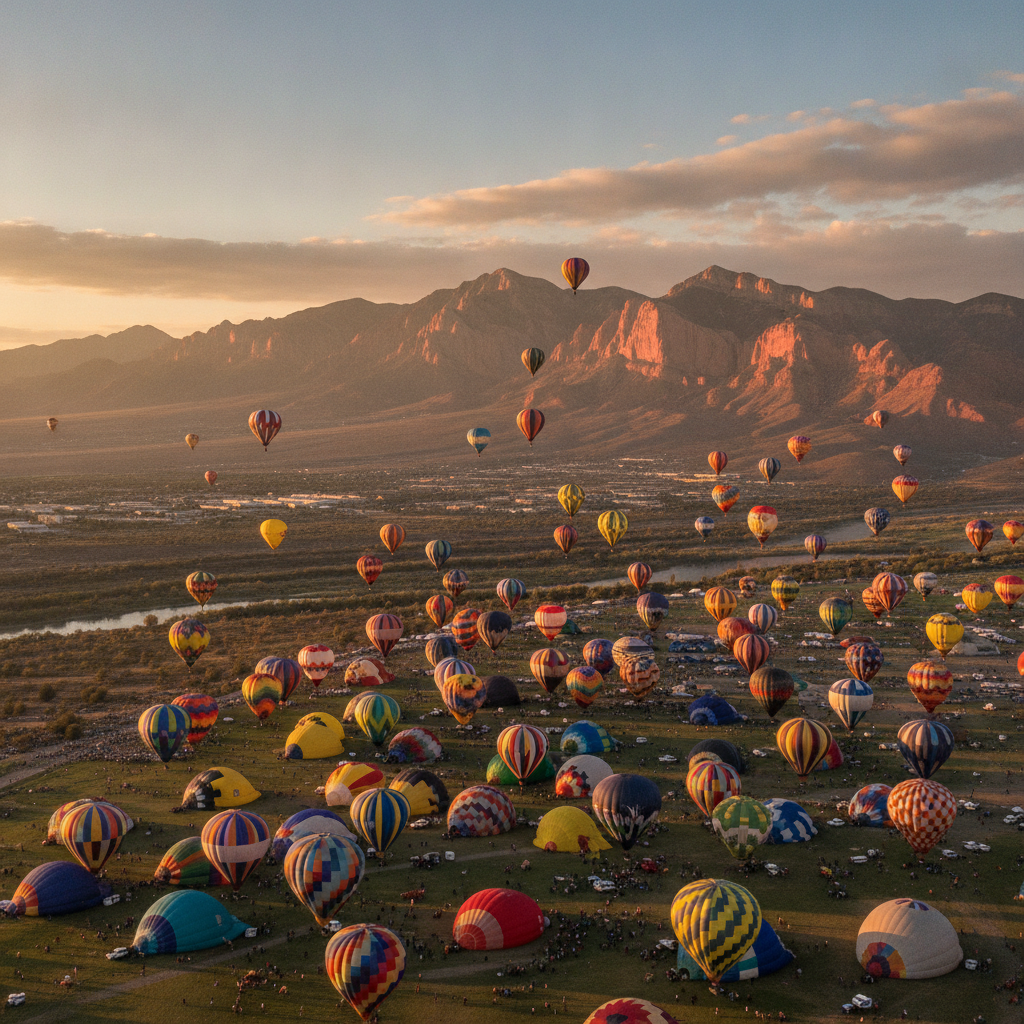
Witness 500 balloons in mass ascension at the world largest balloon event, tour the National Museum of Nuclear Science, walk the Rio Grande BioPark bosque, explore 400 years of New Mexico history at the Albuquerque Museum, read 24,000 petroglyphs on the volcanic escarpment, and taste the Hatch green chile that defines New Mexico cooking.
- 1
Albuquerque International Balloon Fiesta
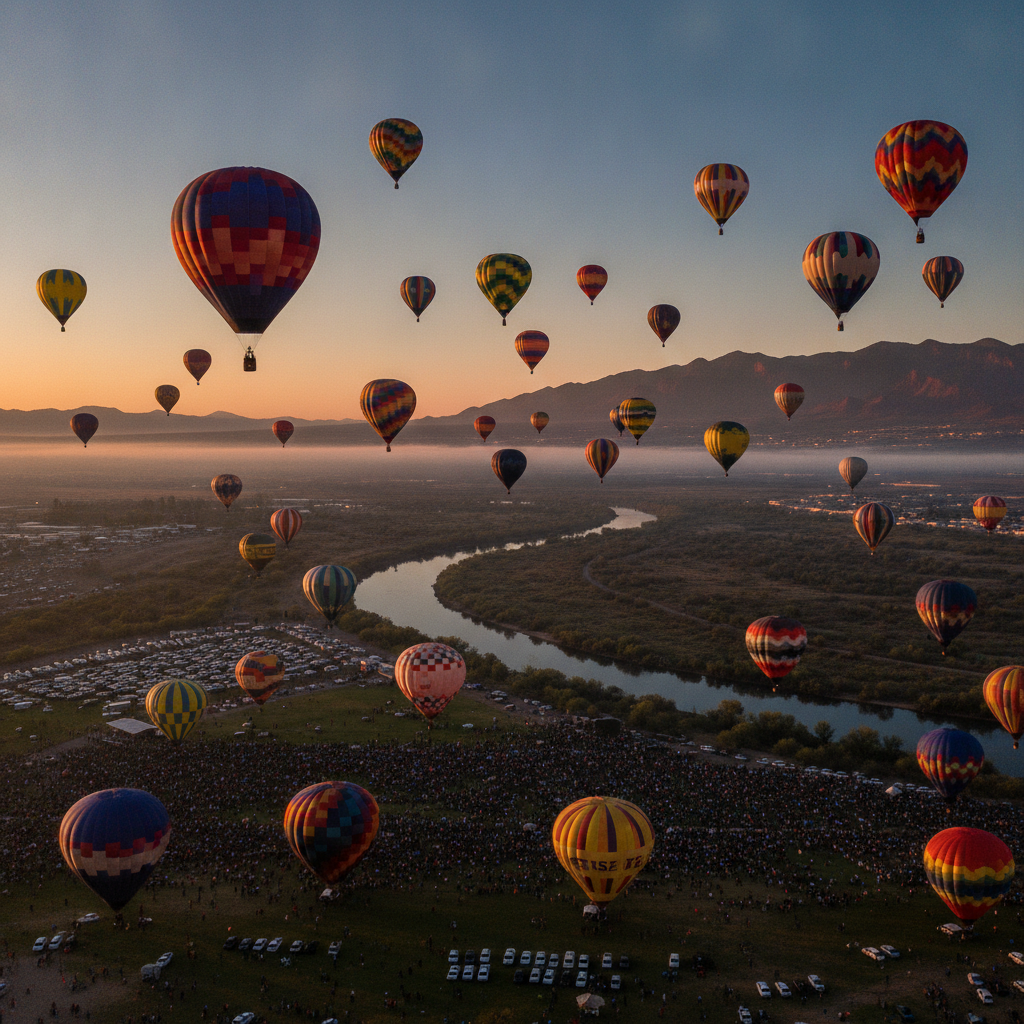
The Albuquerque International Balloon Fiesta, held each October since 1972, is the largest hot air balloon event in the world, drawing over 500 balloons and 900,000 spectators over nine days. The Albuquerque Box, a meteorological phenomenon caused by the mountain and valley topography, creates a predictable wind pattern that allows balloons to fly north at lower altitudes and south at higher altitudes, returning roughly to their launch point. This unique flyability makes Albuquerque the premier balloon launching location in the world. The Fiesta hosts the Mass Ascension, when all balloons launch simultaneously over two waves, and the Special Shape Rodeo featuring novelty balloons shaped as characters and objects. The Anderson-Abruzzo Albuquerque International Balloon Museum interprets the history of ballooning year-round.
- 2
Kirtland Air Force Base and Nuclear History
Kirtland Air Force Base, covering 52,000 acres on the southeastern edge of Albuquerque, is one of the largest military installations in the United States by land area and home to the Air Force Nuclear Weapons Center. The National Museum of Nuclear Science and History at 601 Eubank Boulevard Southeast, operated under the Smithsonian affiliation, is the only congressionally chartered museum in the United States dedicated to the history of the nuclear age. The museum displays a B-29 bomber, nuclear weapons casings including the Fat Man and Little Boy replicas, and extensive exhibits on the Manhattan Project. Sandia National Laboratories, adjacent to Kirtland, employs over 14,000 scientists and engineers working on national security, energy, and climate research and is one of the largest research institutions in the country.
- 3
Albuquerque BioPark and Rio Grande Nature
The Albuquerque BioPark comprises four facilities operated by the City of Albuquerque: the Albuquerque Aquarium, the Rio Grande Botanic Garden, the Rio Grande Zoo, and the Tingley Beach fishing ponds, all connected by a free weekend tram along the Rio Grande. The zoo, opened in 1927, holds over 250 species including one of the most successful polar bear breeding programs in North American zoos. The Botanic Garden, opened in 1996, includes a Mediterranean conservatory, a desert conservatory, and extensive outdoor gardens demonstrating water-efficient landscaping appropriate to the Chihuahuan Desert climate. The Rio Grande itself, running through the city in a cottonwood bosque corridor, provides 16 miles of riverside trail used by cyclists, joggers, and bird-watchers who find over 300 species seasonally.
- 4
Albuquerque Museum and New Mexico History
The Albuquerque Museum at Mountain Road and 19th Street in Old Town interprets 400 years of New Mexico history from Spanish colonial settlement through the contemporary era. The museum holds the largest collection of Spanish colonial artifacts in the United States, including armor, religious objects, and furniture from the missions established along the Rio Grande after the 1598 Onate expedition. The adjacent Albuquerque Museum Sculpture Garden contains over 80 outdoor works in a free public space. The New Mexico Museum of Natural History and Science, two blocks east, has paleontology galleries displaying New Mexico dinosaur specimens and a planetarium. Albuquerque position as the largest city in New Mexico gives it the administrative and cultural infrastructure that smaller New Mexico communities lack, making it the practical capital of the state despite Santa Fe holding the official role.
- 5
Petroglyph National Monument
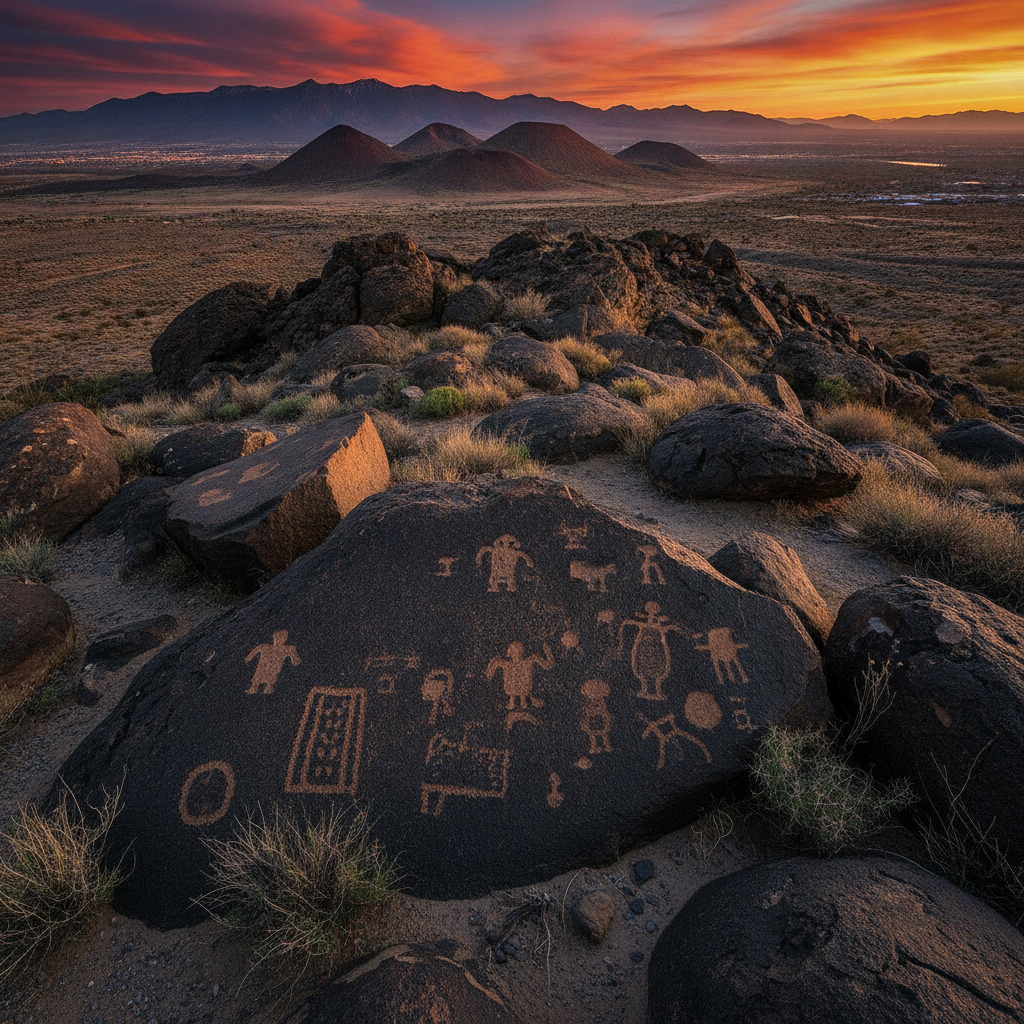
Petroglyph National Monument, on the volcanic escarpment at the western edge of Albuquerque, protects approximately 24,000 petroglyphs carved into the basalt rocks of the West Mesa by ancestral Pueblo peoples and early Spanish settlers over a period of roughly 700 years from 1300 AD through the 1700s. The monument covers 7,236 acres across a 17-mile stretch of the Albuquerque Volcanoes and surrounding mesa. The petroglyphs depict human figures, animals, geometric patterns, and symbols that researchers interpret as spiritual and territorial markers. The monument is managed jointly by the National Park Service and the City of Albuquerque, with development pressures from suburban expansion creating ongoing management tensions. Three visitor centers provide access to different sections of the escarpment.
- 6
Albuquerque Food and Green Chile Culture
New Mexico green chile, specifically the Hatch chile grown in the Hatch Valley 170 miles south of Albuquerque, is the defining flavor of New Mexico cuisine. The annual Hatch Chile Festival held each Labor Day weekend draws 30,000 visitors to the small town of Hatch. In Albuquerque, green chile appears on burgers, eggs, enchiladas, burritos, and pizza at restaurants across the city. The New Mexico question of red or green chile served on traditional dishes has been the official state question since 1996, with the answer Christmas meaning both. The Sawmill Market food hall in the Sawmill District, opened in 2019, concentrates Albuquerque independent food vendors in a renovated historic building. The National Hispanic Cultural Center restaurant and the Old Town Hacienda restaurants represent longer-established New Mexico cuisine traditions.
Walk this route with audio
Stories play automatically as you reach each stop — no tapping needed.
More in Albuquerque
Albuquerque: Breaking Bad Country, Sky Tram and the Hispanic Cultural Heart
Albuquerque: Pueblo Nations, Sandia Labs, Turquoise Trail, Arts, Petroglyphs, and New Mexican Food
Albuquerque: Music, Native Art, Explora, Wine and Beer, Architecture, and Duke City Identity
Albuquerque: White Sands, Tech Scene, International District, Camino Real, Jemez Mountains, and Practical Info
Albuquerque: Balloon Fiesta, Old Town, Sandia Mountains, Route 66, and the Rio Grande