Albuquerque: Music, Native Art, Explora, Wine and Beer, Architecture, and Duke City Identity
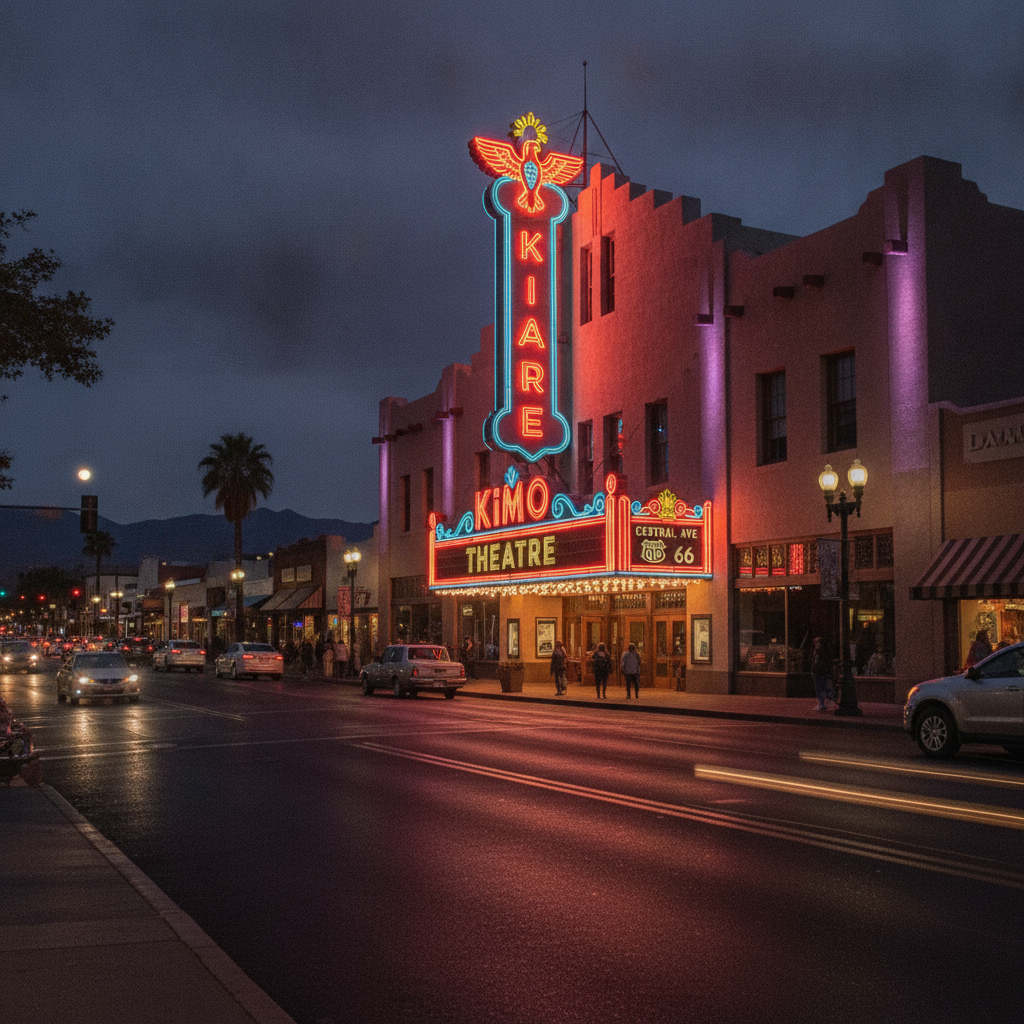
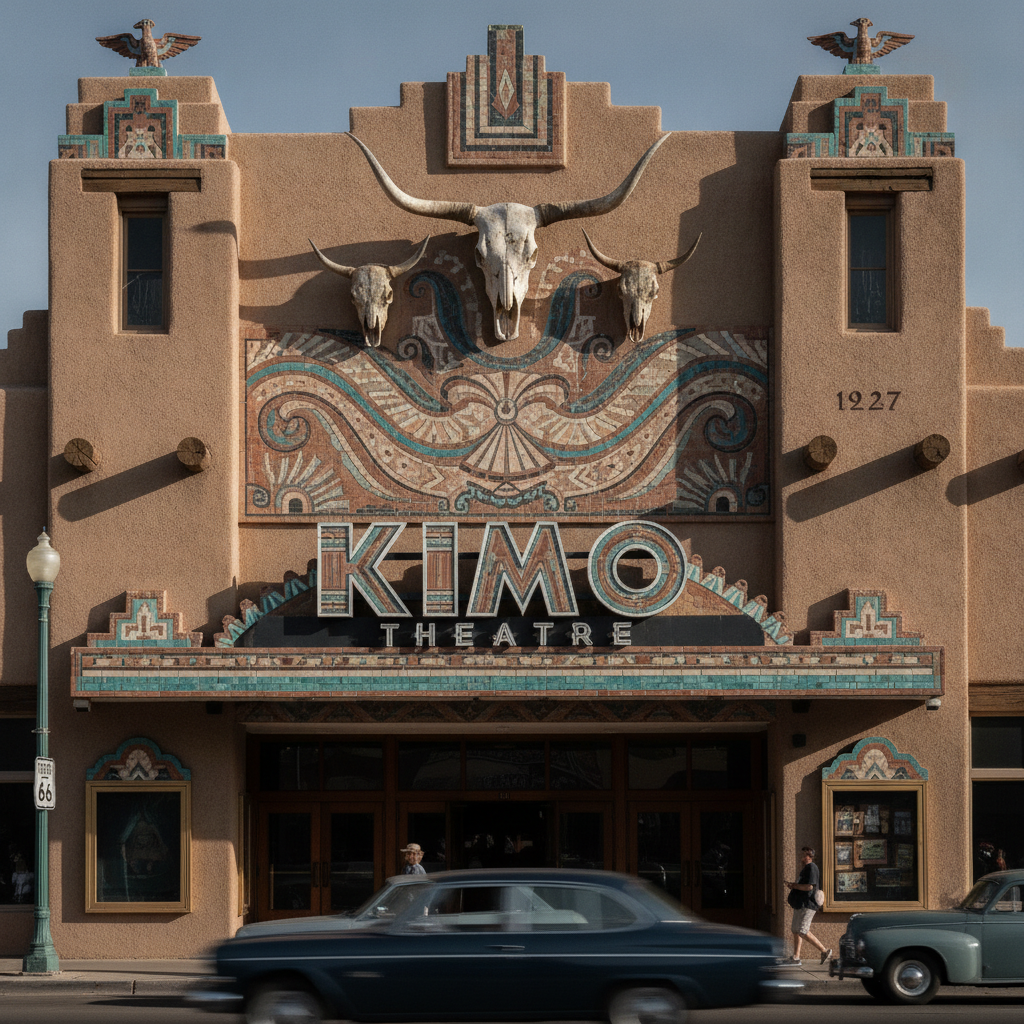
Albuquerque: music (corrido norteño tradition, low rider Central Avenue cruise hydraulic 1960s-70s cars religious airbrushed imagery, Launchpad 1993 alt scene, NM Philharmonic Popejoy Hall 2,094 seats), Native art (Indian Pueblo Cultural Center 1976 owned by 19 Pueblos, Maria Martinez San Ildefonso black-on-black USD 60K, Gathering of Nations Powwow Tingley Coliseum since 1983 3,000 dancers 700 tribes 100,000 visitors largest powwow North America, Santa Fe Indian Market August 1,200 juried artists USD 100M single weekend), Explora (Antoine Predock born 1936 died 2024 desert regionalism rammed earth adobe, NM Museum Natural History 1986 Pentaceratops skull 2.3m largest skull any land animal, DynaTheater 22m dome 340 seats), wine and beer (oldest wine state US Franciscans 1629 Senecu Mission 350 years before California, Gruet 1984 Champagne family methode champenoise nationally distributed Wine Spectator, 30+ breweries top per capita, Marble Brewery 2008 Red Ale IPA, La Cumbre Elevated IPA most award-winning NM craft beer), architecture (KiMo 1927 Pueblo Deco longhorn skulls Navajo patterns, John Gaw Meem 42 UNM buildings 1934-1958, La Posada 1939 Conrad Hilton born San Antonio NM died 1979 first Hilton hotel Pueblo Revival lobby preserved), identity (Duke City from duque 10th Duke Alburquerque 1706 one r dropped, Land of Enchantment 1935 license plates 1941 official, 50% Hispanic highest any US state 10% Native American second highest after Alaska, chile official state vegetable both red and green 1965 only state two state vegetables, New Mexico Spanish influence 320 years language contact).
- 1
Albuquerque's Music Scene - From Low Riders to Desert Noir
Albuquerque's music heritage: the city has produced a distinctive musical culture rooted in the intersection of corrido and norteño traditions, Native American ceremonial music, country and western (the Albuquerque country music scene of the 1950s-70s was among the strongest in the Southwest), and the rock and alt-country underground that emerged from the University of New Mexico scene in the 1980s-90s. The corrido tradition: the narrative ballad form of northern Mexico and New Mexico, still performed live in Albuquerque bars and at quinceañeras and weddings, the corrido as a living oral-history tradition of the border region. The Albuquerque punk and indie scene: the Launchpad (at 618 Central Avenue SW, Albuquerque, the primary 500-capacity live music venue on the Route 66 corridor since 1993) and the Sister Bar (at 407 Central Avenue NW, Albuquerque, 350 capacity) have been the incubators of the Albuquerque alternative music scene. The low rider culture: Albuquerque is one of the two capitals of American low rider culture (alongside East Los Angeles), with the Central Avenue low rider cruise (historically on Saturday nights on Central Avenue SW between Old Town and Downtown) being one of the most distinctive urban cultural practices in the American Southwest -- hydraulic-equipped customized 1960s-70s American cars, often decorated with religious imagery and airbrushed landscapes, bouncing and dancing on Central Avenue. The New Mexico Symphony Orchestra (renamed the New Mexico Philharmonic, playing at Popejoy Hall, 203 Cornell Drive NE, on the UNM campus, the 2,094-seat performance hall): the state's primary classical music institution, and the Revel Avondale (at 700 1st Street NW), the major nightlife and entertainment venue in downtown Albuquerque.
- 2
The Indian Pueblo Cultural Center and Contemporary Native Art
The Indian Pueblo Cultural Center (at 2401 12th Street NW, Albuquerque, operated by the 19 Pueblos of New Mexico, established 1976): the museum and cultural center collectively owned and operated by all 19 New Mexico Pueblos -- the only museum in the United States owned and operated by its subject peoples. The permanent collection traces Pueblo civilization from the Basketmaker period (approximately 1500 BCE) through the Pueblo I, II, III, and IV periods to the present, with the masterwork collection focusing on the pottery, weaving, and jewelry traditions that remain the primary fine art forms of the Pueblo peoples. The Contemporary Pueblo art market: Pueblo pottery from San Ildefonso, Santa Clara, Acoma, and Zuni is among the most collectable contemporary art in North America, with master potters (Maria Martinez, her son Popovi Da, the Naranjo-Morse family of Santa Clara Pueblo, and Lucy Lewis of Acoma Pueblo) commanding auction prices comparable to major contemporary Western artists. The Gathering of Nations Powwow (held annually at Tingley Coliseum, 300 San Pedro Drive NE, Albuquerque, since 1983, typically the fourth weekend in April): the largest powwow in North America, with approximately 3,000 Native dancers from 700+ tribes and nations and 100,000+ visitors over three days -- the premier annual celebration of pan-tribal Native American culture in the United States. The Santa Fe Indian Market (the second Saturday in August, Santa Fe, 100 km north of Albuquerque, on the Santa Fe Plaza): the most prestigious marketplace for Native American art in the world, with 1,200 juried artists and 100,000 visitors generating approximately USD 100M in art sales over a single weekend.
- 3
Explora Science Center and STEM Education in Albuquerque
Explora (at 1701 Mountain Road NW, Old Town, Albuquerque, opened 2003, 60,000 square feet): the hands-on science and technology museum serving New Mexico's children and families, with 250+ interactive exhibits spanning physics, biology, chemistry, engineering, and art. Explora is housed in a building designed by architect Antoine Predock (born February 24, 1936, Lebanon, Missouri; died February 28, 2024, Albuquerque) -- the most celebrated architect in New Mexico history, responsible for the New Mexico Museum of Natural History and Science (at 1801 Mountain Road NW, adjacent to Explora, opened 1986), the American Heritage Center in Laramie, Wyoming, the Nelson Fine Arts Center at Arizona State University, and the Turtle Creek House in Dallas. Antoine Predock: the architect whose desert regionalism style -- using rammed earth, stucco, adobe, and regional materials in buildings that respond to the solar geometry and landscape of the American Southwest -- influenced a generation of southwestern architects and is now recognized as one of the defining architectural voices of the late 20th century American West. The New Mexico Museum of Natural History and Science (at 1801 Mountain Road NW, Old Town): the state natural history museum with New Mexico's largest collection of dinosaur specimens (including the Pentaceratops skull, at 2.3 m the largest skull of any land animal known to science), a comprehensive geology exhibition covering the Precambrian through the present, and a DynaTheater (the giant screen IMAX-format theater, 22-m dome, 340 seats). The Albuquerque Academy (at 6400 Wyoming Boulevard NE, Albuquerque, private high school founded 1955): consistently ranked among the top 10 private high schools in the United States, with a 312-acre campus, and the primary secondary school pipeline to elite national universities from New Mexico.
- 4
The Albuquerque Wine and Beer Scene
New Mexico wine country: New Mexico is the oldest wine-producing state in the United States -- Spanish Franciscan missionaries planted the first vinifera (Vitis vinifera) grapevines in New Mexico at Senecu Mission near El Paso in 1629, 350 years before California became a wine state, making New Mexico the birthplace of American wine. The New Mexico wine industry (approximately 50 wineries, primarily in the Mesilla Valley AVA near Las Cruces, the Middle Rio Grande Valley AVA in the Albuquerque area, and the Mimbres Valley): a small but growing industry producing approximately 2 million gallons of wine annually, with Gruet Winery (at 8400 Pan American Freeway NE, Albuquerque, founded 1984 by the Gruet family from Bethon, Champagne, France) producing the most critically acclaimed New Mexico wines -- the Gruet sparkling wines (methode champenoise from Chardonnay and Pinot Noir grown in the high-altitude Truth or Consequences area) have been reviewed favorably by Wine Spectator and Wine Advocate and are distributed nationally. The craft beer scene: Albuquerque has approximately 30+ craft breweries and is consistently ranked among the top craft beer cities per capita in the United States. Marble Brewery (at 111 Marble Avenue NW, downtown Albuquerque, founded 2008): the flagship of the Albuquerque craft beer movement, with the Red Ale and the IPA as the defining beers of the New Mexico craft tradition. Bosque Brewing Company (at 106 Girard Boulevard SE, Nob Hill, and multiple locations): the Bosque Pilsner, a Czech-style pils brewed with Rio Grande water, and the Elephants on Parade amber ale. La Cumbre Brewing Company (at 3313 Girard Boulevard NE, Albuquerque, founded 2010): the Elevated IPA, New Mexico's most award-winning craft beer, named for the experience of drinking it at 1,524 m elevation.
- 5
Albuquerque Architecture - Pueblo Revival, Streamline Moderne, and Adobe Modernism
Albuquerque's architectural heritage: the city contains one of the most complete collections of early-to-mid 20th century southwestern regional architecture in the United States, with Pueblo Revival, Spanish Colonial Revival, Mission Revival, Streamline Moderne, and the unique New Mexico vernacular adobe tradition all represented in buildings still in active use. The Pueblo Revival style: the architectural movement initiated by architect Isaac Hamilton Rapp (born 1854, Carbondale, Illinois; died 1933, Trinidad, Colorado) at the Museum of New Mexico in Santa Fe (1917) and propagated by John Gaw Meem across New Mexico in the 1920s-1950s, adapting the forms of Taos and Acoma Pueblo (multi-story adobe terraces, vigas (roof beams), corbels, rounded parapets, and earth tones) to commercial and institutional buildings. The Kimo Theatre (1927, described in Route 1) as the supreme example of Pueblo Deco. The Dennis Chavez Federal Building (at 500 Gold Avenue SW, downtown Albuquerque, built 1933 by Louis Hesselden): the best example of New Deal Territorial Revival architecture in Albuquerque, built during the Great Depression under FDR's Federal Works Agency. The Albuquerque Convention Center (at 401 2nd Street NW, Albuquerque, built 1972, expanded 2010): the major convention venue designed in the Pueblo Brutalist style -- a distinctive fusion of Brutalist concrete construction with Pueblo Revival massing and detailing. The La Posada de Albuquerque (at 125 2nd Street NW, downtown, built 1939 by Conrad Hilton -- born December 25, 1887, San Antonio, New Mexico; died January 3, 1979, Santa Monica, California -- as one of his first hotels): the hotel where Conrad Hilton began his national chain, with an original Pueblo Revival lobby featuring hand-painted tile and vigas that has been preserved through multiple renovations.
- 6
The Duke City - Albuquerque Identity and the New Mexico Way of Life
Why Albuquerque is called the Duke City: the name derives from the Spanish colonial name Villa de Alburquerque, given in 1706 in honor of Francisco Fernandez de la Cueva, the 10th Duke of Alburquerque (in Spanish, duque means duke) -- the English Anglicization dropped one r and replaced Villa de with the simpler Duke City as an informal nickname that persists in local usage today. New Mexico as the Land of Enchantment: the official state nickname since 1941 (on license plates since 1935), coined by tourism promoters capitalizing on the desert light, the ancient cultures, and the landscape variety from the Chihuahuan Desert floor (1,100 m) to the Sangre de Cristo peaks (4,011 m). The New Mexico identity: the state has a population of approximately 2.1 million (the 37th-largest state by population) that is 50% Hispanic or Latino (the highest percentage of any U.S. state), 10% Native American (the second-highest percentage after Alaska), 67% non-Hispanic white and Hispanic combined, with a distinctive cultural identity that is simultaneously Spanish Colonial, Indigenous, and American -- the three cultures that share the New Mexico flag (designed with the Zia sun symbol -- four groups of four rays in the four cardinal directions, representing the four seasons, the four directions, the four times of day, and the four stages of human life). The New Mexico chile: the official state vegetable (both red and green chile designated by the legislature in 1965, the only state with two official state vegetables), the foundation of New Mexican identity, and the single most argued-about subject in New Mexico public life (which chile is hotter, Hatch or Chimayo? green or red?). The Albuquerque accent: the distinctive New Mexican Spanish influence on Albuquerque English -- the non-rhotic vowels, the borrowed vocabulary (acequia, arroyo, adobe, placita, jardin, llano, bosque) -- represents 320 years of Spanish-English language contact in the Rio Grande valley.
Walk this route with audio
Stories play automatically as you reach each stop — no tapping needed.
More in albuquerque
Albuquerque: Breaking Bad Country, Sky Tram and the Hispanic Cultural Heart
Albuquerque: Pueblo Nations, Sandia Labs, Turquoise Trail, Arts, Petroglyphs, and New Mexican Food
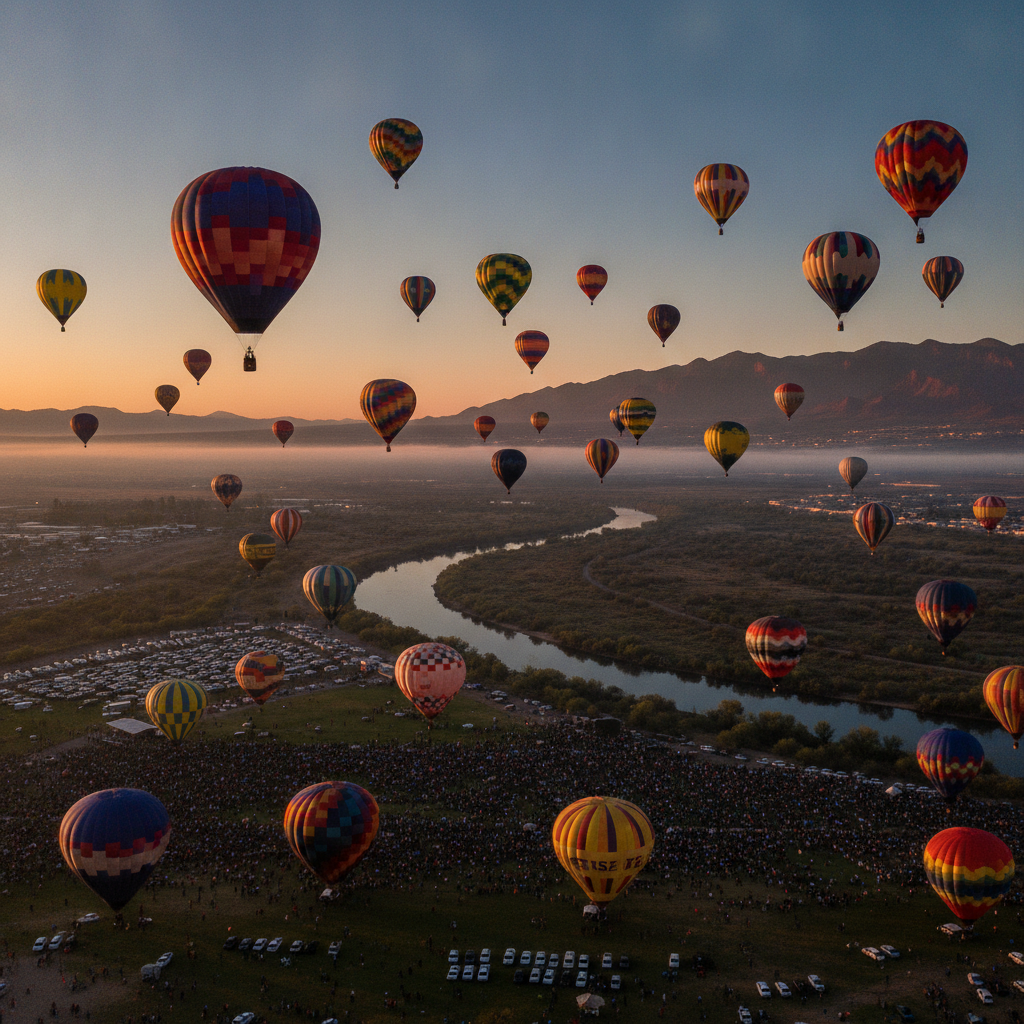
Albuquerque: Balloon Fiesta, Nuclear Heritage and Green Chile Country
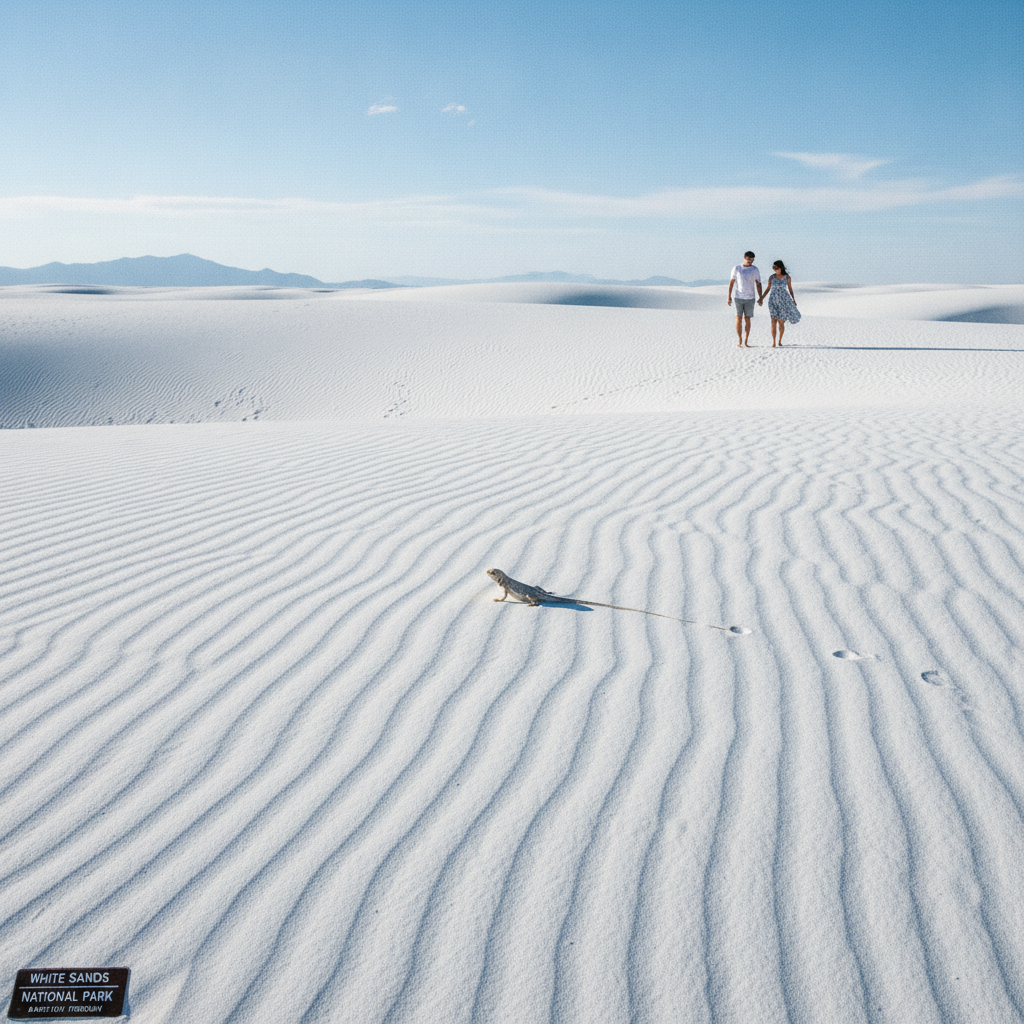
Albuquerque: White Sands, Tech Scene, International District, Camino Real, Jemez Mountains, and Practical Info
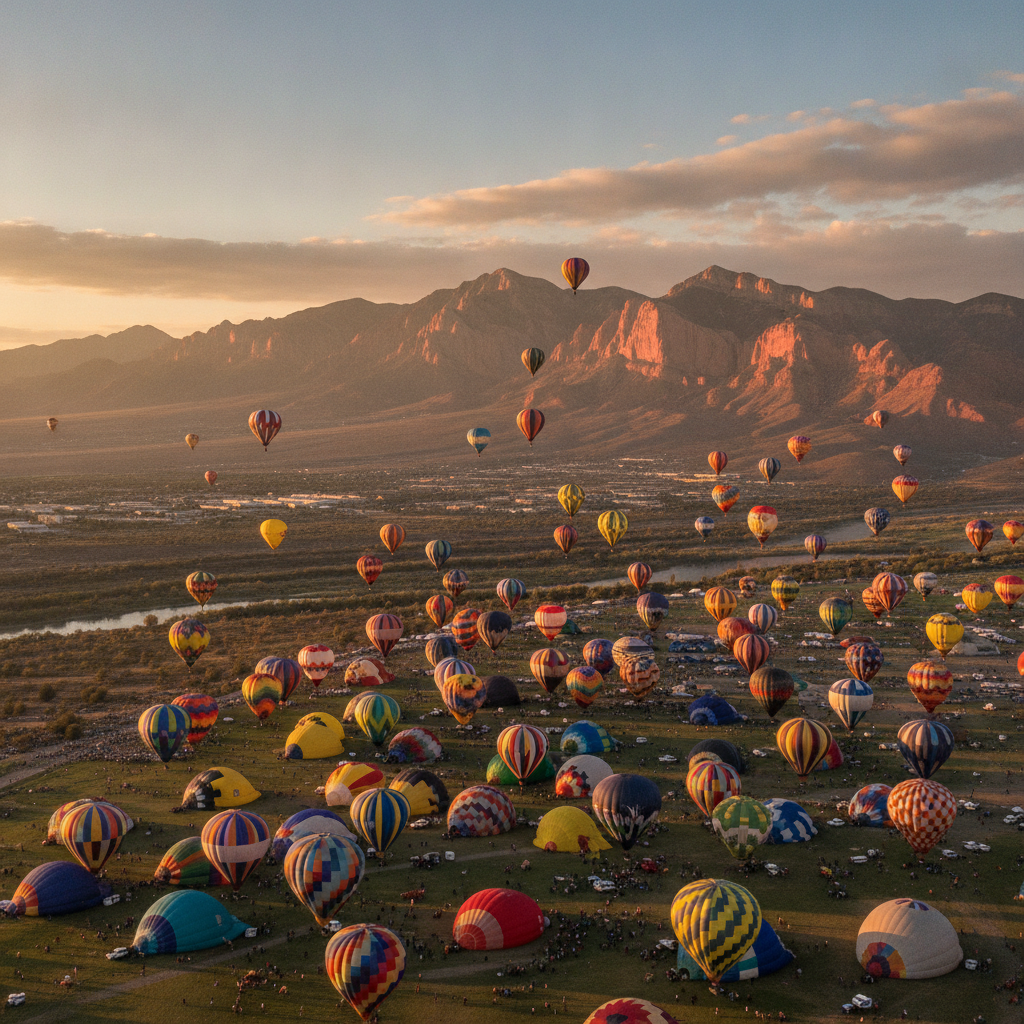
Albuquerque: Balloon Fiesta, Old Town, Sandia Mountains, Route 66, and the Rio Grande