Albuquerque: Route 66 Neon, Ancient Pueblos and Immersive Art
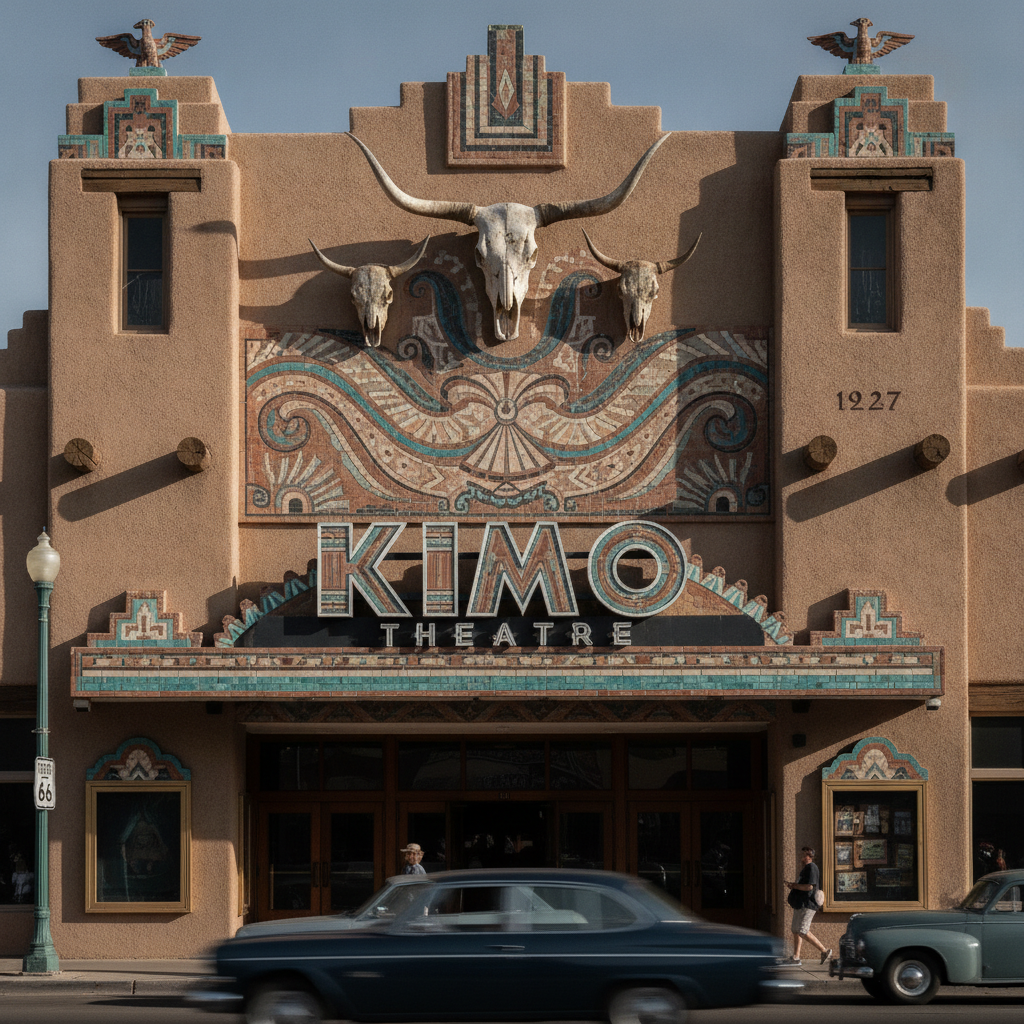
Walk Nob Hill Route 66 neon past the Pueblo Deco KiMo Theatre, visit Isleta Pueblo oldest continuously active church in the US, admire the aviation architecture of the Sunport, farm the acequia-fed fields of Corrales, hike the volcanic cones of the West Mesa, and lose yourself in Meow Wolf immersive art.
- 1
Nob Hill and Route 66 Culture
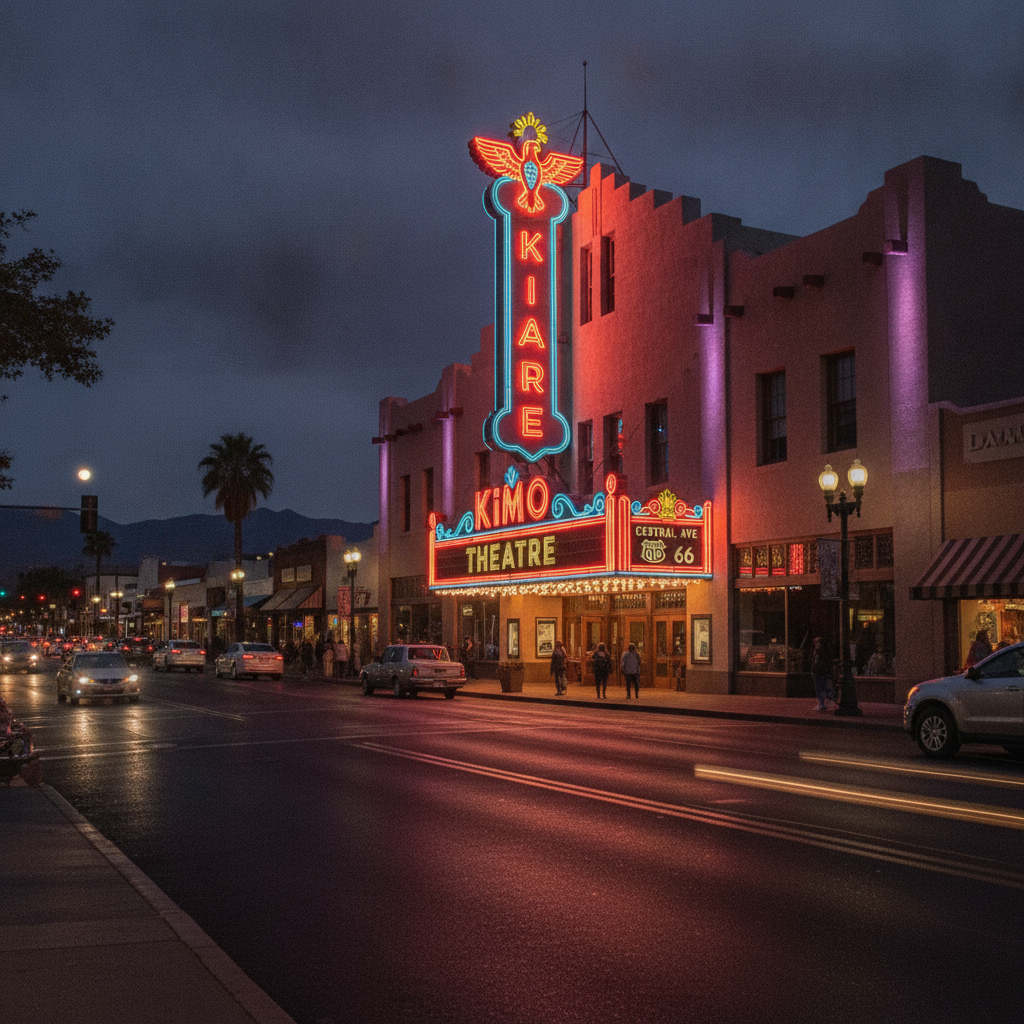
Nob Hill, the Albuquerque neighborhood along Central Avenue between Carlisle and Washington Boulevards, developed in the 1930s and 1940s as Route 66 motor tourism created demand for diners, motor courts, and roadside attractions. The neighborhood retains several original neon signs from the Route 66 era, including the Nob Hill sign spanning the road that was restored in 2003. Nob Hill today supports a walkable concentration of independent restaurants, boutiques, coffee houses, and bars that functions as Albuquerque primary urban village. The KiMo Theatre at 423 Central Avenue Northwest, built in 1927 in a hybrid Pueblo Deco style unique to New Mexico, is a National Historic Landmark that presents live performances and film. The theater interior combines Navajo rugs, buffalo skulls, and Art Deco detailing in a style created specifically for the Albuquerque market.
- 2
Isleta Pueblo and Rio Grande Pueblos
Isleta Pueblo, 13 miles south of Albuquerque on the Rio Grande, is one of 19 federally recognized Pueblo communities in New Mexico and has been continuously occupied since before Spanish contact in the 1500s. The Mission of San Agustin de la Isleta, built in 1613 and rebuilt after the Pueblo Revolt of 1680, is the oldest continuously active church building in the United States, predating the more frequently cited San Miguel in Santa Fe. Isleta operates a resort casino and maintains traditional agricultural practices in the Rio Grande floodplain. The Albuquerque metropolitan area is surrounded by six Pueblo communities including Isleta, Sandia, Santa Ana, Zia, Jemez, and Cochiti, making it one of the few major American cities with significant Native American communities within its immediate orbit.
- 3
Albuquerque Sunport and Aviation History
Albuquerque International Sunport, named for the first informal airstrip established here in 1928, is the primary commercial airport serving New Mexico with approximately 5 million passengers annually. The Sunport has received consistent architectural recognition for its Pueblo Revival terminal building designed by Flatow Moore Bryan and Fairburn in 1965 and expanded in 1989, which maintains mission-style curves and earth tones consistent with New Mexico building traditions despite the functional demands of a modern airport. The New Mexico Aviation Hall of Fame, located within the Sunport, honors aviators with New Mexico connections. The first coast-to-coast air mail service in the United States passed through Albuquerque in 1920 on what was called the Transcontinental Air Mail Route.
- 4
Corrales Village and North Valley Agriculture
Corrales, a village of 8,000 people north of Albuquerque along the west bank of the Rio Grande, preserves an agricultural character within the Albuquerque metropolitan area that would be rare anywhere else in the American Southwest. The village contains working farms, horse properties, vineyards, and orchards separated by ancient irrigation ditches called acequias that have carried Rio Grande water to village fields since the Spanish colonial period. The Casa San Ysidro museum interprets colonial New Mexico agricultural life. Several Corrales restaurants and wineries operate on historic farmsteads. Corrales retained its village government after annexation attempts by Rio Rancho and Albuquerque and maintains strict zoning controls on density and land use that have preserved its character.
- 5
Albuquerque Volcanoes and West Mesa
The five volcanic cones rising above the West Mesa on the western edge of Albuquerque erupted between 140,000 and 200,000 years ago and are the source of the basalt escarpment that forms Petroglyph National Monument. The Three Sisters and JA Peak volcanoes are accessible via trails from the Paseo del Volcan trailhead. The lava flows from these eruptions created the distinct landscape of the West Mesa, which drops abruptly into the Rio Grande Valley on its eastern edge. The mesa extends west to the Rio Puerco Valley and beyond into the Laguna Pueblo lands. The West Mesa is also known as the site of the unsolved 2009 discovery of the bones of eleven victims in a desert field, a case that remains open and is the subject of ongoing advocacy by families of missing women.
- 6
Albuquerque Arts and Maker Culture
Albuquerque arts scene has grown substantially since the establishment of the Creative Albuquerque initiative and expanded film industry. The Albuquerque Arts Business Association coordinates First Friday Artwalk through the downtown and EDo neighborhoods on the first Friday of each month. Meow Wolf Albuquerque, the third location of the Santa Fe-based immersive art collective that opened in 2021, occupies a 90,000 square foot space in a converted shopping center. The organization, which employs over 300 artists, creates environments that combine narrative, visual art, and interactive elements. The South Broadway Cultural Center and the Harwood Art Center in the Sawmill District provide studio space and exhibition venues for working artists at below-market rates through city subsidized programs.
Walk this route with audio
Stories play automatically as you reach each stop — no tapping needed.
More in Albuquerque
Albuquerque: Breaking Bad Country, Sky Tram and the Hispanic Cultural Heart
Albuquerque: Pueblo Nations, Sandia Labs, Turquoise Trail, Arts, Petroglyphs, and New Mexican Food

Albuquerque: Balloon Fiesta, Nuclear Heritage and Green Chile Country
Albuquerque: Music, Native Art, Explora, Wine and Beer, Architecture, and Duke City Identity
Albuquerque: White Sands, Tech Scene, International District, Camino Real, Jemez Mountains, and Practical Info