Alexandria Modern History - Napoleon, the British Occupation, Khedive Ismail, and the Cotton Economy
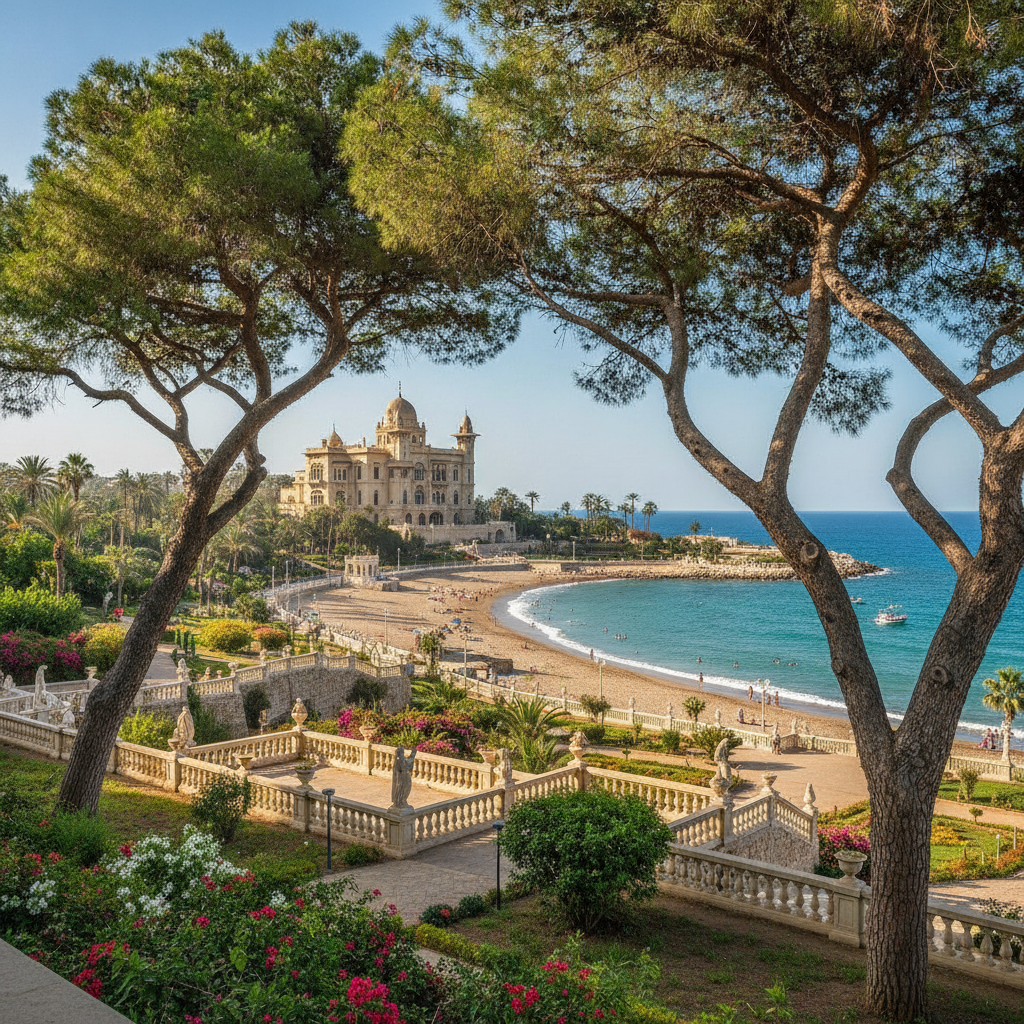
Alexandria in modern history: Napoleon's Egyptian Expedition and the transformation of Egypt; Mohammed Ali and the creation of modern Egypt; Khedive Ismail and the Belle Epoque of Alexandria; the British Bombardment of 1882 and the occupation; the cotton economy and the cosmopolitan city of the 1920s-1940s; and the 1952 revolution and the departure of the cosmopolitan communities.
- 1
Mohammed Ali and the Creation of Modern Egypt - The Albanian Soldier Who Built a Nation
Mohammed Ali Pasha (1769-1849): the Albanian-Ottoman military commander who became the founder of modern Egypt and ruled as the effectively autonomous ruler of Egypt from 1805 to 1848. The background (Mohammed Ali was born in Kavala, Macedonia (in the Ottoman Empire) in 1769: he was an Albanian tobacco merchant and military officer who arrived in Egypt with the Ottoman force sent to expel the French (1801): by 1805 he had outmaneuvered both the Mamluks and the Ottoman governor to become the de facto ruler of Egypt). The Mamluk massacre (the Citadel Massacre of March 1, 1811: Mohammed Ali invited the Mamluk beys to a celebration at the Cairo Citadel and had them ambushed and killed: approximately 470 Mamluks killed in the ambush: the Mamluk forces were then hunted down throughout Egypt: the 800-year Mamluk presence in Egypt was effectively ended in one day). The modernization (Mohammed Ali created a modern Egyptian state: a new army trained by French officers using French methods: the Egyptian Navy: a European-style bureaucracy: the cotton economy (Mohammed Ali introduced long-staple Egyptian cotton cultivation in the Delta approximately 1821: Egyptian cotton (Gossypium barbadense) quickly became the most prized cotton in the world for its long fiber length and luster: the cotton economy made Egypt one of the wealthiest countries in the world by mid-century and made Alexandria the commercial capital of the eastern Mediterranean)). The dynasty (Mohammed Ali founded the dynasty that ruled Egypt until the 1952 revolution: his successors Ibrahim Pasha, Abbas I, Said Pasha, Ismail Pasha, Tewfik Pasha, Abbas Hilmi II, Hussein Kamel, Fuad I, and Farouk I).
- 2
Khedive Ismail and the Cosmopolitan Alexandria of the Belle Epoque
Ismail Pasha (1830-1895): the Khedive (Viceroy) of Egypt (1863-1879) who attempted to modernize Egypt as a European-style state and created the cosmopolitan Alexandria of the late 19th century. The modernization (Ismail famous phrase: my country is no longer in Africa - we are now part of Europe: the construction projects: the Suez Canal (completed under Ismail in 1869: the opening ceremony in November 1869 was the grandest event of the 19th century Mediterranean world: the inaugural performance of Verdi Aida (specifically commissioned for the opera house in Cairo for the occasion, though actually first performed in 1871 due to the Franco-Prussian War)): the Egypt railways, telegraph, and roads: the schools and universities: the Alexandria water supply and sewage system: the redesign of central Cairo (Ismail commissioned a European-style downtown Cairo: the Opera House (1869), the Azbakeya Garden, the wide boulevards modeled on Paris Haussmann): the financial collapse (the modernization was financed by enormous debt: the Egyptian foreign debt rose from approximately GBP 3 million in 1863 to GBP 100 million by 1879: the international creditors (Britain and France) forced Ismail abdication in 1879 and established a Dual Control of Egyptian finances). The cosmopolitan Alexandria (under Ismail and his successors Alexandria became the most cosmopolitan city in the Arab world: large Greek, Italian, French, British, Jewish, Syrian, and Armenian communities: the Ramleh trams: the Cecil Hotel: the Sporting Club: the Greco-Roman Museum).
- 3
The British Bombardment of 1882 and the British Occupation of Egypt
The British Bombardment of Alexandria (July 11-13, 1882) and the subsequent British occupation of Egypt (1882-1956): the event that ended Egyptian independence for 74 years and shaped the development of modern Egypt. The context (the Urabi Revolt (1879-1882): the Egyptian nationalist movement led by Colonel Ahmad Urabi (a native Egyptian army officer as opposed to the Turkish-Circassian officer caste): the Urabi movement demanded a constitutional government and Egyptian control of the army: the Urabi movement gained control of the Egyptian government in 1882): the bombardment (on July 11, 1882 the British Mediterranean Fleet (12 warships under Admiral Sir Frederick Beauchamp Seymour) bombarded the Alexandria fortifications for 10.5 hours: the bombardment destroyed the Alexandria harbor forts but also caused significant civilian casualties and triggered riots in the city in which approximately 50-70 Europeans were killed: the British occupied Alexandria and then Egypt (the Battle of Tel el-Kebir (September 13, 1882): General Wolseley defeated the Urabi forces and occupied Cairo)). The occupation (the British occupation of Egypt (1882-1956): Egypt remained nominally Ottoman (and from 1914 a British Protectorate) but was effectively ruled by the British Consul-General (Lord Cromer from 1883 to 1907): Evelyn Baring (Lord Cromer) exercised supreme authority in Egypt for 24 years: the nationalist movement (Mustafa Kamil, Saad Zaghloul (the Wafd Party): the 1919 Egyptian Revolution against British rule: Egyptian nominal independence (1922) and the Wafd constitution of 1923): British troops remained in the Suez Canal Zone until 1956 when Nasser nationalization and the Suez Crisis ended the British presence).
- 4
The Cosmopolitan Alexandria of the 1920s-1940s - Greeks, Italians, Jews, and the City That Was
The cosmopolitan Alexandria of the interwar period (1920s-1940s): the multi-ethnic, multi-lingual Mediterranean city of the first half of the 20th century that was one of the most culturally diverse cities in the world before the post-1952 transformations. The communities (the Greek community (the largest European community in Alexandria: approximately 100,000-150,000 Greeks in Alexandria at the peak in the 1920s-1930s: 3,000 years of Greek presence in Egypt culminating in the most significant Greek diaspora community outside of Cyprus): the Italian community (approximately 40,000 Italians: the legacy of Khedive Ismail close relationship with Italian culture: the Italian schools, churches, and social clubs): the Jewish community (the Alexandrian Jewish community (Sephardic Jews who had been in Egypt since the Roman period and Ashkenazi Jews who arrived in the 19th-20th centuries): approximately 40,000-70,000 Jews in Alexandria at the peak): the British community (the colonial administration, the military, and the commercial community): the Syrian-Lebanese community (the Syrian and Lebanese merchants and intellectuals)). The departure (the 1952 revolution and subsequent nationalizations (Nasser nationalized the Suez Canal in 1956 and then major private enterprises in 1961): the Alexandrian cosmopolitan communities were squeezed out: most Greeks left after the 1956 Suez War: most Jews left after 1948 (first Nakba) and then 1956 and 1967: most Italians departed in the 1950s-1960s: by 1970 the cosmopolitan Alexandria that Cavafy, Forster, and Durrell had known was almost entirely gone).
- 5
The 1952 Egyptian Revolution - Naguib, Nasser, and the End of the Monarchy
The Egyptian Revolution of July 23, 1952: the Free Officers Movement coup that ended the Egyptian monarchy and the 74-year British occupation and launched the era of Arab nationalism. The background (the Wafd Party constitution of 1923 provided a parliamentary system but real power was contested between the palace, the British, and the nationalist parties: the 1948 Arab-Israeli War was a disaster (the Egyptian army was defeated partly due to defective weapons supplied by corrupt palace officials): the Black Saturday riots (January 26, 1952) burned 730 buildings in central Cairo (primarily European-owned businesses): the army saw the government as too weak to challenge British domination). The coup (July 23, 1952: the Free Officers Movement (a secret organization of Egyptian army officers formed approximately 1945) seized key installations in Cairo: General Mohammed Naguib became the public face of the revolution (he was not an original member of the Free Officers but was used for his seniority and public respect): King Farouk abdicated on July 26, 1952 and sailed into exile from Alexandria harbor on his royal yacht: the monarchy was abolished and Egypt was declared a republic). The Naguib-Nasser conflict (the apparent revolutionary leader Mohammed Naguib was increasingly sidelined by Gamal Abdel Nasser: in November 1954 Nasser placed Naguib under house arrest where he remained until 1971 (Sadat released him): Nasser became Prime Minister (1954) and President (1956)). The departure of the cosmopolitan communities (the post-1952 nationalizations forced the departure of virtually all the European and Jewish communities of Alexandria).
- 6
Alexandria Complete Legacy - From Ancient Wonder to Modern Mediterranean Port
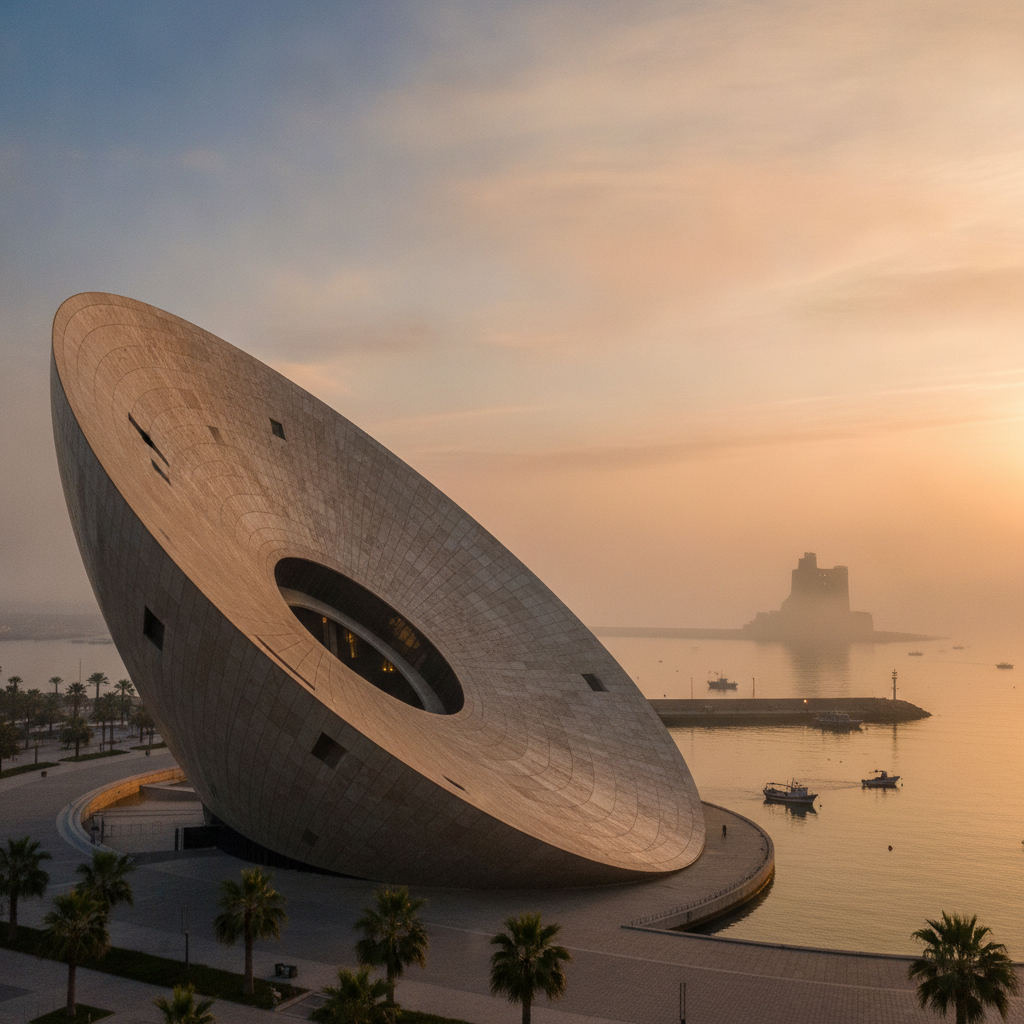
Alexandria complete legacy: the enduring significance of the city Alexander founded on the Egyptian Mediterranean coast in 331 BCE and its place in the history of human civilization. The ancient legacy (Alexandria was the intellectual capital of the Hellenistic world for approximately 700 years (331 BCE - approximately 400 CE): the Great Library and Museum: Euclid, Eratosthenes, Archimedes, Aristarchus, Claudius Ptolemy, Hypatia: the Pharos Lighthouse (one of the Seven Wonders): the Serapeum: the synthesis of Greek philosophy, Jewish Scripture, and Egyptian religion that produced Neoplatonism and early Christian theology: the works of Philo, Clement, Origen, and Plotinus: all of this concentrated in a single city over approximately 7 centuries). The modern legacy (the Bibliotheca Alexandrina (2002) as a symbolic statement of cultural revival: the underwater archaeology program (Franck Goddio, Jean-Yves Empereur) recovering the submerged ancient city: the Cavafy Museum and the literary heritage: the El-Alamein War Cemetery as a memorial to the North Africa Campaign: the Alexandria seafood tradition as one of the finest in the Mediterranean). The essential facts (Alexandria: population approximately 5.5-6 million (the second largest city in Egypt): 32 km of Mediterranean coastline: Alexandria Governorate: latitude 31.20 N: time zone EET (UTC+2): Borg el-Arab Airport (HBE) (40 km southwest of the city center: international and domestic flights) and Alexandria Nozha Airport (ALY) (closer to center but mostly domestic): the best time to visit: May-September (warm Mediterranean weather, beach season) or October-April (cooler, cultural focus)).
Walk this route with audio
Stories play automatically as you reach each stop — no tapping needed.
More in Alexandria
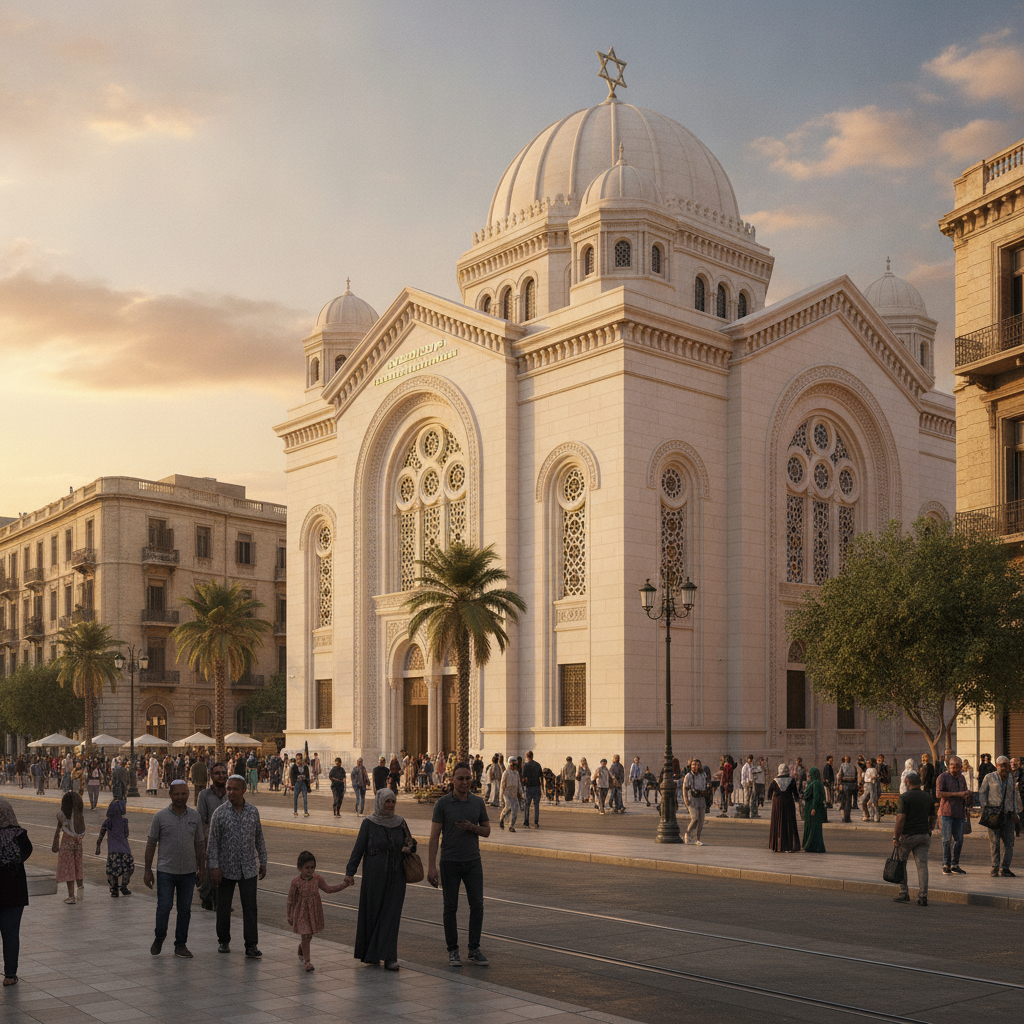
Alexandria Layers: The Jewish Community Heritage, the Ottoman Quarter, the Italian Community, and the Lost Cosmopolitan City
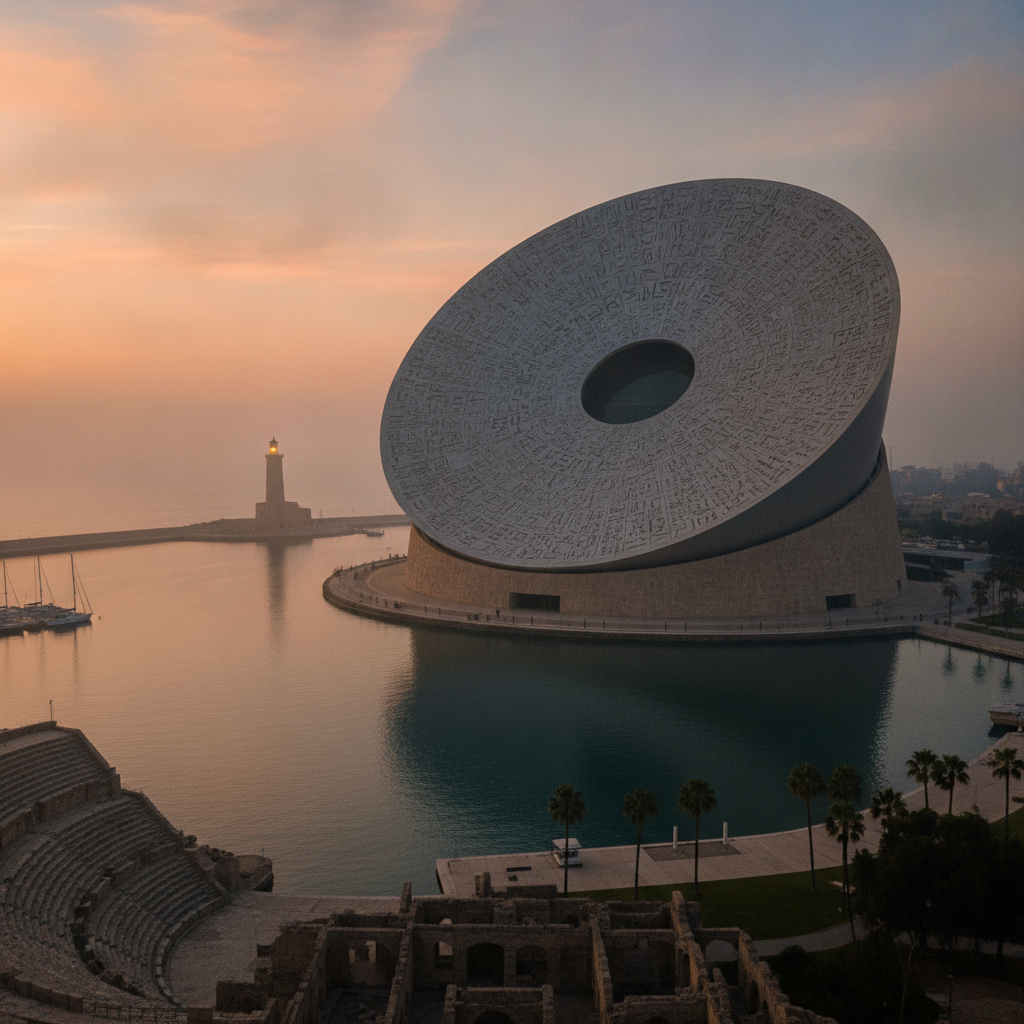
Alexandria: The Great Library, Pharos Lighthouse, Cleopatra, and the Bibliotheca Alexandrina
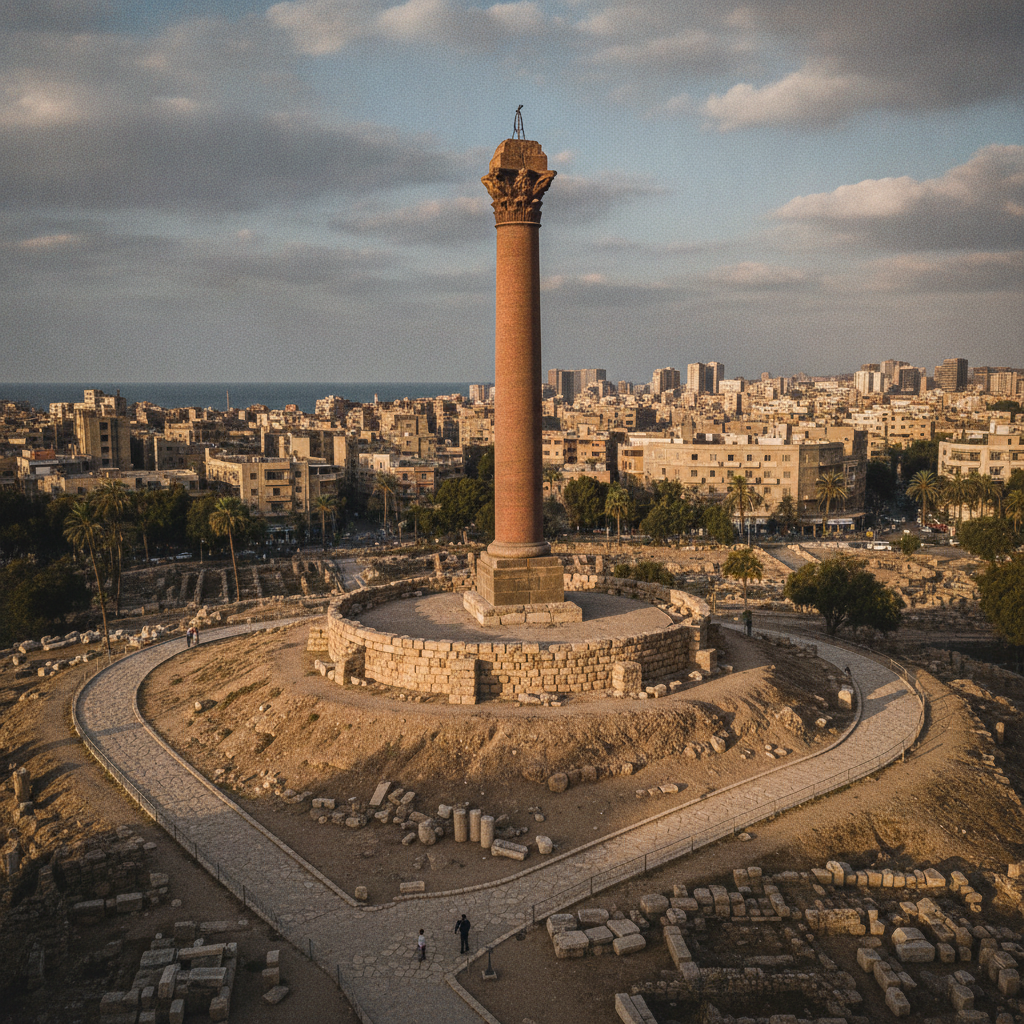
Alexandria Walk: The Pompey Pillar, the Serapeum Platform, the Roman Amphitheatre, and the Complete Ancient Alexandria Walking Circuit
Alexandria Practical: The Cairo Train Connection, the Accommodation, the Day Trip Strategy, the Best Timing, and the Egypt Circuit Role
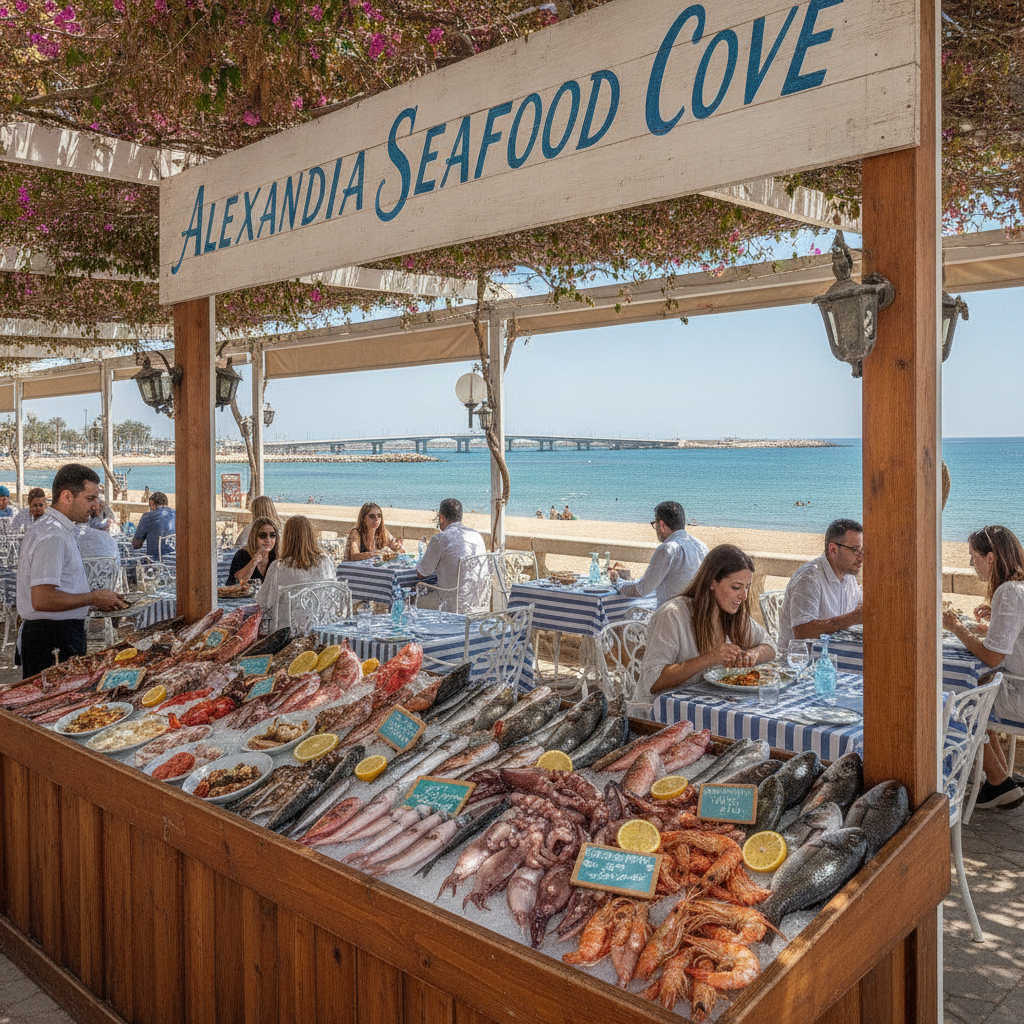
Alexandria Food and Beach: The Mediterranean Seafood, the Stanley Beach, the Local Fish Market, and the Most Relaxed Single Egyptian Coastal City