Alexandria: The Qaitbay Citadel, Roman Amphitheatre, Montaza Palace, and the City on the Sea
The major sights of modern Alexandria: the Qaitbay Citadel built on the site of the ancient Pharos Lighthouse; the Roman Theatre (Amphitheatre); the Montaza Palace Gardens; the underwater archaeology of Cleopatra submerged palace; Alexandria's Mediterranean cuisine; and the El-Alamein battlefield 105 km west.
- 1
The Qaitbay Citadel - The Fortress Built on the Lighthouse Ruins
The Citadel of Qaitbay (built 1477-1479 CE by the Mamluk Sultan Qaitbay): the most important medieval monument in Alexandria and the primary landmark of the city, built on the exact foundation site of the ancient Pharos Lighthouse. The construction (Qaitbay was the Mamluk Sultan of Egypt from 1468 to 1496: he built the citadel to defend the Alexandrian harbor against Ottoman attack: the construction used the stone blocks of the ruined Pharos lighthouse that were scattered in the harbor and on the shore (an 1303 earthquake had finally brought down the remains of the lighthouse that had stood in some form for over 1,600 years): the surviving blocks are still visible incorporated into the citadel walls). The architecture (the citadel has a rectangular outer wall with round towers at the corners and a massive central tower: the sea-facing walls are particularly thick: the harbor and Mediterranean views from the citadel ramparts are extraordinary: the lighthouse footprint (the circular foundations of the main Pharos tower are believed to be partially preserved under the citadel buildings)). The underwater archaeology (French underwater archaeologist Jean-Yves Empereur and his team (from 1994) mapped approximately 2,000 ancient stone blocks submerged in the harbor near the citadel: the blocks include colossal red granite sphinxes, obelisks, and column capitals: some blocks weigh over 50 tons: they are the scattered remains of the Pharos Lighthouse and its associated structures).
- 2
The Roman Theatre of Alexandria - The Kom el-Dikka Excavations
The Roman Theatre (the Kom el-Dikka excavations): the only surviving Roman theatre in Egypt, discovered by Polish archaeologists from the University of Warsaw beginning in 1960 under what appeared to be a hill of rubble in central Alexandria. The theatre (the Roman Theatre of Alexandria (the small theatre or odeon) (2nd-3rd century CE): 13 semicircular rows of white marble seating: capacity approximately 600-800 spectators: the finest surviving example of a small Roman auditorium (odeon or bouleuterion) in the eastern Mediterranean: the marble seating is in extraordinary preservation with carved armrests and decorative details clearly visible: the excavation (the Kom el-Dikka (Mound of Rubble) site: the excavation continues to yield new discoveries: the villa (the 5th century CE Roman villa adjacent to the theatre with elaborate mosaic floors): the baths (the Roman public baths complex adjacent to the villa): the lecture rooms (13 small semicircular lecture rooms identified as academic rooms: possibly the lecture rooms of the Alexandrian schools of philosophy and rhetoric in the 4th-7th centuries CE)). The museum (the on-site Kom el-Dikka museum contains the finds from the excavation including Roman period sculptures, mosaic fragments, and everyday objects). The Alexandrian Greco-Roman Museum (the main Alexandria Greco-Roman Museum: the primary museum of classical antiquity in Alexandria: undergoing renovation for several years: currently partially accessible).
- 3
The Montaza Palace Gardens - The Royal Escape and the Mediterranean Shore
The Montaza Palace Gardens: the former royal palace and gardens on the eastern Corniche of Alexandria, 14 km from the city center, built by Khedive Abbas Hilmi II (1892-1914) as a summer residence for the Egyptian royal family. The palace complex (the Montaza complex covers approximately 150 acres of Mediterranean gardens and coastline: the main palace (the Salamlik: now a luxury hotel) was built in 1892 in a distinctive Ottoman-Florentine style: the Al-Haramlik Palace (built 1932 by King Fuad I) is the larger and more elaborate structure: the grounds contain pine and palm gardens, the famous Salamlik lighthouse (the small private lighthouse built for the royal family), the beach, and the breakwater). The royal history (the Montaza Palace was the primary summer residence of the Egyptian monarchy from Abbas Hilmi II through King Farouk: Farouk (1920-1965: the last king of Egypt: deposed in the 1952 Revolution: went into exile in Monaco: famous for his lavish lifestyle and corruption: he used the Montaza Palace as one of several royal residences): the palace was converted to a public garden and hotel after the 1952 revolution. The gardens (the Montaza Gardens are now one of the most popular public parks in Alexandria: the Mediterranean waterfront, the pine trees, the beach access, and the Al-Haramlik Palace building (now housing a small royal history museum) make it one of the finest garden spaces in Egypt).
- 4
Cleopatra Underwater Palace and the Sunken Ruins of Ancient Alexandria
The underwater archaeological sites of Alexandria harbor: the submerged ruins of the ancient city including the eastern harbor palaces (including the Royal Palace of Cleopatra VII) that sank into the sea after a series of earthquakes and tsunamis between the 4th and 8th centuries CE. The submergence (the ancient eastern harbor of Alexandria (the royal harbor - the Great Harbor) and the adjacent Antirrhodos Island (the private island palace of the Ptolemaic royal family) subsided into the Mediterranean Sea after a major earthquake approximately 365 CE (the 365 CE Crete earthquake and tsunami devastated the eastern Mediterranean coast from Greece to Libya and inundated parts of the Alexandrian coast): subsequent earthquakes (5th-8th centuries CE) submerged additional sections: today approximately 1.5-2.5 meters of ancient Alexandria lies beneath the eastern harbor water). The discoveries (French underwater archaeologist Franck Goddio (from 1996) mapped the submerged royal harbor and Antirrhodos Island: the colossal red granite sphinx (possibly of Ptolemy XII Neos Dionysos, the father of Cleopatra VII): the granite head of a Ptolemaic pharaoh: the naos (shrine box) of a temple: the precise location of the Palace of Cleopatra has not been definitively identified but the general area is mapped). The public access (there is no public underwater diving access to the submerged ancient Alexandria: the underwater remains have been photographed and filmed but remain in situ on the harbor bed: the Alexandria National Museum (opened 2003) displays some recovered objects).
- 5
The El-Alamein Battlefield - The Desert War and the Turning Point of World War II
El-Alamein (105 km west of Alexandria on the Mediterranean coast): the site of the two Battles of El-Alamein (July 1942 and October-November 1942) that represented the decisive turning point of the North Africa Campaign in World War II and prevented the Axis powers from reaching Alexandria and the Suez Canal. The context (by summer 1942 the German-Italian Panzer Army (the Afrika Korps under Field Marshal Erwin Rommel) had advanced to El-Alamein, only 105 km west of Alexandria: Rommel was attempting to break through to Alexandria, the Suez Canal, and the Caucasian oil fields: Alexandria was in a panic (the Ash Wednesday of 1942 - the smoke from burning British documents in Alexandria visible from the city): the First Battle of El-Alamein (July 1-27, 1942): General Claude Auchinleck stopped Rommel advance at the El-Alamein defensive line: the Second Battle of El-Alamein (October 23 - November 11, 1942): General Bernard Montgomery (the new British 8th Army commander) launched the decisive offensive: the battle lasted 12 days: the German-Italian forces were defeated and began their retreat across Libya: El-Alamein was the first significant Allied victory in the European-African theater: Winston Churchill said it was not the beginning of the end but it was the end of the beginning)). The memorials (the El-Alamein War Cemetery: the primary Commonwealth military cemetery with 7,240 graves from all the nations of the British Commonwealth: the German Military Cemetery (Rommel Memorial): the Italian Memorial: the El-Alamein Museum).
- 6
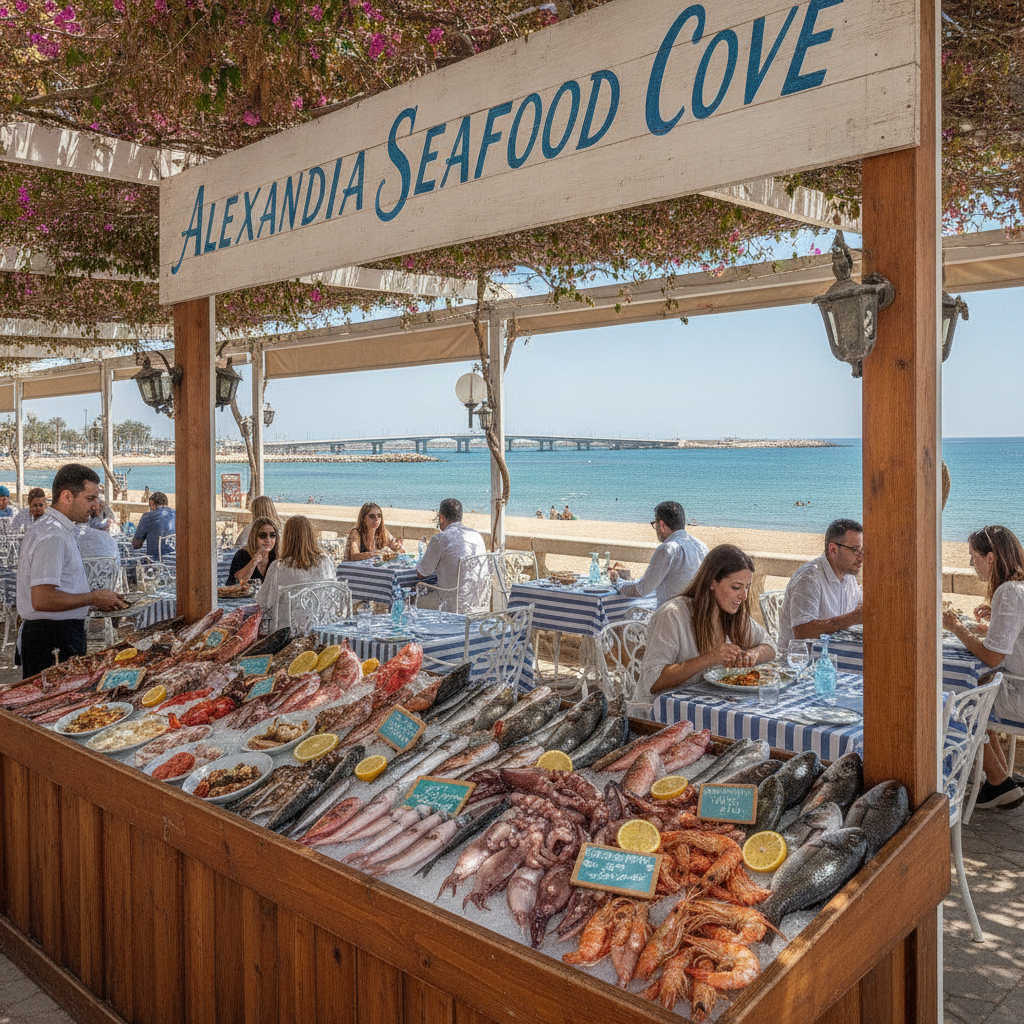
Alexandria Seafood and Cuisine - Mediterranean Fish, Mollusks, and the Alexandrian Kitchen
Alexandria cuisine: the finest Mediterranean seafood tradition in Egypt, combining the fresh catches of the Mediterranean and the Nile Delta with Egyptian, Greek, Ottoman, and Italian culinary influences. The seafood (Alexandria Mediterranean catch: red mullet (barboun), sea bass (qarous), bream (denees), sole (mosht el-bahr), and bluefish (lufar) from the Mediterranean: Nile perch (qarmout) and tilapia (bolty) from the Delta: the squid (calamari) and octopus: the shrimp and prawns from the eastern Mediterranean). The fish restaurants (the Alexandria fish restaurants: the traditional practice of choosing your fish from the market at the entrance and having it grilled, fried, or baked: the seafront restaurants on the Corniche near the Qaitbay Citadel: the Abu Qir fishing village (20 km east): the finest fresh fish destination near Alexandria: the summer weekend crowds of Alexandrians at Abu Qir). The Alexandrian specialties (sayadiyya: the Egyptian fish-on-rice dish (fried fish on a bed of spiced rice with caramelized onions): a specialty throughout the Egyptian Mediterranean coast: taameya (Egyptian falafel made from fava beans rather than chickpeas: the Alexandrian version has green herbs): the Alexandrian stuffed grape leaves (warak dawali) with fish filling: the molokheya (jute mallow soup) with rabbit or chicken). The pastries (the Alexandrian pastry and confectionery tradition: the baklava shops: the Greek-influenced pastries from the remaining Greek community: the Turkish-influenced lokum (Turkish delight): the Italian-influenced ice cream parlors from the 1920s-1940s era (Baudrot, Fluccas)).
Walk this route with audio
Stories play automatically as you reach each stop — no tapping needed.
More in Alexandria
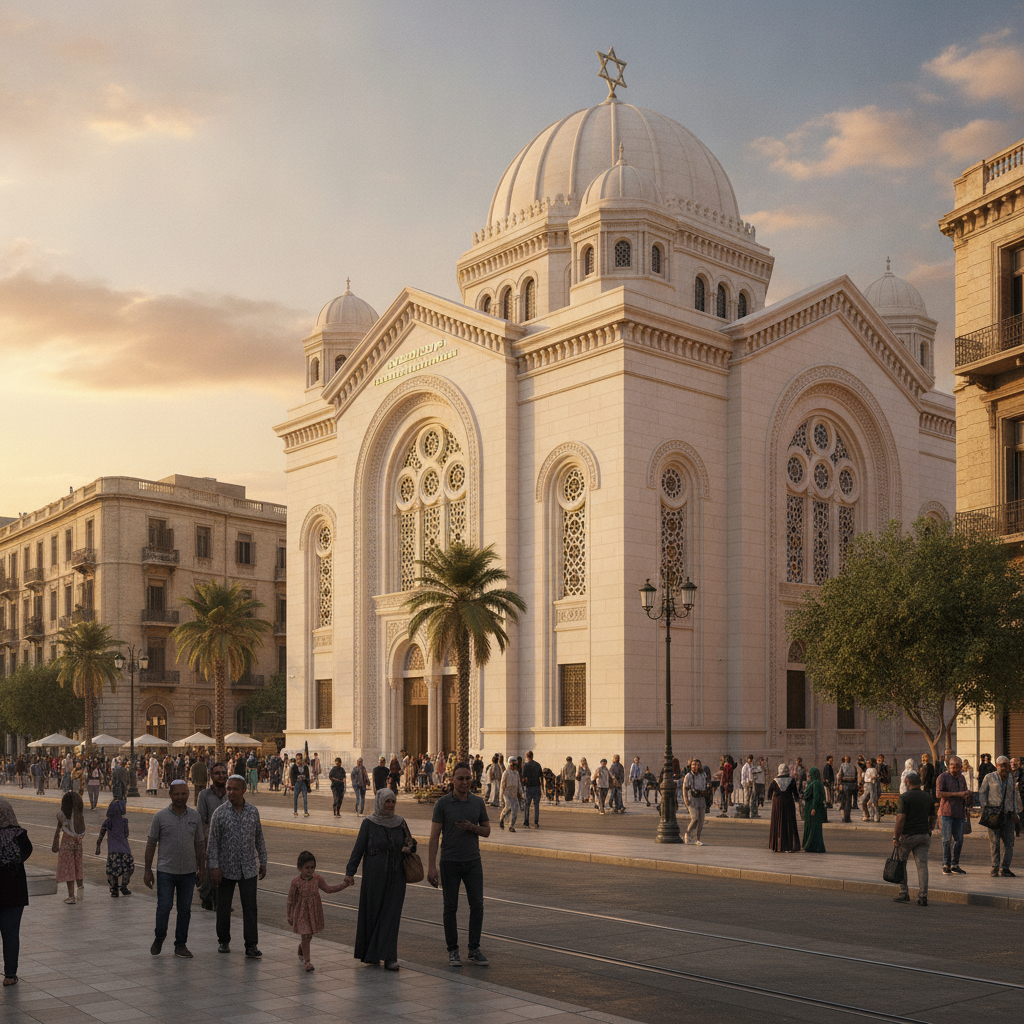
Alexandria Layers: The Jewish Community Heritage, the Ottoman Quarter, the Italian Community, and the Lost Cosmopolitan City
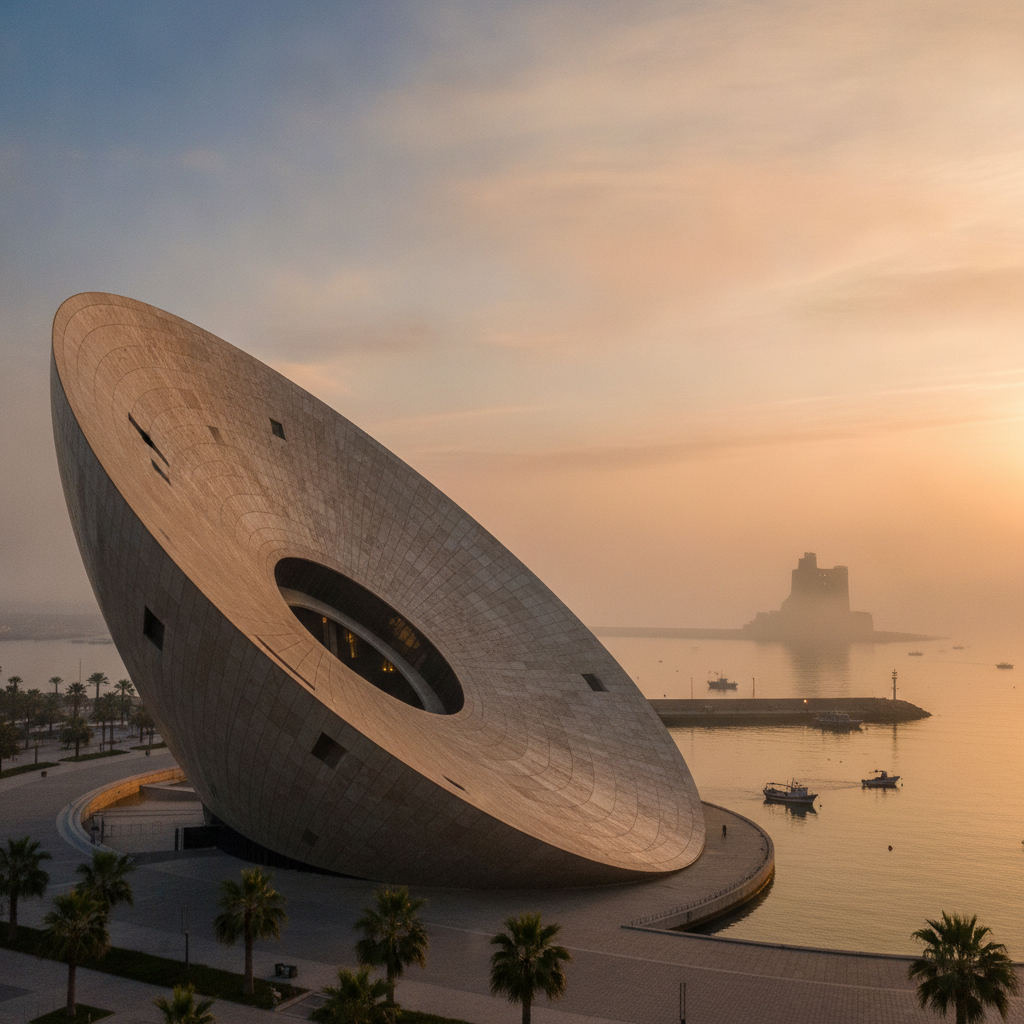
Alexandria Modern History - Napoleon, the British Occupation, Khedive Ismail, and the Cotton Economy
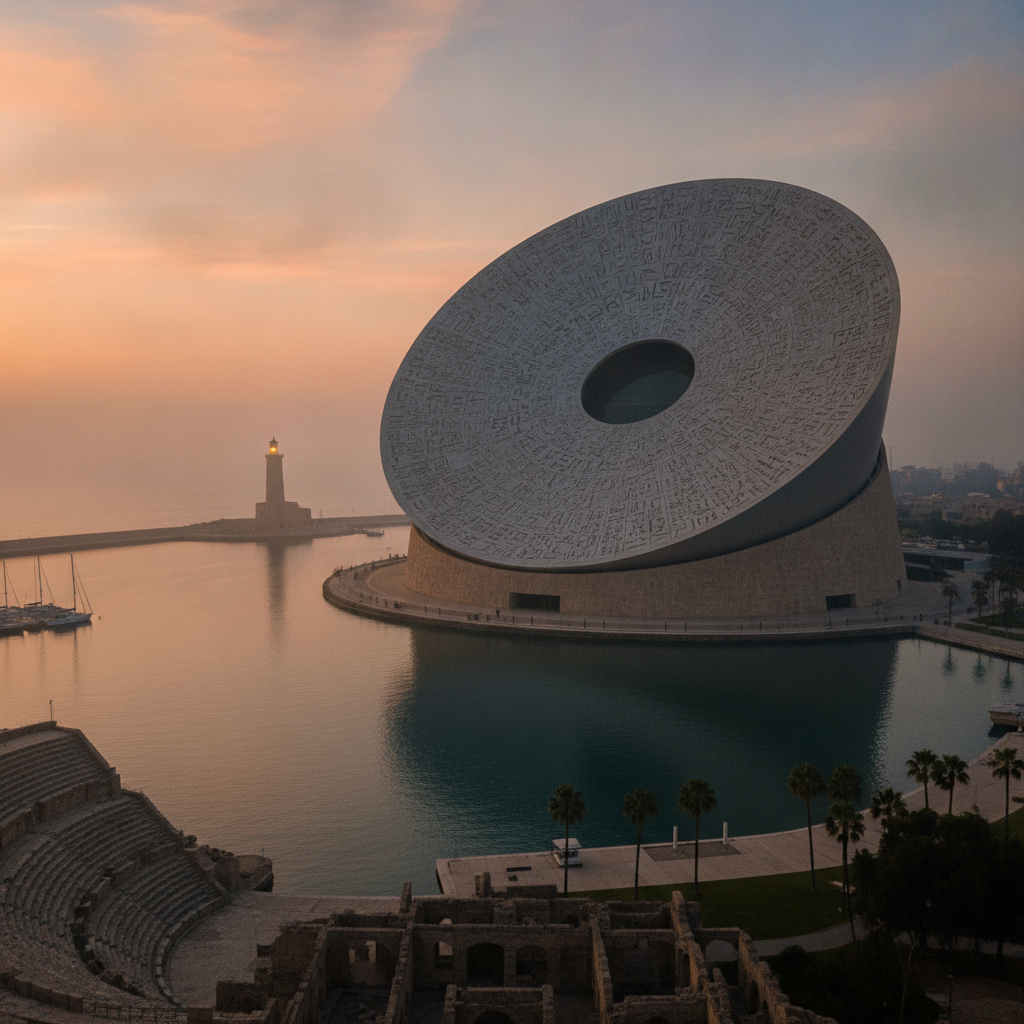
Alexandria: The Great Library, Pharos Lighthouse, Cleopatra, and the Bibliotheca Alexandrina
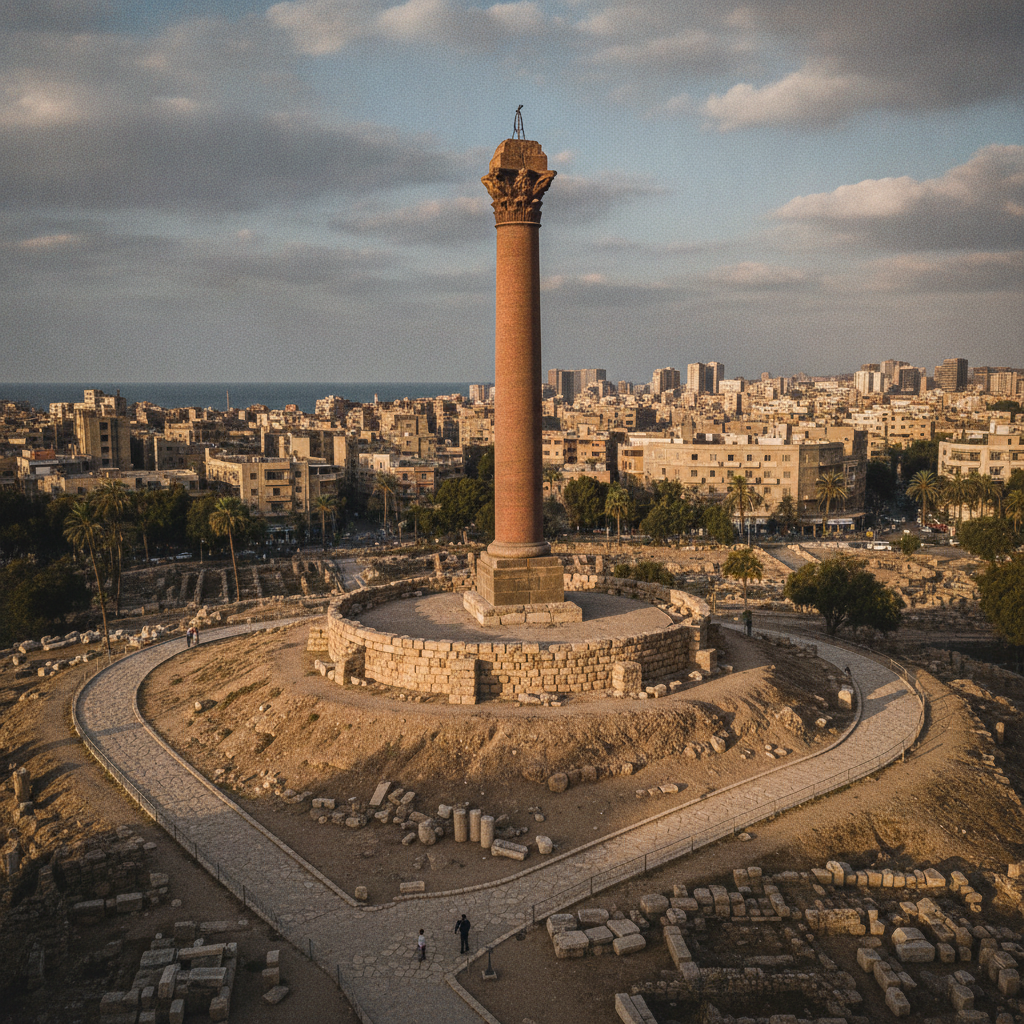
Alexandria Walk: The Pompey Pillar, the Serapeum Platform, the Roman Amphitheatre, and the Complete Ancient Alexandria Walking Circuit
Alexandria Practical: The Cairo Train Connection, the Accommodation, the Day Trip Strategy, the Best Timing, and the Egypt Circuit Role