Alexandria Complete Legacy - Septuagint, Julian Calendar, Mediterranean Identity, and WWII
The complete Alexandria reference: the Septuagint translation and how Alexandria shaped Christianity; the Julian Calendar created by Sosigenes advice to Caesar; the Alexandria National Museum and the Greco-Roman collections; the Mediterranean-facing identity of the cosmopolitan city; Alexandria in World War II and the El-Alamein naval raids; and the final legacy of the city that was the intellectual capital of the ancient world for 700 years.
- 1
The Septuagint and Early Christianity - How Alexandria Shaped Western Religion
The Septuagint (the LXX - the Greek translation of the Hebrew Bible): translated in Alexandria approximately 280-130 BCE: the most important religious translation in history, as it became the primary Bible of early Christianity and the foundation of all Christian Old Testament scholarship. The translation (the Letter of Aristeas (approximately 130-70 BCE) tells the legend that 72 Jewish scholars (6 from each of the 12 tribes of Israel) worked for 72 days on the island of Pharos to produce the Greek translation of the Torah (the Pentateuch): the legend gives the work its name (Septuagint = 70 in Latin): the actual translation was clearly made in Alexandria in the 3rd-2nd centuries BCE for the large Greek-speaking Jewish community of Alexandria who no longer read Hebrew): the importance (the Septuagint was the Bible used by Paul the Apostle, the author of the Gospel of John, and virtually all the early Christian writers: the entire New Testament quotes the Septuagint rather than the Hebrew Bible: without the Septuagint, the New Testament as we know it could not have been written in its present form). The Alexandrian Gospel tradition (the Gospel of Mark is traditionally attributed to the Evangelist Mark who founded the Coptic Church of Alexandria in approximately 42 CE: the Gospel of John (the most theologically complex of the four canonical Gospels) was probably written in or near Alexandria in approximately 90-100 CE (the Logos theology of John 1:1 (In the beginning was the Word) directly echoes the Logos theology of Philo of Alexandria).
- 2
The Alexandria National Museum and the Greco-Roman Collections
The Alexandria National Museum (opened 2003): the primary museum of Alexandria history from antiquity to the modern period, housed in an early 20th-century Italian-style palace in the Zizinia district. The collection (the museum houses approximately 1,800 artifacts in three main galleries: the ancient Egyptian gallery (the artifacts from the Alexandria region including Old Kingdom, Middle Kingdom, and New Kingdom periods): the Greco-Roman gallery (the primary gallery: the statuary, coins, jewelry, mosaic fragments, and everyday objects from the Ptolemaic and Roman periods (332 BCE - 641 CE): the Coptic gallery: the early Christian artifacts from the Alexandria Coptic community). The underwater finds (some objects recovered from the submerged ancient harbor are on display in the museum: the colossal red granite sphinx (possibly Ptolemy XII): the red granite head of a Ptolemaic pharaoh: the items recovered from Franck Goddio underwater excavations). The Greco-Roman Museum of Alexandria (the primary Greco-Roman Museum: housed in a 1895 Italianate building in central Alexandria: undergoing renovation for several years as of 2024: the collection (when accessible) is the most important collection of Hellenistic and Roman-period sculpture, mosaics, and everyday objects in Egypt: the Alexandrian-style portrait sculptures (the hybrid Greco-Egyptian portrait style): the coins of the Ptolemaic dynasty: the Serapis statues: one of the finest collections of Graeco-Egyptian religious syncretism objects in the world).
- 3
The Alexandrian Calendar and Ancient Mathematics - How Alexandria Shaped How We Measure Time
The Julian Calendar and the Alexandrian mathematical tradition: how the astronomers and mathematicians of ancient Alexandria established the measurement of time and space that the Western world uses to this day. The Egyptian calendar (the ancient Egyptian calendar: 365 days divided into 12 months of 30 days plus 5 intercalary days: the first calendar based on the solar year (as opposed to the lunar calendars of Babylon and the Hebrew tradition): the Egyptian calendar was adopted by the Roman world). Julius Caesar and the Julian Calendar (Julius Caesar in Alexandria in 48-47 BCE consulted the Alexandrian astronomer Sosigenes of Alexandria about calendar reform: the existing Roman Republican calendar had fallen approximately 3 months behind the solar year: Sosigenes advised Caesar to adopt a solar calendar of 365 days with a leap year every 4 years: the Julian Calendar (adopted 46 BCE) was the standard calendar in the Western world until 1582 when Pope Gregory XIII modified it to the Gregorian Calendar (by dropping 3 leap years every 400 years to correct the slight overcount): the Gregorian Calendar is still the world standard today: Sosigenes of Alexandria is therefore the astronomer whose advice to Caesar shaped the calendar structure still used 2,000 years later). Claudius Ptolemy (the Ptolemy Almagest: Claudius Ptolemy (c.100-170 CE): the astronomer and geographer who worked in Alexandria: the Almagest (the Mathematical Syntaxis): the definitive ancient astronomical treatise: the geocentric model of the solar system (the Earth at the center with the planets moving in epicycles around it) that dominated astronomy until Copernicus in 1543: the Geography (the systematic atlas of the known world): the primary source for medieval Islamic and Western cartography).
- 4
The Mediterranean Identity of Alexandria - A City That Faces North
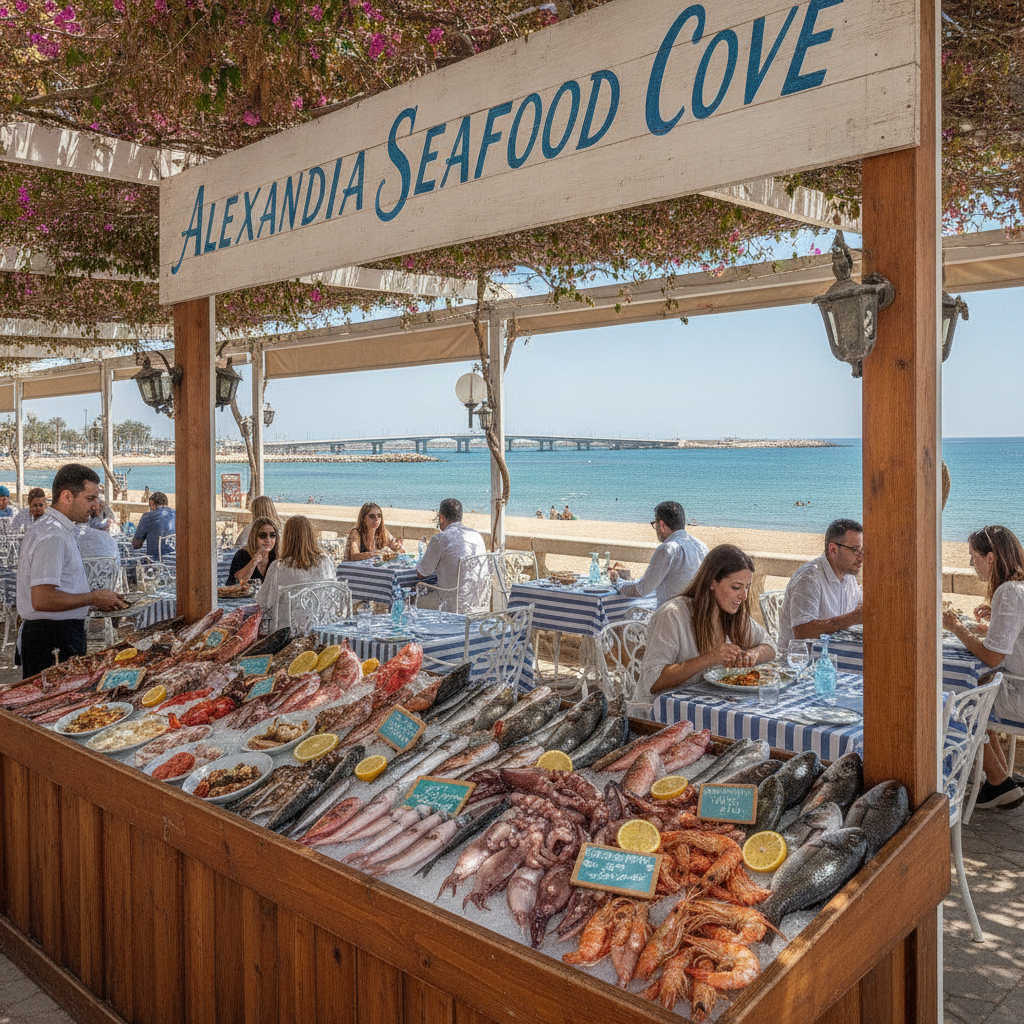
The Mediterranean identity of Alexandria: the city that faces north toward Europe and Greece rather than south toward the African interior, and how this orientation has defined its culture, history, and character. The Greek orientation (the founding of Alexandria by Alexander in 331 BCE established the city as a Greek city in Egypt rather than an Egyptian city: the Ptolemaic dynasty ruled as Greek pharaohs but maintained a primarily Greek cultural and intellectual identity: the Museum, the Library, and the scholarly community were Greek in language and intellectual tradition even while incorporating Egyptian religious elements (the Serapis cult, the Egyptian priest caste)). The Mediterranean trade (Alexandria was the primary entrepot of Mediterranean-Red Sea-Indian Ocean trade for approximately 700 years (300 BCE - 400 CE): the monsoon trade winds carried goods from India and Arabia to the Red Sea ports (Berenice, Myos Hormos) and overland to the Nile and then by river to Alexandria: the primary goods were spices, silk, aromatics, and cotton from India and Arabia: the primary Egyptian export was grain): the cosmopolitan legacy (the multi-ethnic Alexandria of the late 19th-mid 20th century (Greek, Italian, Jewish, British, French, Syrian, Armenian) was the last flowering of the Mediterranean orientation that Alexander established: the loss of this cosmopolitan community after 1952-1967 was a cultural impoverishment from which Alexandria has not fully recovered). The poetry of belonging (Constantine Cavafy poems of Alexandria convey with extraordinary precision the experience of belonging to a cosmopolitan Mediterranean city that is simultaneously the heir of ancient greatness and a provincial outpost: the tension between historical grandeur and present modest reality that is the permanent condition of Alexandria).
- 5
Alexandria and World War II - The Desert War, the Cecil Hotel, and the Wartime City
Alexandria in World War II: the most important Allied naval base in the eastern Mediterranean and the city that was the primary target of Rommel Africa Korps advance from El-Alamein, 105 km to the west. The naval base (Alexandria was the primary Royal Navy base in the eastern Mediterranean from 1882 to 1956: during World War II it was the headquarters of the British Mediterranean Fleet: the harbor contained at various times the battleships HMS Warspite, HMS Barham, HMS Queen Elizabeth, HMS Valiant, and HMS Malaya: the Italian raids on Alexandria harbor (the Italian frogmen raid on December 19, 1941: Italian SLC human torpedoes penetrated the Alexandria harbor nets and attached limpet mines to the battleships HMS Queen Elizabeth and HMS Valiant: both battleships were sunk (they settled on the shallow harbor floor and continued to give the impression of being operational): one of the most successful special operations raids of the World War II). The wartime city (wartime Alexandria was a city of refugees, intelligence operatives, military officers, and expatriate writers: Lawrence Durrell worked for the British Information Office in Alexandria 1941-1945 and this wartime experience directly informed the Alexandria Quartet: the Cecil Hotel was the social center of wartime Alexandria). The El-Alamein battlefield (105 km west: the El-Alamein War Cemetery (7,240 Commonwealth dead): the German Cemetery (the Rommel Memorial): the Italian Memorial: the El-Alamein Museum: the decisive battles of October-November 1942 that turned the tide of the North Africa Campaign).
- 6
Alexandria Final Complete Legacy - From Wonder of the Ancient World to Mediterranean Metropolis
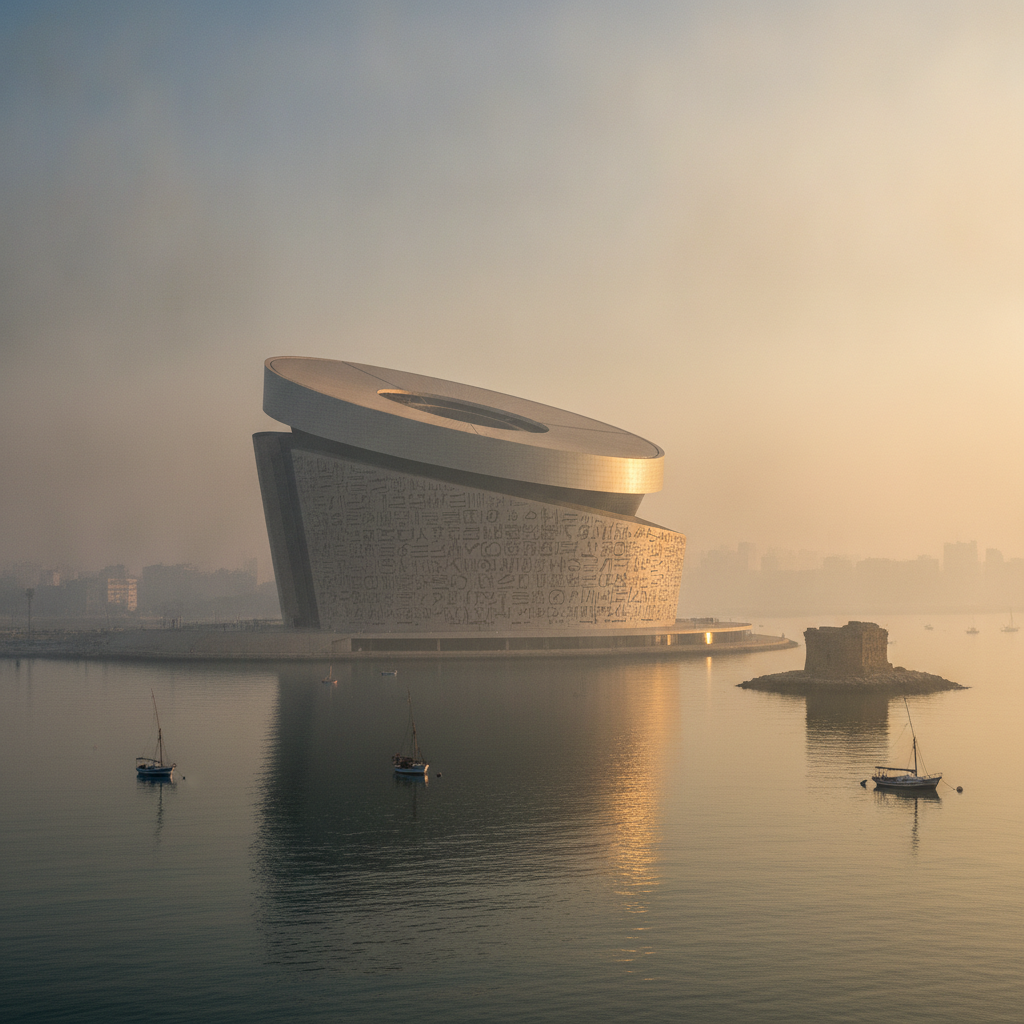
Alexandria final complete legacy: the city that was the intellectual capital of the ancient world, the site of the Pharos Lighthouse (one of the Seven Wonders), the home of Euclid and Cleopatra and Cavafy, and the Mediterranean-facing cultural gateway of Egypt. The ancient achievement (for approximately 700 years (331 BCE - approximately 400 CE) Alexandria was the most important city in the Mediterranean world: the Great Library and Museum: the Pharos Lighthouse: the Serapeum: the synthesis of Greek philosophy, Jewish Scripture, and Egyptian religion that shaped all subsequent Western theological and philosophical thought: the Neoplatonist tradition: Philo, Clement, Origen, Hypatia: the Euclid Elements that defined mathematics for 2,000 years: the Alexandrian astronomical tradition that shaped the Western calendar through Sosigenes advice to Julius Caesar): the medieval achievement (the Catacombs of Kom el-Shoqafa as the finest surviving example of the Greco-Roman-Egyptian artistic synthesis: the early Coptic Christian tradition of Mark the Evangelist and Athanasius the Great and Cyril of Alexandria): the modern achievement (the cosmopolitan Belle Epoque city: Mohammed Ali modernization: Khedive Ismail Suez Canal connection: the 1882-1956 British occupation: the vibrant multi-ethnic community of Cavafy, Forster, Durrell, and the Greek-Italian-Jewish Alexandria of the early 20th century): the contemporary (the Bibliotheca Alexandrina (2002) as a symbol of revival: the underwater archaeology program recovering the submerged ancient city: the El-Alamein memorial landscape). The essential information (Alexandria population approximately 5.5-6 million: Mediterranean Egypt second city: 2 hours from Cairo by train or bus: the best Egyptian Mediterranean destination: one of the most historically layered cities in the world).
Walk this route with audio
Stories play automatically as you reach each stop — no tapping needed.
More in Alexandria
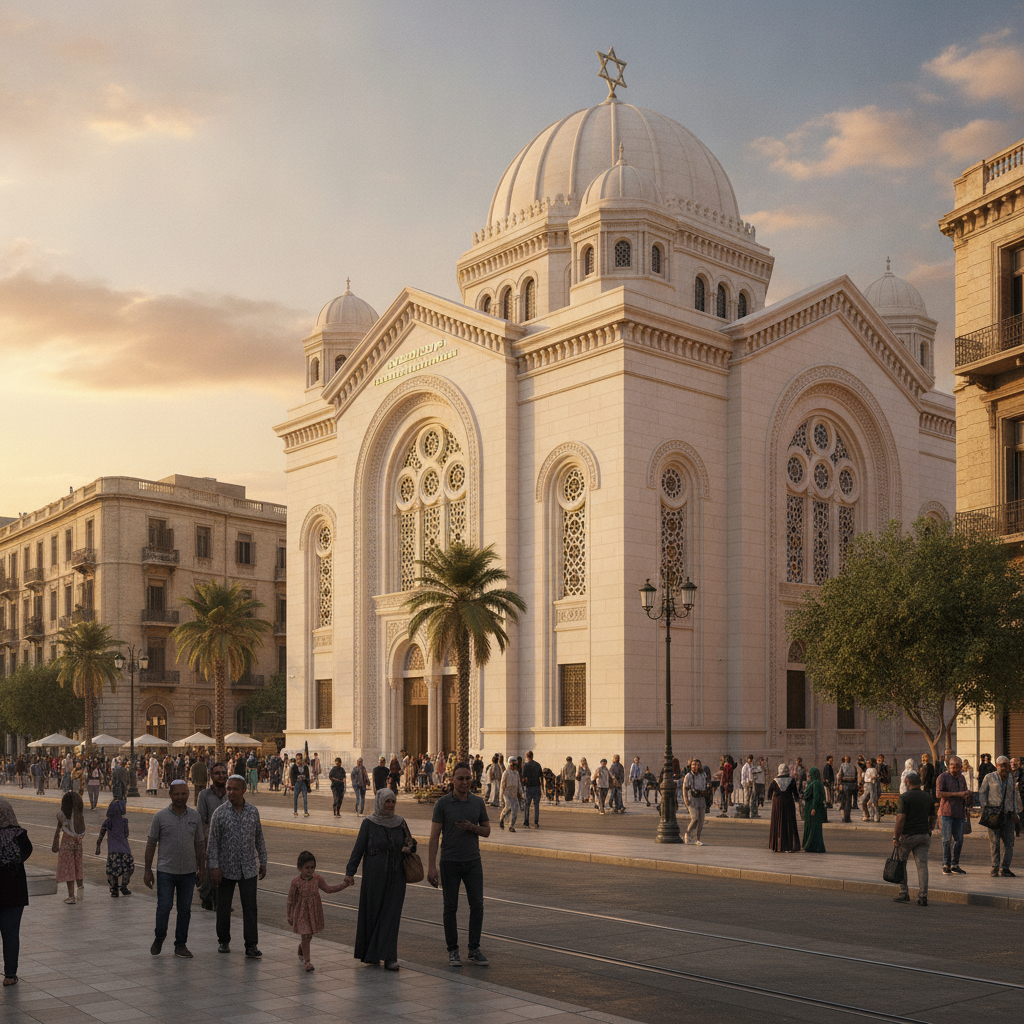
Alexandria Layers: The Jewish Community Heritage, the Ottoman Quarter, the Italian Community, and the Lost Cosmopolitan City
Alexandria Modern History - Napoleon, the British Occupation, Khedive Ismail, and the Cotton Economy
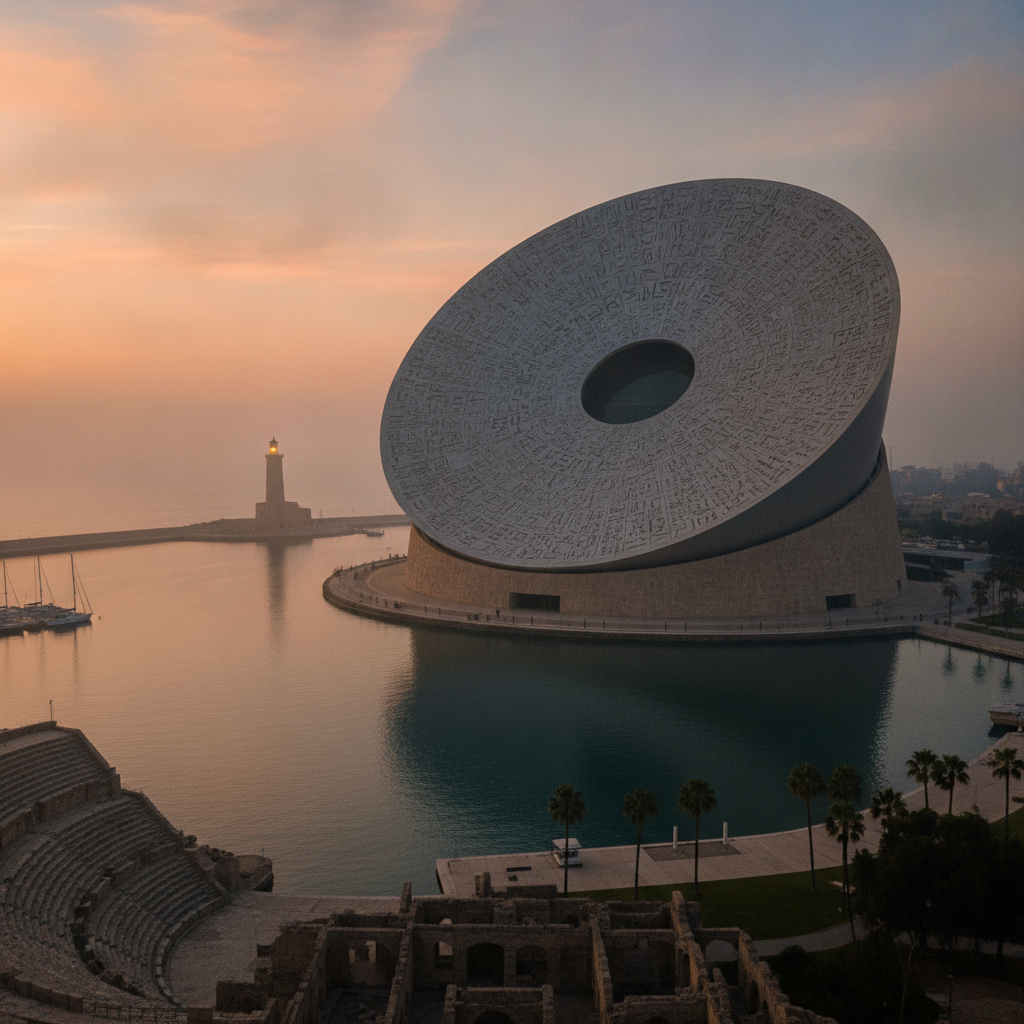
Alexandria: The Great Library, Pharos Lighthouse, Cleopatra, and the Bibliotheca Alexandrina
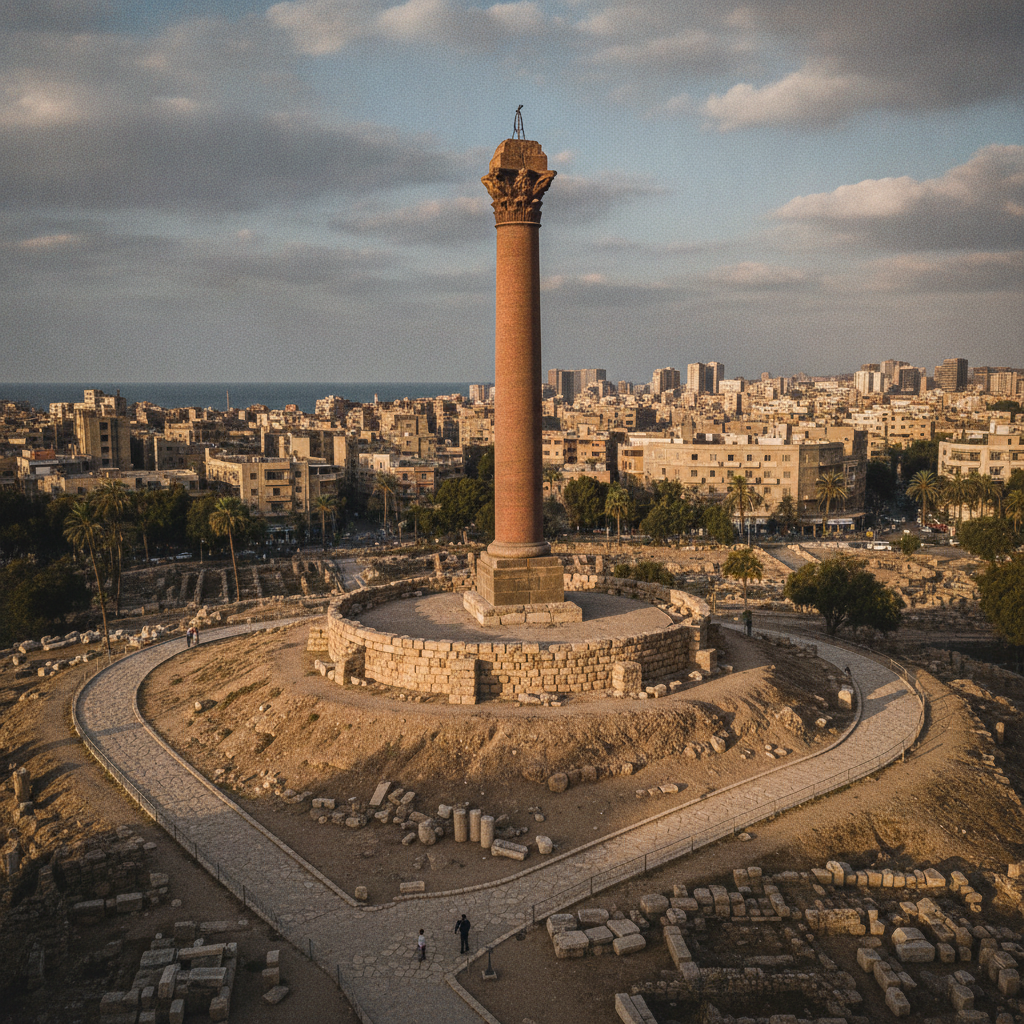
Alexandria Walk: The Pompey Pillar, the Serapeum Platform, the Roman Amphitheatre, and the Complete Ancient Alexandria Walking Circuit
Alexandria Practical: The Cairo Train Connection, the Accommodation, the Day Trip Strategy, the Best Timing, and the Egypt Circuit Role