Alice Springs Aboriginal Art & Culture Walk
Explore Alice Springs' Aboriginal art scene — the commercial and artistic centre for Western Desert, Aranda, and Central Australian Aboriginal art that has transformed Australian fine arts since the Papunya movement began in 1971.
- 1
Araluen Arts Centre Gallery
The Araluen Arts Centre houses the largest collection of Albert Namatjira watercolours in the world — the Aranda artist who painted the MacDonnell Ranges in a Western tradition is the founding figure of Central Australian Aboriginal art.
- 2
Papunya Tula Artists Gallery
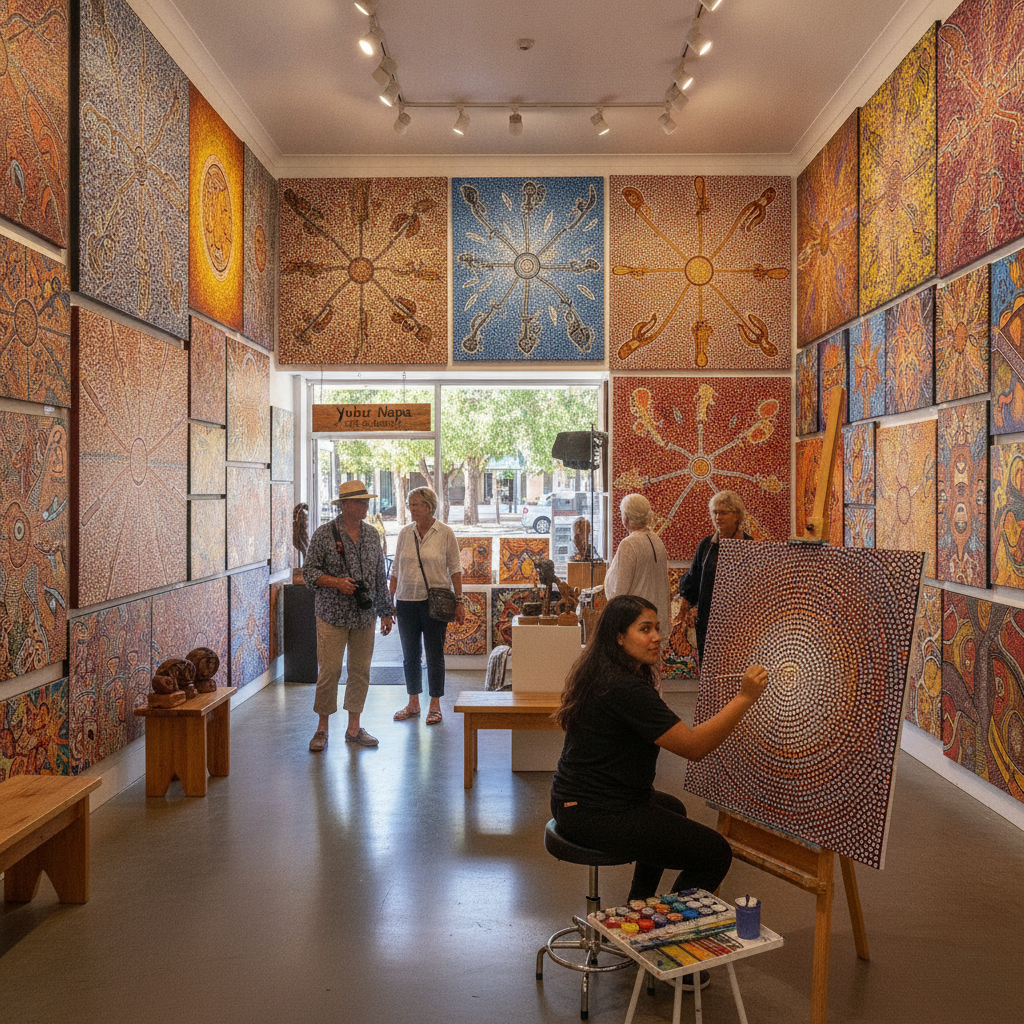
Papunya Tula is the first and most important Aboriginal art cooperative — established in 1972 following the Papunya art movement, the gallery represents artists from the Western Desert whose dot paintings are now among the most valuable in Australia.
- 3
Desart Art Centre Network
The Desart network represents 35 Aboriginal art centres across Central Australia — visiting a Desart member gallery ensures purchases go directly to artists and support their communities in some of Australia's most remote settlements.
- 4
CAAMA Aboriginal Broadcasting
The Central Australian Aboriginal Media Association (CAAMA) has been broadcasting in Aboriginal languages since 1980 — the organisation's impact on keeping Indigenous languages alive in the era of television makes it one of Australia's most important cultural institutions.
- 5
Tjulyuru Cultural Centre Yuendumu
Yuendumu, 300 km northwest, is where the Warlpiri people painted the school doors in 1983, launching the contemporary Warlpiri art movement — the art centre at Yuendumu is one of the most important in the region.
- 6
Aboriginal Art Markets
The Mbantua Gallery and the weekend markets in Alice Springs provide access to a wide range of Central Australian art — from emerging artists selling directly to collectors to established names represented in major museum collections.
Walk this route with audio
Stories play automatically as you reach each stop — no tapping needed.