De Pijp, Albert Cuyp & Heineken: Amsterdam's Most Diverse Neighborhood
De Pijp (The Pipe) — the dense, urban neighborhood immediately south of the canal ring, bounded by the Singelgracht canal — was built between 1870 and 1920 to house the working class that Amsterdam's industrial expansion required. The name comes from the long, narrow streets of apartment buildings that, viewed from the air, resemble a grid of pipes. Today De Pijp is Amsterdam's most international neighborhood: a community of 60,000 people from 150 nationalities, with the Albert Cuyp Market (the largest outdoor market in the Netherlands) at its heart, Turkish and Moroccan bakeries alongside Dutch brown cafés, Surinamese roti shops beside Indonesian rijsttafel restaurants. The neighborhood is also home to the Heineken Experience (the old Heineken brewery) and the Sarphatipark, a Victorian landscaped park at its center.
- 1
Heineken Experience — Beer, Architecture, and Amsterdam History
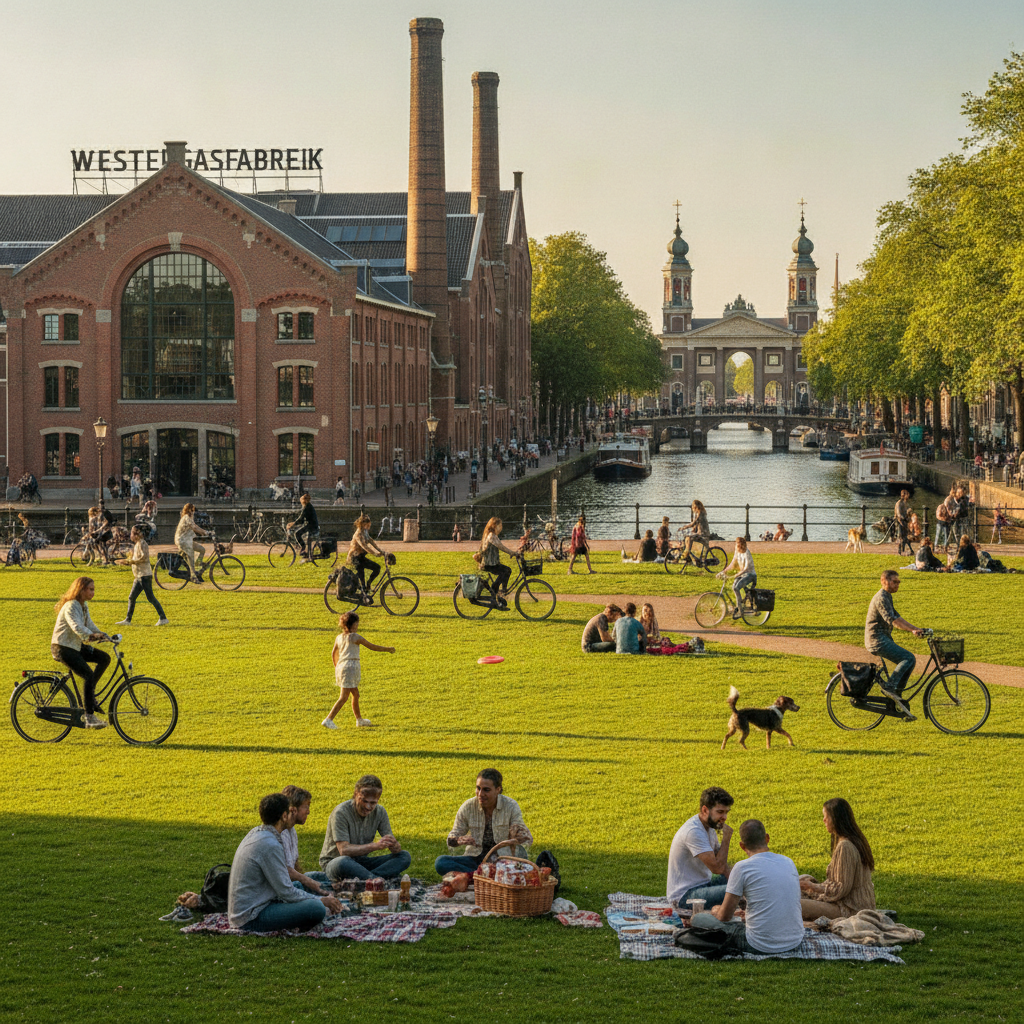
The Heineken Experience, in the original Heineken brewery on the Stadhouderskade (built 1867, designed by Pierre Cuypers — yes, the same architect who designed the Rijksmuseum and Central Station), tells the story of Heineken's growth from a small Amsterdam brewery to a global brand (currently the world's second-largest beer company by volume) and, more interestingly, the story of Amsterdam's beer culture and the role of beer in Dutch social history. The brewery operated at this site from 1867 to 1988; when Heineken moved production to larger facilities outside the city, the building was converted to a visitor experience rather than demolished. The original brewing equipment — copper kettles, fermentation tanks, stables for the delivery horses — has been preserved and integrated into the exhibition. The building itself, a large Victorian industrial structure of red brick with arched windows, is one of the most architecturally significant 19th-century industrial buildings in Amsterdam.
- 2
Albert Cuyp Market — The Netherlands' Largest Outdoor Market
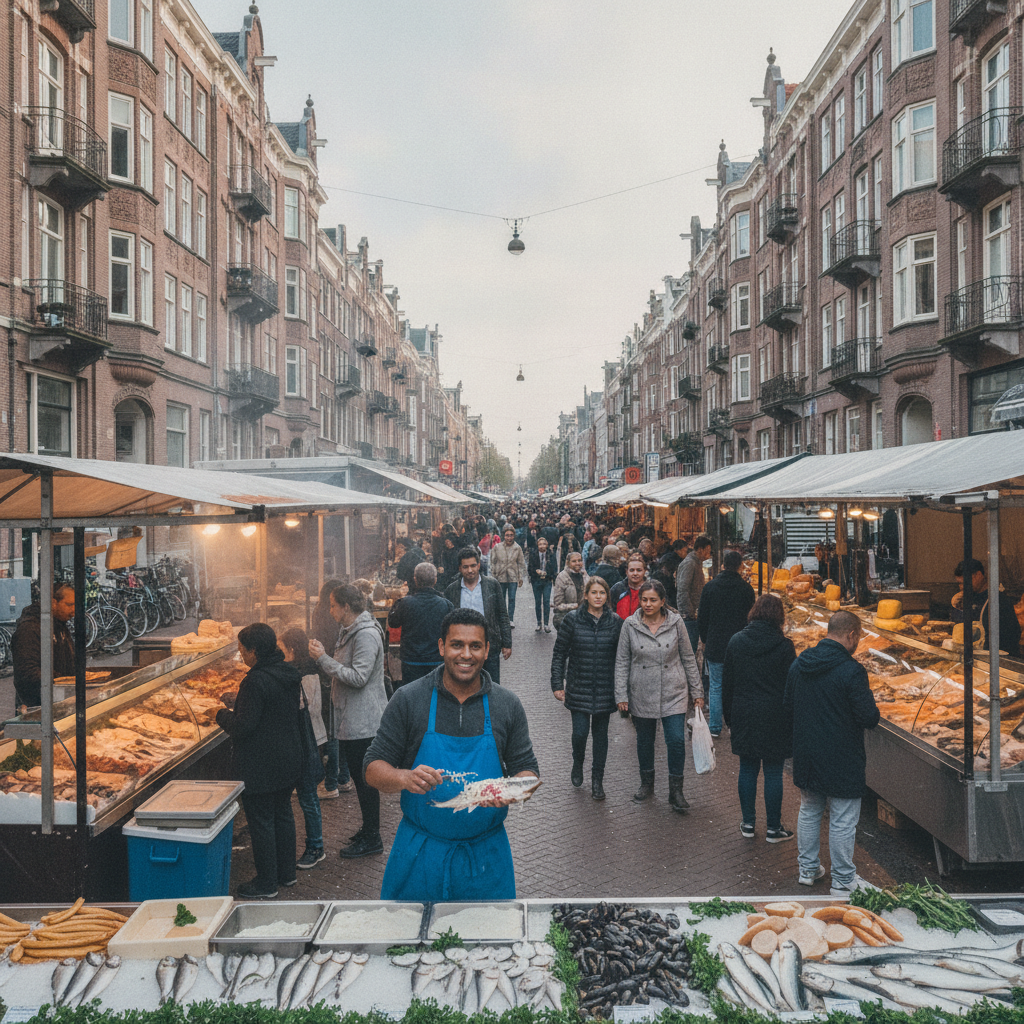
The Albert Cuyp Market, named after the 17th-century Dutch landscape painter Albert Cuyp, runs the full length of the Albert Cuypstraat (330 meters, 260 stalls, open Monday–Saturday) and has been operating since 1905: a daily market of food, household goods, clothing, and street food that is the social and commercial heart of De Pijp. The market's product range is a direct reflection of Amsterdam's demographic diversity: Dutch cheese (jong, oud, Gouda), fresh herring with pickles (hollandse nieuwe, the cured young herring eaten whole by holding the tail and tilting back the head — a Dutch street food tradition 600 years old), Moroccan spices and pastries, Turkish bread, Indonesian sate and nasi goreng, Surinamese roti. The market is at its most intense on Saturday morning, when residents of all backgrounds converge for weekly shopping and the street food stalls serve the full range of Amsterdam's culinary cultures.
- 3
Sarphatipark — The Neighborhood's Victorian Heart
The Sarphatipark, a small Victorian landscaped park at the center of De Pijp, was designed by Jan David Zocher (who also designed Vondelpark) and opened in 1886 — two decades after the surrounding streets were built, as a compensating green space for the dense working-class neighborhood. The park is named after Samuel Sarphati (1813–1866), an Amsterdam Jewish doctor and social reformer who campaigned for public health, education, and infrastructure improvements in 19th-century Amsterdam and is credited with founding the first commercial bakery in the Netherlands. The park has a decorative fountain, a central statue of Sarphati, and a circuit of paths that provides one of the most pleasant 10-minute walks in Amsterdam. The surrounding streets — particularly the Gerard Doustraat and the Eerste van der Helststraat — are the best place to experience De Pijp's café culture: brown cafés, coffee bars, and restaurants with outdoor seating in summer.
- 4
Ferdinand Bolstraat — De Pijp's Main Street
The Ferdinand Bolstraat, running north-south through De Pijp from the Heineken brewery to the Amstel river, is the neighborhood's main commercial street: a mix of independent shops, restaurants, and services that reflects both the neighborhood's diverse population and its rapid gentrification in the 2000s–2010s. The street has the characteristic De Pijp pattern: Turkish and Moroccan food shops alongside Dutch delicatessens, Vietnamese pho restaurants beside Dutch brown cafés, vintage clothing stores next to established antique dealers. The southern end of the street, approaching the Amstel, becomes quieter and more residential, with larger apartment buildings and the Utrechtsedwarsstraat crossing — a small street with an unusually high concentration of independent restaurants that has been called the best restaurant street in Amsterdam.
- 5
De Pijp's Brown Cafés — The Dutch Institution
The bruine kroeg (brown café), the characteristic Amsterdam institution of a neighborhood pub with dark wood paneling, candles, newspapers on wooden rods, and a selection of Dutch beer and jenever (gin), is found throughout Amsterdam but reaches its highest concentration in De Pijp, where the working-class origins of the neighborhood created a café culture that has survived gentrification. The name 'brown' refers to the color of the wood paneling and the nicotine staining that accumulated on walls and ceilings over decades before the smoking ban (2008). The best brown cafés in De Pijp — Café Kingfisher, Café de Ooievaar, Café Brouwerij 't IJ (in a windmill on the Eastern Docklands) — are indistinguishable from what they looked like 50 years ago. The Dutch order beer in 25cl glasses (vaasjes) rather than pints; the standard progression is beer → small jenever → back to beer, a pattern called a 'kopstoot' (headbutt).
- 6
Nieuwe Pijp & the Gerard Doustraat — Slower, Quieter
The southern part of De Pijp, below the Albert Cuypstraat, known as the Nieuwe Pijp (New Pipe), has a quieter, less touristed character than the area around the market: residential streets with fewer restaurants and more grocers, laundries, and everyday shops, and a different apartment building typology (larger buildings, more 1920s Amsterdam School architecture with its characteristic brick ornament and curving facades). The Gerard Doustraat, crossing the neighborhood from east to west, is the best place to see the Amsterdam School architecture at its most elaborate: the Cooperatieve Woningvereniging building (1921, by J.B. van Loghem), the housing blocks on the corner of the Van Woustraat, and the characteristic corner towers that punctuate the Amsterdam School streetscape. The Amsterdam School (1910s–1930s), sometimes called Dutch Expressionism, is an architectural movement unique to Amsterdam that developed the traditional brick building tradition into an ornamental expressionism of curved walls, fantasy towers, and hand-crafted brick details.
Walk this route with audio
Stories play automatically as you reach each stop — no tapping needed.
More in amsterdam
Rijksmuseum, Van Gogh & Museumplein: The Museum Quarter
Jordaan, Anne Frank & the Canal Ring: Amsterdam's Golden Age Heart
Rembrandtplein, Tuschinski & the Amstel: Art, Entertainment, and the Skinny Bridge
Amsterdam Noord, EYE & NDSM: The Creative Waterfront
NEMO, Maritime Museum & Eastern Docklands: The Harbor City Reinvented