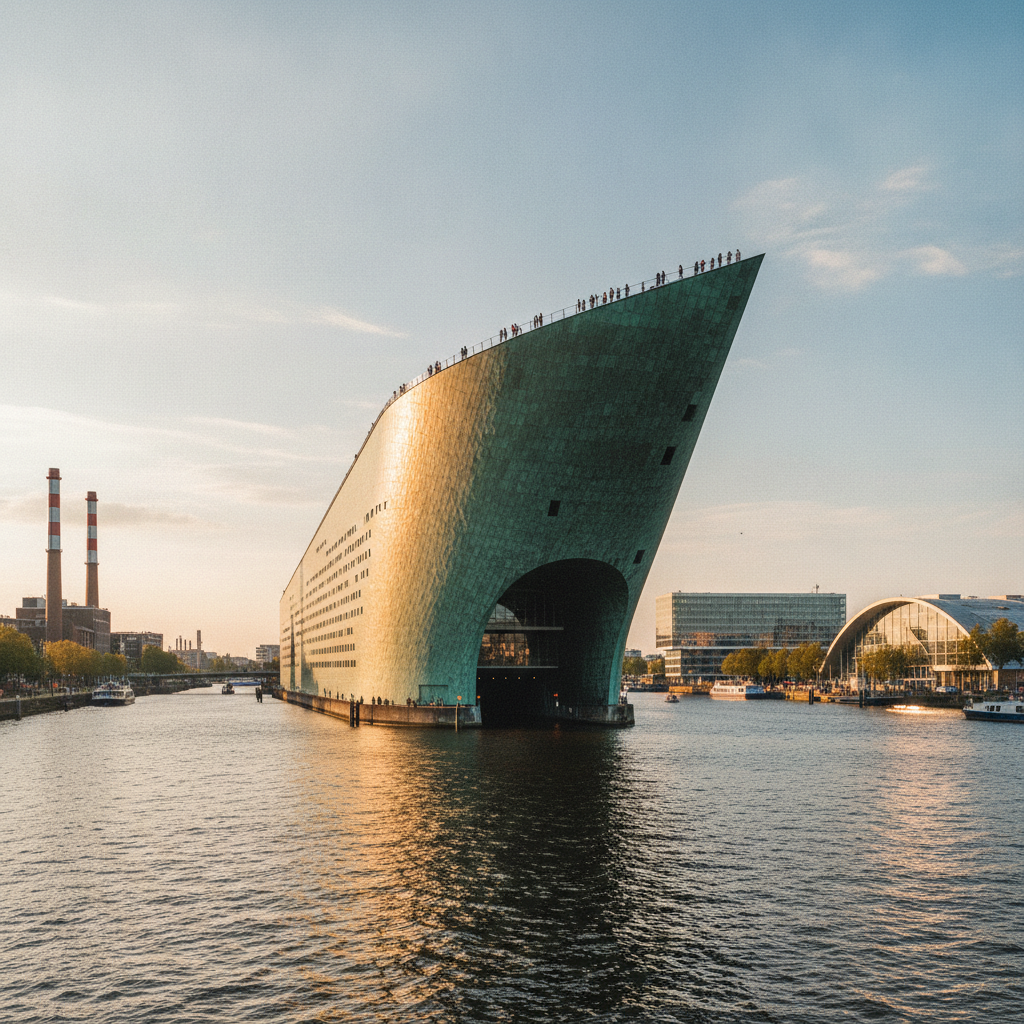
Jewish Quarter, Plantage & Hortus Botanicus: Memory and Nature
The area east of the historic center — the Jodenbuurt (Jewish Quarter), the Waterlooplein, and the Plantage neighborhood — carries the heaviest history in Amsterdam: the Jodenbuurt was home to Amsterdam's Sephardic and Ashkenazi Jewish communities from the 16th century until the German occupation (1940–1945), when 80,000 of Amsterdam's 100,000 Jewish residents were deported and killed. The neighborhood was almost entirely demolished after the war during urban renewal projects, and only the synagogue complex, the market, and a few streets survive from the pre-war community. Immediately adjacent, the Plantage — a residential neighborhood of late 19th-century apartment buildings and broad, tree-lined streets, developed on former botanical gardens — provides a counterweight of extraordinary beauty: the Hortus Botanicus (1638, one of the world's oldest botanical gardens), the Artis Royal Zoo, and the Dutch Resistance Museum.
- 1
Jewish Historical Museum — A Community's Complete Archive
The Jewish Historical Museum (Joods Historisch Museum), housed in a complex of four former Ashkenazi synagogues (the Great Synagogue of 1671, the Obbene Shul of 1685, the Dritt Shul of 1700, and the Nieuwe Synagoge of 1752, all connected internally), is the most complete documentary archive of Jewish life in the Netherlands: photographs, documents, ceremonial objects, and personal testimonies spanning 400 years, from the arrival of Sephardic Jews expelled from Spain and Portugal in 1492–1497 to the present. The collection documents the extraordinary prosperity and cultural achievement of Amsterdam's Jewish community in the Golden Age (Spinoza, the diamond trade, Rembrandt's Jewish neighbors whose portraits he painted), the 19th-century expansion of the Ashkenazi community from Eastern Europe, and the catastrophic destruction of the Holocaust: 102,000 Dutch Jews were deported; 75% perished, the highest proportional death rate of any Western European Jewish community.
- 2
Portuguese Synagogue — The Largest Synagogue in the World in 1675
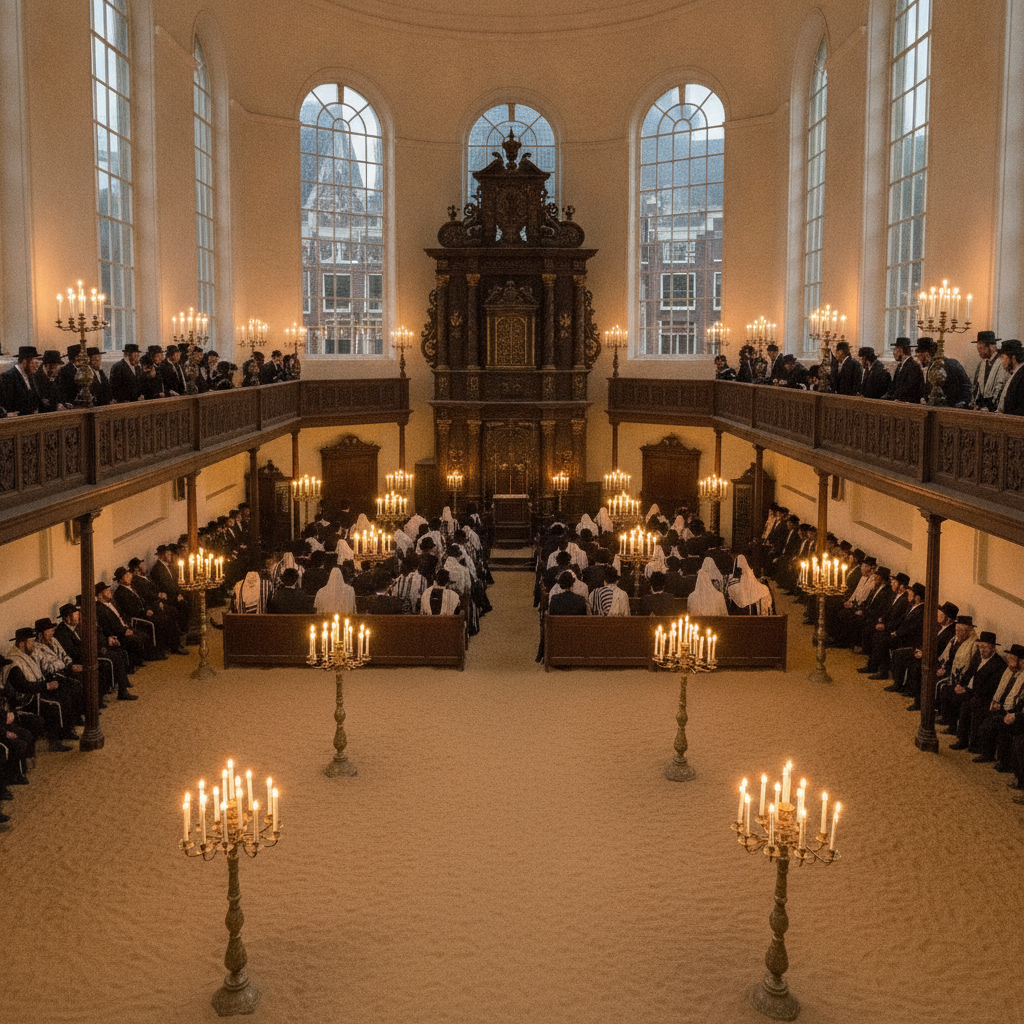
The Portuguese Synagogue (Esnoga), built between 1671 and 1675 for the Sephardic Jewish community of Amsterdam, was the largest synagogue in the world at the time of its completion: a massive, austere brick building inspired by the Temple of Solomon, with a sand-covered floor (tradition), 72 brass candelabras, and no electricity (candles and daylight only, as originally installed — the building has never been electrified). The architect, Elias Bouman, was not Jewish; the building was funded by the Sephardic community, descendants of Jews expelled from Spain (1492) and Portugal (1497) who found refuge in the religiously tolerant Dutch Republic. The synagogue has been in continuous use since 1675 and has survived wars, fires, and the Holocaust unchanged — one of the most complete surviving synagogues from the pre-modern period. The adjacent treasury (in a former rabbi's house) holds the community's silver Torah ornaments and ceremonial objects.
- 3
Waterlooplein Flea Market & Jewish Quarter History
The Waterlooplein, originally the heart of the Jewish Quarter (a square formed by filling in two canals in 1882), hosts Amsterdam's oldest and most famous flea market: a daily open-air market of second-hand goods, antiques, vintage clothing, and curiosities that has operated continuously since 1886 (with interruptions during the German occupation, 1940–1945). The market's history is inseparable from the neighborhood's: before the war, the market was primarily Jewish — run by Jewish traders selling goods to a predominantly Jewish neighborhood. After the deportations, the market continued, the same stalls now operated by non-Jewish traders selling goods that had largely come from the homes of the deported. The adjacent Stopera (1986, a controversial combined opera house and city hall that required the demolition of significant parts of the historic Jewish Quarter), now the Dutch National Opera and Ballet, has a small exhibition on the neighborhood's history in its ground-floor lobby.
- 4
Hortus Botanicus — 1638 and Still Growing
The Hortus Botanicus Amsterdam, established in 1638 as the 'Hortus Medicus' (medicinal plant garden) of the city of Amsterdam, is one of the oldest botanical gardens in the world and one of the most important in the history of European botany: the garden where Jan Commelin and his nephew Caspar Commelin catalogued the Dutch East India Company's plant collections from Asia, where the coffee plant (Coffea arabica) was first cultivated in Europe (1706), and where specimens collected by botanists on VOC ships were identified, named, and distributed to other European gardens. The current garden, expanded several times from its original location on the Plantage Middenlaan, has 6,000 plant species in its outdoor beds and greenhouses, including a 300-year-old cycad (one of the oldest potted plants in the world), the Victoria amazonica water lily, and a clonal descendent of the coffee plant that was sent to the French Caribbean in 1714, where it became the ancestor of all New World coffee cultivation.
- 5
Dutch Resistance Museum — How a Society Responded to Occupation
The Dutch Resistance Museum (Verzetsmuseum), in a former theater in the Plantage, documents the Dutch population's response to the German occupation of the Netherlands (May 1940 – May 1945): not the comfortable narrative of universal resistance, but the complex and uncomfortable truth — that the Dutch population's responses ranged from active collaboration through passive compliance to active resistance, and that the remarkably efficient German deportation of Dutch Jews was enabled by the cooperation of Dutch civil servants, police, and railway workers, as well as the relative passivity of the broader population. The museum is exceptional for its intellectual honesty: it examines what people actually did, not what they should have done, and presents the moral complexity of life under occupation with unusual clarity. The children's section ('Zie je wel' — 'There you go') presents the occupation through the stories of four children of different backgrounds.
- 6
Artis Royal Zoo & the Plantage Neighborhood
Artis, the Royal Artis Zoo, established in 1838 and the oldest zoo in the Netherlands (and the third oldest in the world still in its original location), occupies 14 hectares of the Plantage neighborhood in a deliberate parkland setting: the 19th-century founders intended the zoo to be not just an animal collection but a place of scientific study, recreation, and education for the Amsterdam middle class. The zoo has 900 animal species and is notable for its 19th-century architecture (the 1854 aquarium building, the 1870 glass-and-iron winter gardens, the 1856 planetarium). The Plantage neighborhood surrounding the zoo is one of Amsterdam's pleasantest residential areas: broad streets, late 19th-century apartment buildings, the Artis garden visible through iron fences, and an extraordinary concentration of Indonesian restaurants (a legacy of Amsterdam's historical connection with the Dutch East Indies).
Walk this route with audio
Stories play automatically as you reach each stop — no tapping needed.
More in amsterdam
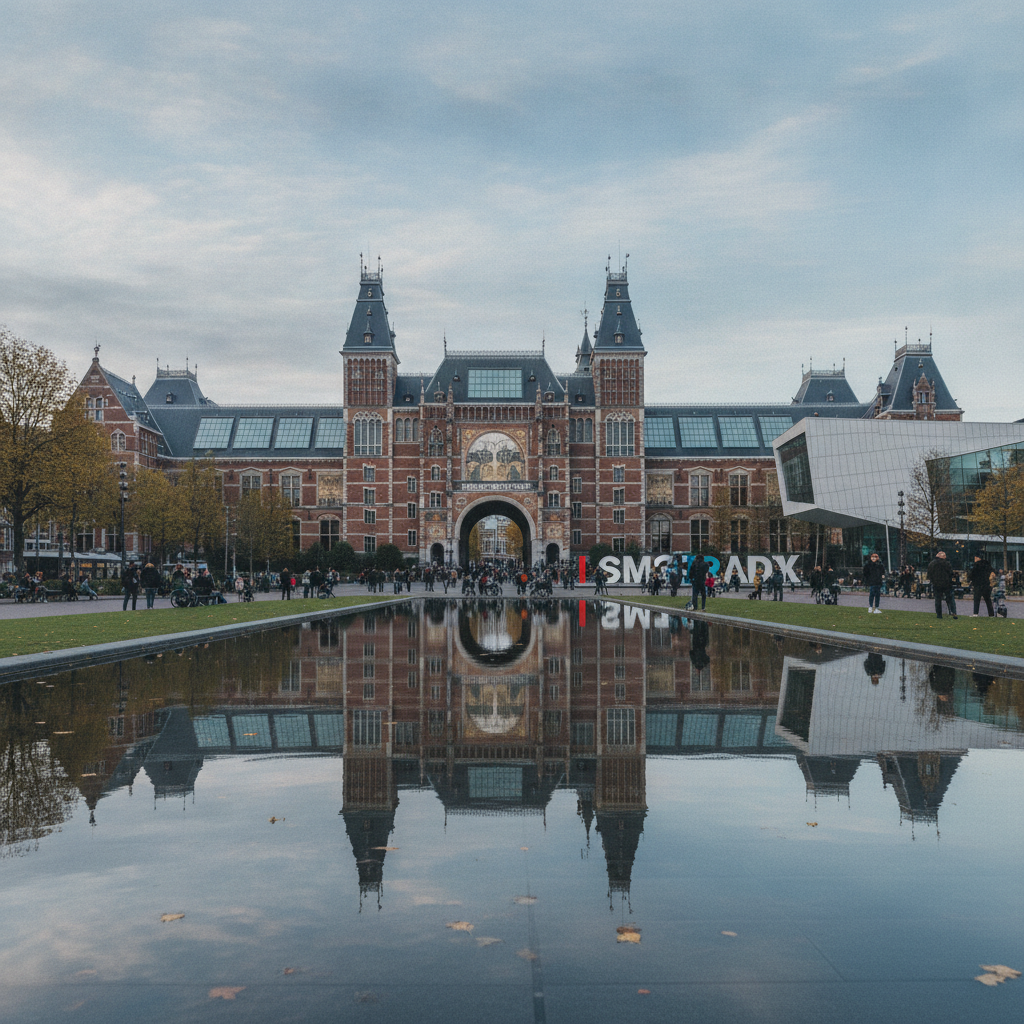
Rijksmuseum, Van Gogh & Museumplein: The Museum Quarter
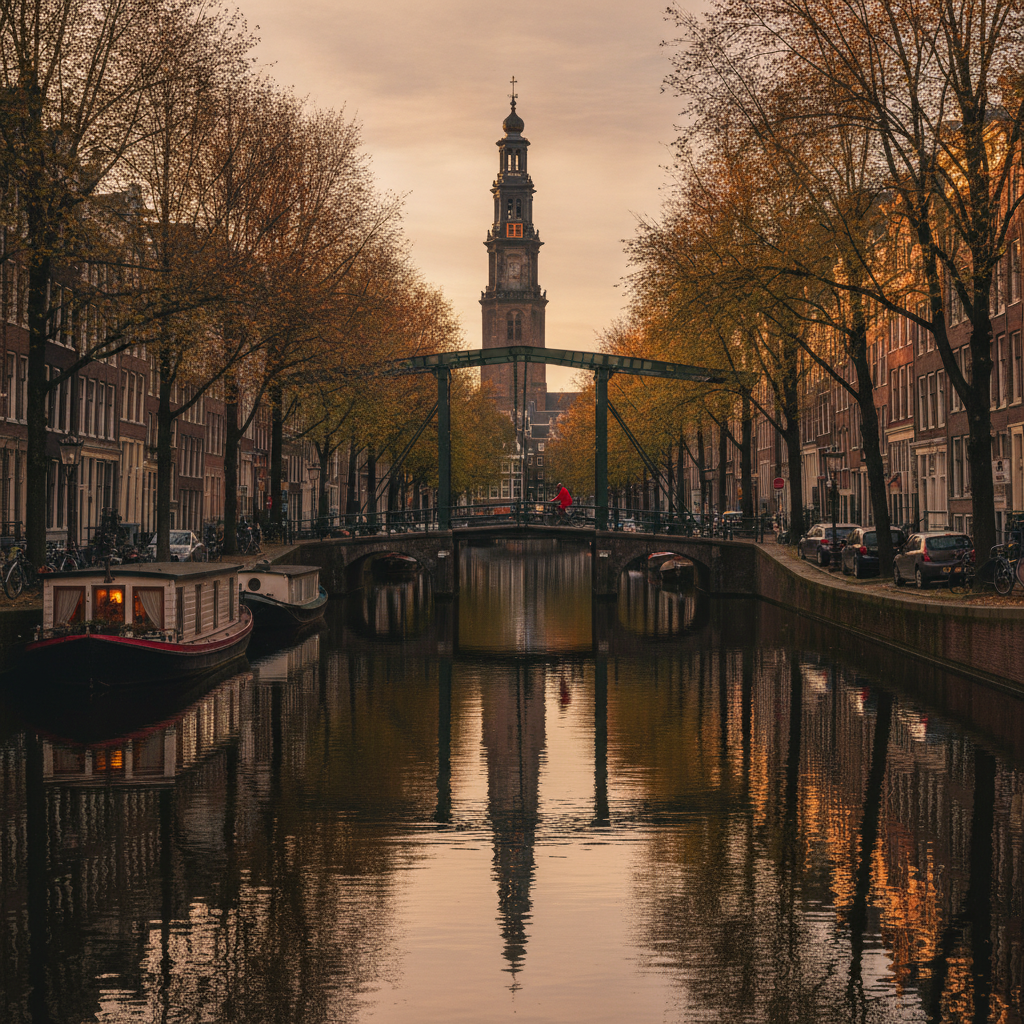
Jordaan, Anne Frank & the Canal Ring: Amsterdam's Golden Age Heart
Rembrandtplein, Tuschinski & the Amstel: Art, Entertainment, and the Skinny Bridge
Amsterdam Noord, EYE & NDSM: The Creative Waterfront
De Pijp, Albert Cuyp & Heineken: Amsterdam's Most Diverse Neighborhood