Anchorage: Denali, Chugach Mountains, Alaska Railroad, Iditarod, Kenai Fjords, the 1964 Earthquake, and Practical Info
Anchorage (elevation 38 m, population 291,000 city/400,000 metro, approximately 40% of all Alaska's 733,000 people) is the largest city in Alaska and the commercial hub of the largest US state by area (1.7 million square km, larger than Texas, California, and Montana combined). The city sits between the Chugach Mountains (immediately east, reaching 4,016 m) and Cook Inlet (to the west), at 61 degrees North latitude -- the same latitude as Oslo, Norway, and Helsinki, Finland. Anchorage is the gateway to some of the most extraordinary wilderness in the world: Denali National Park (240 km north, 24,500 square km, Denali at 6,190 m the highest North American peak), Kenai Fjords National Park (230 km south, Harding Icefield 700 square km the largest US icefield), and Chugach State Park (500,000 acres within Anchorage city limits, 3rd-largest US state park). The city hosts the ceremonial start of the Iditarod Trail Sled Dog Race (1,600 km to Nome), was devastated by the M9.2 Great Alaska Earthquake of 1964 (second-largest earthquake in human history), and is served by Ted Stevens International Airport, one of the top 5 airports in the world by cargo tonnage due to Anchorage sitting at the midpoint of transpacific great circle routes.
- 1
Denali and the Alaska Range - The Tallest Mountain in North America
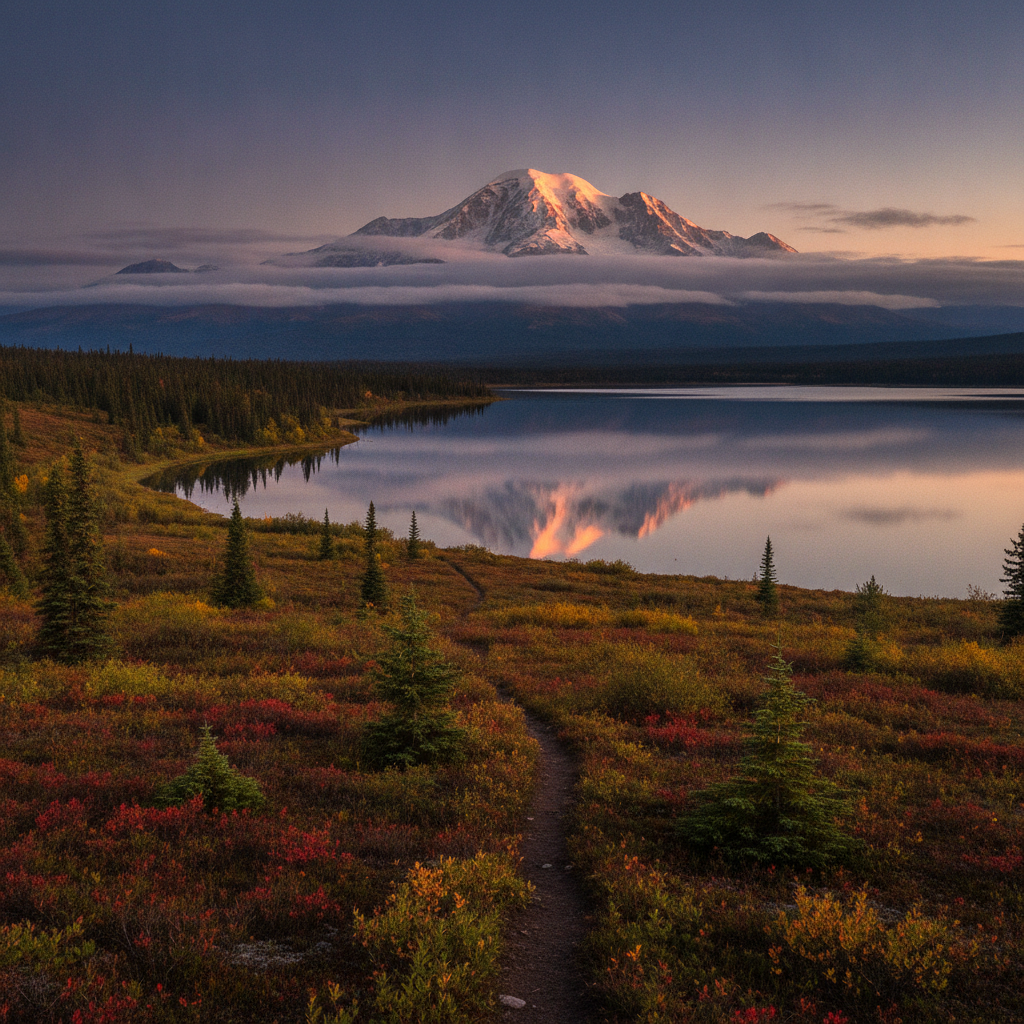
Denali (the Athabaskan name meaning the Great One, the mountain officially redesignated from Mount McKinley to Denali by the U.S. Board on Geographic Names on August 30, 2015, at 63 degrees 4 minutes North latitude, 151 degrees 0 minutes West longitude, summit elevation 6,190 m above sea level -- the highest peak in North America and the highest mountain in the world above its immediate base (the Alaska Range plateau base at approximately 600 m gives Denali a base-to-summit rise of approximately 5,600 m, greater than Mount Everest's base-to-summit rise of approximately 3,500 m from the Tibetan Plateau)): the mountain visible from Anchorage on clear days (240 km north-northeast), rising above the Alaska Range as the defining visual symbol of Alaska. Denali National Park and Preserve (at Mile 237, George Parks Highway, Denali Park, AK, 400 km north of Anchorage via the Parks Highway): the 24,500-square-km national park established February 26, 1917 (as Mount McKinley National Park) protecting the Alaska Range and the vast taiga and tundra that surrounds it. The park road: the 148-km Denali Park Road is the only road into the park, with private vehicles restricted to the first 14.5 km (to the Savage River); the remaining 133.5 km is accessible only by park bus, on foot, or on bicycle. The climbing season: approximately 1,000-1,200 climbers per year attempt to summit Denali via the West Buttress Route (the standard route established by Bradford Washburn in 1951), with approximately 50-58% success rate -- the mountain's extreme altitude (causing more severe altitude effects than mountains of similar height in lower latitudes due to the thinner atmosphere at high latitudes) and notorious weather (storms with winds exceeding 160 km/h and temperatures below -50C) make it one of the most challenging high-altitude objectives in the world.
- 2
Chugach Mountains, Portage Glacier, and Turnagain Arm
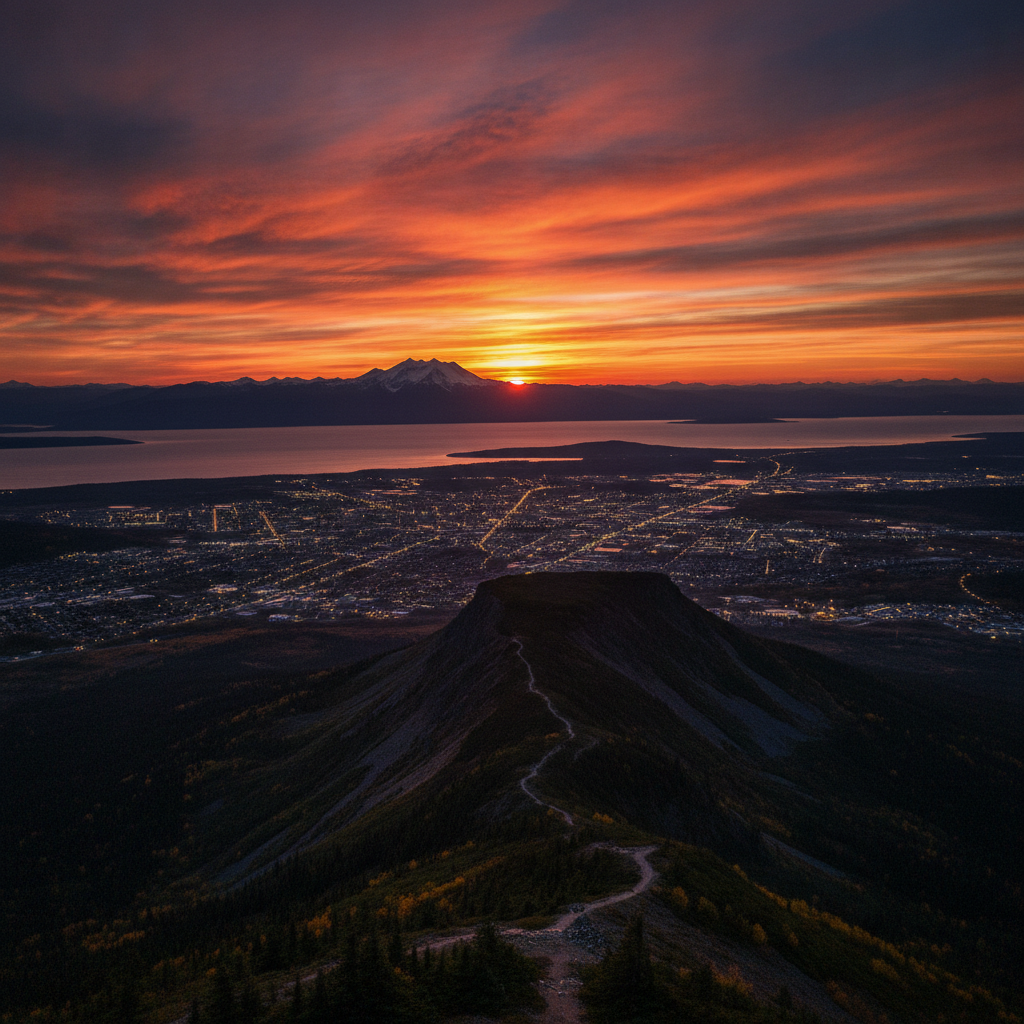
The Chugach Mountains (the mountain range immediately east and south of Anchorage, reaching 4,016 m at Mount Marcus Baker, the highest peak in the range, with the nearest significant peaks only 15-20 km from downtown Anchorage): the dominant geographical feature of the Anchorage Bowl, providing the dramatic mountain backdrop visible from virtually every point in the city and containing the Chugach State Park (500,000 acres, the 3rd-largest state park in the United States) within Anchorage city limits -- Anchorage has the largest municipal park system per capita of any American city. The Flattop Mountain Trail (the trailhead at Upper Huffman Road and Toilsome Hill Drive, 15 km from downtown Anchorage, the 5.4-km round-trip hike to the 1,077-m summit of Flattop Mountain): the most-climbed mountain in Alaska, with views of Cook Inlet, the Alaska Range, and the Anchorage Bowl from the summit on clear days. Portage Glacier (at the end of Portage Glacier Road, 80 km south of Anchorage via the Seward Highway, in Portage Valley): the glacier accessible from the Begich, Boggs Visitor Center (the visitor center at the end of the road, with a theater presenting the Byron Glacier and Portage Glacier environment); the glacier has retreated approximately 3 km since the center was built in 1986 -- the retreat is now so significant that the glacier is no longer visible from the visitor center, requiring a boat tour to approach. Turnagain Arm (the 40-km arm of Cook Inlet running southeast from Anchorage, visible from the Seward Highway between Anchorage and Portage): the second-largest tidal bore in North America (after the Bay of Fundy), with the incoming tide creating a standing wave (the bore) that advances up the arm at 20-25 km/h -- surfable by expert kayakers who position themselves at the Beluga Point viewpoint on the Seward Highway.
- 3
The Alaska Railroad and the Iditarod
The Alaska Railroad (at 411 West First Avenue, Anchorage, established 1915 by the federal government, still owned by the State of Alaska): the 800-km single-track railroad connecting Seward (235 km south of Anchorage, on Resurrection Bay) through Anchorage (the primary railhead) north to Fairbanks (550 km north), with branch lines to Whittier and Palmer. The Alaska Railroad is one of only two US railroads still owned by a state government (the other being the Hawaii state railroad, which no longer operates), and it operates year-round passenger service on the Anchorage-Fairbanks route (the Denali Star, 12 hours, USD 229-289 each way, with dome car observation service and onboard narration of Alaskan history). The most spectacular scenic train ride in North America: the Hurricane Turn train (the flag stop train running from Talkeetna to Hurricane Gulch, operating year-round, requiring passengers to flag the train from the side of the tracks in the wilderness -- the last flag stop passenger train in the United States). The Iditarod Trail Sled Dog Race (beginning ceremonially in downtown Anchorage on the first Saturday of March at 4th Avenue, then restarting officially in Willow, 100 km north, the following day): the most famous sled dog race in the world, covering 1,600 km of Alaska wilderness from Willow to Nome (the finish), typically completed in 8-15 days, commemorating the 1925 serum run (the relay of diphtheria antitoxin by 20 mushers and 150 sled dogs from Nenana to Nome, 1,085 km in 5.5 days, saving the city of Nome from a diphtheria epidemic). The 2025 Iditarod had prize money of USD 500,000 for the winner. The Iditarod Museum (at 2100 South Knik-Goose Bay Road, Wasilla, 80 km north of Anchorage): the museum dedicated to the history of the race and the mushing tradition.
- 4
Kenai Fjords National Park and the Gulf of Alaska
Kenai Fjords National Park (visitor center at 1212 4th Avenue, Seward, AK, 230 km south of Anchorage via the Seward Highway, established December 2, 1980, 2,710 square km): the national park protecting the Kenai Mountains and Harding Icefield (the largest icefield in the United States, covering 700 square km at elevations of 1,200-1,800 m, feeding 40 named glaciers) and the drowned fjord coastline carved by those glaciers during the Pleistocene ice ages. The Exit Glacier (accessible from Exit Glacier Road, 13 km from Seward): the only part of Kenai Fjords National Park accessible by road, with a 1.3-km nature trail to the glacier face and a 9.6-km round-trip Harding Icefield Trail climbing through alpine terrain to the edge of the icefield. Exit Glacier markers along the trail show the retreat of the glacier ice front: in 1815 the glacier extended 800 m beyond the current face; by 2023 it had retreated approximately 1.3 km total from its historic maximum extent. The fjord boat tours from Seward: the most popular way to experience Kenai Fjords, with half-day (USD 90-120) and full-day (USD 160-185) tours from Seward Small Boat Harbor into Resurrection Bay and the outer fjords, viewing tidewater glaciers, sea otters, Steller sea lions, orca whales, humpback whales, puffins, and murres in one of the most productive marine ecosystems in the world. The Orca, humpback, and sea otter populations: the waters of the Gulf of Alaska support approximately 600 orca (Orca orcinus) in the AT1 and AT2 transient killer whale populations, thousands of sea otters (Enhydra lutris), and the largest Steller sea lion (Eumetopias jubatus) rookeries in Alaska.
- 5
The Great Alaska Earthquake of 1964 and Anchorage's Rebirth
The Great Alaska Earthquake (the earthquake of March 27, 1964, Good Friday, 5:36 pm Alaska Standard Time, at 61.04N, 147.65W, in Prince William Sound, 120 km east of Anchorage): the second-largest earthquake ever recorded in human history (magnitude 9.2 on the moment magnitude scale, exceeded only by the 1960 Valdivia earthquake in Chile at M 9.5), releasing energy equivalent to approximately 240 million tons of TNT -- 10 times more powerful than any earthquake ever recorded in the continental United States. The shaking lasted approximately 4.5 minutes (most major earthquakes last 30-60 seconds), causing the most extensive ground failure of any earthquake in North American history -- the 4th Avenue commercial district of Anchorage dropped 3 m, the Turnagain Heights neighborhood (where 75 homes were destroyed by liquefaction and submarine landsliding) lost 100 m of coastline, and L Street dropped 9 m in a block-wide section. The tsunami: the earthquake generated a series of tsunamis that killed 131 people along the Gulf of Alaska coast, in Oregon (at Crescent City, California, and Newport, Oregon), and even as far as Crescent City, California (11 killed). The total death toll was 139 (remarkably low for an earthquake of this magnitude -- the low population of Alaska and the Good Friday timing, when few people were in offices or schools, contributed). The Anchorage Museum (at 625 C Street, Anchorage, the largest museum in Alaska, USD 69M expansion completed 2009): contains the most comprehensive collection of Alaska art and history including the 1964 earthquake documentation. The Earthquake Park (at the end of West Northern Lights Boulevard, on the former Turnagain Heights neighborhood site): the park preserving the landscape of the liquefied ground that destroyed 75 homes in 1964.
- 6
Anchorage Practical Guide - The Crossroads of the World
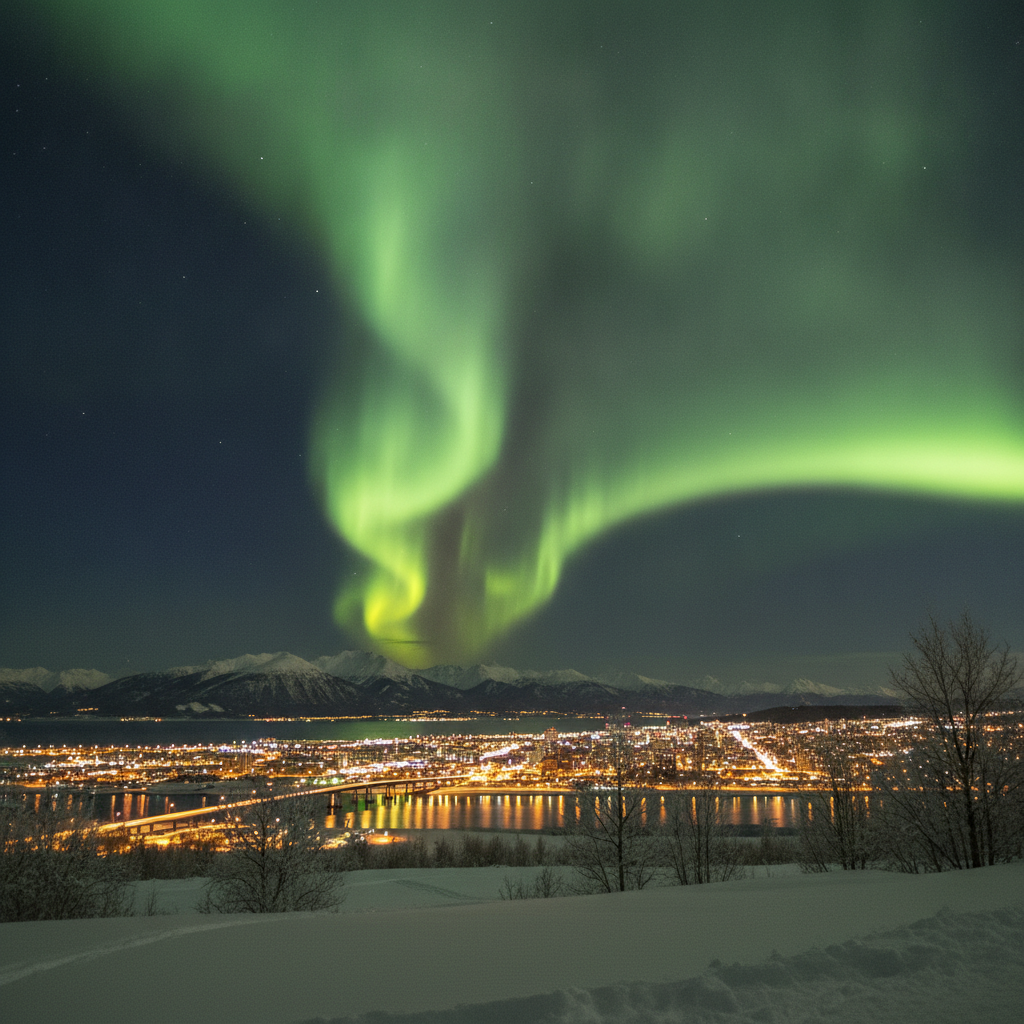
Anchorage (population 291,000 city, 400,000 metro -- approximately 40% of Alaska's total population of 733,000 lives in the Anchorage metro): the largest city in Alaska, the commercial and medical hub of the state, and one of the most geographically isolated major cities in the United States -- connected to the contiguous US by a single highway (the Alaska Highway, 2,300 km from Dawson Creek, BC), the Alaska Marine Highway ferry system, and the Alaska Railroad. Ted Stevens Anchorage International Airport (at 5000 West International Airport Road, IATA code ANC): one of the busiest airports in the world by cargo tonnage (typically 4th-6th globally), because Anchorage sits at the geographic midpoint between North America and Asia -- a 9.5-hour flight from Tokyo, a 10-hour flight from Frankfurt, and a 6-hour flight from Los Angeles, making Anchorage a natural fuel and cargo transshipment hub for transpacific cargo routes. The airport handles approximately 8 million cargo tonnes per year (more than LAX or JFK for cargo), with FedEx and UPS operating major sorting hubs. The Anchorage climate: subarctic climate with the moderating influence of Cook Inlet, averaging 80 cm of annual snowfall, temperatures from -26C (January record) to 32C (July record, though rarely above 22C on average), and 19 hours of daylight on the summer solstice (June 21) but only 5.5 hours on the winter solstice (December 21). The midnight sun effect: in June and July the sky never fully darkens in Anchorage, with civil twilight persisting through the shortest nights, creating the famous Alaska summer where residents stay outside until 2 am and sleep with blackout curtains. The best season: late May through September for outdoor recreation; December-March for Northern Lights (the aurora borealis, visible from the Anchorage Hillside on clear winter nights).
Walk this route with audio
Stories play automatically as you reach each stop — no tapping needed.
More in anchorage
Anchorage: Native Culture, Wilderness City and the World Cargo Hub
Anchorage: Alaska History and Statehood, Seward Highway, Neighborhoods, Glacier Trekking, Economy, and Kenai Salmon Fishing
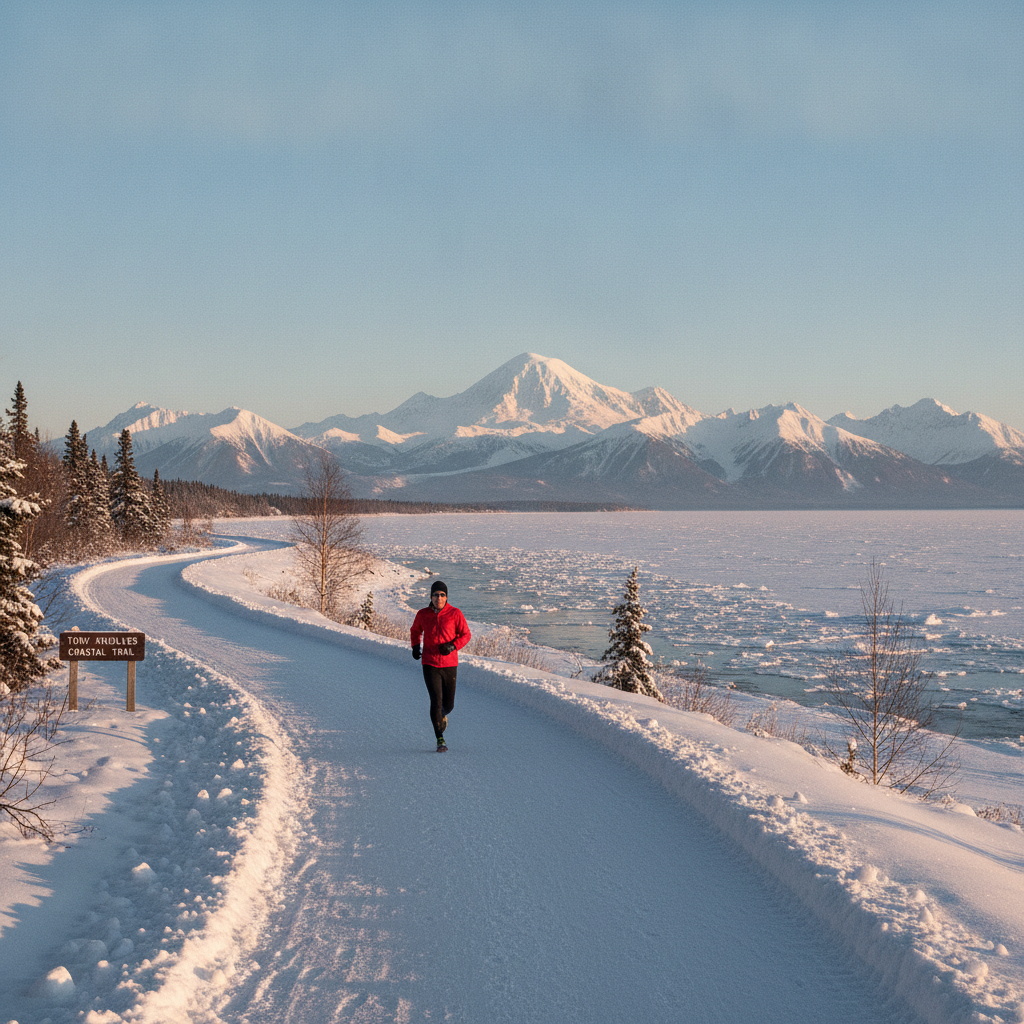
Anchorage: Kincaid Park, Inside Passage, Climate Change in Alaska, Arts Scene, Winter Northern Lights, and Day Hiking
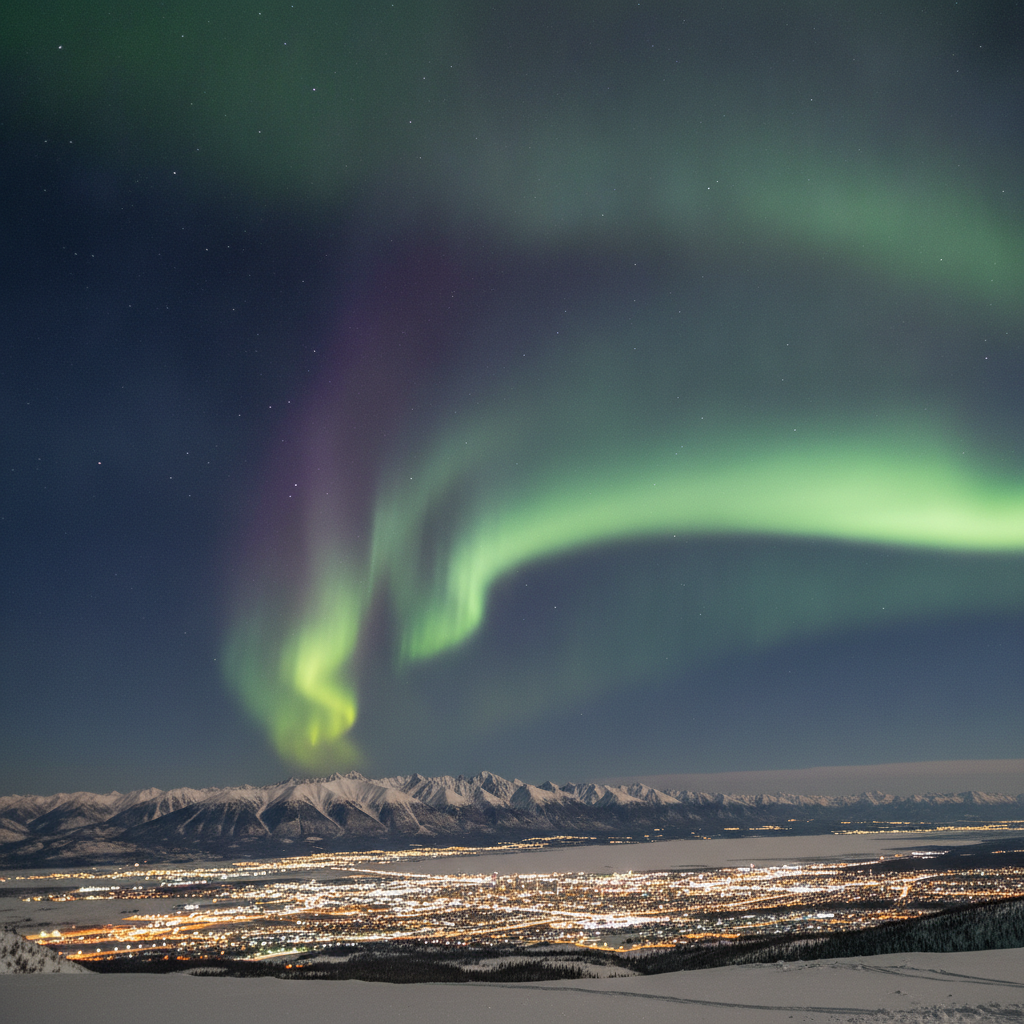
Anchorage: Alaska Native Heritage, Anchorage Museum, Matanuska Valley, Wildlife, Alaska Highway, and the Aurora Borealis
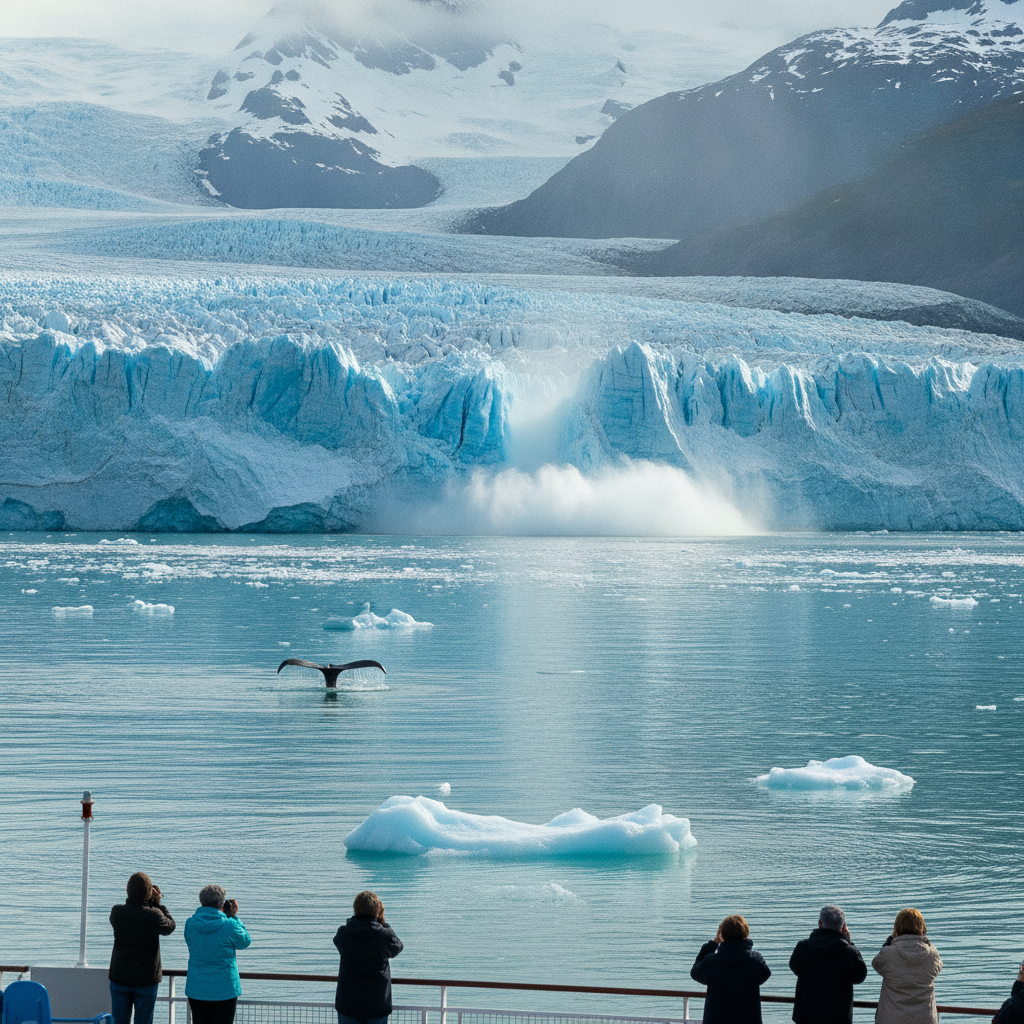
Anchorage: Fjord Glaciers, Urban Moose and the Earthquake That Changed Building Codes