Anchorage: Aurora Nights, Bore Tides and King Salmon Downtown
Watch northern lights on 100 nights per year above Cook Inlet, time your visit to see the Turnagain Arm bore tide wave advancing at highway speed, ride the Alaska Railroad flag-stop train to roadless cabins and Denali views, ski and dine at the Seven Glaciers restaurant in Girdwood, fish for 50-pound king salmon within sight of downtown skyscrapers, and hear the Alaska symphony in its mosaic-tiled concert hall.
- 1
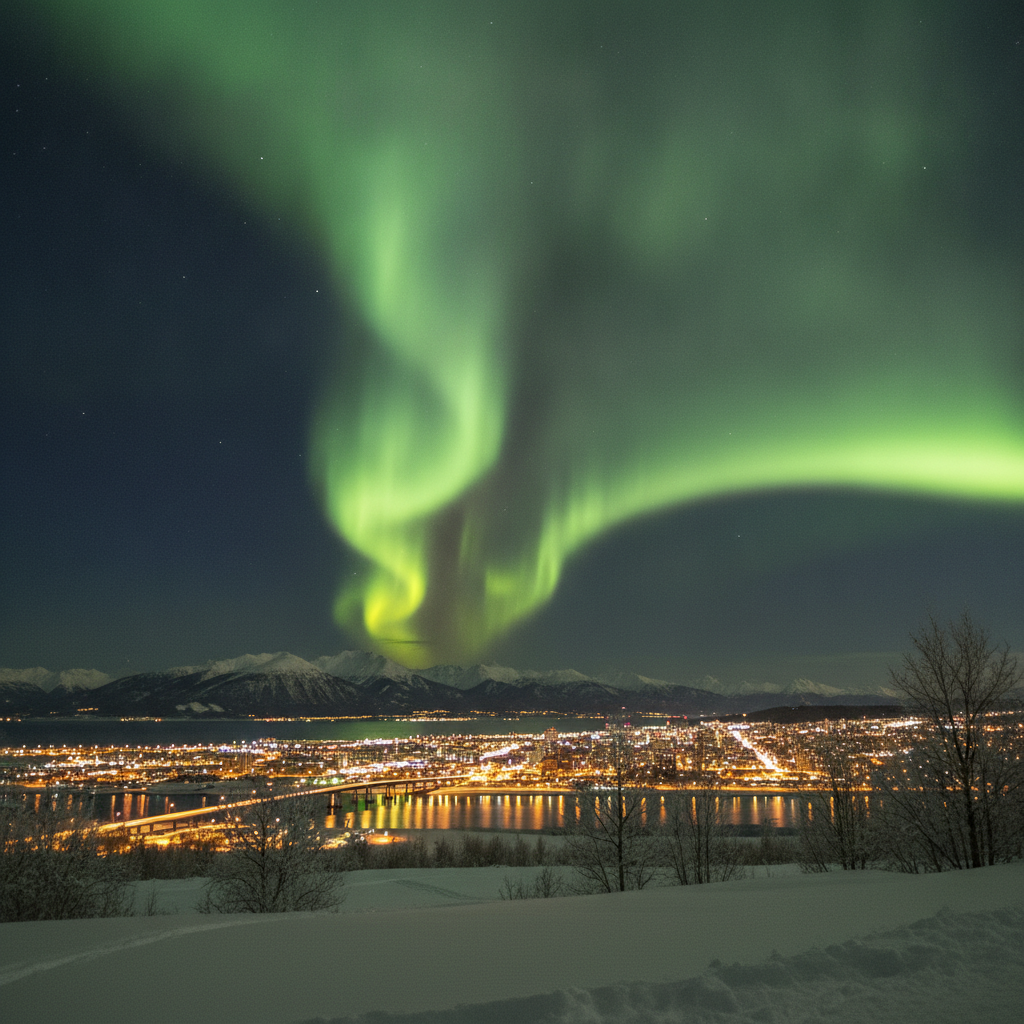
Northern Lights and Anchorage Dark Skies
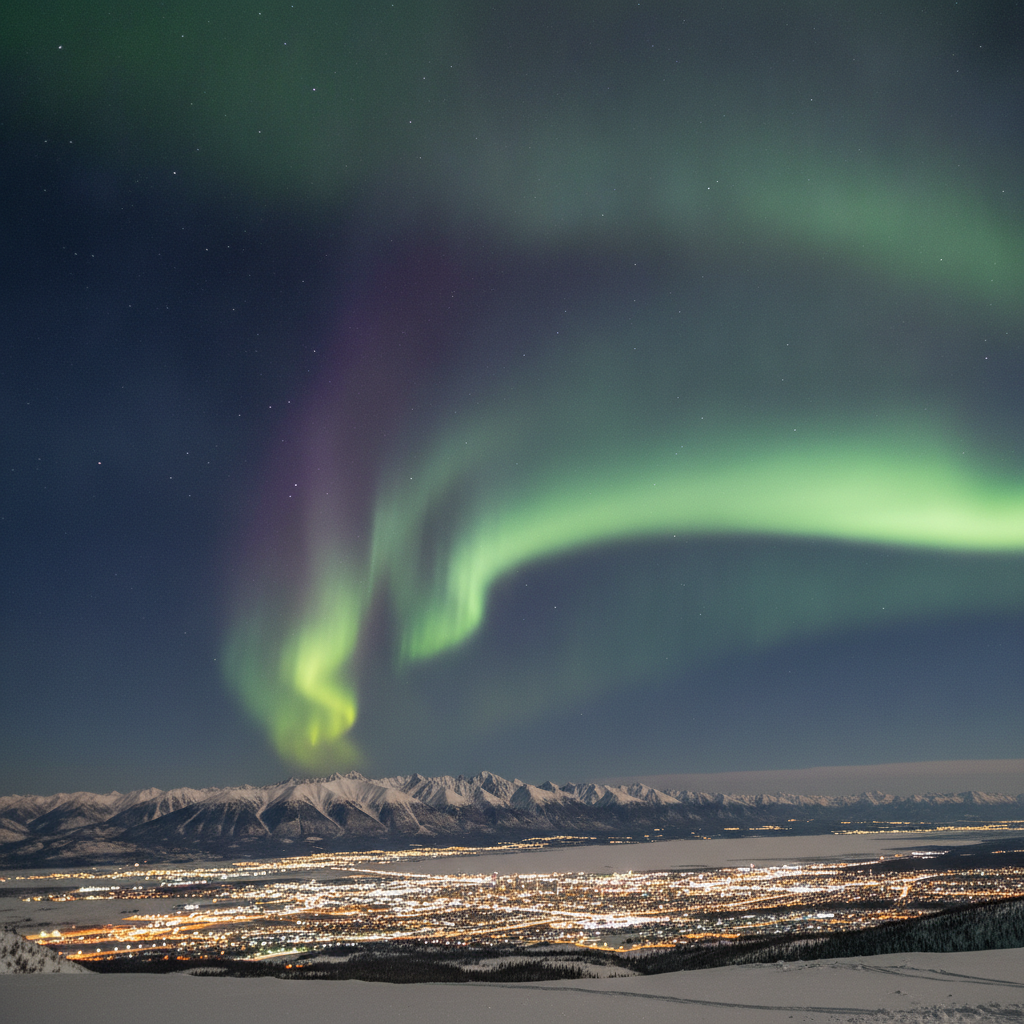
Anchorage sits at 61 degrees north latitude, within the auroral oval where geomagnetic activity produces the northern lights most reliably. The aurora borealis is visible from Anchorage and surrounding areas on roughly 100 nights per year when skies are clear and solar activity is sufficient. The best viewing period runs from late August through April when darkness lasts long enough for observation. The Eagle River Nature Center, 15 miles northeast of downtown, provides dark-sky access with minimal light pollution. The Anchorage area experiences extreme seasonal light variation: nearly 20 hours of daylight around the summer solstice and fewer than 5.5 hours around the winter solstice. This extreme light variation affects human biology, sleep patterns, and seasonal behavior in ways that researchers at the Alaska Native Medical Center and UAA study for implications to circadian rhythm medicine.
- 2
Turnagain Arm and Bore Tide
Turnagain Arm, the 48-mile-long inlet extending southeast from the head of Cook Inlet past Girdwood, has one of the most dramatic tidal ranges in the world at 38.9 feet, the third largest in North America behind the Bay of Fundy and Knik Arm. The extreme tidal range creates a bore tide, a wave front that advances up the arm as the tide comes in, reaching heights of 6 feet and traveling at speeds of 10 to 15 miles per hour. The bore tide is visible from the Seward Highway at several pullouts between Indian and Portage, drawing hundreds of spectators to watch the wave advance. The tidal mudflats of Turnagain Arm are extremely dangerous quicksand-like glacial silt that has trapped animals and humans who ventured onto the flats at low tide. Beluga whales follow salmon runs into Turnagain Arm and are visible from highway pullouts.
- 3
Alaska Railroad and Denali Access
The Alaska Railroad, the only full-service railroad in Alaska and owned by the State of Alaska since 1985, operates passenger service connecting Anchorage to Fairbanks year-round and to Seward and Whittier seasonally. The Denali Star train runs the 356-mile route between Anchorage and Fairbanks daily in summer, passing through Denali National Park where passengers can see the 20,310-foot summit on clear days. The railroad operates a flag-stop service along the Susitna River corridor north of Anchorage where residents of roadless cabins signal the train to stop for pickup, a practice unique in the American rail system. The Glacier Discovery train to Spencer Glacier allows passengers to reach a glacial outwash plain by rail that is inaccessible by road. The railroad carried over 480,000 passengers in 2019 before pandemic disruptions.
- 4
Girdwood and Alyeska Resort
Girdwood, 40 miles southeast of Anchorage in a valley below the Chugach Mountains, is a mountain community of approximately 2,200 people and home to Alyeska Resort, Alaska premier ski destination. The valley was established as a gold mining camp in 1896 and the original townsite was relocated uphill after the 1964 earthquake lowered the valley floor. Alyeska Hotel, a 304-room property opened in 1994, is the largest hotel in Alaska. Alyeska Aerial Tram, operating year-round, lifts visitors to the 2,300-foot level for views of Cook Inlet, the Chugach Mountains, and surrounding glaciers. The Seven Glaciers restaurant at the top of the tram is considered the finest dining experience in Alaska, with a menu featuring Alaskan king crab, halibut, and reindeer. Summer activities at Alyeska include hiking, mountain biking, and the Girdwood Forest Fair held each July.
- 5
Ship Creek Salmon Fishing
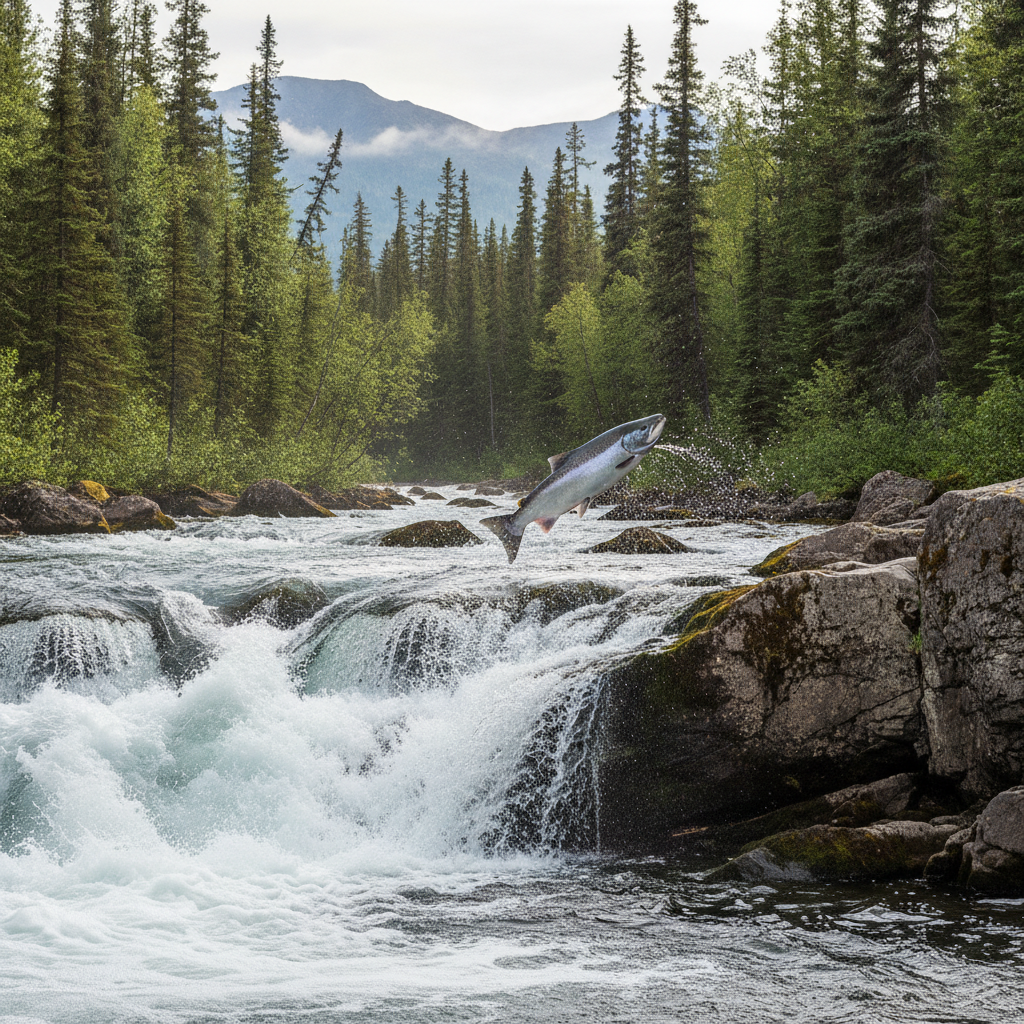
Ship Creek, flowing through downtown Anchorage to Cook Inlet, hosts one of the only urban king salmon fisheries in the United States. Each June through July, anglers line the banks of Ship Creek within sight of the downtown skyline to fish for Chinook salmon weighing up to 50 pounds. The fishery is sustained by the Ship Creek King Salmon Hatchery operated by the Alaska Department of Fish and Game. Fishing licenses cost 45 dollars for non-residents for the day. The Ship Creek Trail connects the fishing area to the coastal trail and downtown Anchorage. The Alaska Department of Fish and Game manages 450 species of fish, shellfish, and marine mammals across Alaska waters and issues approximately 750,000 fishing licenses annually, making sport fishing one of the largest revenue-generating activities in the state economy alongside commercial fishing.
- 6
Anchorage Arts Scene and Center for the Performing Arts
The Alaska Center for the Performing Arts at 621 West Sixth Avenue, completed in 1988 at a cost of 72 million dollars, contains three performance spaces including the 2,000-seat Evangeline Atwood Concert Hall, home of the Anchorage Symphony Orchestra and the Anchorage Opera. The building is distinguished by its exterior mosaic panels designed by Alaska artists depicting Alaska landscapes and wildlife. The Anchorage Symphony, founded in 1946 and the largest orchestra in Alaska, presents a full subscription season and collaborates with visiting soloists and conductors from international careers. The Perseverance Theatre, based in Juneau but collaborating regularly with Anchorage institutions, produces Alaska-themed theater including a landmark production of Hamlet set in a Yupik community. The Anchorage Museum Artist-in-Residence program brings artists from across Alaska to create work in response to the museum collections and the Alaska environment.
Walk this route with audio
Stories play automatically as you reach each stop — no tapping needed.
More in Anchorage
Anchorage: Denali, Chugach Mountains, Alaska Railroad, Iditarod, Kenai Fjords, the 1964 Earthquake, and Practical Info
Anchorage: Native Culture, Wilderness City and the World Cargo Hub
Anchorage: Alaska History and Statehood, Seward Highway, Neighborhoods, Glacier Trekking, Economy, and Kenai Salmon Fishing
Anchorage: Kincaid Park, Inside Passage, Climate Change in Alaska, Arts Scene, Winter Northern Lights, and Day Hiking
Anchorage: Alaska Native Heritage, Anchorage Museum, Matanuska Valley, Wildlife, Alaska Highway, and the Aurora Borealis