Anchorage: Prince William Sound, Talkeetna, Alaska Food Culture, Trans-Alaska Pipeline, Wrangell-St. Elias, and Sports
Anchorage: Prince William Sound (Anton Anderson Tunnel 4.1km longest combined rail-highway North America to Whittier, Columbia Glacier 51km retreating 600m/year, Exxon Valdez March 24 1989 12:04am Bligh Reef 41.6M liters crude 2,100km coastline coated 250,000 seabirds 2,800 sea otters 300 seals 250 eagles 22 orca, USD 1B restoration fund 35+ years later AT1 orca pod still not recovered), Talkeetna (225km north 900 residents, air taxi to Kahiltna Glacier 2,200m basecamp Talkeetna Air Taxi K2 Aviation small ski planes, Main Street log buildings false fronts Talkeetna Roadhouse 1917 cinnamon rolls sourdough, Nagley General Store 1921, Historical Society Museum 1936 Territorial School, Denali view 150km 30-40% clear days), Alaska food (Copper River king salmon May first chinook USD 50-80/pound retail air freight 24 hours to Seattle Portland SF NY, king crab Bering Sea Paralithodes camtschaticus Deadliest Catch 2005-present, 4-week October-January season 120-180m depth 80x national fatality rate, Anchorage Market Festival May-September Saturdays Sundays 300+ vendors reindeer sausage Alaska berry jams birch syrup), Trans-Alaska Pipeline (1,300km Prudhoe Bay to Valdez completed May 31 1977 USD 8B most expensive private construction history, 1.2m diameter 60C oil 671km buried 675km elevated permafrost, Prudhoe Bay 13 billion barrels cumulative peak 2M barrels/day 1988 now 200K, Permanent Fund 1976 USD 80B 2024 USD 1,312 dividend 2023 every resident, 85% state budget oil), Wrangell-St. Elias (53,300 sqkm largest US park 6x Yellowstone larger Switzerland Netherlands Denmark, 9 of 16 highest US peaks Mt St Elias 5,489m, Kennicott Mines 1903-1938 Guggenheim-Morgan copper USD 200M historical USD 1B current abandoned overnight November 1938 still intact isolation cold, Bagley Icefield 200km largest subpolar North America, Bering Glacier 203km longest North American glacier), sports (Iditarod Trail Invitational 350 and 1,000 miles self-supported foot ski fat bike longest most severe endurance world, Mayor Midnight Sun Marathon June 22 summer solstice most distinctive US urban marathon, Alaska Baseball League Cape Cod League of West hundreds MLB alumni, Alaska Aces ABA basketball).
- 1
Prince William Sound and the Exxon Valdez Oil Spill
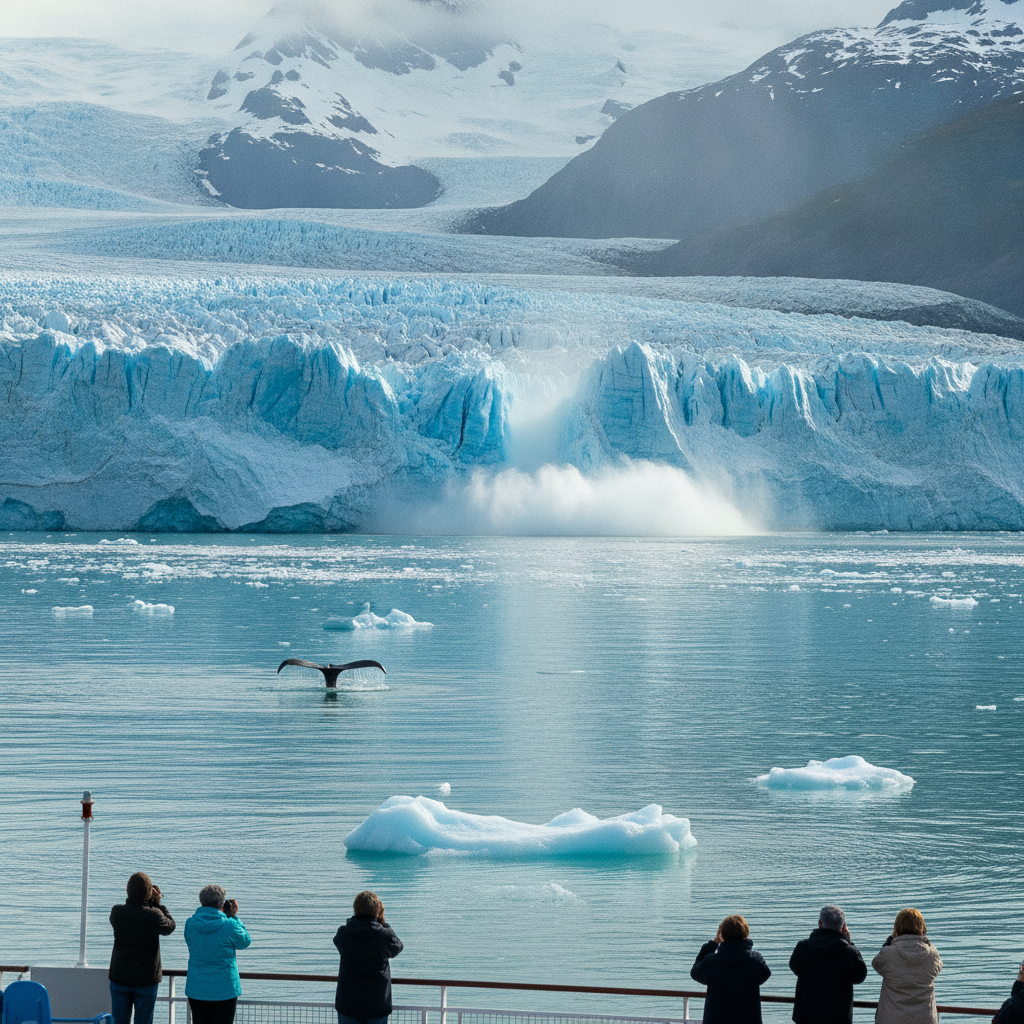
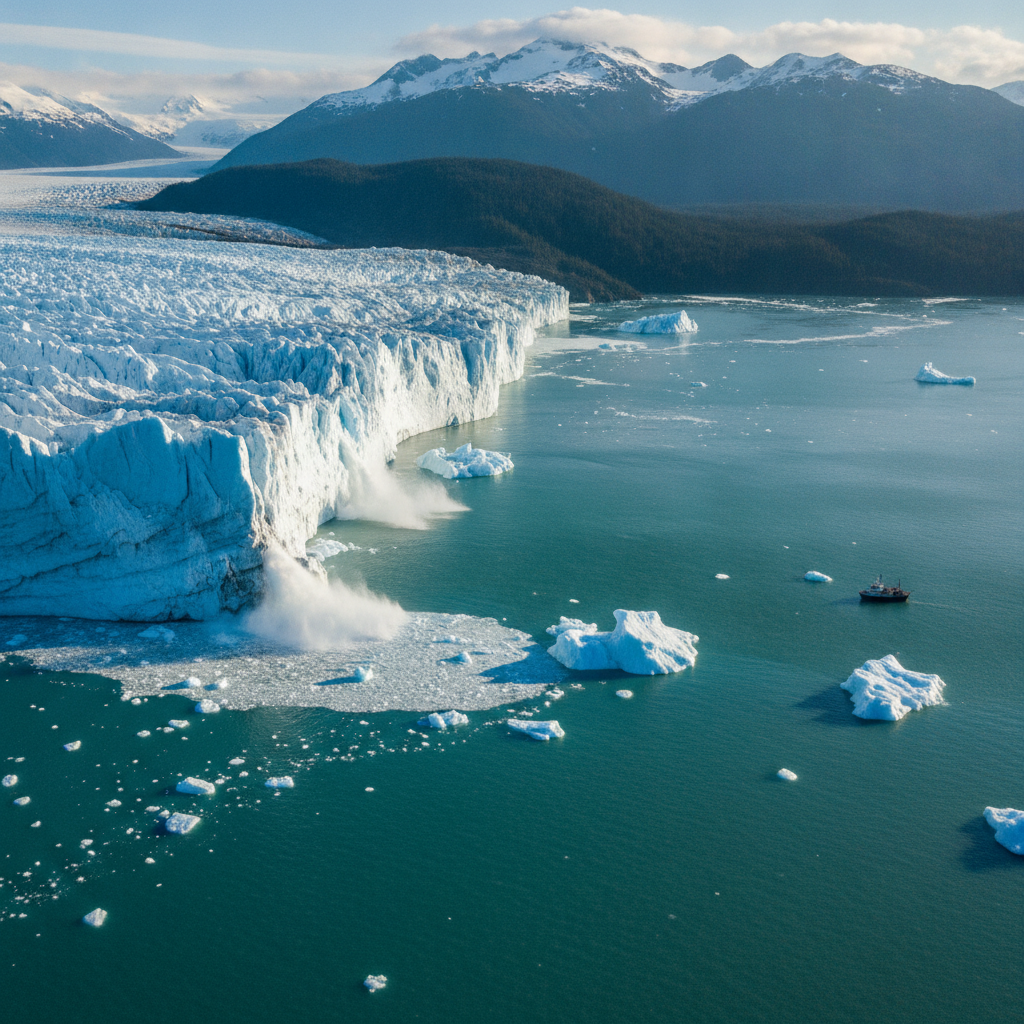
Prince William Sound (the sheltered body of water bounded by the Kenai Peninsula on the west, the Chugach Mountains on the north and east, and the Gulf of Alaska on the south, accessible from Anchorage via the Seward Highway to the Portage Valley and the Anton Anderson Memorial Tunnel (the 4.1-km rail-highway tunnel under Maynard Mountain, opened 2000, the longest combined rail-highway tunnel in North America) to Whittier, a journey of 100 km): one of the most beautiful and ecologically rich bodies of water in North America, with Columbia Glacier (one of the largest tidewater glaciers in Alaska, 51 km long and retreating approximately 600 m per year), humpback whales, orca whales, Steller sea lions, sea otters, harbor seals, and 250+ bird species in a protected fjord system. The Exxon Valdez oil spill (March 24, 1989, at 12:04 am Alaska Standard Time, when the Exxon Valdez supertanker (346 m long, carrying 51 million liters of Prudhoe Bay crude oil) ran aground on Bligh Reef in Prince William Sound, 40 km southwest of Valdez, AK, spilling approximately 41.6 million liters of crude oil into one of the most pristine marine ecosystems in the world -- the largest oil spill in US territorial waters before the 2010 Deepwater Horizon disaster (which spilled 779 million liters into the Gulf of Mexico). The spill coated 2,100 km of coastline with oil (the equivalent of coating the entire US East Coast from Maine to South Carolina), killed approximately 250,000 seabirds, 2,800 sea otters, 300 harbor seals, 250 bald eagles, and 22 orca whales in the immediate aftermath. The Exxon Valdez Oil Spill Trustee Council (operating from Anchorage): the joint federal-state agency still managing the USD 1B restoration fund 35+ years after the spill, with some injured species (the AT1 orca pod, the pigeon guillemot population of Block Island, and the Pacific herring of the Sound) still not recovered.
- 2
Talkeetna and the Denali Basecamp Community
Talkeetna (the small town at the confluence of the Talkeetna, Susitna, and Chulitna Rivers, 225 km north of Anchorage via the Parks Highway, population approximately 900 permanent residents): the most charming small town in Alaska and the service hub for Denali mountain climbers. Talkeetna is the basecamp support town for the approximately 1,000-1,200 climbers who attempt Denali each year -- the air taxi companies (Talkeetna Air Taxi, K2 Aviation) fly climbers from the Talkeetna Airport (the small airstrip at the south end of Main Street) to the 2,200-m Kahiltna Glacier basecamp in small ski-equipped aircraft, the only way to access the standard West Buttress Route on Denali. The Talkeetna Main Street: the 6-block historic district of log buildings and false-front commercial structures, preserved as one of the most intact small-town Alaska streetscapes in existence, with the Talkeetna Roadhouse (at 13550 East Main Street, established 1917, serving enormous cinnamon rolls and sourdough pancakes in the tradition of the gold rush era), Nagley's General Store (1921), and the West Rib Pub and Grill. The Talkeetna Historical Society Museum (at Main Street and Birch Street): the small museum in the original 1936 Territorial School documenting Talkeetna's history as a trading post, railroad construction camp, and climber basecamp. The Denali view from Talkeetna: on clear days (approximately 30-40% of days in summer, due to clouds generated by Denali's own weather system), the full 6,190-m Denali summit is visible from the waterfront viewpoint at the River Park in Talkeetna -- a viewing distance of 150 km, with the mountain appearing larger and more dramatic from this distance than from the summit-proximity views inside the park.
- 3
Alaska Food Culture - Salmon, King Crab, and the Bush Community
Alaska food culture: the most distinctive food culture in the United States, based primarily on wild-caught seafood, wild game, and the subsistence traditions of Alaska Native peoples. The king salmon (chinook salmon, Oncorhynchus tshawytscha): the most prized fish in Alaskan waters, with the Copper River king salmon (the first chinook salmon of the year to arrive at the Copper River delta near Cordova, approximately 375 km east of Anchorage) celebrated each May as one of the great seasonal food events of the Pacific Northwest -- the Copper River kings, fattened with high oil content from their long ocean migration, are rushed by air freight to restaurants in Seattle, Portland, San Francisco, and New York within 24 hours of harvest, commanding USD 50-80 per pound retail at the seasonal peak. The Dungeness crab (Cancer magister) and king crab (Paralithodes camtschaticus, the Alaskan red king crab): the king crab of the Bering Sea (harvested commercially off the Pribilof Islands and the waters of the western Bering Sea, with the Deadliest Catch Discovery Channel television series (2005-present) documenting the most dangerous commercial fishing in the world) is the most iconic Alaska seafood product. The king crab season (October-January): the 4-week commercial season in the most severe seas in the world, with crab pots weighing 360 kg set in 120-180 m of water in conditions that kill approximately 2 commercial fishermen per year per vessel (the fatality rate among Alaskan king crab fishermen is approximately 80 times the national average for all occupations). The Anchorage farmers markets: the Anchorage Market and Festival (at 15th Avenue and E Street, Anchorage, open May through September, Saturdays and Sundays, 300+ vendors) -- the largest outdoor market in Alaska, with Alaskan-caught salmon, reindeer sausage, Alaska berry jams, and birch syrup (the Alaskan equivalent of maple syrup, tapped from birch trees in spring).
- 4
The Trans-Alaska Pipeline and Prudhoe Bay Oil
The Trans-Alaska Pipeline System (the 1,300-km pipeline carrying crude oil from Prudhoe Bay on the Arctic Ocean south through the Brooks Range, across the Yukon River, through the Alaska Range, and to the Valdez Marine Terminal on Prince William Sound, completed May 31, 1977 at a cost of USD 8B (equivalent to approximately USD 40B today) -- the most expensive private construction project in human history at the time): the pipeline that transformed Alaska's economy from a federal welfare state to a petroleum monarchy. The pipeline statistics: 1.2 m diameter, carrying crude oil at 60C (to keep it liquid in the Arctic cold), buried underground for 671 km and elevated on special supports (to prevent the hot oil from melting the permafrost and destabilizing the pipe) for 675 km, crossing 3 mountain ranges, 800 rivers and streams, and 3 active fault lines. Prudhoe Bay (the oil field on the North Slope of Alaska, at the shore of the Beaufort Sea, 690 km north of Fairbanks via the Dalton Highway): the largest oil field in North American history, with cumulative production since 1977 exceeding 13 billion barrels of crude oil. Peak production was 2 million barrels per day in 1988; by 2024, production has declined to approximately 200,000 barrels per day as the field depletes. The Alaska Permanent Fund (established 1976, Article IX Section 15 of the Alaska Constitution): the state-owned investment fund receiving 25% of all oil revenues from state-owned resources, now valued at approximately USD 80B (2024) -- the fund makes annual dividend payments to every Alaska resident (the Permanent Fund Dividend, approximately USD 1,312 in 2023, paid to every Alaska resident who has lived in the state for at least one full calendar year). The Alaska economy: 85% of Alaska's state government budget comes from oil revenues.
- 5
Wrangell-St. Elias National Park - The World's Largest
Wrangell-St. Elias National Park and Preserve (accessible from Anchorage via the Glenn Highway (340 km northeast to Glennallen, then 87 km south to Chitina on the Edgerton Highway) or by floatplane, established December 2, 1980, 53,300 square km -- 6 times larger than Yellowstone, the largest national park in the United States, larger than the countries of Switzerland, the Netherlands, or Denmark): the park containing the greatest concentration of high peaks in the United States (9 of the 16 highest peaks in the US are in Wrangell-St. Elias, including Mount St. Elias at 5,489 m, the second-highest peak in the US, and Mount Wrangell, the largest active volcano in the Wrangell volcanic field). The McCarthy and Kennicott Historic District (accessible via the 96-km unpaved McCarthy Road from Chitina, then a footbridge across the Kennicott River): the most remote significant historic district in the US national park system, where the Kennicott Mines (the copper mining complex operated by the Guggenheim-Morgan syndicate from 1903 to 1938, producing approximately USD 200M in copper at historical prices and approximately USD 1B at current prices, accessed by the 325-km Copper River and Northwestern Railway -- the most expensive railway per mile ever built in Alaska) stand essentially as they were when abandoned overnight when the ore ran out in November 1938, with the original mine buildings, the Kennicott Glacier Lodge, and the 1,000-room National Historic Landmark complex preserved by the isolation and the dry cold. The Bagley Icefield (in the St. Elias Mountains, 200 km long, the largest subpolar icefield in North America outside of the Greenland Ice Sheet): the source of the Bering Glacier (the longest glacier in North America at 203 km, extending from the St. Elias Mountains to the Gulf of Alaska).
- 6
Anchorage Sports Culture and the Alaska Aces
Anchorage sports culture: the combination of the extreme outdoor environment (which has produced world-class mountaineers, marathon runners, and wilderness racers) and the 40% concentration of Alaska's population has made Anchorage the sports capital of Alaska. The Iditarod Trail Invitational (the extreme endurance race held in March, with routes of 350 miles (Anchorage to McGrath) and 1,000 miles (Anchorage to Nome), completed on foot, ski, or fat bike -- the longest and most severe wilderness endurance race in the world, even more extreme than the full Iditarod sled dog race because participants carry their own food and gear, have no musher to help, and must complete the race with far less support): the race that defines the outer limit of human endurance sport. The Anchorage marathon culture: Anchorage has one of the highest rates of marathon participation per capita of any American city, with the Mayor's Midnight Sun Marathon (held June 22, the day after the summer solstice, starting and finishing in Anchorage, with a portion of the course running through Kincaid Park and along the Coastal Trail): the most distinctive urban marathon in the United States for its midnight sun timing and Alaskan scenery. The Anchorage Glacier Pilots and Bucs (the Alaska Baseball League wooden bat teams competing at Mulcahy Stadium): the summer collegiate baseball league that has produced hundreds of major league baseball players (the league is sometimes called the Cape Cod League of the West). The Alaska Aces (the independent basketball team): the professional basketball team playing in the American Basketball Association, drawing a loyal fan base in a city with no major North American professional sports franchises. The Eddies (the soccer team): the Anchorage-based United Premier Soccer League team representing the growing soccer community in Alaska.
Walk this route with audio
Stories play automatically as you reach each stop — no tapping needed.
More in anchorage
Anchorage: Denali, Chugach Mountains, Alaska Railroad, Iditarod, Kenai Fjords, the 1964 Earthquake, and Practical Info
Anchorage: Native Culture, Wilderness City and the World Cargo Hub
Anchorage: Alaska History and Statehood, Seward Highway, Neighborhoods, Glacier Trekking, Economy, and Kenai Salmon Fishing
Anchorage: Kincaid Park, Inside Passage, Climate Change in Alaska, Arts Scene, Winter Northern Lights, and Day Hiking
Anchorage: Alaska Native Heritage, Anchorage Museum, Matanuska Valley, Wildlife, Alaska Highway, and the Aurora Borealis