Antigua Guatemala: Colonial Baroque, Volcano Views, and the UNESCO Historic Core
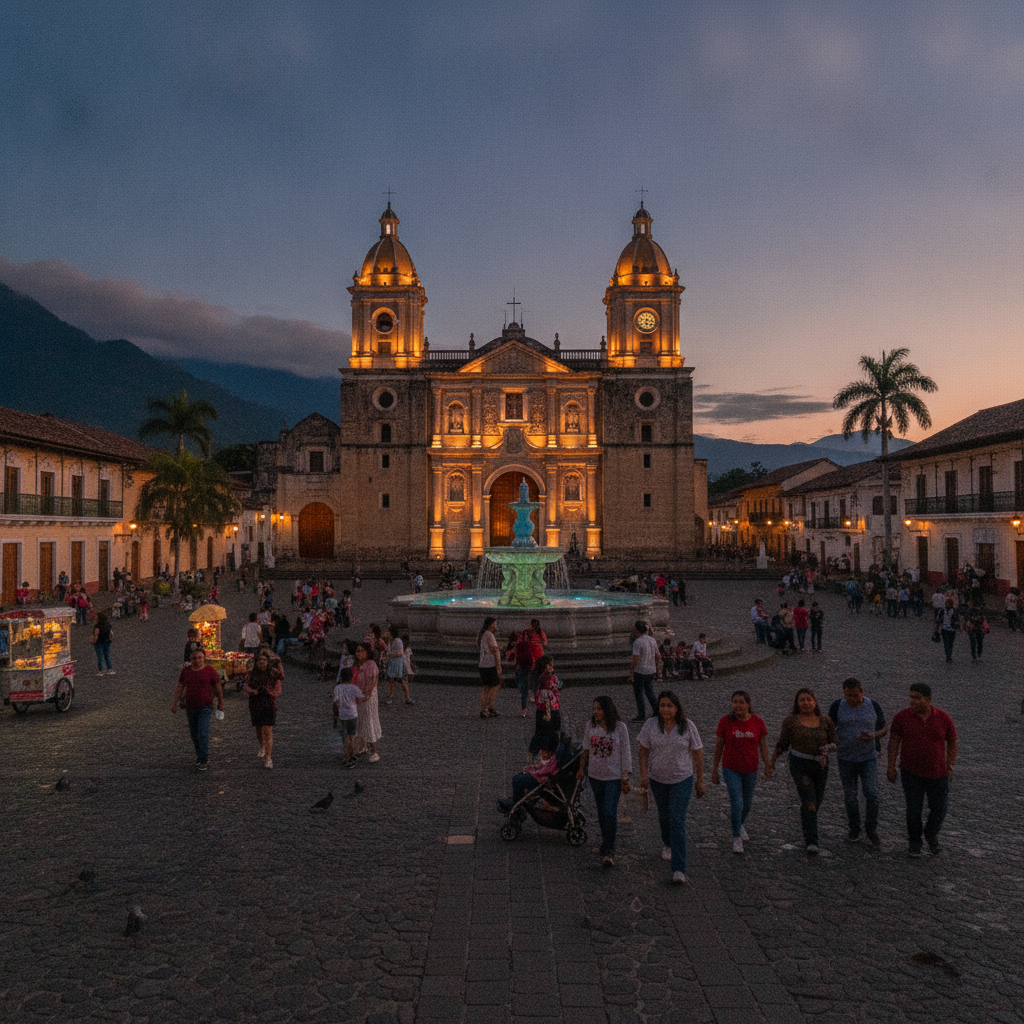
Antigua Guatemala, the former capital of the Kingdom of Guatemala during Spanish colonial rule, is one of the best-preserved colonial cities in the Americas. The grid of ochre and yellow baroque churches, convents, and mansions is set against the dramatic backdrop of three volcanoes: Agua, Fuego, and Acatenango. Fuego is active, emitting ash and occasional lava flows visible from the city. The ruins of buildings destroyed by the 1773 Santa Marta earthquake give Antigua a distinctive character of splendor and ruin coexisting within a single city block. This route covers the foundational layer of the UNESCO World Heritage city.
- 1
La Merced Church and Colonial Baroque Architecture
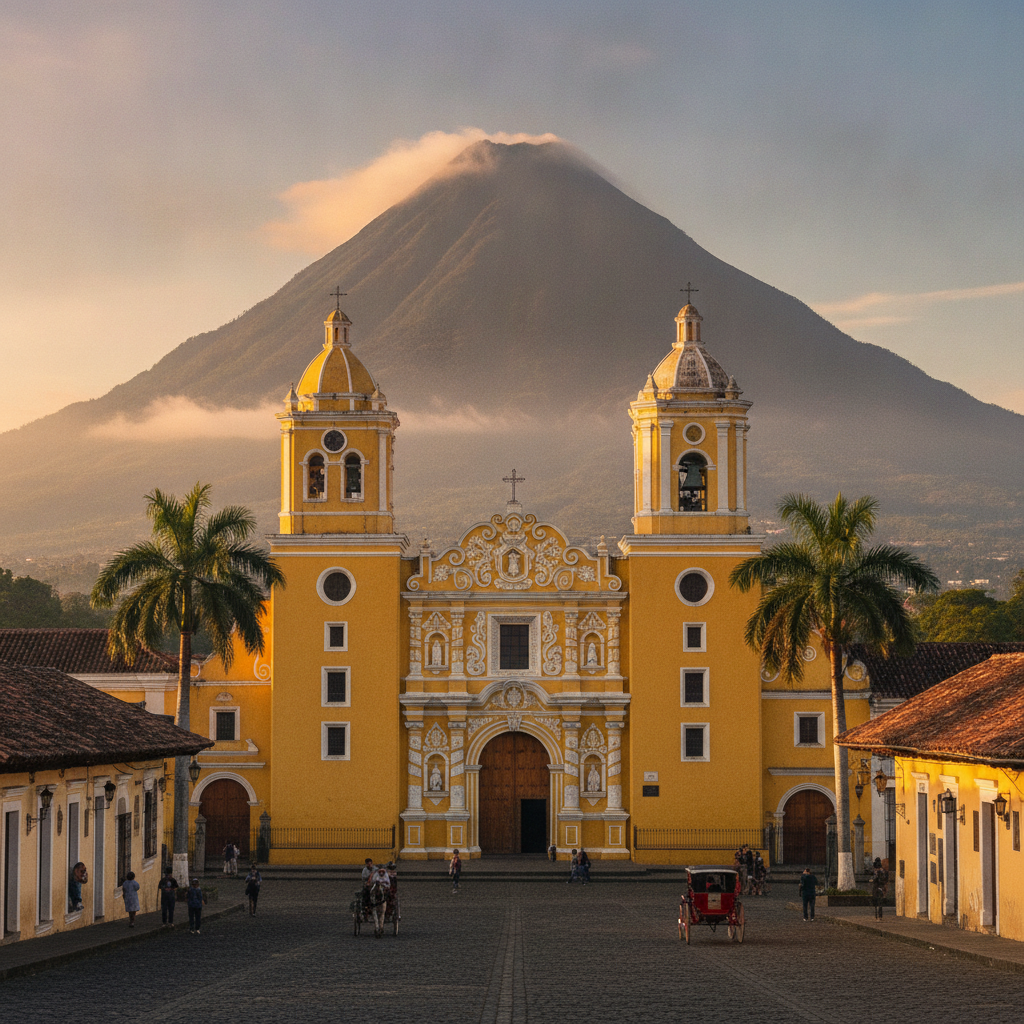
The Church of La Merced, with its distinctive yellow facade covered in stucco relief work of flowers and fruit, is the visual emblem of Antigua. The church was built in stages from the seventeenth century and survived the 1773 earthquake that destroyed much of the city. The fountain in the adjacent garden, the largest colonial fountain in Central America, and the attached monastery complex now serve as an event venue and photography destination. La Merced exemplifies the Antiguan baroque style that combines Spanish ecclesiastical architecture with local Maya craftsmen's interpretations of European decorative motifs, producing a visual language distinct from either Spanish or Mexican colonial baroque.
- 2
Catedral de Santiago and the Parque Central
The Cathedral of Santiago on the east side of the main plaza is in a state of productive ruin: the colonial nave collapsed in the 1773 earthquake and was never fully rebuilt, leaving the rear portion as a working church while the ruined nave is accessible as an archaeological site showing the scale of the original construction. The Parque Central, the social heart of the city, is surrounded by the cathedral, the Palace of the Captains General (the colonial administrative headquarters), and the Ayuntamiento, making it the most complete colonial plaza ensemble in Central America. The park is active from early morning to late evening, with shoe-shiners, food vendors, and the permanent social life of a city that uses its historic center as a living public space.
- 3
Convento de la Concepcion and the Ruins Landscape
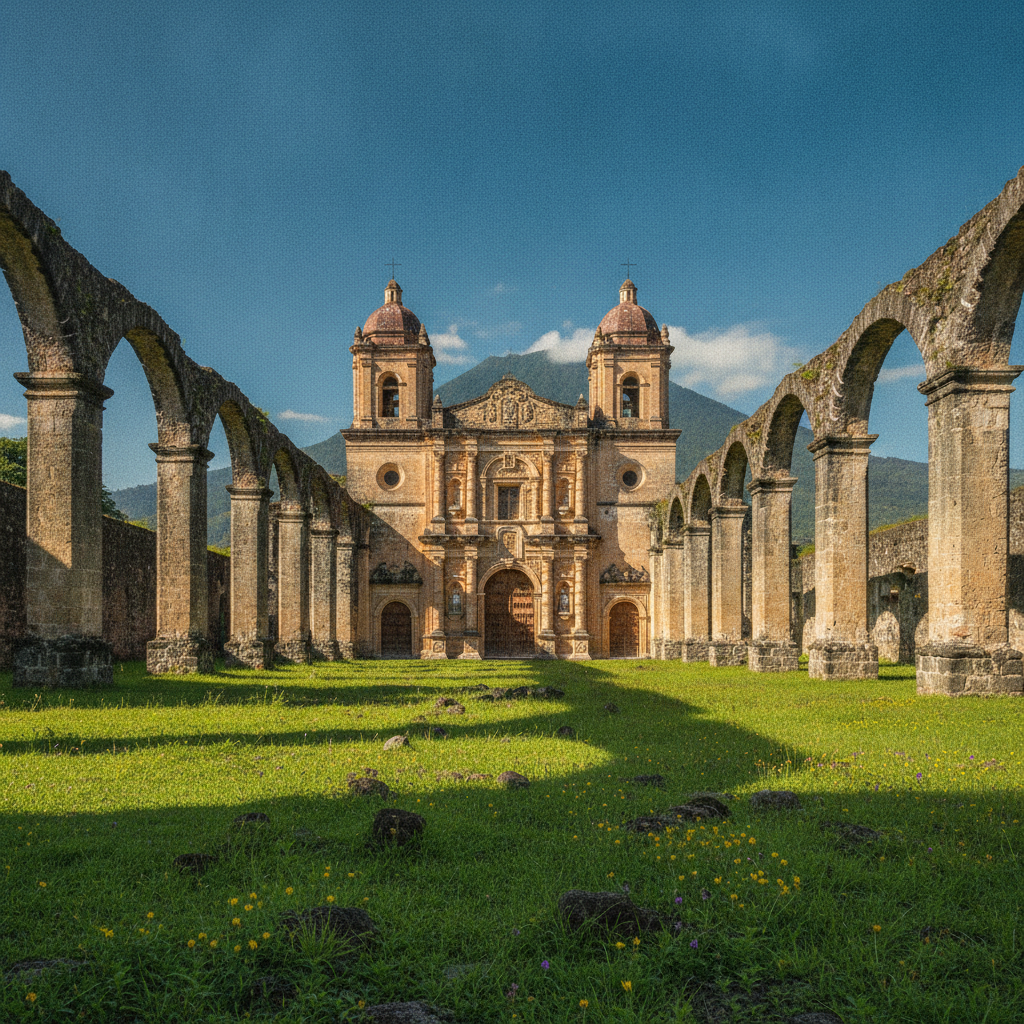
Antigua has more ruined churches and convents per square kilometer than any other city in the Americas. The 1773 Santa Marta earthquake, the largest in Central American history, destroyed approximately 80 percent of the city's major ecclesiastical buildings. Rather than being cleared, the ruins were left in place and have slowly been colonized by vegetation and integrated into the urban fabric. The Convento de la Concepcion, once the largest convent in colonial Central America housing 2,000 nuns, is a partially restored complex with archaeology visible in the open-air ruins. The Convento de las Capuchinas, another major complex, is better preserved and contains the unique circular bathing room that has puzzled historians about its original function.
- 4
The Three Volcanoes: Agua, Fuego, and Acatenango
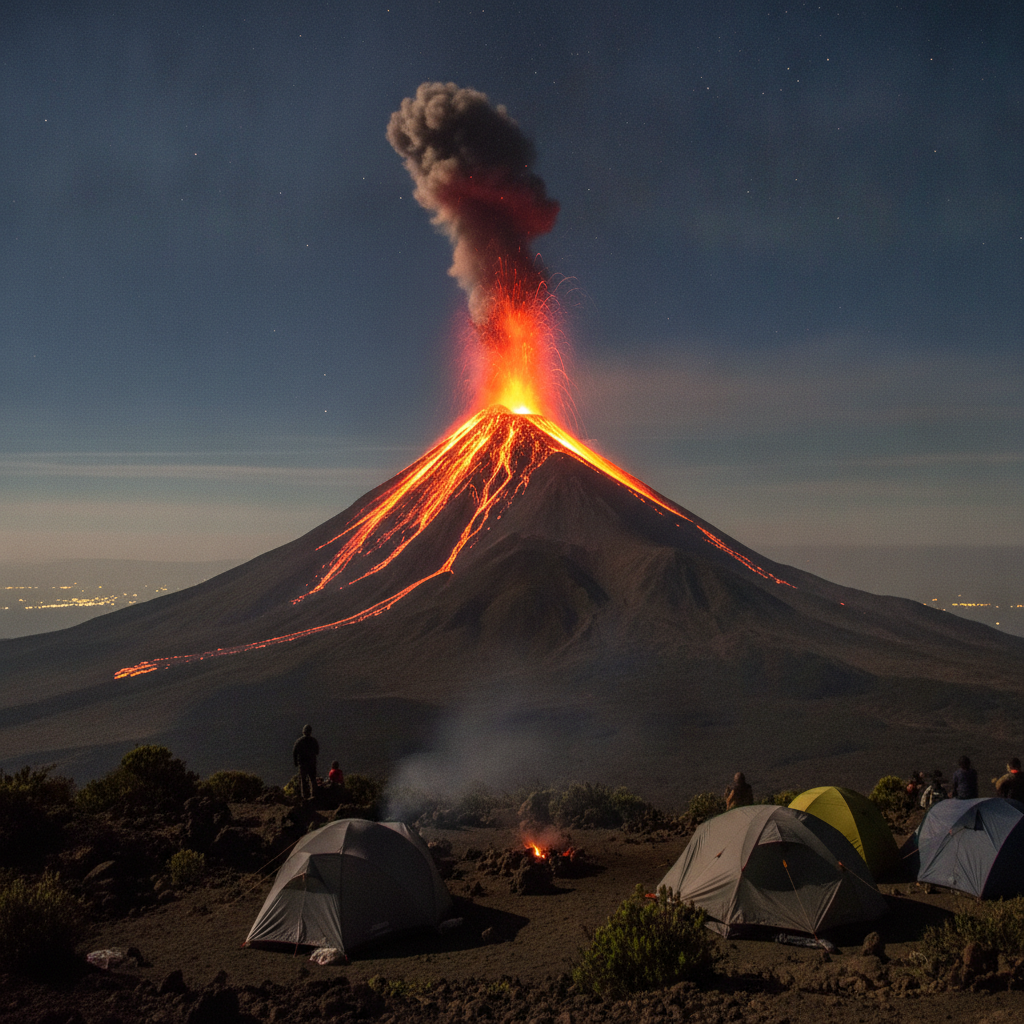
Antigua is framed by three volcanic cones that define the city's visual identity. Volcan de Agua (3,766 meters) rises directly to the south with perfect symmetry; its name comes from a 1541 flood that destroyed the first colonial capital Santiago de los Caballeros when a crater lake collapsed. Volcan de Fuego (3,763 meters) to the southwest is continuously active, producing visible gas emissions, ash columns, and occasional pyroclastic flows that require evacuation of surrounding communities. Acatenango (3,976 meters) stands between Agua and Fuego and is climbed as a multi-day expedition, with the highest camp providing one of the most dramatic viewpoints of Fuego's nighttime lava activity in Central America.
- 5
Semana Santa: The Most Spectacular Easter Processions in the Americas
The Holy Week celebrations in Antigua are considered the most elaborate Easter processions in the Western Hemisphere. The alfombras, elaborately colored sawdust carpets laid in the street patterns that take communities all night to prepare, are walked over by the processions within hours of completion, creating a cycle of creation and destruction that is explicitly part of the ritual meaning. The processions themselves involve centenaries-old polychrome wooden floats (andas) carried by dozens of men (cucuruchos) in purple robes through the cobblestone streets. The main processions can attract 50,000 to 100,000 spectators and fill every hotel within a 50-kilometer radius months in advance. The scale and visual intensity of Antigua's Semana Santa is unlike anything else in Latin America.
- 6
Jade, Textiles, and the Maya Craft Market Economy
Antigua has developed as the primary market for Maya highland textiles and jade jewelry from the surrounding indigenous communities. The Santo Tomas market and the smaller craft markets near the main plaza sell huipiles (woven blouses) from specific communities identifiable by their distinctive color and pattern combinations, handwoven tablecloths, jade jewelry, and carved wooden masks. The jade industry connects to the pre-Columbian Maya culture that prized jade above gold; the Guatemalan jade deposits in the Motagua River valley are the only confirmed source of the New World jade used in Maya ceremonial objects. The contemporary jade workshop economy in Antigua produces both jewelry for the tourist market and scholarly quality artifacts that connect to Maya iconographic traditions.
Walk this route with audio
Stories play automatically as you reach each stop — no tapping needed.
More in Antigua Guatemala
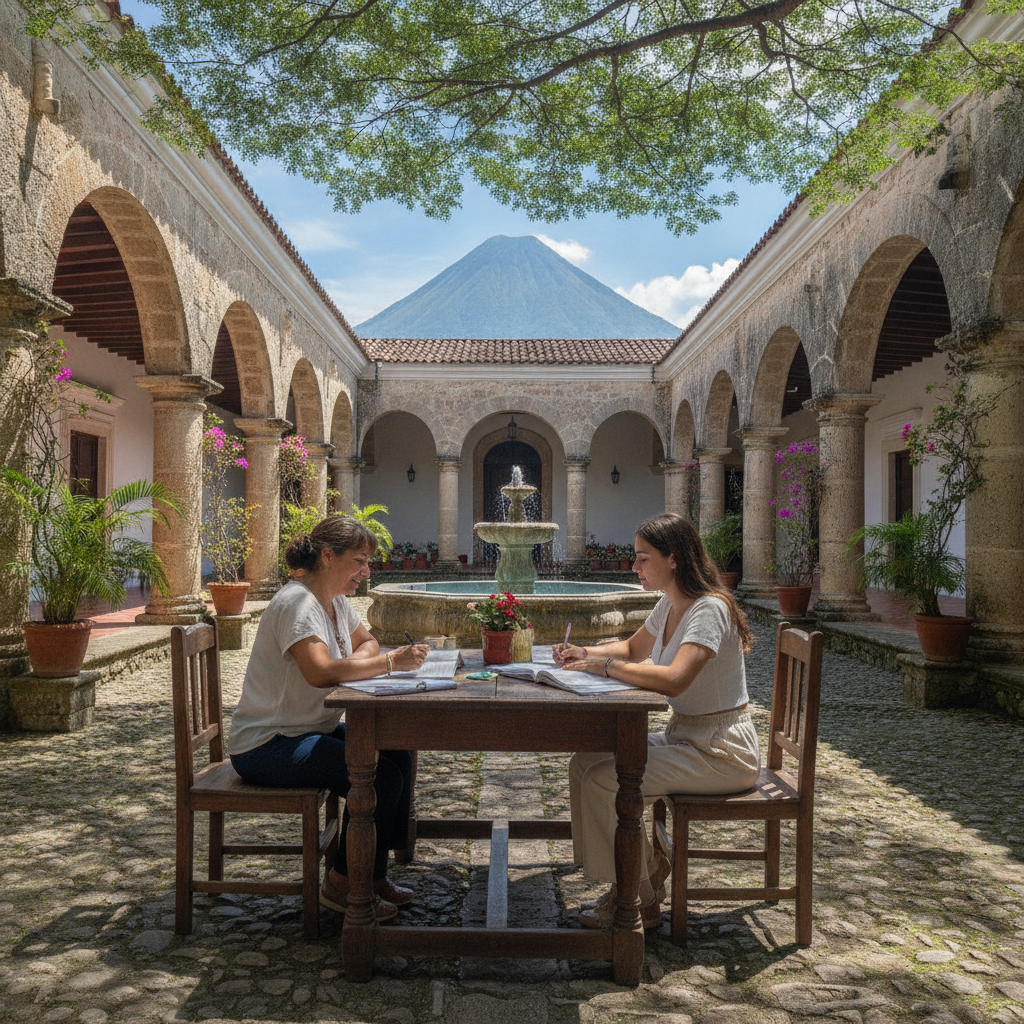
Spanish Language Schools and the Antigua Study-Travel Economy
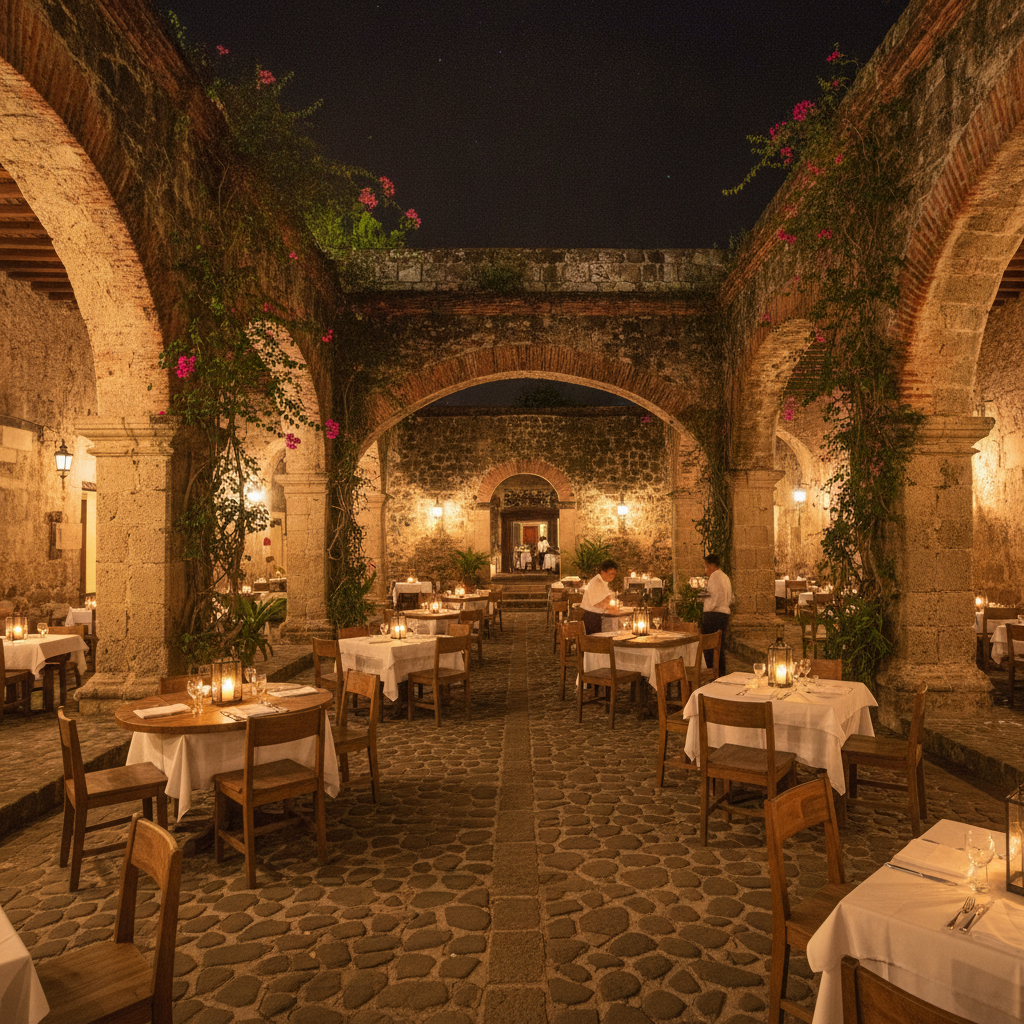
Antigua Food Scene: Coffee, Chocolate, Pepian, and the Restaurant Economy
Acatenango and Fuego: Volcano Trekking from Antigua
Colonial History: The Kingdom of Guatemala and the 1773 Earthquake
Tikal, Copan, and the Classic Maya Archaeological Circuit from Antigua