Asuncion: The Mother of Cities, Guarani Culture, and the Heart of Paraguay
Asuncion, the capital of Paraguay and one of the oldest continuously inhabited cities in South America, was founded by Spanish conquistadors in 1537 and served as the administrative base from which much of the Rio de la Plata region was explored and settled, earning it the title La Madre de Ciudades, the Mother of Cities. The city sits on a bay of the Paraguay River at the border with Argentina, and its riverside position has shaped both its commercial history and its current identity as a subtropical capital with a relaxed pace of life unusual among South American capitals. Paraguay is a bilingual nation where Guarani, the indigenous language of the dominant pre-Hispanic culture, is spoken by the majority of the population alongside Spanish; this linguistic duality is the most distinctive cultural feature of Paraguay and permeates daily life in ways visible to any visitor.
- 1
Guarani Language and Culture: A Living Indigenous Heritage
Guarani is spoken as a first or second language by approximately 90 percent of the Paraguayan population, making Paraguay the only country in the Americas where an indigenous language is spoken by the majority of the national population including non-indigenous people. The language was spread by the Jesuit missions of the 17th and 18th centuries, which used Guarani as the primary language of instruction and religious practice rather than Spanish, creating a literate Guarani-speaking population whose descendants form the majority of modern Paraguay. The Guarani lexical influence on Paraguayan Spanish is total and constant: thousands of words for plants, animals, food, places, and concepts exist only or primarily in Guarani in Paraguayan usage, and speakers switch between the languages mid-sentence in a practice called Jopara that is the most common daily speech pattern in Paraguay. The Guarani language is not only Paraguayan: cognate forms are spoken across a vast area from Argentina and Brazil through Bolivia, and the Tupi-Guarani language family is one of the most widely distributed in South America. The cultural pride in Guarani identity that has grown in Paraguay over the past several decades reflects both genuine popular attachment to the language and a political assertion of indigenous heritage in a country that has been governed primarily by non-indigenous elites throughout its post-colonial history.
- 2
The Historic Center: Cabildo, Government Palace, and Colonial Asuncion
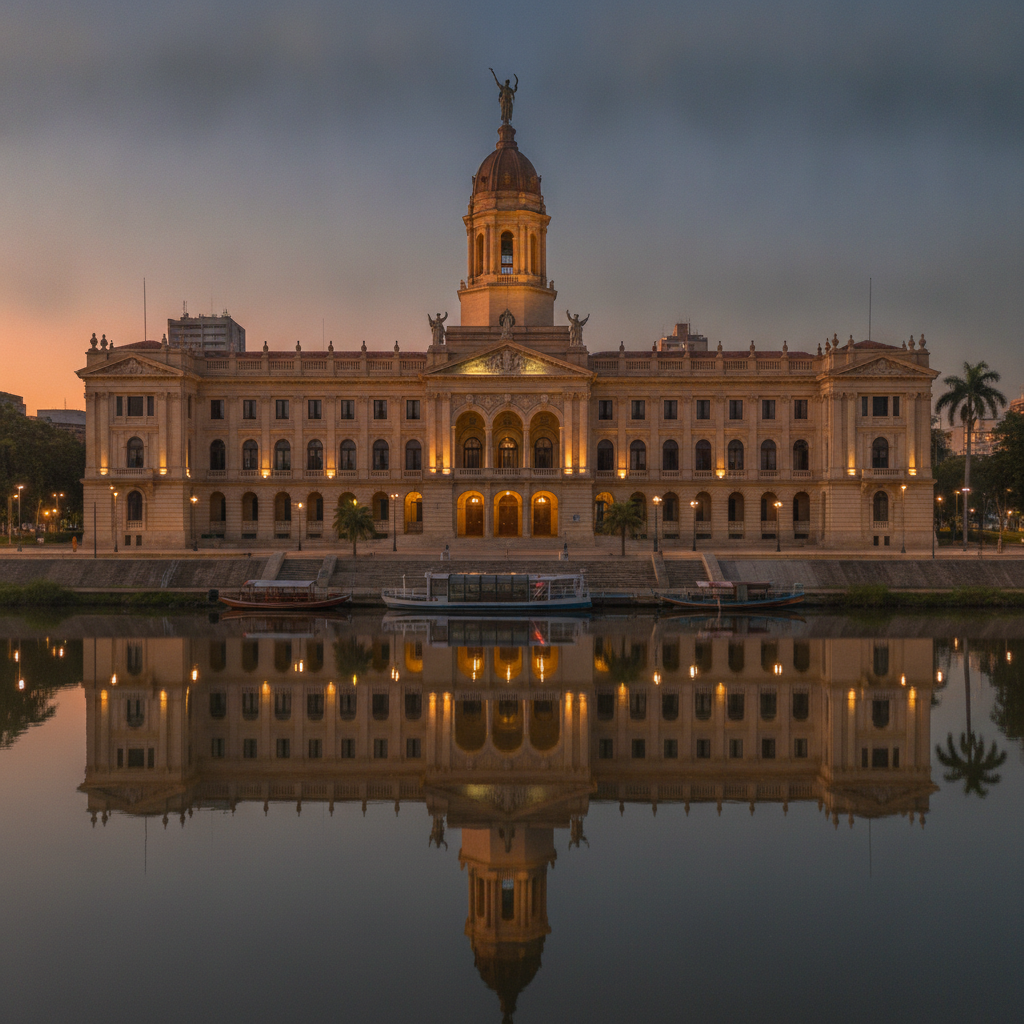
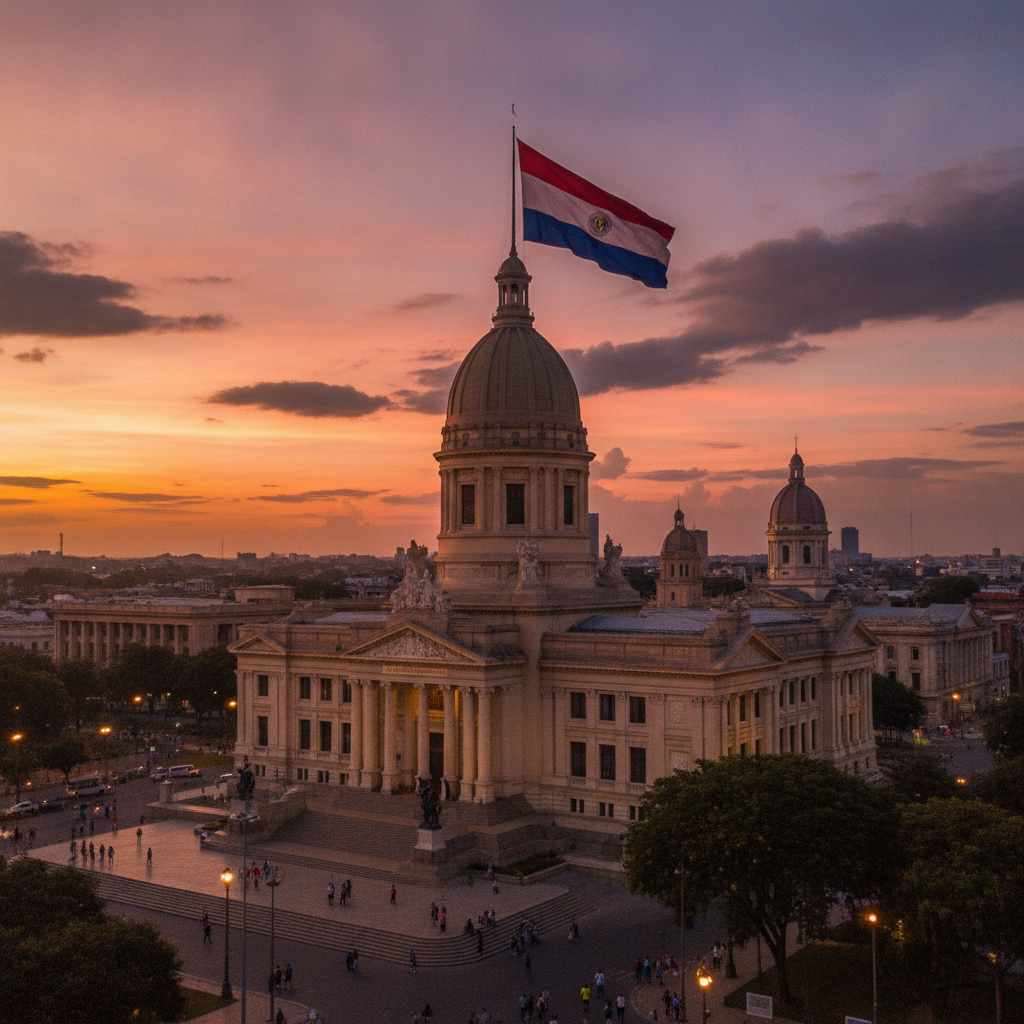
The historic center of Asuncion, concentrated on the Bahia de Asuncion waterfront and the streets immediately behind it, contains the most important colonial and early republican architecture in Paraguay, including the Cabildo, the colonial town hall building that now functions as the Museum of Remembrance documenting the 1954 to 1989 Stroessner dictatorship; the Palacio de los Lopez, the elaborate Italian Renaissance government palace completed in 1892; and the Cathedral of Asuncion on the Plaza de Armas. The historic center has been in a prolonged state of decay and incomplete renovation for decades; several of the important colonial buildings have been stabilized but the broader urban fabric of the area, including abandoned lots, partially demolished structures, and vacant commercial buildings, reflects the economic difficulties of downtown Asuncion. The Manzana de la Rivera, a block of eight colonial houses from different periods in the 18th and 19th centuries preserved as a museum complex, is one of the few comprehensively restored historic ensembles in the city center. The revitalization of the waterfront area with the Costanera promenade, a riverside walkway and park developed along the bay shore, has created a pleasant public space connecting several historic sites.
- 3
The Jesuit Missions: Trinidad and Jesus in the Paraguayan Interior
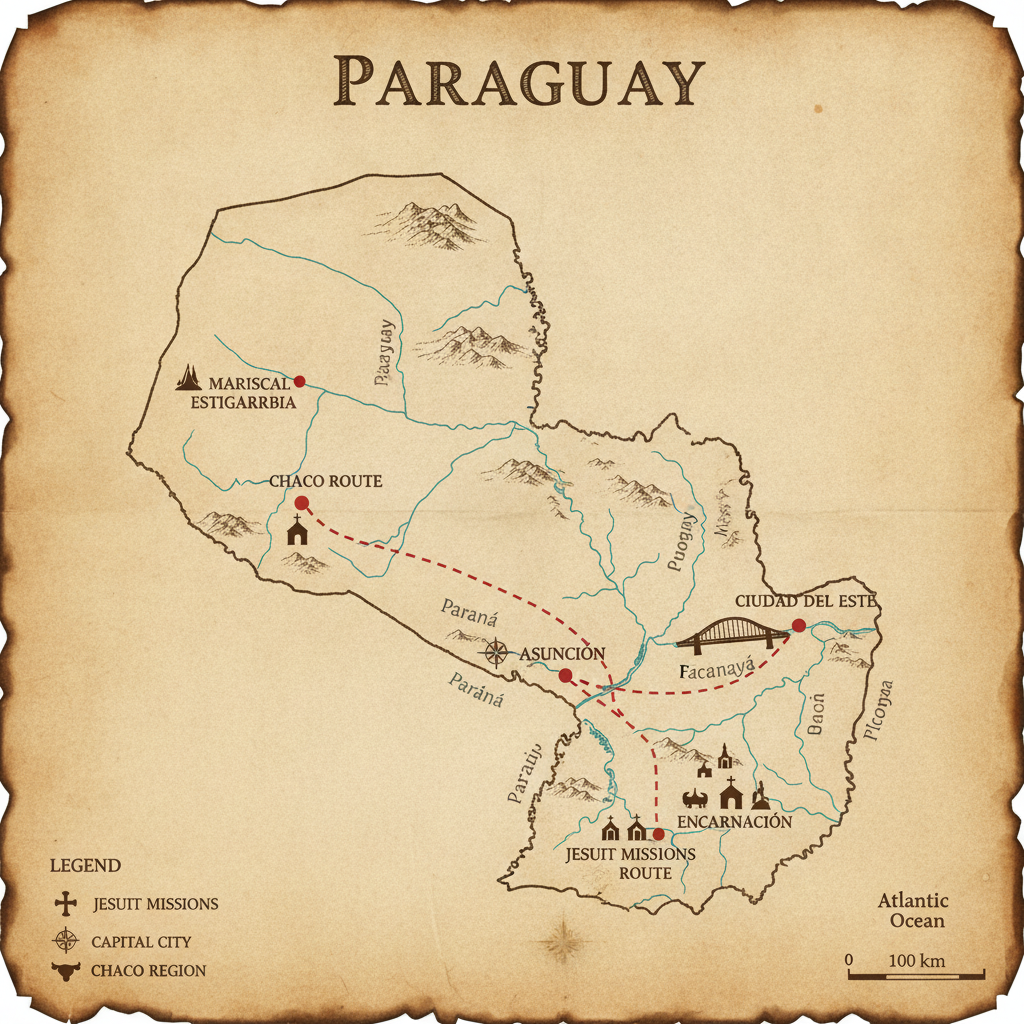
The Jesuit reductions, the network of mission communities established by the Society of Jesus among the Guarani people from the early 17th century until the Jesuit expulsion from Spanish territories in 1767, left a series of architectural ruins in the subtropical forests of eastern Paraguay that are among the most significant colonial heritage sites in South America. The Trinidad reduction, approximately 280 kilometers east of Asuncion near Encarnacion, is the best-preserved Jesuit mission in Paraguay and a UNESCO World Heritage Site alongside the nearby Jesus de Tavarangue; the carved stone church facade, the layout of the residential and agricultural areas, and the stone carving program that decorated the main church survive in a state of evocative ruin. At their peak, the Jesuit reductions of the Paraguay region, which extended across the borders into modern Argentina and Brazil, housed approximately 100,000 Guarani people in 30 mission communities organized around the church as a social and economic center, with collective agriculture, music education, and craft production. The expulsion of the Jesuits in 1767 by the Spanish Crown at the request of colonial interests threatened by the economic power of the missions, left the communities to decline rapidly without their organizational leadership. The ruins of Trinidad and Jesus are accessible from Asuncion via the highway to Encarnacion in a day trip or overnight visit.
- 4
The War of the Triple Alliance: Paraguay's Catastrophic 19th Century
The War of the Triple Alliance, fought from 1864 to 1870 between Paraguay and the allied forces of Brazil, Argentina, and Uruguay, was the deadliest war in Latin American history and came close to eliminating Paraguay as a functioning nation. The war began with Paraguayan President Francisco Solano Lopez ordering military incursions into Brazilian territory and through Argentine territory to attack Uruguay, triggering a defensive alliance that ultimately deployed the military and financial resources of the three largest nations in the region against Paraguay. By the end of the war, which concluded with Solano Lopez's death in battle on March 1, 1870, Paraguay's population had declined from approximately 525,000 to approximately 220,000; estimates of the male population surviving the war range from 28,000 to 150,000, with the most commonly cited figure suggesting that adult males constituted only about 10 percent of the post-war population. The demographic collapse required generations to recover and left Paraguay economically devastated, with the territorial losses to Brazil and Argentina that reduced the country to its current boundaries. The war remains a central reference point in Paraguayan national consciousness, with Solano Lopez cast as a national hero in the Paraguayan narrative despite or because of the catastrophic outcome.
- 5
Stroessner and the Longest Dictatorship: 35 Years of Military Rule
Alfredo Stroessner, a German-Paraguayan military officer who seized power in 1954, ruled Paraguay for 35 years until his overthrow in a coup by his own military in 1989, making his the longest personal dictatorship in the Americas in the 20th century. Stroessner consolidated power through a combination of electoral fraud, the systematic use of torture and assassination against opponents, a patronage network that co-opted the professional class, and the alliance with the Colorado Party that has dominated Paraguayan politics from 1947 to the present with only one interruption. The Stronato, as the Stroessner period is called, attracted significant attention for its welcoming of Nazi war criminals fleeing post-war Germany, including the Auschwitz doctor Josef Mengele who lived in Paraguay for several years, and for the Operation Condor cooperation with other South American military dictatorships in the persecution of political exiles. The Cabildo museum in Asuncion, renamed the Museum of Remembrance, documents the history of the Stroessner regime and its victims; the museum was established as a site of memory by the democratic governments that followed the transition. The Colorado Party's dominance in post-Stroessner Paraguayan politics has created a continuity of political culture that human rights organizations have criticized for its insufficient accountability for the abuses of the Stronato period.
- 6
Ao Po'i and Nanduti: Paraguay's Textile Heritage
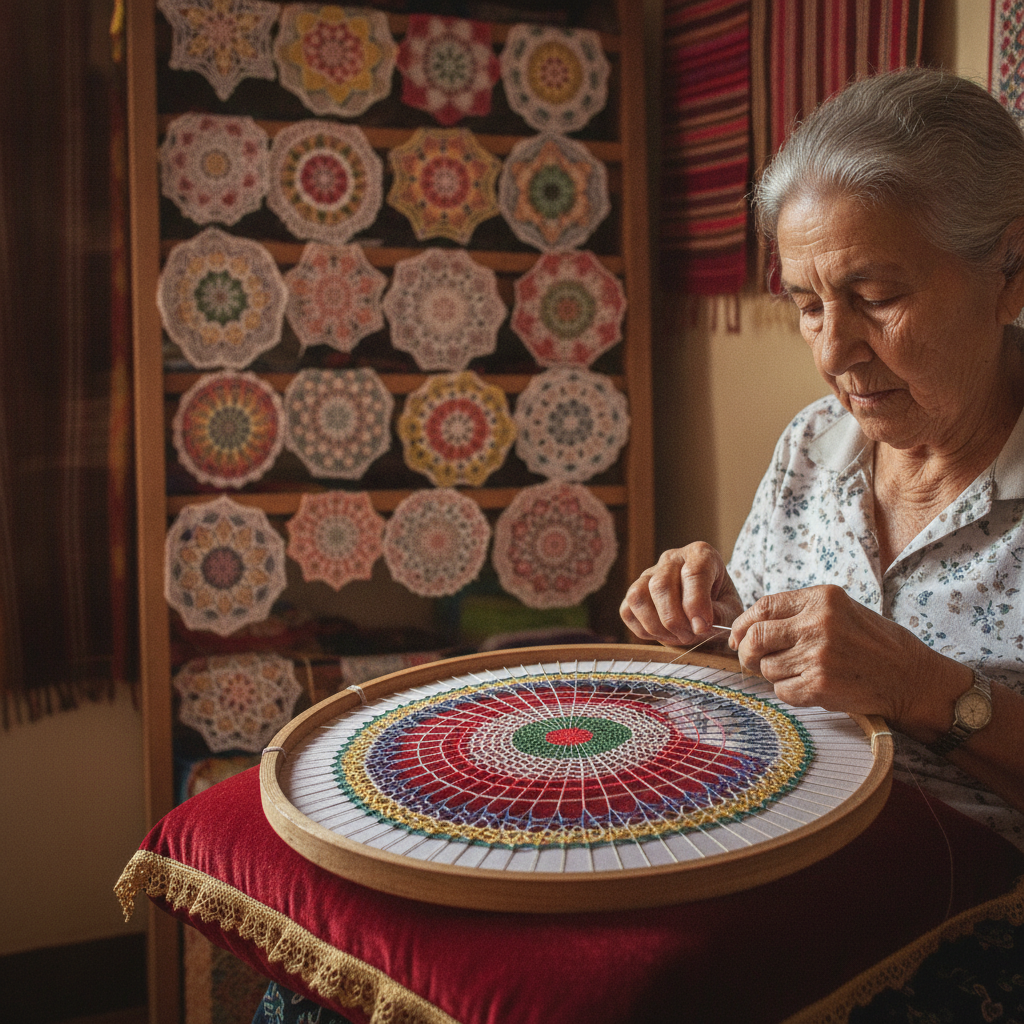
The textile traditions of Paraguay include two of the most technically distinctive handcraft forms in South America. The ao po'i, a fine cotton fabric woven in complex openwork patterns on traditional looms in the town of Piribebuy and several other Paraguayan communities, produces garments and table linens of exceptional delicacy; the name means fine cloth in Guarani and the tradition has roots in the colonial period weaving workshops of the Jesuit missions. The ao po'i shirts worn at formal occasions by Paraguayan men, including presidents at state events, are the most visible expression of this tradition in daily life. The nanduti, meaning spider web in Guarani, is a needle lace technique practiced in the town of Itaugua approximately 30 kilometers from Asuncion, in which circular lace patterns are built up on a cushion using dozens of fine threads in a process that can take weeks for a single circular piece. The nanduti has no documented pre-Columbian precursor and is believed to derive from Spanish or Portuguese bobbin lace introduced in the colonial period and transformed by Paraguayan craftswomen into a distinctive circular form; the circular motifs are said to resemble spider webs seen in morning dew. Both traditions are maintained primarily by women in the specific communities where they developed, and both are purchased by visitors as the primary Paraguayan craft souvenirs.
Walk this route with audio
Stories play automatically as you reach each stop — no tapping needed.
More in Asuncion
Asuncion Practical Guide: Getting There, Getting Around, and Paraguay Circuit
Asuncion Arts, Music, and the Paraguayan Harp
Asuncion Day Trips: Areguá, Itauguá, Caacupe, and the Circuito de Oro
Asuncion History: Foundation, Independence, Dr Francia, and the Lopezas
Asuncion Food and Daily Life: Sopa Paraguaya, Chipa, and the Tereré Culture