Asuncion History: Foundation, Independence, Dr Francia, and the Lopezas
Asuncion has one of the longest continuous histories of any city in South America, having been established as a permanent Spanish settlement in 1537 and serving as the administrative capital of the entire Rio de la Plata region for several decades before Buenos Aires grew to eclipse it. The political history of independent Paraguay from 1811 onward was dominated by three strong leaders: Dr Jose Gaspar Rodriguez de Francia, who ruled as absolute dictator from 1814 to 1840 and isolated Paraguay from the outside world; Carlos Antonio Lopez, who opened Paraguay to commerce and modernization from 1844 to 1862; and Francisco Solano Lopez, whose war against the Triple Alliance ended with the near-destruction of the country.
- 1
Foundation: From Conquistadors to Mother of Cities
The establishment of the permanent settlement of Nuestra Señora Santa Maria de la Asuncion on August 15, 1537 was accomplished by Spanish explorers under Juan de Salazar de Espinosa, who recognized the natural harbor of the bay on the Paraguay River as an ideal location for a base camp during the exploration of the interior. The strategic position of Asuncion, on a defensible bay at the junction of major river routes into the continent, made it the primary base for Spanish exploration and colonization of the entire Rio de la Plata region for several decades. Buenos Aires, founded by Pedro de Mendoza in 1536 and abandoned due to indigenous resistance, was refounded from Asuncion in 1580 by Juan de Garay, who led a party south from the established Paraguayan settlement; this is the foundation of the claim that Asuncion is the Mother of Cities. The early colonial Asuncion was a mixed society of Spanish settlers and Guarani people, with the racial mixing called mestizaje that is characteristic of Paraguayan society occurring earlier and more completely here than in many other Spanish colonial centers. The Guarani women who became the partners and wives of Spanish settlers transmitted the language and many cultural practices to the mestizo children who became the core population of colonial Paraguay.
- 2
Dr Francia: The Supreme Dictator and Paraguayan Isolation
Jose Gaspar Rodriguez de Francia, a Paraguayan lawyer and politician of Creole and possibly African heritage who became the first ruler of independent Paraguay in 1811 and was declared Supreme and Perpetual Dictator by a national congress in 1816, ruled Paraguay until his death in 1840 in a regime of extraordinary personal control that cut the country off from foreign trade, expelled the Jesuit and other religious orders, eliminated the colonial elite through forced marriage to indigenous women, and created a state-controlled economy in which the government owned the majority of productive land. Francia's goals were the preservation of Paraguayan independence against both Spanish reconquest and absorption by the larger neighbors Argentina and Brazil, and the creation of a self-sufficient nation that would not be dependent on foreign markets or foreign creditors. The effectiveness of his isolation policy in preserving Paraguayan sovereignty is debated: the country survived intact and independent through the turbulent post-independence decades that saw multiple civil wars in Argentina and Brazil, but at the cost of economic stagnation and cultural isolation. Francia himself is remembered with genuine ambivalence in Paraguay: his authoritarian methods and the suffering they caused are acknowledged alongside the argument that isolation was a rational survival strategy for a small landlocked nation surrounded by larger and hostile neighbors.
- 3
Carlos Antonio Lopez: Opening Paraguay to the World
Carlos Antonio Lopez, who succeeded to power after Francia's death and served as consul and then president from 1844 to his death in 1862, reversed his predecessor's isolation policy and began modernizing Paraguay on a state-directed model that brought the first telegraph lines, railways, and ironworks in South America south of Brazil to the landlocked country. Lopez signed commercial treaties with Britain and other powers, invited foreign engineers and technicians to build the infrastructure of a modernizing state, established a Paraguayan navy on the Paraguay River, and expanded the school system and the press. The railway from Asuncion toward Villa Rica, begun in 1858, was the first railway in South America and was constructed with British engineering expertise; the Asuncion train station, now a heritage building, dates from this modernization period. Lopez also continued and intensified the state-directed economy inherited from Francia, with the Paraguayan state owning the majority of productive land and controlling exports; this economic model financed the modernization without the foreign debt that would have made Paraguay dependent on foreign creditors. His legacy is complicated by the continuation of authoritarian political methods despite the economic opening: political opposition was suppressed and freedom of expression was limited throughout his rule.
- 4
Francisco Solano Lopez and the Road to Catastrophe
Francisco Solano Lopez, the son of Carlos Antonio Lopez who succeeded to the presidency in 1862 at age 36, led Paraguay into the War of the Triple Alliance in 1864 through a combination of regional political ambitions, miscalculation of military capacity, and the belief that Paraguay's modernized armed forces could defend against and potentially dominate the Rio de la Plata region. The war that followed, against Brazil, Argentina, and Uruguay simultaneously, stretched for six years and resulted in the deaths of the majority of Paraguay's adult male population and the loss of significant territory to both Brazil and Argentina. Lopez himself fought to the end, executing suspected traitors including members of his own family and the Irish-born companion Eliza Lynch who accompanied him until his death in battle at Cerro Corá in March 1870. The evaluation of Solano Lopez in Paraguayan historical memory has been intensely contested: the Stronato regime elevated him to national hero status as a patriotic defender of Paraguayan sovereignty, erecting equestrian monuments throughout the country; revisionist historians have argued that his personal ambitions and miscalculations caused an unnecessary war that nearly eliminated the Paraguayan nation. The tension between these two evaluations remains unresolved in contemporary Paraguay and shapes how the war and its legacy are taught and discussed.
- 5
Post-War Reconstruction and the 20th Century
The post-war reconstruction of Paraguay from 1870 onward proceeded slowly and unevenly, with the country receiving waves of foreign immigration including Brazilian landowners in the east, Argentine capital investment, Mennonite settlers in the Chaco, and various European immigrant groups who contributed to the demographic recovery from the war's population losses. The political history of the late 19th and early 20th centuries was characterized by continuous civil conflicts between the Liberal and Colorado parties, with multiple presidents removed by force and an institutional instability that prevented consistent development policy. The Chaco War against Bolivia from 1932 to 1935, fought over the Gran Chaco territory believed to contain oil, resulted in a Paraguayan military victory that secured the Chaco territory at the cost of approximately 36,000 Paraguayan lives. The military coup of 1954 that brought Alfredo Stroessner to power interrupted the Liberal party governance that had held since 1904, establishing the Colorado party dominance that has characterized Paraguayan politics ever since. The post-Stroessner transition of 1989, which transferred power to General Andres Rodriguez through a coup rather than a democratic election, began a period of democratization that has been imperfect and contested but has maintained electoral politics without a full return to authoritarian rule.
- 6
Asuncion Architecture: From Colonial Remnants to Stronato Brutalism
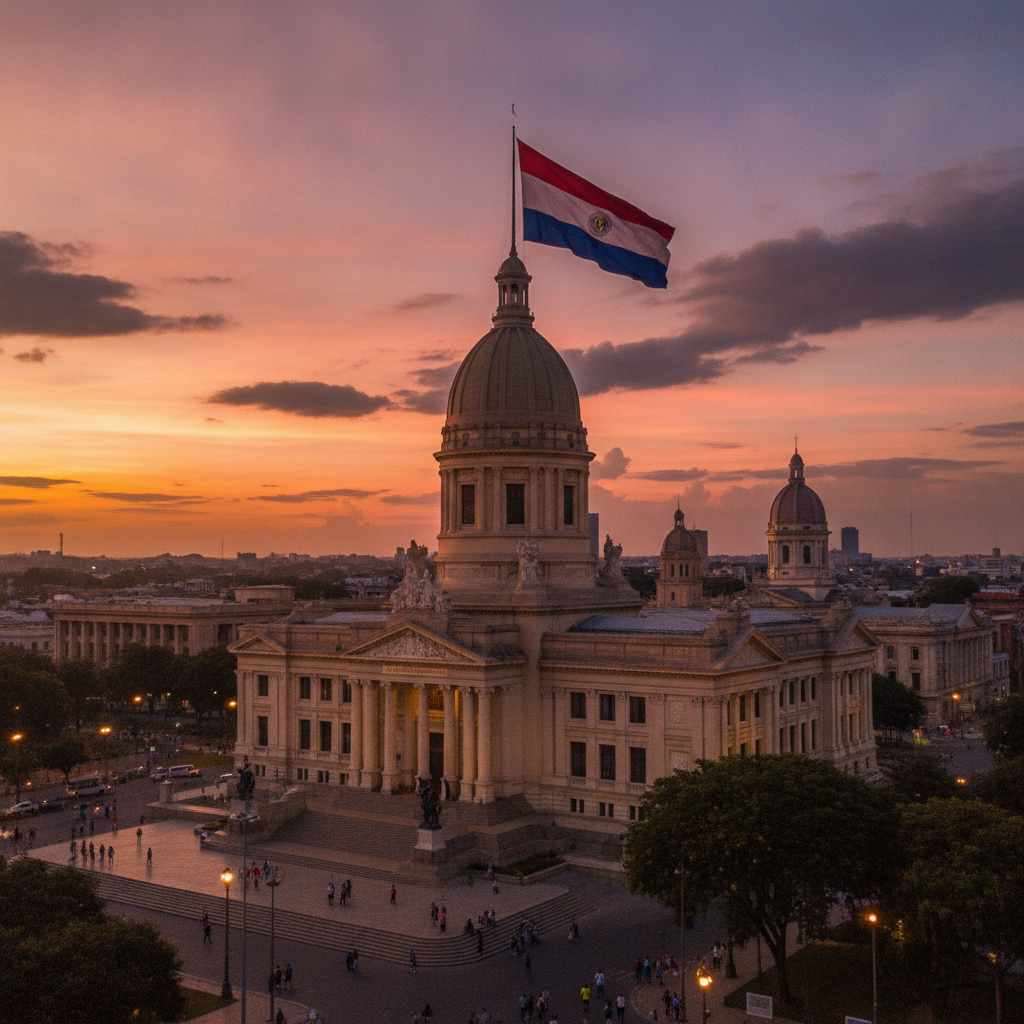
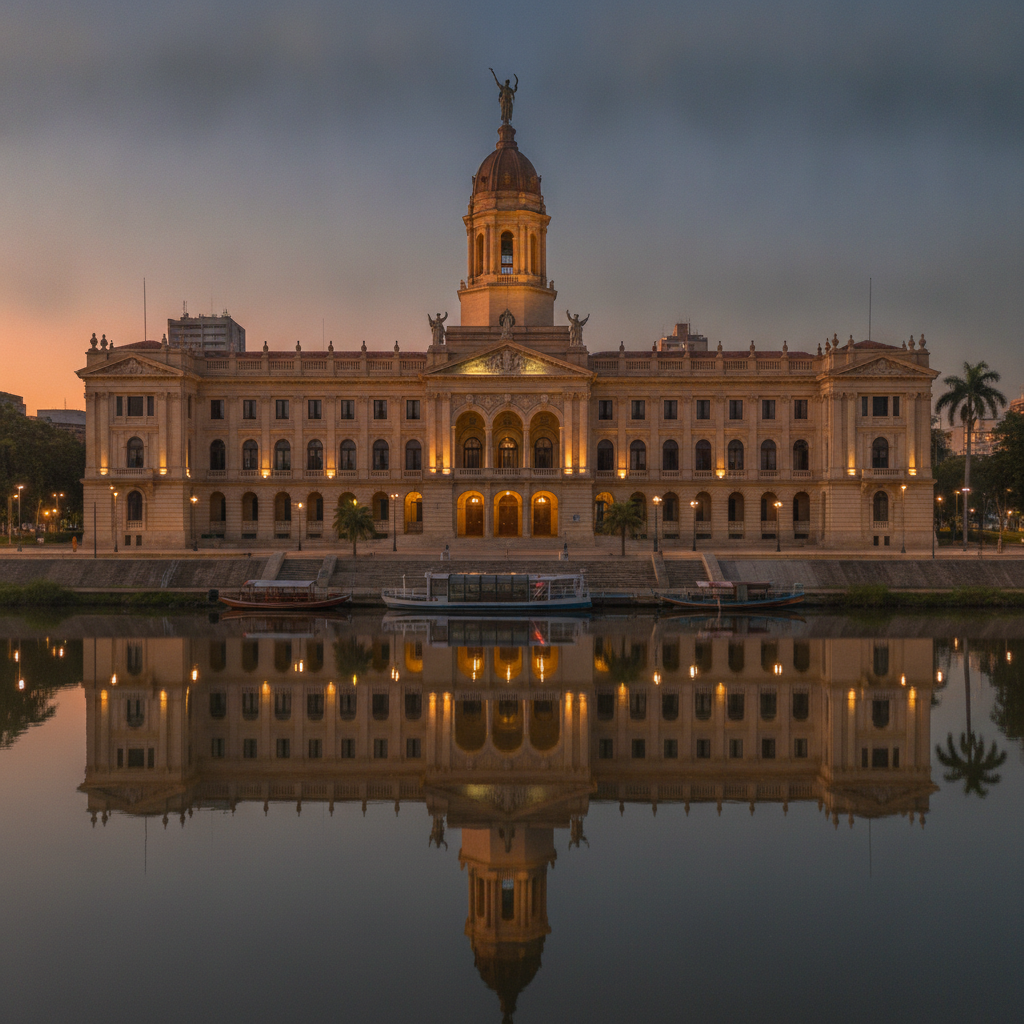
The architecture of Asuncion reflects the layers of Paraguayan political and economic history in its buildings: the colonial remnants that survived the wars and economic disruptions, the Italianate civic buildings of the Lopez modernization era, the early 20th century commercial and residential buildings of the Liberal period prosperity, and the monumental public buildings of the Stroessner era that imposed a provincial brutalism on the city center. The Palacio de los Lopez, the government palace completed in 1892 in an elaborate Italian Renaissance style for Carlos Antonio Lopez but not occupied by him because he died before its completion, is the most architecturally impressive building in Paraguay and one of the most ambitious civic buildings in 19th century South America. The Panteón Nacional de los Heroes, a circular domed mausoleum modeled on the Paris Invalides and completed in 1937, houses the remains of Francisco Solano Lopez, Carlos Antonio Lopez, and other national heroes; it is the most visited historic site in central Asuncion. The Cathedral of Asuncion on the Plaza de Armas, rebuilt in its current neoclassical form in the 19th century, is the oldest active religious institution in the city, with a history of continuous use dating to the original settlement. The Stroessner-era public buildings, including the military headquarters and several government ministries, impose a concrete functionalism that reflects the regime's combination of authoritarian aspiration and limited architectural ambition.
Walk this route with audio
Stories play automatically as you reach each stop — no tapping needed.
More in Asuncion
Asuncion Practical Guide: Getting There, Getting Around, and Paraguay Circuit
Asuncion Arts, Music, and the Paraguayan Harp
Asuncion Day Trips: Areguá, Itauguá, Caacupe, and the Circuito de Oro
Asuncion: The Mother of Cities, Guarani Culture, and the Heart of Paraguay
Asuncion Food and Daily Life: Sopa Paraguaya, Chipa, and the Tereré Culture