Aswan Complete Reference - Eratosthenes, the Suez Canal, Nile Source Discovery, and Heritage Tourism
The complete Aswan reference: Eratosthenes calculation of the Earth circumference at Aswan (within 2% accuracy using sun shadows); ancient Greek and Roman travel writing about Syene; the Suez Canal history and the 1956 Suez Crisis; the Victorian search for the Nile source (Burton, Speke, Livingstone, Stanley); the UNESCO International Campaign to Save the Monuments of Nubia as the birth of world heritage preservation; and the complete practical planning guide.
- 1
Eratosthenes and the Circumference of the Earth - Science at the First Cataract
Eratosthenes of Cyrene (c.276-194 BCE): the librarian of the Great Library of Alexandria who calculated the circumference of the Earth with extraordinary accuracy (within approximately 2%) using the shadow angle of the midday sun at the summer solstice at Aswan (Syene) compared to Alexandria. The calculation (Eratosthenes knew that on June 21 (the summer solstice) the sun was directly overhead at Syene (Aswan) (at approximately latitude 24 N, close to the Tropic of Cancer) so a vertical stick cast no shadow and the sun was reflected at the bottom of a deep well: at the same moment in Alexandria (approximately 800 km to the north) a vertical stick cast a shadow of approximately 7.2 degrees (1/50th of a full circle): therefore the Earth circumference was approximately 50 times the Alexandria-Syene distance: 50 x 800 km = 40,000 km: the modern value is 40,075 km (he was within 1-2% depending on which ancient unit of measurement he used)): the methodology (the measurement relied on two key facts: that the sun was directly overhead at Syene (Aswan) at the solstice (Aswan is close to the Tropic of Cancer, the latitude where the sun is directly overhead on June 21): and that Alexandria is approximately due north of Aswan along the same meridian): the significance (Eratosthenes calculation was the first scientific measurement of the size of the Earth: the result was widely known in the ancient world: Columbus knew of it (and used an incorrect smaller estimate to justify the feasibility of his westward voyage to Asia)). The Aswan connection (Syene (Aswan) is named in the calculation as the zero-point of Eratosthenes method: the first Nile cataract at Aswan is effectively the site of one of the greatest scientific measurements in history).
- 2
Ancient Aswan in Greek and Roman Travel Writing - The Tourist Gaze of Antiquity
Ancient Aswan (Syene) as a tourist destination in the Greco-Roman period: the ancient travel writing that recorded the first Nile cataract and the Egyptian monuments for an educated Mediterranean readership. Herodotus (the Greek historian Herodotus (c.484-425 BCE) visited Egypt approximately 450 BCE and wrote the most detailed ancient Greek account of Egypt in his Histories Book 2: he described the Nile flood, the building of the pyramids (with various theories), the embalming traditions, the Egyptian priests, and the geography of the Nile: he did not reach Aswan but described the first cataract as the limit of Egyptian territory). Strabo (the Greek-Roman geographer Strabo (c.63 BCE - c.24 CE) visited Egypt with the Roman Prefect Aelius Gallus in approximately 25-24 BCE and wrote the most comprehensive ancient description of Egypt in his Geography Book 17: he visited Aswan and the first cataract and described the scene with precision: the granite island, the Nilometer, the Jewish garrison at Elephantine, and the noise of the cataract). Pliny the Elder (the Roman naturalist Pliny the Elder (23-79 CE) included Egypt and the Nile in his Natural History: the Nilometer at Elephantine, the annual flood measurements, and the agricultural cycle of Egypt). The Obelisk tourists (ancient Greek and Roman visitors carved their names on the Egyptian obelisks at various sites: the Theban monuments are covered with ancient Greek tourist graffiti including the recording of admiration for the Colossi of Memnon).
- 3
The Suez Canal - The Engineering Achievement That Changed World Trade
The Suez Canal (the canal connecting the Mediterranean Sea to the Red Sea): the most significant maritime engineering achievement in history, which eliminated the need to sail around Africa (the Cape of Good Hope route) and reduced the voyage from Europe to Asia by approximately 7,000 km. The history (the ancient canal (a canal connecting the Nile to the Red Sea was built and used in various periods from the reign of Senausert III (Middle Kingdom) through the Persian, Ptolemaic, and Roman periods): the medieval closure: the modern canal (Ferdinand de Lesseps, the French diplomat and engineer who convinced Said Pasha (the Egyptian khedive and nephew of Mohammed Ali) to grant the concession in 1854: construction began in 1859: the canal opened November 17, 1869 after 10 years of construction at a cost of approximately USD 100 million (USD 2 billion in 2024 terms): the workforce: approximately 1.5 million Egyptians worked on the canal during construction (primarily through a corvee system of forced labor that killed approximately 120,000 workers)). The Suez Crisis 1956 (Nasser nationalized the Suez Canal Company on July 26, 1956: the Anglo-French-Israeli Tripartite Aggression October-November 1956: US refusal to support the invasion forced Anglo-French withdrawal: Nasser triumph established him as the hero of Arab nationalism). The modern canal (the Suez Canal is one of the most strategically important waterways in the world: approximately 12-15% of world maritime trade passes through it: the 2021 Ever Given container ship blocking (March 23-29, 2021) held up approximately USD 9.6 billion in daily trade).
- 4
The Nile Source Discovery - Stanley, Speke, and the Victorian Exploration of Africa
The discovery of the Nile source: one of the great geographical puzzles of the 19th century, solved by Victorian explorers at the cost of extraordinary hardship and several lives. The ancient knowledge (ancient Greeks and Romans knew the Nile flowed from the south and speculated about the Mountains of the Moon as the source: Ptolemy (c.100-170 CE) in his Geography described the Nile as flowing from two equatorial lakes fed by the Mountains of the Moon (the Ruwenzori Range in modern Uganda-DRC)). The Victorian quest (the search for the Nile source was the primary British geographical objective of the 1850s-1860s: the Royal Geographical Society funded multiple expeditions). Richard Burton and John Hanning Speke (the Burton-Speke expedition (1857-1858): discovered Lake Tanganyika: Burton was ill and Speke went ahead and discovered Lake Victoria (July 30, 1858): Speke claimed it was the Nile source: Burton disputed this: the rivalry became one of the great disputes in Victorian exploration). The Speke confirmation (Speke returned to Lake Victoria (1860-1863) with James Grant: found the Ripon Falls (in modern Uganda) where the Nile exits Lake Victoria: confirmed the lake as the source). David Livingstone (the Scottish missionary-explorer who mapped the Congo River basin: his disappearance prompted the famous rescue expedition by Henry Morton Stanley: Stanley found Livingstone at Ujiji on Lake Tanganyika on November 10, 1871 (the famous Dr. Livingstone I presume greeting)). The modern understanding (the White Nile flows from the Kagera River (the Ruvyironza tributary in Burundi) through Rwanda, Tanzania, and Uganda into Lake Victoria and then north to Sudan and Egypt: the Nile total length approximately 6,650 km).
- 5
Aswan and Egyptian Heritage Tourism - The UNESCO Legacy and Future Challenges
Aswan and Egyptian heritage tourism: the UNESCO International Campaign to Save the Monuments of Nubia (1960-1980) as the birth of international heritage preservation, and the current challenges facing Egyptian heritage conservation. The UNESCO campaign (the International Campaign to Save the Monuments of Nubia: organized by UNESCO Director-General Vittorino Veronese beginning in 1960 in response to the imminent flooding of the Nubian Nile Valley by the Aswan High Dam: 50 countries contributed funds, expertise, and personnel: approximately 22 temples and monuments were saved: Abu Simbel (relocated 1964-1968): Philae (relocated 1972-1980): Kalabsha, Beit el-Wali, Amada, Wadi el-Sebua, Derr, and Kasr Ibrim (the submerged island monastery) were among the others: four temples were donated to contributing countries as thanks (Temple of Dendur to USA (Metropolitan Museum of Art, New York), Temple of Debod to Spain (Parque del Oeste, Madrid), Temple of Ellesyia to Italy (Museo Egizio, Turin), Temple of Taffeh to Netherlands (Rijksmuseum van Oudheden, Leiden)). The World Heritage Convention (the success of the Nubian rescue campaign directly led to the drafting and adoption of the UNESCO Convention Concerning the Protection of the World Cultural and Natural Heritage (the World Heritage Convention) in 1972: the Convention has since listed over 1,100 World Heritage Sites in 167 countries: the International Campaign to Save the Monuments of Nubia was the founding event of the modern international heritage preservation movement). The current challenges (mass tourism impact on fragile painted tombs in the Valley of the Kings: conservation of mud-brick sites: the impact of climate change (flooding, rising humidity) on underground tomb environments: the conservation backlog for Egyptian heritage is enormous).
- 6
Aswan Final Complete Reference - The Southern Gateway to Africa and Essential Planning
Aswan final complete reference: the definitive planning guide for Egypt most beautiful and historically significant southern city. The essential facts (Aswan: latitude 24.09 N (just below the Tropic of Cancer at 23.44 N): the southernmost significant city in Egypt: population approximately 350,000-400,000: Aswan International Airport (ASW): direct flights from Cairo (1 hour, approximately EGP 400-800 one way): the train (the overnight sleeper from Cairo to Aswan: approximately 14-16 hours: the best budget long-distance option): Aswan time zone: Egypt Standard Time (EET / UTC+2) year-round (no daylight saving)). The 3-day Aswan itinerary (Day 1: arrive, settle in hotel, afternoon felucca on the Nile to Kitchener Island and Elephantine Island, Aswan Corniche at sunset, dinner: Day 2: morning Philae Temple by boat, Aswan High Dam, Unfinished Obelisk, Nubian village visit, Philae Sound and Light Show evening: Day 3: Abu Simbel day trip (fly 7am, return 2pm): afternoon rest: evening souk and karkadeh at an Aswan cafe). The accommodation (Old Cataract Hotel (heritage luxury): Movenpick Aswan on Elephantine Island (excellent mid-range with Nile island location): the Bet el Kerem guesthouse in the Nubian village on the west bank (budget with Nubian family immersion)). The money (Egyptian pound EGP: approximately 30-50 EGP to the USD as of 2024-2025: cash is preferred at most sites and restaurants: ATMs available in Aswan city center). The connectivity (Aswan has good 4G mobile coverage in the city center and at the main tourist sites: wifi available in hotels).
Walk this route with audio
Stories play automatically as you reach each stop — no tapping needed.
More in Aswan
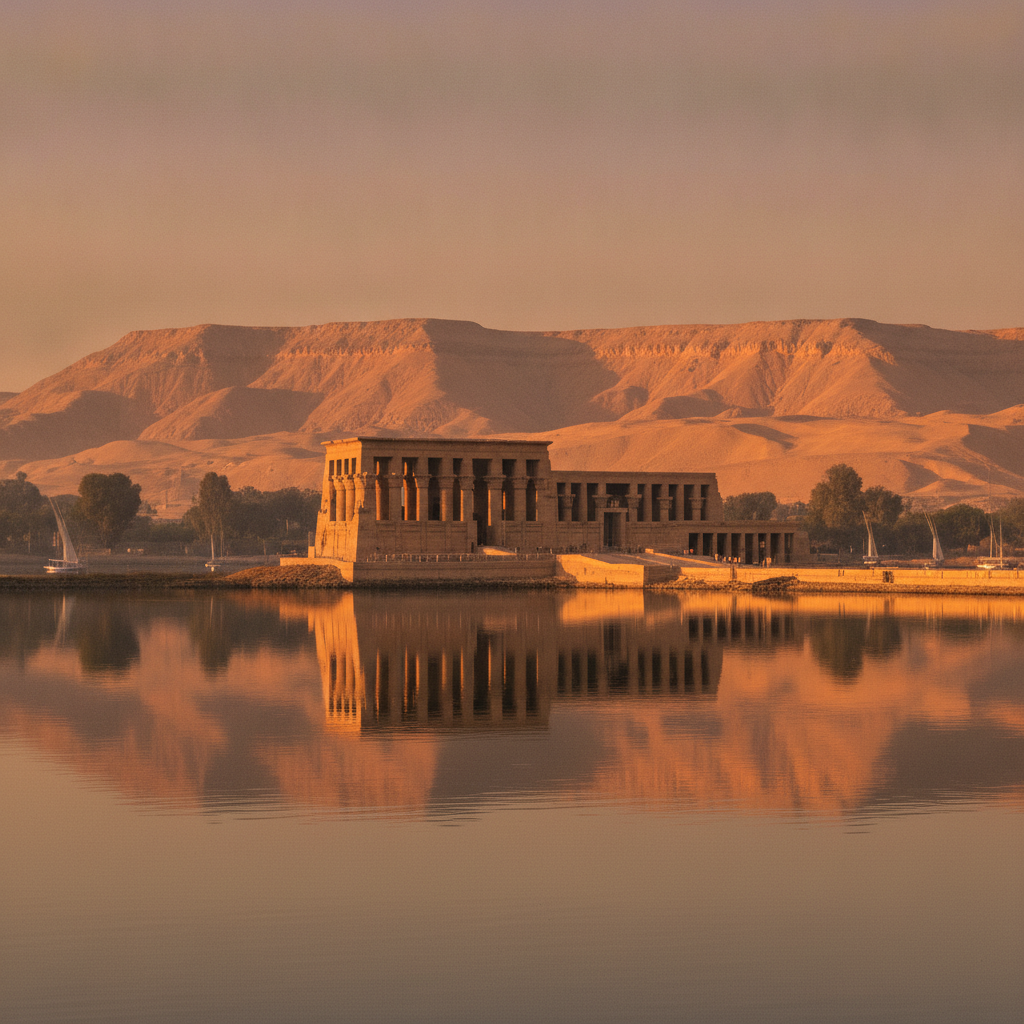
Aswan Complete Reference - Kalabsha Temple, Practical Guide, and the Eastern Desert
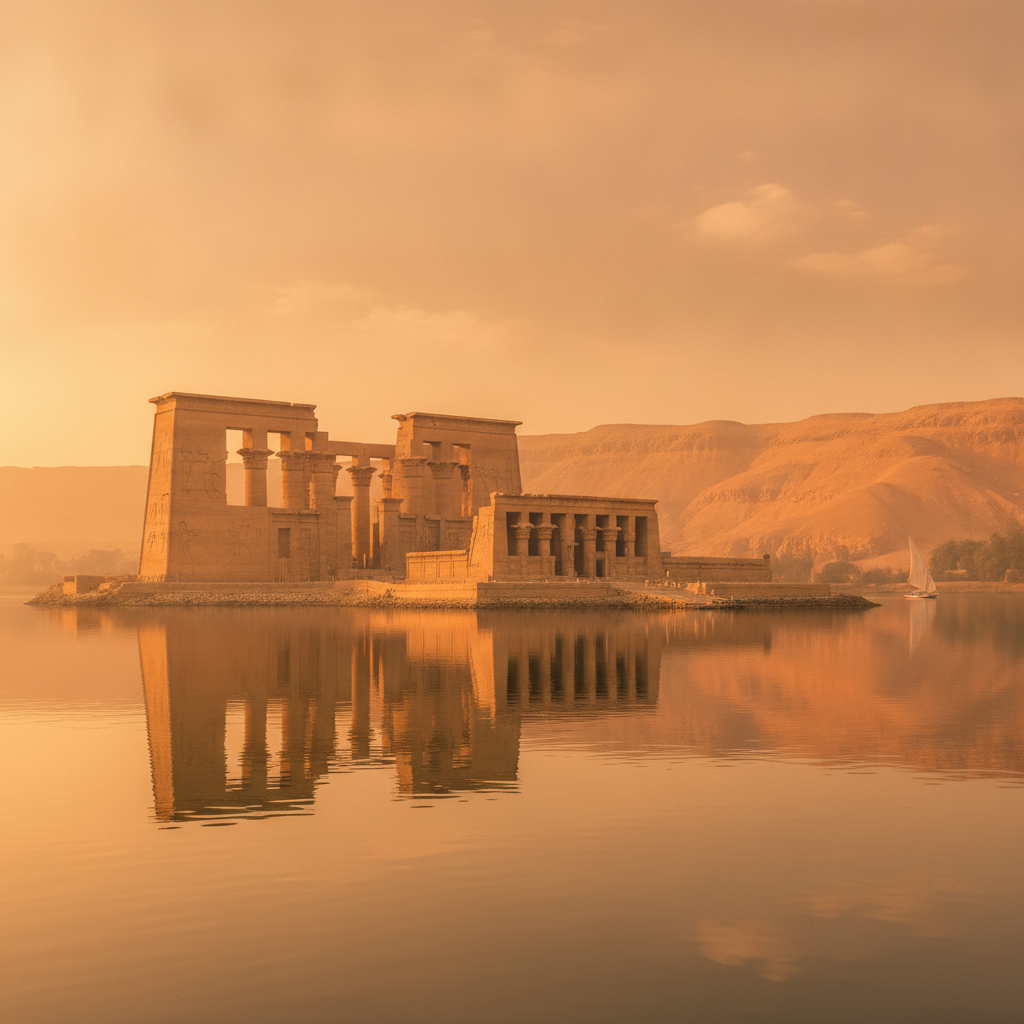
Aswan Practical Guide - Felucca Rides, Sound and Light Shows, Best Season, and Complete Itinerary
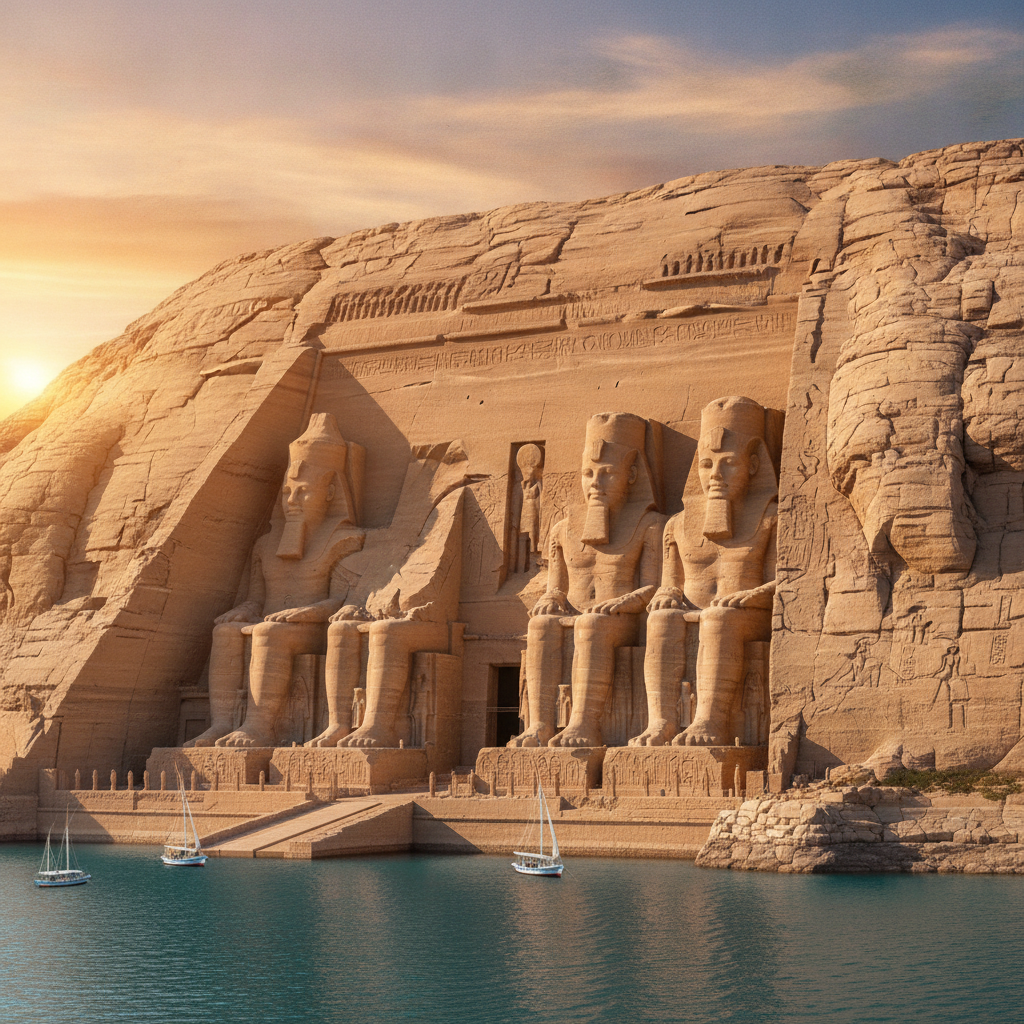
Aswan Essential: Abu Simbel, the Philae Temple of Isis, the Nile Felucca, the Nubian Village, and the Most Dramatically Beautiful Single Nile City
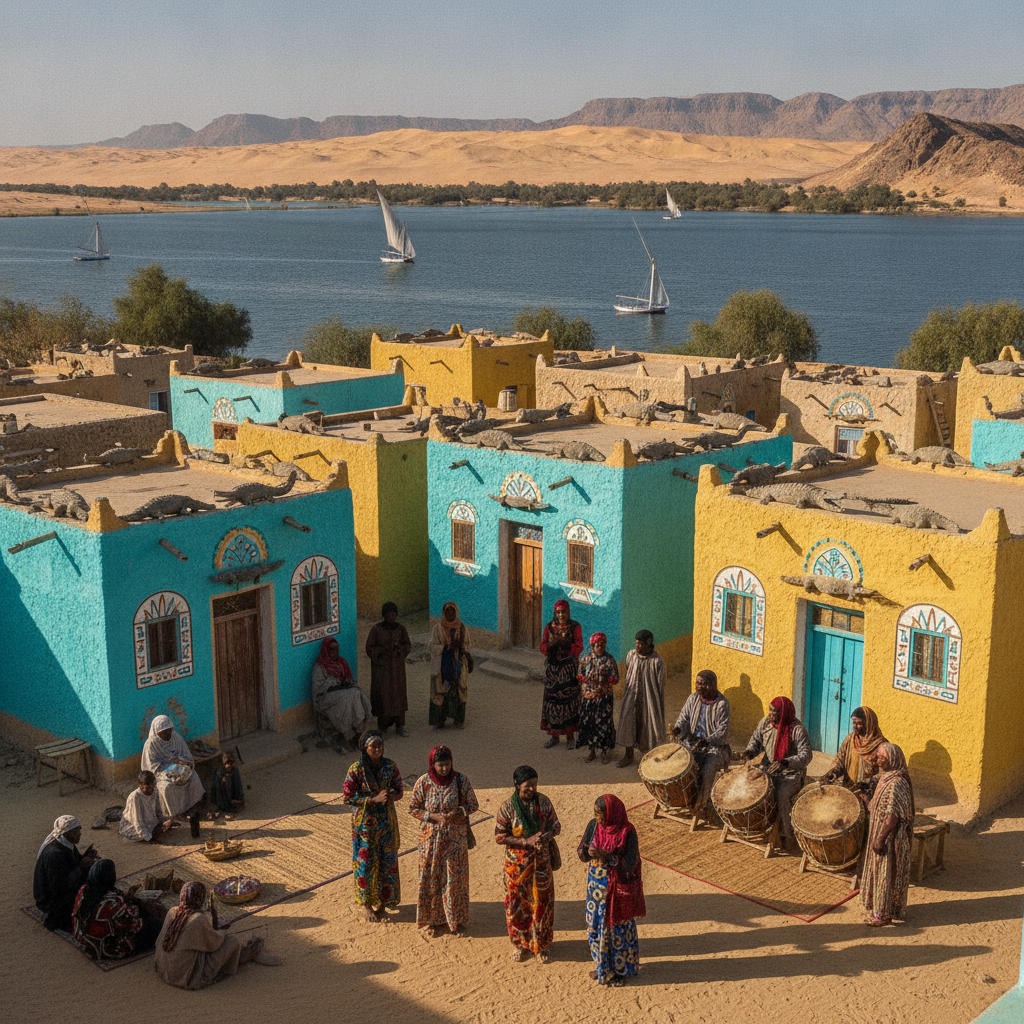
Aswan Nubian Culture: The Nubian Heritage, Music, Food, the Colorful Architecture, and the Most Distinctively African Single Egyptian Community
Aswan Practical: The Airport, Lake Nasser Cruise Booking, Accommodation, Optimal Timing, and the Nile South Circuit