Aswan: Kingdom of Kush, Abu Simbel, Lake Nasser, and the Nubian Heritage
The deeper history of Aswan: the Kingdom of Kush and the Nubian pharaohs who conquered Egypt (25th Dynasty); Abu Simbel and the solar alignment; Lake Nasser and the drowned Nubia (temples rescued by UNESCO and donated to New York and Madrid); the ancient granite quarries and the Unfinished Obelisk; the Agha Khan Mausoleum and the Monastery of Saint Simeon on the west bank; and the complete Aswan guide.
- 1
The Kingdom of Kush - The Nubian Civilization That Conquered Egypt
The Kingdom of Kush (approximately 2000 BCE - 350 CE): the Nubian civilization centered in the region between the second and sixth Nile cataracts (modern Sudan) that was alternately a subject of, competitor to, and conqueror of ancient Egypt. The early period (the Egyptian New Kingdom pharaohs (approximately 1550-1070 BCE) conquered and administered Nubia (which they called Kush): the Viceroy of Kush was one of the most powerful officials in the New Kingdom bureaucracy: Nubian gold was the primary funding for the New Kingdom building program). The Nubian conquest of Egypt (after the New Kingdom collapse (approximately 1070 BCE) the Nubian rulers of the Kingdom of Kush gradually extended their power northward: the Nubian Piankhy (Piye) conquered most of Egypt by approximately 747 BCE: his successors Shabaka, Shebitku, Taharqa, and Tanutamani ruled all of Egypt as the 25th Dynasty (approximately 747-656 BCE): Taharqa (690-664 BCE) was the most powerful Kushite pharaoh: he built extensively at Karnak and throughout Egypt: he was eventually driven out by the Assyrian king Ashurbanipal). The Meroitic period (after the Assyrian expulsion the Kushite state retreated to Meroe in modern Sudan (approximately 300 BCE - 350 CE): the Meroitic Kingdom developed an independent writing system (the Meroitic script - still not fully deciphered): the extraordinary Meroitic royal pyramids at Meroe (steeper and smaller than Egyptian pyramids) survive as one of the finest archaeological sites in Sudan).
- 2
Abu Simbel - The Rock-Cut Temple of Ramesses II and the UNESCO Rescue
Abu Simbel (270 km south of Aswan): the two rock-cut temples carved from the sandstone cliff above the Nile approximately 1264-1244 BCE by Ramesses II, relocated by UNESCO (1964-1968) to save them from the rising waters of Lake Nasser. The Great Temple (four 20-meter colossal seated statues of Ramesses II on the facade carved from the living cliff: the interior pillared halls with Osiride pillars and painted ceilings: the inner sanctuary with four seated figures (Ptah, Amun-Ra, Ramesses II deified, and Ra-Horakhty): the solar alignment (approximately February 22 and October 22 the rising sun illuminates the inner sanctuary through the entire length of the temple, lighting the faces of three figures while Ptah (god of the underworld) remains in shadow: the dates correspond approximately to the birthday and coronation day of Ramesses II). The Small Temple (dedicated to the goddess Hathor and to Queen Nefertari: the facade with alternating colossal standing statues of Ramesses II and Nefertari at equal height: extraordinary (a pharaoh had never depicted his queen at equal scale before)). The UNESCO relocation (the temples were cut into 1,050 blocks averaging 20 tons each and reassembled 65 meters higher and 200 meters back from the original site: the total cost approximately USD 40 million (approximately USD 350 million in 2024 terms): the most complex and expensive archaeological rescue in history: the operation was the template for all subsequent large-scale archaeological relocation projects).
- 3
Lake Nasser - The Drowned Nubia and the Temples Rescued and Lost
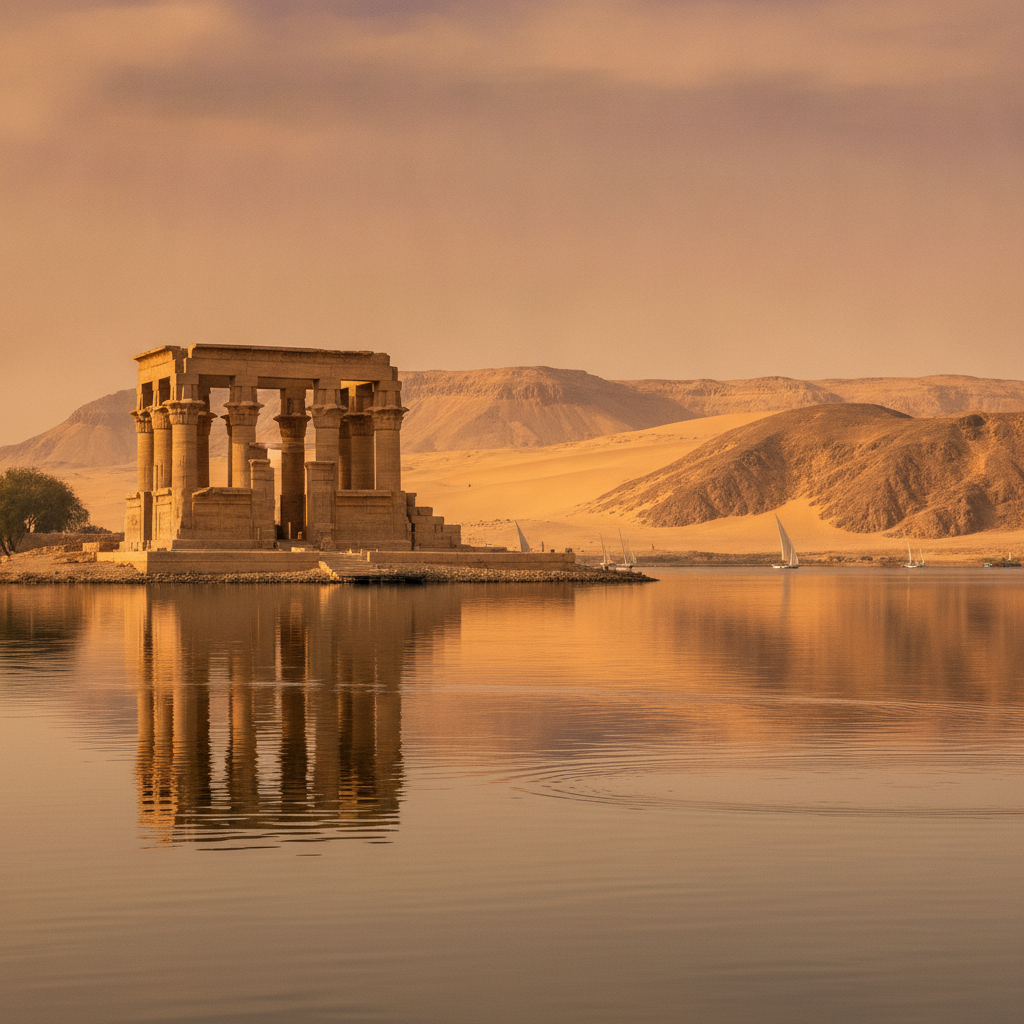
Lake Nasser (the reservoir of the Aswan High Dam): approximately 550 km long, maximum width approximately 35 km, total storage capacity approximately 132 cubic km: the largest artificial lake in the world by surface area at the time of its creation (1971) and one of the most significant acts of landscape transformation in human history. The drowned heritage (the rising waters of Lake Nasser submerged approximately 820 km of the ancient Nubian Nile Valley: dozens of ancient Egyptian and Nubian temples, hundreds of Neolithic rock art sites, and thousands of Nubian settlements including the towns of Wadi Halfa and Abu Simbel (the original village) were permanently inundated: the UNESCO International Campaign to Save the Monuments of Nubia (1960-1980) was the most ambitious archaeological rescue operation in history (predating even the UNESCO designation of World Heritage Sites): approximately 22 temples and monuments were successfully relocated or donated to contributing countries). The rescued temples (Abu Simbel (relocated to higher ground): Philae (relocated to Agilkia Island): Kalabsha Temple (relocated to new Kalabsha Island near the dam): the Temple of Dendur (donated to the United States as thanks for contribution to the rescue: now in the Metropolitan Museum of Art in New York in a specially built glass wing): the Temple of Debod (donated to Spain: now in the Parque del Oeste in Madrid)). The ecological impact (the end of the annual Nile silt: the Nile Delta is now subsiding approximately 3-5mm per year without the annual silt replenishment: the delta will be significantly submerged by Mediterranean sea level rise within the next century).
- 4
The Granite Quarries of Aswan - Where the Ancient Egyptians Shaped Their World
The ancient granite quarries of Aswan: the primary source of the hard pink and grey granite used in the most important ancient Egyptian monuments for 3,000 years. The granite (the Aswan granite (a coarse-grained red-pink granite containing quartz, feldspar, and biotite mica): used for obelisks, sarcophagi, temple naoi (inner sanctuary shrine boxes), colossal statues, and architectural elements: the specific pink Aswan granite (granodiorite) used for the most prestigious objects: the granite is extremely hard (rating 6-7 on the Mohs scale) making it both durable and extraordinarily difficult to work with ancient tools). The evidence (the Unfinished Obelisk in the northern quarries of Aswan: approximately 42 meters long, approximately 1,168 metric tons: abandoned in situ when a crack developed during quarrying: the largest evidence of ancient Egyptian quarrying technique: the pounding stone channels visible around the obelisk show the dolerite-pounding method). The logistics (the transport of finished granite objects to the northern Egyptian sites (Karnak, Luxor, the Nile Delta, even Giza for the Khafre pyramid casing and the Great Sphinx limestone enclosure) required specialized barges on the Nile: the granite quarry workers used dolerite pounding stones (harder than granite): the quarrying process for a large obelisk required approximately 3-7 years of continuous work by hundreds of workers). The modern use (Aswan pink granite is still quarried today for architectural use: the continuity of granite working in this location spans approximately 5,000 years).
- 5
The Agha Khan Mausoleum and Aswan West Bank - The Desert Shore of the Nile
The Agha Khan Mausoleum (the Mausoleum of Sultan Muhammad Shah Aga Khan III (1877-1957): the 48th Imam of the Ismaili Muslim community: one of the wealthiest men in the world in the mid-20th century: built on a hill above the west bank of the Nile at Aswan in a site he chose for its resemblance to the Valley of the Kings across the river: completed in 1959: the Aga Khan III is buried in the pink granite sarcophagus in the marble-clad mausoleum: his wife the Begum Aga Khan placed a single red rose on the sarcophagus every day until her own death in 2000: the mausoleum is still respected as a pilgrimage site by the Ismaili community). The Monastery of Saint Simeon (the Anba Hadra Monastery - the Monastery of Saint Simeon: a Coptic Christian monastery on the west bank hills above Aswan: built approximately 7th century CE and expanded to 10th century: one of the largest surviving Coptic monastery complexes in Egypt: abandoned in the 13th century when the water supply failed: the well-preserved mudbrick walls, chapels, refectory, and monks cells give an exceptional picture of Coptic monastic life). The west bank felucca experience (the traditional Nile sailing boats (feluccas) are the primary mode of transport to the west bank sites from Aswan: the felucca sail on the Nile at Aswan is one of the finest sailing experiences in Egypt: the combination of Nile waters, granite boulders, desert hills, and Nubian palm groves is visually extraordinary).
- 6
Aswan Complete Guide - Best Hotels, Nubian Village Experience, and Legacy of the Southern Frontier
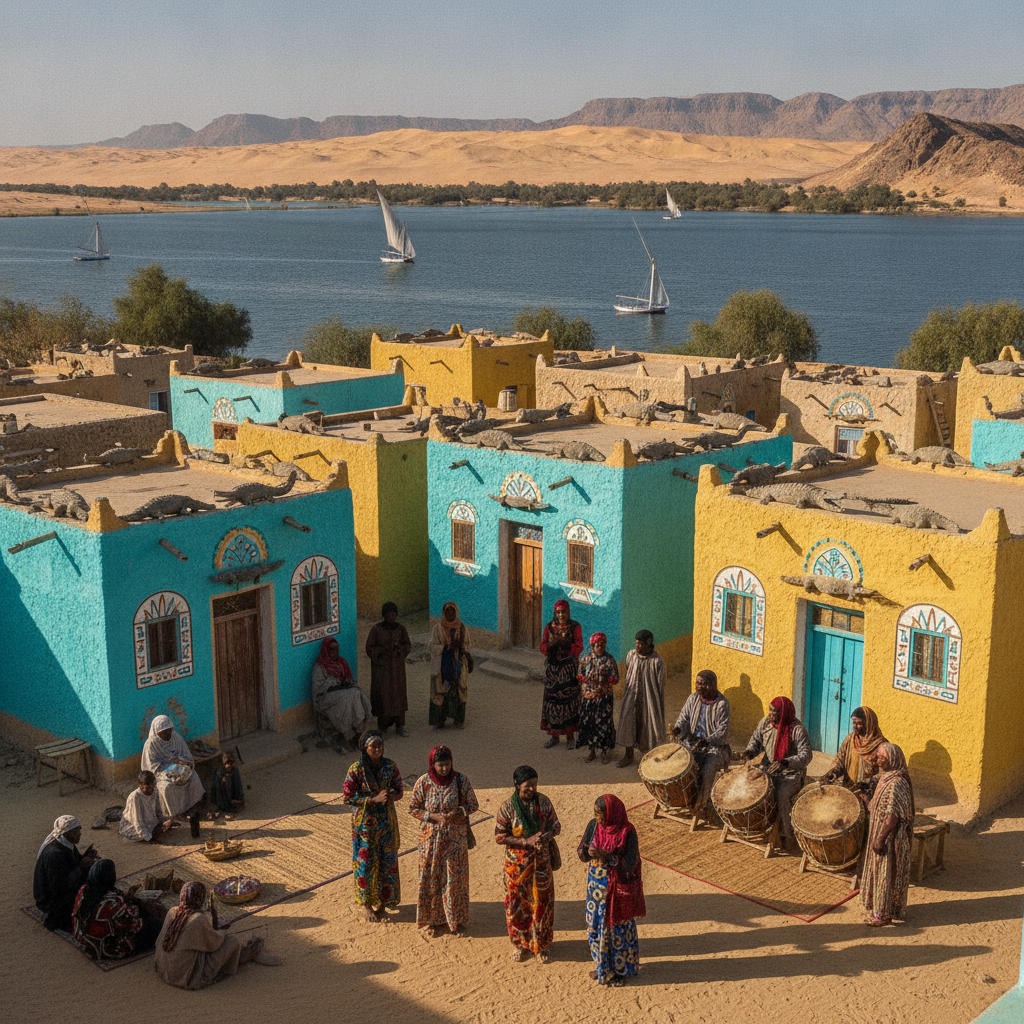
Aswan complete guide: the finest hotels, the Nubian village experience, and the legacy of Egypt southern gateway city. The Old Cataract Hotel (the Old Cataract Hotel: built 1899 by Thomas Cook: pink sandstone Victorian-era grand hotel on a Nile-side granite outcrop: Agatha Christie, Winston Churchill, and Howard Carter among former guests: the Agatha Christie Suite: the terrace bar at sunset with views over Elephantine Island and the first Nile cataract: a Sofitel heritage property). The Movenpick Aswan (located on Elephantine Island: a hotel surrounded by the Nile on all sides: the island location gives the unique experience of staying in the middle of the river). The Nubian village experience (the Nubian villages on the west bank of the Nile at Aswan: accessible by motor boat from the Aswan Corniche: the brightly painted mudbrick houses with bold geometric murals (a distinctive Nubian architectural tradition): Nubian music and food: the warm Nubian hospitality tradition: responsible tourism with direct economic benefits to Nubian families). The Aswan souk (the Aswan spice market and bazaar behind the Corniche: the finest spice market in Upper Egypt with karkadeh (dried hibiscus flowers), Nubian spice blends, saffron, dates, and local crafts). The Karkadeh (Hibiscus) tradition (karkadeh: dried hibiscus flowers brewed as tea: the primary Aswan drink: deep red, intensely flavored: drunk hot or cold with sugar: Aswan is the primary hibiscus growing region in Egypt and one of the primary in Africa: exported worldwide as a herbal tea). The legacy (Aswan as the southern frontier of ancient Egypt for 3,000 years, the crossroads between Mediterranean and African civilizations, and one of the most beautiful natural landscapes of any city in the world (the first Nile cataract with its pink granite boulders, blue Nile waters, and desert hills is a UNESCO-quality natural landscape)).
Walk this route with audio
Stories play automatically as you reach each stop — no tapping needed.
More in Aswan
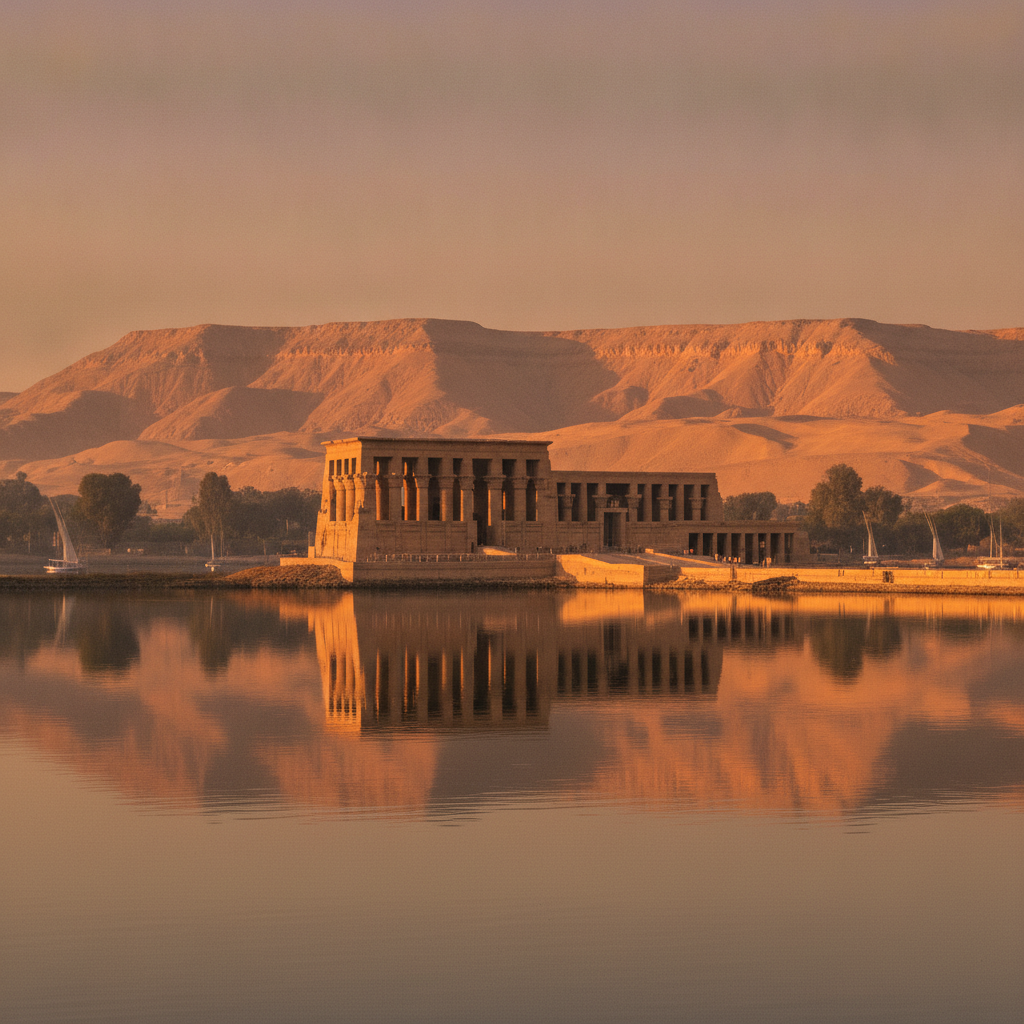
Aswan Complete Reference - Kalabsha Temple, Practical Guide, and the Eastern Desert
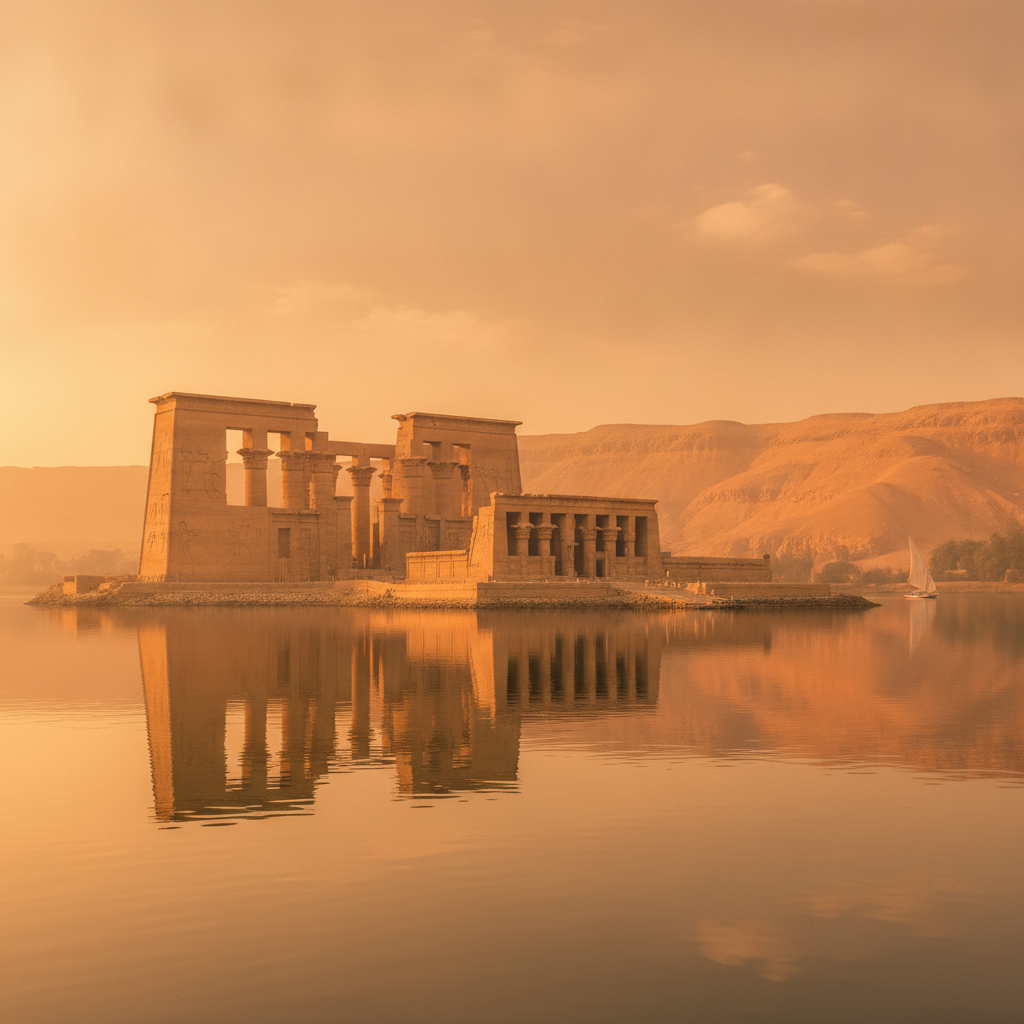
Aswan Practical Guide - Felucca Rides, Sound and Light Shows, Best Season, and Complete Itinerary
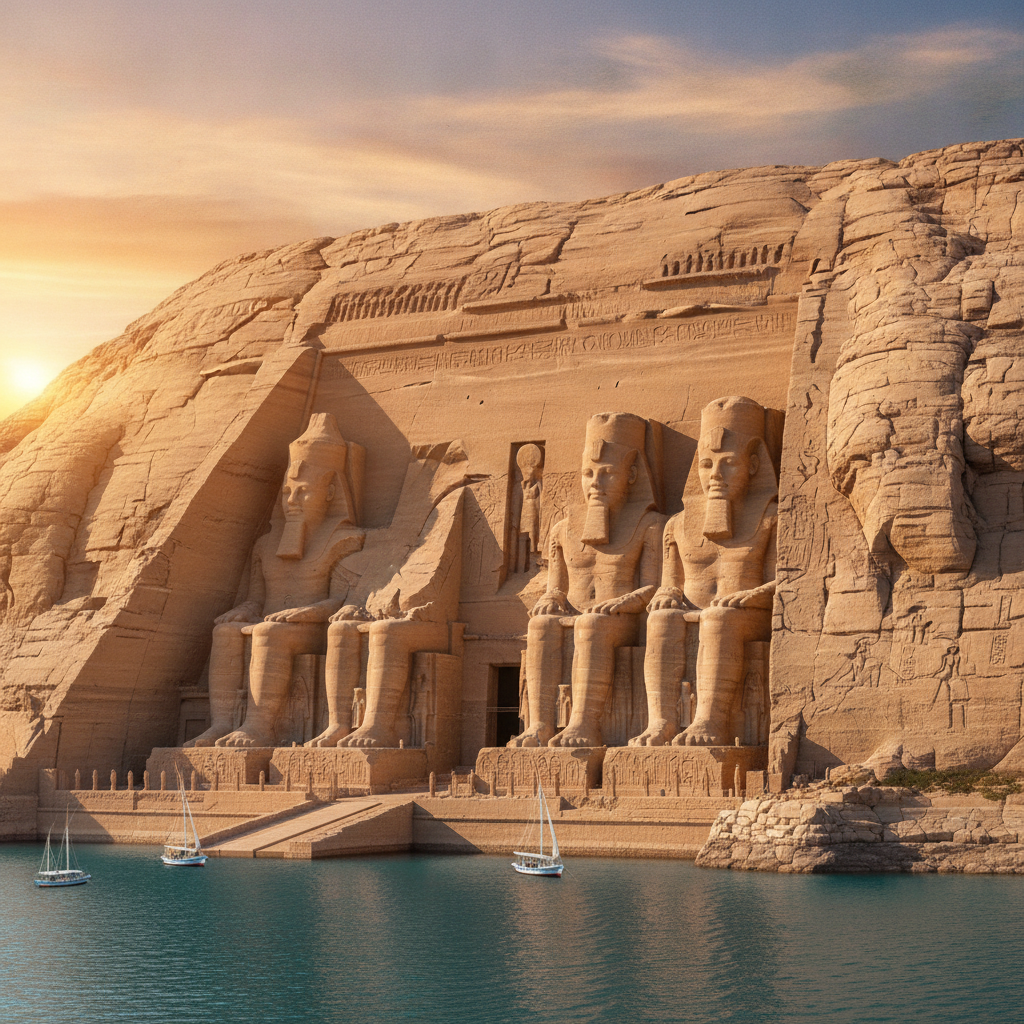
Aswan Essential: Abu Simbel, the Philae Temple of Isis, the Nile Felucca, the Nubian Village, and the Most Dramatically Beautiful Single Nile City
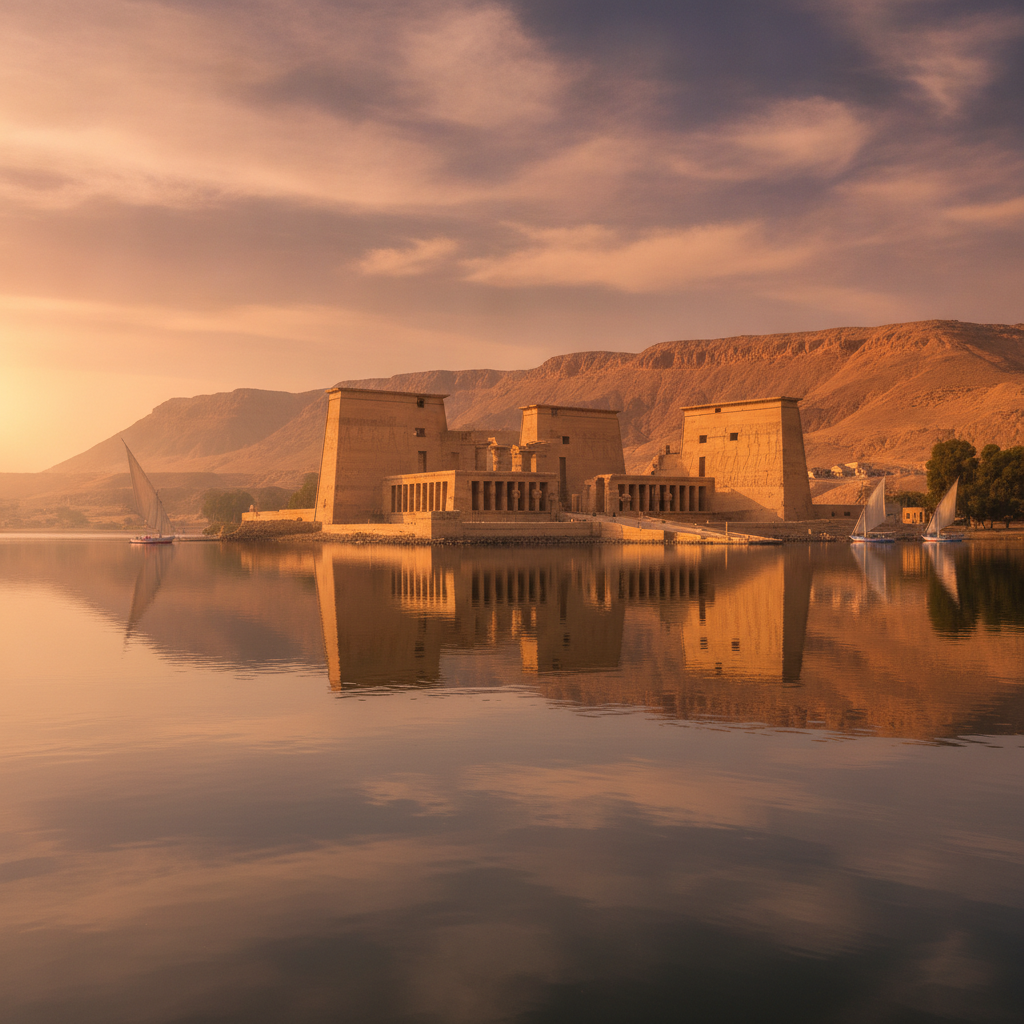
Aswan Complete Reference - Eratosthenes, the Suez Canal, Nile Source Discovery, and Heritage Tourism