Aswan: Philae Temple, the Nubian People, the High Dam, and the Gateway to Africa
Aswan as the southern frontier of ancient Egypt and the crossroads between Mediterranean and African civilizations: the Philae Temple of Isis (the last pagan temple, rescued by UNESCO); Elephantine Island and the ancient Nilometer; the Aswan High Dam that transformed Egypt but submerged ancient Nubia; the Nubian people and their displacement; the Unfinished Obelisk (the largest single stone object ever attempted); and the practical guide including the Old Cataract Hotel and Abu Simbel day trips.
- 1
Philae Temple of Isis - The Last Pagan Temple and the UNESCO Rescue
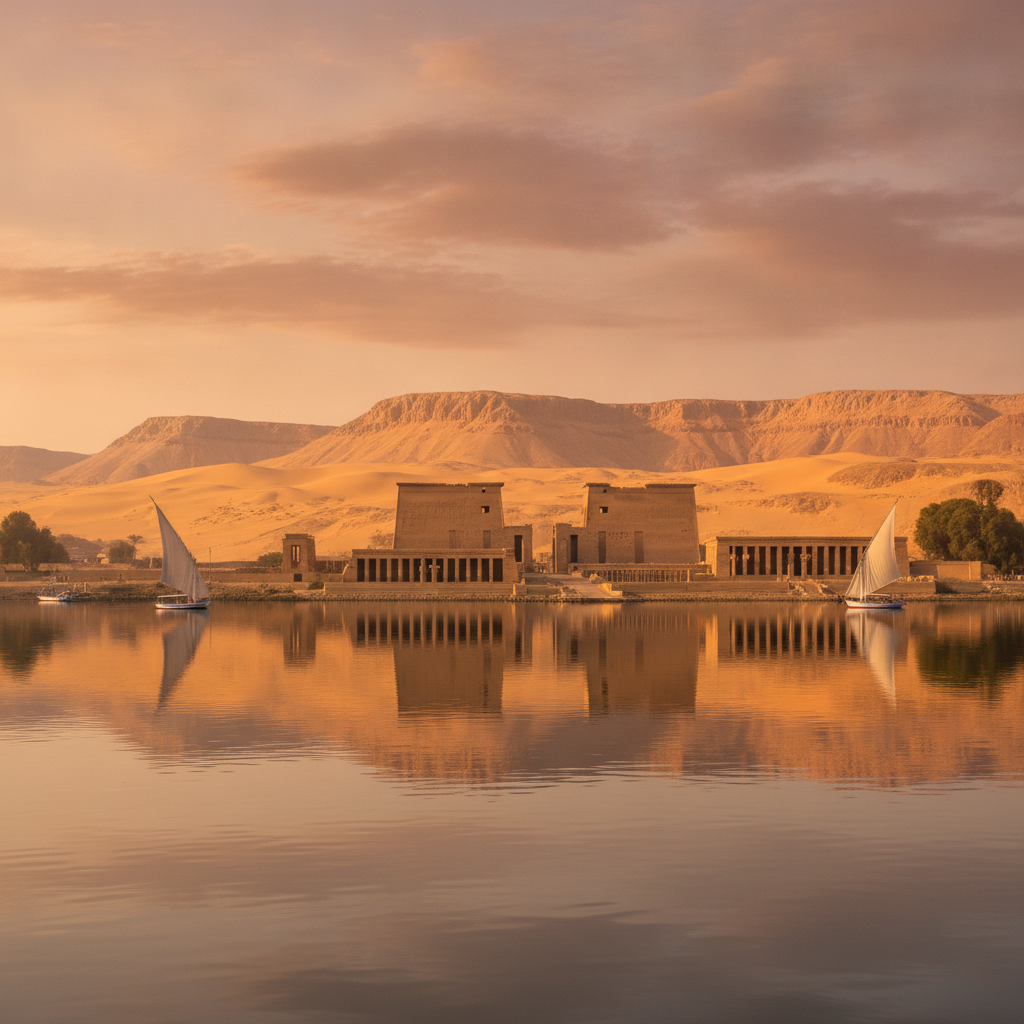
The Philae Temple (the Temple of Isis on the island of Philae): the most beautiful Ptolemaic temple in Egypt and the last ancient Egyptian temple to operate as a functioning pagan religious site before being officially closed by the Byzantine Emperor Justinian in approximately 550 CE. The original island (the Temple of Isis at Philae was built primarily in the Ptolemaic period (approximately 380-362 BCE start with most construction 285-47 BCE and Roman additions through 68 CE): the island of Philae was sacred to Isis (the goddess of magic, healing, and motherhood): the Isis cult at Philae was one of the most important and enduring in Egypt and spread throughout the Roman Empire). The flooding (after the construction of the first Aswan Dam (1902) the island of Philae was flooded for most of each year: the temple stood half-submerged for 50 years becoming one of the most photographed images of archaeology under threat). The UNESCO rescue (the construction of the Aswan High Dam (1971) would have permanently submerged Philae: UNESCO coordinated the relocation of the temple complex to the nearby island of Agilkia (1972-1980): the entire temple was dismantled, the island of Agilkia was reshaped to match the topography of the original Philae, and the temple was reassembled: the operation cost approximately USD 30 million and was the second great UNESCO Nile rescue operation after Abu Simbel (1964-1968)). The Sound and Light Show (the nightly Sound and Light Show at Philae: the illuminated temple reflected in the Nile waters of the Lake Nasser inlet: one of the finest Sound and Light shows in Egypt).
- 2
Elephantine Island and the Aswan Nilometer - Ancient Egypt Southern Frontier
Elephantine Island (Yebu - the Elephant in ancient Egyptian): the ancient island at the first Nile cataract that served as Egypt southern frontier fortress and trade gateway for 3,000 years. The history (Elephantine was the southernmost administrative center of ancient Egypt throughout most of its history: a border fortress against Nubia: a trading post for the goods of sub-Saharan Africa (gold, ivory, ebony, exotic animals, incense): the first Nile cataract (the granite outcrops that interrupted navigation on the Nile at Aswan) made Elephantine the effective southern limit of Nile shipping). The Nilometer (the Elephantine Nilometer: one of the oldest and finest surviving Nilometers: a graduated stone staircase descending into the Nile measuring the annual flood height: the flood measurements at Elephantine were used to predict the agricultural yield for the entire Nile valley and set the annual tax rate: the Nilometer has measurements dating from the pharaonic period through the Islamic era). The Khnum Temple (the Temple of Khnum (the ram-headed god of the Nile flood and creator of humanity on his potter wheel) on Elephantine Island: partially excavated: the foundation deposits and fragments of the earlier Middle Kingdom temple survive: the Aswan Museum on Elephantine Island (the Aswan archaeological museum: the mummy of the sacred ram of Khnum: the artifacts from the Elephantine excavations including Old and Middle Kingdom objects from the frontier garrison).
- 3
The Aswan High Dam - The Engineering Achievement That Transformed Egypt and Submerged Nubia
The Aswan High Dam (Sadd el-Ali): completed in 1971: the largest rockfill dam in the world at the time of construction and the engineering achievement that transformed modern Egypt by providing flood control, irrigation, and hydroelectric power - at the cost of submerging most of ancient Nubia and displacing approximately 100,000 Nubian people. The dimensions (the dam: 111 meters high, 3,830 meters long, 980 meters wide at the base: the reservoir (Lake Nasser): approximately 550 km long (500 km in Egypt, 150 km in Sudan): maximum width approximately 35 km: total storage capacity approximately 132 cubic km: the largest artificial lake in the world by surface area at the time of creation). The Soviet partnership (the US and Britain withdrew their offer to fund the dam in 1956 following Nasser nationalization of the Suez Canal: the Soviet Union stepped in to fund and provide technical expertise for the dam: the Soviet-Egyptian collaboration produced one of the largest engineering projects of the Cold War: the dam was built with Soviet engineers and equipment between 1960 and 1971). The consequences (positive: complete flood control ending the cycle of catastrophic Nile floods and droughts: water security for year-round agriculture: 2,100 megawatts of hydroelectric power: negative: the end of the annual Nile silt deposit (the Nile delta is now subsiding and eroding into the Mediterranean): the drowning of approximately 820 km of Nubian settlements: the displacement of approximately 100,000 Nubians from their ancestral homeland).
- 4
The Nubian People - Ancient Civilization, Displacement, and Cultural Renaissance
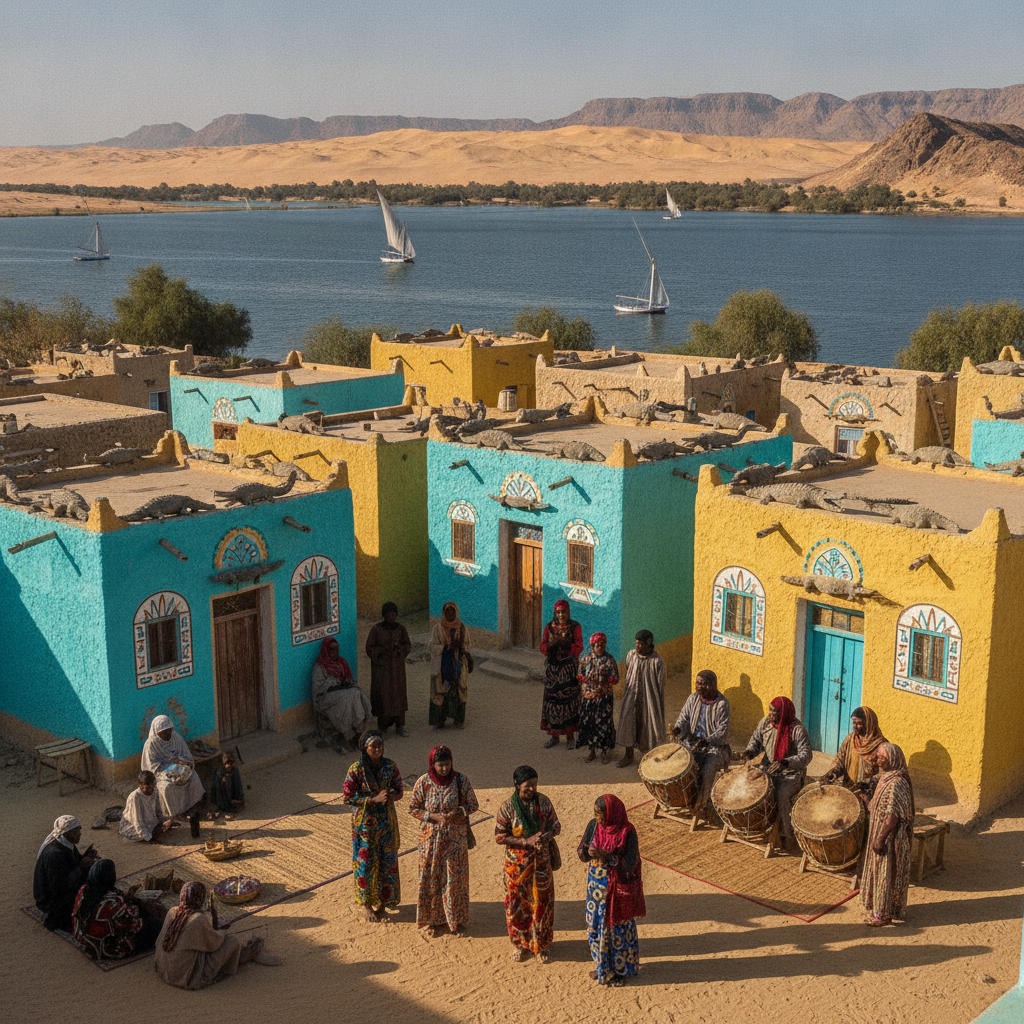
The Nubian people: the indigenous inhabitants of the Nile Valley between the first and sixth cataracts (the region between Aswan and Khartoum) who maintained one of the oldest continuous civilizations in Africa and were catastrophically displaced by the construction of the Aswan dams. The ancient Nubian civilizations (the Kingdom of Kush (approximately 2000 BCE - 350 CE): a Nile civilization that was alternately a subject of, competitor to, and conqueror of ancient Egypt: the Nubian 25th Dynasty (approximately 747-656 BCE) when Nubian pharaohs (Piankhy, Shabaka, Taharqa) ruled all of Egypt: the Meroitic Kingdom (approximately 300 BCE - 350 CE) centered at Meroe (in modern Sudan) with its own writing system (the Meroitic script, still not fully deciphered). The displacement (the construction of the first Aswan Dam (1902) flooded part of Nubia: subsequent raising of the dam (1912, 1933) flooded more: the Aswan High Dam (1971) flooded the remaining Egyptian Nubia (the region from Aswan to the Sudanese border) and required the complete resettlement of the approximately 50,000 Egyptian Nubians and approximately 50,000 Sudanese Nubians). The Nubian villages (the Nubian communities were resettled primarily in Kom Ombo north of Aswan (Egyptian Nubians): the original Nubian villages are now under Lake Nasser: the Nubian-style architecture (brightly painted mudbrick houses with bold geometric murals) can be seen in the villages on the west bank of the Nile at Aswan and in the resettlement communities).
- 5
The Unfinished Obelisk - The Largest Single Stone Object Ever Attempted
The Unfinished Obelisk (in the northern granite quarries of Aswan): the largest single stone object ever attempted in ancient Egypt (and in the ancient world), abandoned in situ when a crack was discovered during the quarrying process, providing unique insight into how the ancient Egyptians created their monuments. The dimensions (the Unfinished Obelisk: approximately 42 meters long (if completed) and weighing approximately 1,168 metric tons: larger than any obelisk ever successfully erected: the largest successfully erected obelisk was the Lateran Obelisk from Karnak now in Rome (105 tons): the Unfinished Obelisk would have been approximately 11 times heavier). The quarrying method (the ancient Egyptian granite quarrying technique: workers used dolerite pounding stones (harder than the granite) to create a network of channels around the obelisk by continuous pounding: the quarry workers then hammered wooden wedges into the base channels and soaked them with water: the expanding wood created pressure that split the obelisk from the bedrock: the crack visible in the Unfinished Obelisk is the reason it was abandoned (if a crack appeared during quarrying the entire project was lost)). The transport (how the ancient Egyptians moved objects of this scale remains one of the great engineering mysteries of antiquity: the leading theories involve wooden sledges on lubricated surfaces, rolling logs, and barges on specially constructed canals). The attribution (the Unfinished Obelisk is attributed to the reign of Queen Hatshepsut based on inscriptions in the quarry).
- 6
Aswan Practical Guide - Old Cataract Hotel, Nubian Cuisine, and the Best Day Trips
The Aswan practical guide: the finest hotel in Egypt, the Nubian culinary tradition, and how to plan the optimal Aswan experience. The Old Cataract Hotel (the Old Cataract Hotel Aswan: built 1899 by the Thomas Cook travel company: a pink-sandstone Victorian-era grand hotel on a Nile-side granite outcrop overlooking Elephantine Island and the first Nile cataract: Winston Churchill, Agatha Christie (she wrote part of Death on the Nile here), and Howard Carter were among its guests: the Agatha Christie Suite: the terrace bar at sunset overlooking the Nile is one of the finest views in Egypt: a Sofitel property since 2011: a UNESCO-recommended heritage property). The Nubian cuisine (the culinary tradition of the Nubian people: distinct from mainstream Egyptian food: fried Nile tilapia with Nubian spice blends: Nubian lentil stews: Nubian-style grilled meats with tamarind sauce: the Aswan spice markets with East African spice influences (tamarind, hibiscus, ginger): karkadeh (hibiscus flower tea): the primary Aswan drink (deep red, intensely flavored hibiscus tea drunk hot or cold with sugar): one of the finest natural teas in Egypt and a major export product). The day trips (Abu Simbel: 270 km south of Aswan: fly (40 minutes) or drive (3-4 hours): the two rock-cut temples of Ramesses II and Nefertari: the UNESCO relocation story: the solar alignment February 22 and October 22: the Nubian villages on the west bank of the Aswan Nile: a felucca trip to Agha Khan Mausoleum and the Monastery of Saint Simeon: the Kalabsha Temple on Lake Nasser).
Walk this route with audio
Stories play automatically as you reach each stop — no tapping needed.
More in Aswan
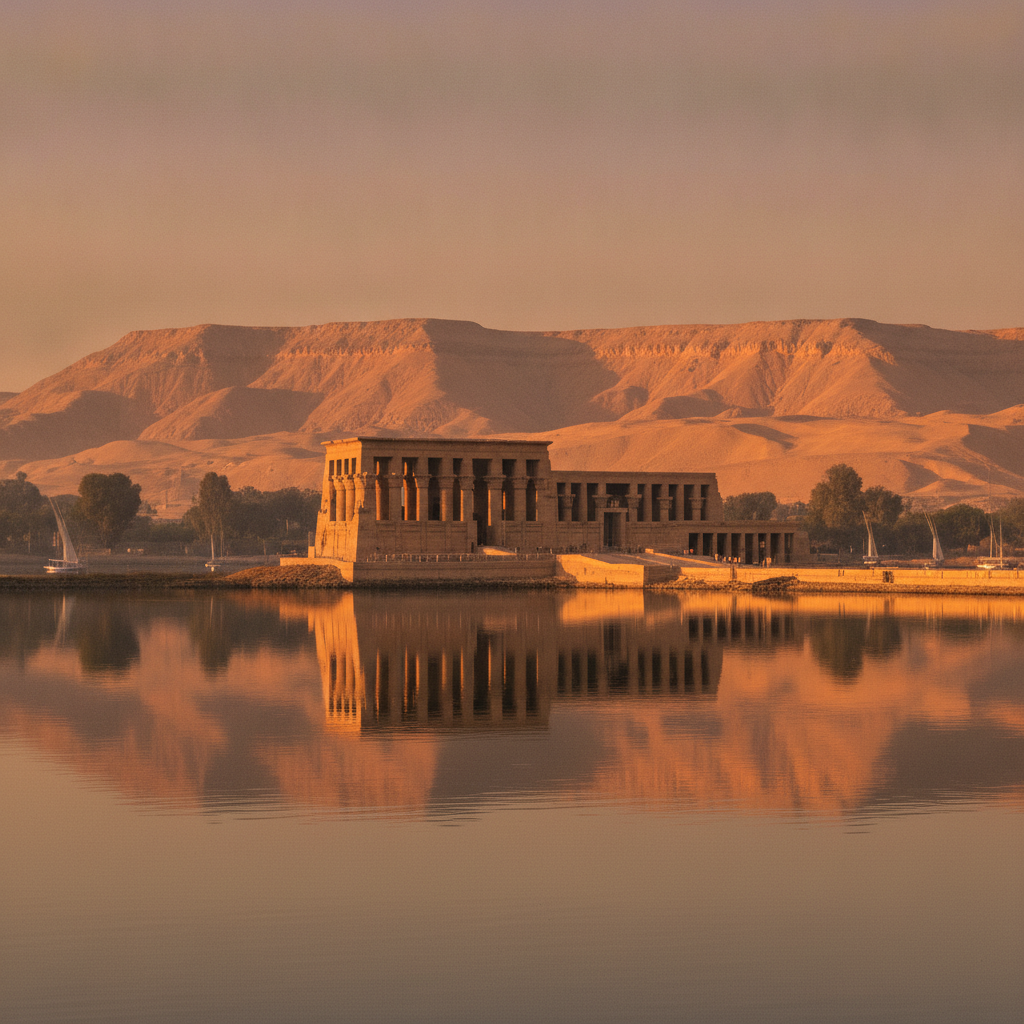
Aswan Complete Reference - Kalabsha Temple, Practical Guide, and the Eastern Desert
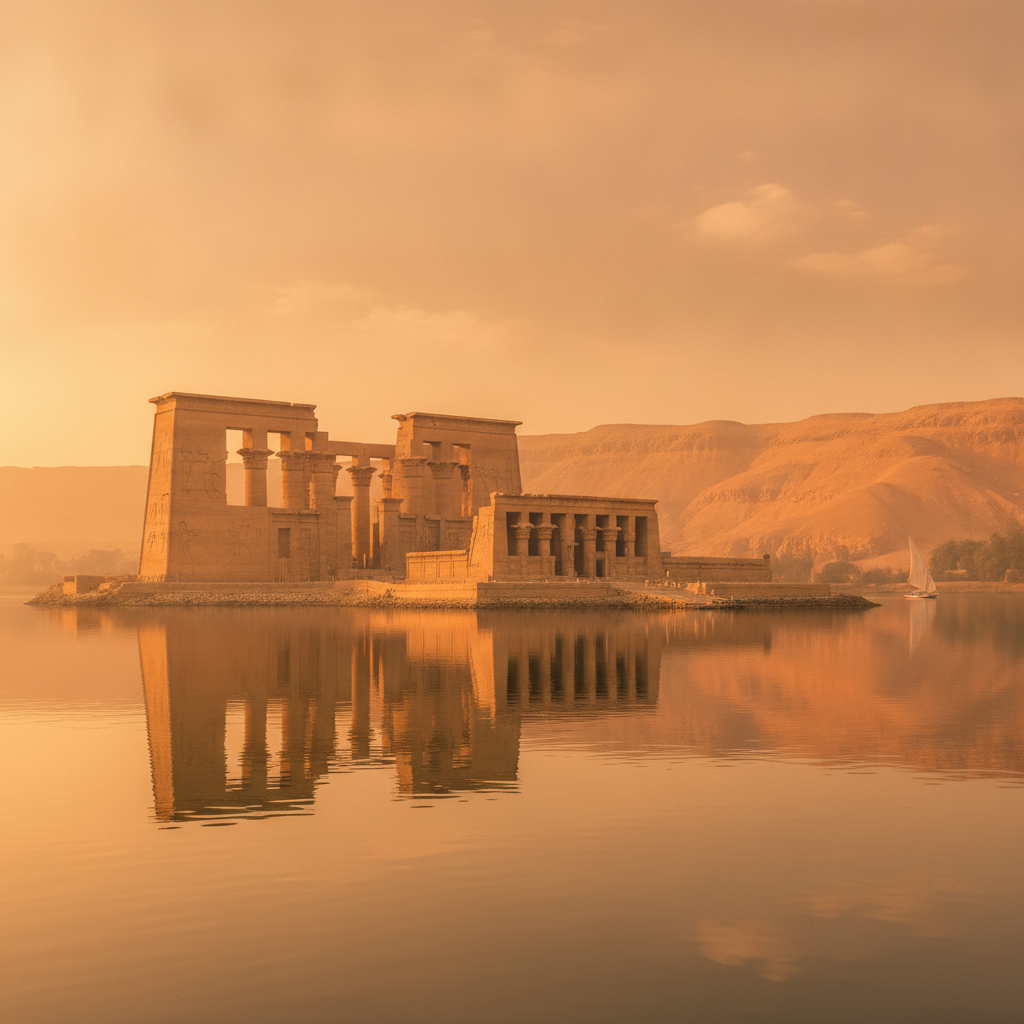
Aswan Practical Guide - Felucca Rides, Sound and Light Shows, Best Season, and Complete Itinerary
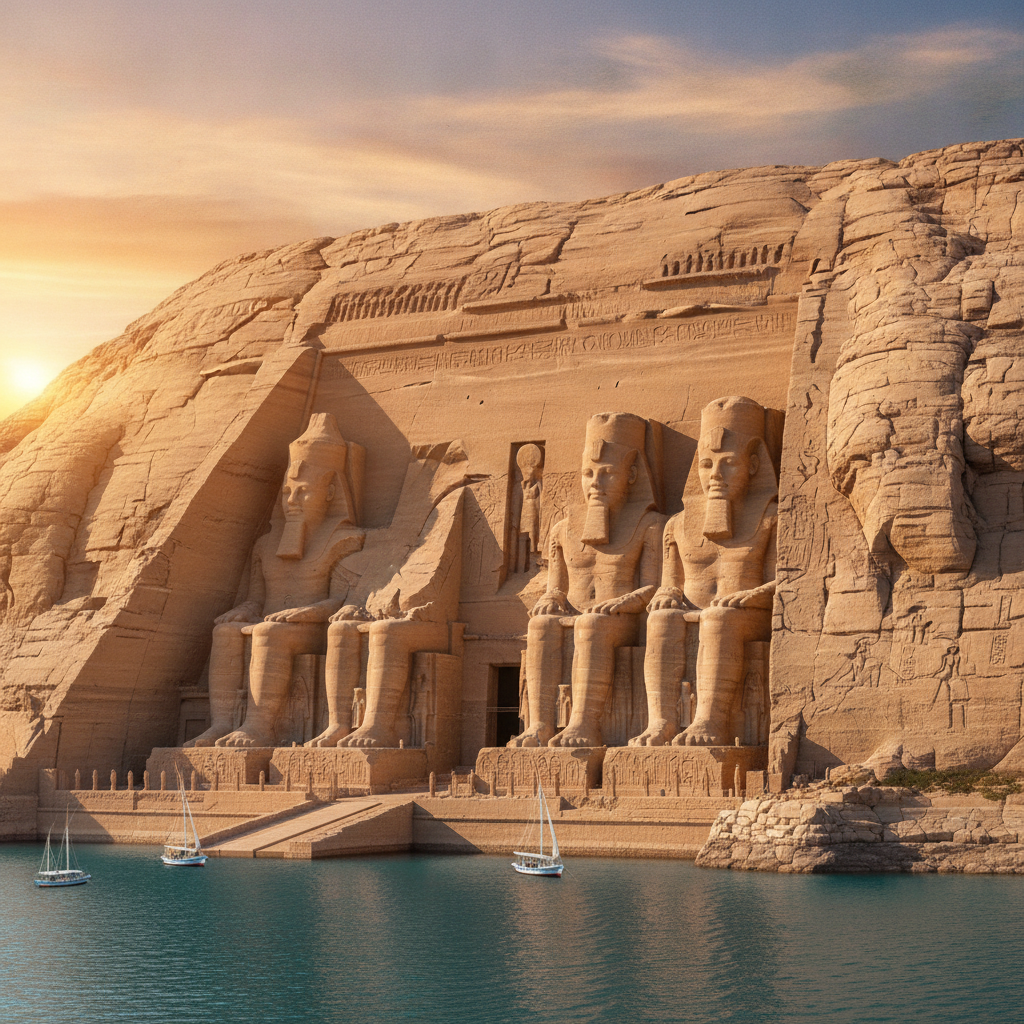
Aswan Essential: Abu Simbel, the Philae Temple of Isis, the Nile Felucca, the Nubian Village, and the Most Dramatically Beautiful Single Nile City
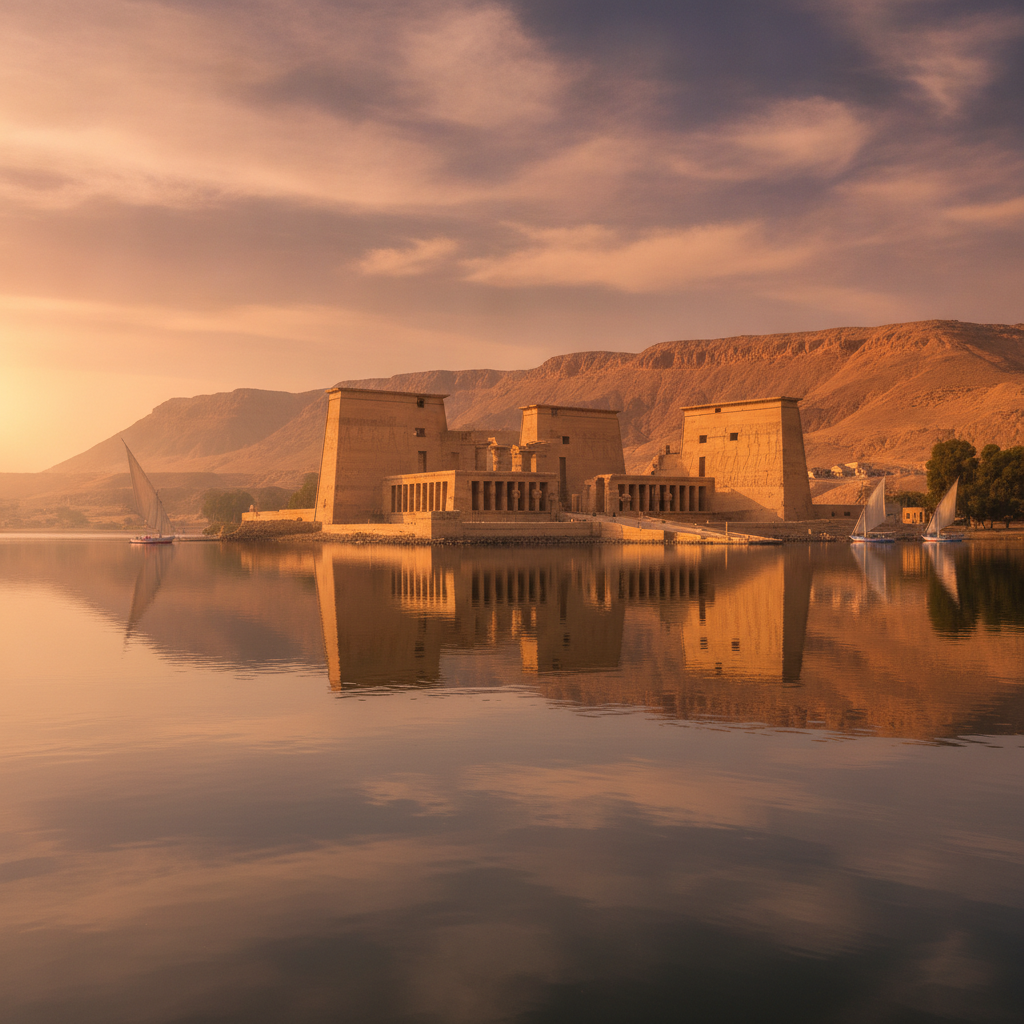
Aswan Complete Reference - Eratosthenes, the Suez Canal, Nile Source Discovery, and Heritage Tourism