Aswan and the Suez Crisis - Nasser, the Cold War, and Egypt Arab Nationalism
The Aswan High Dam as the trigger for the Suez Crisis of 1956: how the refusal by the US and Britain to fund the dam led Nasser to nationalize the Suez Canal, the subsequent Anglo-French-Israeli invasion, and the humiliation of the European powers by Eisenhower that marked the end of European imperial power in the Middle East.
- 1
Gamal Abdel Nasser and Arab Nationalism - The Egyptian Revolution of 1952
Gamal Abdel Nasser (1918-1970): the Egyptian army officer who became the primary leader of Arab nationalism and the most influential Arab political figure of the 20th century. The 1952 Revolution (the Free Officers Revolution of July 23, 1952: a bloodless coup by Egyptian army officers against the corrupt monarchy of King Farouk: the revolution ended British domination of Egypt and established the Egyptian Republic: the nominal president was initially Muhammad Naguib but Nasser became the effective leader and Prime Minister in 1954 and President in 1956). The ideology (pan-Arab nationalism: Nasser vision of a unified Arab world free from Western imperialism and Israeli occupation: the Arab Socialist Union: the nationalization of foreign-owned enterprises: the alignment with the Non-Aligned Movement). The charisma (Nasser was one of the most charismatic political speakers of the 20th century: his speeches to the Egyptian masses and the Arab world were broadcast on radio across the entire Arab Middle East: the Voice of the Arabs (Sawt al-Arab) radio station broadcast Nasser messages from Cairo: he became the symbol of Arab dignity and resistance to Western imperialism for an entire generation of Arabs).
- 2
The Aswan High Dam Funding Withdrawal and the Suez Crisis 1956
The Suez Crisis of 1956: triggered by the US-British withdrawal of the offer to fund the Aswan High Dam. The offer and withdrawal (the US (through the World Bank) and Britain offered to fund the construction of the Aswan High Dam in December 1955: in July 1956 the US and Britain simultaneously withdrew their funding offer citing concerns about Egyptian-Soviet relations (Egypt had purchased Soviet arms through Czechoslovakia in 1955) and Egyptian diplomatic recognition of the People Republic of China (in breach of US conditions)): the nationalization (on July 26, 1956 Nasser announced the nationalization of the Suez Canal Company (a Franco-British private company controlling the canal) in a 3-hour speech in Alexandria: the nationalization was legal under international law (Egypt compensated shareholders at market value) but was seen by Britain and France as an intolerable affront to their interests and prestige: the canal revenues would fund the dam). The Tripartite Aggression (the Suez War - the Anglo-French-Israeli invasion of Egypt in October-November 1956: Israel invaded the Sinai on October 29: Britain and France issued an ultimatum and then bombed Egyptian positions and landed troops at Port Said: the US under President Eisenhower refused to support the invasion (threatening Britain with financial sanctions): the UN called for a ceasefire: Britain and France withdrew in humiliation: Nasser emerged as the victor and Arab hero).
- 3
The Israeli-Arab Conflicts and Egypt - From 1948 to Camp David 1978
Egypt and the Israeli-Arab conflict: the series of wars and negotiations that defined Egyptian foreign policy for 30 years from 1948 to the Camp David Accords of 1978. The 1948 Arab-Israeli War (the Israeli War of Independence / Nakba: Egypt participated in the Arab coalition that invaded Israel on May 15, 1948 (the day after Israeli independence): the Arab coalition was defeated: the 1949 armistice established the 1949 armistice lines (the Green Line)). The 1967 Six-Day War (June 5-10, 1967: Israel launched a preemptive strike against Egypt, Jordan, and Syria: the Egyptian Air Force was destroyed on the ground in the first hours: Israel captured the Sinai Peninsula, the Gaza Strip, the West Bank, and the Golan Heights in 6 days: Nasser resigned in a televised speech on June 9 but mass popular demonstrations demanded he stay: the defeat was a catastrophic blow to Arab nationalism). The 1973 Yom Kippur War (October War: President Anwar Sadat launched a surprise attack across the Suez Canal on October 6, 1973 (Yom Kippur and the start of Ramadan): the Egyptian crossing of the Canal and the initial success was a psychological victory that restored Egyptian military honor: the subsequent Israeli counterattack and encirclement of the Egyptian Third Army led to a UN-mediated ceasefire). The Camp David Accords (the Camp David Accords (September 1978) mediated by President Jimmy Carter between Egyptian President Sadat and Israeli Prime Minister Begin: Egypt recognized Israel in exchange for the return of the Sinai Peninsula: the peace was controversial in the Arab world: Sadat was assassinated by Islamic extremists on October 6, 1981).
- 4
The Isis Cult and the Spread of Egyptian Religion in the Roman Empire
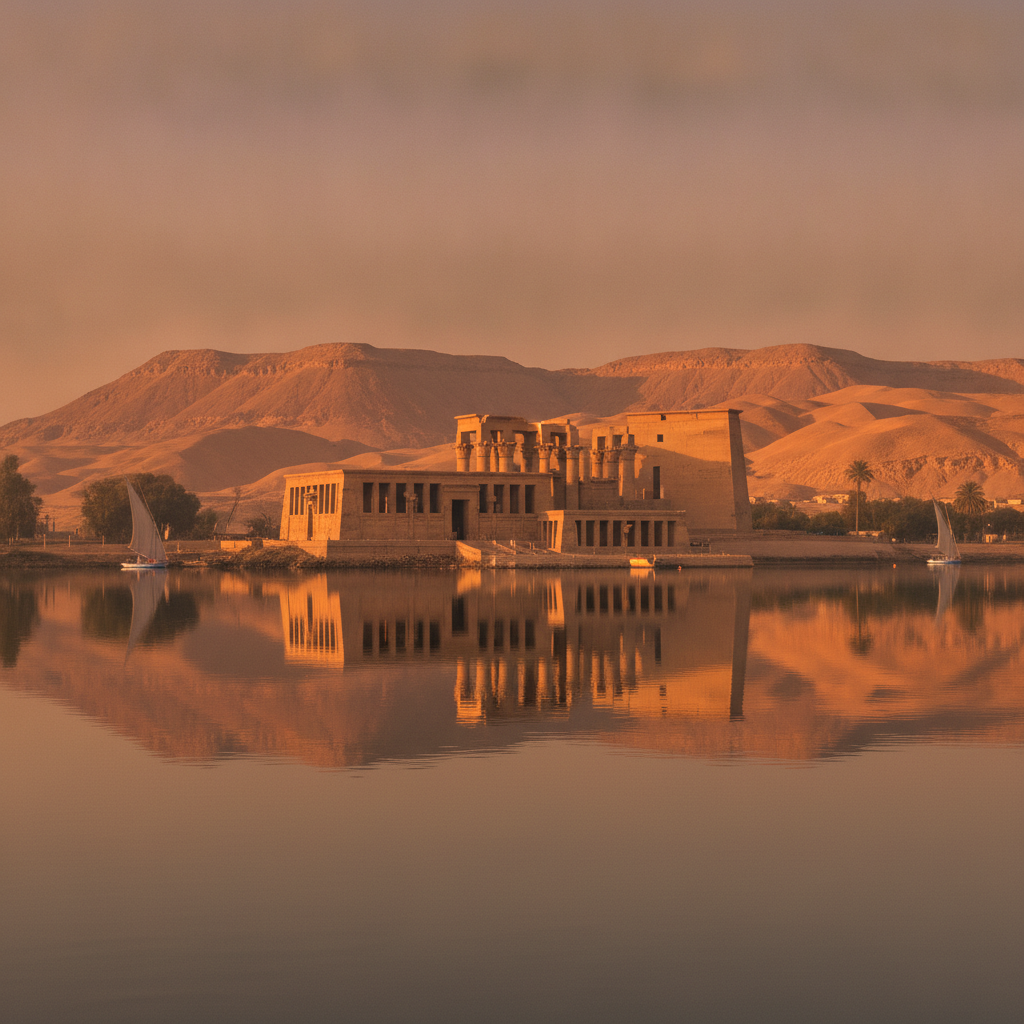
The cult of Isis: the Egyptian goddess of magic, healing, and motherhood whose worship spread throughout the Roman Empire from Egypt and became one of the most widely practiced mystery religions of the ancient Mediterranean world. The Isis theology (Isis in Egyptian mythology: the sister and wife of Osiris (the god of the underworld): after the murder of Osiris by Set (the god of chaos) Isis gathered the dismembered body of Osiris and magically resurrected him sufficiently to conceive their son Horus: Isis is depicted with a throne headdress or the disk-and-horns of Hathor: the goddess of healing, magic, protection, and motherhood). The Philae connection (the island of Philae was the primary cult center of Isis in Egypt: the Temple of Isis at Philae was the last functioning ancient Egyptian temple: it was closed by the Byzantine Emperor Justinian in approximately 550 CE making Philae the site of the very end of ancient Egyptian pagan religion). The Roman spread (the Isis cult spread throughout the Roman Empire from approximately 1st century BCE: Isis temples were built in Rome (the Iseum Campense in the Campus Martius), Pompeii, London, and throughout the Roman world: the Isis worshippers observed daily rituals, annual festivals (the Navigium Isidis - the ship of Isis festival on March 5, celebrating the opening of the navigation season), and initiation ceremonies (described by Apuleius in The Golden Ass): Isis was the primary competing goddess to early Christianity and her worship was not entirely extinguished until the 5th-6th century CE).
- 5
Nubian Architecture and the Colorful Villages of Aswan
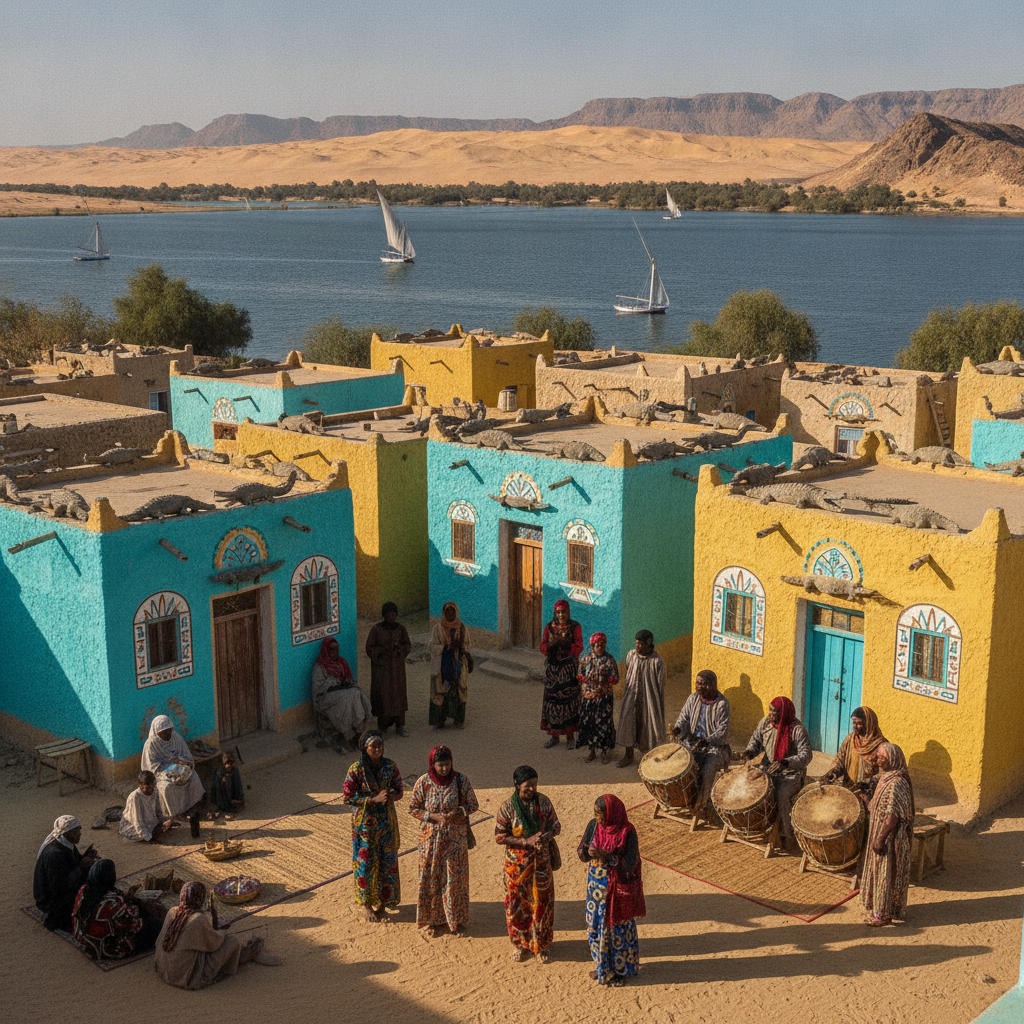
The Nubian architectural tradition: the distinctive painted mudbrick architecture of the Nubian communities in the Aswan region, now primarily in the resettlement villages on the west bank of the Nile at Aswan and in the Kom Ombo district. The Nubian house (the traditional Nubian house: a mudbrick one or two-story building with flat roof: the defining feature is the painted exterior facade with bold geometric murals in blue, green, yellow, and orange: the patterns are a continuous living tradition combining Islamic geometric motifs with African decorative traditions: the paintings are renewed regularly and reflect the creativity and identity of each household: the interior courtyards with decorative arched doorways and painted walls: the rooftop terraces used for sleeping in the hot summer nights). The painted crocodiles (the tradition of painting crocodile images on the exterior of Nubian houses: the crocodile (in ancient Nubia and Egypt associated with the god Sobek) is a protective symbol against evil: the crocodile images are painted on the gateposts and above the doorways of Nubian houses as protective guardians). The current villages (the Nubian villages accessible from Aswan by motor boat: Gharb Sohail (the most touristic Nubian village: restaurants, guest houses, souvenir shops and the traditional painted houses): Koti: the west bank villages north of the Agha Khan Mausoleum: a 2-3 hour Nubian village tour from the Aswan Corniche is one of the most distinctive and culturally enriching experiences in Upper Egypt).
- 6
Aswan Photography Guide and Final Legacy - The Most Beautiful Natural Setting in Egypt
The Aswan photography guide: the finest photography locations in the most naturally beautiful city in Egypt. The first Nile cataract (the granite boulders of the first Nile cataract at Aswan: the pink and grey granite outcrops in the blue Nile water: the felucca sails against the granite islands: the islands of Kitchener (botanical garden island) and Elephantine against the desert hills of the west bank: best photographed in the early morning and late afternoon when the low sun illuminates the granite and water). The Philae Temple (best photographed at the Sound and Light Show (evening): the illuminated temple reflected in the still inlet waters: the golden hour boat approach to the island). The Old Cataract Hotel terrace (the terrace of the Old Cataract Hotel at sunset: the pink granite rocks, the Nile water, and the golden light on Elephantine Island and the desert hills behind: one of the finest sunset views from any hotel in the world). The Aswan legacy (Aswan has been the southern gateway of Egypt for 5,000 years: the granite quarries that supplied the most important monuments of ancient Egypt, the trade routes that connected the Mediterranean world to sub-Saharan Africa, the Christian monasteries of the Coptic Desert Fathers, the Nubian civilization that conquered Egypt in the 8th century BCE, the site of the 20th century greatest engineering project (the Aswan High Dam), and the home of the most beautiful natural cityscape in Egypt: the granite boulders, blue Nile water, felucca sails, Nubian palm groves, and desert hills combine in a landscape of extraordinary beauty that has drawn travelers since antiquity).
Walk this route with audio
Stories play automatically as you reach each stop — no tapping needed.
More in Aswan
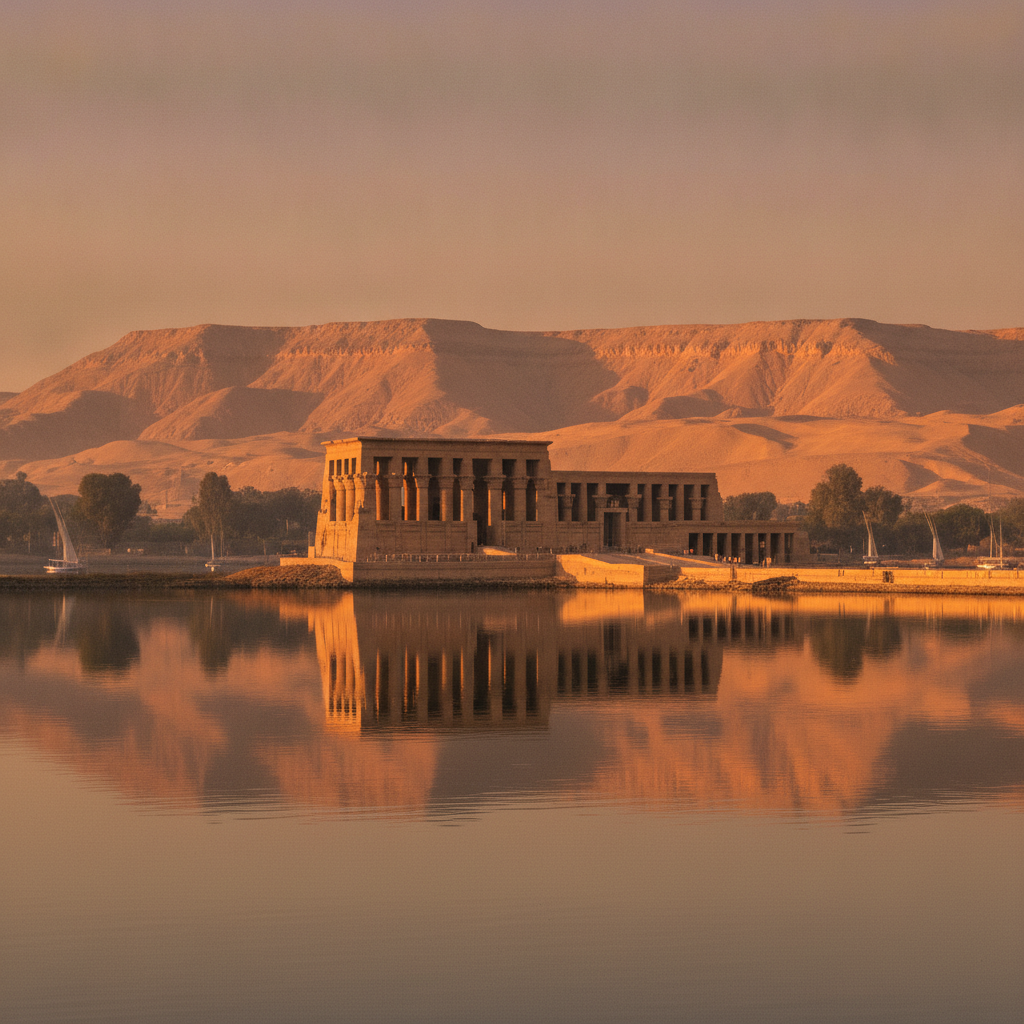
Aswan Complete Reference - Kalabsha Temple, Practical Guide, and the Eastern Desert
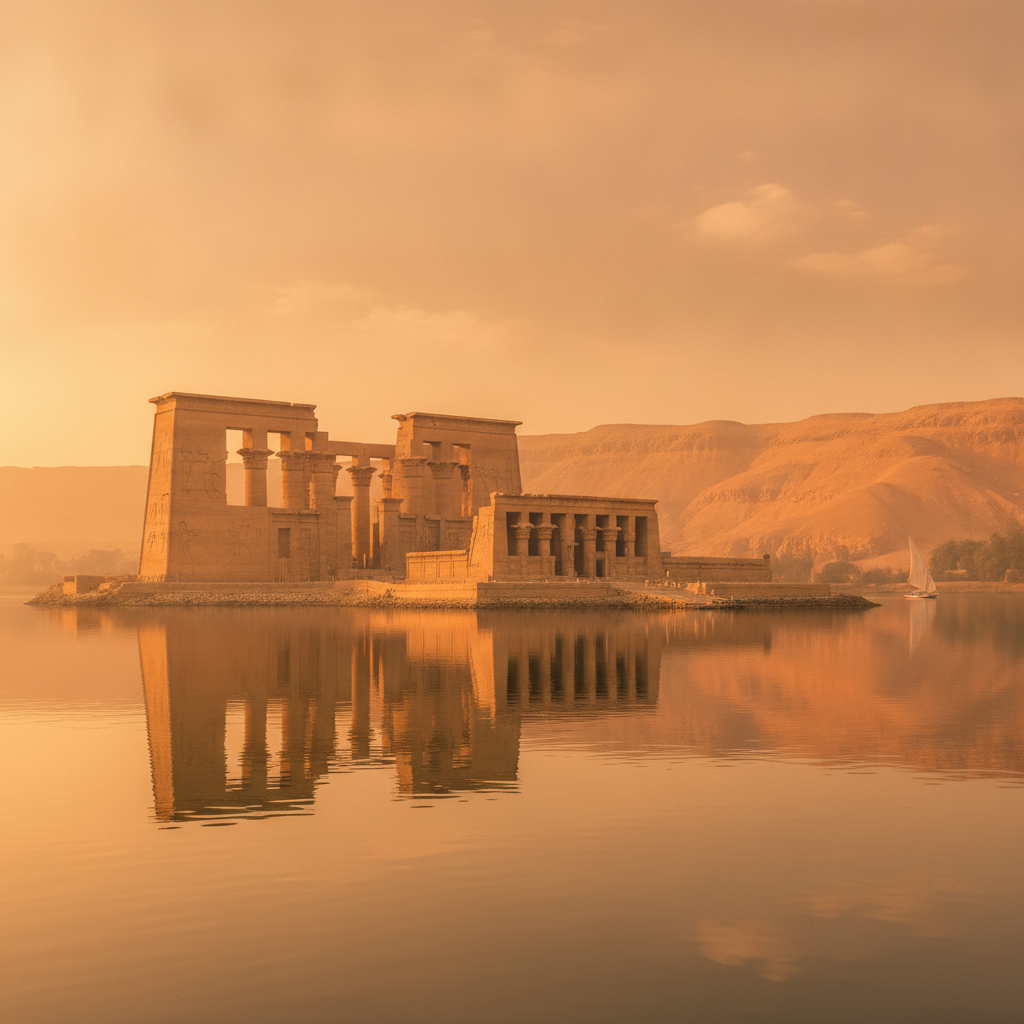
Aswan Practical Guide - Felucca Rides, Sound and Light Shows, Best Season, and Complete Itinerary
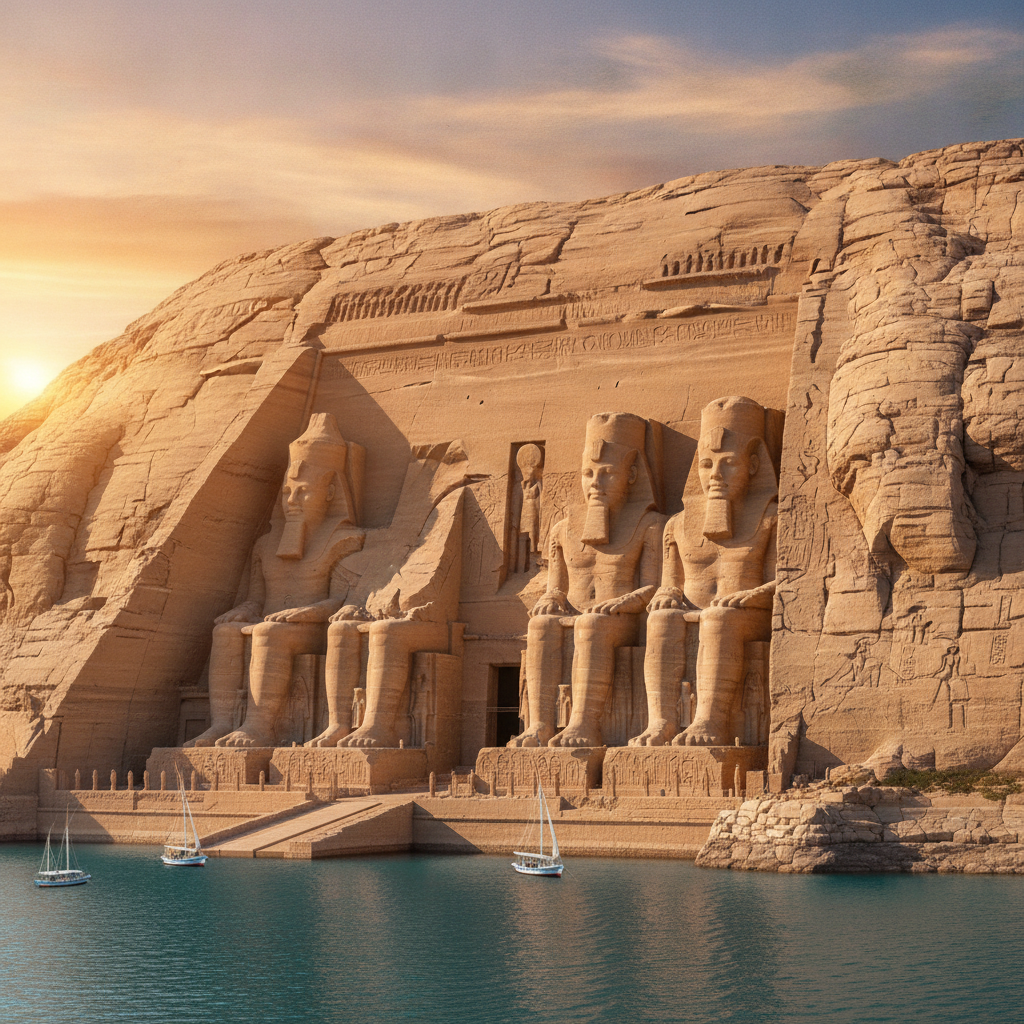
Aswan Essential: Abu Simbel, the Philae Temple of Isis, the Nile Felucca, the Nubian Village, and the Most Dramatically Beautiful Single Nile City
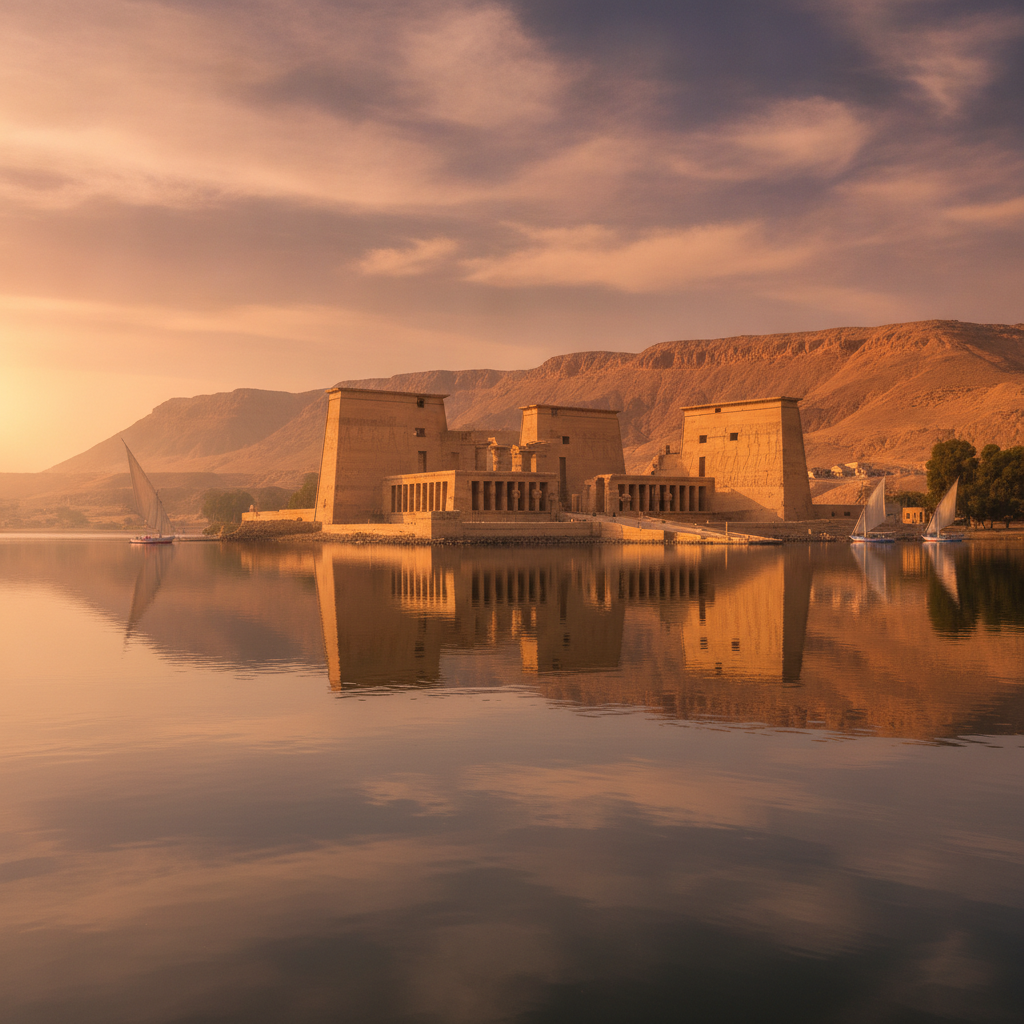
Aswan Complete Reference - Eratosthenes, the Suez Canal, Nile Source Discovery, and Heritage Tourism