Atacama Astronomy: ALMA, World-Class Observatories, and Astrophotography
The Atacama plateau hosts the most important concentration of professional astronomical observatories in the world, including the ALMA radio telescope array, the VLT at Paranal, and the future Extremely Large Telescope, exploiting the unique atmospheric conditions that make the Atacama the most productive astronomical observation site on Earth.
- 1
ALMA: The World's Most Powerful Radio Telescope Array
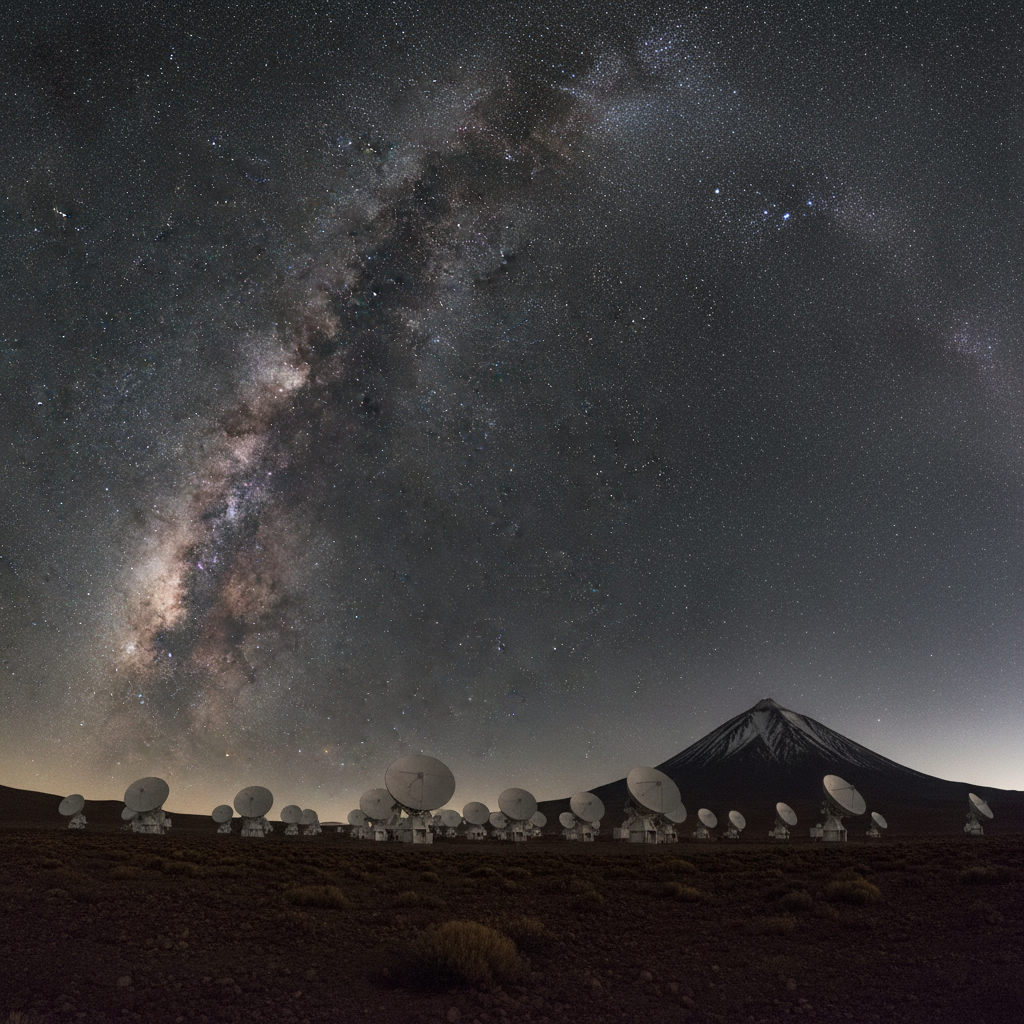
The Atacama Large Millimeter Array, situated on the Chajnantor plateau at 5,000 meters elevation near San Pedro de Atacama, is the most powerful and most expensive ground-based astronomical observatory ever constructed, consisting of 66 high-precision radio telescope antennas that observe the universe at millimeter wavelengths invisible to optical telescopes. ALMA has produced fundamental discoveries about planetary formation, galaxy evolution, and the molecular chemistry of star-forming regions.
- 2
VLT at Paranal: The European Southern Observatory
The Very Large Telescope at Cerro Paranal, 130 kilometers south of Antofagasta, is the most productive optical telescope observatory in the world and the primary facility of the European Southern Observatory in Chile; the four 8.2-meter primary mirrors can work together as an interferometer of extraordinary resolving power. Public visits to Paranal on certain weekends are among the most impressive scientific tourism experiences in South America.
- 3
Night Sky Tours from San Pedro: Amateur Astronomy
The concentration of professional tour operators offering night sky observation tours from San Pedro de Atacama, using high-quality telescopes and knowledgeable guides, makes the Atacama the most accessible world-class astronomy tourism destination in the world. The best tours use 8 to 12 inch Dobsonian telescopes to show visitors the globular clusters, nebulae, galaxies, and planets visible from the southern hemisphere.
- 4
The Southern Sky Exclusives: Omega Centauri and the Magellanic Clouds
Visitors from the northern hemisphere encounter several spectacular objects in the Atacama sky that are invisible from latitudes above 30 degrees north: Omega Centauri, the largest and most luminous globular cluster in the Milky Way visible as a fuzzy star to the naked eye; the Large and Small Magellanic Clouds, the two satellite galaxies of the Milky Way visible as detached portions of the Milky Way in the southern sky; and the Centaurus A radio galaxy visible as a bright elongated smudge.
- 5
Astrophotography in the Atacama: Technical Guide
The Atacama night sky is the most photographed astronomical subject in the world, and the combination of extreme dryness, dark skies, and dramatic desert landscapes creates conditions for astrophotography that are unmatched anywhere else on Earth. The standard astrophotography setup of a wide-angle lens, a camera with good high-ISO performance, and a sturdy tripod produces images of the Milky Way over the desert that are among the most spectacular landscape photographs available anywhere in the world.
- 6
The Extremely Large Telescope: The Future of Atacama Astronomy
The European Southern Observatory's Extremely Large Telescope, under construction on Cerro Armazones 20 kilometers from the VLT Paranal site, will be the largest optical telescope ever built when completed in the late 2020s, with a primary mirror 39 meters in diameter that will collect more light than all existing optical telescopes combined. The ELT represents the future of Chilean and world astronomy and will produce observations impossible with any existing facility.
Walk this route with audio
Stories play automatically as you reach each stop — no tapping needed.
More in Atacama
Atacama Wildlife: Vicunas, Flamingos, Viscachas, and the Andean Cat
Atacama Desert: Moon Valley, El Tatio Geysers, Flamingo Lagoons, and the World's Best Stargazing
Atacama Geology: Salt Flats, Volcanoes, and the Science of the World's Driest Desert
Atacama Nitrate Era: Ghost Towns, Humberstone, and the Rise and Fall of White Gold
Atacameno Culture: Pukara Fortresses, Village Traditions, and 10,000 Years of Desert Life