Acropolis, Parthenon & Ancient Agora: The Heart of Classical Athens
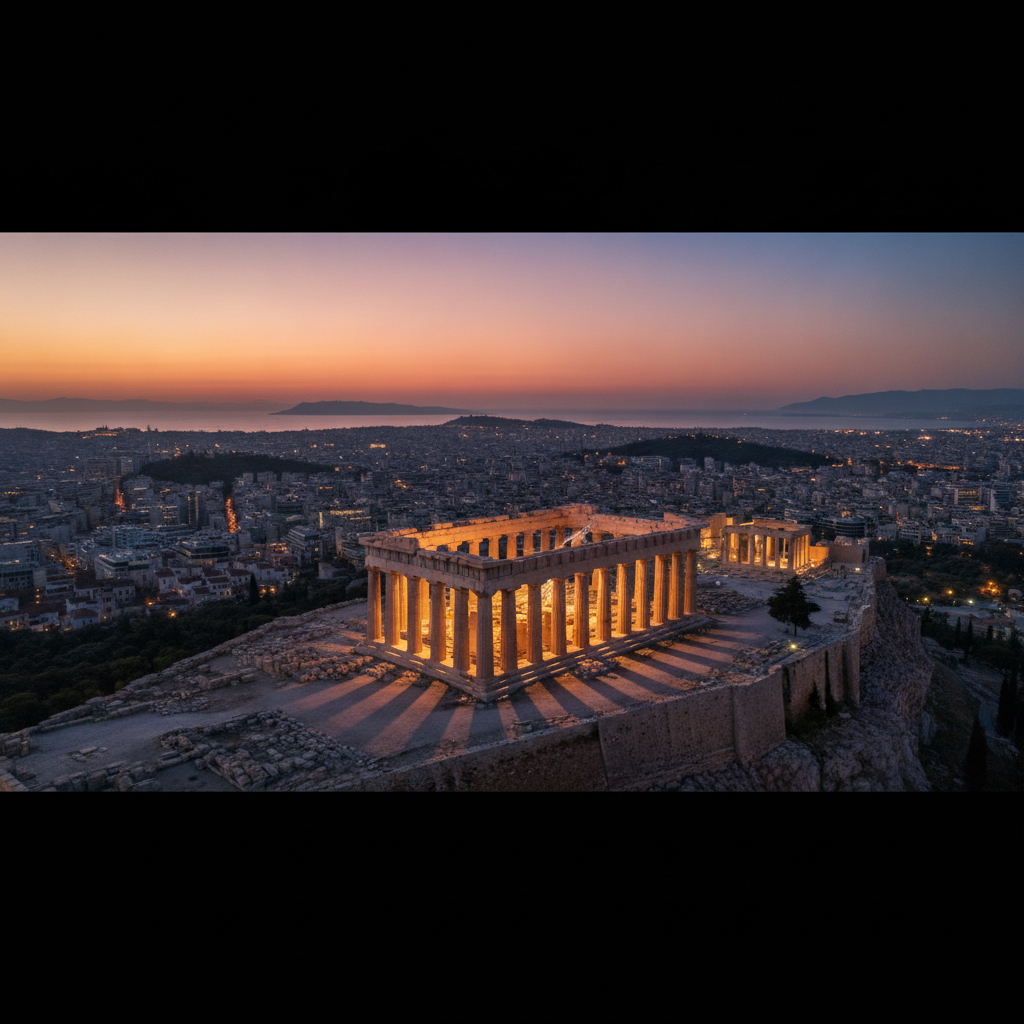
The Sacred Rock of the Acropolis — rising 156 meters above the Attic plain — has been the religious, political, and symbolic center of Athens for over 3,500 years. The complex of temples built between 447 and 406 BC under the direction of the statesman Pericles and the sculptor Pheidias represents the highest achievement of Classical Greek architecture and art, and forms the foundation of the Western architectural tradition. Below the Acropolis, the Ancient Agora was the civic heart of ancient Athens — the marketplace, law court, philosophical gathering place, and political center where Socrates taught, Demosthenes argued, and Paul of Tarsus debated the Stoics.
1. Propylaea & Beulé Gate
- 1
Propylaea & Beulé Gate
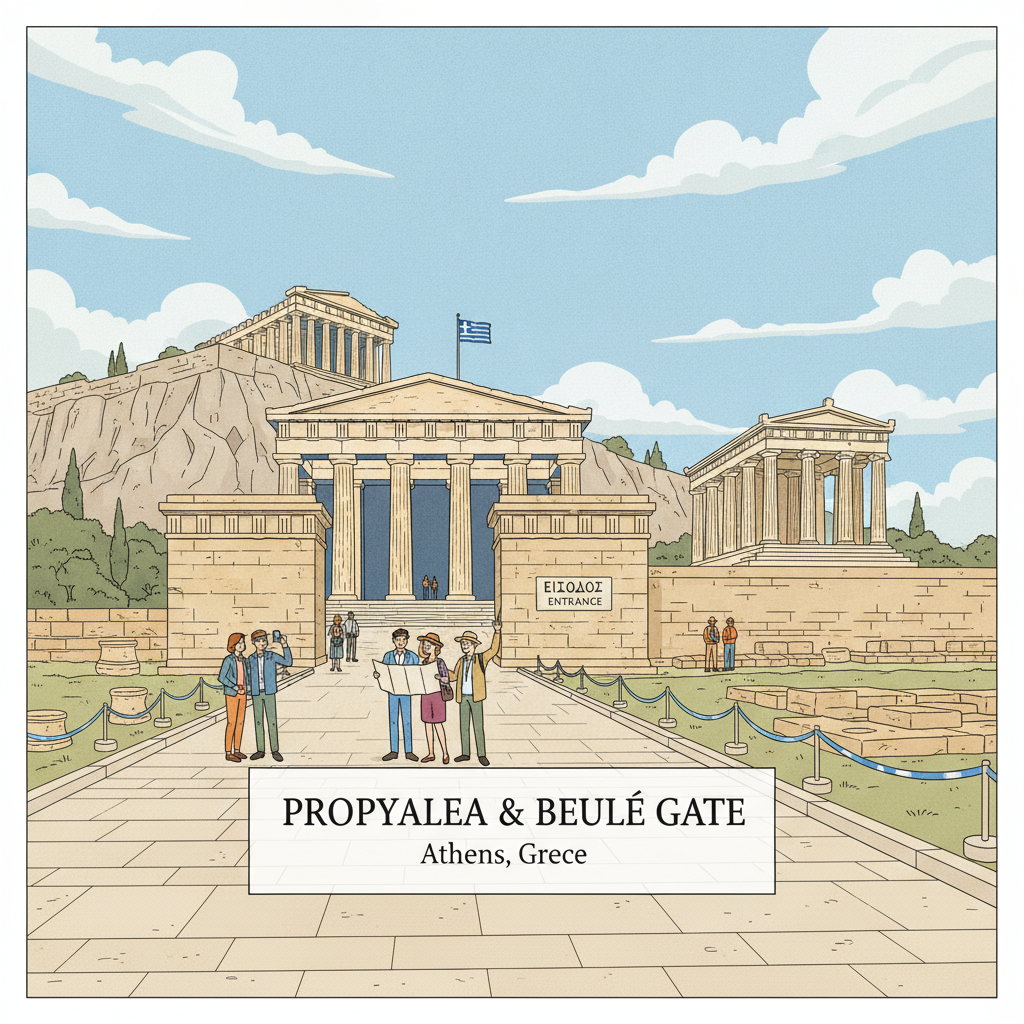
The Propylaea ('gateway' in Greek) is the monumental ceremonial entrance to the Acropolis — designed by the architect Mnesicles and constructed between 437 and 432 BC (construction was halted before completion by the outbreak of the Peloponnesian War in 431 BC). The structure is a masterpiece of spatial organization: five doorways of graduated height create a processional corridor, flanked by Ionic colonnades within the exterior Doric order — the first known deliberate mixing of the two orders in a single building. The Beulé Gate, a Roman-era addition (267 AD) named for the French archaeologist who discovered it in 1852, serves as the current ticket entrance. To the right of the Propylaea, the tiny Temple of Athena Nike (Ictinus and Callicrates, 421 BC) — restored four times since Ottoman dismantlement in 1687 — stands on a bastion commanding the western approach to the Acropolis. The frieze of the Temple of Athena Nike depicted the Battle of Marathon (490 BC) — several blocks are now in the British Museum.
- 2
Parthenon (447-438 BC)
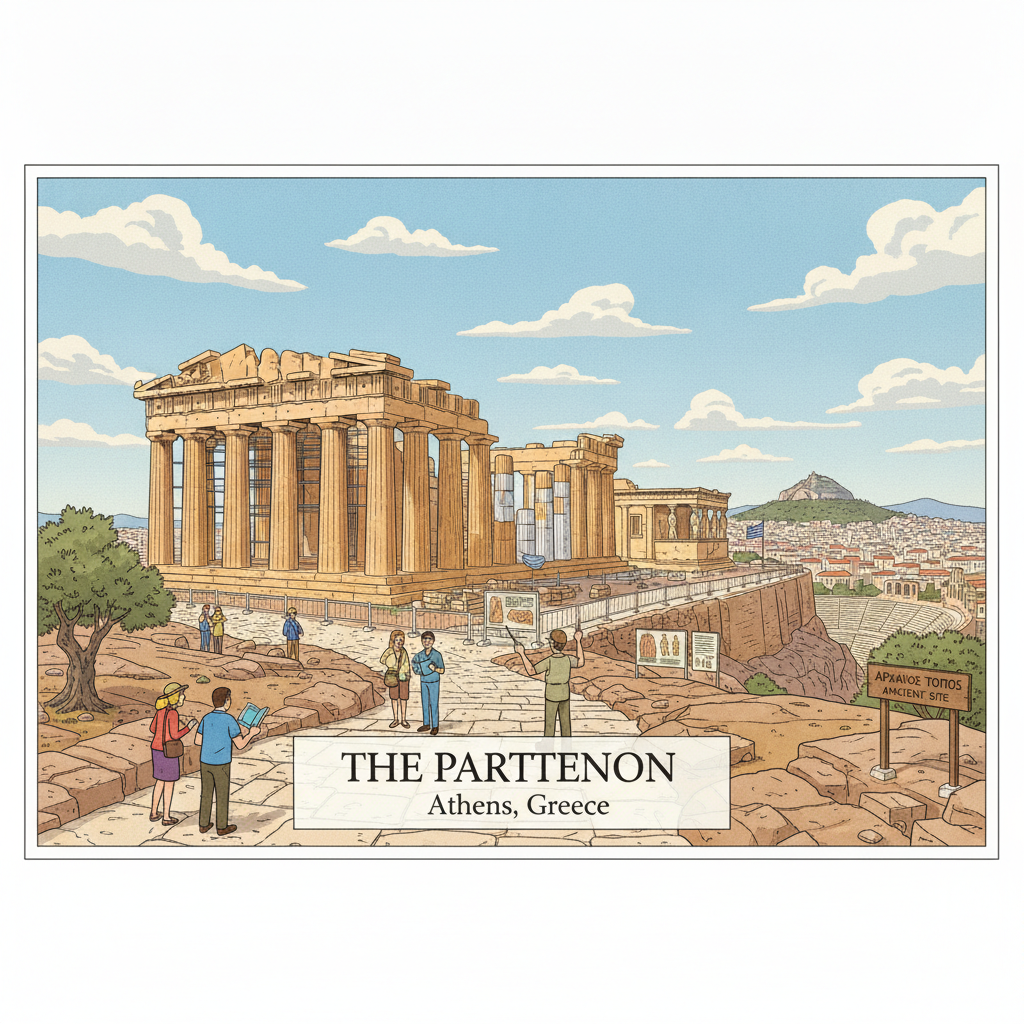
The Parthenon — the Temple of Athena Parthenos ('Virgin'), designed by Ictinus and Callicrates under the supervision of Pheidias, built 447-438 BC with sculptural decoration completed by 432 BC — is the most important surviving building of Classical Antiquity and the most studied building in architectural history. Its fame rests on the extraordinary number of optical refinements built into what appears to be a rectilinear structure: the stylobate (temple floor) curves upward by 60mm along its 70-meter length (entasis of the platform); all columns lean inward slightly and are thicker in the middle (column entasis) to correct the optical illusion that makes perfectly vertical columns appear to bow outward; the corner columns are slightly thicker than the others. The chryselephantine (gold and ivory) cult statue of Athena by Pheidias, 12 meters tall, stood in the interior cella — it was removed in Late Antiquity and subsequently lost. The Elgin Marbles (pediment sculptures and frieze panels removed by Lord Elgin 1801-1812) are a continuing point of diplomatic tension between Greece and the United Kingdom.
- 3
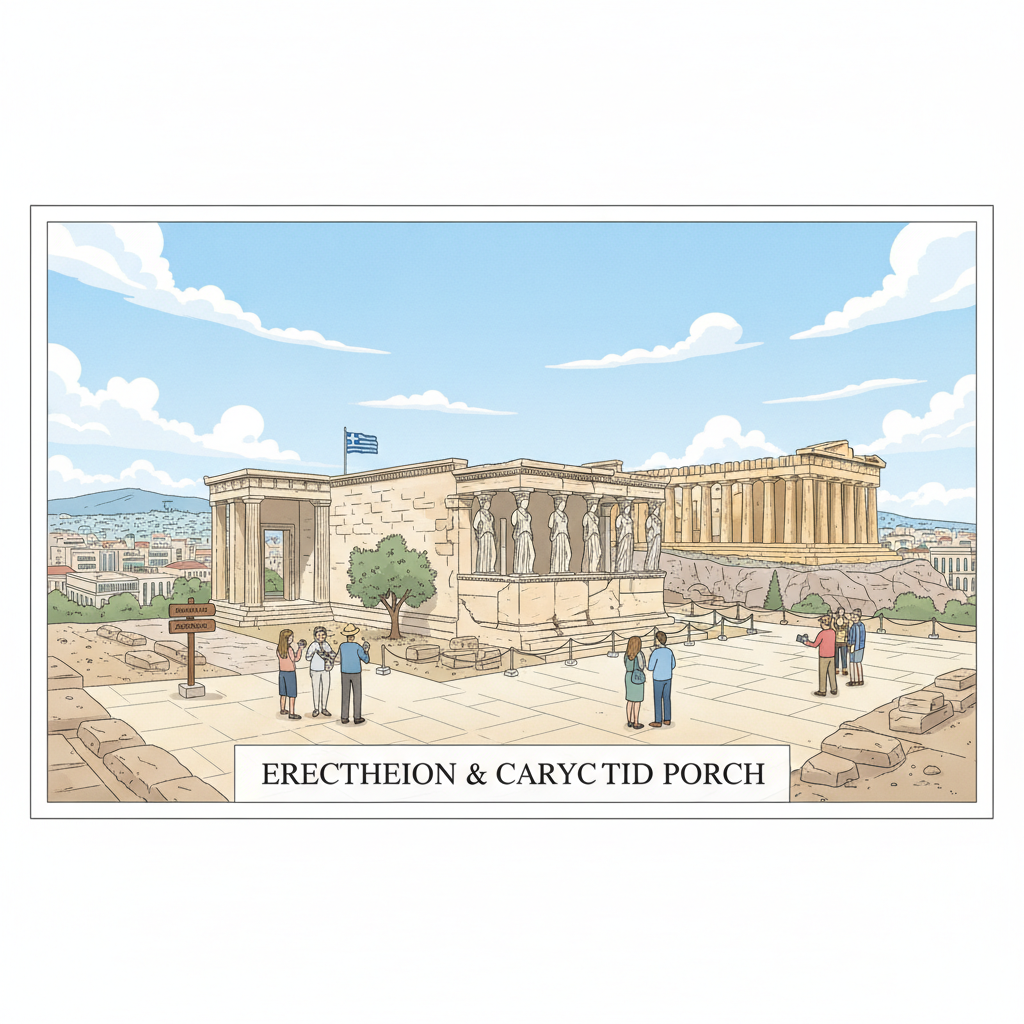
Erechtheion & Caryatid Porch
The Erechtheion (421-406 BC, architect unknown) is the most architecturally complex building on the Acropolis — an irregular plan dictated by the sacred nature of the ground it occupies (the site of the mythological contest between Athena and Poseidon for patronage of Athens: the salt spring struck by Poseidon's trident and the olive tree planted by Athena were both within or adjacent to the building). The north porch, with its elaborate Ionic doorway, faces the site of the olive tree. The south porch — the famous Porch of the Caryatids (korai, 'young women'), whose six sculpted female figures serve as columns — faces the Parthenon. Five original caryatids are in the Acropolis Museum; one is in the British Museum (taken by Elgin). The building housed the ancient olive-wood cult statue of Athena Polias, the most sacred object in Athens, dressed and carried in procession during the Panathenaic festival every four years.
- 4
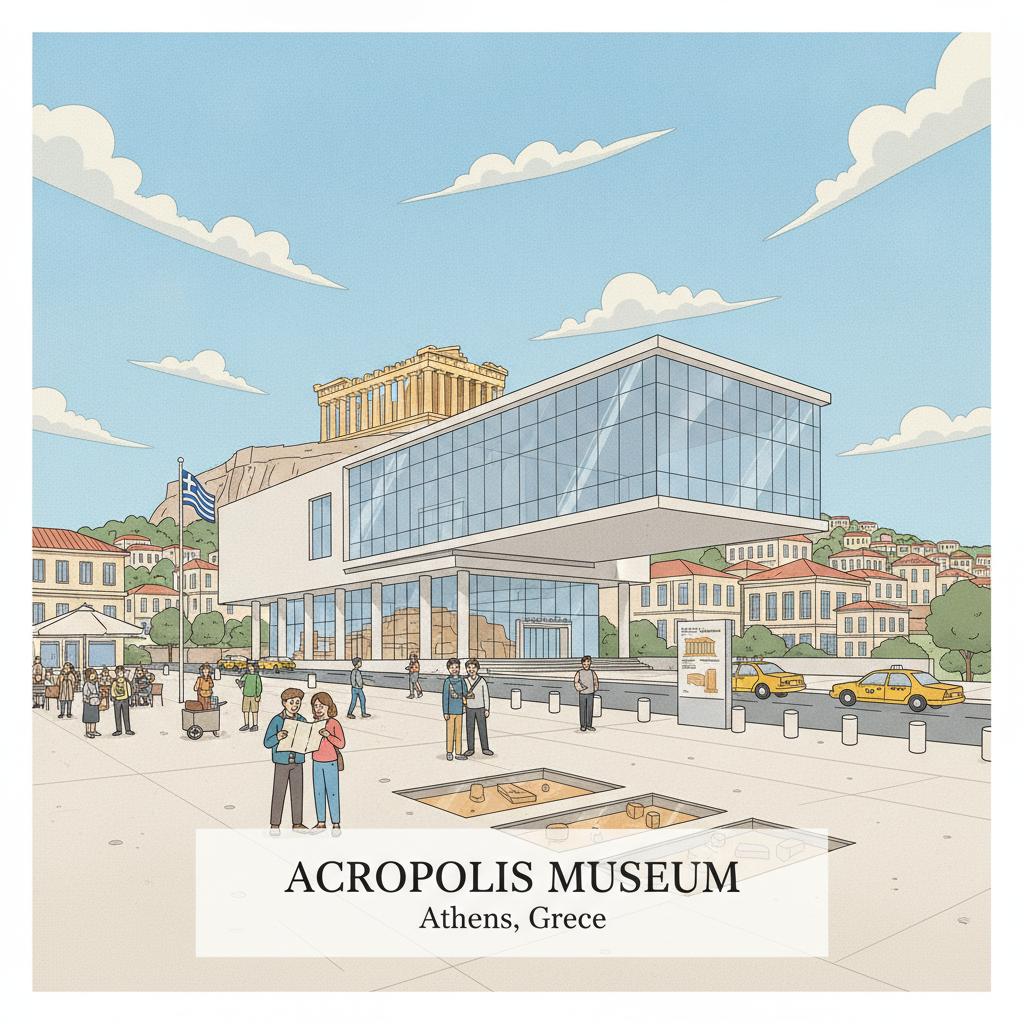
Acropolis Museum (New)
The New Acropolis Museum, designed by the Swiss-American architect Bernard Tschumi and opened in 2009 on the south slope of the Acropolis, is one of the most architecturally and museologically significant museum buildings in Europe. The building is designed around its collection: the ground floor is transparent (visitors can see the archaeological excavation beneath through glass floors), with 4,000 finds from the Acropolis slopes; the middle floors contain the archaic sculpture gallery (including the famous Kore statues and the Calf-Bearer); the top floor — the Parthenon Gallery, a glass box oriented to align exactly with the Parthenon visible above — displays the surviving fragments of the Parthenon frieze, with plaster casts in the positions of missing pieces (most in the British Museum). The museum was specifically designed as part of Greece's argument for the return of the Elgin Marbles — demonstrating that Athens has a world-class facility to house them.
- 5
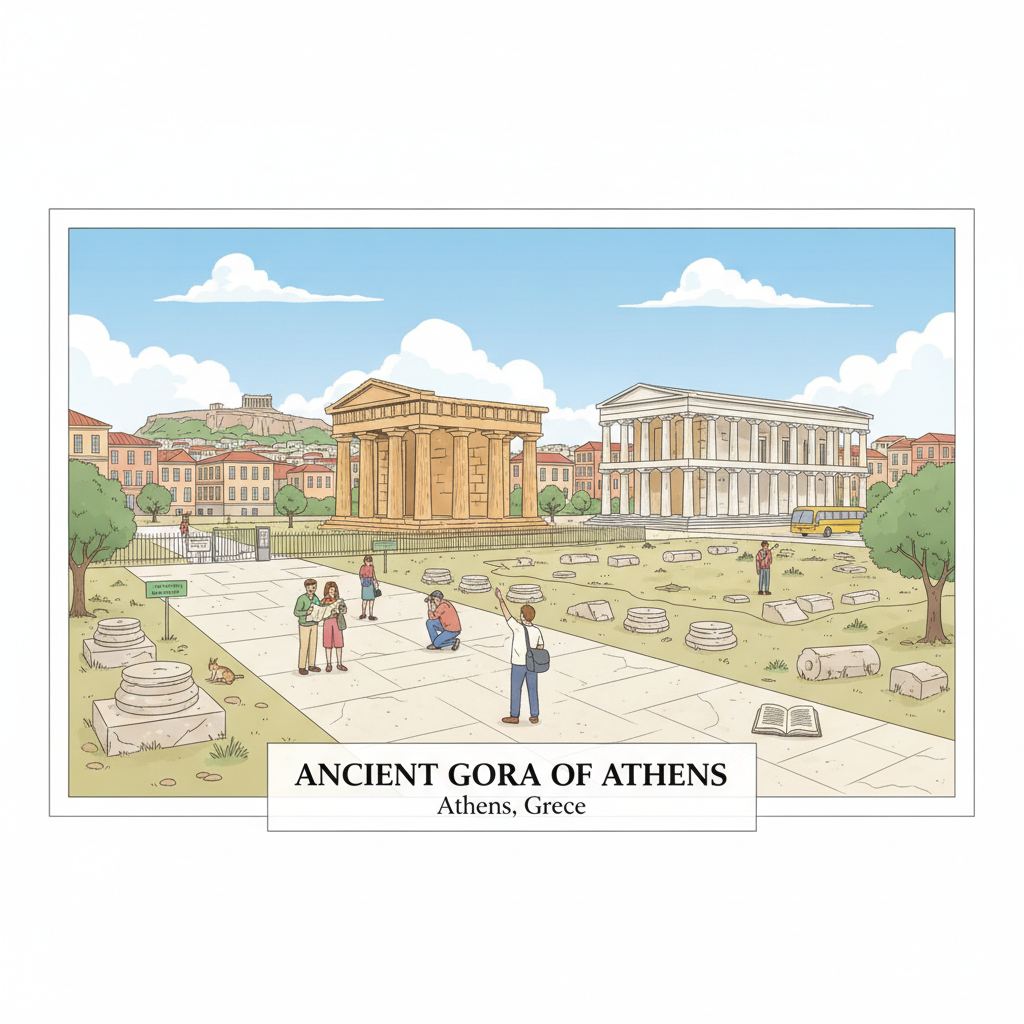
Ancient Agora of Athens
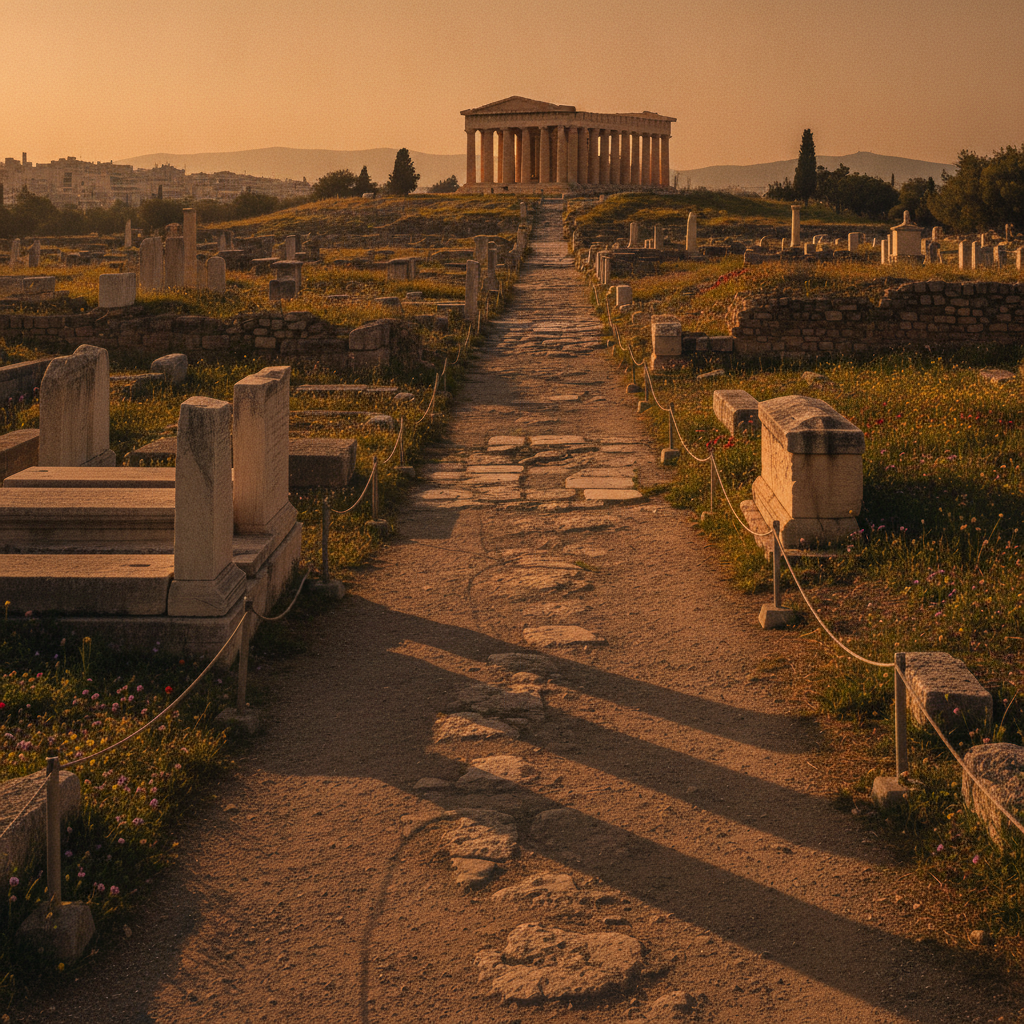
The Ancient Agora (6th century BC-3rd century AD) was the civic, commercial, and philosophical center of Classical Athens — a large open space northwest of the Acropolis surrounded by public buildings, temples, and colonnades (stoas). The Stoa of Attalos (2nd century BC, restored 1953-1956 by the American School of Classical Studies as an exact reconstruction) serves as the Agora Museum, containing over 400 objects from the excavation. The Temple of Hephaestus (Hephaesteum or 'Thesion', c. 449 BC) — built by the same unknown architect as the Temple of Nemesis at Rhamnous and the Temple of Ares in the Agora — is the best-preserved Doric temple in Greece (better than the Parthenon), having served continuously as a Christian church from the 7th century AD until 1834. In the Agora's northwest corner, the Stoa Poikile ('Painted Stoa', c. 460 BC), now beneath a modern road, was where Zeno of Citium (c. 334-262 BC) taught — the word 'Stoic' derives from stoa.
- 6
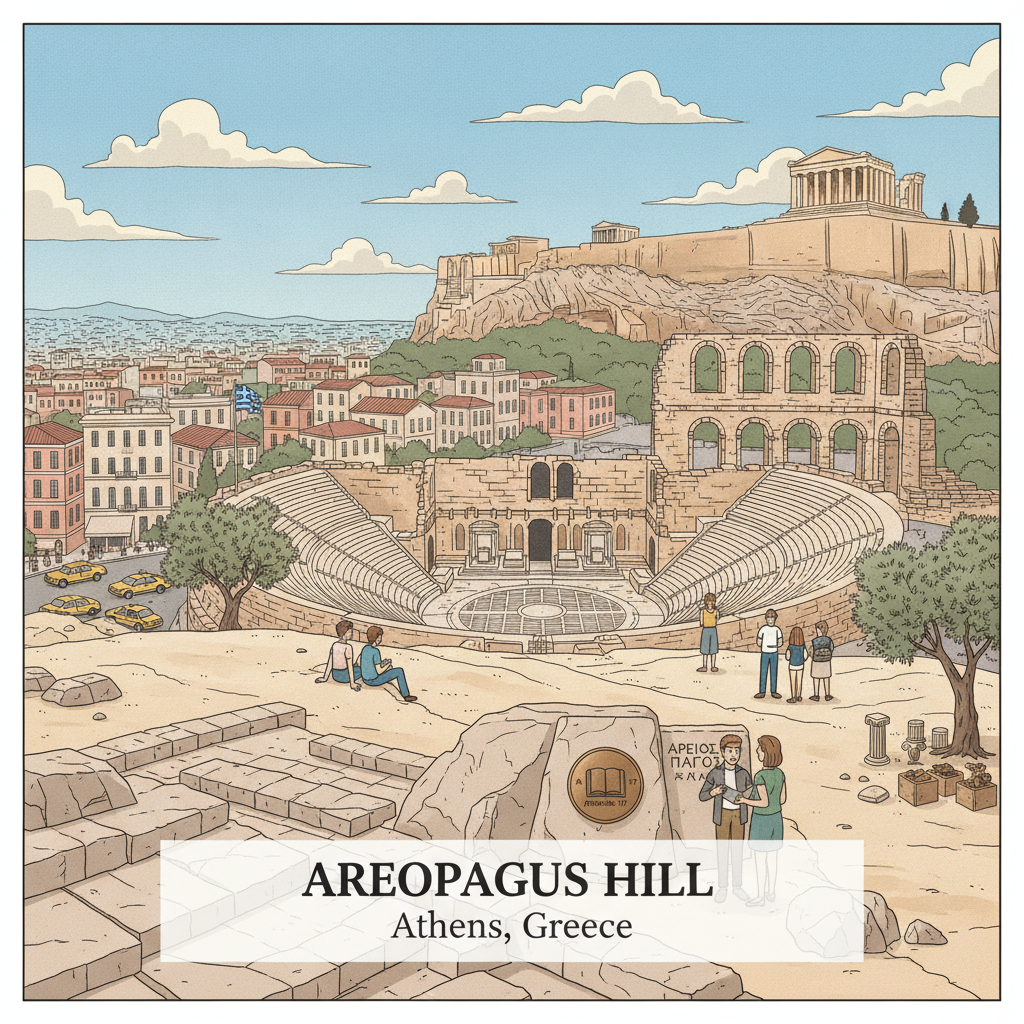
Areopagus Hill & South Slope of the Acropolis
The Areopagus ('Hill of Ares'), a bare limestone outcrop immediately northwest of the Acropolis entrance, was the site of Athens' most ancient law court — the Areopagus Council — where Orestes was tried for the murder of his mother Clytemnestra in Aeschylus's Oresteia (458 BC). In 51 AD, Paul the Apostle stood on the Areopagus and delivered his famous speech to the Athenians (Acts 17:22-34), mentioning the altar 'To an Unknown God' — a pivotal moment in the transmission of Christianity to Europe. The south slope of the Acropolis contains the Theater of Dionysus (6th century BC, rebuilt 4th century BC) — the world's first stone theater and the site of the first performances of Aeschylus, Sophocles, Euripides, and Aristophanes — and the Odeon of Herodes Atticus (161 AD), a 5,000-seat Roman concert hall still used for the Athens Festival (June-September) performances of music, opera, and theater under the Acropolis.
Walk this route with audio
Stories play automatically as you reach each stop — no tapping needed.
More in athens
Keramikos, Gazi & Thisseio: Ancient Cemeteries, Creative Districts & Democratic Hills
Piraeus, Mikrolimano & the Saronic Riviera: Athens' Ancient Port and Yacht Harbor
Plaka, Monastiraki & Psyrri: Athens Beneath the Acropolis
Panathenaic Stadium, Zappeion & National Garden: Olympic Legacy and Royal Athens
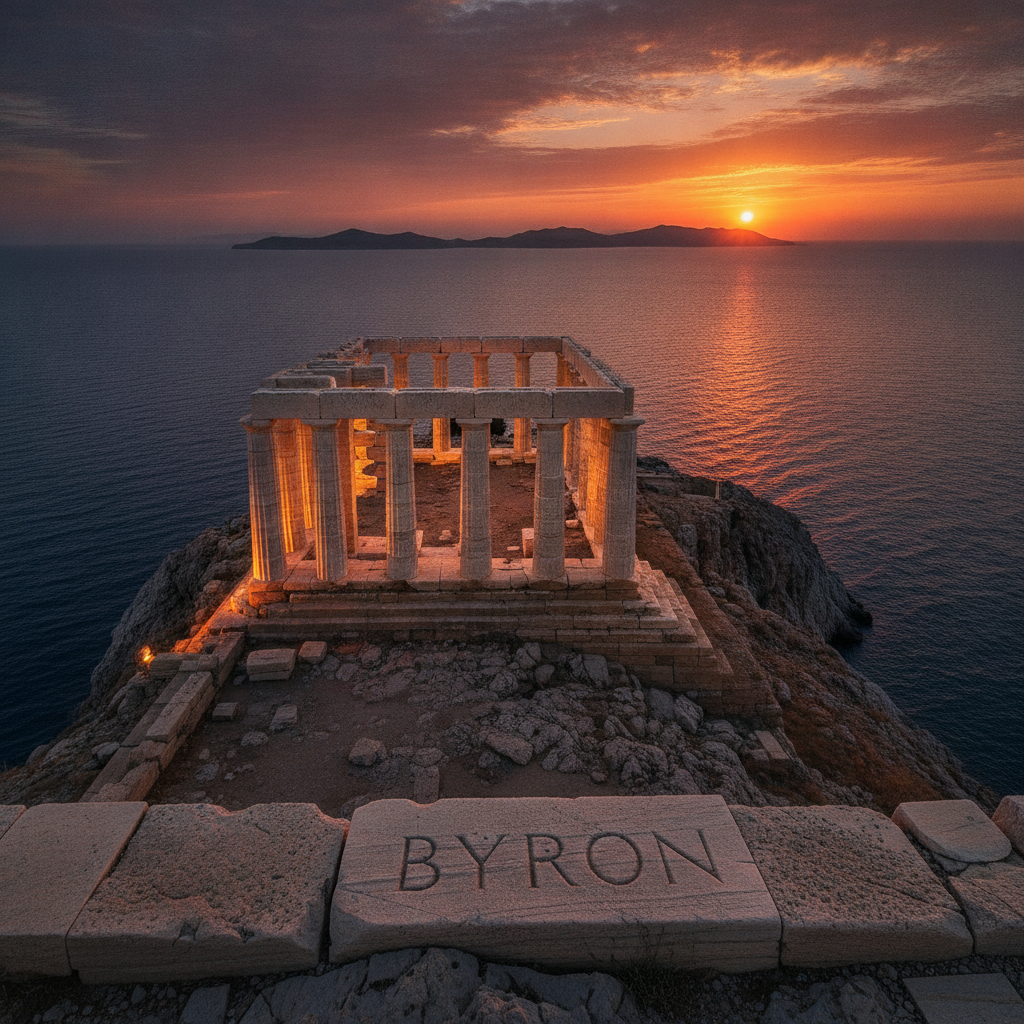
Cape Sounion & the Attica Coast: Poseidon's Temple Above the Aegean