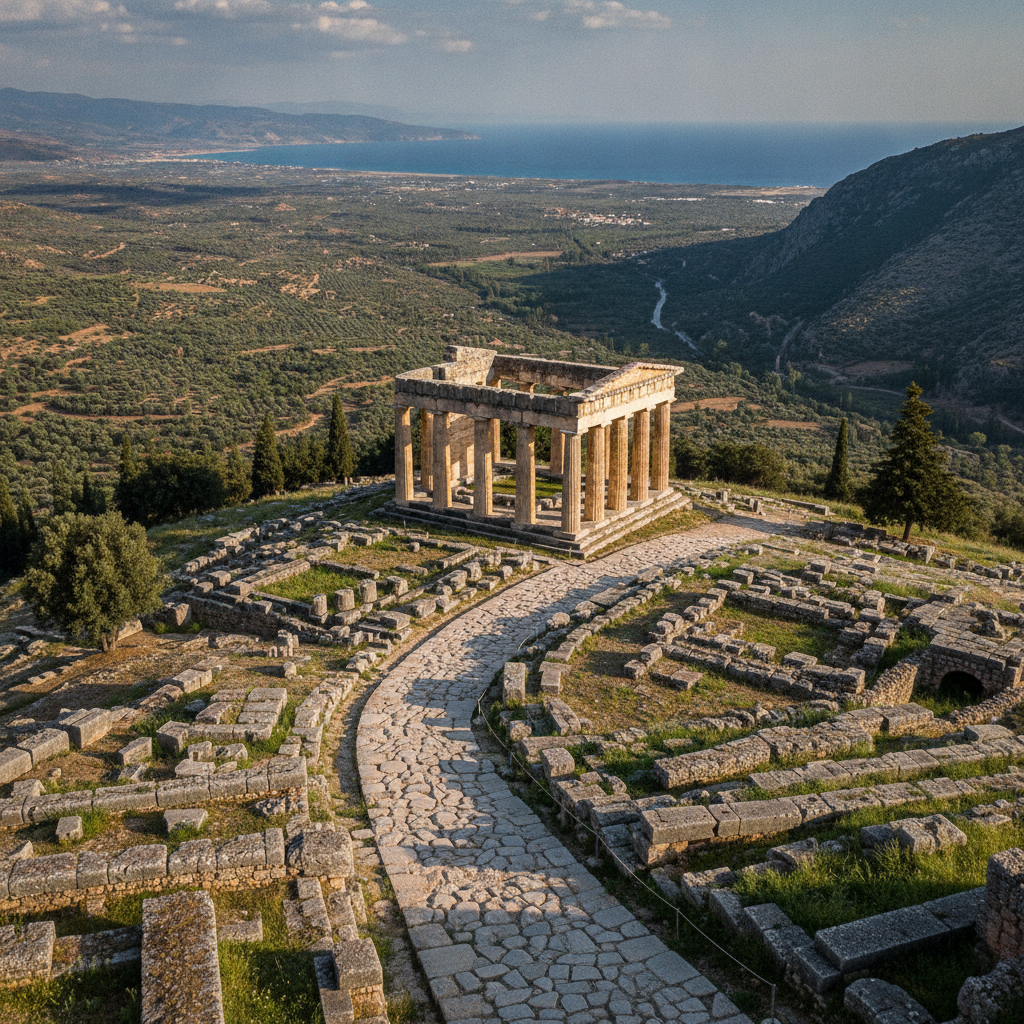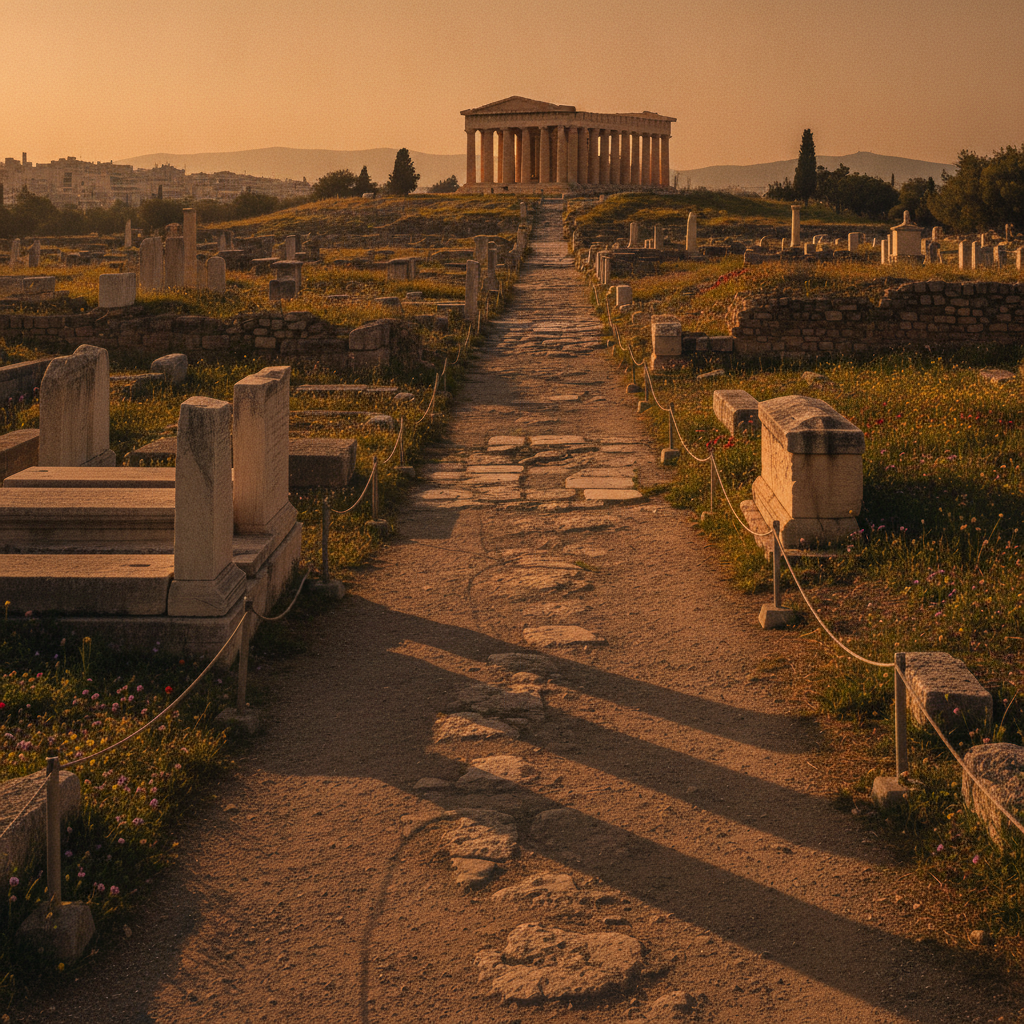
Keramikos, Gazi & Thisseio: Ancient Cemeteries, Creative Districts & Democratic Hills
West of the Acropolis, the neighborhoods of Keramikos, Gazi, and Thisseio form Athens' most creatively eclectic district, where the ancient Sacred Way passes through the oldest cemetery in the Greek world, industrial heritage has been transformed into arts venues, and the Pnyx hill above Thisseio was the site of the world's first democratic assembly.
- 1
Keramikos Archaeological Site & Cemetery
The Keramikos (Κεραμεικός) — named for the potters' workshops (keramos = pottery clay) that once lined the Eridanos river here — is the oldest continuously used cemetery in Athens, with burials documented from the 12th century BC through the Roman period. The site's significance derives from its double role: it was both a city quarter (the potters' and craftsmen's district) and the principal burial ground of ancient Athens, with a continuous funerary tradition from Sub-Mycenaean through Byzantine times. The excavated area (about 38,000 m²) contains two principal zones: the Sacred Gate area (where the Sacred Way — the processional road to Eleusis — exits the city through the Dipylon Gate, the largest city gate in the ancient Greek world, ca. 478 BC) and the cemetery itself, containing grave monuments spanning from modest 5th-century BC marble lekythoi to the elaborate sculptural grave stelae of the 4th century BC (the Stele of Dexileos, 394/393 BC, showing a cavalryman defeating a fallen opponent, is one of the finest surviving examples of Attic grave relief). The Keramikos Museum (1937), built on-site, contains original grave monuments, vases from the potters' quarter, and finds from the Sacred Gate excavation.
- 2
Sacred Gate, Dipylon Gate & the Sacred Way
The Sacred Gate (Iera Pyle) and the adjacent Dipylon Gate (Double Gate) were the two principal entrances to ancient Athens through the Long Walls that connected the city to its port at Piraeus (built by Themistocles, 479 BC; extended by Pericles). The Dipylon Gate — the largest city gate in the Greek world (38 meters wide), built ca. 478-450 BC — was the starting point of the Panathenaic Way, the processional route that ran through the Agora to the Acropolis for the quadrennial Great Panathenaia festival. The Sacred Gate was the departure point of the Sacred Way (Iera Odos) to Eleusis — the road along which the mystai (initiates) of the Eleusinian Mysteries processed during the annual Mysteries festival in Boedromion (September). The stretch of ancient road between the two gates contains the Demosion Sema (Public Burial Ground), where Athens' war dead were buried in state at public expense after each military campaign; the tombs of Cleisthenes, Solon, and Pericles were reportedly here (none preserved above ground).
- 3
Gazi: Technopolis & Creative District
Gazi — the neighborhood adjacent to Keramikos to the west — takes its name from the Athens Gas Works (Εταιρεία Αερίου / Γκάζι), built 1857-1862 to supply street lighting to the city, which operated until 1984 and whose distinctive iron gasometer and brick factory buildings dominate the skyline. The gas works was converted into Technopolis (Τεχνόπολις) — a 32,000 m² cultural complex — between 1988 and 1999, and now hosts major international art exhibitions, the Athens Festival's peripheral events, night clubs (the Gazi district became Athens' main gay-friendly nightlife area in the 2000s), and the Maria Callas Museum (2021, the first museum dedicated to the opera singer, who was born in New York in 1923 but was of Greek heritage and is considered Greece's greatest cultural ambassador). The Gazi neighborhood also contains some of the most interesting street art in central Athens.
- 4
Thisseio & Apostolou Pavlou Pedestrian Path
Thisseio (Θησείο) — the neighborhood southeast of Keramikos at the base of the Acropolis hill — is named for the Temple of Hephaestus in the Agora (which was mistakenly identified as the Theseum, a temple of Theseus, in the Byzantine period and retains that misidentification in the neighborhood name). The neighborhood contains some of the finest neoclassical architecture in Athens — late-19th century town houses by the architects Ernst Ziller (who also designed the Schliemann/Ilion Melathron mansion and the Presidential Palace) and Lysandros Kaftantzoglou. The Apostolou Pavlou pedestrian promenade — a 3.5 km traffic-free path constructed 1997-2004 running from Thisseio through Keramikos to the base of Filopappou Hill, flanked by olive trees and jasmine hedges — is the best place to walk around the Acropolis rock with its south-face views of the Parthenon and Odeion of Herodes Atticus.
- 5
Filopappou Hill (Mouseion Hill)
Filopappou Hill (Λόφος Φιλοπάππου) — also called the Mouseion Hill in antiquity, the highest of the three hills facing the Acropolis from the southwest (147 meters) — contains the Monument of Philopappos (114-116 AD), a funerary monument built by Julius Antiochus Philopappos, a prince of the Commagene royal family (Syria) who served as Athenian archon and Roman consul; the monument's marble frieze depicts Philopappos riding in his consular quadriga. The hill also contains the Deme of Koile (an ancient deme/neighborhood), the tomb of Kimon (father of the general Miltiades, 5th century BC), and cave-dwellings that were inhabited from antiquity through the Ottoman period. The panoramic view from the Philopappos monument encompasses the Acropolis (northeast), the Saronic Gulf (south), and Piraeus (southwest) — the standard photographic viewpoint for the Parthenon west facade.
- 6
Pnyx — The World's First Democratic Assembly Site
The Pnyx (Πνύξ) — the semicircular rock-cut auditorium on the north face of Filopappou Hill, immediately west of the Acropolis — was the meeting place of the Athenian ekklesia (citizens' assembly), the primary decision-making body of Athenian radical democracy, from approximately 507 BC (after Cleisthenes' reforms) to the late 4th century BC. The assembly met approximately 40 times per year (about once a week), with a quorum of 6,000 citizens required for certain votes; in the Periclean period approximately 30,000-40,000 male citizens had the right to vote, though actual attendance varied. The bema (speaker's platform) — a rectangular rock-cut podium — is where Themistocles proposed the building of the trireme fleet (483 BC), Pericles delivered his Funeral Oration (431 BC, as recorded by Thucydides), and Demosthenes warned against Philip of Macedon (Philippics, 351-338 BC). The site also offers the finest elevated view of the Acropolis north face available in Athens.
Walk this route with audio
Stories play automatically as you reach each stop — no tapping needed.
More in athens
Piraeus, Mikrolimano & the Saronic Riviera: Athens' Ancient Port and Yacht Harbor
Plaka, Monastiraki & Psyrri: Athens Beneath the Acropolis
Panathenaic Stadium, Zappeion & National Garden: Olympic Legacy and Royal Athens
Cape Sounion & the Attica Coast: Poseidon's Temple Above the Aegean
National Archaeological Museum & Exarcheia: Greece's Greatest Treasures