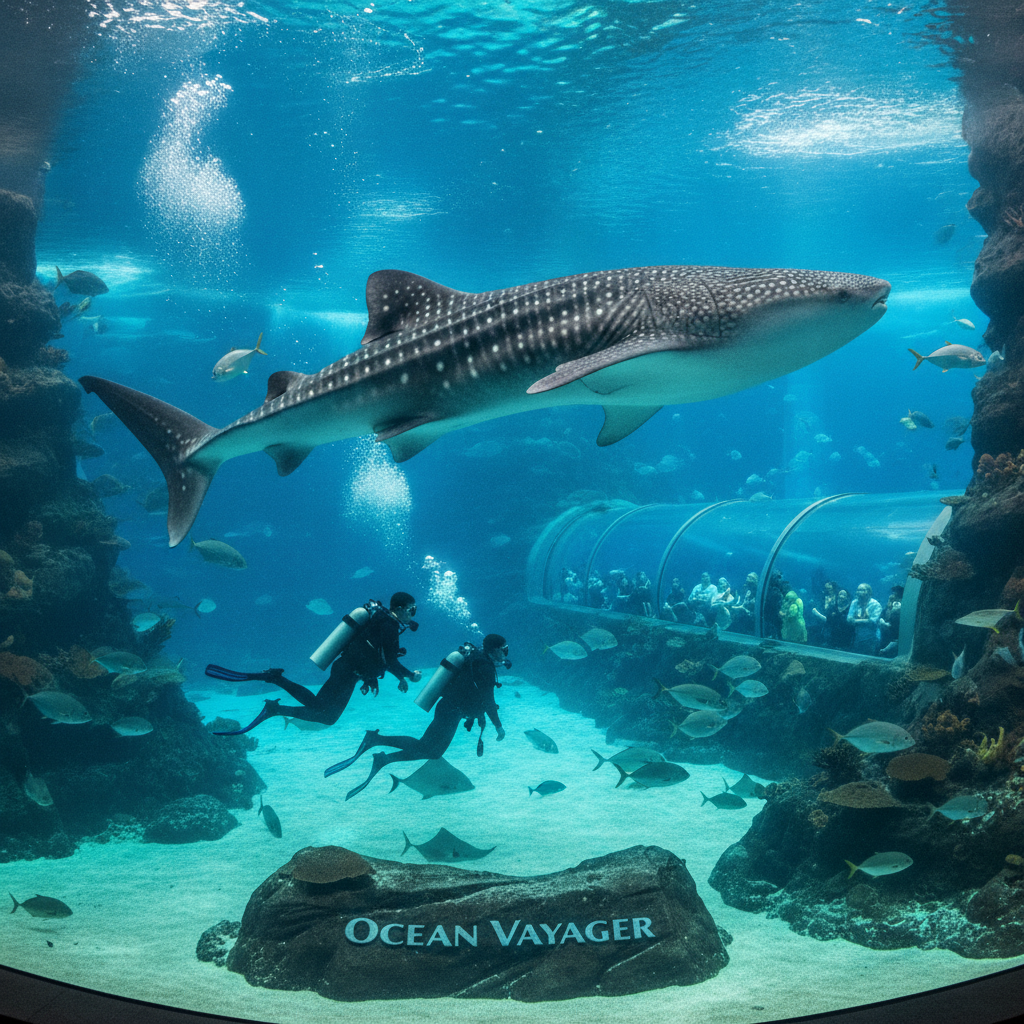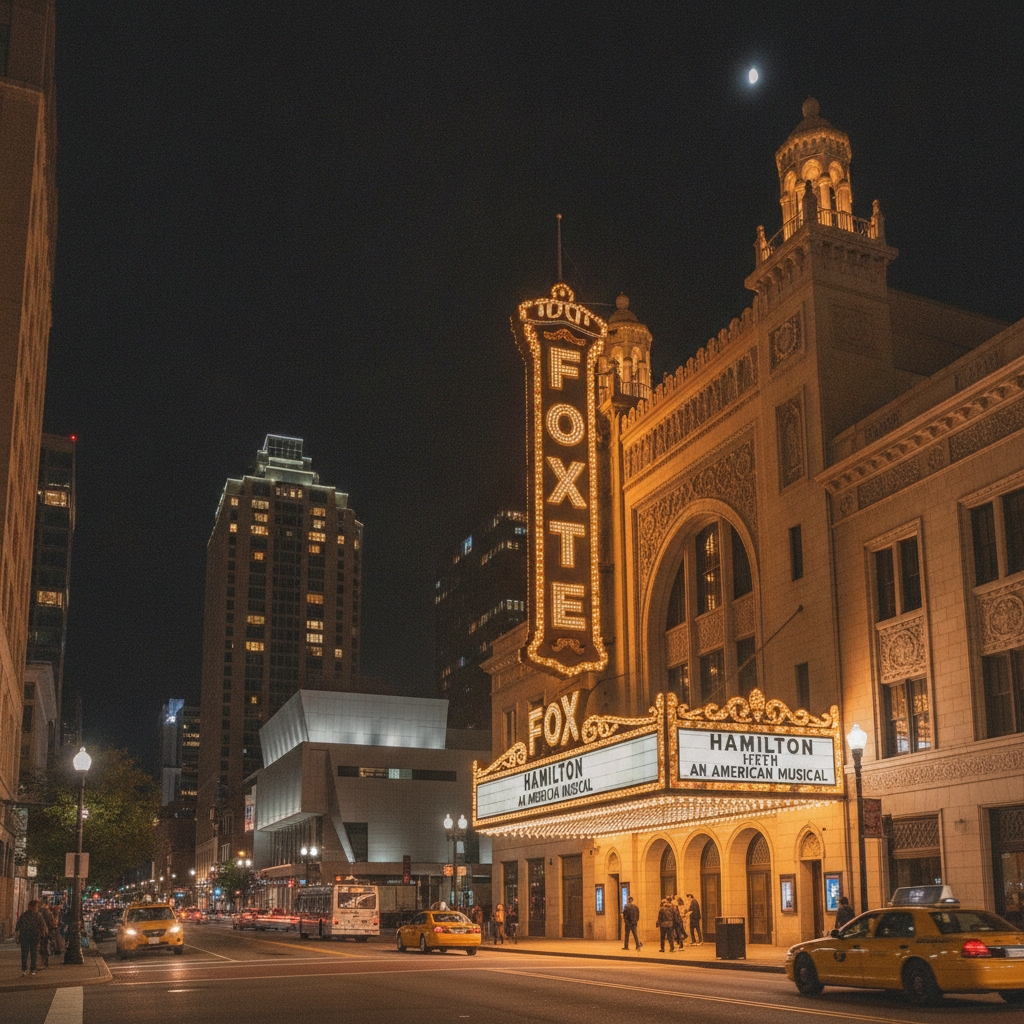
Atlanta: High Museum of Art (Richard Meier 1983, Renzo Piano 2005 expansion, Orly air disaster 1962 art donation), Fox Theatre (Moorish Revival 1929, Save the Fox 1975 campaign, Driving Miss Daisy world premiere, busiest single-stage theater), BeltLine Eastside Trail and Inman Park (1889 Victorian streetcar suburb, Krog Street Market food hall, Little Five Points), Jimmy Carter Library (Camp David Accords 1978, Nobel Prize 2002, Guinea worm near-eradication, died age 100), Georgia Tech (Fortune 500 HQ capital, Bobby Dodd Stadium 1913, Atlanta tech hub), Atlanta hip-hop (OutKast 2004 Grammy AOTY, Dungeon Family, trap music T.I. and Future Lil Baby)
Atlanta arts and culture: High Museum of Art (18,000 works, Richard Meier 1983 building, Renzo Piano 2005 expansion — founded after Orly air disaster June 3 1962 killed 106 Atlanta arts patrons), Fox Theatre (4,665-seat Moorish-Egyptian 1929 palace, Save the Fox 1975 grassroots preservation, Alliance Theatre Driving Miss Daisy world premiere 1987), BeltLine Eastside Trail and Inman Park (1889 first planned suburb, Krog Street Market food hall, Little Five Points bohemian), Jimmy Carter Library (Camp David Accords 1978, Nobel Peace Prize 2002, Carter Center Guinea worm 3.5M cases to 13, Carter died age 100 December 2024), Georgia Tech (top 5 public university, Bobby Dodd Stadium 1913 oldest on-campus stadium, Atlanta Fortune 500 hub — Delta Coca-Cola UPS Chick-fil-A Home Depot), Atlanta hip-hop (OutKast 1994 debut to 2004 Grammy AOTY, Dungeon Family Organized Noize, trap music T.I. Gucci Mane to Future Lil Baby 21 Savage Migos).
- 1
High Museum of Art and the Woodruff Arts Center
The High Museum of Art (at 1280 Peachtree Street NE, Midtown Atlanta): the leading art museum in the American Southeast, with a permanent collection of approximately 18,000 works. The High Museum building: the original 1983 building was designed by Richard Meier (the Pritzker Prize-winning architect of the Getty Center in Los Angeles), featuring the signature Meier white porcelain enamel panels and the dramatic circular atrium ramp that became one of the most celebrated museum buildings of the 1980s. The museum was expanded in 2005 with three new buildings designed by Renzo Piano (the architect of the Pompidou Centre in Paris and the Nasher Sculpture Center in Dallas), tripling the exhibition space to approximately 19,000 square meters. The High Museum collection highlights: the collection of 19th and 20th century American art (one of the most comprehensive in the Southeast), the collection of African art (approximately 1,000 works), the decorative arts collection (furniture, silver, and ceramics from the American South and Europe), and the photography collection (one of the largest in the American Southeast). The Woodruff Arts Center (the complex housing the High Museum, the Atlanta Symphony Orchestra, and the Alliance Theatre): the Woodruff Arts Center was founded in 1962 after the Orly air disaster (June 3, 1962) in which 106 prominent Atlanta arts patrons were killed when their chartered Air France Boeing 707 crashed on takeoff from Orly Airport near Paris: it was the single greatest cultural tragedy in American history, and the Paris arts community responded by donating works of art to Atlanta (the collection became the foundation of the High Museum).
- 2
Fox Theatre and the Atlanta Performing Arts Scene
The Fox Theatre (at 660 Peachtree Street NE, Midtown Atlanta): the most spectacular movie palace and performing arts venue in the American South, opened in 1929 as the Yaarab Temple Shrine Mosque before being converted to a movie theater. The Fox Theatre architecture: the Fox Theatre is a masterpiece of Moorish Revival and Egyptian Revival architecture (designed by Marye, Alger and Vinour), with the interior designed to resemble an outdoor Egyptian courtyard under a night sky — the ceiling is a deep blue with twinkling stars and moving clouds, the walls are decorated with Islamic minarets and palm trees, and the horseshoe-shaped auditorium seats 4,665 people. The Fox Theatre was threatened with demolition in 1974-1975 (when Atlanta-based Coca-Cola proposed purchasing the theater and demolishing it for a corporate headquarters), but a Save the Fox grassroots campaign raised USD 1.8 million to purchase and preserve the building, becoming one of the most successful historic preservation campaigns in US history. The Fox Theatre today: the Fox is the busiest single-stage theater in the world (outside of Las Vegas), hosting over 225 performances per year, including Broadway touring productions (Phantom of the Opera, Hamilton, Lion King), concerts, and the annual Atlanta Film Festival. The Woodruff Arts Center Alliance Theatre (the professional regional theater company of Atlanta, adjacent to the High Museum and Fox): founded in 1968, the Alliance has produced world premieres of plays that later transferred to Broadway, including the world premiere of Driving Miss Daisy (1987, which later won the Academy Award for Best Picture in 1989).
- 3
Atlanta BeltLine Eastside Trail and Inman Park
Inman Park and the Atlanta BeltLine Eastside Trail: Inman Park (the first planned suburb of Atlanta, developed by Joel Hurt in 1889-1891 as a Victorian streetcar suburb connected to downtown Atlanta by the first electric streetcar in Atlanta) is one of the most historically significant and beautifully preserved Victorian neighborhoods in the American South, with dozens of Queen Anne, Eastlake, and Italianate Victorian houses from the 1890s. The Inman Park Festival (the largest neighborhood festival in Atlanta, held each April): the festival began in 1972 as part of the effort to save Inman Park from urban renewal and highway construction (Interstate 485, the connector that would have bisected the neighborhood, was cancelled after community opposition), making it one of the earliest and most successful historic preservation victories in Atlanta history. Krog Street Market (at 99 Krog Street NE, where the BeltLine Eastside Trail passes through the former Krog Street rail corridor): the adaptive reuse of a 1920s warehouse complex into a covered food market with over 20 restaurants and vendors, described as a model for the food hall development that has spread across American cities. The Little Five Points neighborhood (the bohemian neighborhood adjacent to Inman Park): Atlanta most eclectic neighborhood, with vintage clothing stores (Stefan's, Junkman's Daughter), independent record stores, tattoo parlors, and the Variety Playhouse (a 1,000-seat concert venue in a former movie theater). The Freedom Farmers Market at the Carter Center (at 453 John Lewis Freedom Pkwy): a weekly market celebrating local farms and food justice in one of the most historic neighborhoods in Atlanta.
- 4
Jimmy Carter Presidential Library and the Carter Center
The Jimmy Carter Presidential Library and Museum (at 441 Freedom Pkwy, the Old Fourth Ward neighborhood, approximately 3 km east of downtown Atlanta): the presidential library, museum, and offices of the Carter Center, established on 1 October 1986. Jimmy Carter (James Earl Carter Jr., born 1 October 1924, Plains, Georgia; died 29 December 2024, Plains, Georgia): the 39th President of the United States (1977-1981), the longest-lived US president in history (he died at age 100), and widely considered the most effective post-presidential figure in American history. Carter presidential legacy: Carter brokered the Camp David Accords (September 17, 1978: the peace agreement between Israeli Prime Minister Menachem Begin and Egyptian President Anwar Sadat, the first peace treaty between Israel and an Arab nation, for which Carter was awarded the Nobel Peace Prize in 2002 — one of only three sitting or former US presidents to receive the Nobel Peace Prize). Carter post-presidential legacy: the Carter Center (founded 1982) has monitored over 110 elections in 39 countries, eradicated Guinea worm disease (from approximately 3.5 million cases in 1986 to fewer than 13 cases worldwide in 2022, a near-total eradication of a parasitic disease), dramatically reduced cases of river blindness, trachoma, lymphatic filariasis, and other diseases that primarily affect the worlds poorest people. The Carter Center campus: situated on 35 acres with formal Japanese-inspired gardens and a small lake adjacent to Freedom Park, the campus is open to the public and connects via the BeltLine to the broader Atlanta park system.
- 5
Georgia Tech Yellow Jackets and the Midtown Innovation Ecosystem
Georgia Institute of Technology (Georgia Tech, at 225 North Avenue NW, Midtown Atlanta): one of the premier public engineering and technology universities in the United States, consistently ranked among the top 5 public universities in the US and top 10 engineering schools in the world. Georgia Tech history: founded 1885 as the Georgia School of Technology, part of Georgias post-Civil War effort to transform from an agricultural to an industrial economy. Georgia Tech alumni and faculty: the Nobel Prize in Physics 2018 winner Arthur Ashkin (for optical tweezers) worked on research that underpins Georgia Tech laser physics; Jimmy Carter attended Georgia Tech for one year before transferring to the US Naval Academy; Jeff Sprecher (founder of the Intercontinental Exchange and chairman of the New York Stock Exchange) graduated from Georgia Tech. The Georgia Tech campus (420 acres in Midtown Atlanta): the Bobby Dodd Stadium at Hyundai Field (the oldest continuously used on-campus college football stadium in the United States, opened 1913), the Tech Tower (the landmark 1888 Victorian Gothic building with the TECH sign that is lit after Yellow Jackets football victories), and the Invention Studio (the student-run makerspace that is one of the largest and most active student maker facilities in any US university). Atlanta tech ecosystem: Atlanta has become one of the largest technology hubs in the American Southeast, with the second largest concentration of Fortune 500 companies headquartered in the Southeast (after Houston): Home Depot, Delta Air Lines, Coca-Cola, UPS, Chick-fil-A, NCR, Global Payments, and others are headquartered in the Atlanta metropolitan area.
- 6
Atlanta Hip-Hop Legacy and Contemporary Music Scene
Atlanta hip-hop: Atlanta has been the most influential city in American hip-hop since the early 1990s, producing an unparalleled succession of artists, labels, and sonic innovations that have shaped the mainstream of American popular music for 30 consecutive years. Atlanta hip-hop origins: Organized Noize (the production collective of Rico Wade, Ray Murray, and Sleepy Brown) and LaFace Records (founded 1989 by Antonio LA Reid and Babyface, distributed through Arista Records): the two pillars of early Atlanta hip-hop. OutKast (Andre 3000 and Big Boi, formed in East Point, Atlanta suburb): the duo that brought Atlanta hip-hop to national attention, with their 1994 debut Southernplayalisticadillacmuzik and their 2003 double album Speakerboxxx/The Love Below (which sold 5.5 million copies in the US and won the Grammy Award for Album of the Year 2004, making them the first hip-hop act to win that award). Dungeon Family (the collective of artists centered on the home studio of Rico Wade, including OutKast, Goodie Mob, Witchdoctor, and others): the creative foundation of Atlanta alternative hip-hop. Trap music (the genre originating in Atlanta that has come to dominate mainstream hip-hop worldwide): originated with T.I. (Clifford Joseph Harris Jr., from Bankhead, Atlanta), Young Jeezy, and Gucci Mane in the early 2000s, and defined the sound of the 2010s through artists including Future, 21 Savage, 2 Chainz, Migos, Lil Baby, and Young Thug. The Atlanta rap scene and Spotify: Atlanta artists have dominated Spotify streaming since 2015, with Future, Lil Baby, and 21 Savage consistently among the most streamed artists globally.
Walk this route with audio
Stories play automatically as you reach each stop — no tapping needed.
More in atlanta
Atlanta: Presidential Peace Work, Mill Ruins and Counterculture Corners
Atlanta: MLK National Historical Park (Birth Home, Ebenezer Baptist Church, King tomb Sweet Auburn, Atlanta Life Insurance), World of Coca-Cola (John Pemberton 1886 invention, secret formula, taste 100 world beverages), Piedmont Park and Atlanta BeltLine (35km trail, Ponce City Market Sears warehouse, Eastside Trail murals), Hartsfield-Jackson Airport (worlds busiest since 1998, Delta 75% hub, Plane Train automated transit), and Practical Guide (BeltLine neighborhoods, Buford Highway international food, The Varsity oldest drive-in, Georgia Bulldogs football)
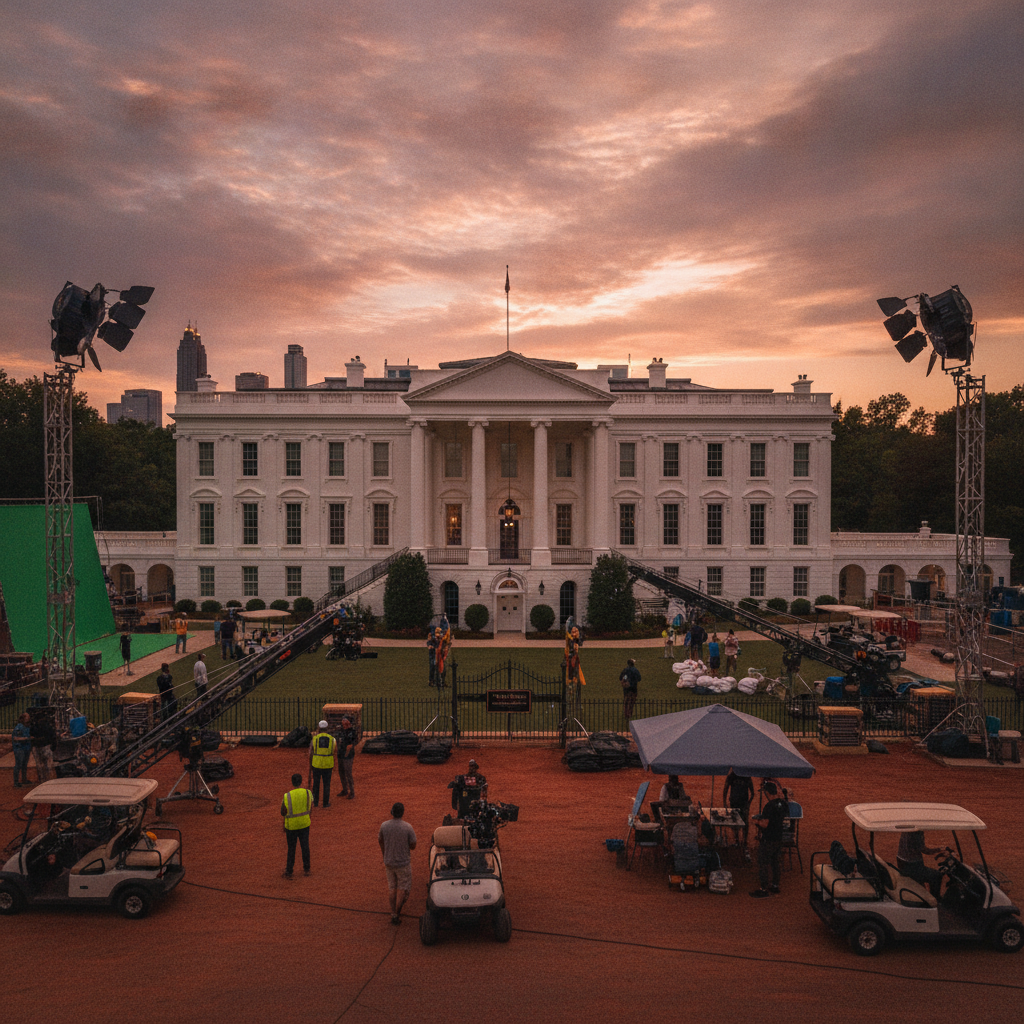
Atlanta: World Busiest Airport, Hollywood of the South and Global Food
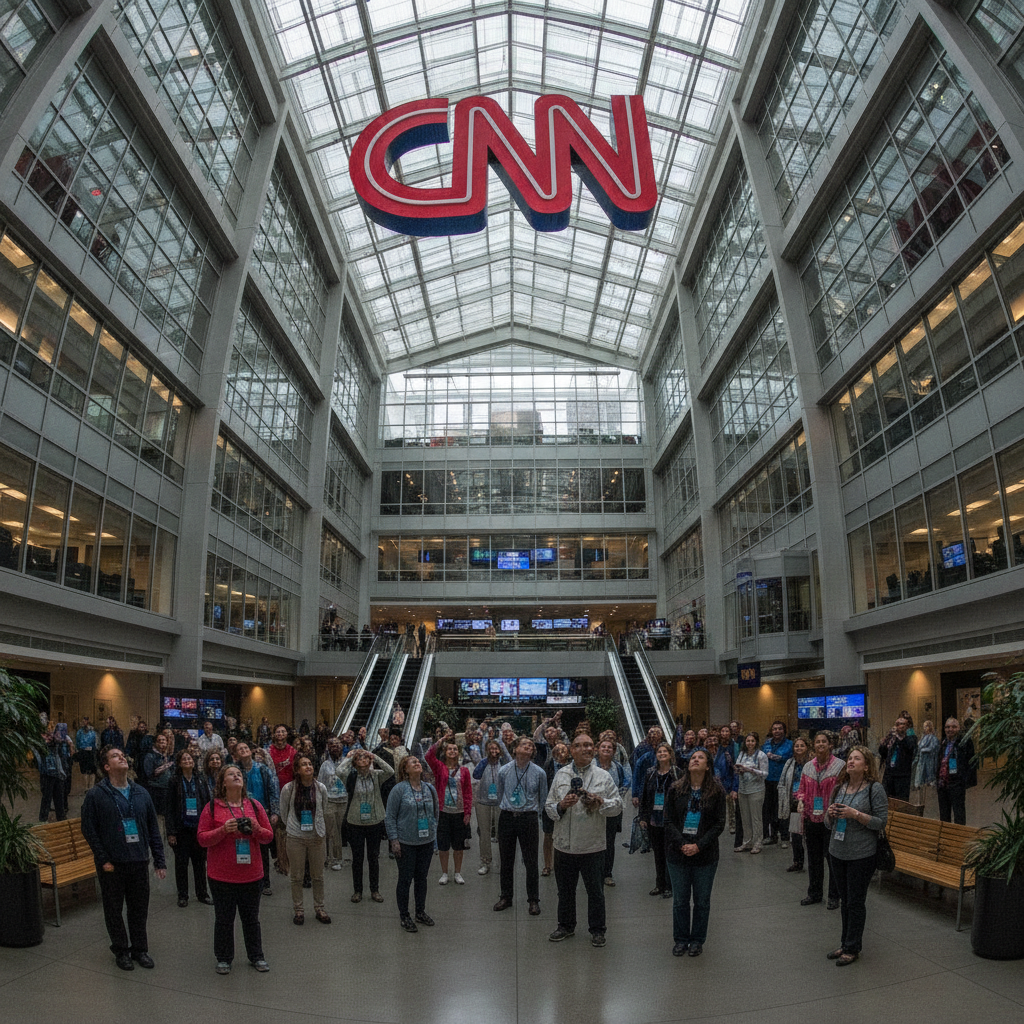
Atlanta: CNN Birthplace, Braves Champions and the Chattahoochee Trout River
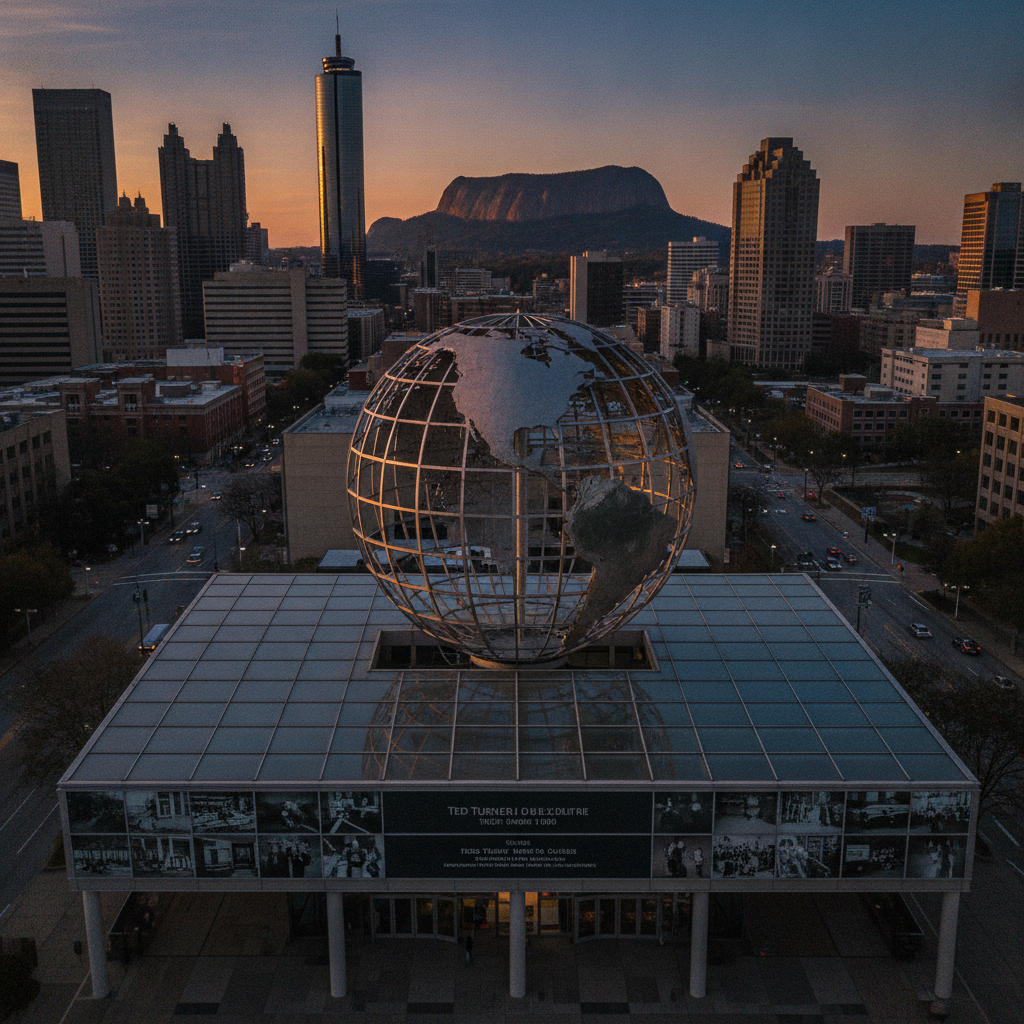
Atlanta: Civil Rights Movement (AUC HBCUs, Morehouse, Spelman, SCLC headquarters), National Center for Civil and Human Rights (MLK papers, sit-in counter experience, global human rights gallery), Centennial Olympic Park (1996 Olympics, Muhammad Ali cauldron, Jewell bombing, Georgia Aquarium whale sharks), CNN Center (Ted Turner 1980, Gulf War coverage, Hollywood of the South Tyler Perry Studios), Stone Mountain (worlds largest bas-relief Confederate carving, KKK 1915, Hank Aaron 715th home run), Atlanta food (soul food Paschal's Mary Macs, Buford Highway international corridor, Buford Highway Farmers Market)