Auckland: The City of Sails, Sky Tower, Rangitoto Volcano, Waiheke Wine Island, Maori Culture, and Practical Guide
Auckland introduction: the City of Sails on the volcanic isthmus, the Sky Tower (tallest in the southern hemisphere), Rangitoto Island volcanic cone walk, Waiheke Island wineries (Stonyridge Larose), Maori culture and the Treaty of Waitangi, and the Auckland practical travel guide.
- 1
Auckland - The City of Sails and the Gateway to New Zealand
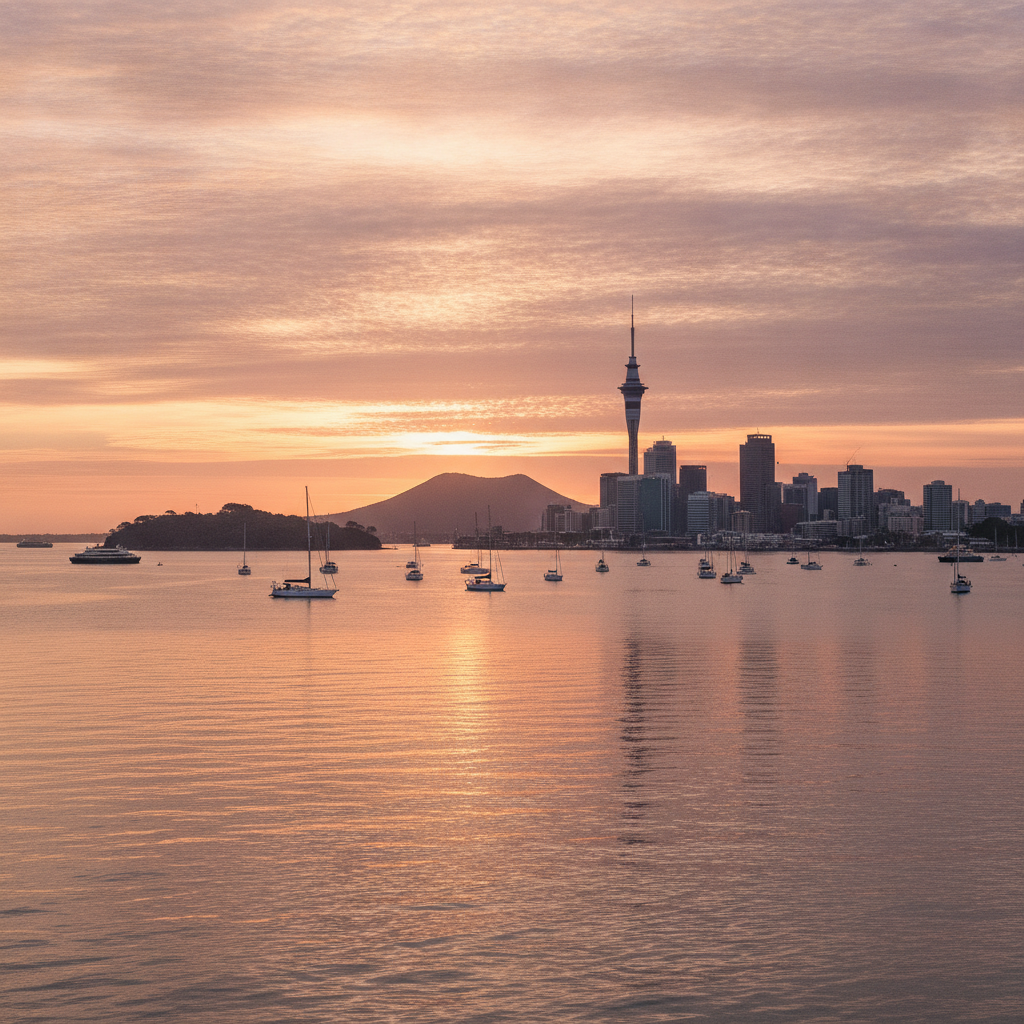
Auckland (Tamaki Makaurau in te reo Maori: the city sought by many lovers): the largest city in New Zealand with approximately 1.7 million people in the greater urban area, approximately 35% of the entire New Zealand population. Auckland is built on a narrow isthmus between the Waitemata Harbour (Pacific Ocean side) and the Manukau Harbour (Tasman Sea side), giving it a unique geography where the Pacific and the Tasman are visible from the same hilltop. The volcanic field: Auckland is built on the Auckland volcanic field, one of the most geologically young and potentially active volcanic fields on earth (approximately 53 volcanic cones and craters, the most recent eruption approximately 600 years ago at Rangitoto Island). The tallest structure in the southern hemisphere: the Sky Tower (328 meters) dominates the Auckland skyline. Auckland harbor: the Waitemata Harbour is the primary sailing harbor in the southern hemisphere; the Auckland-to-Russell ferry is the primary gateway to the Bay of Islands.
- 2
The Sky Tower and Auckland CBD - The Urban Core of New Zealand
The Sky Tower (328 meters): the primary observation point and telecommunications tower of Auckland, the tallest structure in the southern hemisphere (built 1997). The SkyJump (a controlled cable descent from the Sky Tower pod at 192 meters: the highest external base jump-style attraction in the southern hemisphere) and the SkyWalk (the guided walk around the external rim of the Sky Tower at 192 meters: a harness-equipped circumnavigation of the structure). The Auckland CBD: the Albert Street and Queen Street corridor, Britomart (the former ferry and rail terminal, now converted to an upscale restaurant and fashion district), and the Viaduct Harbour (the waterfront precinct developed for the 2000 and 2003 America Cup yachting events). The America Cup: Auckland hosted the America Cup in 2000 (Team New Zealand won as defender) and 2003 (Team New Zealand lost to Alinghi). The Auckland Harbor Bridge (1959): the primary crossing between the North Shore and the Auckland CBD; the BungyWorks bridge climb and bungee jump operate from the bridge.
- 3
Rangitoto Island - The Volcanic Cone in Auckland Harbour
Rangitoto Island: the youngest and most symmetrical of the Auckland volcanic field cones, rising 260 meters from the Waitemata Harbour, a 25-minute ferry from the Auckland CBD. Rangitoto erupted approximately 600 years ago (approximately 1350-1400 CE) and was witnessed by the Maori people of the area (the oral traditions of the Waiohua tribe record the eruption). The eruption was the most recent in the Auckland volcanic field and the island is still geologically young: the lava flows are rough and barely weathered. The pohutukawa trees (the New Zealand Christmas tree, Metrosideros excelsa): the world largest pohutukawa forest grows on the Rangitoto lava fields, the trees rooting directly into the bare basalt. The Rangitoto summit walk (a 2-hour return walk from the wharf to the summit): the most accessible volcano summit walk in Auckland. The view from the summit: the full panorama of Auckland, the Hauraki Gulf, the Coromandel Peninsula, and on a clear day the Northland coastline.
- 4
Waiheke Island - The Island of Wine and the Auckland Escape
Waiheke Island: the primary island destination of the Hauraki Gulf (35 minutes by ferry from the Auckland CBD), one of the most desirable lifestyle destinations in New Zealand. Waiheke (population approximately 10,000-15,000 permanent residents) supports over 30 wineries and vineyards on its warm, north-facing terraced slopes. The primary Waiheke wine varieties: Bordeaux-style red blends (Cabernet Sauvignon, Merlot, Cabernet Franc), Syrah, and Chardonnay. The Waiheke wineries (Stonyridge Vineyard, Man O War, Mudbrick Vineyard, Cable Bay): the most internationally recognized New Zealand boutique wine estates. The Stonyridge Larose: the most sought-after New Zealand red wine, a Bordeaux-style blend produced in tiny quantities (approximately 2,000 bottles annually), consistently cited as one of the finest wines produced in the southern hemisphere. The Waiheke beaches (Onetangi, Palm Beach, Oneroa): the most popular Auckland day trip beaches, protected from the ocean swell by the island position.
- 5
Maori Culture in Auckland - Tamaki Makaurau and the Tangata Whenua
The Maori people: the tangata whenua (the people of the land) of Aotearoa New Zealand, with an estimated population of approximately 850,000 (approximately 17% of the New Zealand total population). Auckland (Tamaki Makaurau) was the most contested and most frequently fought-over territory in the pre-European Maori world because of its strategic position between two harbors and the fertile volcanic soil. The Auckland Museum (the War Memorial Museum in the Domain): the primary museum of Maori culture in Auckland, with an extensive taonga (treasure) collection and a daily Maori cultural performance. The haka (the powerful rhythmic chant and movement): the most internationally recognized Maori cultural practice (the Ka Mate haka performed by the All Blacks rugby team before international matches is the most watched haka in the world). The Treaty of Waitangi (1840): the founding document of New Zealand, signed between the British Crown and approximately 500 Maori chiefs; the Waitangi Day national holiday (6 February) commemorates the signing.
- 6
Auckland Practical Guide - Beaches, Climate, and the New Zealand Gateway
Auckland practical guide. The climate: Auckland has a warm temperate (oceanic) climate (average summer 23-25 Celsius, average winter 14-16 Celsius, rainfall year-round with no pronounced dry season). The Auckland beaches: the east coast (Mission Bay, St Heliers, Kohimarama): the sheltered harbor beaches, calm and warm in summer. The west coast (Piha, Karekare, Muriwai): the dramatic black sand surf beaches on the Tasman Sea side, with heavy surf and the black iron sand of the volcanic geology. The gannet colony at Muriwai: one of the most accessible mainland gannet colonies in the world. Practical transport: the ferry network (the Fullers Ferries service the harbor, Waiheke, and Rangitoto), the Auckland train network (the recently upgraded suburban rail network linking the CBD to the South Auckland suburbs), and the bus network. Auckland International Airport (AKL): approximately 24 km south of the CBD. The drive south: Auckland to Wellington by road is approximately 650 km (8-9 hours), passing through the Waikato and Volcanic Plateau (the Tongariro National Park detour is strongly recommended).
Walk this route with audio
Stories play automatically as you reach each stop — no tapping needed.
More in auckland
Auckland: Bay of Islands, Cathedral Cove, Kauri Forest, Pacific Rim Food Scene, Volcanic Field, and New Zealand Gateway
Auckland: Ponsonby and K Road, Harbour Bridge, Maori Language Revival, Milford Sound, and Abel Tasman National Park