Lady Bird Lake, Barton Springs & Austin's Outdoor Culture
Austin's outdoor culture (the culture of a city whose semi-arid climate (300 days of sunshine per year, an average annual temperature of 20°C (68°F)), the Colorado River, and the surrounding Hill Country have made outdoor recreation an essential part of daily life): the Barton Springs Pool, Lady Bird Lake, the Town Lake Hike and Bike Trail, and Zilker Park form the outdoor recreational heart of Austin and the most tangible expression of Austin's famous 'Keep Austin Weird' identity.
- 1
Barton Springs Pool — Austin's Natural Swimming Hole
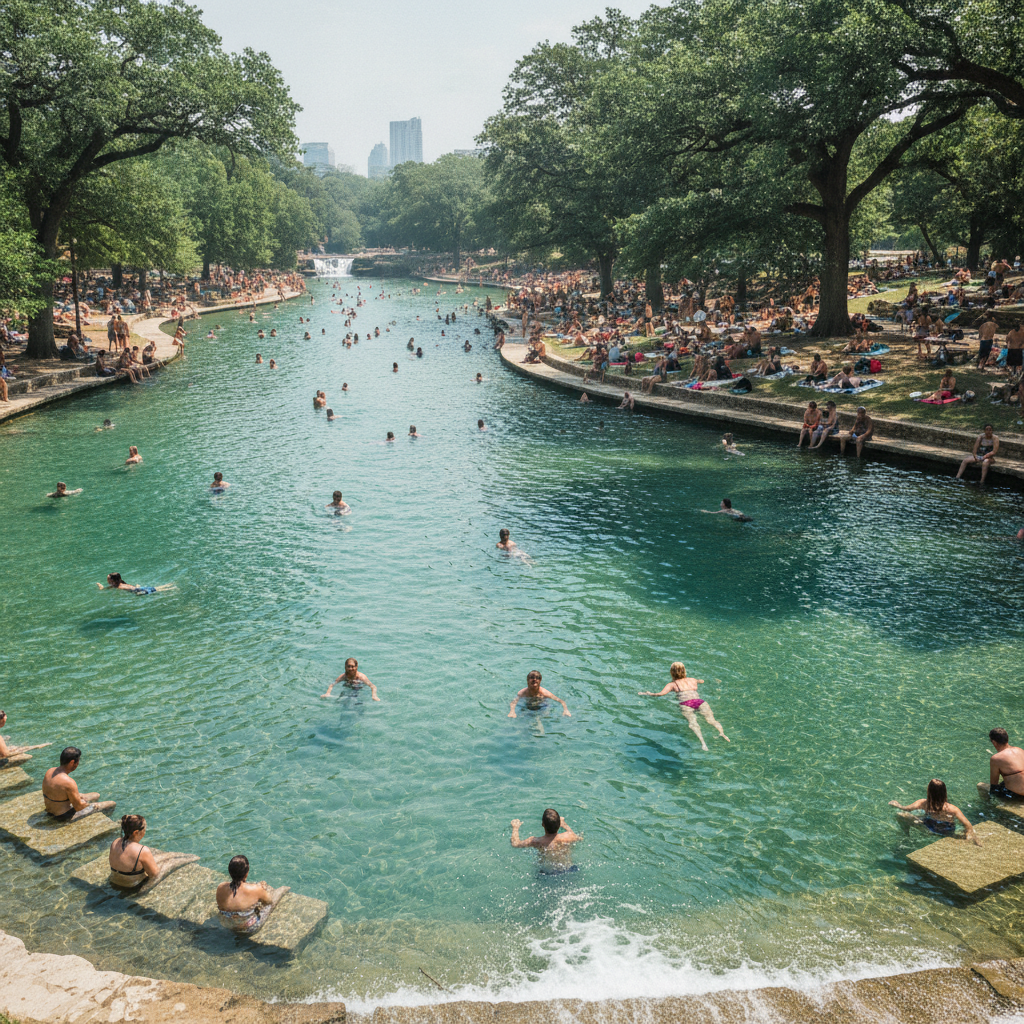
Barton Springs Pool (2201 Barton Springs Road, in Zilker Park, Austin — the 3-acre (1.2-hectare) natural swimming pool fed by Barton Springs (the natural artesian spring emerging from the Edwards Aquifer limestone formations below Austin at a rate of approximately 30-40 million gallons (114-151 million litres) per day)): the Barton Springs experience (the pool that maintains a constant water temperature of 68°F (20°C) year-round, making it both the finest warm-weather swimming hole in Texas (the cool water is a refuge from Austin's brutal summer heat — the Austin summer average high temperature is 37°C (99°F) in July and August) and a surprisingly pleasant winter swimming destination (the 68°F water feels warm against the cool air on a January day)): the Barton Springs ecology (the pool that is the only known habitat of the Barton Springs salamander (Eurycea sosorum — the federally endangered salamander species that lives only in and around Barton Springs, dependent on the pristine Edwards Aquifer water quality that feeds the springs) — the salamander was one of the central subjects of the 1990s 'Water Wars' (the political battles over Austin development and its potential impact on the Edwards Aquifer and Barton Springs recharge zone that shaped Austin's approach to urban planning for a generation): the Barton Creek Greenbelt (the 809-acre (327-hectare) natural greenbelt along Barton Creek upstream from Barton Springs Pool — the most beloved urban nature reserve in Austin, with hiking and mountain biking trails, swimming holes (the 'Deep Eddy', the 'Twin Falls', and the 'Sculpture Falls' swimming holes), and rock climbing areas (the 'Seismic Wall' — the limestone cliff above Barton Creek popular with rock climbers)).
- 2
Lady Bird Lake & the Town Lake Hike and Bike Trail
Lady Bird Lake (the Colorado River reservoir formed by the Tom Miller Dam and the Longhorn Dam in the heart of Austin — the 416-acre (168-hectare) lake that bisects the city of Austin, separating downtown (north shore) from the South Congress and Zilker Park neighbourhood (south shore)): the history of Lady Bird Lake (the lake renamed in 2007 from 'Town Lake' to 'Lady Bird Lake' in honour of Lady Bird Johnson (Claudia Alta Johnson, 1912-2007) — the wife of President Lyndon B. Johnson and the First Lady who championed the Highway Beautification Act of 1965 (the 'Lady Bird Act' — the Federal legislation that removed billboards and planted wildflowers along American highways, most notably the bluebonnets (Lupinus texensis — the state flower of Texas) that now line Texas highways in spring)): the Town Lake Hike and Bike Trail (the 10-mile (16-km) paved trail that circumnavigates Lady Bird Lake, running along both the north and south shores — the most popular outdoor recreation amenity in Austin, used by approximately 2 million people per year for running, cycling, walking, and paddleboarding): the kayaking and paddleboarding (the most popular water sports on Lady Bird Lake — the calm, motorboat-free water (private motorboats are not permitted on Lady Bird Lake) makes it ideal for human-powered watercraft): the Austin Rowing Club (the oldest rowing club in Texas (established 1973), based at the Lake Austin Boat Ramp, which trains on Lady Bird Lake).
- 3
Zilker Park & the Austin Parks System
Zilker Park (2100 Barton Springs Road, Austin — the 351-acre (142-hectare) urban park on the south bank of Lady Bird Lake, the most important public park in Austin): the Zilker Park history (the park named for Andrew Jackson Zilker (1858-1934) — the Austin businessman and philanthropist who donated the land to the city of Austin in 1934): the Zilker Park facilities (the Barton Springs Pool (the main attraction of Zilker Park), the Zilker Park Great Lawn (the open lawn area that hosts the Austin City Limits Music Festival (October), the Kite Festival (March — the Austin Kite Festival, held on the first Sunday of March each year since 1929, the longest-running kite festival in the United States), the Trail of Lights (December — the annual holiday light installation that has drawn Austin families since 1965), and the Austin Reggae Festival (April)): the Zilker Park Botanical Garden (the 31-acre (12.5-hectare) botanical garden within Zilker Park, with rose gardens, Japanese garden, prehistoric garden, and the Hartman Prehistoric Garden (the garden featuring plant species that existed during the age of the dinosaurs)): the Barton Creek Greenbelt access (the Zilker Park area provides the primary access to the Barton Creek Greenbelt, the 809-acre natural preserve along Barton Creek that is the most popular hiking and swimming area in Austin).
- 4
Mount Bonnell & the Austin Hill Country Views
Mount Bonnell (3800 Mount Bonnell Road, Austin — the rocky promontory at 775 feet (236 metres) above sea level in the western Austin neighbourhood of Tarrytown, the highest point in Austin and the most popular scenic overlook in the city): the Mount Bonnell experience (the short but steep climb (the 99 steps (the limestone staircase that climbs the east face of the promontory) to the top, the panoramic view from the summit across the Colorado River (the lake below is Lake Austin — the Colorado River reservoir created by the Mansfield Dam) to the Balcones Escarpment (the geological fault line (the Balcones Fault Zone — the geological boundary between the limestone Edwards Plateau to the west and the black clay soils of the Blackland Prairie to the east, the fault that creates the Hill Country of central Texas — one of the most dramatic geological transitions in the southern United States) that marks the eastern edge of the Texas Hill Country)): the Texas Hill Country (the region of rolling limestone hills, cedar-juniper forests, spring-fed rivers and swimming holes, wildflower meadows, and working ranches immediately west and north of Austin — the most beloved natural landscape in Texas, the region that draws Austinites for weekend escapes (the Pedernales Falls State Park (2585 Park Road 6026, Johnson City — the state park 40 miles (64 km) west of Austin famous for the cascading waterfalls of the Pedernales River over the pink granite ledges), the Enchanted Rock State Natural Area (Fredericksburg — the massive pink granite dome rising 425 feet (130 metres) above the surrounding Hill Country, the largest exfoliation dome in the United States east of the Rocky Mountains, and one of the finest hiking destinations in Texas)).
- 5
Sixth Street Bats — Austin's 1.5 Million Free-Tail Bats
The Congress Avenue Bridge bats (the largest urban bat colony in North America — the approximately 1.5 million Mexican free-tailed bats (Tadarida brasiliensis mexicana) that roost in the expansion joints under the Congress Avenue Bridge (the bridge over Lady Bird Lake at Congress Avenue in downtown Austin) from approximately mid-March through early November): the Congress Avenue Bridge bat colony history (the colony established in 1980 when the bridge was reconstructed with the expansion joints (the horizontal crevices under the deck of the bridge that created the warm, dark, sheltered roosting habitat preferred by the Mexican free-tailed bat)): the emergence (the spectacle of the evening bat emergence (the nightly event at sunset, when the 1.5 million bats exit the bridge in a continuous stream that can last 20-45 minutes and travel up to 50 miles (80 km) into the surrounding Hill Country to forage for insects (the 1.5 million bats consume approximately 15-30,000 pounds (7-14 tonnes) of insects per night, making the Congress Avenue Bridge bat colony the most effective natural insect control in Texas): the viewing area (the south shore of Lady Bird Lake beneath the bridge — the paved park area where hundreds of Austinites gather each evening at sunset to watch the bat emergence, bringing lawn chairs, beer, and pizza from the nearby South Congress restaurants): the bat cruise (the Lady Bird Lake boat tours that position passengers under the bridge for the emergence — the most atmospheric way to watch the bats).
- 6
University of Texas Campus & The LBJ Presidential Library
University of Texas at Austin (UT Austin — the public research university established 1883, with an enrollment of approximately 51,000 students (the largest university by enrollment in Texas and one of the largest in the United States), a total research expenditure of approximately $700 million per year (consistently ranked in the top 10 US public universities by research output), and an endowment of approximately $42 billion (the largest university endowment of any public university in the United States and the eighth-largest of any university in the world)): the UT Austin campus (the 431-acre (175-hectare) campus in the West Campus/Hyde Park neighbourhood immediately north of downtown Austin, with the signature building (the UT Tower — the 307-foot (94-metre) limestone tower built 1937 in the Spanish Renaissance Revival style, the building that is the most recognizable landmark in Austin and the site of the Charles Whitman mass shooting of August 1, 1966 (the shooting from the observation deck of the UT Tower that killed 16 people and wounded 31 others — the first major mass shooting in American public life and the event that established the precedent of the sniper attack on civilians that became a recurring tragedy in American life)): the LBJ Presidential Library (2313 Red River Street — the Presidential library and museum of the 36th US President Lyndon Baines Johnson (1908-1973), located on the UT Austin campus (LBJ was a UT alumnus (class of 1930)): the library (the 10-story building designed by architect Gordon Bunshaft (1909-1990) of Skidmore, Owings & Merrill, opened 1971 on the UT Austin campus — the largest Presidential library in the United States in terms of total archival material (45 million pages of documents, 650,000 photographs, and approximately 5,000 hours of recordings)).
Walk this route with audio
Stories play automatically as you reach each stop — no tapping needed.
More in austin
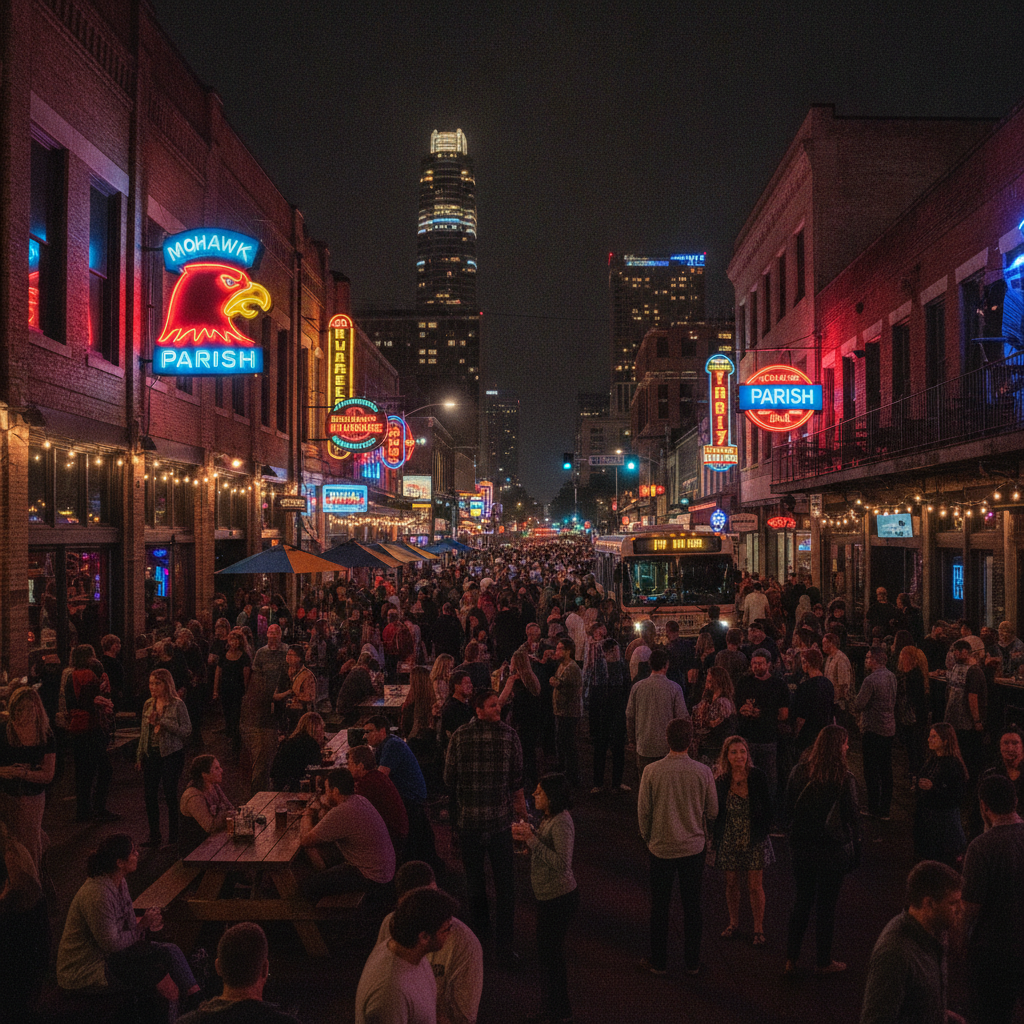
6th Street, Live Music & Austin's Role as the Music Capital of the World
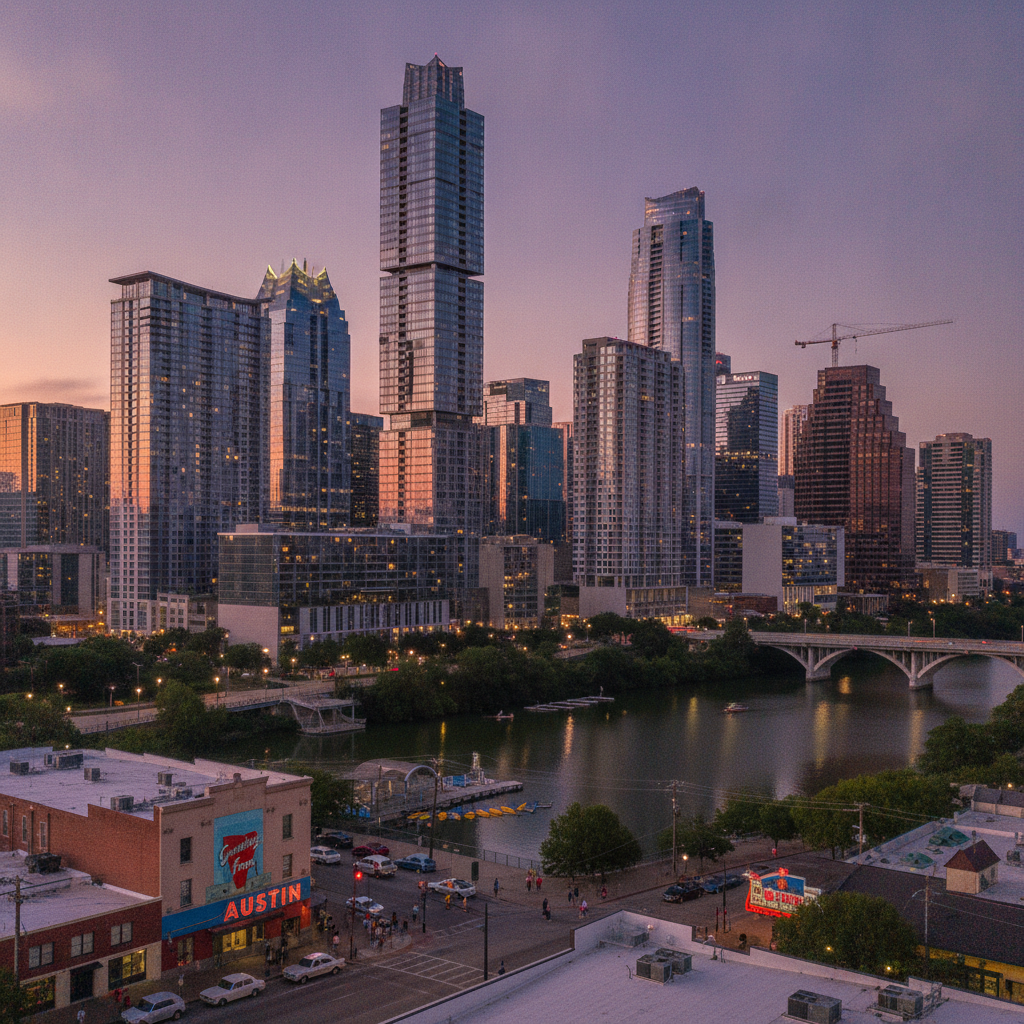
Silicon Hills — Austin's Tech Boom, Innovation & the New Economy
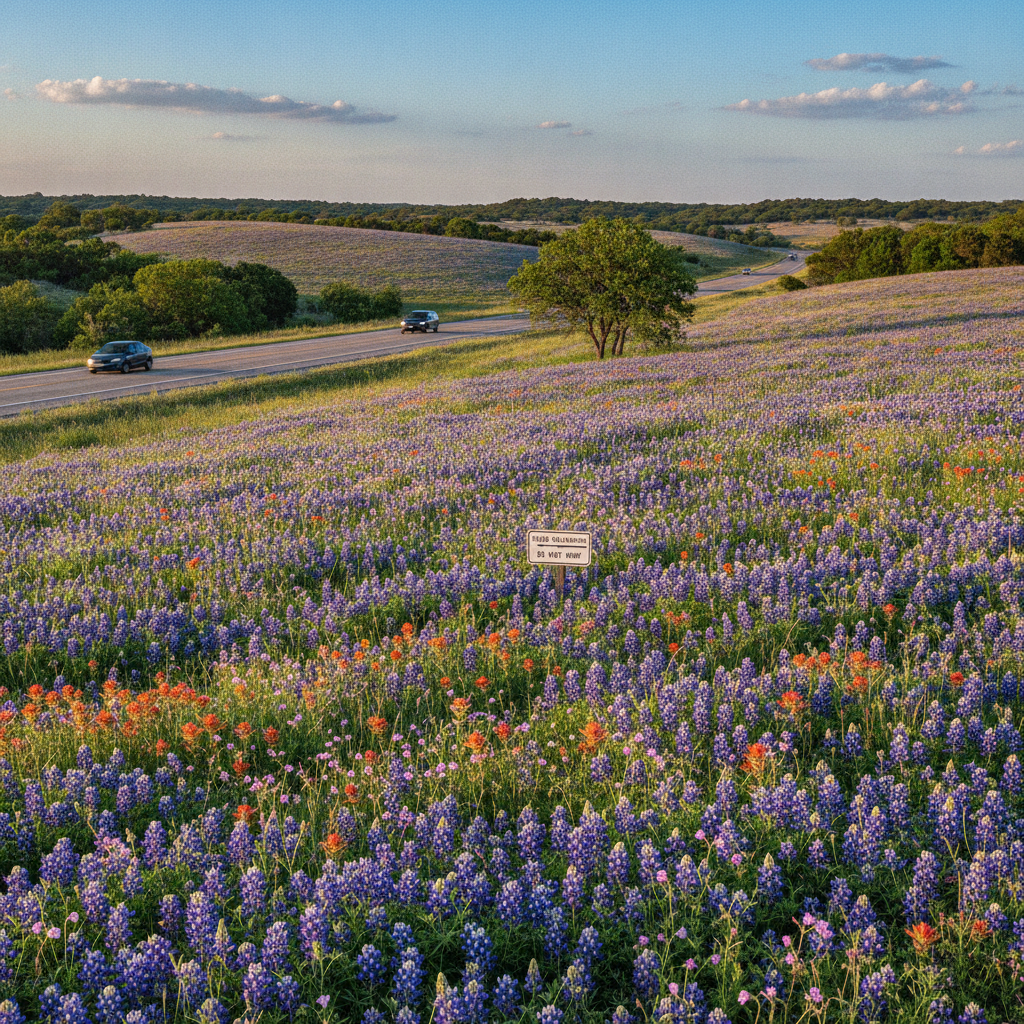
Texas Hill Country — Wineries, Bluebonnets & Weekend Escapes
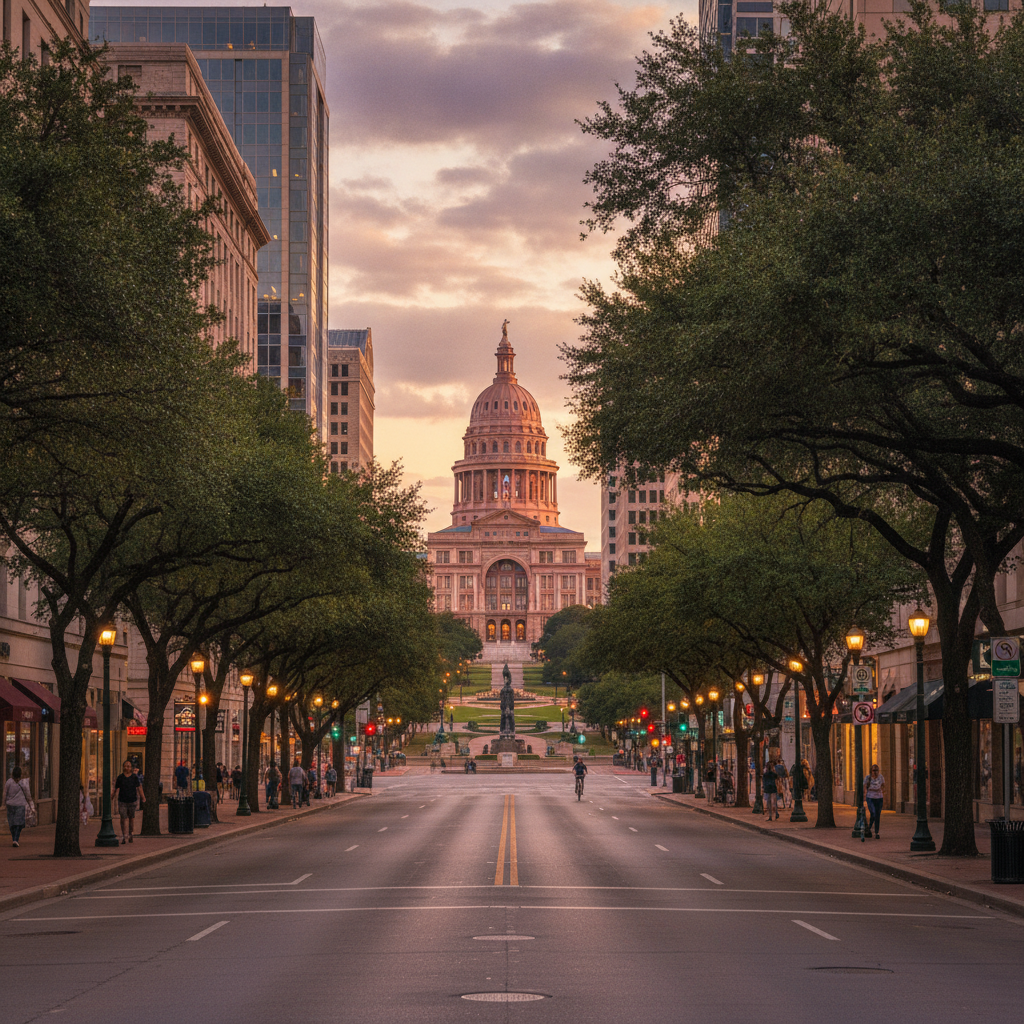
Texas State Capitol, Congress Avenue & Downtown Austin
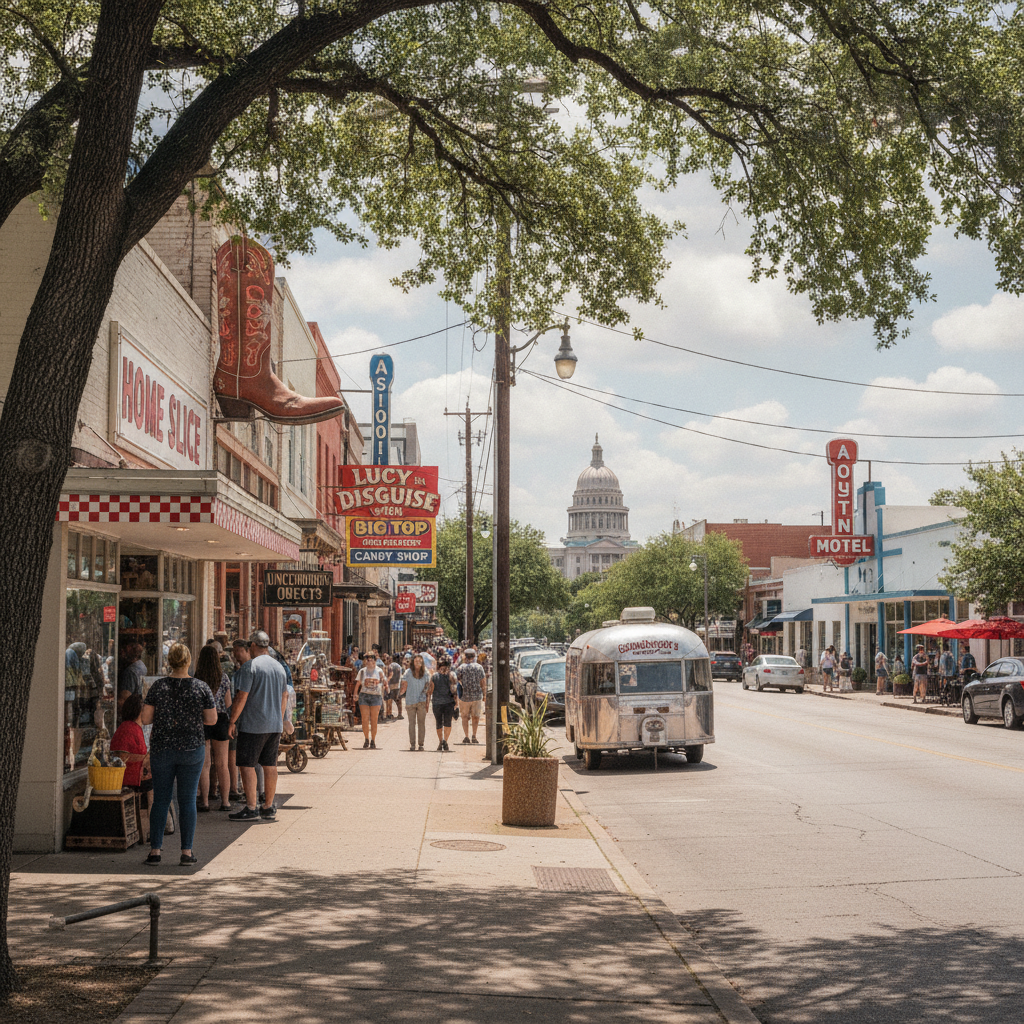
South Congress, SoCo Shopping & Austin's Independent Retail Culture