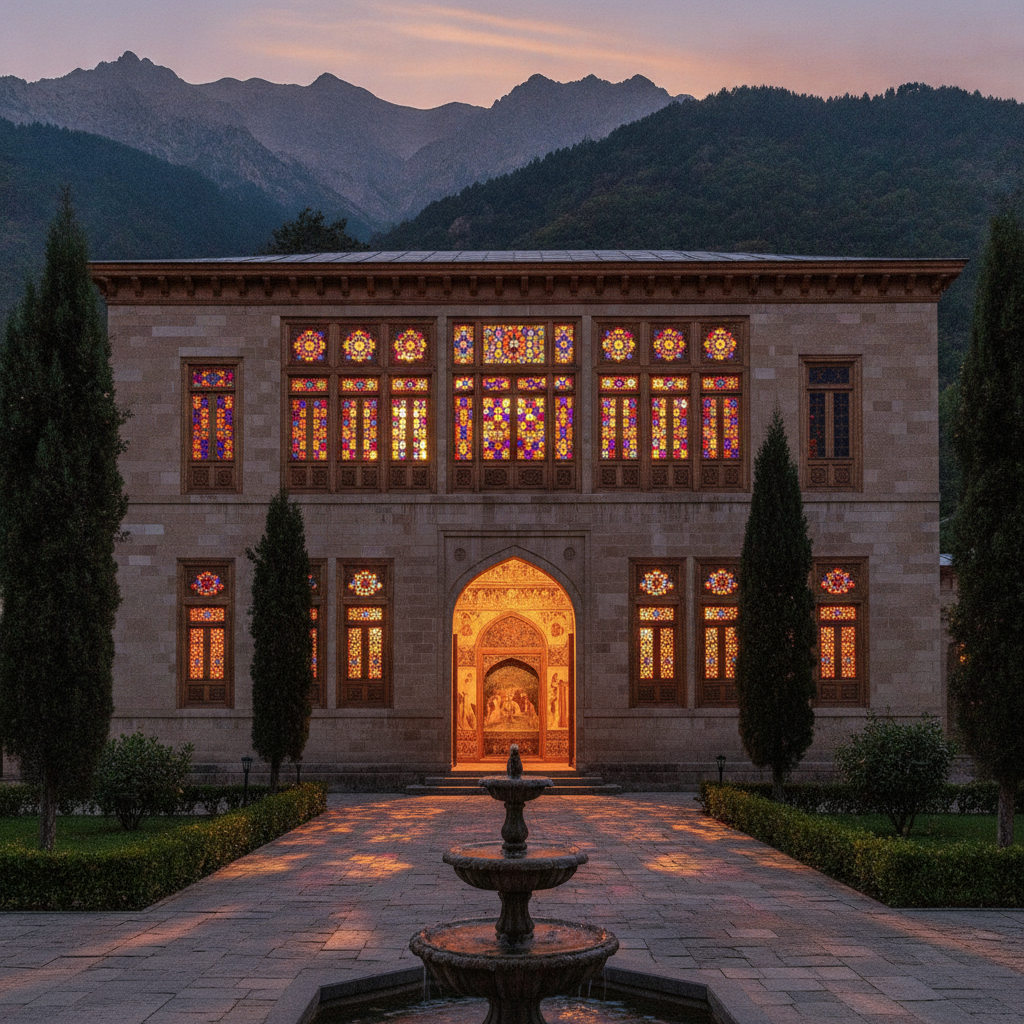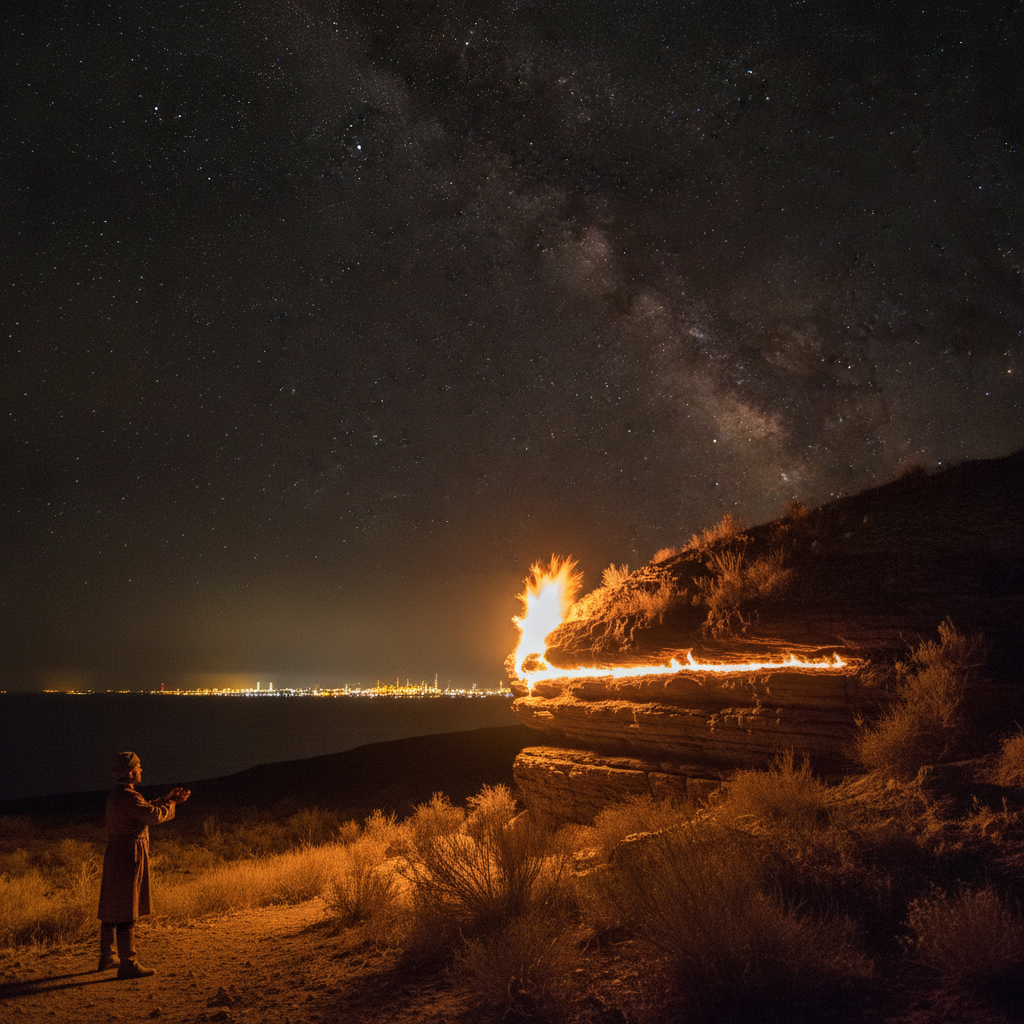
The Yanar Dag Natural Gas Flame That Marco Polo Saw in 1271 Still Burns at 1,000°C, Caspian Seals Down from 1 Million to 100,000 Since 1900, Gobustan's Easternmost Roman Military Inscription & the Dushbara Dumpling Test of 100 per Tablespoon
The Yanar Dag Burning Mountain natural gas seep (described by Marco Polo in 1271) still burning at 1,000°C; the Caspian seal (Pusa caspica) population collapsing from 1 million in 1900 to 100,000 today; the Gobustan rock art 40,000-year sequence including the easternmost Roman Legion inscription in the world (Legio XII Fulminata, 84–96 CE); the dushbara dumpling test of fitting 100 pieces in a single tablespoon; Yarat Contemporary Art Centre founded by Aida Mahmudova; and the 3-day circuit combining Old City, Ateshgah, Gobustan, and Sheki day trip.
- 1
The Absheron Peninsula – Oil Infrastructure & Nature
The Absheron Peninsula oil infrastructure and nature heritage (the extraordinary landscape of the Absheron Peninsula east of Baku — the world's oldest oil-producing region and a UNESCO candidate landscape): the peninsula guide. The oil geography (the Absheron Peninsula is a 60 km limestone promontory extending into the Caspian Sea east of Baku — the peninsula sits atop the largest onshore oil and gas accumulation in the South Caucasus: the oil-bearing strata of the Absheron are Pliocene-age (5–2.6 million years ago) sandstones and siltstones that contain oil at depths of 200m–3,000m: the natural oil seeps (the Absheron natural oil seeps were described by Marco Polo in 1271 who noted the locals collecting oil from surface puddles to burn as lamp fuel and to treat skin conditions in camels: the seeps also produced natural gas fires (the Yanar Dag — the Burning Mountain — a natural gas fire that has burned continuously on the Absheron hillside since at least the 9th century — the current flame is 3m high and 10m wide): the Nobel Brothers (the Nobel Brothers Petroleum Company (Branobel) — founded in Baku in 1879 by Robert and Ludwig Nobel (brothers of Alfred Nobel, the dynamite inventor and founder of the Nobel Prize) — Branobel became the world's largest oil company by 1884, exceeding the Rockefeller Standard Oil Company in production volume).
- 2
The Yanar Dag Burning Mountain & Absheron Nature
The Yanar Dag natural gas fire (the Burning Mountain — the most dramatic natural feature of the Absheron Peninsula and one of the most extraordinary natural gas phenomena on earth): the natural heritage guide. The Yanar Dag (the Yanar Dag (Yanardağ — Burning Mountain) is located 25 km north of central Baku on the Absheron hillside at Mehemmedi village: the fire (the natural gas emerges through a crack in the hillside limestone and has burned at the surface since at least the medieval period: the flame is 3m high, 10m wide, and burns at approximately 1,000°C: the Yanar Dag gas seep is fed by the same Absheron subsurface gas accumulation that once fed the Ateshgah sacred fire — the Yanar Dag seep survived the 19th-century oil drilling pressure decrease that extinguished the Ateshgah because it is located on the hillside rather than the flat peninsula surface: the fire was extinguished briefly by a Azerbaijani farmer in the 1950s who accidentally put it out while burning brush nearby — it was reignited by gas workers shortly after): the Absheron National Park (the Absheron National Park (Abşeron Milli Parkı) at the eastern tip of the peninsula: established in 1969 (as a nature reserve) — the park protects 783 ha of Caspian coastal habitat: the primary wildlife: the Caspian seal (Pusa caspica — the world's smallest seal, endemic to the Caspian Sea — the population has declined from 1 million in 1900 to approximately 100,000 today due to hunting, pollution, and climate change-related habitat loss): the flamingo colonies (the greater flamingo (Phoenicopterus roseus) and lesser flamingo feed on the Absheron salt pans in large flocks (up to 20,000 birds) from March to October).
- 3
Azerbaijani Cuisine – Baku's Best Dishes
The Baku culinary scene (the richest and most internationally celebrated cuisine in the South Caucasus — the Azerbaijani food tradition combines influences from Persian, Turkic nomadic, Russian imperial, and Mediterranean culinary traditions): the comprehensive Baku food guide. The signature dishes (the primary dishes of Azerbaijani cuisine: Plov (the rice pilaf — the pilaf (plov) is the prestige dish of Azerbaijani cuisine: the Azerbaijani plov is distinguished from other Central Asian pilafs by the gazmag — the crispy rice crust formed by clarified butter and rice soaking in the bottom of the kazan copper pot: the Azerbaijani plov is served with a separate side of dried fruits and nuts (the kuru meyve garnituri) including dried apricots, prunes, cherries, and raisins): Dolma (the stuffed grape leaf dish — the Azerbaijani dolma (yarpaq dolması — stuffed vine leaf) is distinguished by the use of freshly picked young vine leaves (not preserved in brine as in Turkish and Greek cuisine): the filling is a mixture of ground lamb, rice, fresh herbs (mint, cilantro, basil), and dried barberries (turş gilə)): Dushbara (the tiny dumpling soup — the Azerbaijani dushbara are the smallest dumplings in the Turkic world — approximately the size of a thumbnail: the test of a skilled Azerbaijani cook is the ability to fit 100 dushbara in a single tablespoon): Lavangi (the stuffed chicken or fish dish from the Lenkoran region): the Taza Bazaar (Azerbaijani: the Fresh Bazaar — the primary food market of Baku for fresh produce, dried fruits, and spices): the best restaurant district (the Icherisheher Old City contains the highest concentration of traditional Azerbaijani restaurants in Baku).
- 4
Baku's Nighlife & Contemporary Art Scene
The Baku contemporary cultural scene (the rapidly evolving contemporary art and nightlife culture of Baku — Azerbaijan's post-oil cultural transformation): the contemporary culture guide. The Yarat Contemporary Art Centre (the Yarat (Yaradıcılıq — Creation in Azerbaijani) Contemporary Art Centre on the Baku waterfront — the primary contemporary art institution in Azerbaijan: founded in 2011 by Aida Mahmudova (a British-Azerbaijani artist and the daughter of a former Azerbaijani presidential chief of staff): the Yarat Centre presents international and Azerbaijani contemporary art exhibitions with a focus on Azerbaijani artists in the international context: the centre has presented exhibitions by Tino Sehgal, Hiroshi Sugimoto, and other internationally recognized artists alongside Azerbaijani contemporary artists): the Baku nightlife (the nightlife district centers on the Fountain Square (Fəvvarələr meydanı) area and the surrounding streets — the area is active until 03:00 on weekends: the primary venue types: the traditional teahouse (çayxana — the primary social space for traditional Azerbaijani male socializing — the teahouse serves tea in armud glasses (the pear-shaped glass characteristic of the Caucasus), the black tea from the Lankaran tea-growing region, sweets and dried fruits): the Wine Culture (though Azerbaijan is a Muslim-majority country, alcohol consumption in Baku restaurants and bars is widespread and unremarkable — the local wine industry (centered on the Shamakhi and Gabala regions) has been revived since independence with 15 licensed wineries): the Baku Jazz Center (the primary jazz venue — the Baku Jazz Center at Nizami 91 hosts regular jazz performances Thursday–Saturday).
- 5
The Caucasus Albania – Azerbaijan's Pre-Islamic Heritage
The Caucasian Albania heritage (the pre-Islamic kingdom of Caucasian Albania (not related to the European Albania) — the most obscure and contested ancient heritage of Azerbaijan): the ancient heritage guide. The Caucasian Albania (the Kingdom of Caucasian Albania (Aghvank in Armenian, Alban in Azerbaijani) — an ancient Caucasian kingdom that occupied the territory of modern Azerbaijan and southern Dagestan from approximately 200 BCE to 800 CE: the Albanians (the Caucasian Albanians were a distinct ethnic group unrelated to the Illyrian Albanians of Europe — the Albanian language was a Northeast Caucasian language related to the modern Lezgian and Udi languages: the Albanian script (the Caucasian Albanian alphabet — one of the world's forgotten writing systems — the script was completely unknown until the 1930s discovery of a manuscript at Saint Catherine's Monastery in Sinai: the Azerbaijani historical interpretation claims that the modern Azerbaijani Turkic population descends partially from the Christianized Caucasian Albanians): the Gobustan rock art (the Gobustan State Reserve (Qobustan Dövlət Qoruğu) 60 km southwest of Baku — the most significant rock art site in the South Caucasus: 6,000 rock engravings on 537 rocks representing human figures, animals (bull, deer, horse, snake, bird), boats, and ritual dance scenes spanning 40,000 years of human habitation: the Gobustan inscription (a Roman military inscription from 84–96 CE identifying a unit of the Legio XII Fulminata (the 12th Roman Legion) stationed at Baku — the easternmost known Roman military inscription in the world): UNESCO World Heritage status 2007).
- 6
Baku 3-Day Itinerary – The Complete Circuit
The comprehensive Baku 3-day itinerary (the optimal sequence for exploring Baku's Old City, modern architecture, natural heritage, and day trip options within 72 hours): the complete Baku circuit. Day 1 (the Old City focus day): morning (09:00 Icherisheher Old City entry through the eastern Double Gates — the morning light is ideal for photographing the Maiden Tower (Qız Qalası) from the Old City square: 09:30 Shirvanshah Palace Museum (the required 60-minute tour of the 15th-century palace complex): 11:00 Multani and Bukharan Caravanserais walking tour: 12:30 lunch at the Old City Caravanserai restaurant): afternoon (14:00 Flame Towers viewpoint from the funicualr (Baku Funicular) on Neftçilər Avenue: 15:00 Heydar Aliyev Center (Zaha Hadid building — allow 90 minutes for the museum and building exterior): 17:30 Azerbaijani Carpet Museum): evening (19:30 Boulevard walk to the Baku Eye Ferris Wheel: 21:00 dinner at a traditional Azerbaijani restaurant in the Old City). Day 2 (Ateshgah and Gobustan): 09:00 taxi to Ateshgah fire temple (30 km, 45 min): 11:00 Gobustan rock art reserve (45 km from Ateshgah, 1 hour): 14:00 return to Baku: afternoon: Azerbaijan Museum of History. Day 3 (Sheki or Quba): the day trip options: Sheki (270 km, 3-hour drive — the Khan's Palace and historic caravanserai are the primary targets — best done with a private driver or organized tour: AZN 80–120 for a private driver round trip from Baku): Quba (170 km north — the mountain town and its adjacent Red Town (the only rural Jewish settlement in the former Soviet Union still operating as a self-contained Jewish village).
Walk this route with audio
Stories play automatically as you reach each stop — no tapping needed.
More in Baku
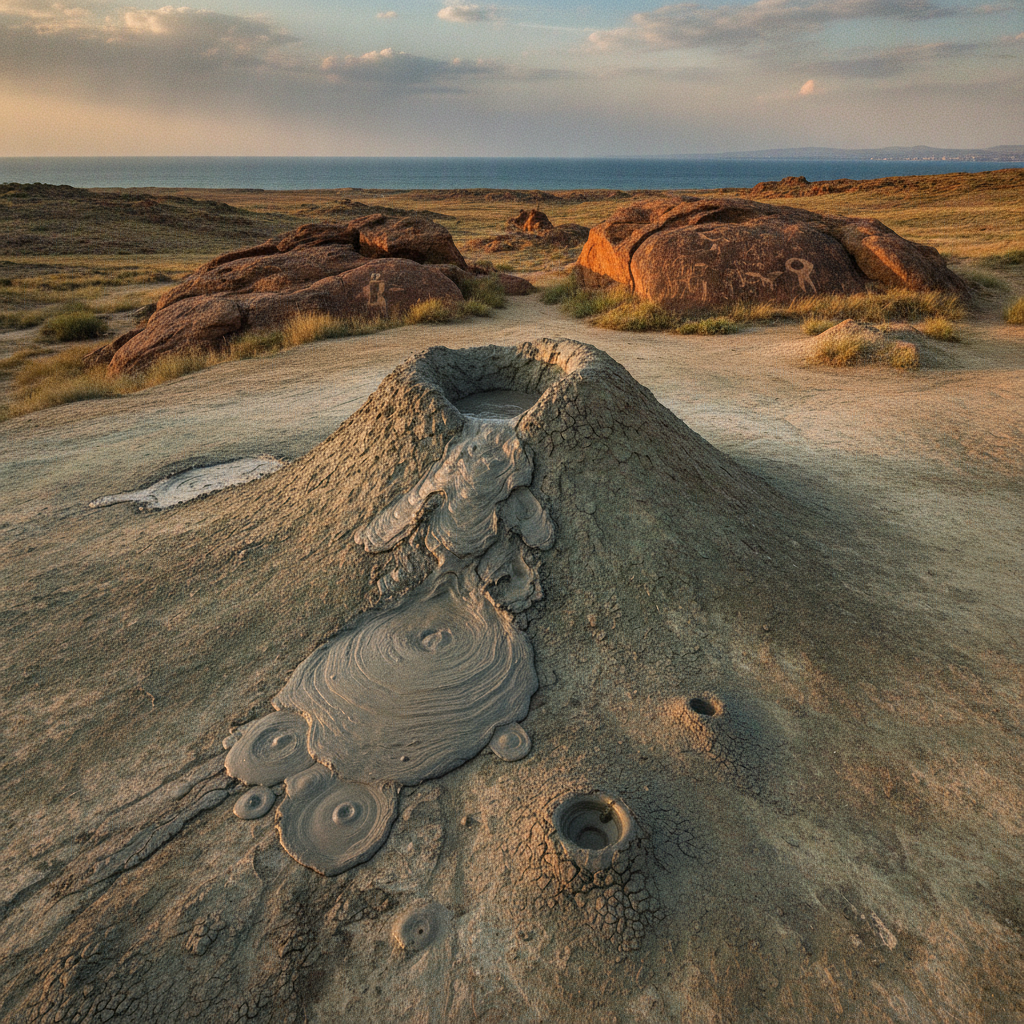
Baku Day Trips: Gobustan Rock Art, the Mud Volcanoes, the Caspian Sea, and the Most Geologically Unique Single Azerbaijan Excursion Circuit
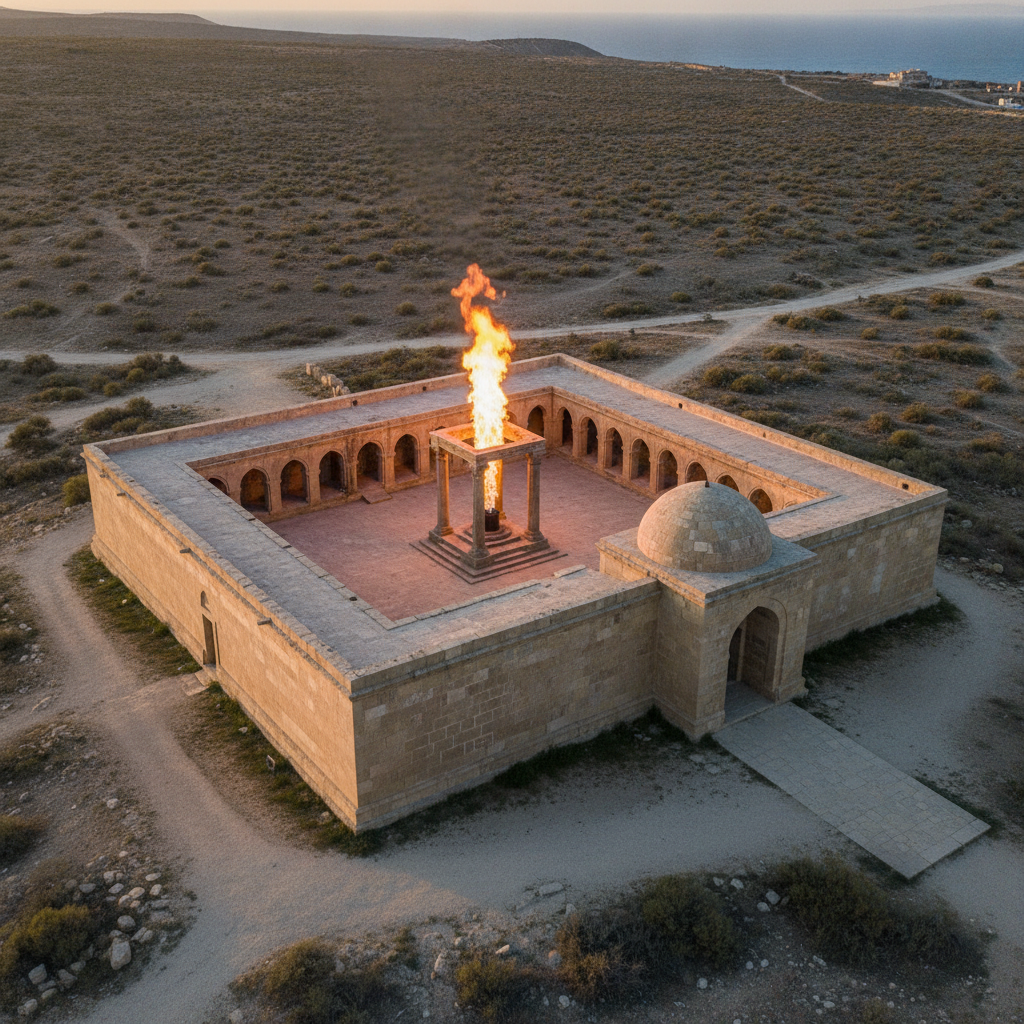
The Ateshgah Sacred Flame Extinguished by the 1880s Oil Drilling That Lowered Absheron Gas Pressure, the Mugham Zarb Upper Register as the Most Demanding Technical Feat in Azerbaijani Singing & the 2020 Bayraktar TB2 Drones That Reversed the 1994 Karabakh Ceasefire Line
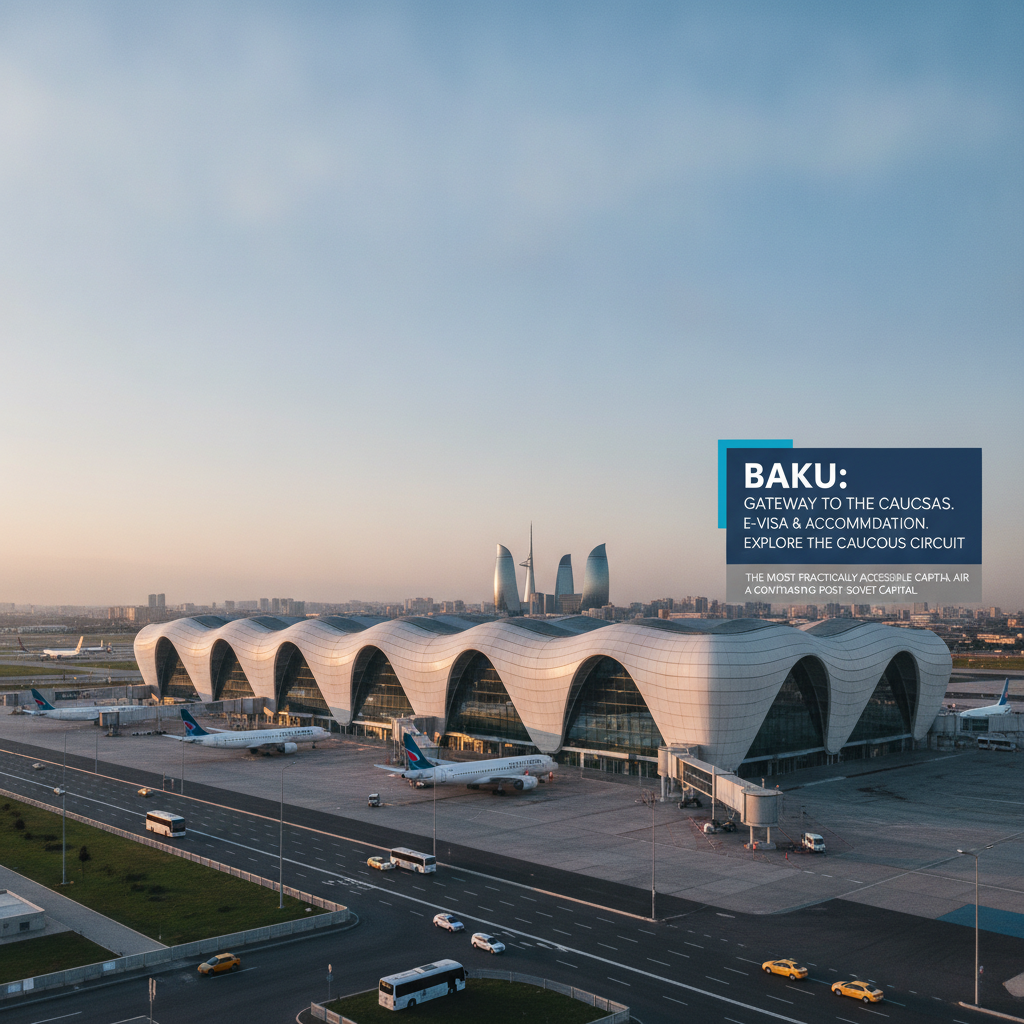
Baku Practical: Getting There, the e-Visa, Accommodation, the Caucasus Circuit, and the Azerbaijan Visitor Framework
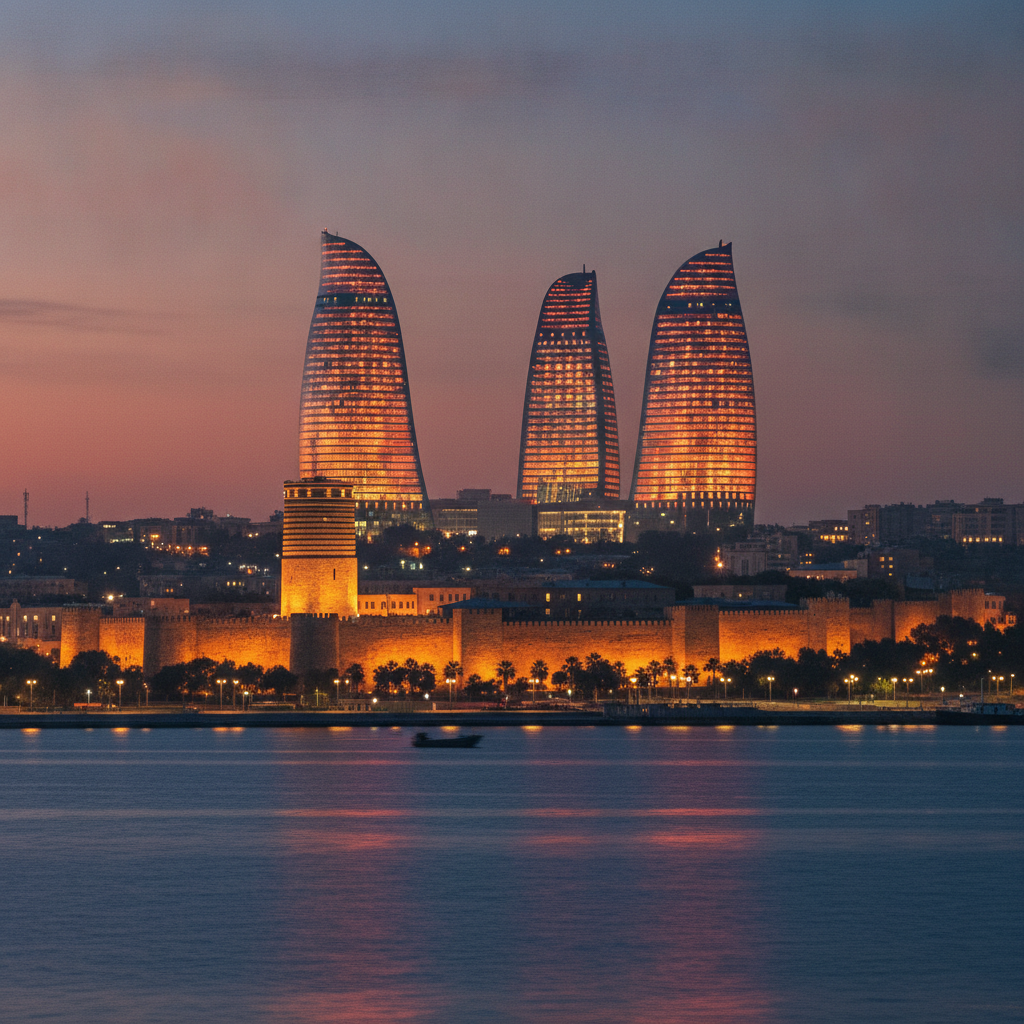
Baku Essential: The Old City, Flame Towers, the Caspian Boulevard, the Maiden Tower, and the Most Dramatically Contrasting Single Post-Soviet Capital
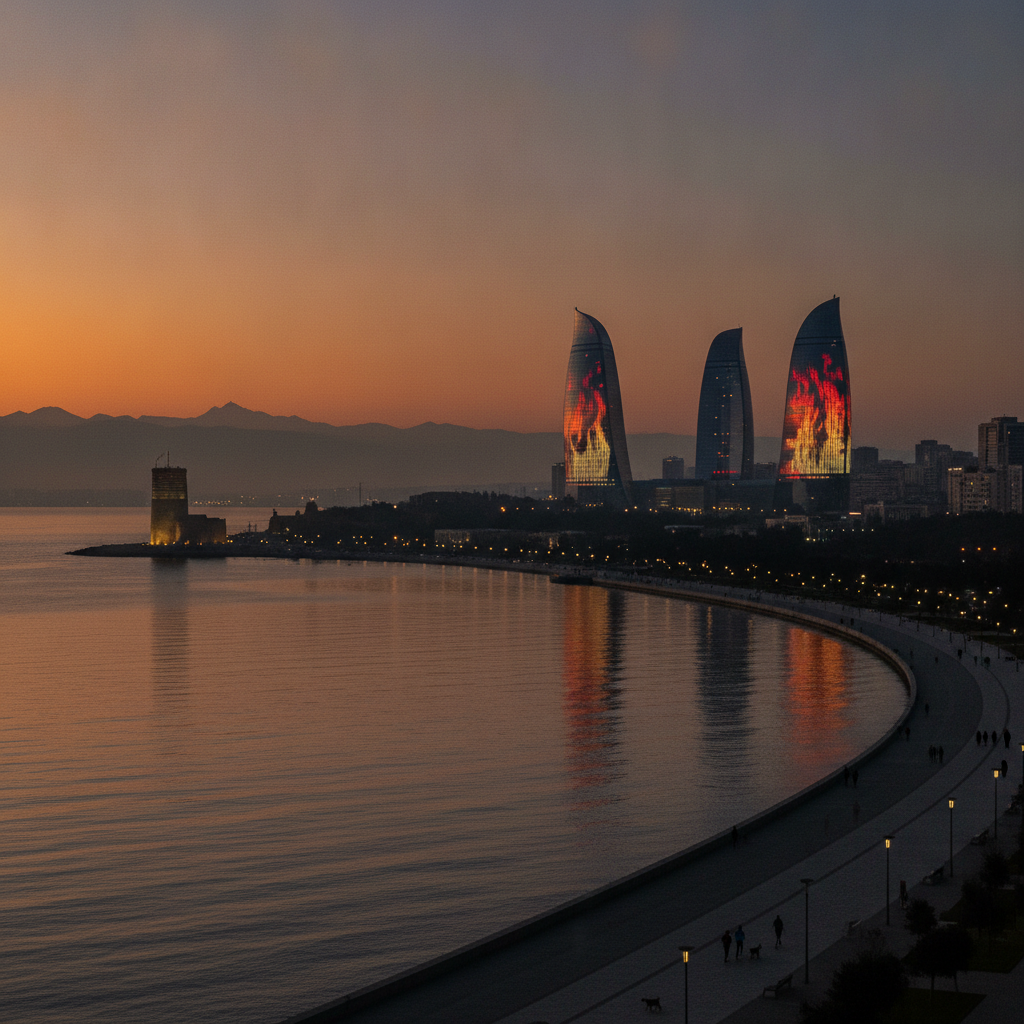
The Baku-Tbilisi-Ceyhan Pipeline Routed to Bypass Both Russia and Iran, Baku's 30,000-40,000 Jewish Residents as the Largest Jewish Community in Any Majority-Muslim City, and the Azerbaijan Tower Planned at 1,050m to Have Been the World's Tallest Building