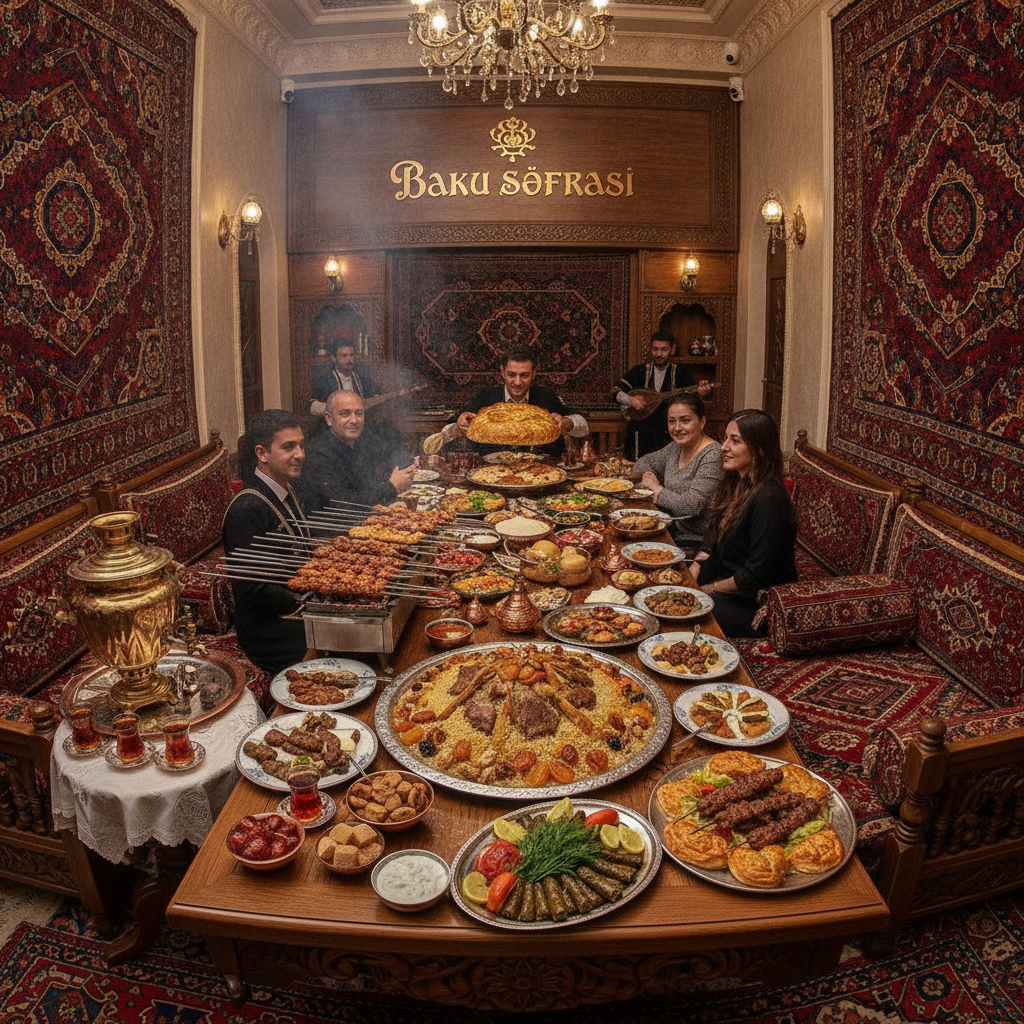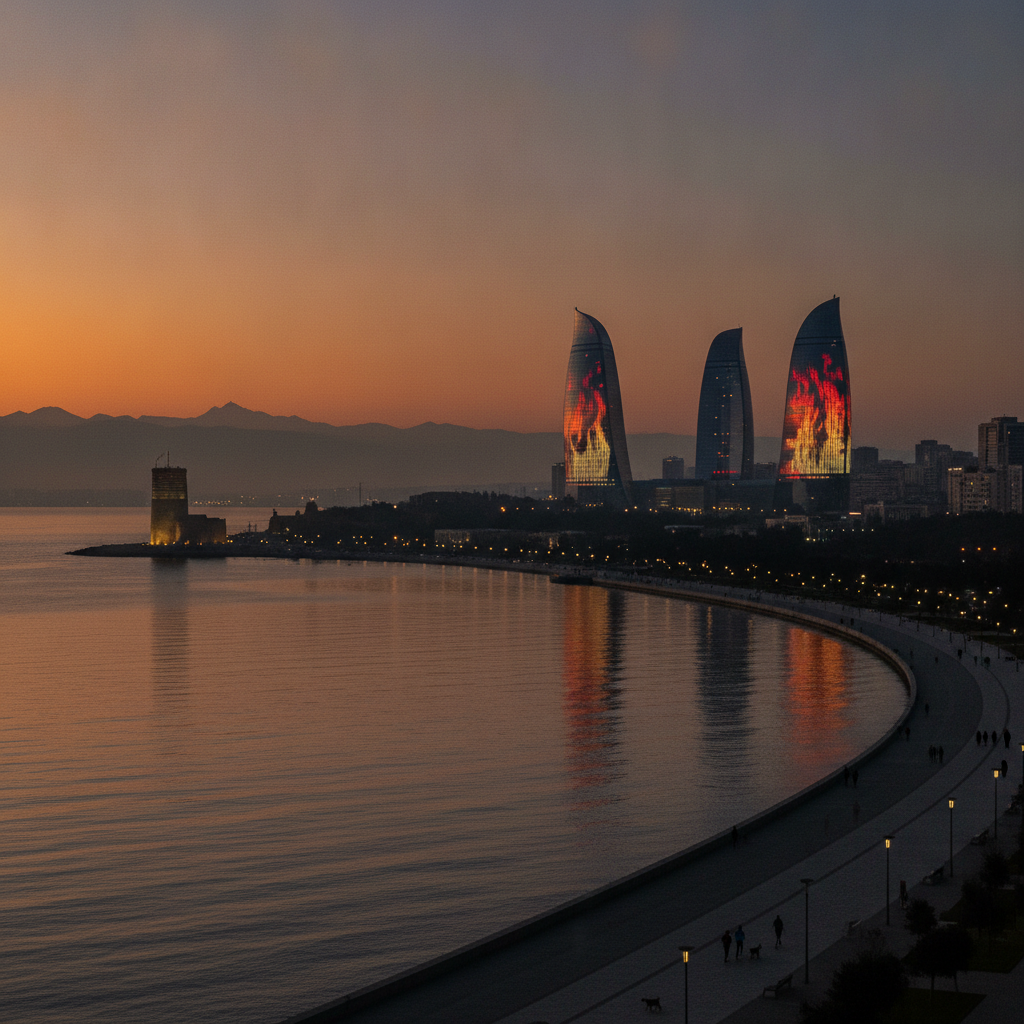
The Baku-Tbilisi-Ceyhan Pipeline Routed to Bypass Both Russia and Iran, Baku's 30,000-40,000 Jewish Residents as the Largest Jewish Community in Any Majority-Muslim City, and the Azerbaijan Tower Planned at 1,050m to Have Been the World's Tallest Building
The BTC pipeline (1,768 km, USD 3.9 billion, capacity 1.2 million barrels/day) specifically routed to bypass both Russia and Iran; Baku hosting the world's largest Jewish community in any majority-Muslim city (30,000–40,000 residents); the Mountain Jews' Judeo-Tat language (a Persian-derived language written in Hebrew script with Caucasian roots since at least the 5th century CE); the Azerbaijan Tower planned at 1,050m to surpass the Burj Khalifa; Baku hosting Eurovision 2012, European Games 2015, Formula 1 since 2016, and COP29 in 2024; and the September 2023 operation dissolving the Republic of Artsakh in 24 hours.
- 1
Baku vs Tbilisi vs Yerevan – South Caucasus City Comparison
The South Caucasus cities comparison (the comparative guide to the three capital cities of the South Caucasus — Baku (Azerbaijan), Tbilisi (Georgia), and Yerevan (Armenia) — the most practical travel decision framework for the region): the comparative city guide. The cost comparison (the relative cost of travel in the three capitals: Baku is the most expensive of the three South Caucasus capitals for visitors due to: the oil-economy pricing (Baku hotel and restaurant prices are calibrated to the oil industry expense-account traveler rather than the budget backpacker); the relatively underdeveloped budget hospitality infrastructure; the requirement to exchange AZN currency (ATM availability for international cards is lower than in Tbilisi): Tbilisi is the least expensive of the three capitals and has the most developed budget travel infrastructure: Yerevan falls in between — somewhat more expensive than Tbilisi but significantly cheaper than Baku): the architectural comparison (Baku has the most dramatic modern architecture of the three (Flame Towers, Heydar Aliyev Center, Crystal Hall) but the least authentic historic urban fabric — the Icherisheher Old City is the primary medieval remnant: Tbilisi has the most atmospheric and continuous historic urban fabric — the Kura gorge townscape with its carved wooden balconies is the most photogenic cityscape in the South Caucasus: Yerevan has the most homogeneous urban fabric — the pink tufa stone architecture of Tamanyan's 1924 master plan gives Yerevan a distinctive unified appearance): the cuisine comparison (Georgian cuisine is the most internationally celebrated: Azerbaijani cuisine is the most refined and complex: Armenian cuisine is the most influenced by the diaspora).
- 2
The Baku-Tbilisi-Ceyhan Pipeline – Oil Geopolitics
The Baku-Tbilisi-Ceyhan (BTC) pipeline geopolitics (the most geopolitically significant infrastructure project in the post-Soviet space — the oil pipeline that bypassed Russia and Iran to connect Caspian oil to Mediterranean markets): the geopolitics guide. The BTC pipeline (the Baku-Tbilisi-Ceyhan Main Export Pipeline (BTC) — the 1,768 km pipeline that runs from the Sangachal terminal south of Baku through Georgia to the Ceyhan Marine Terminal on the Turkish Mediterranean coast: the pipeline was built by a consortium led by BP (which holds a 30.1% stake) and includes SOCAR (25%), Chevron (8.9%), and other oil companies: the pipeline capacity is 1.2 million barrels per day — it carries the production of the Azerbaijan-Chirag-Guneshli (ACG) offshore oil field: the geopolitical significance (the BTC was specifically routed to bypass both Russia and Iran — the primary alternative routes were: (a) the northern route through Russia (the Baku-Novorossiysk pipeline) — rejected because it would give Russia leverage over Azerbaijani export income; (b) the southern route through Iran to the Persian Gulf — rejected by the US government which was enforcing Iran sanctions: the construction (the pipeline was completed in 2006 at a cost of USD 3.9 billion — the construction through the Georgian Caucasus mountains required the longest tunnel boring operation in pipeline history): the Shah Deniz gas pipeline (the parallel South Caucasus Pipeline (SCP) carries natural gas from the Shah Deniz field through the same Baku-Tbilisi corridor to Turkey — the extension (TAP and TANAP) now supplies natural gas to Italy via the Trans-Adriatic Pipeline).
- 3
Baku's Jewish Community – Mountain Jews & Ashkenazim
The Baku Jewish heritage (the extraordinary Jewish community of Baku and Azerbaijan — one of the oldest Jewish communities in the world and the primary Jewish community of the South Caucasus): the Jewish heritage guide. The Mountain Jews (the Mountain Jews (Juhuro — the self-designation of the Judeo-Tat-speaking Jewish community of the eastern Caucasus): the Mountain Jews are one of the oldest Jewish diaspora communities in the world — their presence in the eastern Caucasus (modern Azerbaijan and Dagestan) dates to at least the 5th century CE, possibly earlier: the Judeo-Tat language (the Mountain Jewish language — a Persian-derived language written in Hebrew script — one of the Jewish diaspora languages in the Iranian language group, related to the Tat language spoken by non-Jewish Caucasian Tat people: the community (the Mountain Jewish community of Azerbaijan numbers approximately 10,000–12,000 people — the largest concentrations are in Baku, Quba (where the Red Town (Qırmızı Qəsəbə) is the largest rural Jewish settlement in the former Soviet Union still operating as a self-contained Jewish community), and Oghuz): the Baku Jewish organizations (the Baku Mountain Jewish community operates the Or Avner Chabad synagogue and the Mountain Jewish synagogue on Moshe Mordechai Street in central Baku): the Ashkenazi Jews (the Ashkenazi Jewish community arrived in Baku with the Russian Empire (post-1806) and grew significantly during the oil boom period (1880–1914) — the Ashkenazi community operated the Baku Jewish gymnasium and multiple cultural organizations): the contemporary community (Baku has the largest Jewish community of any majority-Muslim city in the world — estimated 30,000–40,000 Jewish residents).
- 4
The Lachin Corridor & Karabakh After 2023
The post-2023 Karabakh situation (the aftermath of the September 2023 Azerbaijani military operation that restored full Azerbaijani sovereignty over Nagorno-Karabakh): the contemporary political situation. The September 2023 operation (the 24-hour Azerbaijani military operation of September 19, 2023 (called the Anti-Terrorist Measures operation by Azerbaijan) resulted in the dissolution of the Republic of Artsakh (the Armenian self-proclaimed republic in Nagorno-Karabakh) and the departure of virtually the entire ethnic Armenian population of Karabakh (approximately 100,000 people) to Armenia within 72 hours of the ceasefire: the Lachin Corridor (the Lachin Corridor — the 5 km-wide road corridor through Azerbaijani territory connecting Armenia to Nagorno-Karabakh — was the primary lifeline for the Karabakh Armenian population from 1994 to 2023: Azerbaijan blocked the corridor in December 2022 (citing security concerns) causing a humanitarian crisis in Karabakh: the Azerbaijani position (Azerbaijan considers the Karabakh issue resolved — the territory has been re-integrated into the Azerbaijani administrative system with the establishment of the new East Zangezur and Karabakh economic zones: the reconstruction (Azerbaijan announced a USD 3 billion reconstruction program for the formerly occupied territories — the cities of Shusha (the primary cultural heritage site), Aghdam, and Fuzuli are being rebuilt): the Armenian-Azerbaijani peace process (the two countries have been engaged in a peace treaty negotiation since 2022 — as of 2025 the peace treaty has not been signed but both sides have expressed commitment to a diplomatic resolution).
- 5
Baku's Modern Districts – White City & Khazar Islands
The contemporary Baku urban development projects (the most ambitious urban transformation projects in the post-Soviet South Caucasus): the modern development guide. The White City (the Ağ Şəhər (White City) development project — the Baku urban regeneration project covering 221 ha of former industrial land immediately east of the central Baku districts: the site was formerly the primary industrial zone of Soviet Baku (oil storage, refining infrastructure, and railway yards) — the soil contamination from a century of oil industry required a full soil remediation before construction: the White City master plan (the master plan was designed by the German architecture firm Atkins Group in 2010 — the plan envisions 14 urban quarters with mixed residential, commercial, and cultural uses targeting 50,000–100,000 residents: construction began in 2012 with completion projected for 2030: the primary completed element is the Crystal Hall arena (built for Eurovision 2012 — the largest entertainment arena in the Caucasus with 22,000 capacity)): the Khazar Islands (the Khazar Islands project (Xəzər Adaları) — the most ambitious real estate project in the Caspian Sea: the plan envisions constructing 41 artificial islands in the Caspian Sea south of Baku using dredged Caspian sea-bed material: the primary landmark of the project is the Azerbaijan Tower — a planned 1,050m supertall skyscraper that would have been the tallest building in the world if completed: the project (begun 2011) has been significantly delayed due to the 2014 oil price collapse and Caspian Sea level fluctuations that complicated the offshore construction — construction is currently partially suspended).
- 6
Baku Then & Now – A Timeline from 2000 BCE to 2025
The complete Baku historical timeline (the comprehensive chronological history of Baku from prehistoric settlement through the present): the historical timeline. The ancient period (the Absheron Peninsula has been continuously inhabited since at least 2000 BCE — the Gobustan rock art (UNESCO 2007) includes human figures and boat carvings from approximately 10,000 BCE (Upper Paleolithic): 9th century CE (the first written references to Baku appear in the 9th-century Arabic geographers — the Persian name Badu-kube (City of Winds) appears in the records of the Arab traveler Masudi (943 CE) referring to the strong winds from the north (khazri) that characterize the Absheron Peninsula): 1191 (the Shirvanshah ruler Akhsitan I builds the Maiden Tower and the first defensive walls of the Icherisheher (Inner City): 1501 (the Safavid conquest of Azerbaijan — Shah Ismail I (the founder of the Safavid dynasty and a speaker of Azerbaijani Turkic) conquers Baku and makes Shemakha the Safavid provincial capital): 1806 (the Russian Empire annexes the Baku Khanate after the Battle of Baku): 1846 (the world's first modern oil well is drilled on the Absheron Peninsula by the Russian engineer Semyonov): 1872 (the Russian government sells the Absheron oil-field concessions at public auction — the first oil boom begins): 1906 (the first-ever Middle East labor strike (the Baku General Strike of 1904–1906) organized by Joseph Stalin (then a young Bolshevik organizer based in Baku): 1918 (the Azerbaijan Democratic Republic declared in Baku — the first parliamentary democracy in the Muslim world): 1920 (Soviet annexation): 1991 (independence restored): 2012 (Eurovision Song Contest hosted in Baku): 2015 (first European Games hosted in Baku): 2024 (COP29 climate summit hosted in Baku).
Walk this route with audio
Stories play automatically as you reach each stop — no tapping needed.
More in Baku
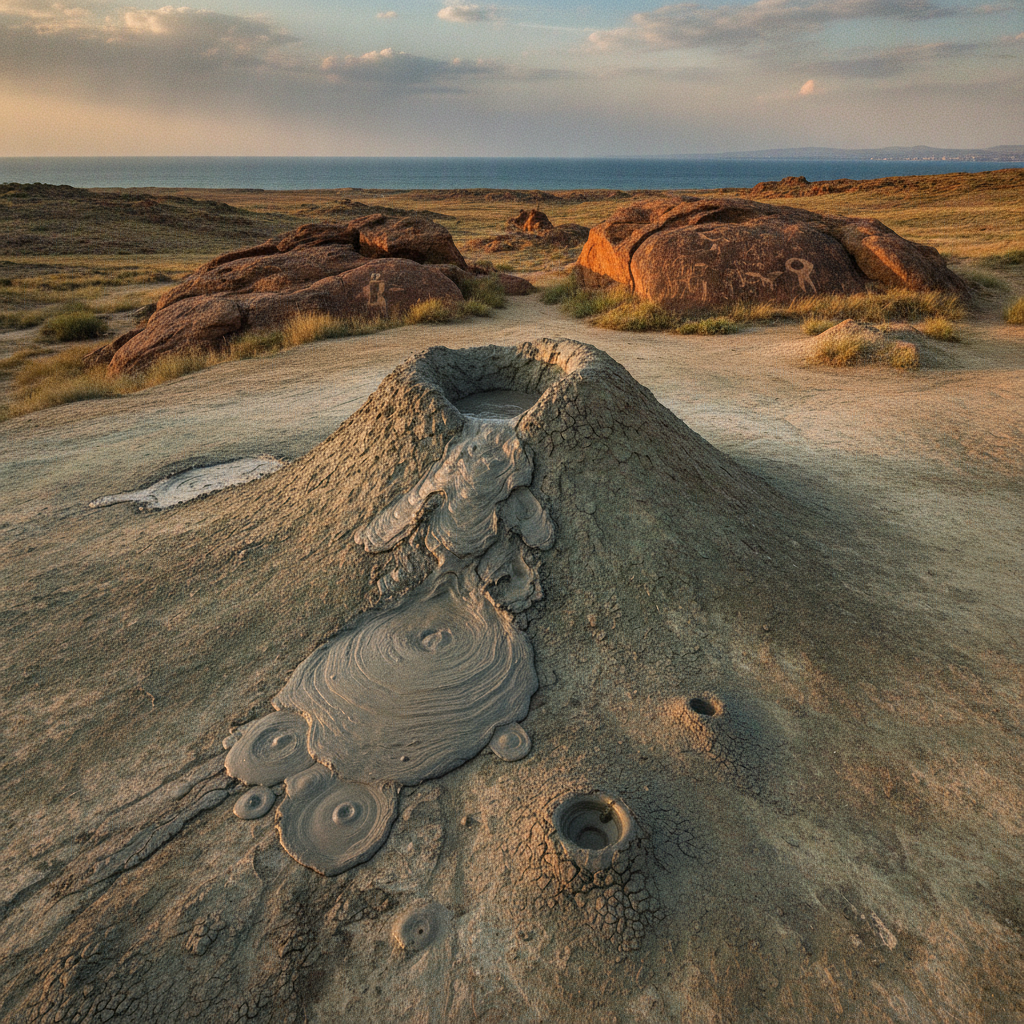
Baku Day Trips: Gobustan Rock Art, the Mud Volcanoes, the Caspian Sea, and the Most Geologically Unique Single Azerbaijan Excursion Circuit
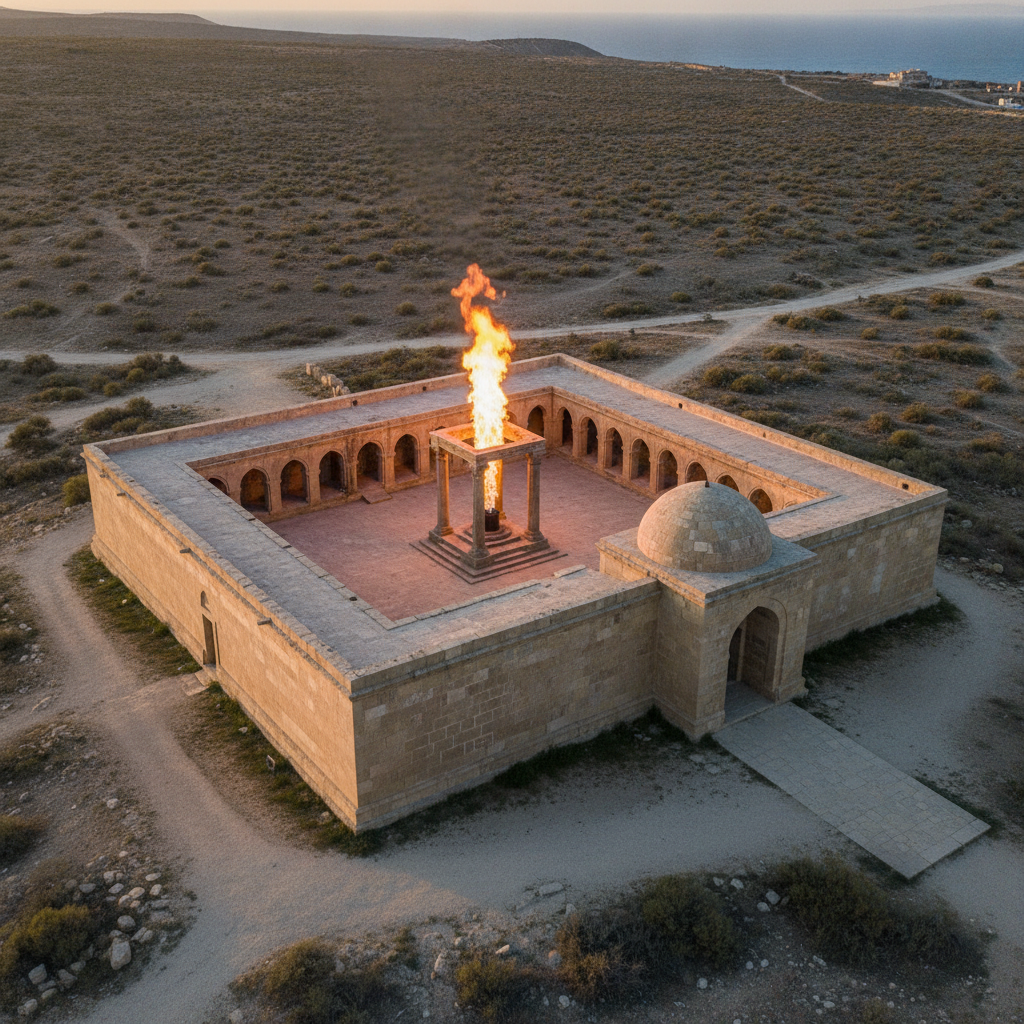
The Ateshgah Sacred Flame Extinguished by the 1880s Oil Drilling That Lowered Absheron Gas Pressure, the Mugham Zarb Upper Register as the Most Demanding Technical Feat in Azerbaijani Singing & the 2020 Bayraktar TB2 Drones That Reversed the 1994 Karabakh Ceasefire Line
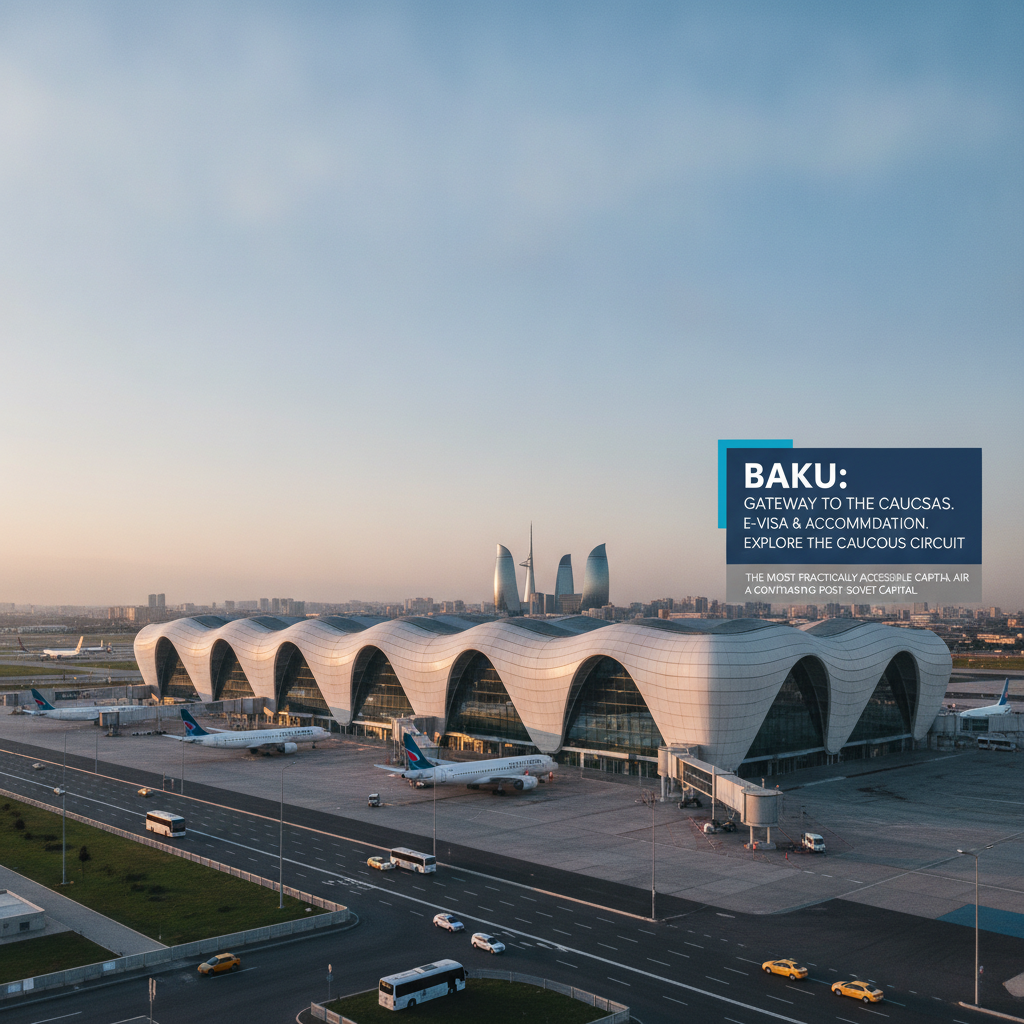
Baku Practical: Getting There, the e-Visa, Accommodation, the Caucasus Circuit, and the Azerbaijan Visitor Framework
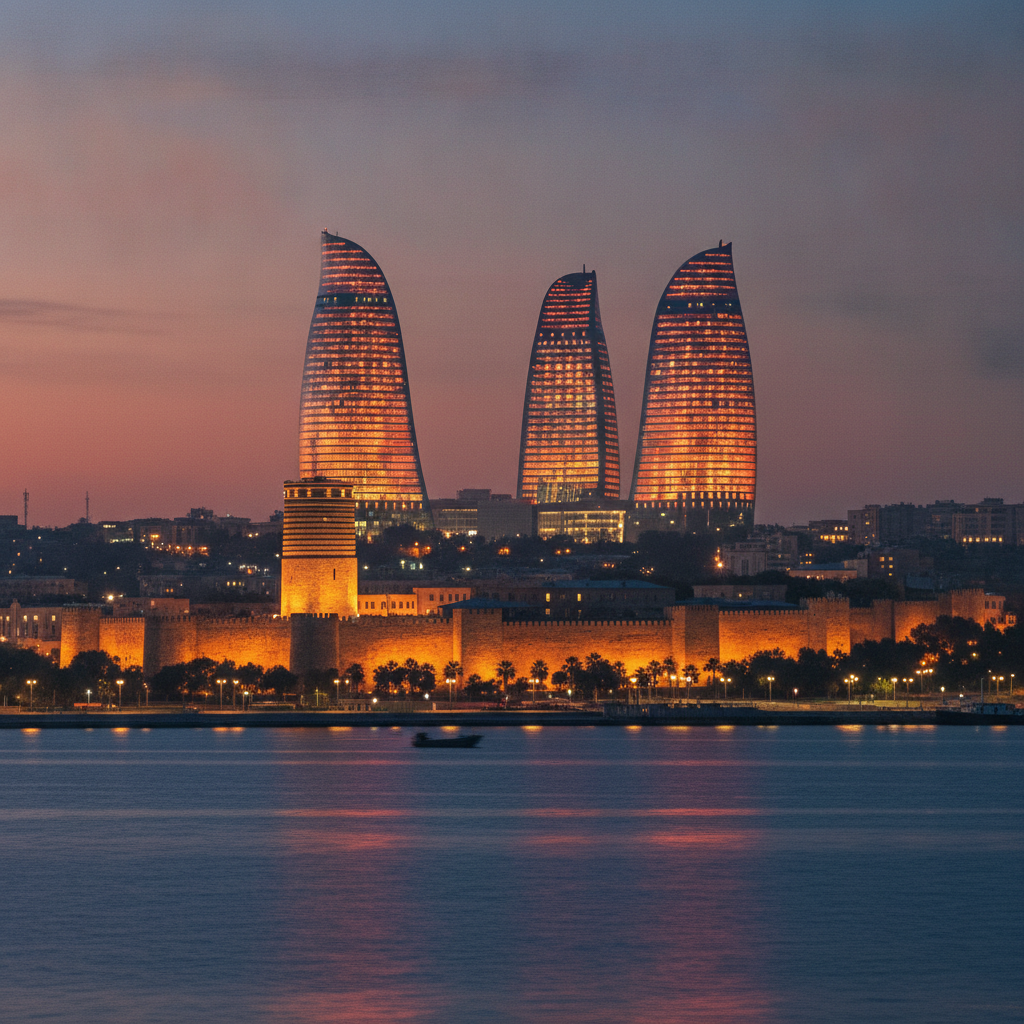
Baku Essential: The Old City, Flame Towers, the Caspian Boulevard, the Maiden Tower, and the Most Dramatically Contrasting Single Post-Soviet Capital
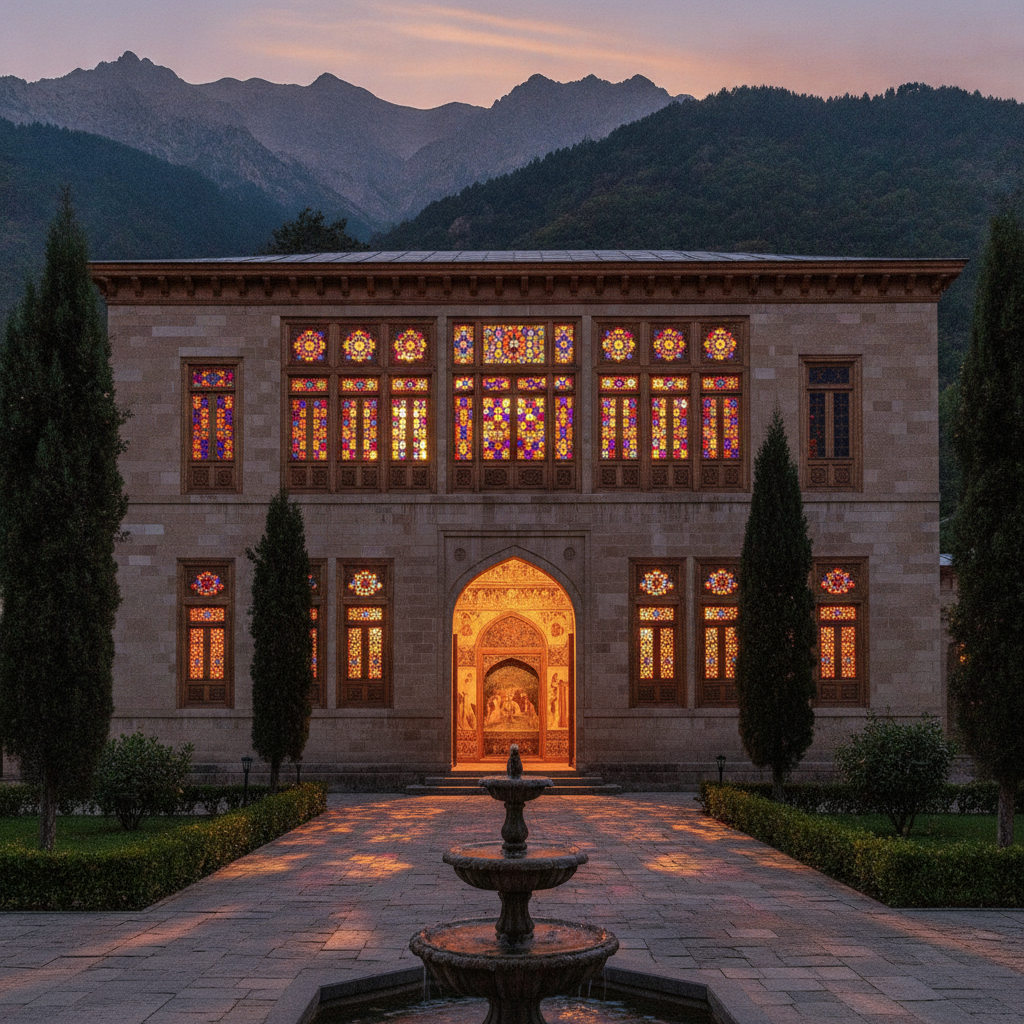
The Sheki Khan's Palace Shebeke Stained Glass Fitted Without Glue, the Piti Clay-Pot Lamb Baked 8 Hours in a Tandir, Nizami Ganjavi's Khamsa Five Poems & the Baku Boulevard Caspian Level Dropping 1.5m Since 1995