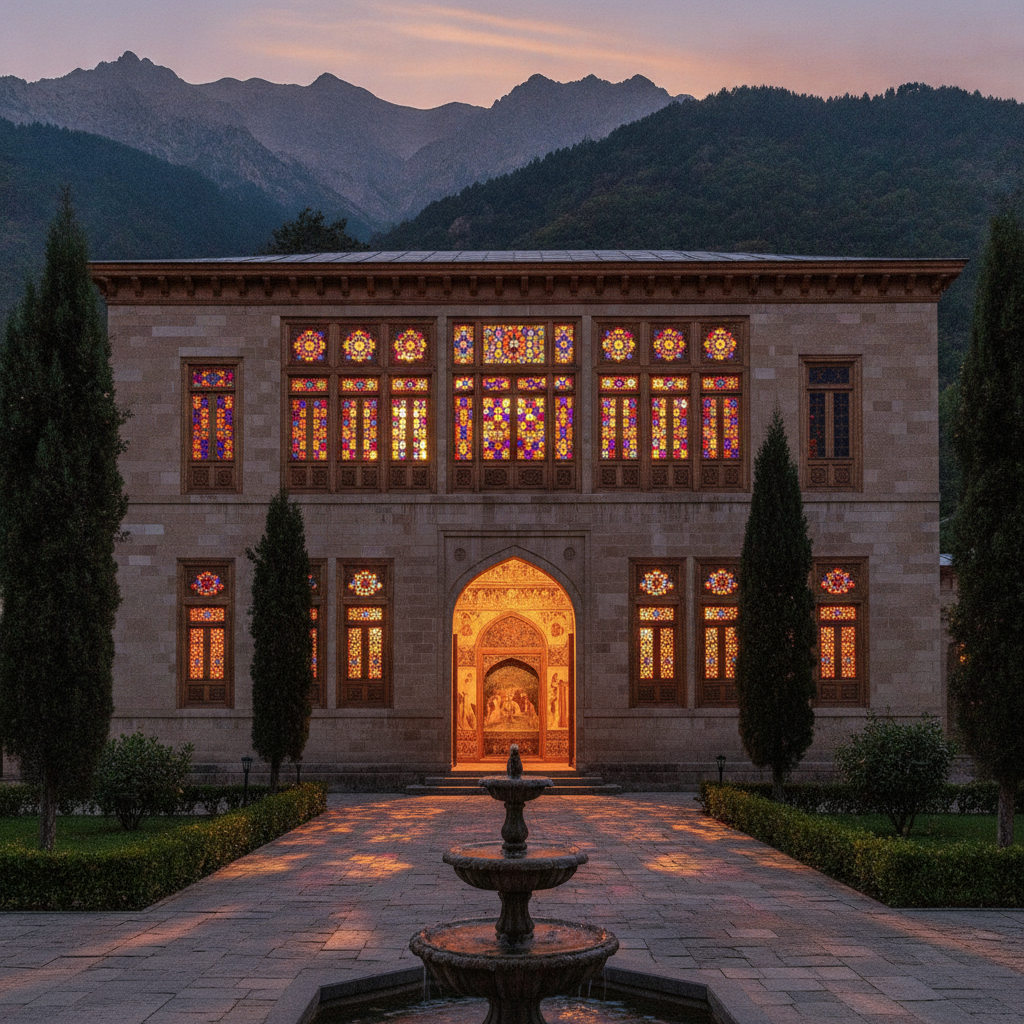
Baku Drilling the World's First Modern Oil Well in 1846 Supplying 50% of Global Oil Production in 1900, the Maiden Tower With Unknown Construction Date and Unknown Function & the Nobel Brothers Who Operated the World's First Oil Tanker From the Baku Caspian
Baku's 1846 oil well preceding Pennsylvania's Drake well by 10-13 years; Baku supplying 50% of the world's entire oil production in 1900 — the highest proportion any single city has ever contributed to global petroleum; the Maiden Tower (Giz Galasi) with disputed construction date ranging from 4th century BCE to 12th century CE and completely unknown original function; the Nobel brothers (Alfred Nobel's relatives) operating the world's first oil tanker (Zoroaster, 1878) from the Caspian; the Flame Towers LED display consuming 1.5 MW of power nightly and visible 30km out to sea; and the Azerbaijani Shah plov wrapped in lavash with dried fruits and nuts.
- 1
The Icherisheher – Baku's Walled Old City
The Icherisheher (İçərişəhər—'Inner City' in Azerbaijani—the walled medieval city of Baku and the UNESCO World Heritage core of the Azerbaijani capital): the Old City heritage guide. The walls (the Icherisheher is enclosed by double stone walls built by the Shirvanshah dynasty in the 11th–12th centuries: the walls are constructed in local Absheron limestone (the grey-buff porous limestone quarried from the Absheron Peninsula on which Baku stands)—the wall circuit is approximately 1.5 km; the wall height 6–8m; thickness 2–4m at the base: four original gates survive (the Salyan Gate, the Gosha Gala (Twin Towers) Gate—the primary entrance from the south): the primary monuments (the principal monuments within the Icherisheher: the Palace of the Shirvanshahs (the 15th-century palace complex—the most important secular medieval building in Azerbaijan—built by Shirvanshah Ibrahim I (r. 1382–1417): the palace consists of the Divankhaneh (throne room—a 5-chambered pavilion); the Shah's mosque; the bathhouse; and the mausoleum of Shah Ibrahim); the Maiden Tower (the Giz Galasi—the cylindrical tower 29.5m high on the southeastern edge of the walls—the most iconic structure in Baku: the tower's construction date is disputed (4th century BCE to 12th century CE); the function is unknown (lighthouse? fire temple? defensive tower?)—the ambiguity of the tower's origin and purpose has made it the primary symbol of Baku's ancient and mysterious heritage): the UNESCO status (the Walled City of Baku with the Shirvanshah's Palace and Maiden Tower was inscribed on the UNESCO World Heritage List in 2000).
- 2
The Flame Towers – Modern Baku's Skyline Icon
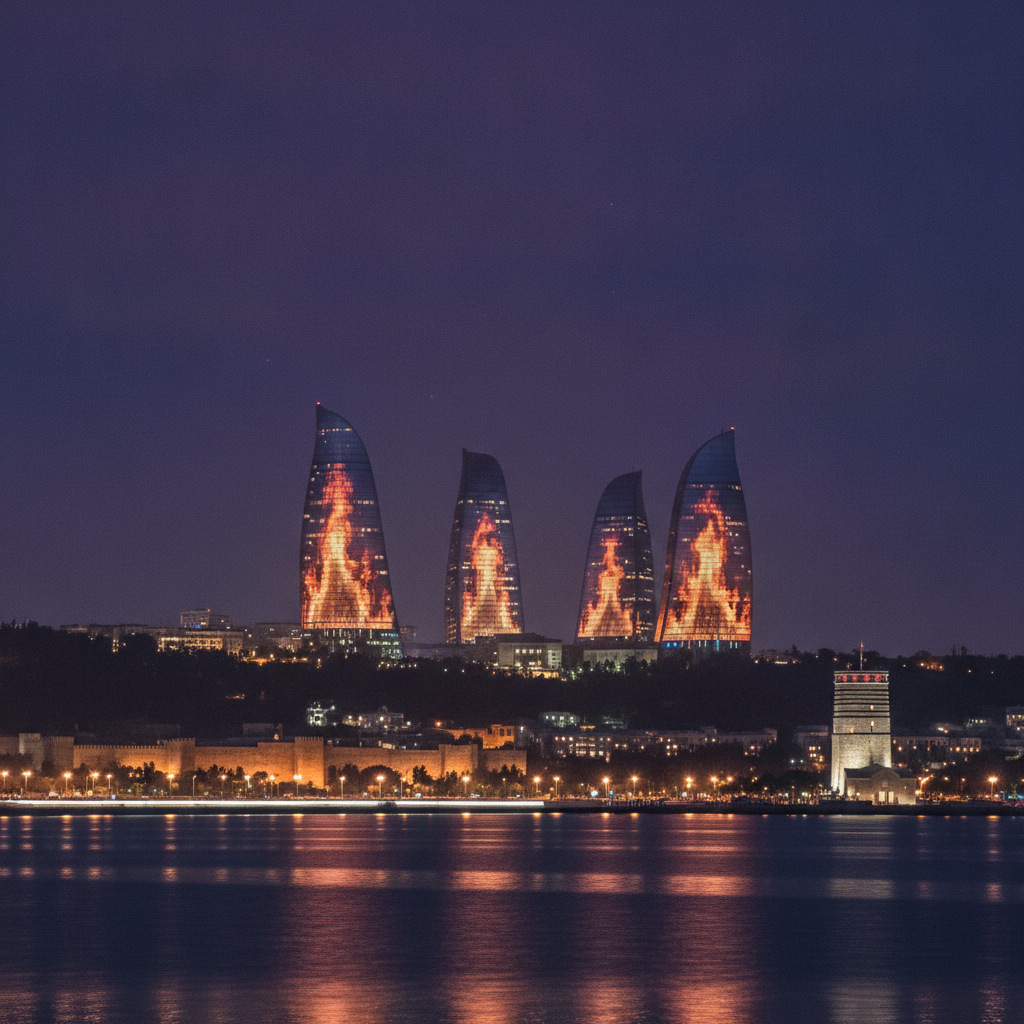
The Flame Towers (the three skyscrapers (182m, 165m, and 190m) on the Baku hillside above the Old City—the defining symbol of post-Soviet, oil-rich Azerbaijan): the contemporary architecture guide. The towers (the Flame Towers (Alov Qüllələri): the three towers completed 2012 are clad in approximately 10,000 LED panels on their facades—each tower's cladding displays animated sequences of fire (the Zoroastrian flame is the primary design reference): the fire display (the LED fire animations run nightly after sunset, visible from across the Baku Bay and from the Old City walls below—the towers appear to burn with animated red-orange flames 120–190m above the city): the architecture (the towers were designed by the Austrian firm HOK International: the two outer towers lean slightly outward from the central tower; the LED facade system consumes approximately 1.5 MW of power during the nightly display): the symbolism (the flame motif references the Zoroastrian fire-worship tradition of the Absheron Peninsula—the natural gas seeps that produced spontaneous flames on the Absheron Peninsula were the basis of the Zoroastrian fire temples at Ateshgah (see Route 2): the height and visibility (the Flame Towers are visible from 30+ km out to sea on the Caspian—the towers have become the primary navigational landmark for ships approaching Baku from the Caspian).
- 3
The Caspian Sea & Baku's Oil Heritage
The Caspian Sea and the oil heritage of Baku (the two physical facts that have defined the city's existence—the inland sea that made Baku a trade port and the petroleum beneath its coast that made it the oil capital of the world): the oil and sea heritage guide. The Caspian Sea (the Caspian Sea (Xəzər dənizi)—the world's largest lake (371,000 km²), classified as a sea due to its salt water content: the Caspian is 28m below sea level (the lowest-elevation body of water in the world outside the oceans): the Caspian is landlocked—there is no natural outflow—and is shared by five countries (Russia, Kazakhstan, Turkmenistan, Iran, and Azerbaijan): the Baku seafront (the Baku Boulevard (Primorskiy Bulvar)—the 3.5 km seafront promenade along the Baku Bay, originally built 1857 and substantially rebuilt post-independence): the oil heritage (the first modern oil well in the world was drilled at Bibi-Heybat, Baku in 1846 (some historians prefer 1848)—preceding the famous Drake well in Pennsylvania (1859) by 10–13 years: Baku produced approximately 50% of the world's oil supply in 1900 (11 million tonnes out of 21 million tonnes globally)—the highest proportion any single city has ever supplied to global petroleum production): the Nobel brothers (Ludwig and Robert Nobel (brothers of Alfred Nobel—the dynamite inventor and Peace Prize donor) established the Nobel Oil Company in Baku in 1879—the company operated the world's first oil tanker (the Zoroaster, 1878) and constructed the first oil pipeline in Russia (Baku to Batumi, 1883)).
- 4
Nizami Street & the Baku Fashion Scene
Nizami Street (the primary commercial boulevard of Baku—the city's answer to Fifth Avenue or the Champs-Elysées, named for the medieval Azerbaijani poet Nizami Ganjavi): the shopping and culture guide. The street (Nizami Street (Nizami küçəsi)—the 1.5 km pedestrian-accessible boulevard running east-west through the center of Baku: the street was named Torgovaya (Trading Street) during the Russian Imperial period and renamed for the poet Nizami after independence): the shopping (the Nizami Street shopping: the primary Azerbaijan luxury brands (the silk scarves and carpets at the Azerbaijan Carpet Museum adjacent to the boulevard); the international luxury brands (Louis Vuitton, Burberry, Rolex—the concentration of global luxury brands on Nizami Street reflects the oil wealth of the Azerbaijani capital); the Taza Bazaar (the 1916 covered market at the eastern end of Nizami Street—the primary food market of central Baku)): the culture (the cultural institutions on and adjacent to Nizami Street: the Azerbaijan State Academic Drama Theater (1873); the Baku Museum of Modern Art (the primary contemporary art museum of Azerbaijan—opened 2009 in a converted factory space—the collection includes major works by the Azerbaijani artist Togrul Narimanbekov (the most celebrated Azerbaijani painter)): the café culture (the Nizami Street café scene: the outdoor terrace culture that develops May–October, with the Bulvar restaurant strip adjacent to the Caspian seafront providing the most atmospheric setting).
- 5
Baku Cuisine – Plov, Dolma & Pomegranate
The Azerbaijani food guide (the cuisine that combines Persian, Turkish, and Caucasian influences into one of the most distinctive and complex food cultures in the former Soviet space): the food heritage guide. The Azerbaijani plov (the Azerbaijani plov (the rice dish prepared differently from the Uzbek osh—the Azerbaijani method uses the gazmag (the crispy rice crust at the bottom of the pot) as the most celebrated element of the dish: the gazmag is formed by placing oiled bread or potato slices at the bottom of the pot before adding the rice—the gazmag (crispy tah-dig) is served with the plov and is the most competed-over element of the meal): the primary plov varieties (the Azerbaijani plov has 40+ named varieties: the Shah plov (the wedding plov wrapped in lavash with dried fruits, nuts, and saffron-flavored rice); the Sabzi plov (the herb rice plov with fried onion and lamb, served with Nowruz fish); the Toyuq plov (the chicken plov—the most common everyday variety)): the dolma (the Azerbaijani dolma (the stuffed grape leaf or vegetable—the primary Azerbaijani contribution to world cuisine): the most celebrated form: the Yarpaq Dolmasi (the grape-leaf dolma with a filling of ground lamb, rice, dried barberries, mint, and coriander): the pomegranate (the pomegranate (nar—the Azerbaijani national symbol) appears in: Narsharab (the pomegranate molasses sauce served with kebobs); the pomegranate-based dessert drinks; and the Azerbaijani carpet motif).
- 6
Baku Practical Guide – Oil City Logistics
The Baku practical guide (the essential logistics for visiting the capital of Azerbaijan—the most prosperous city in the South Caucasus): the practical handbook. The airport (Heydar Aliyev International Airport (GYD)—25 km north of the city center: direct connections to Dubai (3h, multiple daily (flydubai, Emirates)); Istanbul (3h, daily (Turkish Airlines, Pegasus, Azerbaijan Airlines)); Moscow (3h, multiple daily); London (6h, 3× weekly (British Airways)); Frankfurt (5h30m, 3× weekly (Lufthansa, Azerbaijan Airlines)); Tel Aviv (3h30m, daily)): the visa (the Azerbaijani e-ASAN visa (electronic tourist visa): available online at evisa.gov.az for citizens of 95+ countries: the e-visa costs USD 20 and is issued in 3 business days for a 30-day single-entry stay): the currency (the Azerbaijani Manat (AZN): 1 USD = 1.70 AZN (fixed exchange rate since 2017)): the city transport (the Baku Metro (3 lines, 26 stations)—the primary transport for the city center and airport (Airport Station on Line 1); the metro fare AZN 0.30 = USD 0.18 per trip: taxis via the Bolt or Uber app (AZN 3–7 within the center = USD 1.80–4.10)): the accommodation (the Baku hotel market is the most diverse in the South Caucasus: the international luxury (Four Seasons Baku, the Fairmont Baku—both in the Flame Towers complex, USD 300–500/night); mid-range (the Hilton Garden Inn Baku, USD 100–150); budget (the Central Park Hostel, USD 12–20/dorm)): the Armenia border (the Armenia-Azerbaijan border is closed—traveling between Baku and Yerevan requires flying via a third country).
Walk this route with audio
Stories play automatically as you reach each stop — no tapping needed.
More in Baku
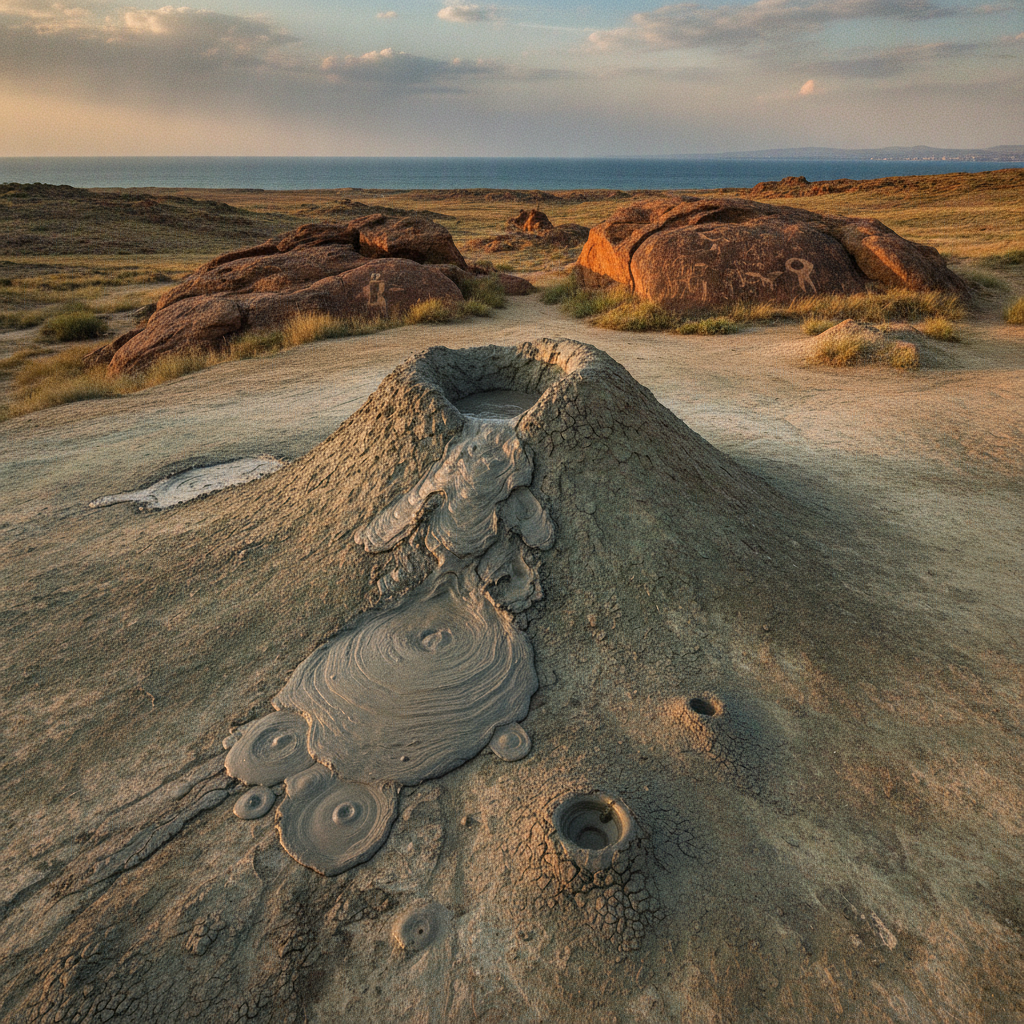
Baku Day Trips: Gobustan Rock Art, the Mud Volcanoes, the Caspian Sea, and the Most Geologically Unique Single Azerbaijan Excursion Circuit
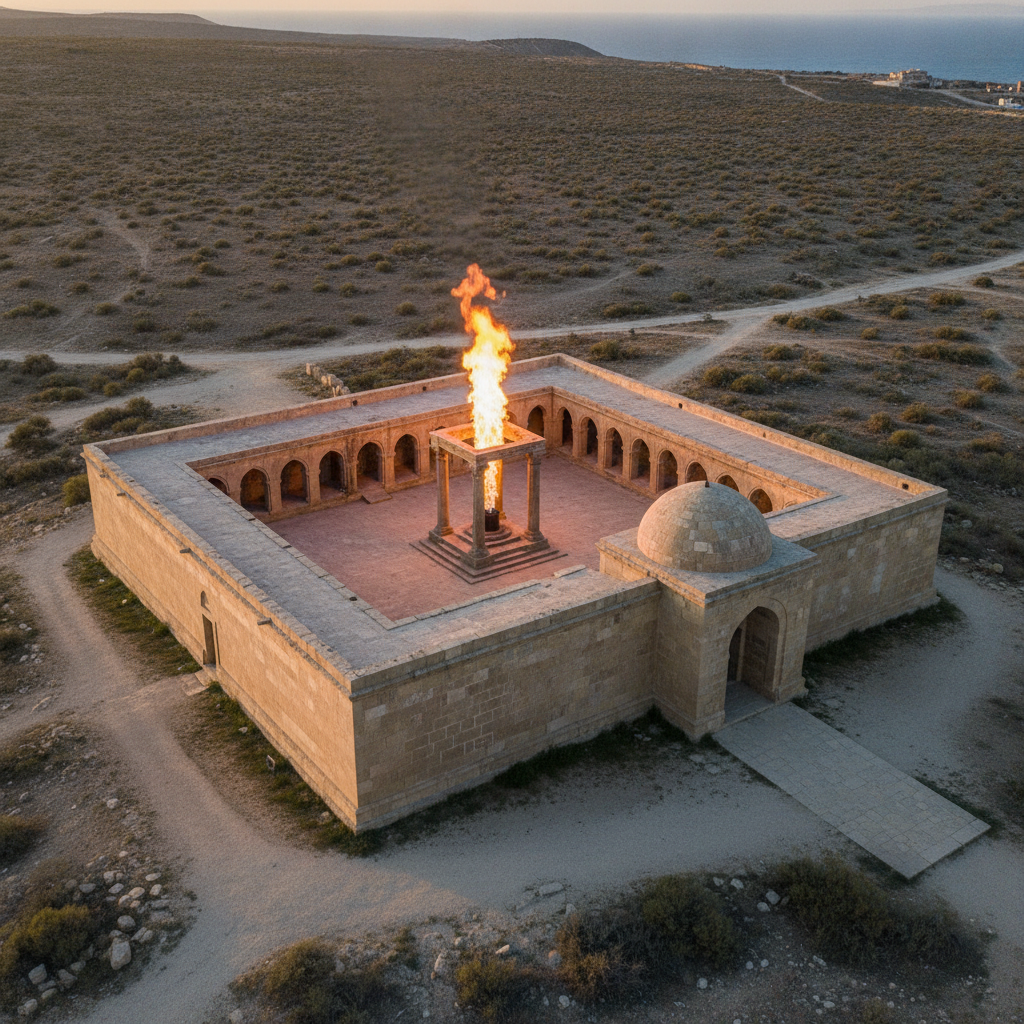
The Ateshgah Sacred Flame Extinguished by the 1880s Oil Drilling That Lowered Absheron Gas Pressure, the Mugham Zarb Upper Register as the Most Demanding Technical Feat in Azerbaijani Singing & the 2020 Bayraktar TB2 Drones That Reversed the 1994 Karabakh Ceasefire Line
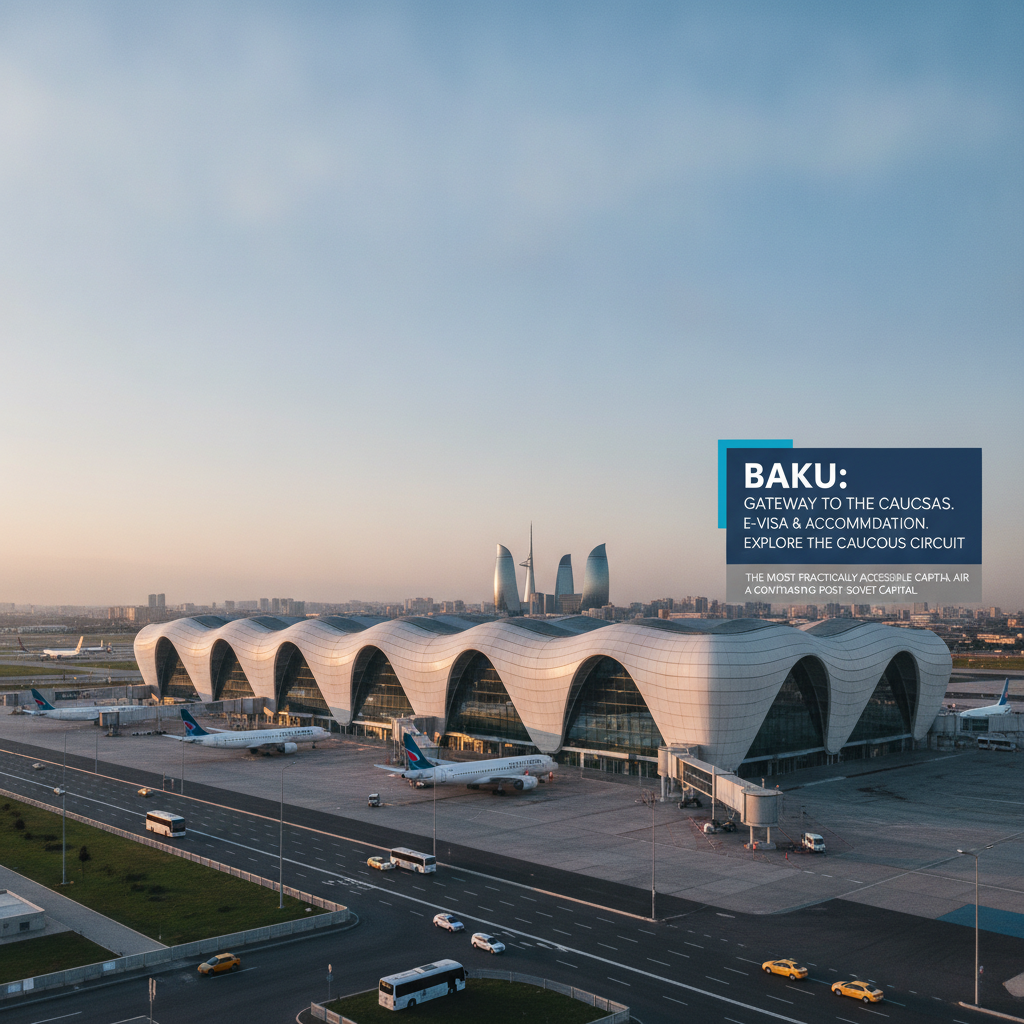
Baku Practical: Getting There, the e-Visa, Accommodation, the Caucasus Circuit, and the Azerbaijan Visitor Framework
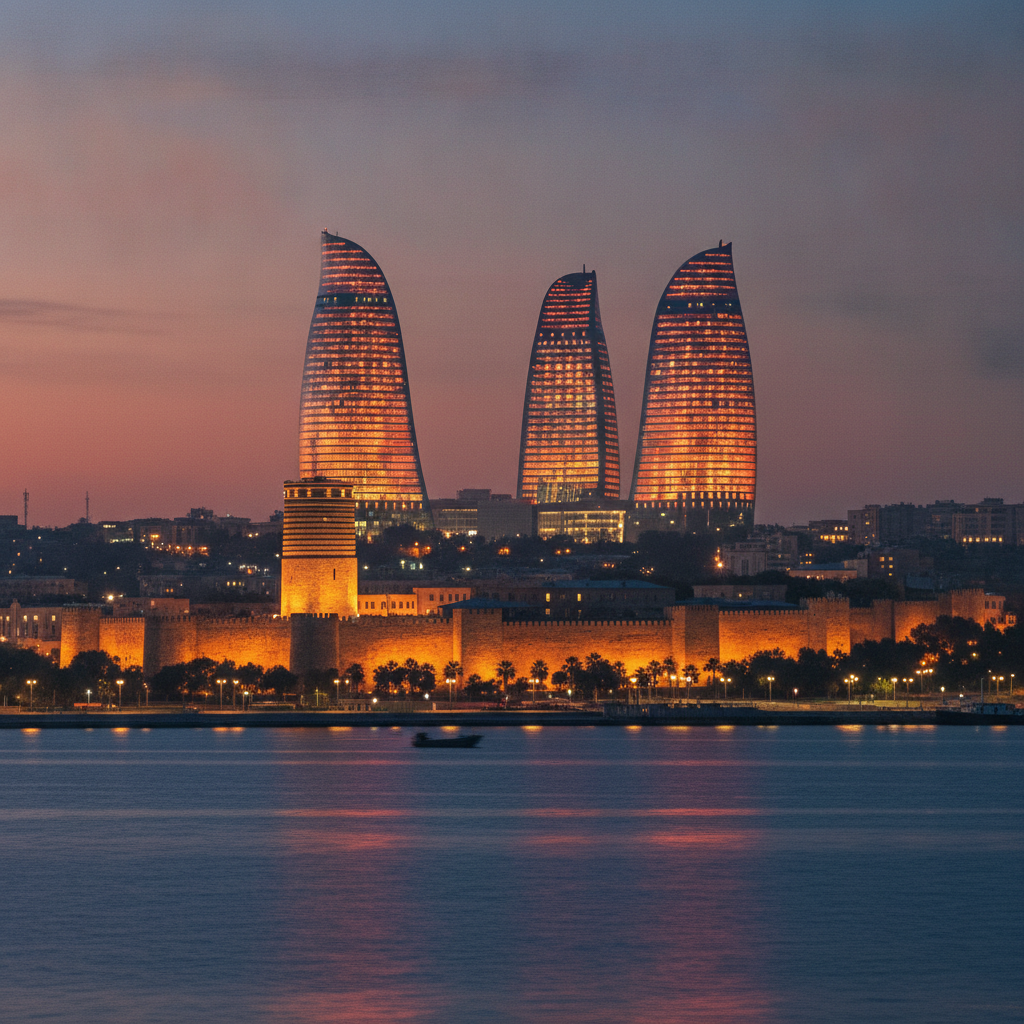
Baku Essential: The Old City, Flame Towers, the Caspian Boulevard, the Maiden Tower, and the Most Dramatically Contrasting Single Post-Soviet Capital
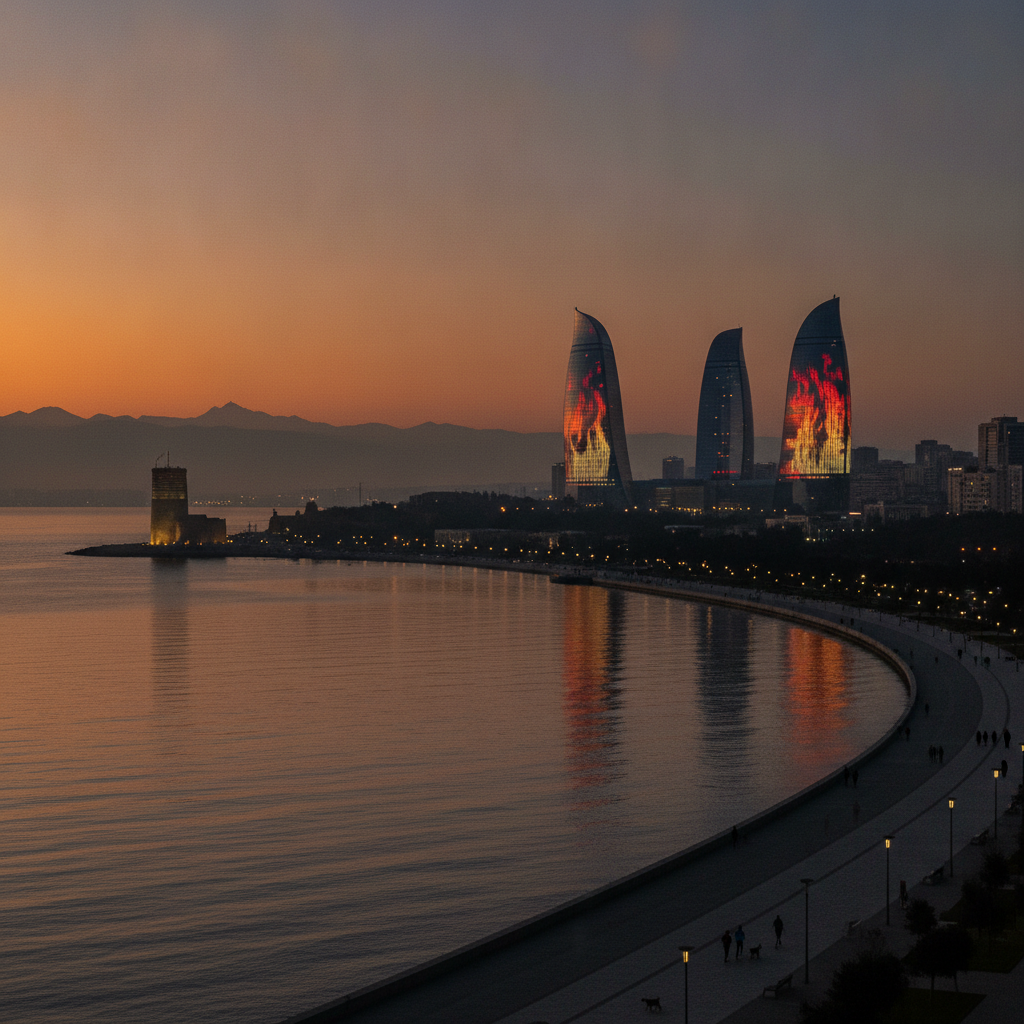
The Baku-Tbilisi-Ceyhan Pipeline Routed to Bypass Both Russia and Iran, Baku's 30,000-40,000 Jewish Residents as the Largest Jewish Community in Any Majority-Muslim City, and the Azerbaijan Tower Planned at 1,050m to Have Been the World's Tallest Building