Tanah Lot, Uluwatu Temple & the Sacred Sea Temples of Bali
Bali's ancient sea temples — Tanah Lot (the offshore rock temple that is the most photographed image in Bali), Uluwatu (the dramatic cliff-edge temple 70 metres above the Indian Ocean at the southern tip of the Bukit Peninsula, with its nightly Kecak fire dance performance at sunset), and the broader network of Bali's 'sad kahyangan' (six paramount temples of the island) — form the spiritual spine of Balinese Hindu civilization.
- 1
Pura Tanah Lot — The Sea Temple on the Rock
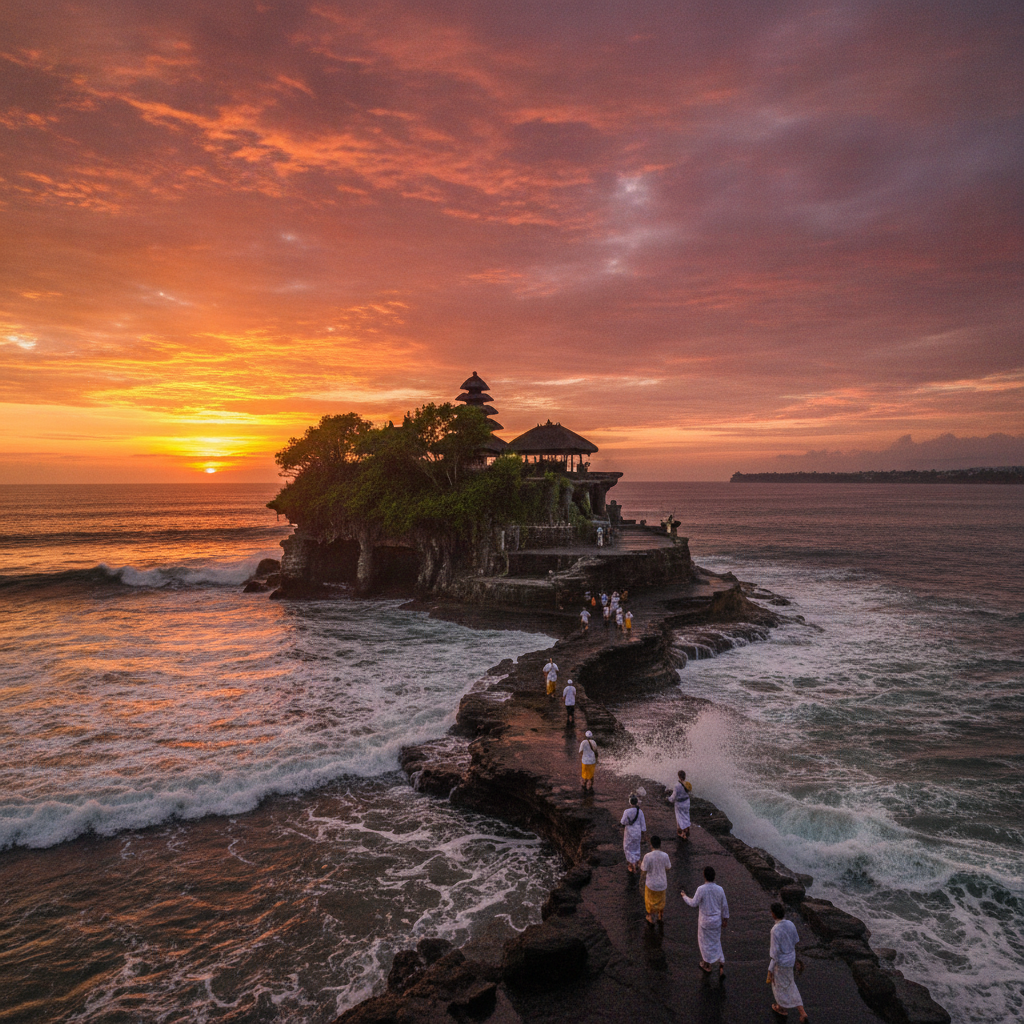
Pura Tanah Lot (Beraban village, Tabanan Regency, approximately 20 kilometres northwest of Denpasar and 13 kilometres south of Ubud — accessible by private car in approximately 45 minutes): Tanah Lot ('land in the sea' in Balinese) is one of Bali's most important sea temples (pura segara) and is part of the chain of sea temples that are believed to protect Bali from evil sea spirits; the temple sits on a small rocky islet approximately 100 metres offshore, accessible on foot at low tide through the waves; the complex is considered to be built in the 16th century by the Hindu sage Nirartha, who is credited with establishing many of Bali's sea temples during his journey around the coast; the base of the islet is inhabited by sea snakes believed to be sacred guardians of the temple; the most famous view of Tanah Lot — the temple silhouetted against the sunset — is best seen from the coastal cliff paths to the north and south of the islet.
- 2
Pura Luhur Uluwatu — The Cliff Temple of the Bukit Peninsula
Pura Luhur Uluwatu (Jalan Raya Uluwatu, Pecatu village, Badung Regency — the sea temple perched at the edge of a 70-metre-high limestone cliff on the southwestern tip of the Bukit Peninsula, considered one of the six paramount temples (sad kahyangan) of Bali and the directional temple for the southwest): Uluwatu was founded by the 11th-century Hindu sage Empu Kuturan and subsequently expanded by Nirartha in the 16th century; the temple complex is partially open to non-Hindus (the inner sanctum is closed); the resident population of long-tailed macaques are notorious for stealing visitors' sunglasses and other objects; the most popular reason to visit Uluwatu is the nightly Kecak and Fire Dance performance (starting at 18:00 in the open-air amphitheatre on the cliff edge, with the sun setting into the Indian Ocean behind the performers — one of the most dramatically staged performances in the world).
- 3
Seminyak Sunset Strip & Beach Bars
Seminyak (the upscale beach resort area on the southwest coast of Bali, immediately north of Kuta — approximately 7 kilometres from Ngurah Rai International Airport): Seminyak developed from the late 1990s as the more sophisticated alternative to Kuta, with a concentration of boutique hotels, designer villas, high-end restaurants, beach clubs, and concept stores that has made it the preferred destination of affluent Indonesian and international visitors; the Seminyak beach (Pantai Seminyak/Double Six Beach) is one of the most beautiful beaches on the west coast of Bali, with the characteristic dark volcanic sand of the Balinese west coast, strong sunset colours over the Indian Ocean, and a beach club strip (Ku De Ta, now KUDETA — one of Asia's most famous beach clubs — Potato Head, La Plancha) that attracts a sophisticated clientele for sundowners; the streets behind the beach (Jalan Kayu Aya / 'Eat Street', Jalan Petitenget) contain the finest concentration of restaurants in Bali.
- 4
Jimbaran Bay Fish Market & Seafood Dinner on the Beach
Jimbaran (the fishing village and beach on the south side of the airport peninsula, immediately south of the airport — approximately 15 minutes from Kuta by taxi): Jimbaran is famous for its fresh seafood — the morning fish market (Pasar Ikan Jimbaran, operating from approximately 5:00am to 8:00am on the beach) is one of the most colourful and authentic fish markets in Bali, with the entire catch from the Jimbaran fishing fleet (colourful outrigger fishing boats called jukung) landed on the beach and sold; the Jimbaran seafood restaurants (a row of simple warung-style restaurants on the beach in the Muaya Beach area at the south end of the bay) are open for lunch and dinner and serve grilled fish, lobster, prawns, squid, and clams at tables set directly on the beach sand, with views of the sunset over the Indian Ocean.
- 5
Batu Bolong Beach & Canggu's Surf Culture
Canggu (the village and coastal area approximately 10 kilometres northwest of Seminyak, between Seminyak and Tanah Lot — the most rapidly developed area of Bali in the 2010s, transforming from rice paddies and coconut palm groves into a dense concentration of surf camps, co-working spaces, vegan cafés, digital nomad accommodations, and boutique hotels): Batu Bolong Beach (the main surf beach of Canggu, fronting the Echo Beach and Batu Bolong areas) is one of the best beginner and intermediate surf beaches in Bali, with consistent beach break waves, affordable surf lessons, and a laid-back beach culture; the 'Canggu scene' is one of the defining phenomena of contemporary global digital nomadism — a concentration of Bali-based freelancers, startup founders, and location-independent workers who have made Canggu one of the most Instagram-documented co-working/surf destinations in the world.
- 6
Pura Besakih — Mother Temple of Bali on Mount Agung
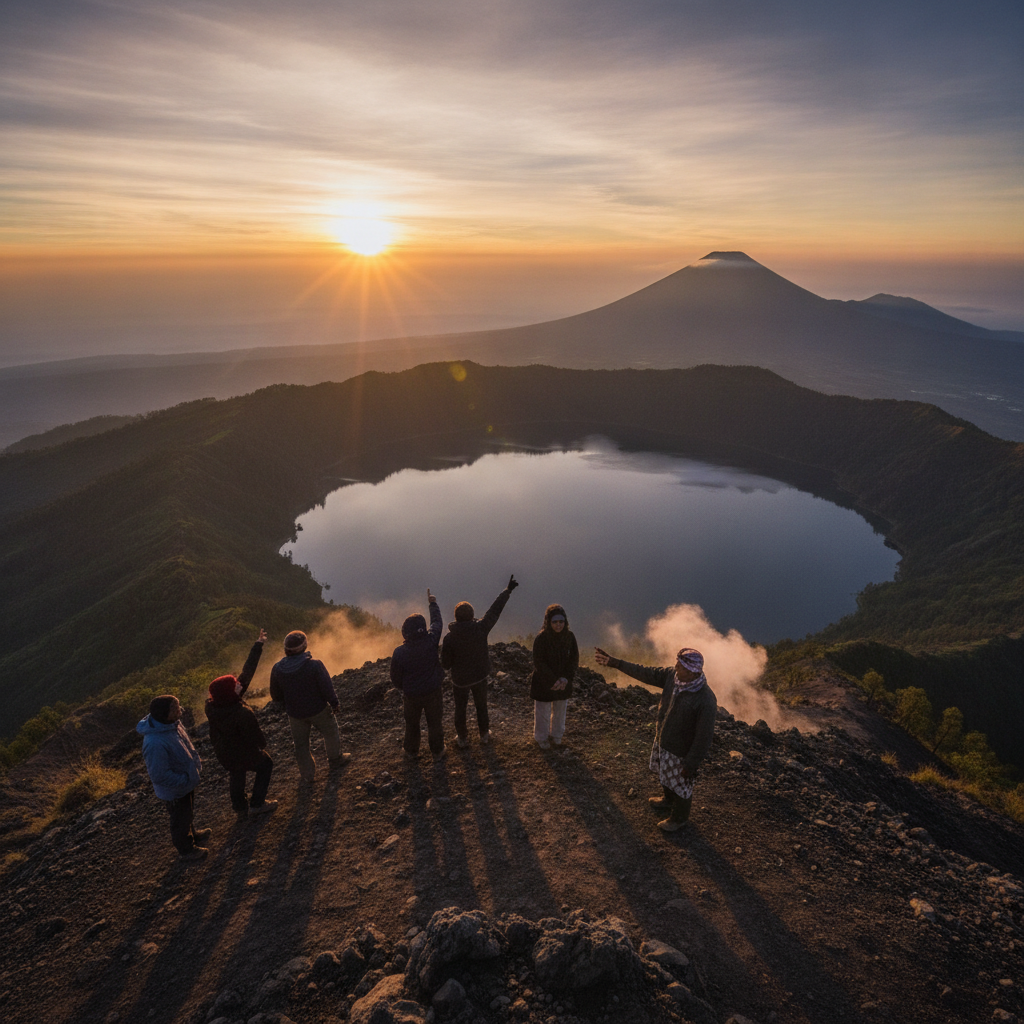
Pura Besakih (Besakih village, Rendang district, Karangasem Regency — the largest and most important Hindu temple complex in Bali, located on the slopes of Mount Agung (the sacred volcano, 3,031 metres, Bali's highest point and the spiritual centre of the island) at approximately 950 metres elevation): the Besakih complex comprises 23 separate but related temples spread over an area of approximately 3 kilometres, the largest being Pura Penataran Agung (the central state temple, with its distinctive multi-tiered merus rising against the backdrop of the volcano above); Besakih has been a place of Hindu worship for at least 1,000 years and is considered the directional temple for the universe and the supreme temple of the entire island — all other Balinese temples are subordinate to Pura Besakih; the volcano above the temple is considered the earthly home of the Balinese Hindu deities (particularly Shiva); Mount Agung last erupted in November 2017, causing major disruption to Bali tourism.
Walk this route with audio
Stories play automatically as you reach each stop — no tapping needed.
More in bali
Bali Wellness — Spa Rituals, Yoga Retreats & the Bali Spirit
Ubud, Monkey Forest, Tegallalang Rice Terraces & Balinese Arts
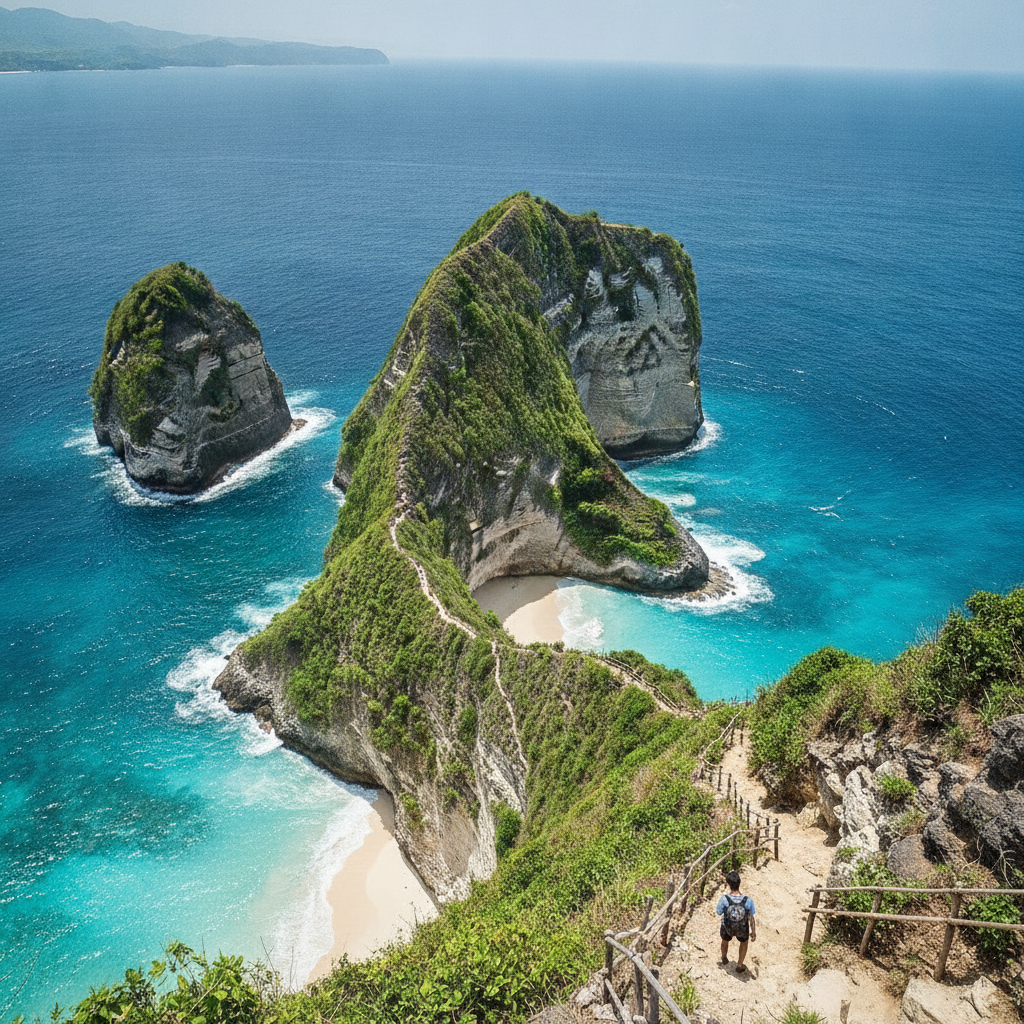
Nusa Penida & Nusa Lembongan — Pristine Islands off Bali's Southeast Coast
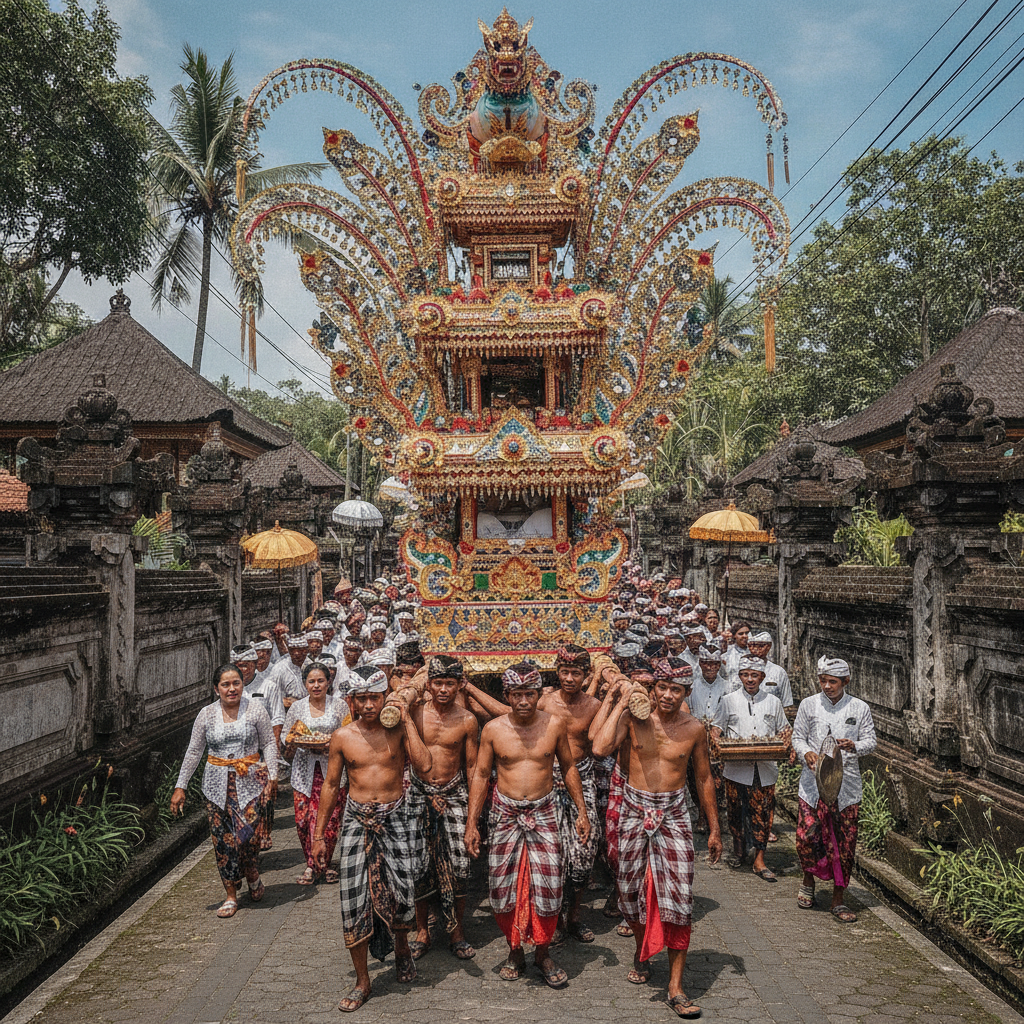
Balinese Hinduism — Temple Ceremonies, Cremation & the Spiritual Life of Bali
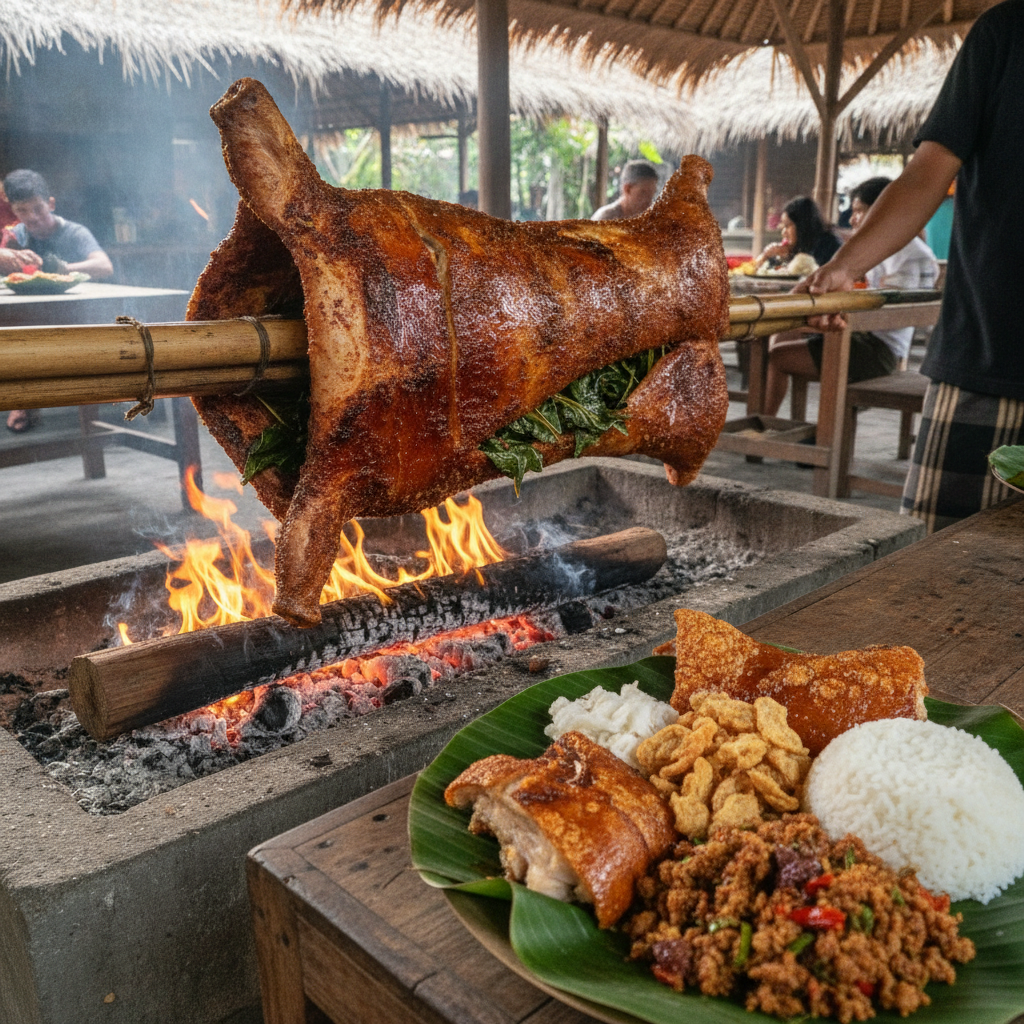
Balinese Cuisine — Babi Guling, Lawar, Nasi Campur & the Warung Culture