Baltimore R3-R4: B&O Railroad Museum (1827 first common-carrier US railroad, 1884 roundhouse 22-sided largest early railroad collection, Tom Thumb 1830 replica, Lincoln Baltimore Plot 1861), Space Telescope Science Institute (Hubble 1990 James Webb 2022, Applied Physics Lab GPS TIROS-1 New Horizons Pluto 2015), H.L. Mencken (Baltimore Sun 1906-1948 greatest American journalist, The American Language 1919 never out of print, John Waters Pope of Trash Hairspray 1988), African American heritage (MICA oldest degree-granting art college 1826, Great Blacks in Wax Museum, Reginald Lewis first Black billionaire USD 985M buyout 1987, Marin Alsop first woman major US orchestra music director), Chesapeake Bay (largest US estuary 320km, 348 fish species ecological decline restoration USD 6B, Assateague wild ponies 300 years), Practical (BWI Southwest hub MARC train to DC 40min, Preakness Stakes Pimlico May second oldest US track 1870, blue crab season July-September, Artscape largest free Maryland arts festival July)
Baltimore R3-R4: B&O Railroad Museum (chartered February 28 1827 first US common-carrier railroad, 1884 roundhouse 61m diameter largest collection, Tom Thumb 1830, Lincoln traveled disguised through Baltimore 1861 Baltimore Plot), Space Telescope Science Institute (Hubble 1990 science operations, James Webb 2022, Applied Physics Lab GPS TIROS-1 1960 New Horizons Pluto July 14 2015), H.L. Mencken (Baltimore Sun 1906-1948, American Language 1919 never out of print, 1524 Hollins St house museum, John Waters Pope of Trash Baltimore Hairspray 1988, Enoch Pratt Free Library 1886 oldest free US public library system), African American heritage (MICA 1826 oldest degree-granting art college US, Great Blacks in Wax first Black wax museum, Reginald Lewis born Baltimore 1942 USD 985M Beatrice buyout 1987, Marin Alsop 2007 first woman major US symphony music director), Chesapeake Bay (320km largest US estuary 348 fish species, USD 6B restoration program 1983, Assateague wild ponies 300 years, Sandy Point Chesapeake Bay Bridge 6.9km), practical (BWI Southwest hub MARC 40min to DC, Light Rail Inner Harbor 30min, Preakness Pimlico third Saturday May 1870, blue crab season July-September peak).
- 1
B&O Railroad Museum and Transportation Heritage
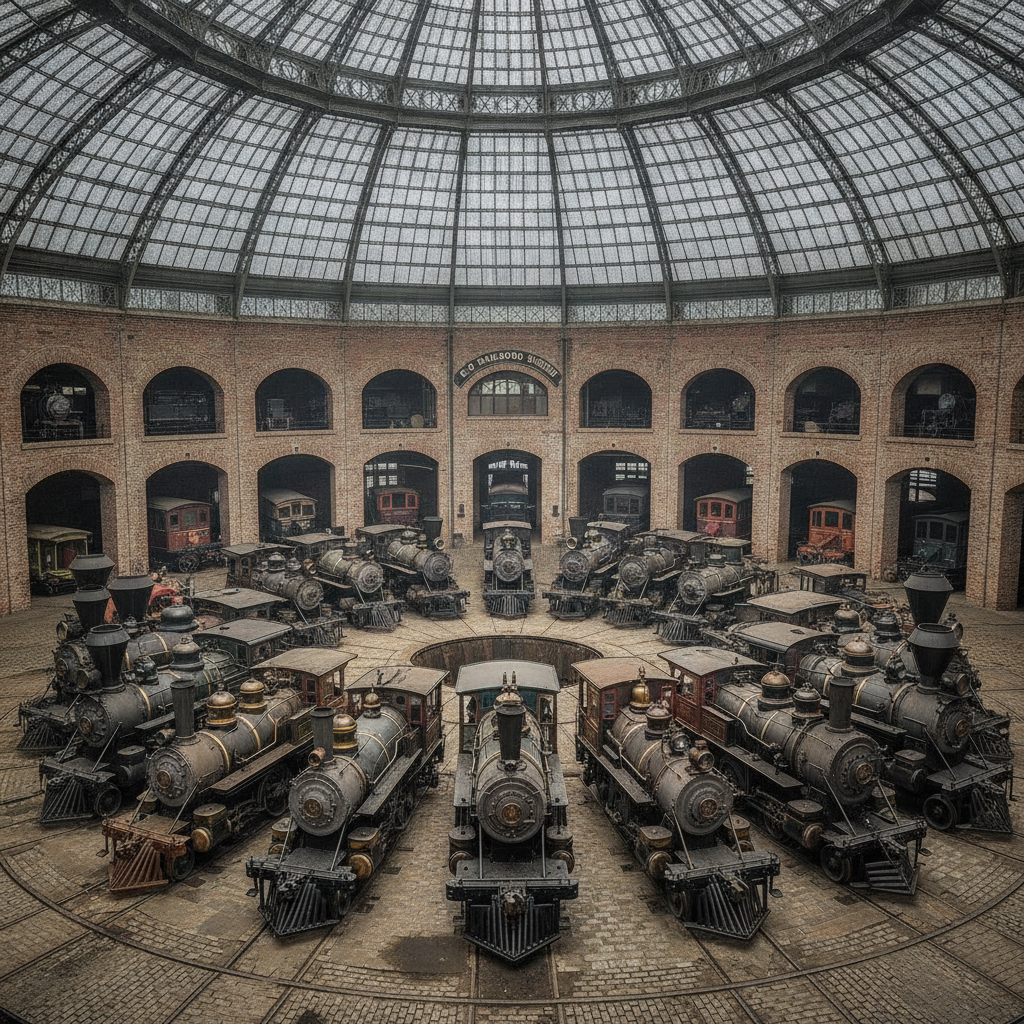
The Baltimore and Ohio Railroad Museum (at 901 W Pratt Street, Carroll Station, Baltimore): the most important railroad heritage museum in the United States, housed in the original 1884 roundhouse of the B&O Railroad's Mount Clare Shops (the oldest railroad repair facility in the United States, established 1829). The B&O Railroad history: the Baltimore and Ohio Railroad (chartered February 28, 1827) was the first common-carrier railroad in the United States — the first railroad to operate scheduled passenger service, the first to use steam locomotion for regular service, and the first to connect the East Coast to the Ohio River Valley. The B&O was the railroad that connected Baltimore to the interior of the country and made Baltimore the commercial capital of the mid-Atlantic United States. The B&O Railroad Museum roundhouse (the 22-sided roundhouse, 61 meters in diameter, built 1884): the largest collection of early American railroad equipment in the world, including the Tom Thumb (the replica of the first American-built steam locomotive, built by Peter Cooper in 1830), the most complete collection of 19th-century American steam locomotives in existence, and the Chessie System caboose. The railroad's significance to Baltimore: the B&O Railroad was the economic engine that transformed Baltimore from a regional port city into the commercial gateway to the American West, competing with the Erie Canal (which benefited New York) and the Pennsylvania Railroad (which benefited Philadelphia). The B&O's original terminus at Camden Station (now Camden Yards) is where Abraham Lincoln passed through Baltimore in February 1861 (he traveled in disguise through Baltimore to avoid a suspected assassination plot — the Baltimore Plot — on his way to Washington for his first inauguration).
- 2
Maryland Science Center and STEM Heritage
The Maryland Science Center (at 601 Light Street, Inner Harbor): the major science museum of Baltimore, with the Davis Planetarium (one of the first modern planetariums built in the United States, opened 1964), the IMAX Theater, and exhibits on paleontology (with the actual Hubble Space Telescope gyroscope on display — NASA maintains offices in the Baltimore area). The Space Telescope Science Institute (at 3700 San Martin Drive, the Johns Hopkins University campus in Homewood): the science operations center for the Hubble Space Telescope and the James Webb Space Telescope, managed by the Association of Universities for Research in Astronomy under contract with NASA. The Baltimore connection to space: the Space Telescope Science Institute has been the science operations center for the Hubble Space Telescope since its 1990 launch (and the James Webb Space Telescope since 2022), making Baltimore one of the most important centers for astronomical research in the world. The Applied Physics Laboratory (at 11100 Johns Hopkins Road, Laurel, 30 km west of Baltimore): the Johns Hopkins University Applied Physics Laboratory, one of the most important defense and space research facilities in the United States, which designed the TIROS-1 weather satellite (the first successful weather satellite, 1960), the GPS navigation system (the Omega system that preceded GPS), and the New Horizons spacecraft (which flew past Pluto on July 14, 2015, returning the first detailed images of the dwarf planet). Goucher College and Towson University: two of the major universities in the Baltimore metropolitan area contributing to the cultural richness of the region.
- 3
Baltimore's H.L. Mencken and Literary Heritage
H.L. Mencken (Henry Louis Mencken, born September 12, 1880, Baltimore; died January 29, 1956, Baltimore): the most important American journalist and literary critic of the early 20th century, who spent his entire career in Baltimore and is the defining literary figure of the city. Mencken's career: Mencken worked for the Baltimore Sun and Baltimore Evening Sun from 1906 to 1948, writing the most witty, iconoclastic, and stylistically brilliant journalism in American history. He cofounded The American Mercury magazine (1924), wrote the landmark study The American Language (1919, which documented the distinctive features of American English versus British English, and which has never been out of print), and produced the autobiographical trilogy Happy Days, Newspaper Days, and Heathen Days. The Mencken House (at 1524 Hollins Street, Union Square neighborhood, Baltimore): the rowhouse where Mencken was born and lived for nearly his entire life, now a museum operated by the Enoch Pratt Free Library. John Waters (born April 22, 1946, Baltimore): the filmmaker known as the Pope of Trash, who created a body of work (Pink Flamingos 1972, Hairspray 1988, Serial Mom 1994) celebrating the transgressive, campy, and working-class culture of Baltimore — Waters has lived in the same Baltimore house for decades and is the most prominent cultural ambassador of Baltimore's quirky, self-deprecating civic identity. The Enoch Pratt Free Library (at 400 Cathedral Street, downtown Baltimore): the oldest free public library system in the United States (established 1886 by Enoch Pratt, who donated USD 1 million to the city for a public library open to all regardless of race — one of the first explicitly integrated public institutions in Maryland), where H.L. Mencken's papers are archived.
- 4
Baltimore's African American Heritage - MICA and the Cultural Landscape
Baltimore African American cultural heritage: Baltimore has one of the largest and most historically rooted African American communities in the United States (African Americans constitute approximately 62% of Baltimore's city population), with cultural institutions spanning from the Free Blacks of the antebellum period to the contemporary arts scene. The Maryland Institute College of Art (MICA, at 1300 W Mount Royal Avenue, Bolton Hill, founded 1826): the oldest continuously degree-granting art college in the United States, consistently ranked among the top art schools in the country, with alumni including David Salle, Grace Hartigan, and Hasan Elahi. The Great Blacks in Wax Museum (at 1601 E North Avenue, East Baltimore): the first and only wax museum dedicated to African American history in the United States, with life-size wax figures of historical African American leaders from ancient African history through contemporary times. The Reginald F. Lewis Museum of Maryland African American History and Culture (at 830 E Pratt Street, Inner Harbor East): the largest African American history museum on the East Coast (excluding Washington DC), named for Reginald Lewis (born in Baltimore 1942, the first African American to build a billion-dollar business empire — the 1987 acquisition of Beatrice International Foods for USD 985 million was the largest leveraged buyout by an African American in history). The Baltimore Symphony Orchestra under Marin Alsop (2007-2021): the first woman to lead a major American symphony orchestra as music director, making the BSO a landmark institution for female leadership in classical music.
- 5
Chesapeake Bay and Maryland Outdoors
The Chesapeake Bay (the largest estuary in the United States, approximately 320 km long and 5-48 km wide, draining a watershed of 165,760 square km including parts of 6 states and Washington DC): the defining natural feature of Maryland and one of the most ecologically important bodies of water in the world, historically producing more seafood per unit area than any other estuary on Earth. Chesapeake Bay ecology: the Bay supports 348 species of fish, 173 species of shellfish, and extraordinary populations of migratory waterbirds (including the largest concentration of overwintering migratory waterfowl on the East Coast, particularly Canada geese and canvasback ducks). The Chesapeake Bay's ecological decline: the Bay's water quality has declined dramatically since the 1960s due to agricultural runoff (excess nitrogen and phosphorus from fertilizer causing algal blooms and dead zones), overharvesting of blue crabs and oysters, and the loss of bay grasses (the underwater meadows that filter water and provide habitat). Bay restoration efforts: the Chesapeake Bay Program (a partnership among Maryland, Virginia, Pennsylvania, New York, West Virginia, Delaware, and Washington DC) has invested over USD 6 billion since 1983 in Bay restoration, with measurable improvements in water clarity and oyster populations. Sandy Point State Park (at 1100 E College Pkwy, Annapolis, 50 km from Baltimore): the most popular state park in Maryland, at the western terminus of the Chesapeake Bay Bridge (the 6.9-km dual-span bridge connecting the Maryland Western Shore to the Eastern Shore, one of the longest overwater structures in the world). Assateague Island National Seashore (the barrier island 240 km from Baltimore on the Atlantic Ocean coast): home to the wild Chincoteague ponies (a feral horse population living on the island for at least 300 years).
- 6
Baltimore Practical Guide - Getting Around and When to Visit
Baltimore practical visitor guide: getting to Baltimore: Baltimore-Washington International Thurgood Marshall Airport (BWI, at 7050 Friendship Road, Anne Arundel County, 16 km south of downtown Baltimore): the primary airport for Baltimore, served by Southwest Airlines as its second largest hub and all major US carriers. The MARC Penn Line (the Maryland Area Regional Commuter train) connects BWI Airport Station to Baltimore Penn Station (15 minutes) and to Washington Union Station (40 minutes), making BWI one of the most transit-accessible airports in the United States. Getting around Baltimore: the Baltimore Light Rail line connects BWI Airport to downtown Baltimore (the Inner Harbor and Camden Yards) in approximately 30 minutes; the Charm City Circulator (the free bus system operating 4 routes through downtown Baltimore) makes the Inner Harbor, Fells Point, and Mount Vernon walkable without a car. Baltimore is otherwise primarily a car-oriented city. When to visit: spring (April-May) is the most beautiful season in Baltimore, with the Maryland Sheep and Wool Festival, the Preakness Stakes horse race at Pimlico Race Course (the second jewel of the Triple Crown, held the third Saturday of May: Pimlico is the second oldest horse racing track in the United States, opened 1870), and the flowering of the cherry trees in the Maryland countryside. Summer brings the blue crab season (peak July-September), the Artscape festival (the largest free arts festival in Maryland, held each July), and the Maryland State Fair in late August.
Walk this route with audio
Stories play automatically as you reach each stop — no tapping needed.
More in baltimore
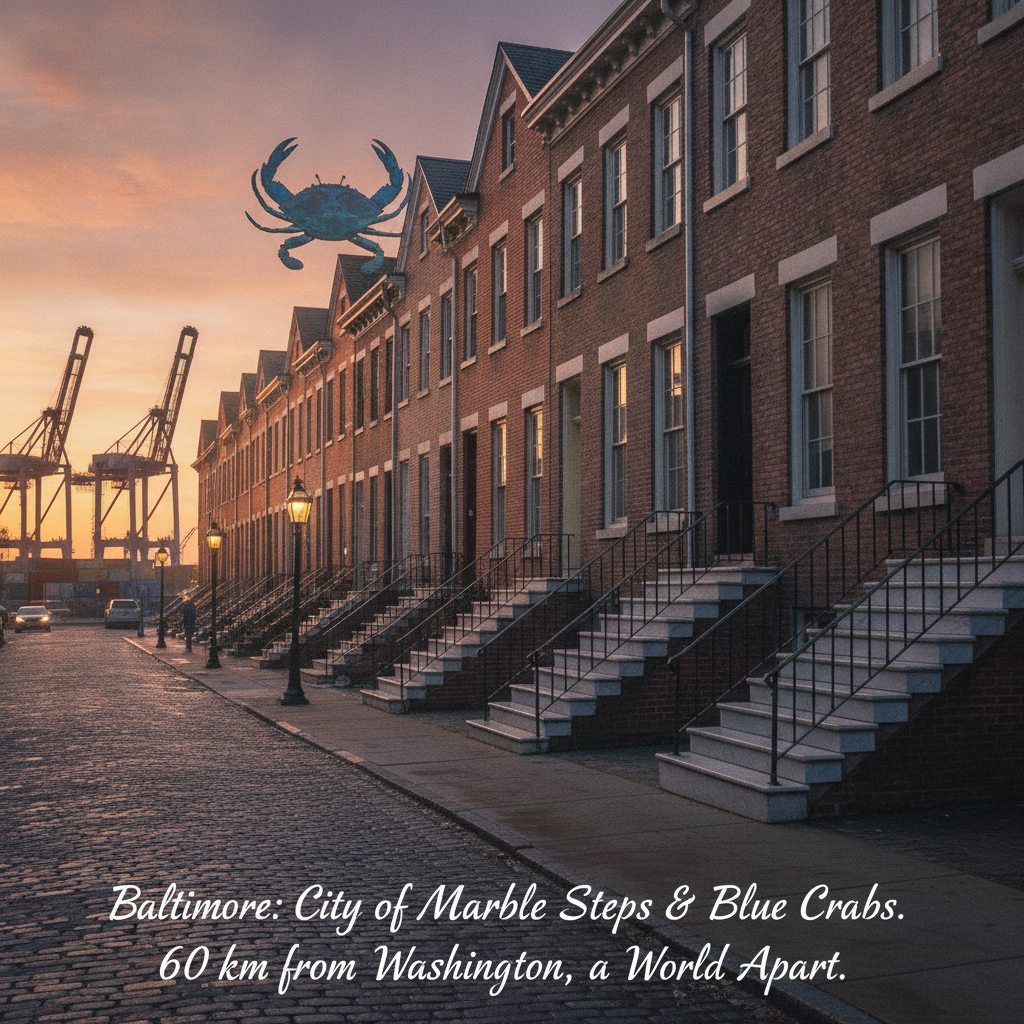
Baltimore R4: Rowhouse culture (70,000 brick rowhouses, white marble Cockeysville stoop scrubbing Saturday tradition, Bolton Hill Patterson Park William Patterson Jerome Bonaparte, Johns Hopkins Hospital 1889 modern surgery nursing), Baltimore music (Cab Calloway Hi-De-Ho, Billie Holiday raised in Baltimore Pigtown, Eubie Blake ragtime, Frank Zappa born 1940, 8x10 Club Federal Hill), Port of Baltimore (largest US auto import port, Baltimore Clipper slave trade, Key Bridge collapse March 26 2024 Dali container ship 6 workers killed largest recovery operation US), Civil rights (Thurgood Marshall 32 Supreme Court cases 29 wins Brown v Board 1954 first Black Justice 1967, Frederick Douglass HS Calloway Holiday Marshall, Morgan State HBCU 1867), Baltimore in film (John Waters Pink Flamingos Hairspray Serial Mom, The Wire filmed on location, Barry Levinson Diner 1982 Rain Man 1988, Sleepless in Seattle), Practical (median home USD 180-200K vs DC USD 600K, MARC train to DC 40min, Acela to NYC 2.5hr, BWI Southwest hub Key Bridge replacement USD 60M 2028)
Baltimore: Pope of Trash Homeland, Free Double Warhol Museum and the Freeway That Never Got Built
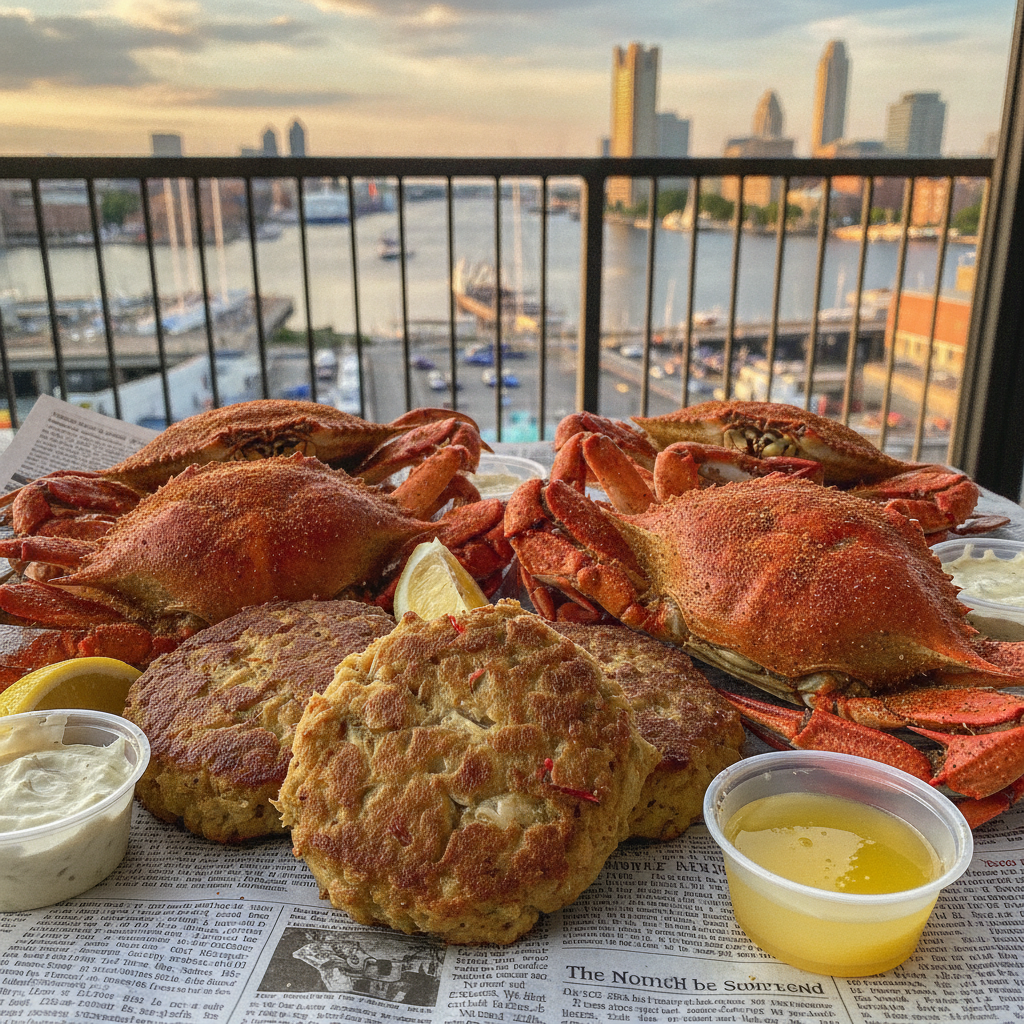
Baltimore: Largest Matisse Collection in the World, Poe Toaster Cognac and the 1782 Crab Market
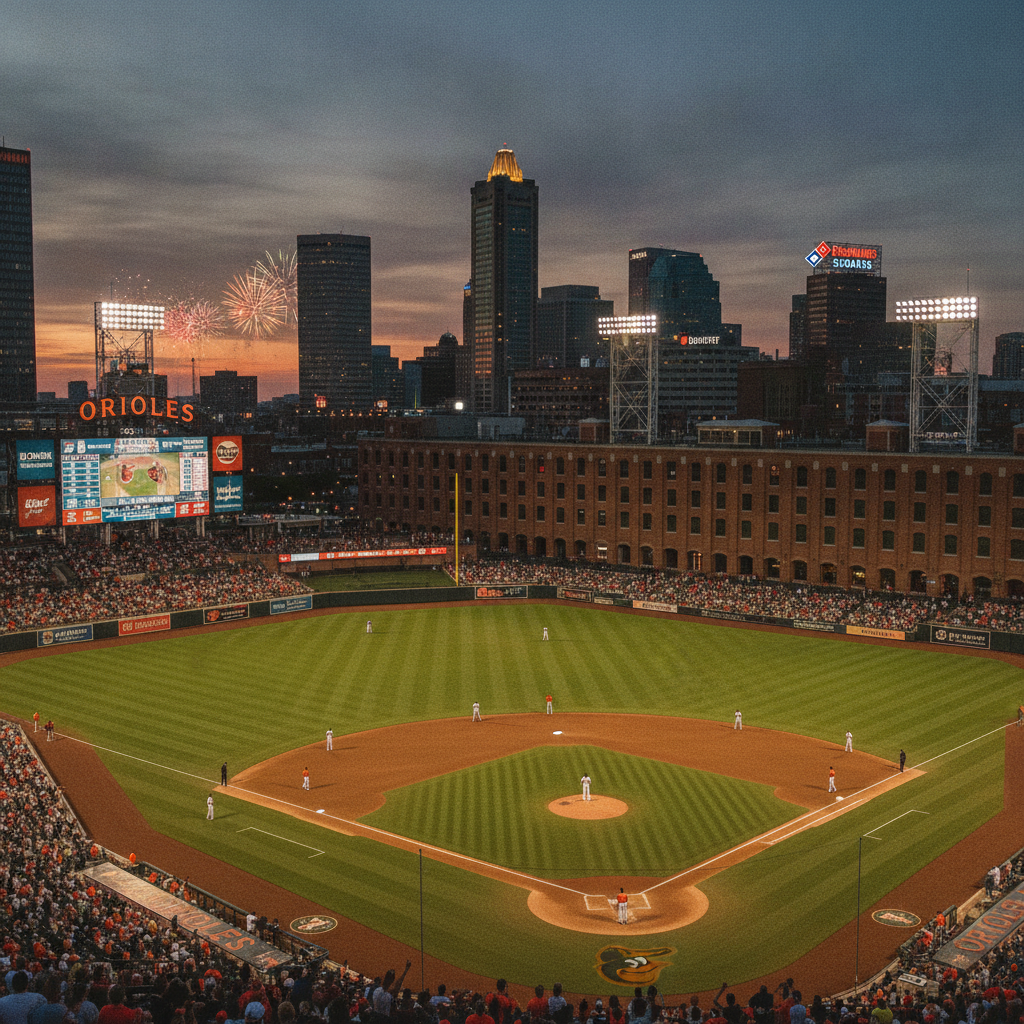
Baltimore: The Ballpark That Changed Baseball, Frederick Douglass Escapes in a Sailor Suit and the First Catholic Cathedral in the US
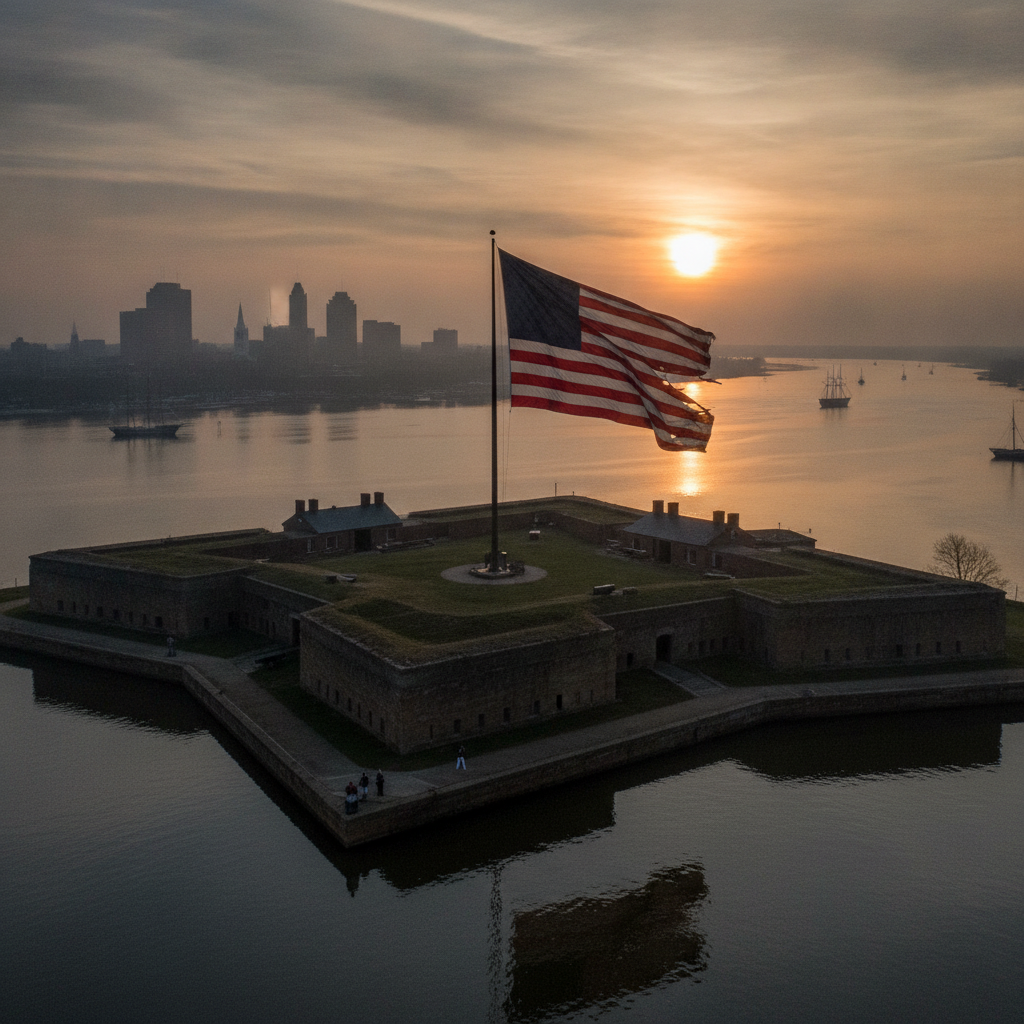
Baltimore: Inner Harbor (National Aquarium, USS Constellation last sail warship, USS Taney Pearl Harbor survivor, American Visionary Art Museum), Fort McHenry (September 13-14 1814 25hr British bombardment, Francis Scott Key aboard British ship writes Star-Spangled Banner, 30x42ft Pickersgill flag now Smithsonian), Chesapeake Bay blue crabs (Old Bay Seasoning Gustav Brunn 1939, Maryland crab cake purist lumped meat, LP Steamers, Faidley Seafood Lexington Market 1782), Edgar Allan Poe (died Baltimore October 7 1849 mysterious circumstances, Westminster Hall grave, Poe Toaster 70 years roses cognac, Baltimore Ravens named after The Raven 1845), The Wire (greatest US TV drama David Simon Ed Burns, Bethlehem Steel Sparrows Point 35,000 workers closed 2012, 2015 Freddie Gray uprising), Practical (Johns Hopkins first US research university 1876, Flexner Report reformed US medical education, Fells Point Federal Hill Canton Mount Vernon, MARC train to DC, BWI airport)