Baltimore: Largest Matisse Collection in the World, Poe Toaster Cognac and the 1782 Crab Market
See 1000 Matisse works the Cone sisters bought from him directly in Paris at the free Baltimore Museum of Art, visit the Edgar Allan Poe house where he wrote and the grave where an anonymous figure left roses and cognac for decades, trace the Johns Hopkins revolution in medical education that admitted women from founding and invented bedside clinical teaching, celebrate Ravens Super Bowl defenses named after Poe own bird, eat Faidley crab cakes at Lexington Market operating since 1782, and find marble front steps on every Victorian rowhouse in Druid Hill and Reservoir Hill.
- 1
Baltimore Museum of Art and Cone Collection
The Baltimore Museum of Art at 10 Art Museum Drive, the largest art museum in Maryland, holds the largest collection of Henri Matisse works in the world, nearly 1,000 pieces assembled by Baltimore sisters Claribel and Etta Cone, who spent decades in Paris in the early 20th century purchasing directly from Matisse, Picasso, Cezanne, and their circle at prices that seemed extravagant at the time and became incalculable in retrospect. The Cone Collection, donated to the BMA in 1949, is the core of the museum. The BMA eliminated admission charges for permanent collection viewing in 2006, making the Cone Collection and 95,000-work permanent collection freely accessible. The museum has taken an active stance on diversifying its collection and acquisition priorities. The adjacent Sculpture Garden is a pleasant outdoor space. The museum is in the Charles Village neighborhood adjacent to Johns Hopkins University.
- 2
Edgar Allan Poe House and Literature
The Edgar Allan Poe House and Museum at 203 North Amity Street in the Hollins Market neighborhood, where Poe lived from 1832 to 1835 with his grandmother, aunt, and cousin Virginia Clemm whom he later married, is one of the most visited literary historic sites on the East Coast. Poe is buried in the Westminster Hall and Burying Ground cemetery at Fayette and Greene Streets, where he died in 1849 under circumstances that remain disputed, with theories including rabies, cooping which was voter fraud forcing, carbon monoxide poisoning, and alcohol-related causes. For decades an anonymous figure known as the Poe Toaster left roses and cognac at Poes grave each January 19 on his birthday, a tradition that ended in 2009 and was later revived with a new toaster. The Maryland Historical Society holds the original manuscript of The Raven. Johns Hopkins University in Baltimore, named for its Quaker merchant benefactor who died in 1873, founded the first American research university model.
- 3
Johns Hopkins and Medical Research
Johns Hopkins University and the Johns Hopkins Hospital, both founded by the bequest of Baltimore merchant Johns Hopkins who left his entire 7 million dollar estate to found them at his death in 1873, together constitute the most influential medical education and research institution in American history. The Johns Hopkins Hospital, which opened in 1889, pioneered modern medical education by requiring physicians to have scientific training and combining clinical training with laboratory research for the first time in the United States. The Johns Hopkins School of Medicine, opened in 1893 after women donors insisted on admitting women as a condition of their contribution, admitted women from its founding. William Osler, who developed the model of bedside clinical teaching, served at Hopkins. The Hopkins Applied Physics Laboratory in Laurel is a major defense research institution. Hopkins is the largest employer in Baltimore, with over 40,000 employees and billions in annual research funding.
- 4
Baltimore Ravens and M&T Bank Stadium
The Baltimore Ravens, formed in 1996 when the Cleveland Browns franchise relocated to Baltimore under owner Art Modell in a move still bitterly resented in Cleveland, have won two Super Bowl championships in 2000 and 2012. The 2000 championship team with the defense led by linebacker Ray Lewis, who overcame a murder investigation in the off-season, is considered one of the greatest defensive teams in NFL history. The 2012 championship was won over the San Francisco 49ers in Super Bowl XLVII in New Orleans. M&T Bank Stadium, opened in 1998 adjacent to Camden Yards, forms a sports complex on the south side of downtown. The Ravens deep connection to the Edgar Allan Poe legacy is reflected in the team name, the purple color scheme, and the mascot named Poe. The loss of the Baltimore Colts to Indianapolis in 1984 when owner Robert Irsay moved the team overnight in Mayflower moving trucks remains a defining trauma in Baltimore sports history.
- 5
Lexington Market and Baltimore Food
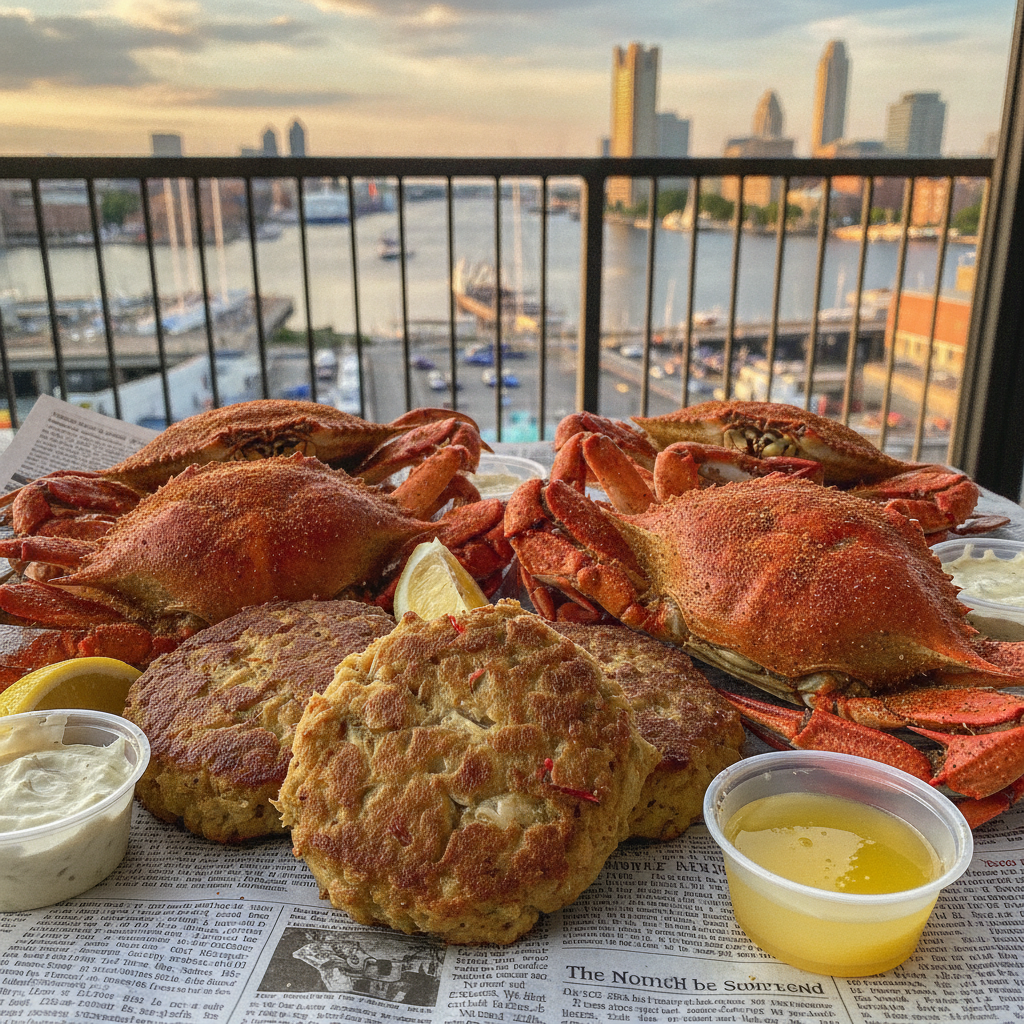
Lexington Market at Eutaw and Lexington Streets, which has operated continuously since 1782 and claims to be the oldest continuously operating market in the United States, underwent a major renovation opening in 2022. The market has historically been the primary source of Baltimore specialty foods including steamed blue crabs, crab cakes, pit beef, and Baltimore-specific prepared foods in a large food hall format. Faidley Seafood at Lexington Market, operated by the Faidley family since 1886, is widely credited with making the best crab cake in Baltimore, a distinction contested by dozens of other establishments. The Baltimore crab cake, made with jumbo lump crab meat and minimal binder, is distinct from crab cakes elsewhere. The Chesapeake Bay blue crab, the foundation of Baltimore seafood culture, has experienced significant population decline due to overharvesting and water quality degradation, making crab cakes increasingly expensive. Old Bay seasoning, created in Baltimore in 1939, is used on virtually everything.
- 6
Druid Hill Park and Maryland Zoo
Druid Hill Park in northwest Baltimore, covering 745 acres and established in 1860, is one of the oldest large urban parks in the United States and the third largest urban park in Maryland. The park contains the Maryland Zoo, the third oldest zoo in the United States founded in 1876, and the Howard P. Rawlings Conservatory and Botanic Gardens, a Victorian glass greenhouse complex. The Jones Falls stream runs through a valley in the park. The park contains a reservoir that still serves as part of the city water system. Druid Hill Park was the site of significant civil rights protests in the 1940s and 1950s challenging segregated tennis courts. The Rawlings Conservatory, with its 1888 palm house, houses tropical plants and presents seasonal flower exhibitions. The surrounding Reservoir Hill neighborhood, historically African American and now a target of reinvestment, contains Victorian townhouses with Baltimore distinctive marble front steps.
Walk this route with audio
Stories play automatically as you reach each stop — no tapping needed.
More in Baltimore
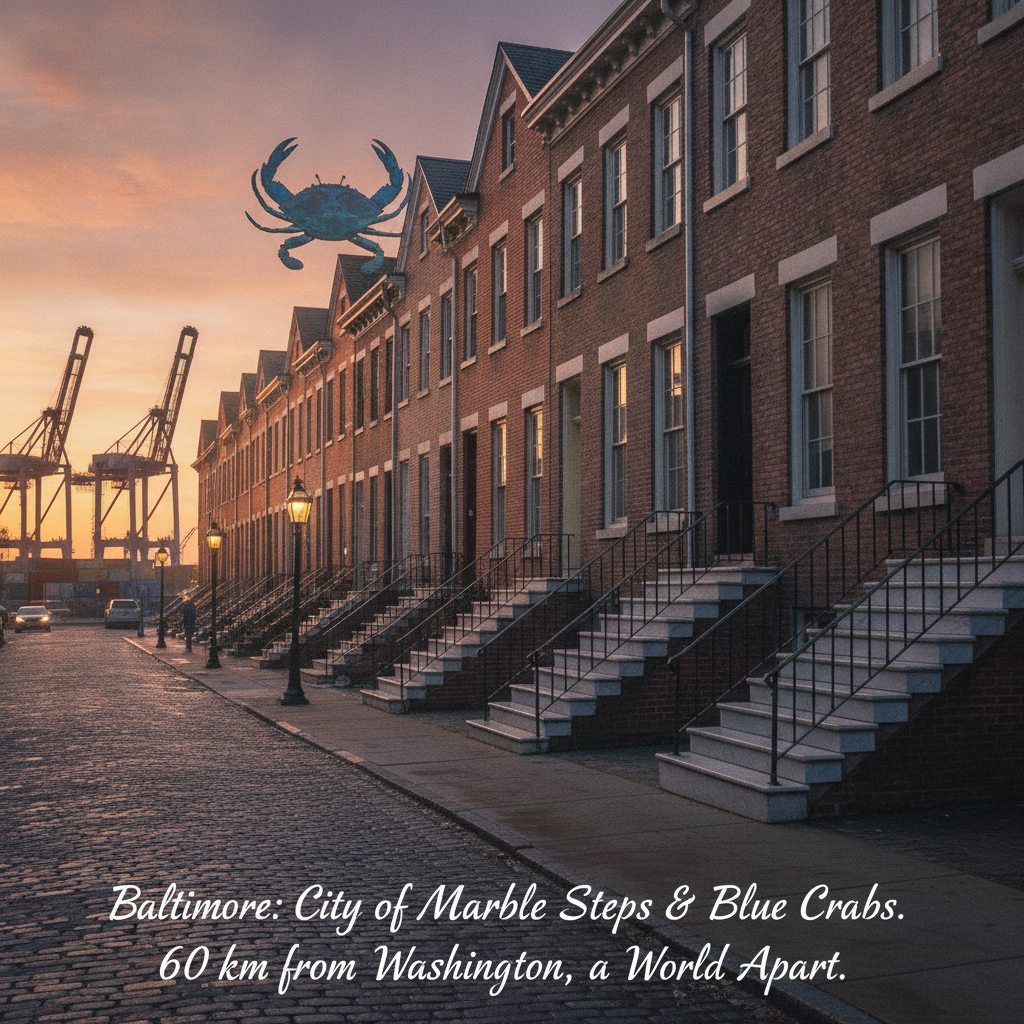
Baltimore R4: Rowhouse culture (70,000 brick rowhouses, white marble Cockeysville stoop scrubbing Saturday tradition, Bolton Hill Patterson Park William Patterson Jerome Bonaparte, Johns Hopkins Hospital 1889 modern surgery nursing), Baltimore music (Cab Calloway Hi-De-Ho, Billie Holiday raised in Baltimore Pigtown, Eubie Blake ragtime, Frank Zappa born 1940, 8x10 Club Federal Hill), Port of Baltimore (largest US auto import port, Baltimore Clipper slave trade, Key Bridge collapse March 26 2024 Dali container ship 6 workers killed largest recovery operation US), Civil rights (Thurgood Marshall 32 Supreme Court cases 29 wins Brown v Board 1954 first Black Justice 1967, Frederick Douglass HS Calloway Holiday Marshall, Morgan State HBCU 1867), Baltimore in film (John Waters Pink Flamingos Hairspray Serial Mom, The Wire filmed on location, Barry Levinson Diner 1982 Rain Man 1988, Sleepless in Seattle), Practical (median home USD 180-200K vs DC USD 600K, MARC train to DC 40min, Acela to NYC 2.5hr, BWI Southwest hub Key Bridge replacement USD 60M 2028)
Baltimore: Pope of Trash Homeland, Free Double Warhol Museum and the Freeway That Never Got Built
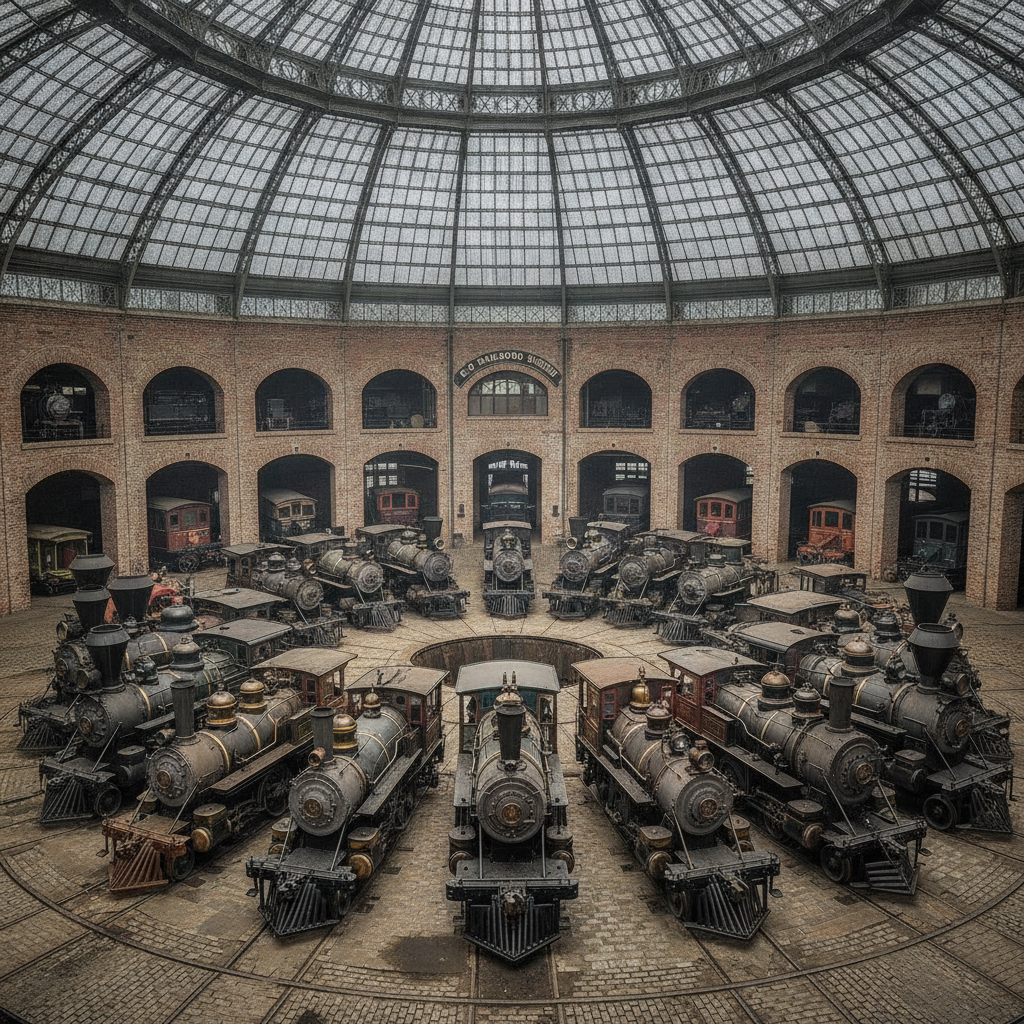
Baltimore R3-R4: B&O Railroad Museum (1827 first common-carrier US railroad, 1884 roundhouse 22-sided largest early railroad collection, Tom Thumb 1830 replica, Lincoln Baltimore Plot 1861), Space Telescope Science Institute (Hubble 1990 James Webb 2022, Applied Physics Lab GPS TIROS-1 New Horizons Pluto 2015), H.L. Mencken (Baltimore Sun 1906-1948 greatest American journalist, The American Language 1919 never out of print, John Waters Pope of Trash Hairspray 1988), African American heritage (MICA oldest degree-granting art college 1826, Great Blacks in Wax Museum, Reginald Lewis first Black billionaire USD 985M buyout 1987, Marin Alsop first woman major US orchestra music director), Chesapeake Bay (largest US estuary 320km, 348 fish species ecological decline restoration USD 6B, Assateague wild ponies 300 years), Practical (BWI Southwest hub MARC train to DC 40min, Preakness Stakes Pimlico May second oldest US track 1870, blue crab season July-September, Artscape largest free Maryland arts festival July)
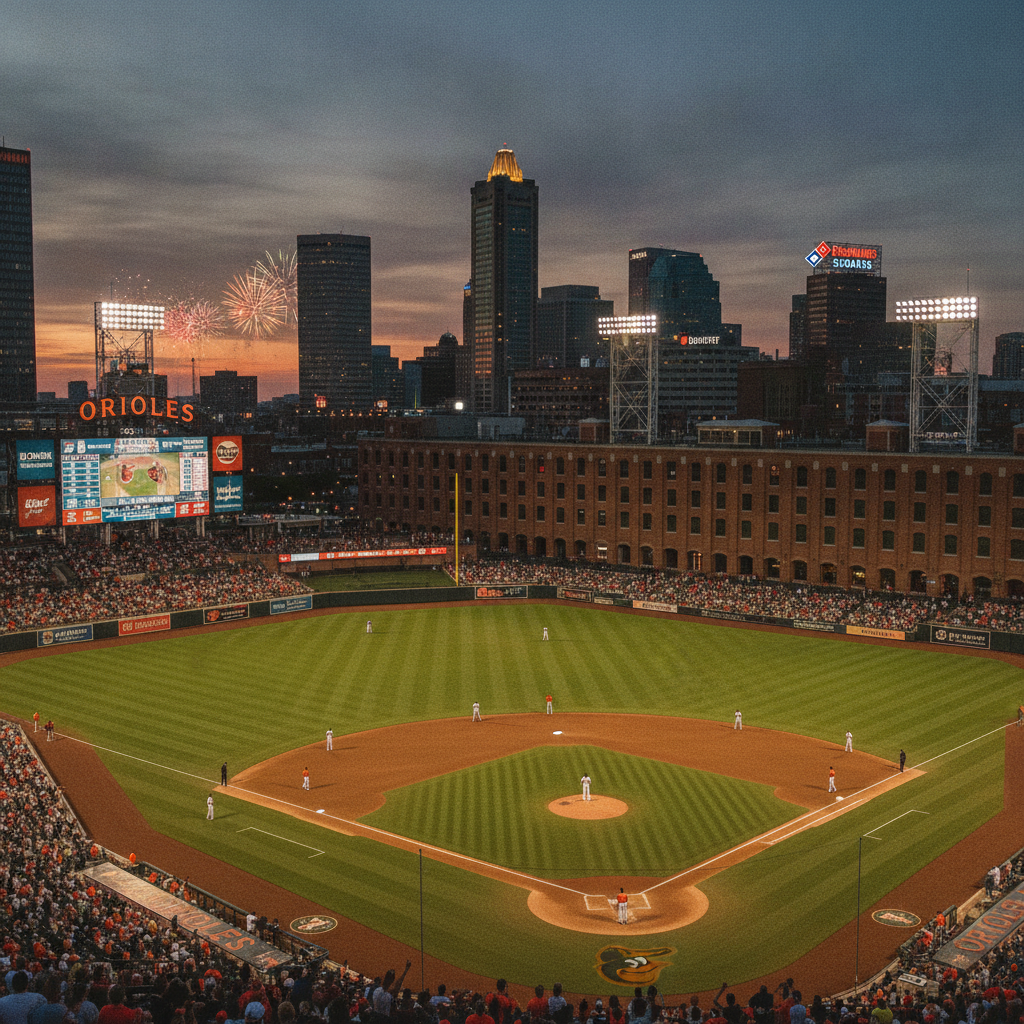
Baltimore: The Ballpark That Changed Baseball, Frederick Douglass Escapes in a Sailor Suit and the First Catholic Cathedral in the US
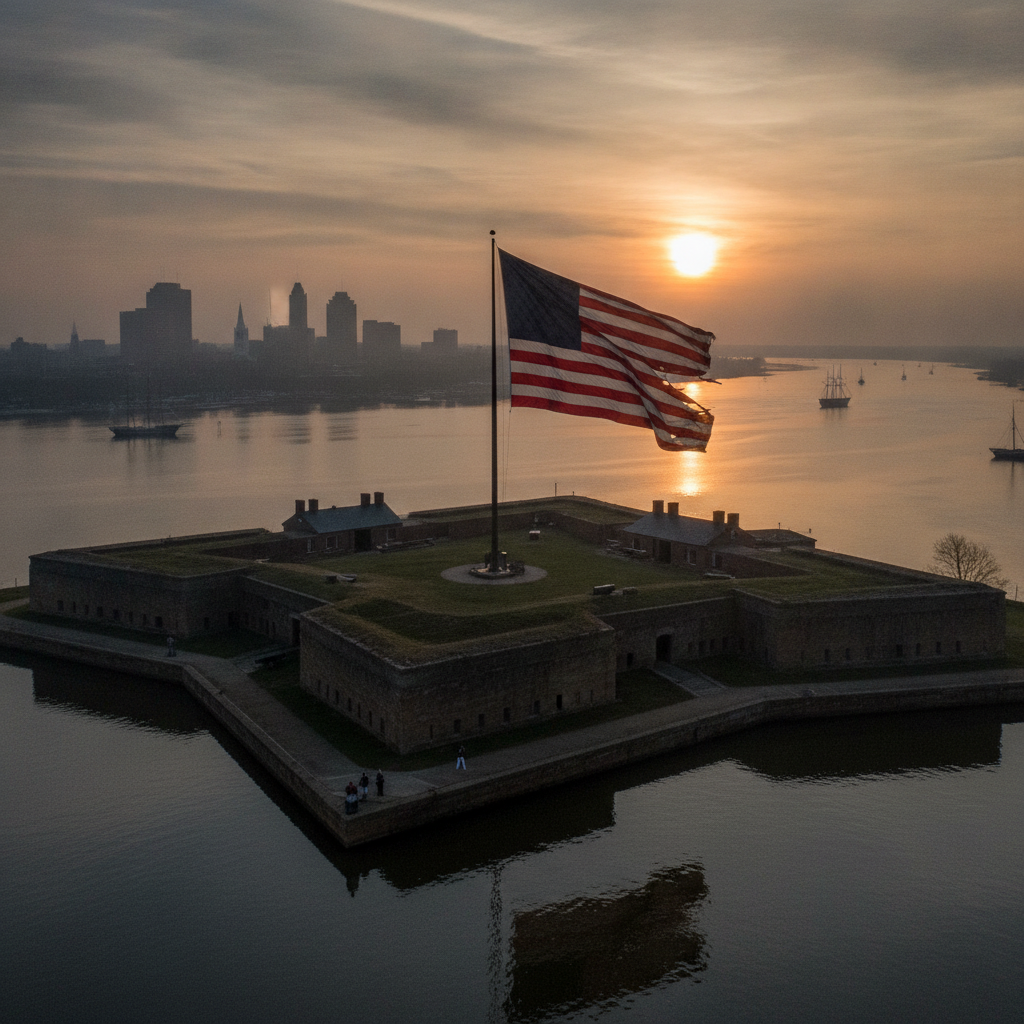
Baltimore: Inner Harbor (National Aquarium, USS Constellation last sail warship, USS Taney Pearl Harbor survivor, American Visionary Art Museum), Fort McHenry (September 13-14 1814 25hr British bombardment, Francis Scott Key aboard British ship writes Star-Spangled Banner, 30x42ft Pickersgill flag now Smithsonian), Chesapeake Bay blue crabs (Old Bay Seasoning Gustav Brunn 1939, Maryland crab cake purist lumped meat, LP Steamers, Faidley Seafood Lexington Market 1782), Edgar Allan Poe (died Baltimore October 7 1849 mysterious circumstances, Westminster Hall grave, Poe Toaster 70 years roses cognac, Baltimore Ravens named after The Raven 1845), The Wire (greatest US TV drama David Simon Ed Burns, Bethlehem Steel Sparrows Point 35,000 workers closed 2012, 2015 Freddie Gray uprising), Practical (Johns Hopkins first US research university 1876, Flexner Report reformed US medical education, Fells Point Federal Hill Canton Mount Vernon, MARC train to DC, BWI airport)