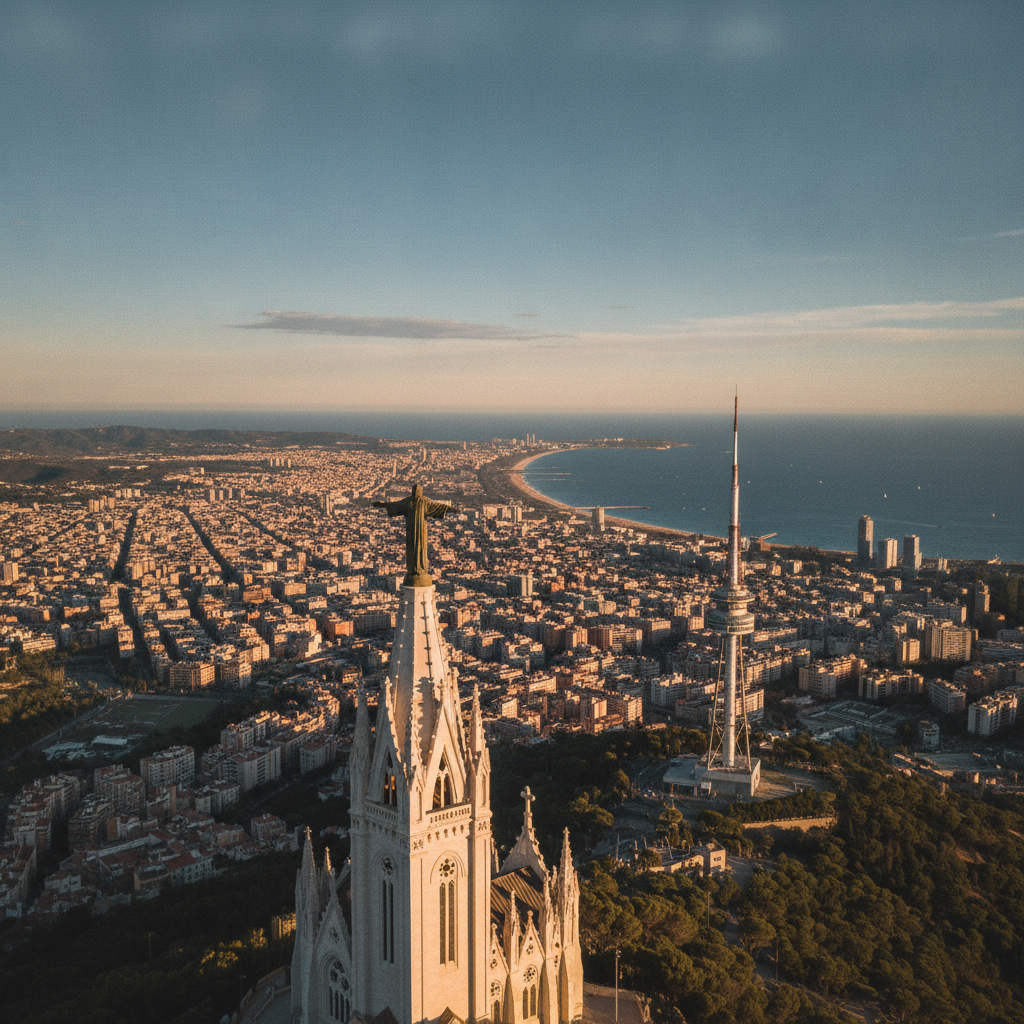
Gothic Quarter & El Born: Roman Ruins to the City of the Sea
The Barri Gòtic (Gothic Quarter) is one of the largest and best-preserved medieval city centers in Europe — though 'preserved' understates what is actually a complex history of survival, adaptation, demolition, and creative reconstruction. The Roman colony of Barcino (founded 10–15 BC) underlies the medieval city; its ruins lie beneath Plaça del Rei and the Cathedral. The medieval Catalan-Aragonese Crown (12th–15th centuries) made Barcelona the commercial capital of the western Mediterranean, building the Cathedral, the royal palace complex, and the sea-facing quarter of La Ribera (now El Born). This route moves through 2,000 years of urban sediment from the Cathedral to the extraordinary Gothic hall of Santa Maria del Mar and the 19th-century iron market of El Born.
1. Barcelona Cathedral — The Gothic Heart
- 1
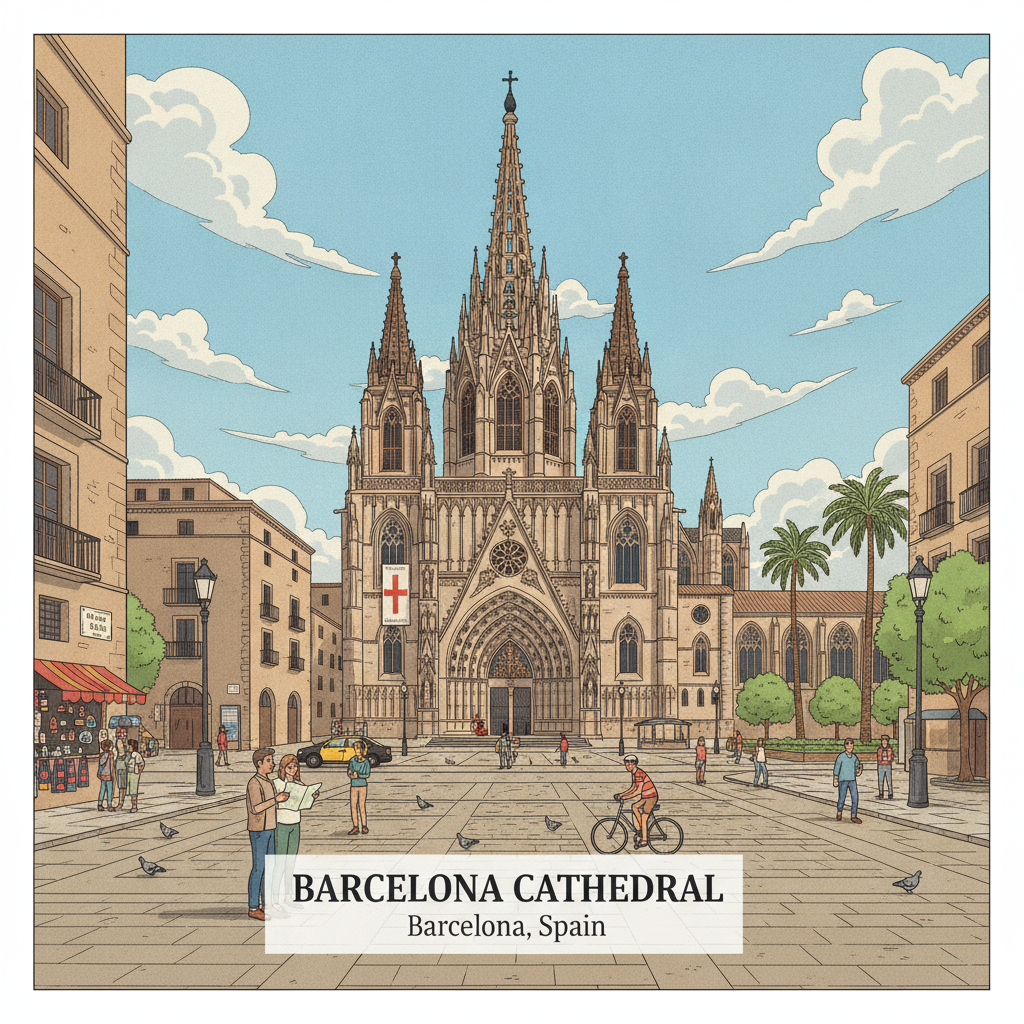
Barcelona Cathedral — The Gothic Heart
The Cathedral of the Holy Cross and Saint Eulalia (La Catedral de la Santa Creu i Santa Eulàlia), on the Plaça de la Seu, was built primarily between 1298 and 1450 on the site of a Romanesque cathedral (1046–1058), which was itself built over a Visigothic cathedral, which was itself built over a Roman basilica (4th century). The current Gothic structure is therefore the fourth building on this site in as many centuries. The facade facing the Plaça de la Neu is a 19th-century addition (1882–1913), designed in neo-Gothic style when the medieval project was declared structurally complete; the original medieval facade was never built. The Cathedral's cloister is one of the most unusual in Spain: a large Gothic garden with a central fountain, magnificent magnolia and palm trees, and, by long tradition, 13 white geese (representing the 13 years of Saint Eulalia's life) that live permanently in the cloister. The crypt beneath the main altar contains the alabaster sarcophagus of Saint Eulalia (martyred by the Roman governor 304 AD at age 13), patron saint of Barcelona, which was rediscovered in 877 and brought to the Cathedral from the church of Santa Maria del Mar.
- 2
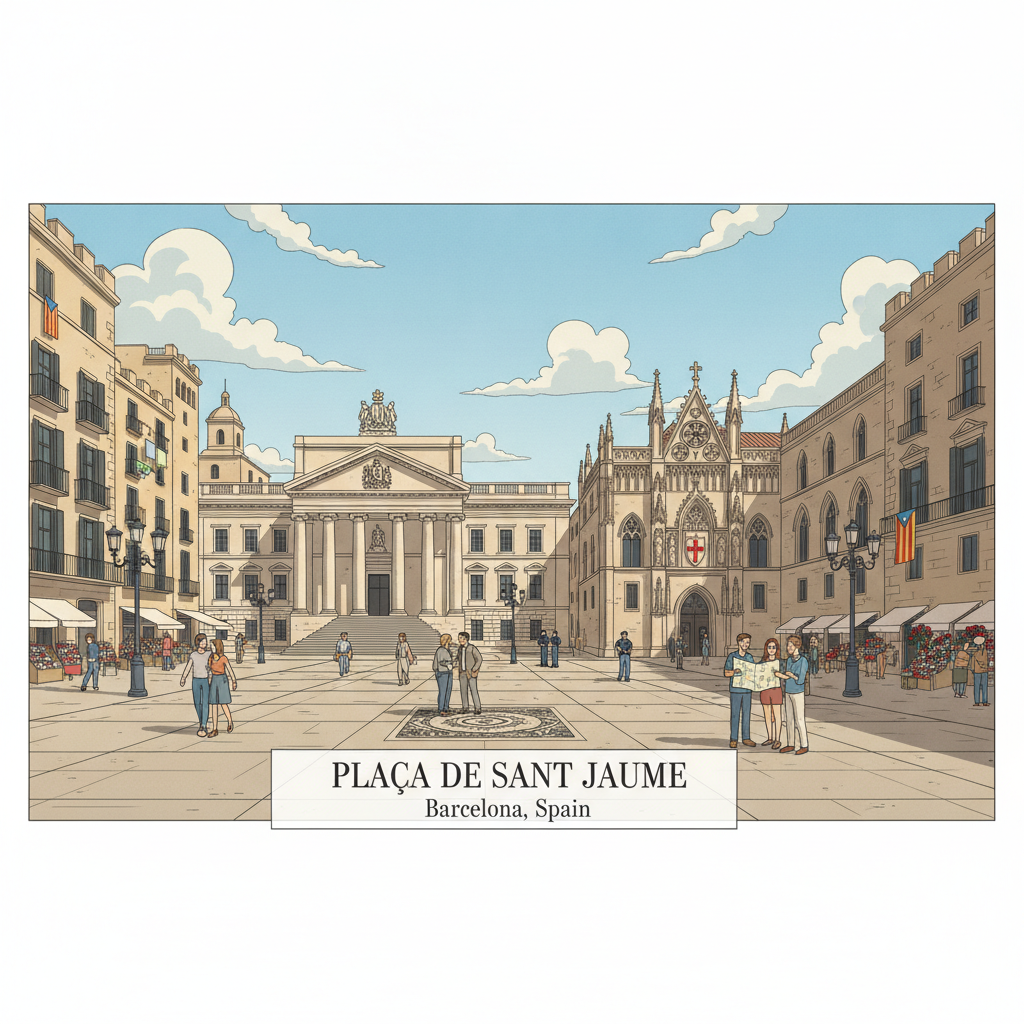
Plaça de Sant Jaume — The Political Center of Catalonia
Plaça de Sant Jaume, the large rectangular plaza at the intersection of two of Barcino's main Roman roads (the decumanus maximus and the cardo maximus), has been the political center of Barcelona since Roman times. Today two facing buildings define it: the Ajuntament de Barcelona (City Hall, with a medieval Gothic facade on the side street and a neo-classical main facade on the plaza, 1847) and the Palau de la Generalitat (the government building of the Catalan regional government, its Gothic facade from 1416 making it the older of the two). The plaza is the site of the traditional Sant Jordi Day celebrations (April 23), when the square fills with rose and book stalls — a Catalan tradition combining the feast day of Saint George (Catalonia's patron saint) with the anniversary of the deaths of Cervantes and Shakespeare (both died April 23, 1616). Political demonstrations traditionally end here.
- 3
Plaça del Rei & Roman Ruins — The City Beneath
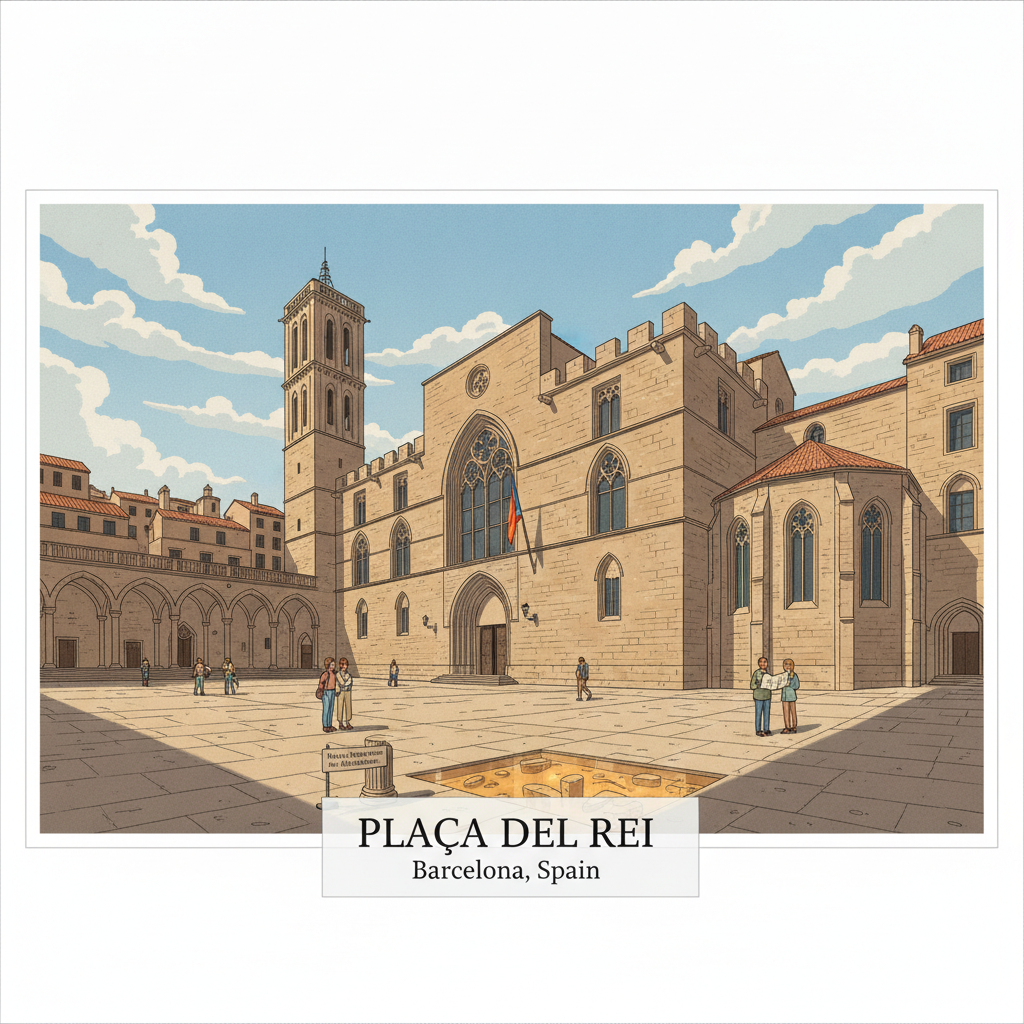
Plaça del Rei ('King's Square') is an enclosed medieval plaza of great atmospheric power: surrounded on three sides by the Palau Reial Major (the main royal palace of the Catalan-Aragonese kings, 12th–15th centuries), the Capella de Santa Àgata (royal chapel, 1302), and the Mirador del Rei Martí (watchtower, 1555). The plaza is traditionally identified as the location where Ferdinand and Isabella received Columbus on his return from the Americas (1493) — though historians debate whether the actual meeting took place here or at the Palau del Lloctinent nearby. Beneath the plaza lies the Museu d'Història de Barcelona (MUHBA), the entry point to an extraordinary excavation: 4,000 square meters of Roman Barcino (streets, workshops, water cisterns, a wine-pressing facility, a laundry) preserved at the level of the 1st–4th century AD, accessible by walkways suspended above the ruins. One of the best Roman archaeological sites in Spain.
- 4
Picasso Museum — 4,250 Works in Five Medieval Palaces
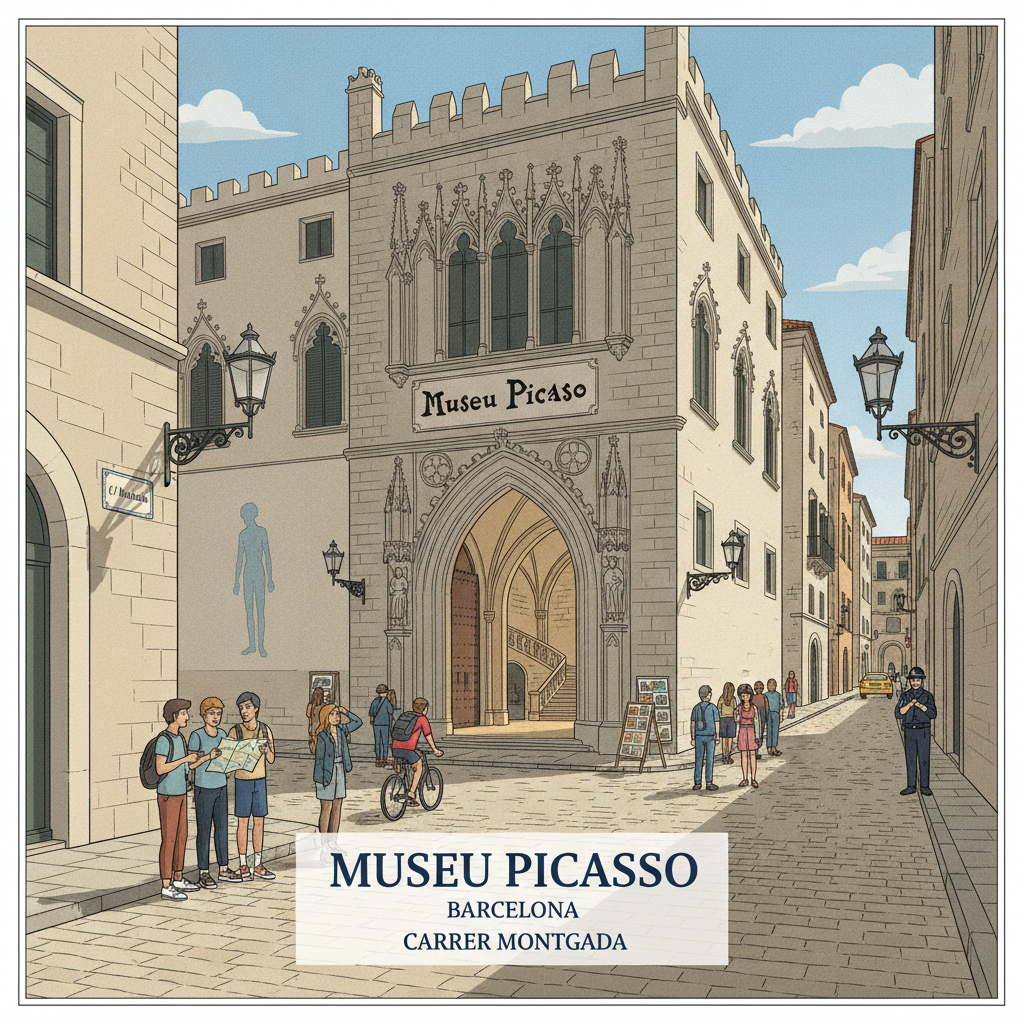
The Museu Picasso, on Carrer Montcada in El Born, is the most visited art museum in Barcelona and one of the most important Picasso collections in the world: 4,249 works spanning Picasso's entire career from his earliest childhood drawings (age 9, Malaga, 1890) through his late work. The collection is particularly strong on the early period (1890–1904), when Picasso lived in Barcelona and formed his artistic identity: the Blue Period works here, including La Vie (1903, on loan from Cleveland) and the Celestina (1904), are defining statements of that phase. The extraordinary series of 58 paintings of Las Meninas (after Velázquez, 1957), created in a concentrated period of creative dialogue with the Velázquez original, fills one entire floor. The museum is housed in five adjacent Gothic palaces (15th century), whose courtyard staircases and late-medieval stone interiors provide a remarkable setting for Picasso's modernist work.
- 5
Santa Maria del Mar — The Cathedral of the Sea
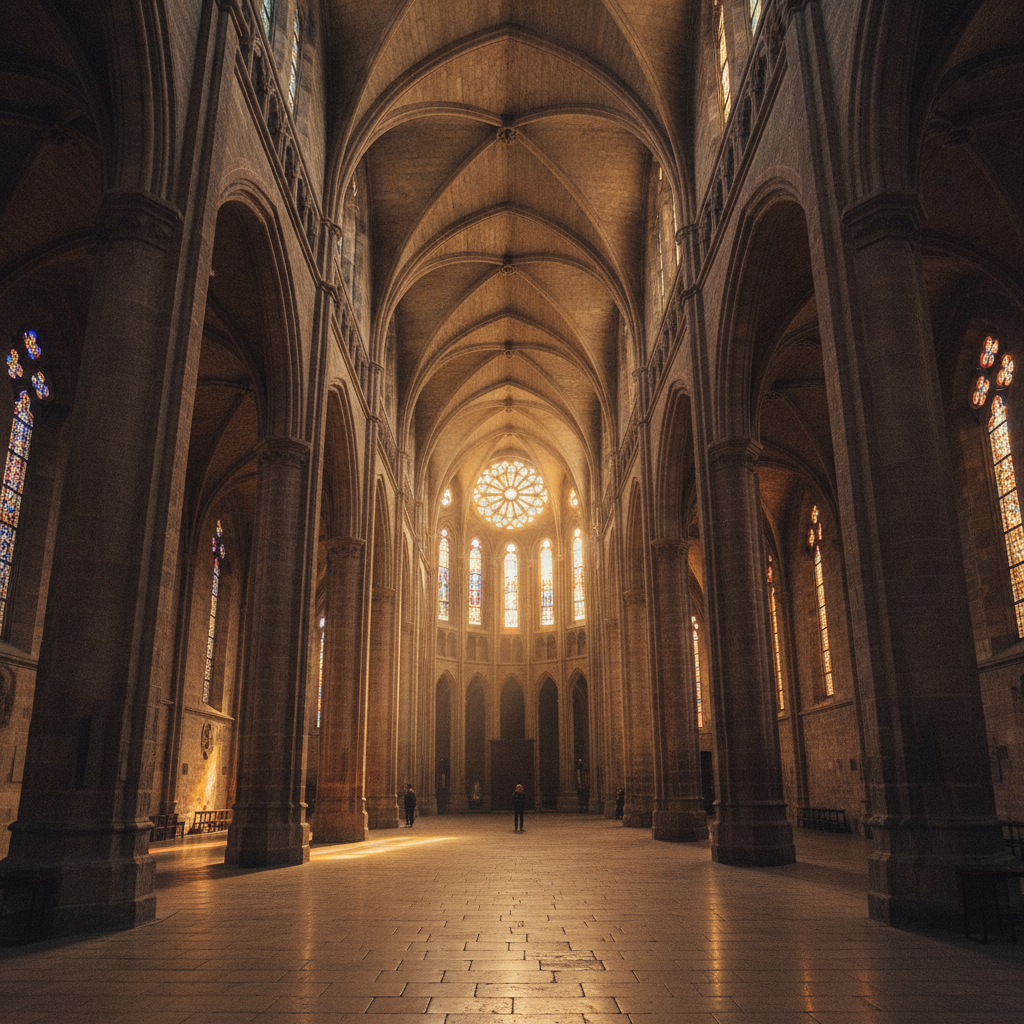
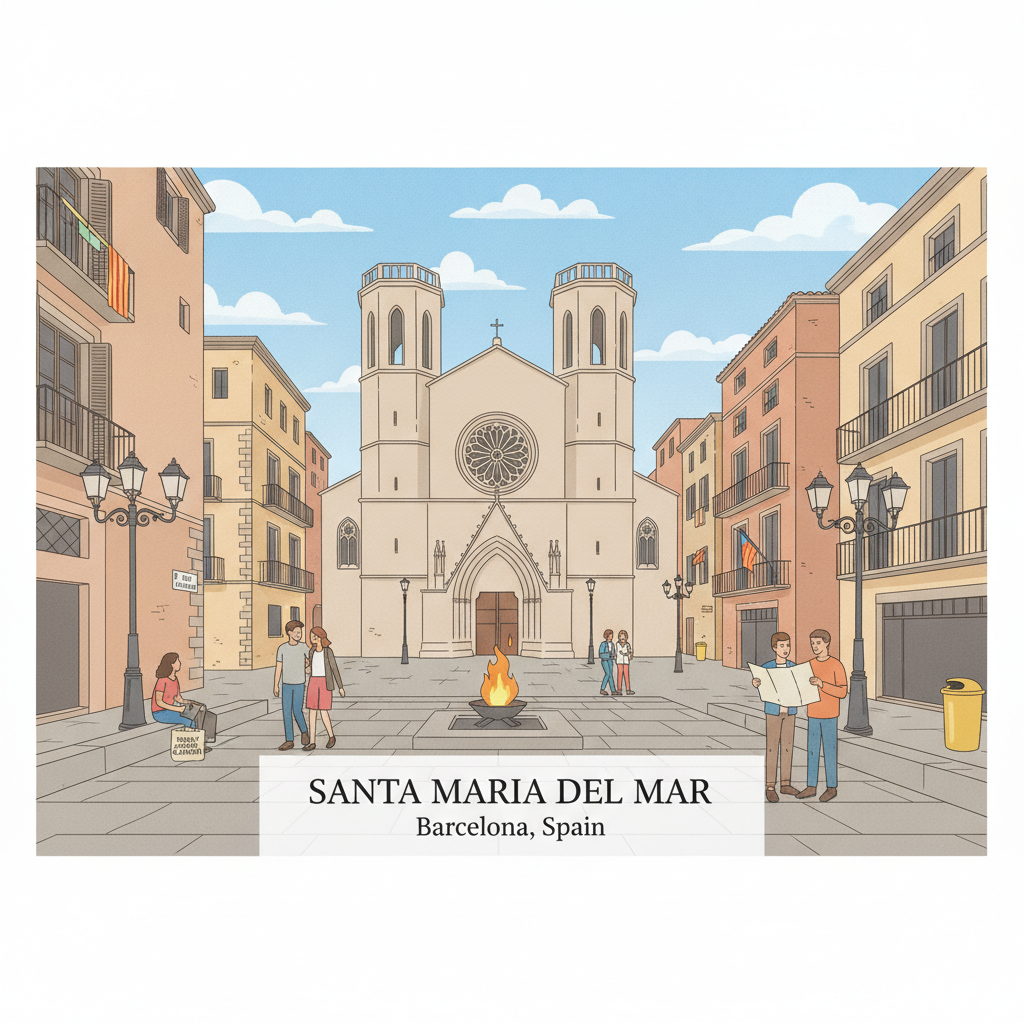
Santa Maria del Mar ('Saint Mary of the Sea'), in the Ribera neighborhood at the edge of El Born, is considered the finest Gothic building in Catalonia and one of the most perfect Gothic structures in Europe — by contrast with the Barcelona Cathedral (built over centuries, heavily modified) a building of remarkable architectural unity, built in a concentrated period of just 54 years (1329–1383) by the guild of maritime workers (stevedores and traders of the nearby port). The building is an extreme statement of the Catalan Gothic tradition (which prioritizes width over height, preferring broad naves and minimal ornamentation over the French Gothic emphasis on soaring verticality and stained glass): three naves of nearly equal height, supported by slender octagonal columns spaced 13 meters apart (among the widest bays in Gothic architecture anywhere), lit by a large rose window and narrow clerestory windows. The interior, stripped of all Baroque additions by the 1936 anarchist fire (which burned for 11 days), now appears in its original Gothic austerity — arguably more powerful for the destruction.
- 6
El Born Market & Neighborhood — The 19th Century Returns
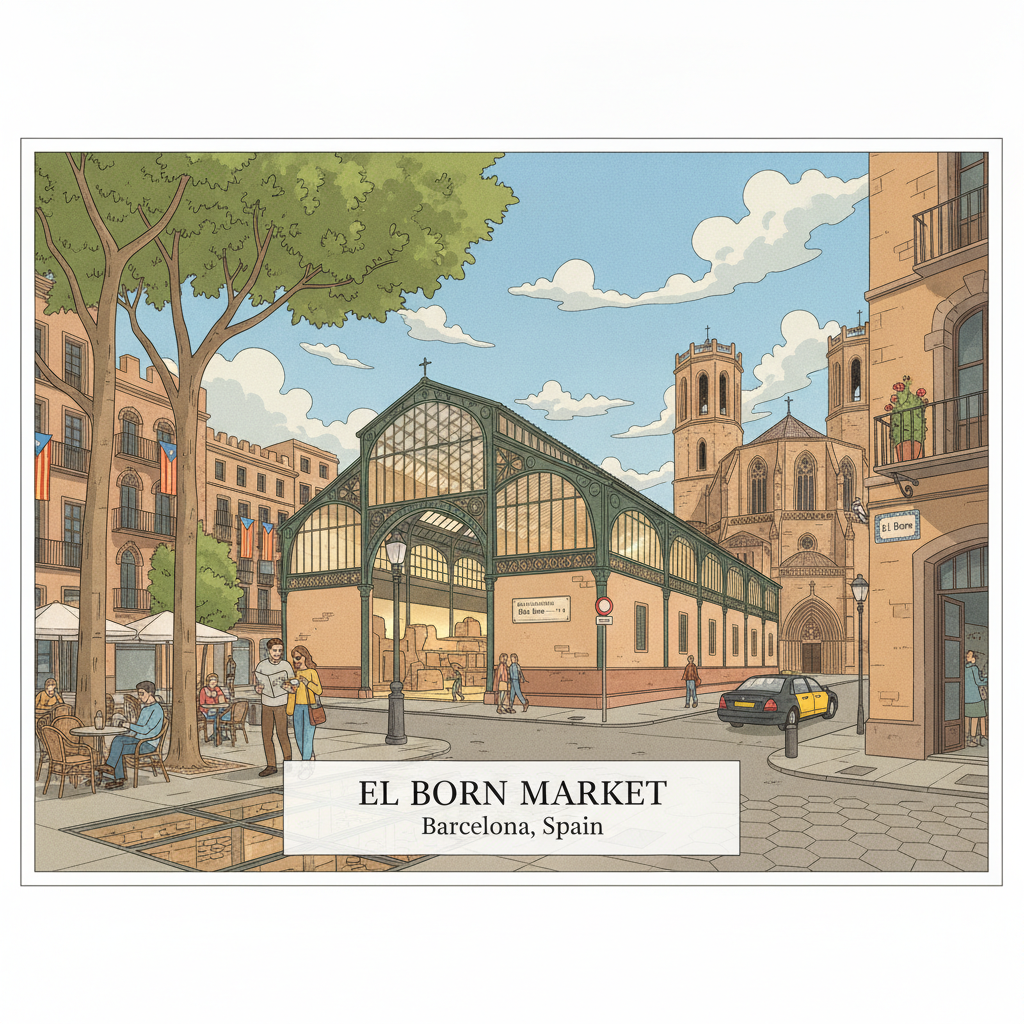
The Mercat del Born, a large iron-framed market hall built in 1876 (ironwork by Josep Fontserè, who also designed the Parc de la Ciutadella waterfall), was Barcelona's main wholesale food market until 1971, when it was replaced by the Mercabarna facility. Long abandoned and repeatedly threatened with demolition (once to build a provincial library), excavation for the library foundations in 2002 revealed the extraordinary Barcelona of 1714: an entire neighborhood preserved beneath the market floor, demolished on September 11, 1714, when the city fell after a 14-month siege by Philip V's Bourbon forces following the War of the Spanish Succession. The houses, streets, and household objects of a city at the moment of its political and cultural destruction are now visible beneath glass floors in the market building, which has become the Espai Cultural del Born — a museum and cultural center focused on the meaning of 1714 in Catalan history and memory. The surrounding El Born neighborhood is now one of Barcelona's most fashionable areas for independent fashion, galleries, and bars.
Walk this route with audio
Stories play automatically as you reach each stop — no tapping needed.
More in barcelona
Pedralbes, Camp Nou & Sarrià: Barcelona's Quiet Upper City
Palau de la Música & Sant Pere: The Greatest Concert Hall in Spain and the City of Iron
Barceloneta & the Olympic Waterfront: From Columbus to the Mediterranean
La Rambla, Boqueria & El Raval: The Street, the Market, and the Other Barcelona
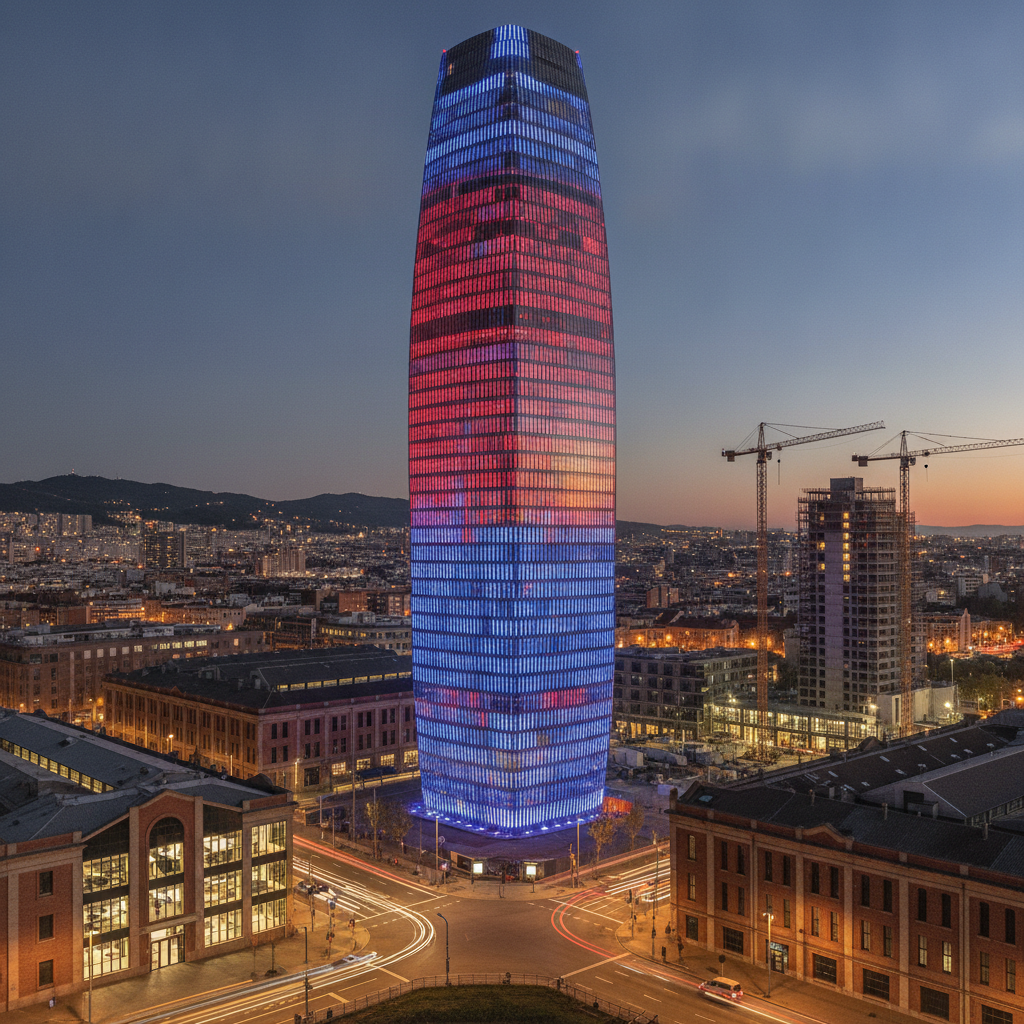
Poblenou, 22@ & the Design Hub: Barcelona's Creative Frontier