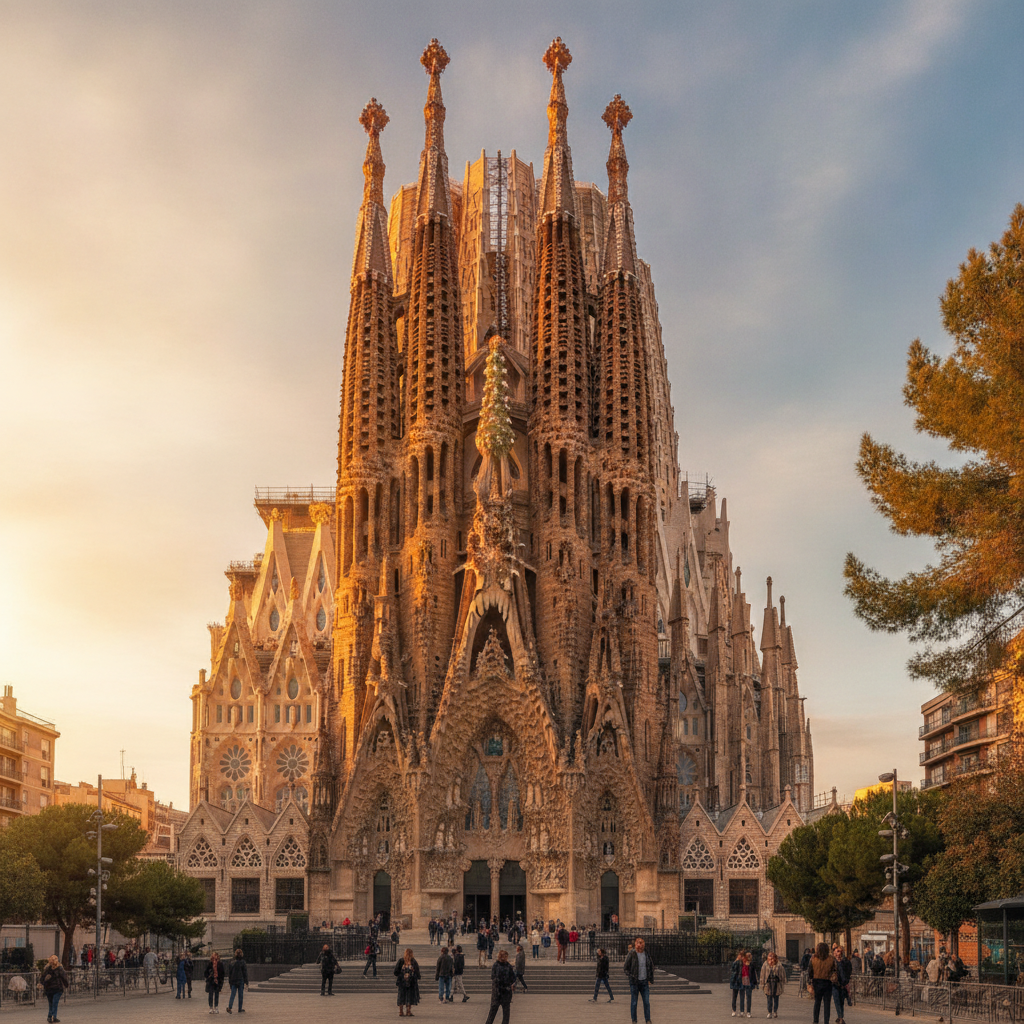
Palau de la Música & Sant Pere: The Greatest Concert Hall in Spain and the City of Iron
The neighbourhood of Sant Pere, between the Gothic Quarter and El Born, contains two of Barcelona's most extraordinary buildings — the Palau de la Música Catalana (1908) and the Mercat de Santa Caterina (2005) — as well as the old administrative center of the medieval city around the Arc de Triomf and one of Barcelona's most undervisited green spaces, the Parc de la Ciutadella. The Palau de la Música, a UNESCO World Heritage Site, is the only concert hall in the world lit entirely by natural light during the day; the Santa Caterina market is one of the finest examples of contemporary urban architecture in Spain.
1. Palau de la Música Catalana — The Concert Hall of Light
- 1
Palau de la Música Catalana — The Concert Hall of Light
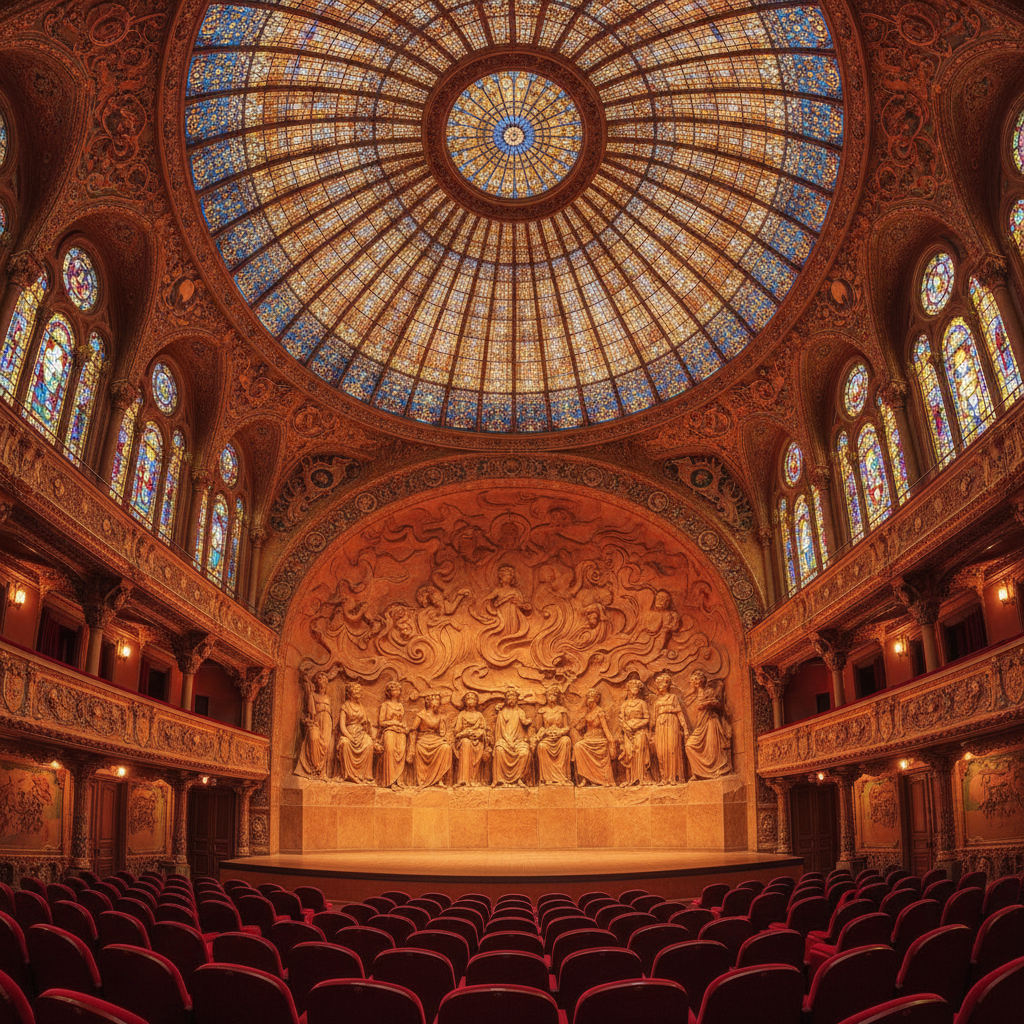
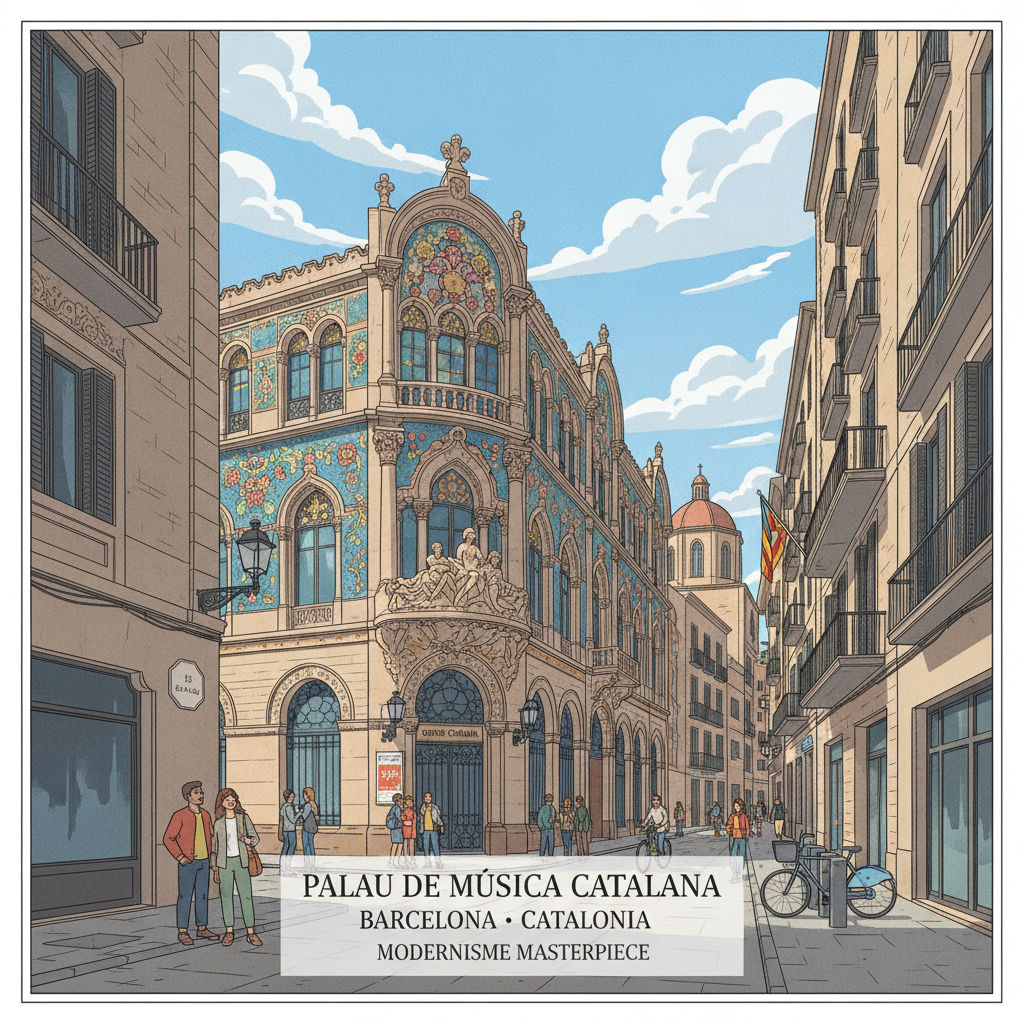
The Palau de la Música Catalana, designed by Lluís Domènech i Montaner and built between 1905 and 1908, is the defining monument of Catalan Modernisme and one of the most extraordinary concert halls ever built: a UNESCO World Heritage Site whose interior is entirely lit by natural light — by the great stained-glass skylight over the auditorium (an inverted dome of 3,700 panes of blue, amber, and white glass, the largest stained-glass skylight in the world), by the stained-glass windows on the lateral facades, and by the glass and iron structural system that reduces the walls to transparent membranes of color and light. The exterior, on the narrow Carrer de Sant Pere més Alt, is equally extraordinary: a dense encrustation of ceramic mosaic, carved stone, glazed terracotta, and polychrome tile covering every surface of a building wedged between adjacent structures. The concerts (the hall seats 2,200 in the main auditorium and a smaller chamber hall) are the primary purpose of the building — to hear music here, particularly the Orfeó Català choir for which the hall was built, is an aesthetic experience that has little parallel. Guided tours run daily when there are no rehearsals.
- 2
Sant Pere Neighborhood — The Grid Behind the Gothic Quarter
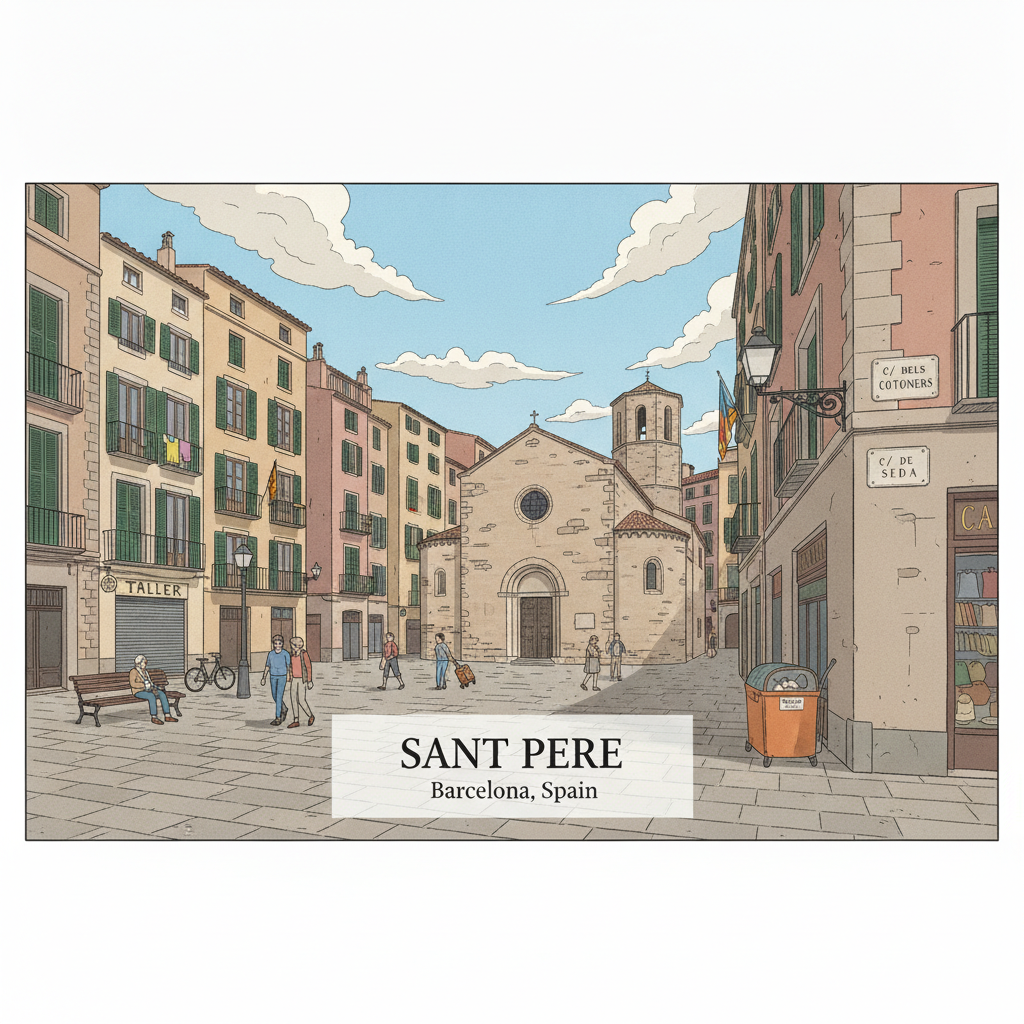
The Sant Pere neighborhood, immediately north of the Gothic Quarter and west of El Born, is one of Barcelona's least visited and most genuine residential areas: a dense medieval street pattern with the streets and squares that develop organically rather than on a plan. The neighborhood was historically associated with the textile trades (the street names — Carrer dels Cotoners (cotton merchants), Carrer dels Basters (pack-saddle makers), Carrer de la Seda (silk) — record its economic history), and several of the street-level warehouses and workshops survive as active artisan businesses. The Plaça de Sant Pere, a small square with the 12th-century church of Sant Pere de les Puel·les (rebuilt after 1936 fire damage), is the neighborhood's social center. The area around the Carrer dels Carders retains the highest concentration of traditional trades and is the most genuinely 'medieval' street in Barcelona in its built form, though the residents are contemporary.
- 3
Mercat de Santa Caterina — Enric Miralles's Last Work
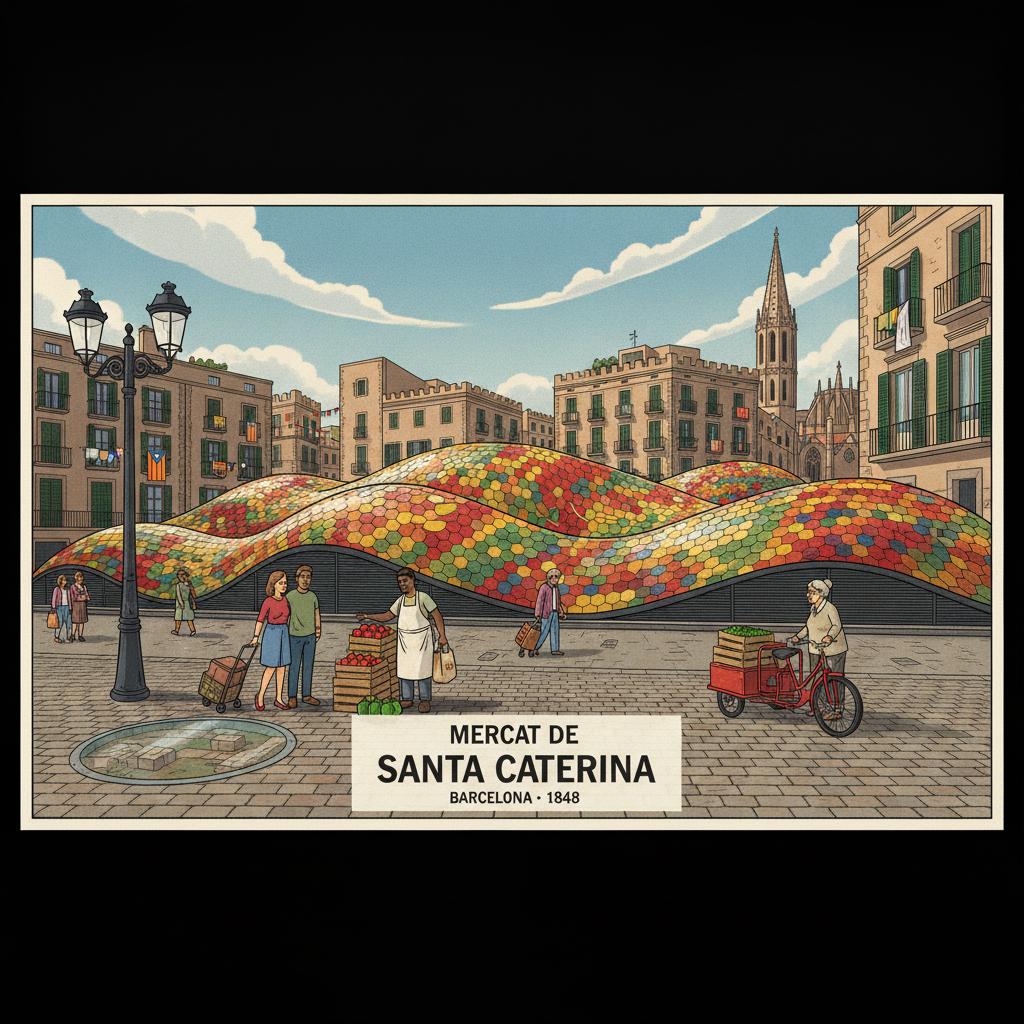
The Mercat de Santa Caterina, completed posthumously in 2005 from designs by Enric Miralles (who died in 2000) and Benedetta Tagliabue, is the most architecturally significant market building in Barcelona since the Boqueria's 19th-century iron hall: a neighborhood food market whose roof — a 5,500 square meter undulating mosaic of 325,000 ceramic hexagonal tiles in 67 colors, forming the pixelated images of fruits and vegetables — is visible from Montjuïc and from the windows of the MACBA. The interior is a conventional market structure with 80 stalls; the extraordinary element is entirely the roof, which rises and falls in organic waves over the stalls below, supported by an innovative timber and steel structure that allows column-free spans of up to 40 meters. The market was built on the site of the former Convent of Santa Caterina (1243–1838), and a section of the convent's excavated foundations is preserved and visible in the market's northeastern corner.
- 4
Arc de Triomf — Gateway to the 1888 World's Fair
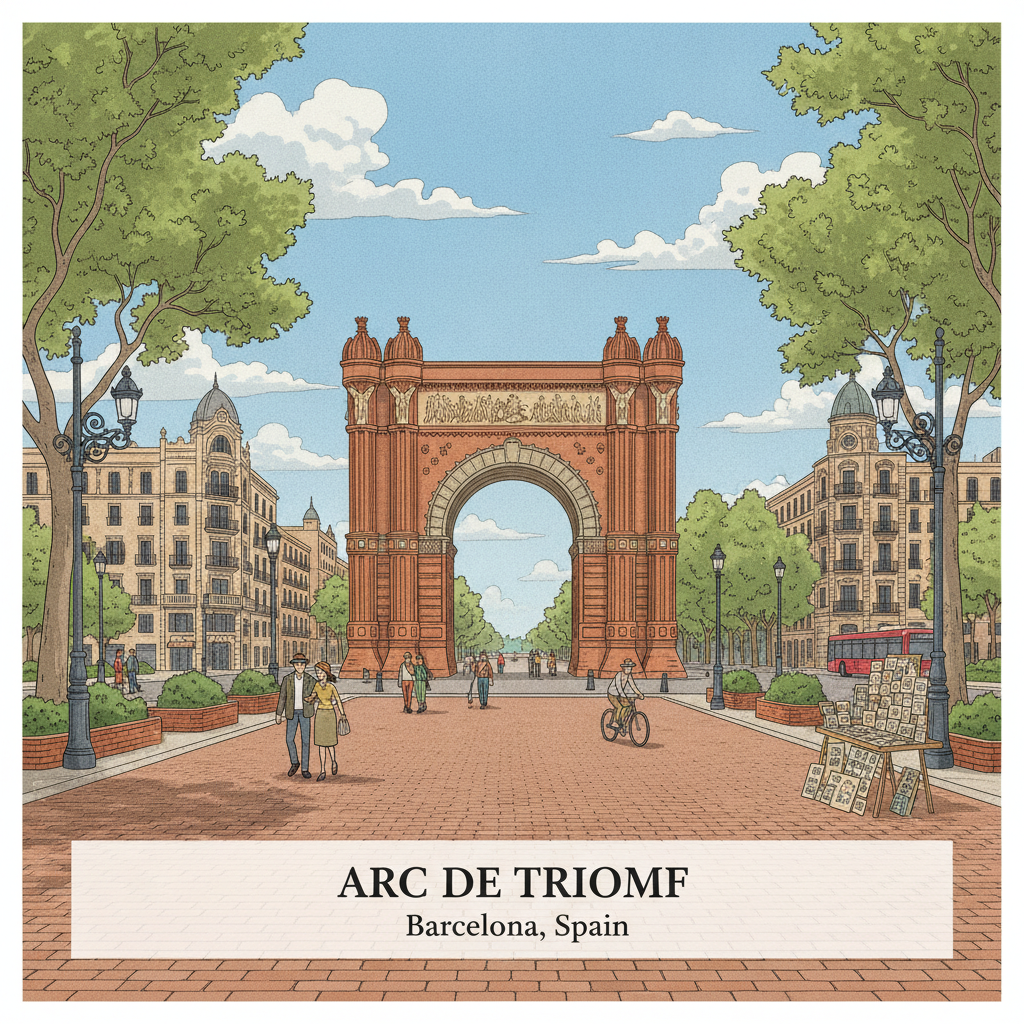
The Arc de Triomf (see also Route 1), at the top of the Passeig de Lluís Companys, marks the northern end of the ceremonial approach to the 1888 Universal Exhibition site in the Parc de la Ciutadella. Designed by Josep Vilaseca in neo-Mudejar brick (unusually — triumphal arches are traditionally stone), the arch is decorated with allegorical friezes of the nations of the world and represents, in its Mudejar style, an Orientalist vision of Spain as part of a broader Mediterranean-Islamic cultural zone — a common trope of late 19th-century Catalanism. The arch is the starting point of the Sunday flea market of philatelic and collecting items that takes over the promenade on weekend mornings.
- 5
Parc de la Ciutadella — Barcelona's Central Park
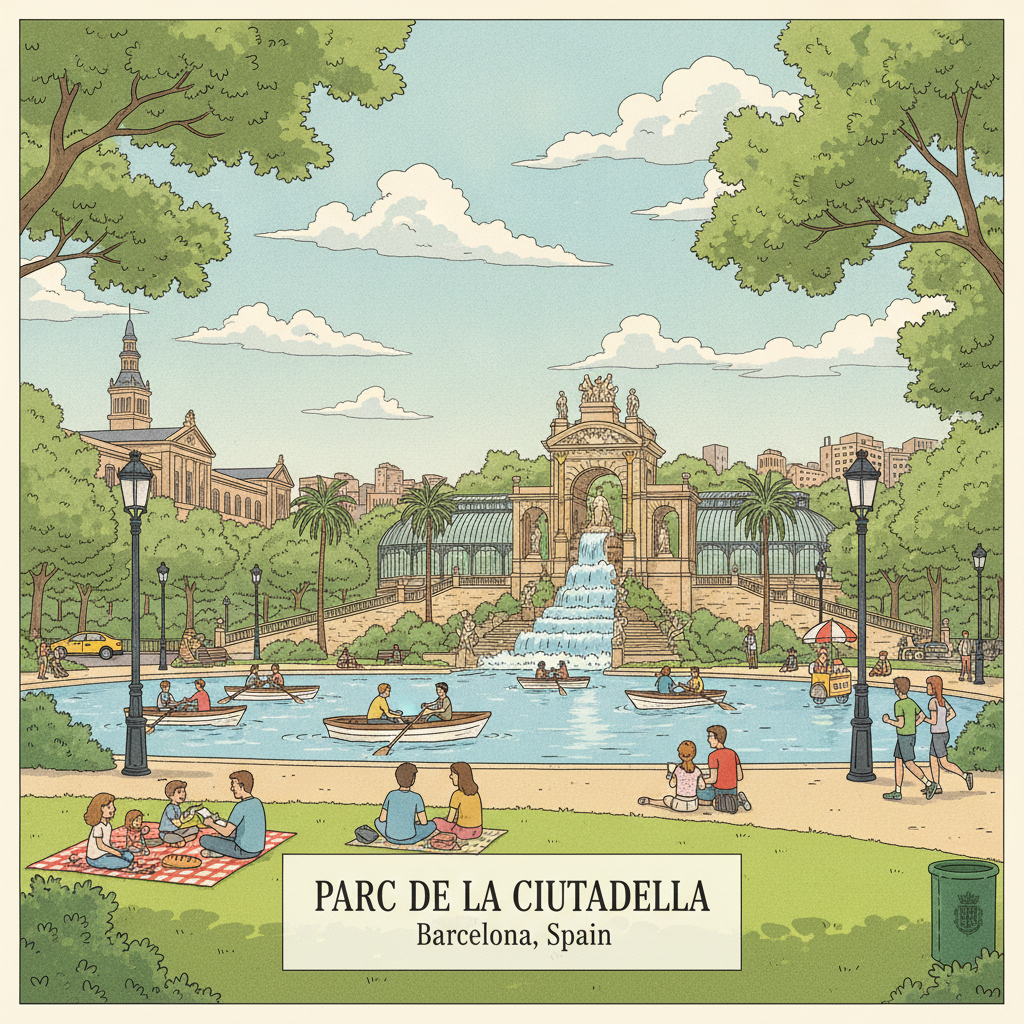
The Parc de la Ciutadella, the 17.4-hectare park on the site of the Bourbon citadel demolished from 1869, is Barcelona's nearest equivalent to a traditional city park: lawns, lakes, a zoo, a palm greenhouse, and mature trees (many planted for the 1888 exhibition). The park was redesigned by Josep Fontserè for the 1888 Universal Exhibition, which used most of the park's area for exhibition pavilions; the permanent structures remaining from the exhibition include the large Neoclassical Hivernacle (winter garden, 1884) and the striking iron-and-brick Castellets. The Parlament de Catalunya — the regional parliament — occupies the only surviving building of the original Citadel fortress: the Baroque arsenal building (1727), substantially remodeled by Josep Domènech i Estapà. The park's central artificial lake (for rowing boats) and surrounding lawns are used continuously by picnicking families and university students, especially on sunny Sunday afternoons.
- 6
Cascada del Parc de la Ciutadella — Gaudí's First Work
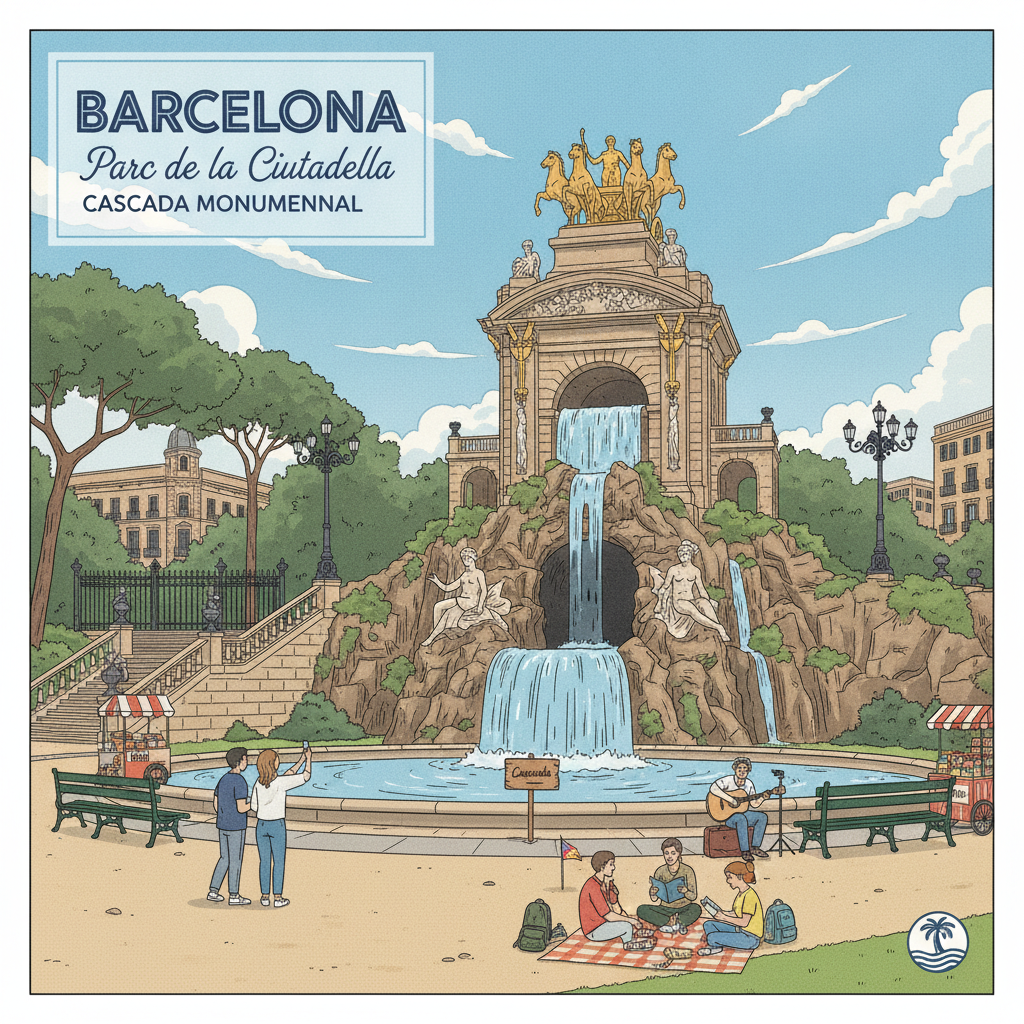
The great Cascada (waterfall) fountain at the eastern end of the Parc de la Ciutadella, designed by Josep Fontserè and built 1875–1881, is traditionally identified as including contributions from a young Antoni Gaudí who worked in Fontserè's studio while completing his architecture degree. The extent of Gaudí's contribution is debated by scholars, but the fountain's organic rock formations, grotto, and the quadriga (four-horse chariot group) at the summit bear recognizable affinities with his mature work. The fountain was built to celebrate the demolition of the Citadel fortress and the return of the park to public use after nearly 200 years of military occupation. It is now the most popular photographic subject in the park — a Victorian Baroque extravaganza of cascading water, classical figures, and artificial rock — and the central gathering point for the park's regular Sunday activities (outdoor exercise classes, picnics, informal music sessions).
Walk this route with audio
Stories play automatically as you reach each stop — no tapping needed.
More in barcelona
Pedralbes, Camp Nou & Sarrià: Barcelona's Quiet Upper City
Barceloneta & the Olympic Waterfront: From Columbus to the Mediterranean
La Rambla, Boqueria & El Raval: The Street, the Market, and the Other Barcelona
Poblenou, 22@ & the Design Hub: Barcelona's Creative Frontier
Tibidabo, Collserola & Pedralbes: Above the City, Beyond the Grid