Forbidden City, Tiananmen & the Imperial Heart of Beijing
Beijing (北京 — the capital of the People's Republic of China, population approximately 21 million, founded as a major city in the 10th century (as the Liao dynasty capital 'Nanjing') and capital of China under the Yuan, Ming, and Qing dynasties (1271-1912) — the cultural and political capital of the world's most populous nation): the Forbidden City and Tiananmen Square form the symbolic and geographical centre of Beijing and one of the most historically significant urban complexes in the world.
- 1
The Forbidden City (Palace Museum) — 600 Years of Imperial Power
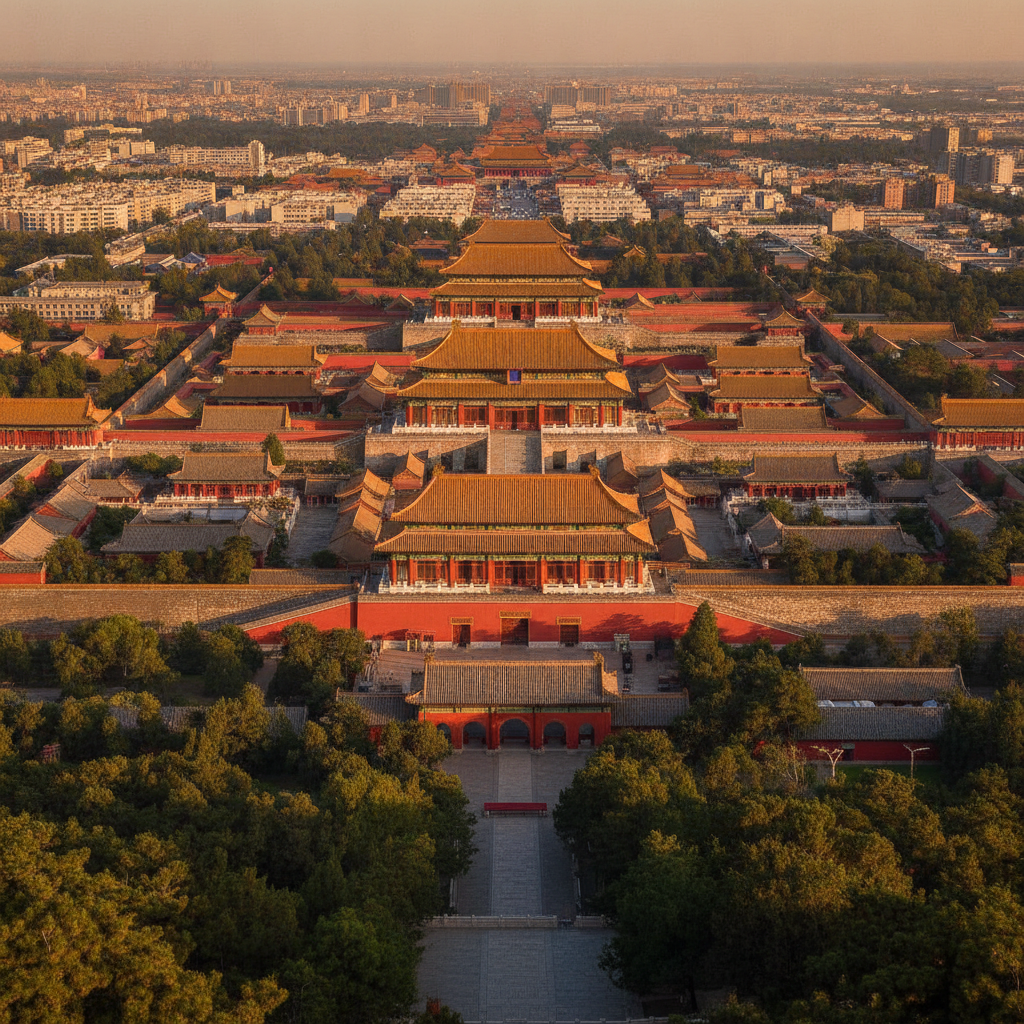
The Forbidden City (紫禁城 — Zǐjìnchéng — 'Purple Forbidden City', now the Palace Museum (故宫博物院 — Gùgōng Bówùyuàn), in the heart of Beijing — the imperial palace of the Ming (1368-1644) and Qing (1644-1912) dynasties, the home of 24 emperors over 491 years (from the Yongle Emperor's completion of the palace in 1420 to the abdication of the Xuantong Emperor (Puyi) in 1912) — UNESCO World Heritage since 1987): the palace (72 hectares, 980 surviving buildings, approximately 70 major structures along the 960-metre north-south central axis) is the world's most complete surviving imperial palace complex; the main ceremonial axis runs from the Meridian Gate (午门 — Wǔ Mén, the main south entrance) through the Outer Court (the three great ceremonial halls: the Hall of Supreme Harmony (太和殿 — the largest single wooden structure in China, 35 metres high, where emperors held their most important ceremonies including coronations, New Year celebrations, and military triumphs) through the Inner Court (the residential quarters of the emperor, empress, and imperial household) to the Gate of Divine Might (神武门 — Shénwǔ Mén) at the north; the Palace Museum's collection (approximately 1.86 million artefacts, comprising one-third of China's national heritage objects) includes the finest collection of Chinese ceramics, painting, calligraphy, bronzes, jade, and imperial regalia in the world.
- 2
Tiananmen Square — The Centre of China
Tiananmen Square (天安门广场 — Tiān'ānmén Guǎngchǎng — 'Gate of Heavenly Peace Square' — the massive public square in central Beijing, 440,000 square metres (44 hectares, the third largest city square in the world after Xinhailan Square in Harbin and Rosamund Square in Jakarta)) — the symbolic and political centre of the People's Republic of China): the square is bounded to the north by Tiananmen Gate (the gate with the portrait of Mao Zedong, from whose balcony Mao proclaimed the People's Republic of China on October 1, 1949 — the most politically significant moment in modern Chinese history), to the south by the Zhengyangmen Gate (正阳门, the inner gate of the Ming dynasty city wall, now the most imposing surviving gate tower of Beijing's historic city wall system), to the west by the Great Hall of the People (人民大会堂 — the legislature of the PRC), and to the east by the National Museum of China (中国国家博物馆 — the largest museum in the world by floor area, with approximately 1.4 million items in the collection); the Chairman Mao Memorial Hall (毛主席纪念堂 — the mausoleum at the centre of the square where Mao Zedong's embalmed body lies in state, open for public viewing Tuesday-Sunday mornings) is the most visited site in the square.
- 3
Jingshan Park — The View Over the Forbidden City
Jingshan Park (景山公园 — 'Prospect Hill Park', directly north of the Forbidden City — the artificial hill (47 metres) created from the earth excavated during the construction of the Forbidden City's moat in the early 15th century, situated precisely on the north-south central axis of Beijing): the view from the Pavilion of Everlasting Spring (万春亭 — Wànchūn Tíng — the central pavilion at the top of Jingshan, at 47 metres above the surrounding city — the highest accessible point in the historic centre of Beijing) looking south over the entire Forbidden City is the most spectacular single view in Beijing — the entire palace complex (the yellow-glazed tile roofs of the main halls, the red walls of the enclosure, the moat (护城河), and the four corner towers of the palace walls) laid out in its geometric perfection against the urban landscape of modern Beijing stretching to the south and east; the same viewpoint looking north reveals the Drum Tower (鼓楼) and Bell Tower (钟楼) of the Yuan and Ming dynasty city directly to the north, the axis of the ancient capital continuing beyond the palace.
- 4
The Imperial Axis — Beijing's 7.8 km Historic Spine
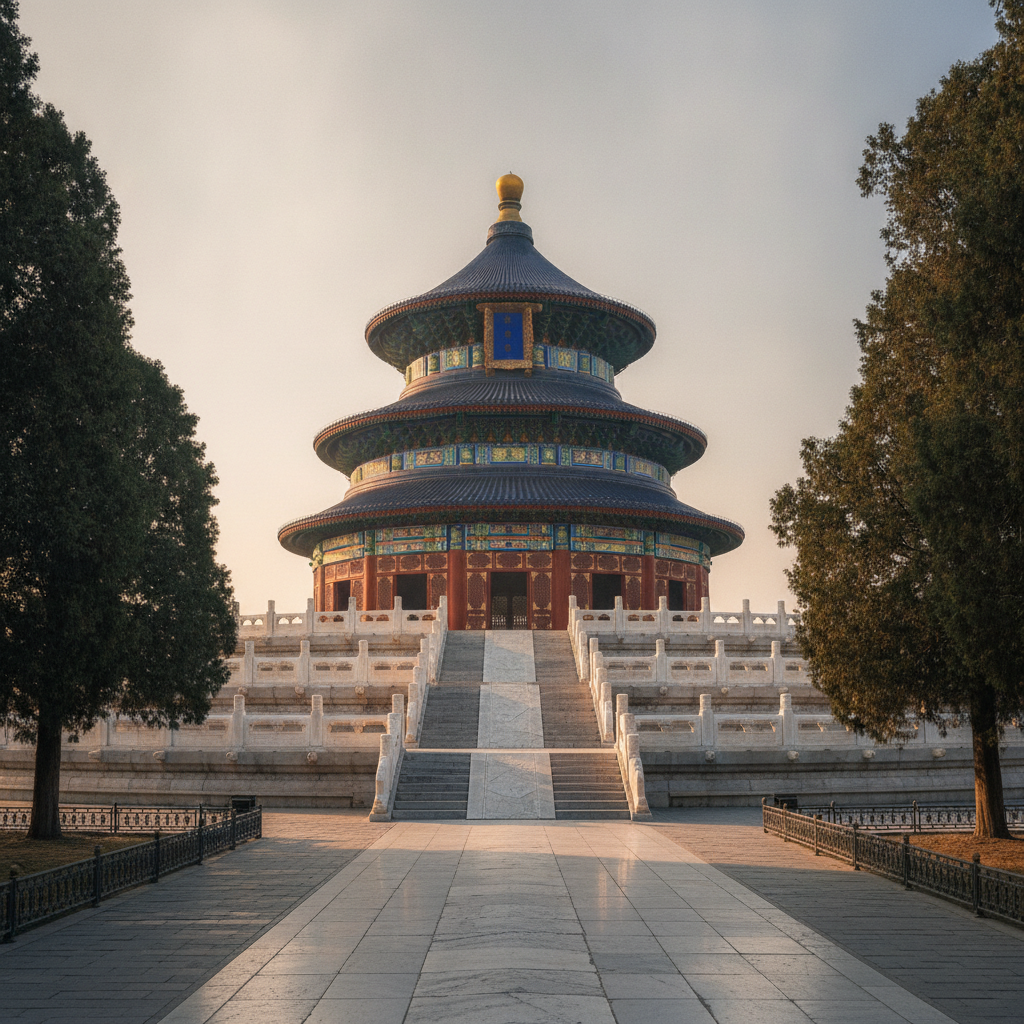
Beijing's Central Axis (北京中轴线 — the 7.8 km north-south axis that has organized the layout of Beijing since Kublai Khan established the Yuan capital of Dadu on this site in 1267 — now inscribed as a UNESCO World Heritage Site in 2024): the axis runs from the Yongding Gate (永定门 — the reconstructed southern gate of the Outer City wall) in the south through the Temple of Heaven (天坛), Tiananmen Square, the Forbidden City, Jingshan Hill, the Drum Tower and Bell Tower, to the Olympic Forest Park (奥林匹克森林公园) in the north — the most continuously significant urban axis in the world; the southern section of the axis (the Temple of Heaven and the surrounding park, the formal garden of the Antai Garden, and the historic Zhengyangmen Gate) is the most intact surviving section of the pre-modern urban fabric of Beijing; the northern extension (the Olympic Green and the National Stadium ('Bird's Nest') built for the 2008 Beijing Olympics) extends the axis into the 21st century.
- 5
National Museum of China — The World's Largest Museum
National Museum of China (中国国家博物馆 — the museum on the eastern side of Tiananmen Square, the result of the 2003-2011 rebuilding and expansion of the former Museum of Chinese History and Museum of the Chinese Revolution (built 1959) — the largest museum in the world by floor area (approximately 200,000 square metres), housing approximately 1.4 million items): the permanent collection 'The Road of Rejuvenation' (复兴之路 — the narrative of Chinese history from the Opium War (1839-1842) through the founding of the PRC (1949) to the present — the most visited permanent exhibition in China, the ideological centrepiece of the museum) tells the official Chinese Communist Party narrative of modern Chinese history; the museum's ancient China collection (the pre-history through imperial era galleries, containing the finest collection of Shang dynasty bronzes (the ritual vessels (ding, gui, jue) cast in bronze approximately 1300-1046 BCE — the most technologically and artistically sophisticated bronzes in the world at the time of their creation), Western Zhou dynasty (1046-771 BCE) inscribed bronze vessels, Tang dynasty (618-907 CE) ceramics, and the finest collection of Chinese currency history in the world) is the most comprehensive display of Chinese material culture in any single institution.
- 6
The Drum Tower & Bell Tower — Beijing's Timekeeping Heart
The Drum Tower (鼓楼 — Gǔlóu — the massive red timber tower on the north end of the Imperial Axis in the Gulou district of central Beijing, originally built by Kublai Khan in 1272 as the principal timekeeper of the Yuan capital Dadu, rebuilt in its current form in 1420 by the Yongle Emperor of the Ming dynasty) and the Bell Tower (钟楼 — Zhōnglóu — the grey stone tower 100 metres north of the Drum Tower, housing the enormous cast-iron bell (moved to the Bell Tower from the Drum Tower in the Qing dynasty, weighing approximately 63 tonnes) that was rung to announce the hours): the Drum Tower and Bell Tower (together forming the northern terminus of the Imperial Axis) marked the time for all of Beijing through the Ming and Qing dynasties, with the drums beaten and the bell rung at specific intervals through the night (the 19 time intervals of the traditional Chinese timekeeping system): the view from the Drum Tower looking north (over the Gulou hutong neighbourhood — the best surviving area of traditional Beijing courtyard house (四合院 — sìhéyuàn) architecture, now undergoing rapid gentrification as a tourist and café district) and south (directly down the Imperial Axis to Tiananmen, the Forbidden City visible as a distant smear of yellow roofs) is the finest view of the historic axis.
Walk this route with audio
Stories play automatically as you reach each stop — no tapping needed.
More in beijing
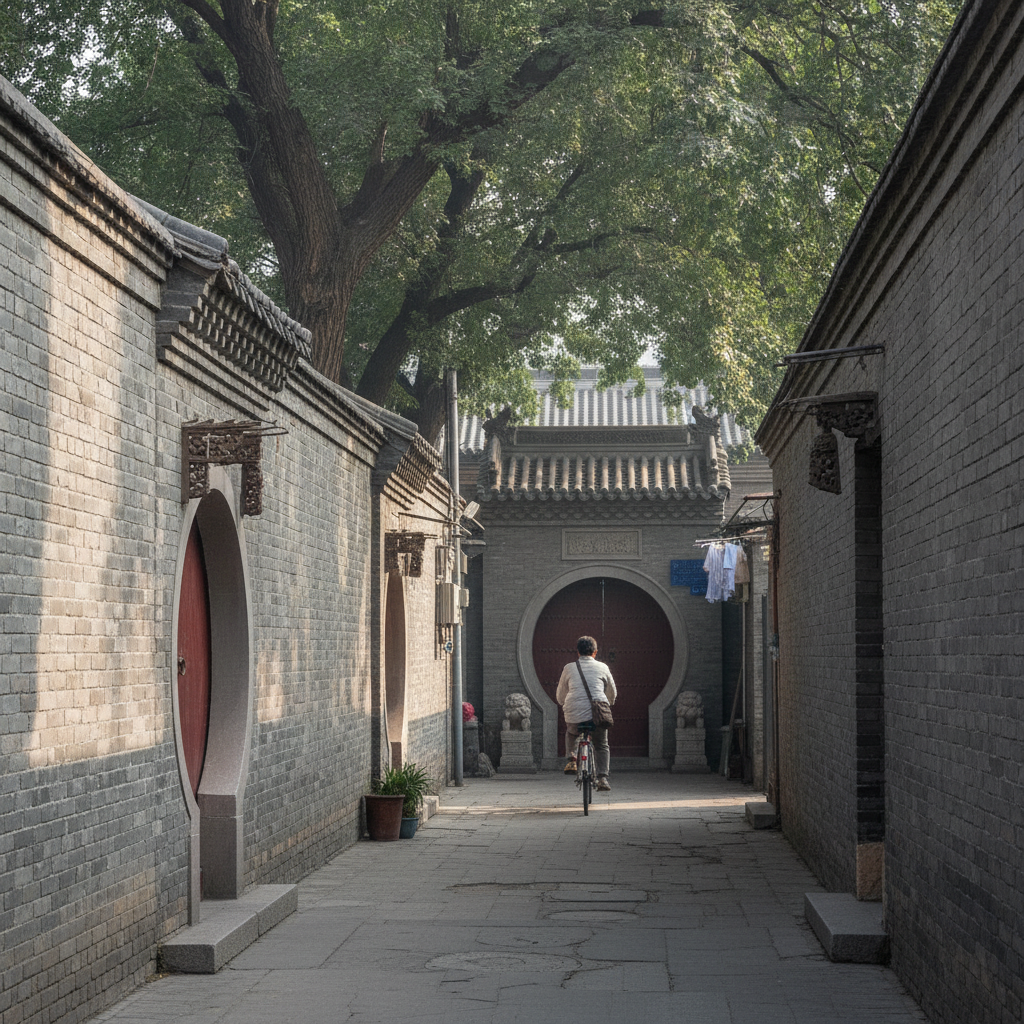
Hutong & Siheyuan — Old Beijing's Courtyard City
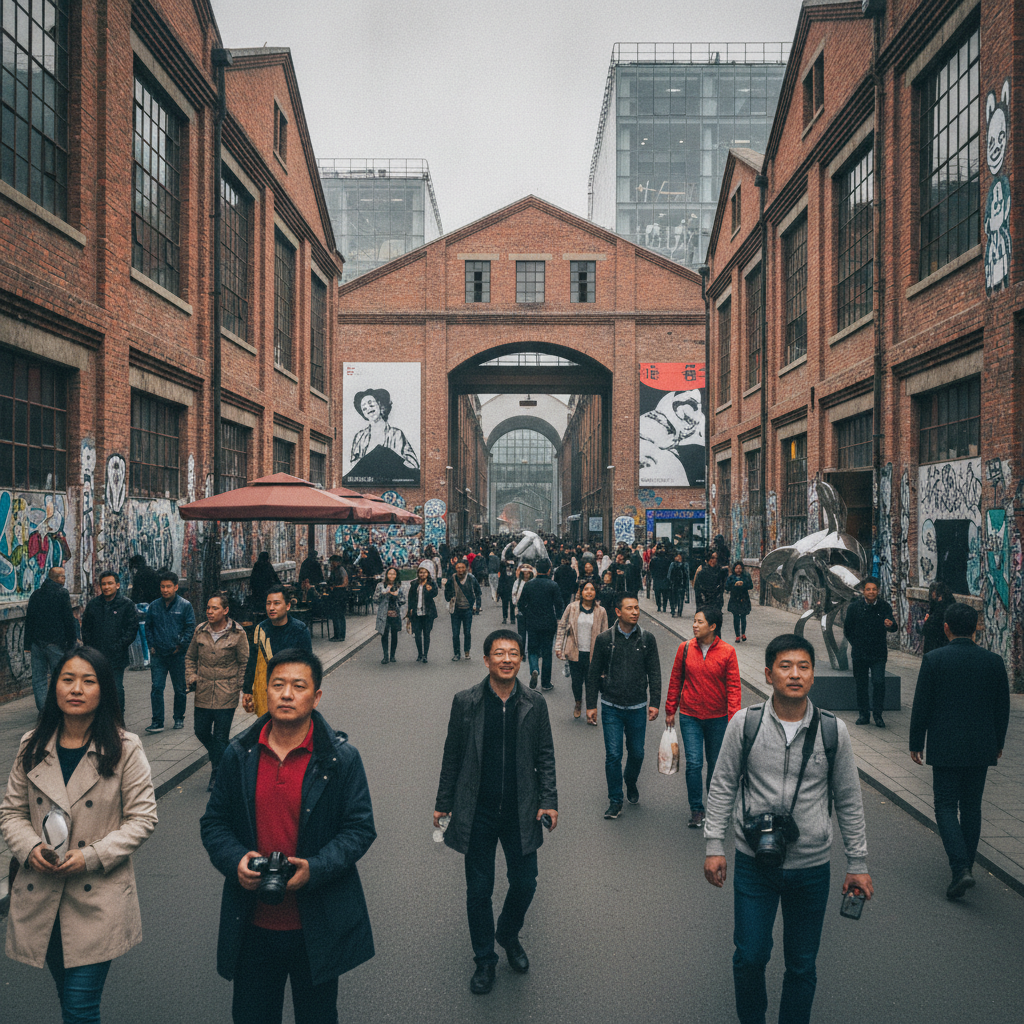
798 Art District & Contemporary Beijing — China's Creative Revolution
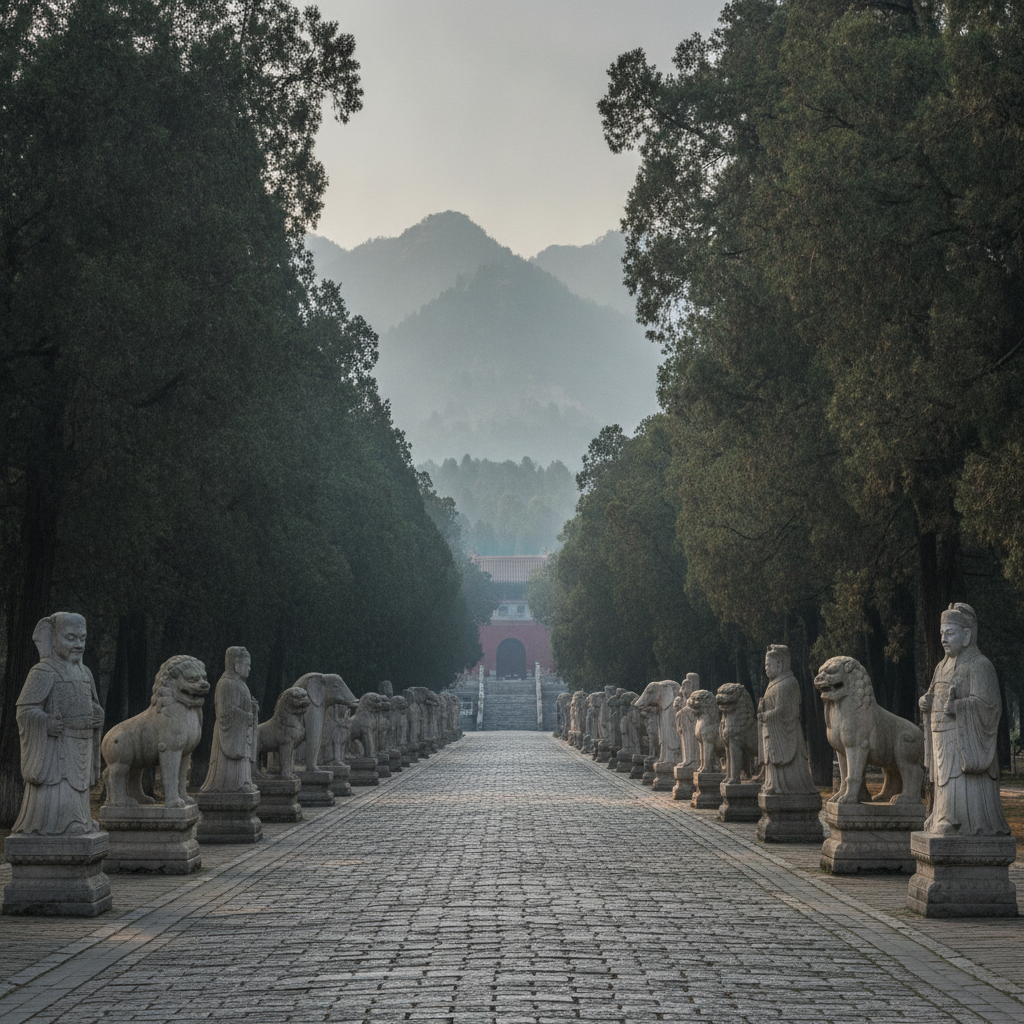
Ming Tombs & the Sacred Way — Beijing's Imperial Necropolis
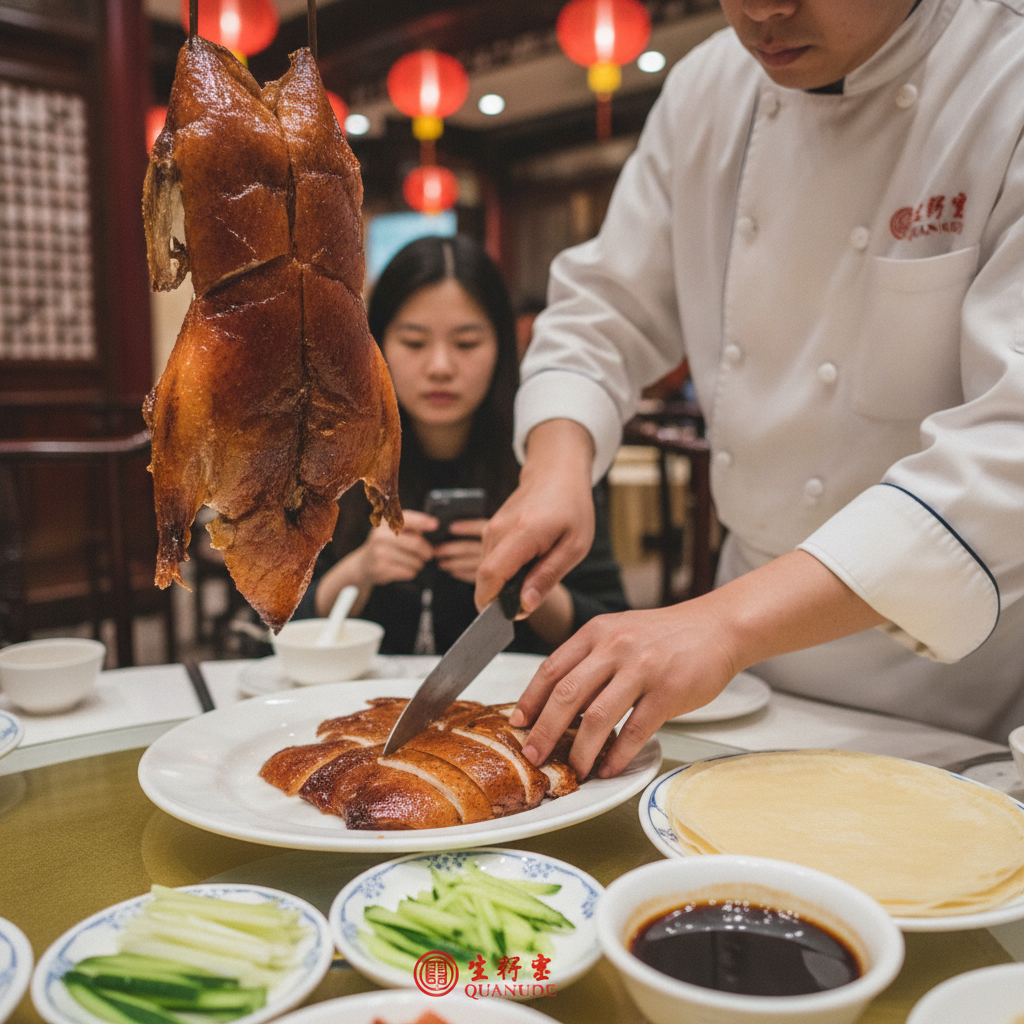
Peking Duck, Jiaozi & the Imperial Gastronomy of Beijing
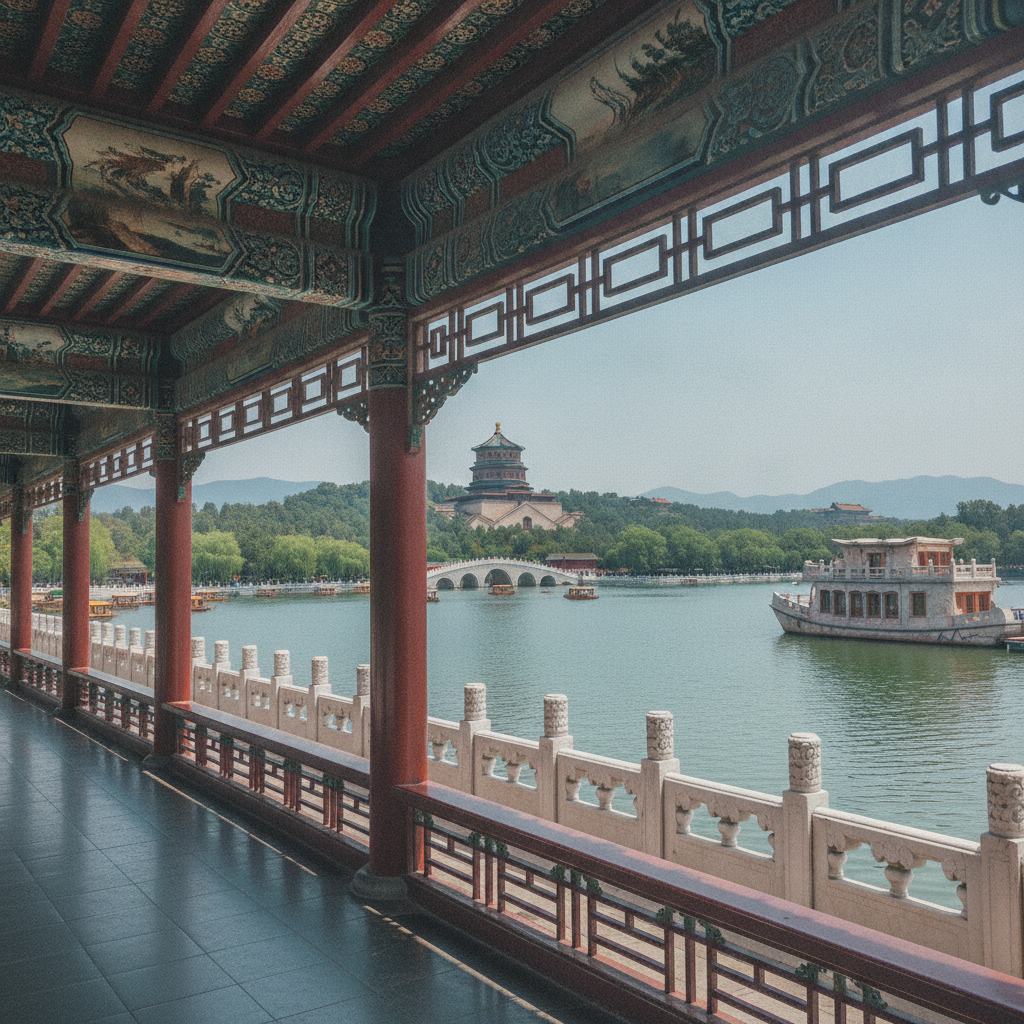
Summer Palace & Yuanmingyuan — Beijing's Imperial Garden Legacy