Bengaluru Complete: Coorg Coffee Estates 5 Hours Away, the Standing-Only Darshini Breakfast & a City Without a Single Famous Monument
Finish the Bengaluru portrait—Coorg's coffee homestays where guests pick arabica berries 260 km from the Indiranagar cafés that roast them, Ranga Shankara's 300 annual theatre performances in four languages, the Gavi Gangadhareshwara cave temple whose rock columns are astronomically aligned to illuminate the Shiva lingam precisely on January 14th, Blossom Book House's 150,000 second-hand titles on Church Street, the darshini standing restaurant feeding Bengaluru's 1.7 million IT workers for ₹40 before the commute, and the honest visitor's guide to a city with no Taj Mahal equivalent but the best urban quality of life in India for those who find their monuments in coffee shops, microbreweries, and a well-laid-out park.
- 1
Bengaluru's Coffee Estates – The Coorg & Chikmagalur Connection
The coffee-growing regions that supply Bengaluru's thriving café scene lie 200–300 km to the west: Coorg (Kodagu district) and Chikmagalur are two of India's finest Arabica-growing regions, producing coffee that is exported to specialty roasters in Europe, Japan, and the United States. Coorg (5 hours from Bengaluru, 260 km) combines coffee estate stays (homestays on working estates where guests participate in the harvest), trekking (Brahmagiri Wildlife Sanctuary, Pushpagiri Wildlife Sanctuary—tiger, leopard, elephant, and Malabar giant squirrel), the spectacular Abbey Falls, and the Kodava culture (the indigenous Coorgi community, known for distinctive cuisine, the Kodava Takk language, and the largest per-capita gun ownership in India—a historical right of the Kodava warriors). Chikmagalur (240 km, 4.5 hours) has India's highest coffee estates (Mullayangiri peak, 1,930 metres) and a growing homestay economy.
- 2
Bengaluru's Theatre & Literary Scene
Bengaluru has a significant theatre tradition in both Kannada and English. The Ranga Shankara theatre (Jayanagar, established 2004 by actress Arundhati Nag)—a dedicated theatre complex with a 310-seat main auditorium and a smaller black box theatre—runs Bengaluru's most active theatre programme: 300+ performances annually in Kannada, Hindi, English, and other Indian languages. The Rangayana (Mysore, 150 km, but with a Bengaluru presence) is Karnataka's state repertory theatre. The Bengaluru Literary Festival (BILF)—annual, two days in November, the Lalit Ashoka hotel campus—brings Indian and international writers and has grown significantly since its founding in 2012. The Strand Book Stall (MG Road) and Blossom Book House (Church Street—Bengaluru's most beloved second-hand bookshop, occupying three floors of a commercial building with 150,000 titles) serve the city's substantial reading community.
- 3
Bengaluru's Temples – Gavi Gangadhareshwara & ISKCON
Bengaluru's temple landscape is less famous than its IT sector but historically significant. Gavi Gangadhareshwara Temple (Gavipuram)—a Shiva temple built around a natural cave, with a distinct astronomical feature: on Makara Sankranti (January 14), the sun's rays pass through an opening between two rock columns to illuminate the Shiva lingam inside the cave at precise angles—is the city's most historically important temple (dated to the 9th–10th century Ganga dynasty). The Dodda Ganapathi Temple (Basavanagudi, the old city's central neighbourhood)—famous for the enormous seated Ganesha idol (4 metres tall, natural granite, bedecked with butter) and the bull temple (Nandi, a massive 15th-century carved granite bull)—is the most visited temple in Bengaluru. ISKCON Bengaluru (Rajajinagar)—a modern Hare Krishna temple of considerable scale—is one of ISKCON's largest complexes globally.
- 4
Bengaluru's Street Art & Public Space
Bengaluru has the most active street art scene in India outside Mumbai: the Jayanagar underpass murals, the Koramangala flyover pillars, and the Church Street heritage wall are the most concentrated locations. The St+art India Foundation (which created the landmark Lodhi Colony murals in Delhi) has produced several Bengaluru projects. The Cubbon Park heritage walks (organised by the Indian National Trust for Art and Cultural Heritage—INTACH Bengaluru chapter) document the colonial-era building stock within the park. The Malleswaram walking tour (organised by Bengaluru Walking Tours) covers the traditional Brahmin neighbourhood's temples, markets, and the Margosa Road jasmine sellers. Bengaluru's Public Art Commission (proposed) has been debated for years as a mechanism to integrate art into new infrastructure—the metro stations and flyovers that define the contemporary city's visual environment.
- 5
Bengaluru's Darshini Culture – The Standing Restaurant
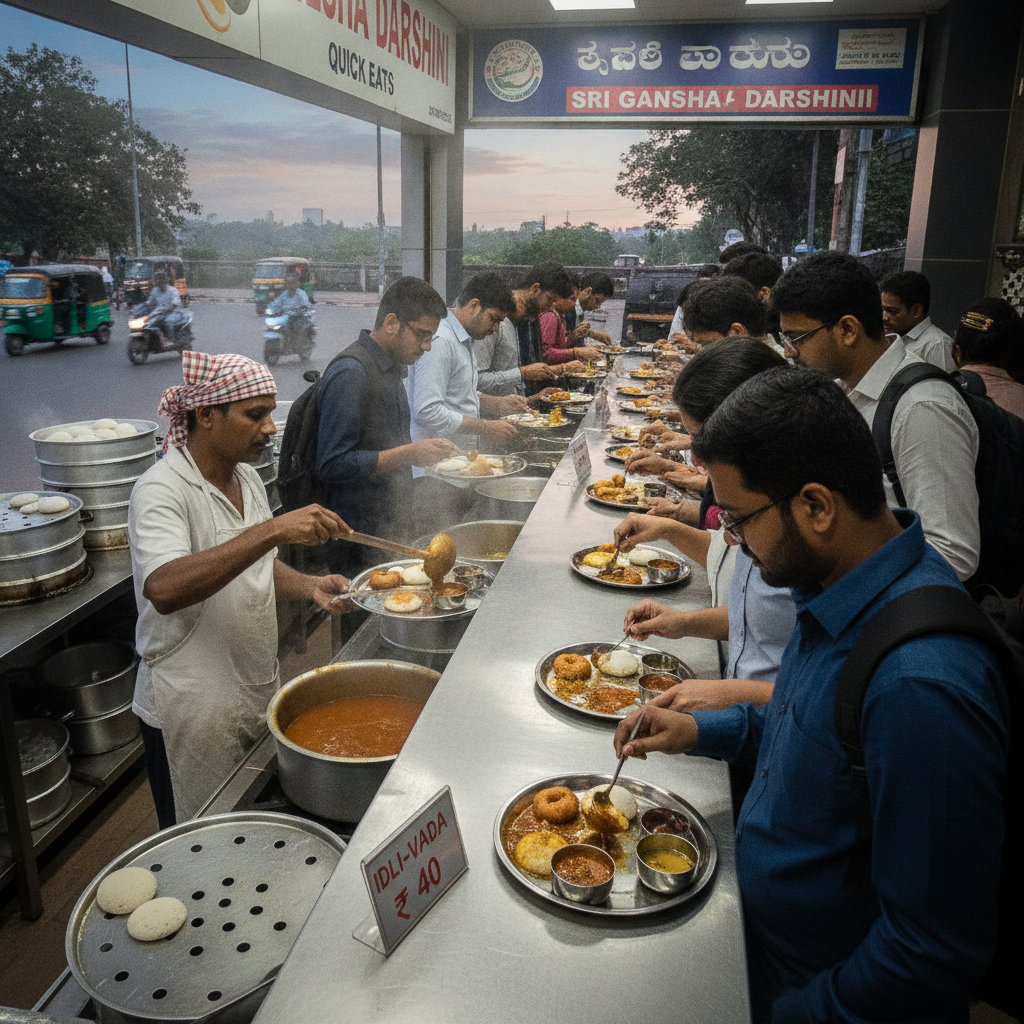
The darshini (from 'darshanam'—a glimpse, auspicious viewing, as in viewing a deity in a temple)—a standing-only fast-food restaurant serving South Indian breakfast and snacks at minimal prices—is one of Bengaluru's most distinctive urban institutions. A darshini consists of a stainless steel counter with no seating; customers pick up their order (idli-vada, dosa, upma, pongal) in stainless steel plates, eat standing, and leave within 5–10 minutes. The turnover is extremely fast; the prices (₹30–60/€0.33–0.66 for a full breakfast) make darshinis the most affordable full meal in any Indian city. The darshini concept is specific to Bengaluru—Udupi restaurants in other cities have seating; the standing format reflects Bengaluru's commuter culture and the desire to eat quickly before work. Major darshini chains: Adigas, Janatha Hotel, Subbaiah Brahmin Hotel in Malleswaram.
- 6
Bengaluru for the Visitor – A City That Rewards Curiosity
Bengaluru is not an obvious tourist city: it has no monument comparable to the Taj Mahal or the ghats of Varanasi, no beach, no dramatic natural setting. What it has is an exceptional urban quality of life—parks, coffee, craft beer, music, food diversity, intellectual energy, and a cosmopolitan social culture that makes it the most comfortable major Indian city for international visitors who don't speak Hindi. The tourist sites (Lalbagh, Cubbon Park, Tipu Sultan's Palace, Bangalore Palace) can be seen in two days; the city repays a longer stay through its neighbourhoods, restaurant scene, and day trips to Hampi, Coorg, and Mysore. The Bengaluru experience is primarily urban and experiential rather than monument-based—it suits travellers who want to understand contemporary India (the IT economy, the start-up culture, the environmental challenges, the music and food scene) rather than encounter its ancient monuments.
Walk this route with audio
Stories play automatically as you reach each stop — no tapping needed.
More in Bengaluru
Bengaluru After Dark: 1am Bars, India's Most Visible Queer Scene & Why Hyderabad Is Trying to Steal the Silicon Valley Crown
Bengaluru Insider: ISRO's $74m Mars Mission, Jacaranda Streets in March & the Indie Music Scene That Defined Indian Festivals
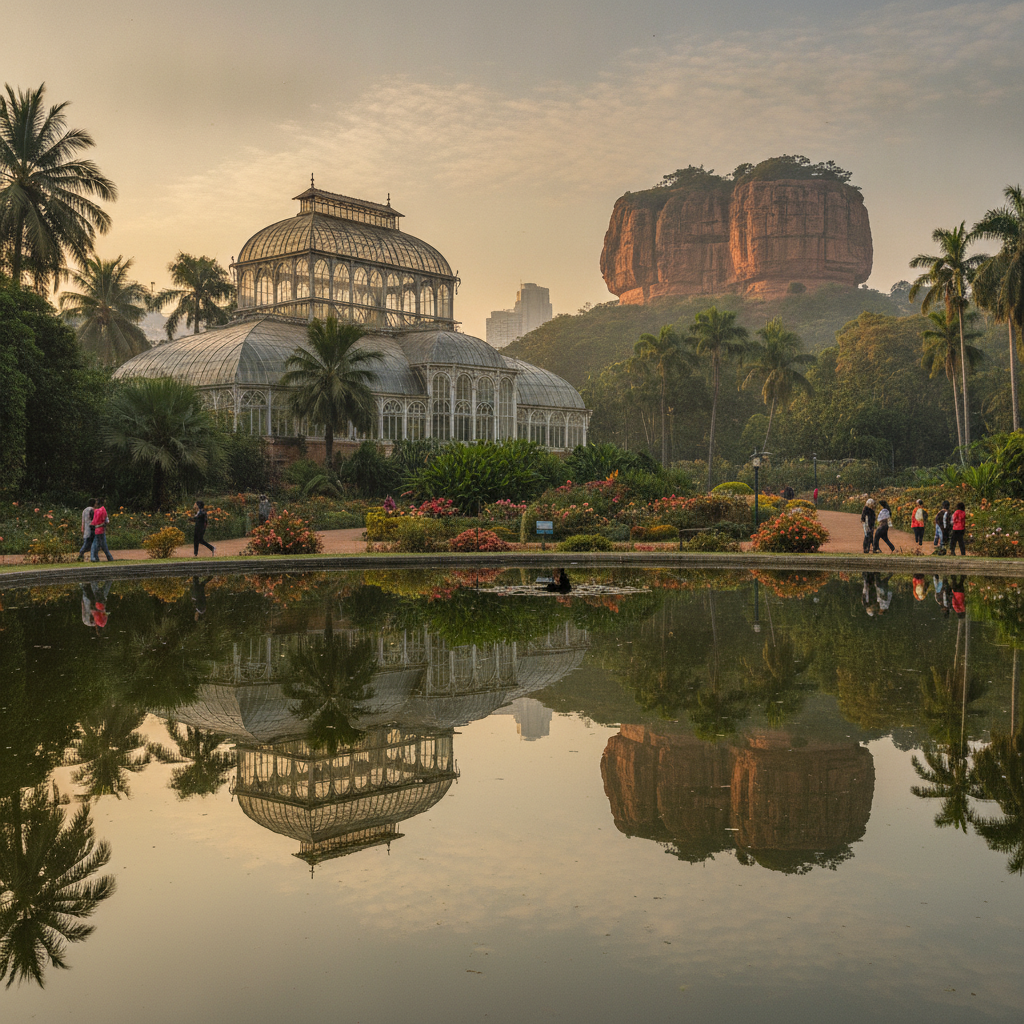
Bengaluru Essentials: India's Silicon Valley, the Garden City's Botanical Parks & the Country's Best Pub Scene
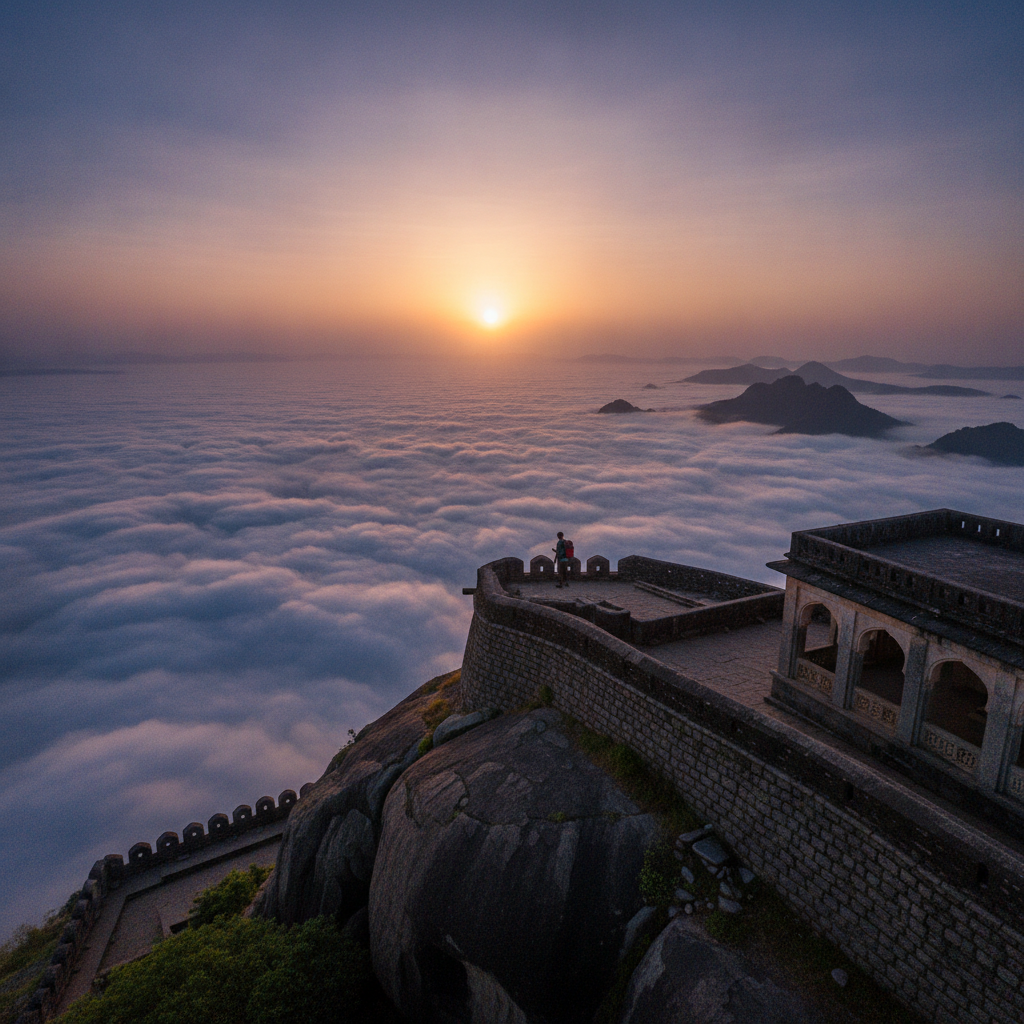
Bengaluru's Contrasts: Burning Lakes, ISRO's Moon Landing & the World's Most Traffic-Congested City