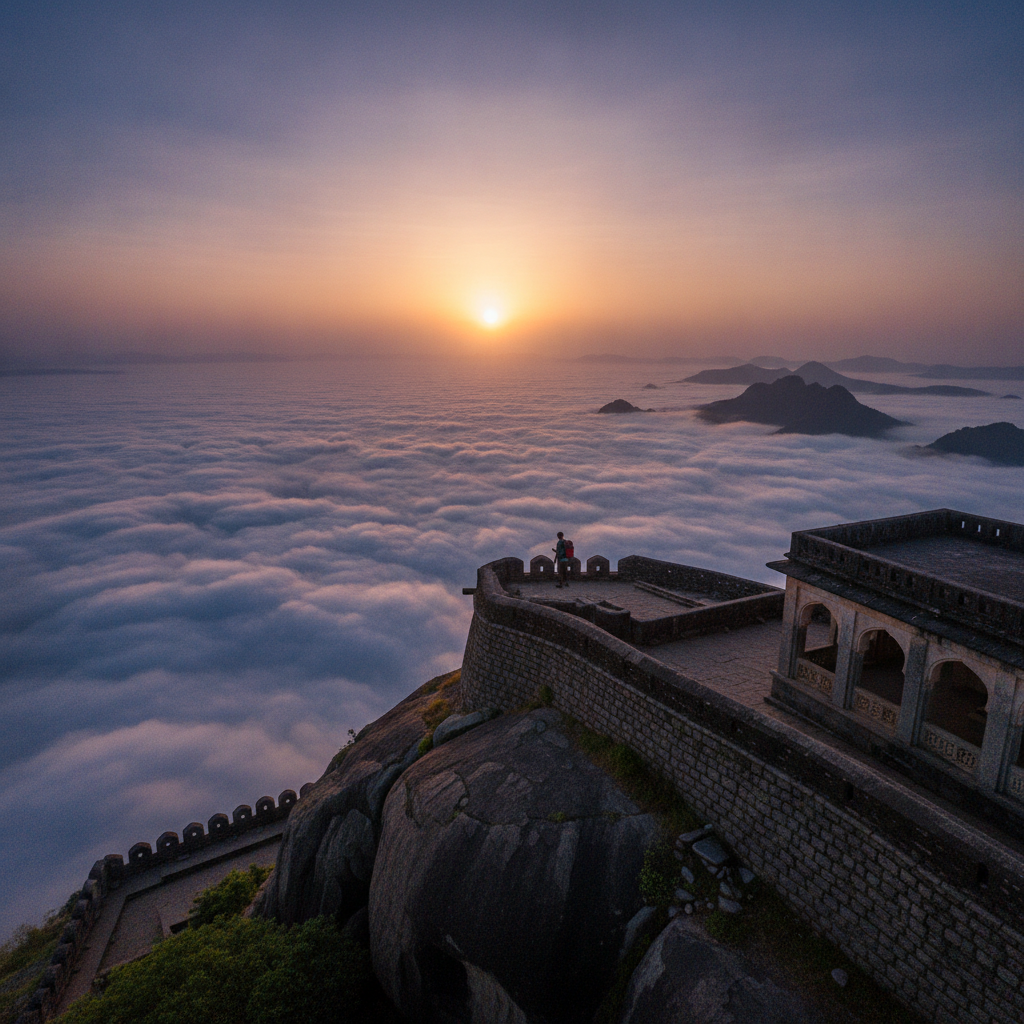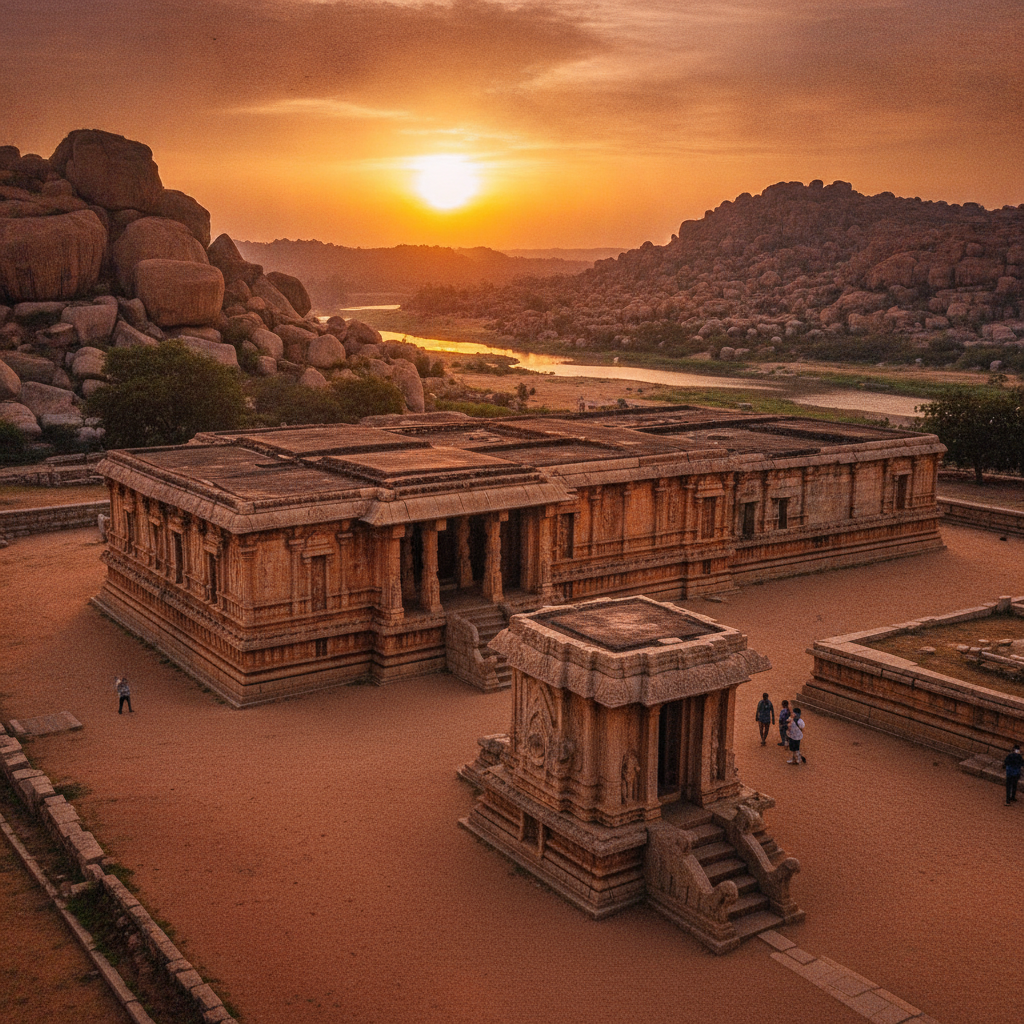
Bengaluru's Depth: Karnataka's Silk Economy, C.V. Raman at IISc & Hampi's 500 Vijayanagara Monuments in a Boulder Landscape
Discover Bengaluru's wider world—Karnataka producing 45% of India's raw silk and the Mysore Sandal Soap factory using genuine sandalwood oil since 1918, the IISc campus where C.V. Raman discovered the Raman Effect (first Asian Nobel laureate in science) on 400 acres of forested land with spotted deer grazing outside the labs, Hampi's surreal boulder landscape with 500 Vijayanagara Empire monuments including pillars that produce musical notes when struck, the 60% of Bengaluru residents born outside Karnataka making it India's most immigrant-dependent city, and the 2022 September floods that evacuated Wipro and Infosys employees from Whitefield by boat—the IT economy meeting the climate crisis.
- 1
Bengaluru's Silk & Sandalwood – Karnataka's Craft Economy
Karnataka is India's largest producer of raw silk (producing 8,500 tonnes/year—45% of India's total), and the Karnataka Silk Industries Corporation (KSIC) in Mysore produces the finest Mysore silk sarees—pure silk woven with real gold zari, softer and lighter than Banarasi but equally prestigious. The Bengaluru silk bazaar (City Market area, west Bengaluru) is the wholesale and retail silk centre for Karnataka. Sandalwood (Santalum album—Indian sandalwood, the most fragrant and most valuable sandalwood species)—whose heartwood yields the essential oil used in perfumery and religious ritual—is a government-controlled resource in Karnataka; the Karnataka Soaps & Detergents Limited (KS&DL) makes Mysore Sandal Soap (one of India's most enduring consumer brands, established 1918, still using genuine sandalwood oil). The Cauvery Emporium (government craft shop) and the City Market sell authentic sandalwood handicrafts.
- 2
Bengaluru's Urban Farming & Sustainability Movement
Bengaluru has an unusually active urban farming and sustainability movement—a reflection of the city's educated, globally connected population and its consciousness of rapid environmental degradation. The 'Save Our Lakes' campaign (Hasiru Usiru—'Green Breath')—which fights lake encroachment and restoration—has achieved partial success at Jakkur Lake and Puttenahalli Lake. The Cubbon Crawl (a monthly guided walk through the city's heritage areas, run by the Bengaluru Walking Tours collective) and the Bangalore Sustainability Forum reflect the civic engagement that distinguishes Bengaluru's resident community. The Malleswaram neighbourhood (northwest central Bengaluru) has maintained its traditional South Indian residential character—weekly markets (Margosa Road market), traditional Brahmin households, old Kannada cultural institutions—as a counterpoint to the IT-era transformation of the rest of the city.
- 3
Bidar, Hampi & Karnataka's Historical Legacy
Karnataka contains some of India's most extraordinary historical sites that are accessible as day trips or short stays from Bengaluru. Hampi (340 km north, 6 hours)—UNESCO World Heritage Site (1986)—was the capital of the Vijayanagara Empire (1336–1565), the last great Hindu empire before Mughal dominance: 500+ monuments scattered across a surreal boulder landscape, including the Virupaksha Temple (still active, 7th century), the Vittala Temple (with its famous musical pillars—stones that produce different musical notes when struck), and the Elephant Stables. Bidar (700 km north)—the capital of the Bahmani Sultanate and then the Bidar Sultanate (1422–1619)—contains the finest medieval Islamic architecture in South India: the Bidar Fort, the Madrasa of Mahmud Gawan (1472, a Persian-style madrasa), and the distinctive Bidriware craft (black zinc alloy inlaid with silver).
- 4
The Indian Institute of Science – Bengaluru's Research Core
The Indian Institute of Science (IISc)—established 1909, funded by a donation of ₹30 lakh by Jamsetji Tata (who had been inspired by a lecture by Swami Vivekananda on scientific education for India), 400-acre campus in central Bengaluru—is India's premier research university and consistently ranked among the top 50 universities in Asia. IISc's research spans aerospace engineering (collaboration with ISRO and DRDO), biological sciences, materials science, and theoretical physics. Notable IISc alumni and faculty include C.V. Raman (Nobel Prize Physics 1930—the first Asian and first non-white Nobel laureate in science, discovered the Raman Effect while at IISc and Calcutta) and multiple Padma Bhushan and Padma Vibhushan recipients. The campus itself—the main building (1911, Edwardian Baroque) surrounded by 400 acres of forested campus with spotted deer—is open to visitors and is among the most beautiful university campuses in India.
- 5
Bengaluru's Social Life – Apartments, Auto-Rickshaws & Outsiders
Bengaluru's social fabric is uniquely shaped by internal migration: approximately 60% of Bengaluru's residents were born outside Karnataka, making it India's most immigrant-dependent major city (more so than Mumbai or Delhi in proportional terms). This creates a city of apartment-dwelling nuclear families (rather than the extended family compounds of traditional Indian cities), of office canteens rather than neighbourhood kitchens, and of WeWork co-working spaces rather than family workshops. The auto-rickshaw drivers of Bengaluru—predominantly from Andhra Pradesh and Tamil Nadu, with a significant Kannada-speaking contingent—are famous for using meters (a relative rarity in Indian cities) and for their opinions on Bengaluru's traffic. The Kannada Rajyotsava (November 1) generates annual debates about whether the IT migrant population should be required to learn Kannada.
- 6
Bengaluru's Future – Water, Climate & the Second Airport
Bengaluru faces compounding infrastructure crises that make it a test case for Indian urban planning. Water: the city's primary water source (the Cauvery River, 100 km away) is shared with Tamil Nadu under a Supreme Court order that limits Karnataka's extraction; groundwater is severely overdrawn; rainwater harvesting is mandatory for new buildings (since 2009) but poorly enforced. Climate: Bengaluru's average temperature has risen 1.5°C since 1950; the urban heat island effect has eliminated the cool evenings that were once the city's defining characteristic. The 2022 floods (in September, the worst in 50 years—IT campuses in Whitefield and Sarjapur Road were inundated, with Wipro and Infosys employees evacuated by boat) demonstrated the vulnerability of the IT economy to extreme weather. A second airport (proposed at Kolar, 60 km east) has been in planning for a decade without breaking ground.
Walk this route with audio
Stories play automatically as you reach each stop — no tapping needed.
More in Bengaluru

Bengaluru After Dark: 1am Bars, India's Most Visible Queer Scene & Why Hyderabad Is Trying to Steal the Silicon Valley Crown
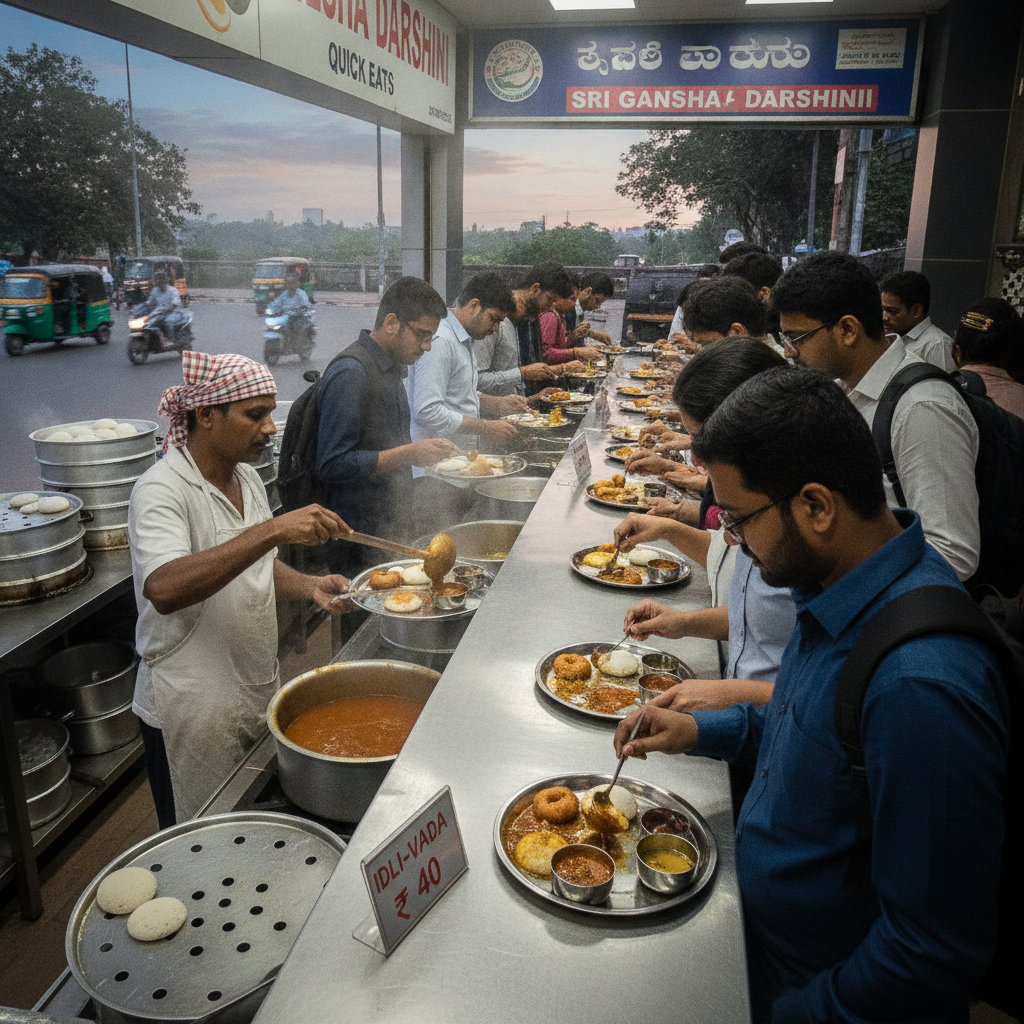
Bengaluru Complete: Coorg Coffee Estates 5 Hours Away, the Standing-Only Darshini Breakfast & a City Without a Single Famous Monument
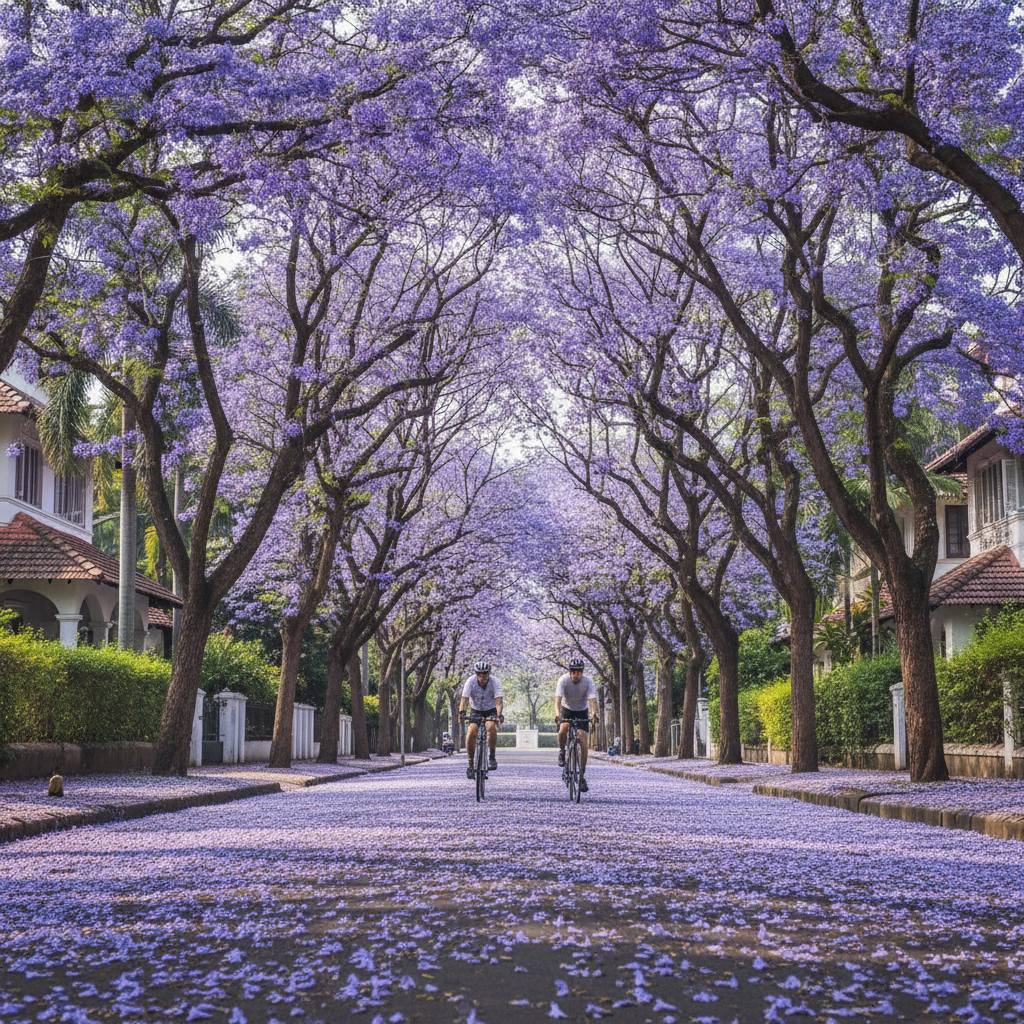
Bengaluru Insider: ISRO's $74m Mars Mission, Jacaranda Streets in March & the Indie Music Scene That Defined Indian Festivals
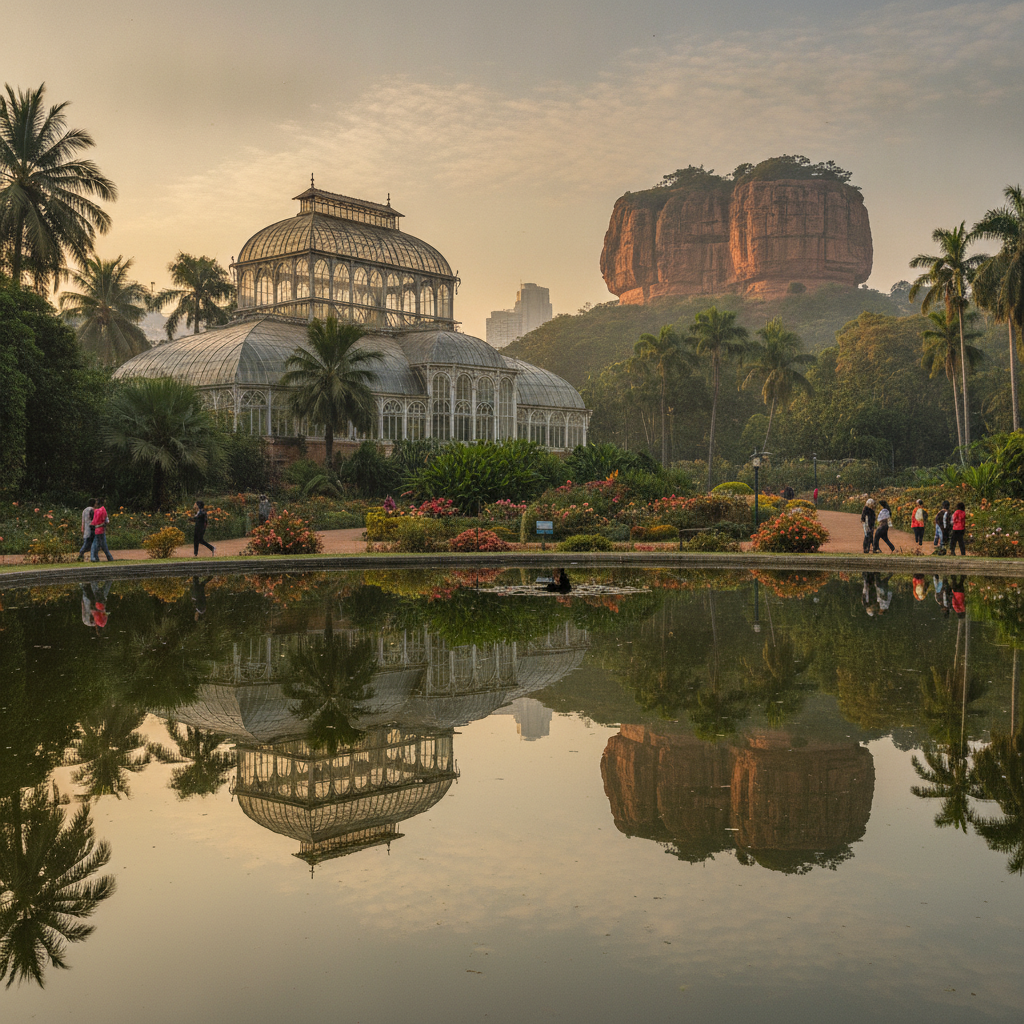
Bengaluru Essentials: India's Silicon Valley, the Garden City's Botanical Parks & the Country's Best Pub Scene