Bergen Art & Architecture — KODE Museums, Norwegian Design & the City Life of Bergen
Bergen's KODE art museum complex is the largest visual art collection in Scandinavia outside the national museums of the Scandinavian capitals. The city's architecture from the medieval Bryggen through the Art Nouveau period to contemporary Norwegian design is equally rich.
- 1
KODE Art Museums — the Largest in Western Norway
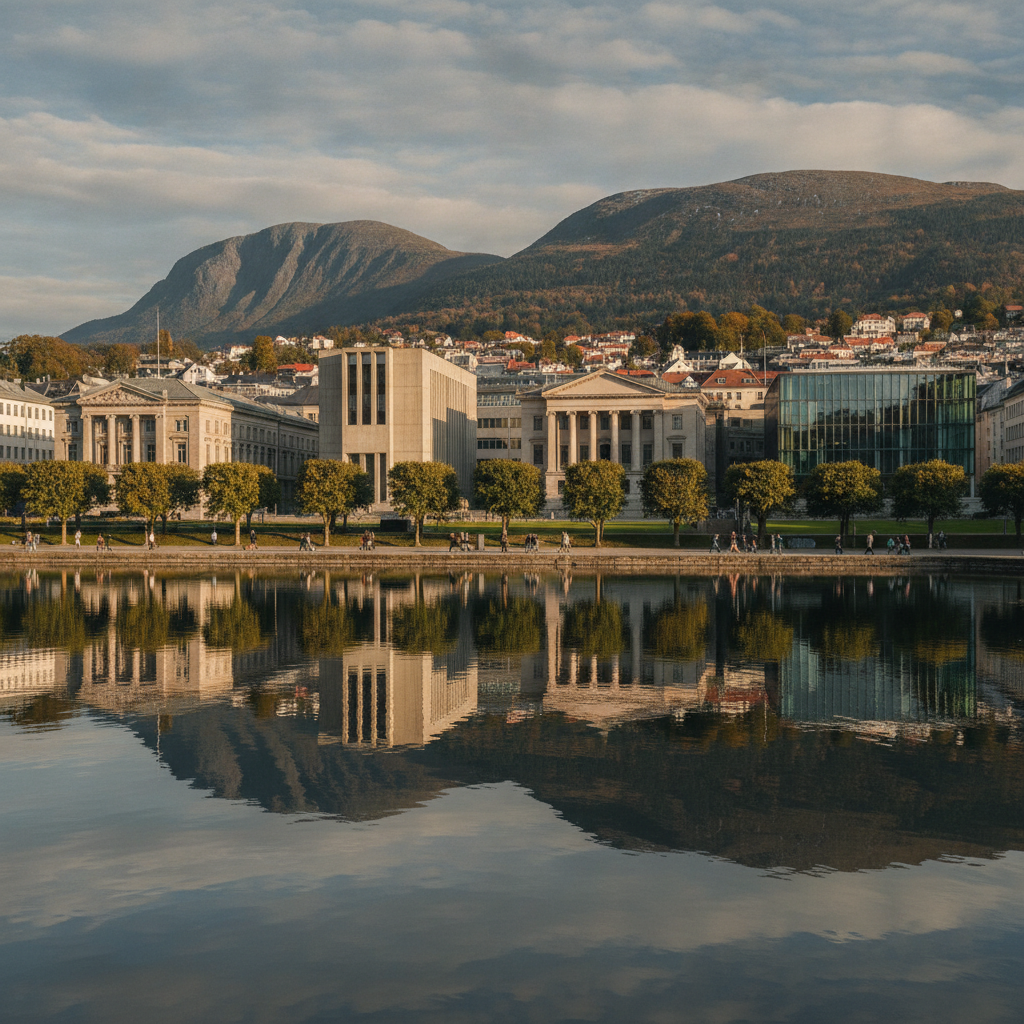
KODE (the Bergen art museum complex at Rasmus Meyers allé, 4 buildings around the Lille Lungegårdsvannet city lake, the largest collection of art, design, and musical history in Norway outside Oslo, €12 adults covering all 4 buildings with the same day-ticket, Tuesday-Sunday 11am-5pm, Thursday until 8pm): KODE 1 (the Permanenten building, the applied arts collection — the Norwegian decorative arts, the Viking Age metalwork, the Norwegian silver, the Hardanger embroidery — the most complete collection of Norwegian applied arts in western Norway), KODE 2 (the Rasmus Meyer collection — the Norwegian paintings of the 19th and early 20th century, the most important private collection in Norwegian art history donated to Bergen in 1924 — the Edvard Munch, the Christian Krohg, the Erik Werenskiold, and the Harriet Backer, the most significant impressionist and symbolist Norwegian paintings outside Oslo), KODE 3 (the 20th-century and contemporary collection, the Norwegian and international art from 1900 to the present, the permanent display of the Nikolai Astrup works — the Norwegian expressionist painter 1880-1928 whose fjord and folk-life paintings are the most internationally recognized Norwegian paintings after Munch — and the Café Rasmus, the best museum café in Bergen) and KODE 4 (the Edvard Grieg collection including the composer's piano, the manuscripts, and the personal objects — the most comprehensive Grieg archive outside Troldhaugen, the concert hall used for the chamber music series).
- 2
Norwegian Expressionism — Edvard Munch and the Bergen Collections
Norwegian painting (the Norwegian visual art tradition from the 19th-century Romantic landscapes of the Dahl school through the Impressionism of Harriet Backer and the expressionism of Edvard Munch to the contemporary Norwegian art the KODE collects): Edvard Munch (1863-1944, the most internationally recognized Scandinavian visual artist, the creator of 'The Scream' — the most recognized image in Scandinavian art history — the Munch works in the KODE 2 collection including the 'The Sick Child' study and the 'Jealousy' series, the Bergen Munch works complementing the Oslo National Museum and the Munch Museum collections, the KODE Munch display the correct Bergen approach to the artist outside the Oslo institutions), Nikolai Astrup (1880-1928, the Bergen artist born in Jølster in the inner fjord district, the painter who created the most distinctively western Norwegian images in modern art — the Jølster landscape paintings with the blue fjord water, the flowering fruit trees, and the midnight sun — the paintings on the boundary between Symbolism and Expressionism, the most complete collection of Astrup's work in KODE 3, the Astrup Fearnley Museum in Oslo owning the most internationally circulated works), and the Harriet Backer (1845-1932, the Norwegian Impressionist who studied in Munich and Paris, the interior paintings of the Norwegian domestic life — the lamplight interiors, the church interiors — the most technically accomplished Norwegian Impressionist painter, the KODE 2 collection housing the most important group of Backer's works outside the National Museum in Oslo).
- 3
Bergen Architecture — from Medieval to Contemporary
Bergen architecture (the city's building history reflecting the repeated cycles of construction and fire — the wooden city burning and being rebuilt in the same forms 8 times between 1170 and 1916 — the fire of 1916 the last major fire, destroying 400 buildings in the Nygård and Møhlenpris districts, the current building stock a palimpsest of all the rebuilding periods from the Hanseatic through the Art Nouveau): Bryggen (the UNESCO medieval Hanseatic buildings, as described in the featured route), the Art Nouveau district (the Vestre Torggaten and the Nygårdsgaten streets, the buildings of 1900-1910 in the Norwegian National Romantic and the Jugendstil style, the most concentrated Art Nouveau streetscape in western Norway — the terracotta facade ornaments and the elaborate window surrounds of the 5-6 storey apartment buildings, the neighbourhood walkable from the city centre in 10 minutes), the Grieghallen concert hall (the modern concert hall of 1978 by Knud Munk, the home of the Bergen Philharmonic Orchestra — the second-oldest symphony orchestra in the world, founded 1765 — the brutalist concrete exterior the controversial aspect of a building otherwise universally praised for the acoustic quality of the main hall) and the USF Verftet (Georgernes Verft 12, the former fish factory on the inner harbour, the most complete example of the Bergen industrial heritage conversion, the red-painted brick and steel buildings of 1895 now housing the most important independent cultural venue in Bergen — the cinema, the music club, the art gallery, the restaurant, and the co-working space, the USF the model for the industrial heritage conversion that has become the Bergen approach to cultural infrastructure).
- 4
Bergen Neighbourhoods — Fyllingsdalen and the Modern City
Bergen's residential character (the city growing rapidly in the post-war period, the municipalities of Åsane, Fana, and Fyllingsdalen absorbed in the 1972 municipal consolidation, the suburban development extending the city from the medieval core in the seven-mountain valley to the outer areas of the fjord): Laksevåg and Fyllingsdalen (the western districts accessible by the Bybanen light rail from the city centre, the most modern Norwegian residential development of the 1960s-80s — the concrete apartment blocks of Fyllingsdalen the characteristic western Norwegian suburban form, the district also containing the Nordre Borge open-air farm — the historic farm of the Borge family preserved as the Bergen agricultural museum), the Fana district (10km southeast of the city centre, the most historically layered of the Bergen suburban districts — the Fana church the oldest stone church in western Norway, built 1150 — the Fantoft Stave Church at Fantoftvegen 38, the medieval stave church reconstructed after the 1992 arson fire — accessible by bus 83 from the city centre, the stave church the most complete reconstruction of the medieval Norwegian wooden church tradition, €5 adults, May-September daily 10:30am-2pm and 3-6pm) and the Bergen harbour development (the Bontelabo and the Nøstet districts on the northwest harbour, the former warehouse and factory areas converted to the contemporary residential and commercial quarter since 2000, the most architecturally dynamic area of contemporary Bergen with the mixed residential towers and the adaptive reuse buildings, the restaurants at the Bontelabo waterfront the newest dining address in Bergen at €30-50 per main).
- 5
The Hanseatic Legacy — Trade, Power and the Kontors
The Hanseatic League in Bergen (the German merchant association that controlled Norwegian fish trade 1360-1754, the Bergen Kontor — the German trading station — the most powerful of the 4 Hanse Kontors in Europe alongside Bruges, London, and Novgorod, the German merchants living in the closed community of Bryggen separate from the Bergen population with their own laws, their own courts, and their own church — the German community at its peak 2,000 Germans out of a Bergen population of 6,000): the Hanseatic power (the Kontor controlling the price of the stockfish landed by the Norwegian fishermen and the price of the grain and cloth sent north in return — the terms of trade consistently unfavorable to the Norwegians, the Bergen people's resentment of the German merchants documented in the medieval records, the occasional violent confrontations culminating in the 1455 massacre of the Norwegian bishop Thorvald Sigurdsson at the Bergen Kontor — the bishop attempting to enforce Norwegian law on the merchants, the Germans killing him and throwing his body in the harbour), the end of the Hanseatic period (the Danish-Norwegian crown gradually restricting the Kontor privileges through the 16th and 17th centuries, the Kontor formally dissolved 1754 when the last German merchant left Bergen, the 4 centuries of German presence leaving the city with the Bryggen buildings, the Low German vocabulary in the Bergen dialect, and the tradition of the fish trade that shaped the Norwegian economy into the 20th century), and the Hanseatic Museum (see featured route, the most complete documentation of the Hanseatic daily life in Bergen, the merchant's dormitory the most immediately humanizing element of the exhibition).
- 6
Bergen Day Trip to Voss — Extreme Sports and Norse Landscape
Voss (the town 100km east of Bergen, 1 hour by train on the Bergen Line at €18-30 in advance, the outdoor adventure capital of Norway — the concentrated vertical relief of the Voss landscape creating the conditions for the widest range of adventure sports in a single Norwegian location): the Voss Canyon (the fjord valley and the mountain terrain above Voss the setting for: the paragliding from the Hangurstoppen mountain above the town — the most popular beginner paragliding location in Norway, the tandem flights with an instructor at €150-180 per person departing daily in summer; the white water rafting on the Stranda and Raundal rivers — Class 3-4 rapids through the canyon at €70-90 per person, 2-3 hours on the water; and the bungee jumping from the Stalheimskleiva bridge — the bridge at the head of the Nærøydalen valley, the jump at €120 per person), the Hangurstoppen cable car (the cable car from Voss town centre to the Hangurstoppen summit at 640m, the departure point for the paragliding and the hiking network, €25 adults return, the summer view of the Vangsvatnet lake and the surrounding mountains from the summit the best single panorama in the Voss area, the ski area operating December-April on the same mountain) and the Voss Heritage Museum (the Voss Folkemuseum at Mølstervegen 143 — the 16 preserved historical buildings of the Voss farming community, the medieval Mølster farm the best preserved, free and always accessible in the outdoor section, €10 adults for the indoor museum, the most complete documentation of the traditional western Norwegian farming culture in the Hardangerfjord district).
Walk this route with audio
Stories play automatically as you reach each stop — no tapping needed.
More in bergen
Bergen to the Fjords — the Flåmsbana Railway, Sognefjord & the Norway in a Nutshell Circuit
Bergen — Bryggen UNESCO Wharf, the Fish Market & the Fløibanen Funicular to the Mountain
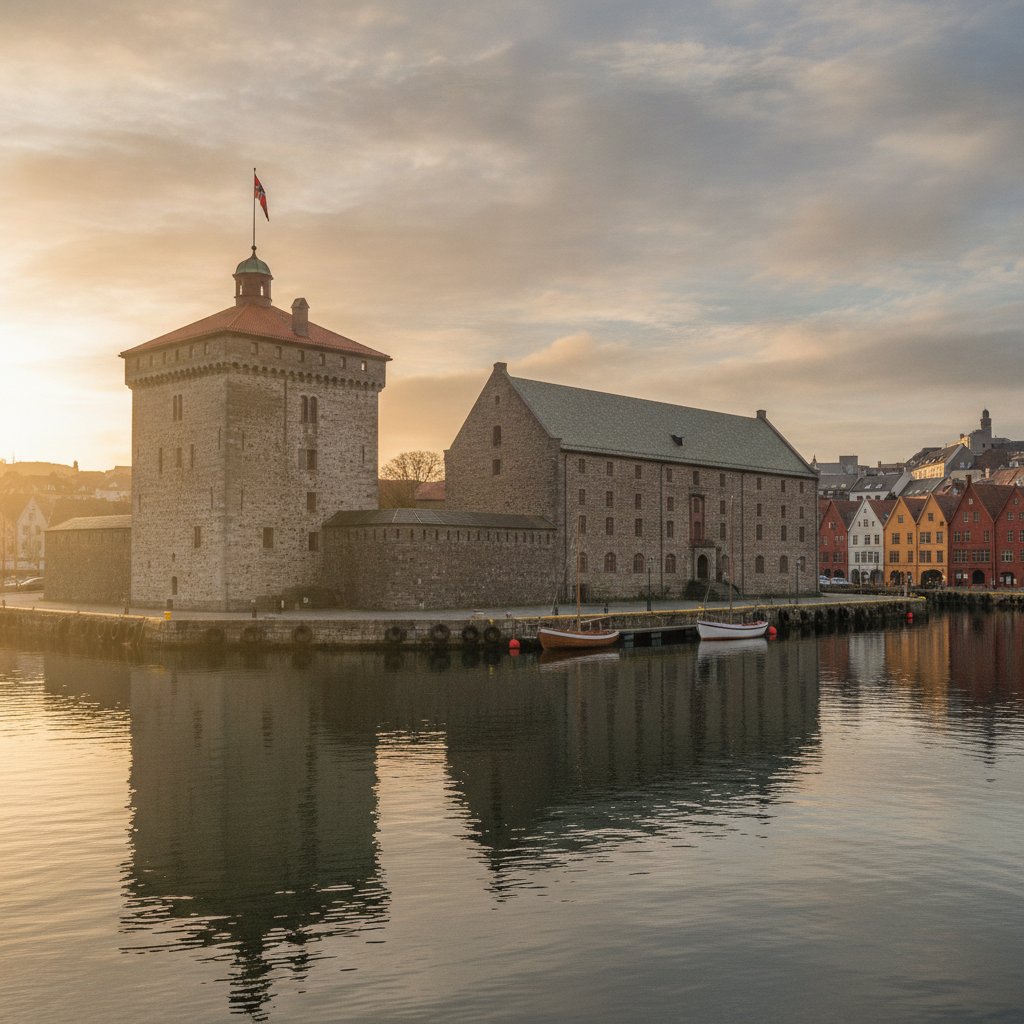
Bergen Medieval History — Bergenhus Fortress, Håkonshall & the Norwegian Royal Past
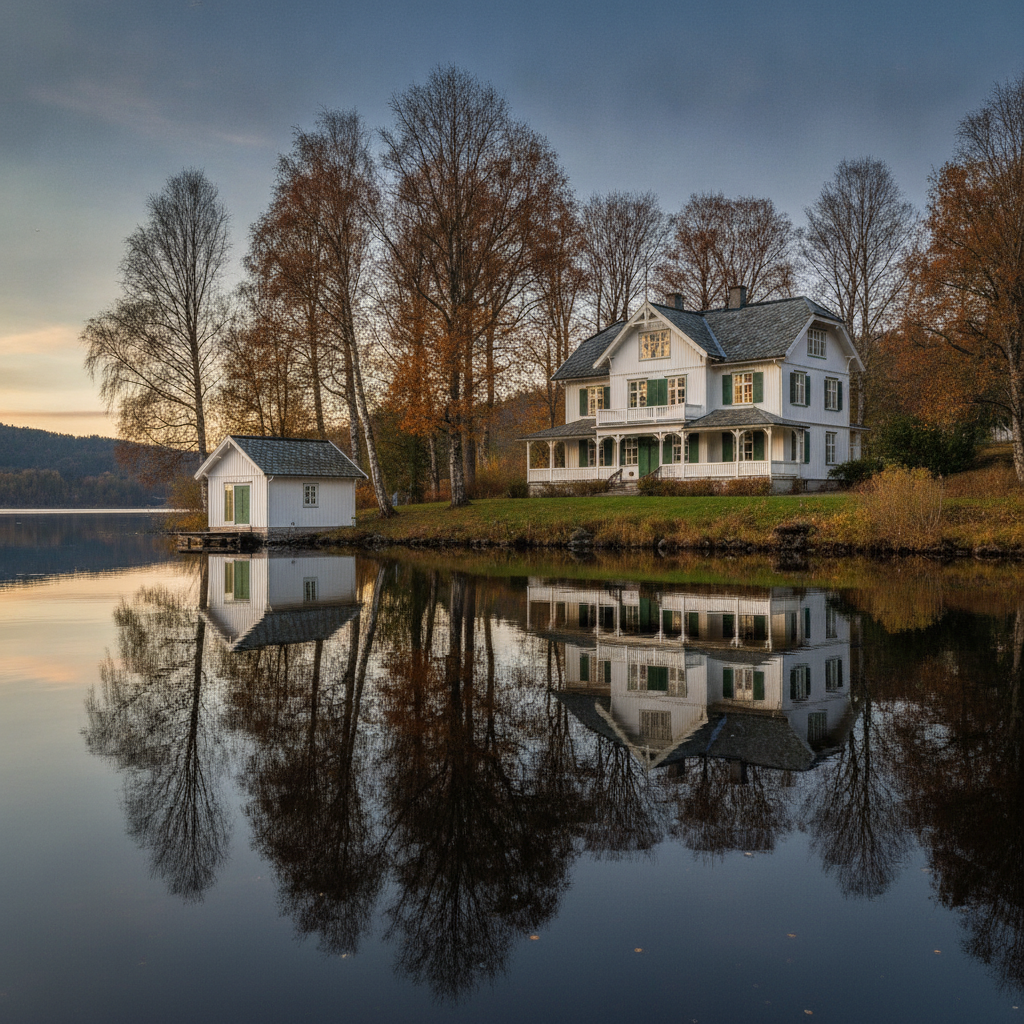
Bergen Music — Edvard Grieg, Troldhaugen & the Norwegian Musical Tradition