Bergen Practical — the Rain, Seasons, Norwegian Food & Getting Around
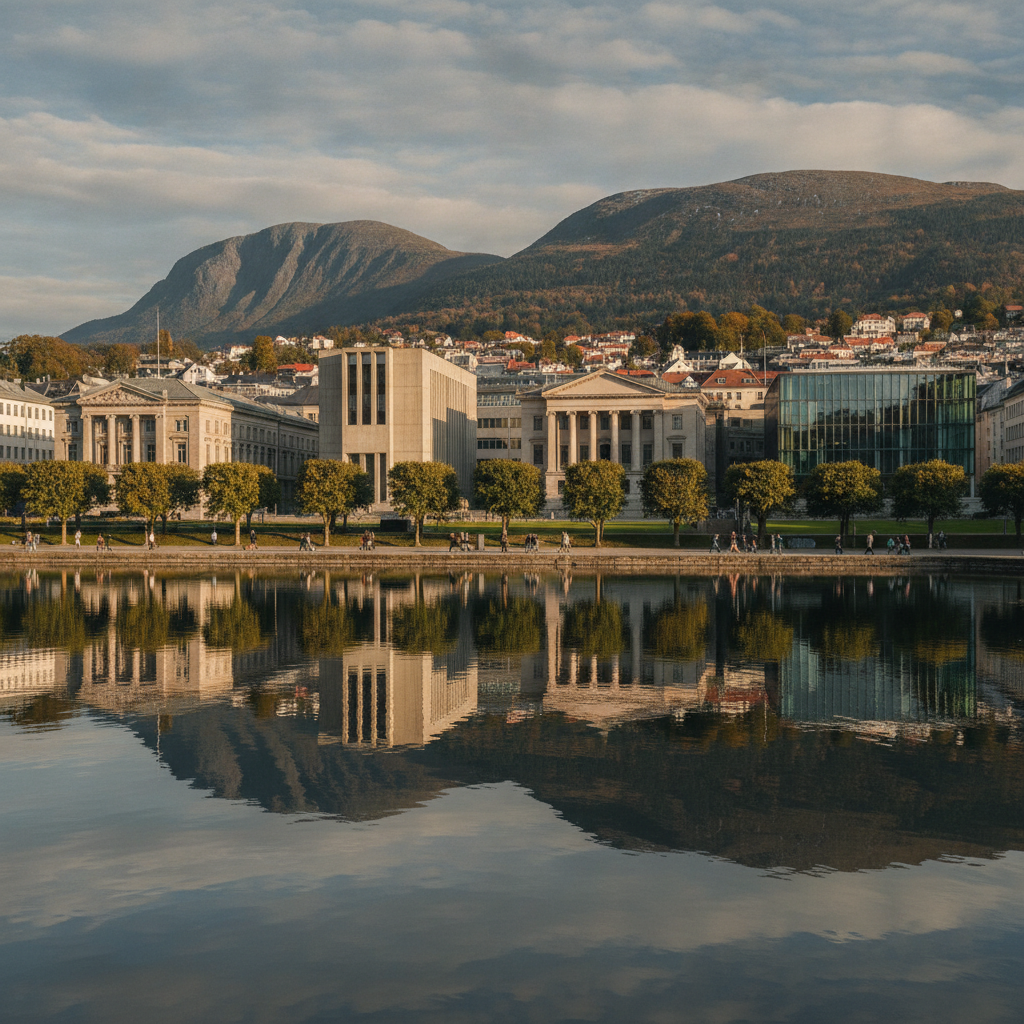
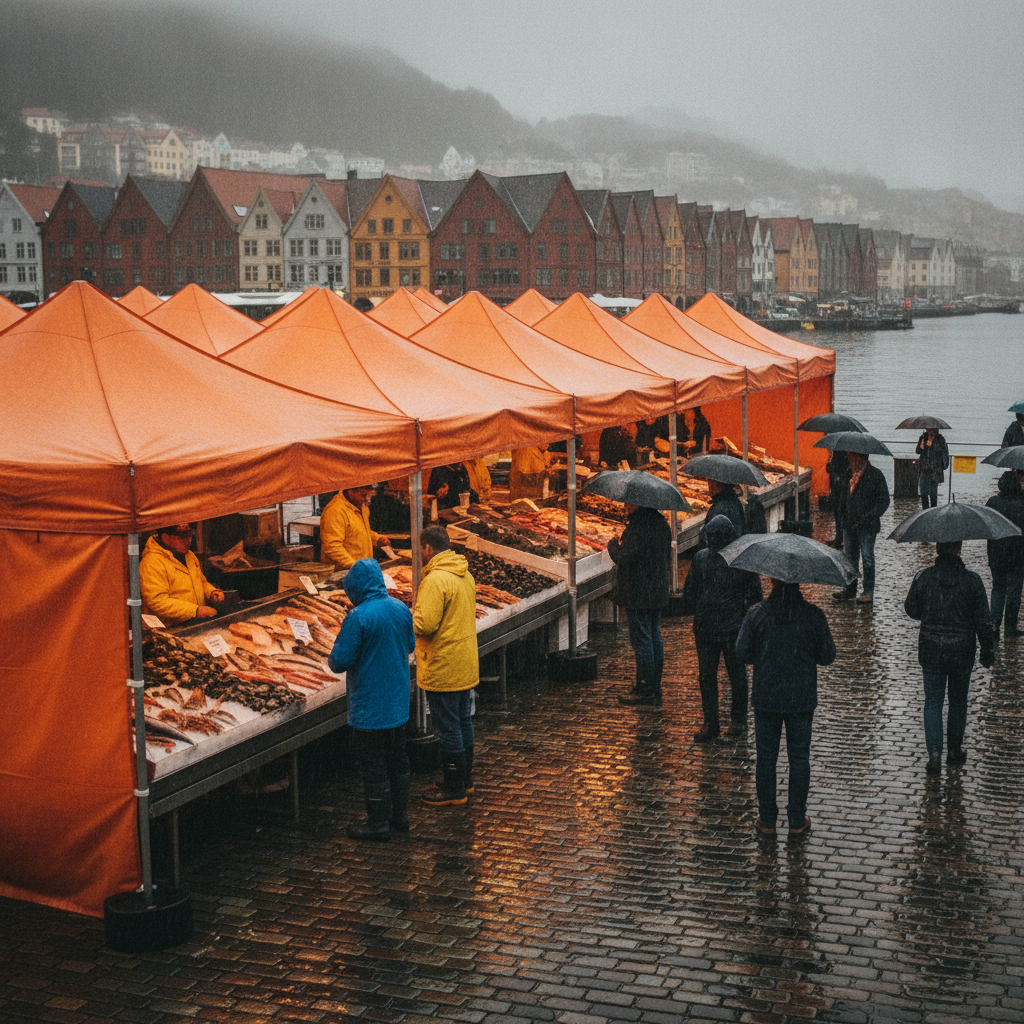
Bergen is the rainiest city in Europe (2,250mm per year) but this hasn't stopped it becoming one of the most visited cities in Norway — the Bergenserne are proud of their rain, and the city offers the waterproof jacket, the covered fish market, and the Bryggen alley walk as the correct responses.
- 1
The Bergen Rain — Understanding and Embracing It
The Bergen rain (the city receiving approximately 2,250mm of rain per year — the highest annual rainfall of any European city with a population over 100,000, the rain arriving as the Atlantic weather systems make landfall on the steep Norwegian mountains, the orographic lifting forcing the moist air upward and causing the precipitation, the Bergen annual average of 243 rain days — approximately 2 days in every 3 experiencing some rainfall, the driest months April and May with 100-110mm each, the wettest October-December with 220-250mm each): the Bergen response to the rain (the philosophical approach encapsulated in the phrase 'Det finnes ikke dårlig vær, bare dårlige klær' — There is no bad weather, only bad clothing — the correct waterproof outer layer the essential Bergen equipment, the Bergen Tourist Information office selling the compact Bergen umbrella branded with the Bryggen image at €10, the most practical single purchase in Bergen for unprepared visitors), the Bergen rain culture (the outdoor tables at Bryggen and the Fish Market operating through light rain — the Norwegian tolerance for outdoor dining in drizzle the highest in Europe — the covered Bryggen passages the most atmospheric weather shelter, the Fish Market Hall the indoor alternative for the rainy day market visit), the Bergen windows (the characteristic image of the Bergen rainy day: the colourful Bryggen buildings reflected in the Vagen harbour puddles, the rain making the painted corrugated iron houses of the old town more intensely coloured, the rainbow above the fish market after the shower — the photogenic Bergen that the rain creates rather than destroys — and the Bergen Light Festival in February, the most atmospheric event in the rainiest month, the light installations most dramatic in the wet streets) and the 5-day Bergen weather forecast (yr.no/en, the Norwegian Meteorological Institute's free weather service, the most accurate weather forecast in Norway, the app used by all Bergen visitors for planning the fjord excursions and the mountain hikes).
- 2
Bergen Seasons — When to Visit
Bergen seasonal guide: Summer (June-August, the best weather statistically — the 17-19 hours of daylight, the temperatures 17-22 degrees on the best days, the Bergen summer the driest of the 4 seasons though still with frequent rain showers, the Bryggen and the Fish Market at maximum visitor capacity — the cruise ships calling 3-4 times per week bringing 3,000-5,000 passengers per ship to the Fish Market, the Norway in a Nutshell tours fully booked by March for the July-August dates, the booking essential), Spring (April-May, statistically the driest months in Bergen, the mountains still snow-capped in April creating the most dramatic backdrop to the city, the Hardangerfjord blossom in late April-May the most photographed landscape in western Norway, the Bergen International Festival in late May the most important cultural event, the visitor numbers lower than summer but the quality of experience higher — fewer cruise ship crowds, the accommodation prices 30-40 percent lower than peak), Autumn (September-October, the most atmospheric season — the colour on the Bergen mountain forests, the salmon in the rivers, the Bergen International Film Festival in October the most important cinema event in western Norway, the rain increasing but the light quality in the short clear periods extraordinary), Winter (November-March, the most challenging weather and the shortest days — the sun rising at 9:30am and setting at 3:30pm on the shortest days, the Bergen snow rare in the city centre but reliable on the Fløyen and Ulriken mountains, the Bergen Light Festival in February the best winter cultural event, the ski season at the Voss resort the primary winter sports option from Bergen, the accommodation at minimum prices December-February).
- 3
Norwegian Food in Bergen — the Authentic Experience
Norwegian food in Bergen (the most distinctive Norwegian regional food culture — the Bergen fish soup, the stockfish, the King crab, the Norwegian lamb — in the context of the most important Norwegian fishing port history): the Bergen fish cake (fiskekake, the traditional Norwegian fishcake made from the white fish — cod or haddock — minced with the potato starch, the egg, and the milk, shaped into flat cakes and pan-fried, the texture firm and the flavour mild, served with the butter sauce and the boiled potatoes — the most universally Bergen home dish, available at the Fish Market Hall at €4-6 per cake, the Norwegian mothers' claim that the fiskekake is the single healthiest and most practical food is the Norwegian equivalent of Italian claims about pasta), the Bergen lamb (the smalahove — the traditional Norwegian halved sheep's head, salted and dried then boiled or steamed, the head halved and served with the nepe turnip and the potato — the most confrontational Norwegian food tradition for international visitors, available at the Bergen Fish Market and at the restaurant Cornelius on the Osterøy island in the fjord, the smalahove the definitive Norwegian farmhouse autumn food eaten at the Hordaland Michaelmas tradition in late September), the restaurant scene (the Cornelius Sjømatrestaurant at Georgernes Verft 12 — the fish restaurant on the harbour with the most complete Norwegian seafood menu in Bergen at €50-80 per main — the most celebrated Bergen restaurant — alongside the Bryggen Tracteursted at Bryggestrete 6 in the Bryggen buildings, the Bergen historic restaurant in the original Hanseatic interior, the traditional Norwegian food at €40-60 per main) and the Norwegian breakfast (the Norwegian hotel breakfast — the most elaborate in Europe, the cold cuts, the cheeses, the pickled herring, the eggs, the rye bread and the crispbread, the frambosbær jam — the raspberry jam — the ubiquitous Bergen morning institution, the Norwegian concept that a substantial breakfast prevents the necessity of lunch entirely).
- 4
Getting Around Bergen — the Bybanen and the Bergencard
Bergen transport: the Bybanen (the Bergen Light Rail, the electric tram system opened 2010 connecting the Bergen Airport Flesland with the city centre and the Fyllingsdalen suburb, the most transformative infrastructure investment in Bergen in 20 years, the light rail at €4 per trip — the combined ticket covering the airport transfer the most cost-effective airport connection in Norway, the Bergen Airport to the city centre in 45 minutes): the city buses (the Skyss public bus network, the single trip at €39 NOK / €3.60, the 24-hour day pass at €120 NOK / €11, the bus network connecting the city centre to all the Bergen neighbourhoods and the suburban areas, the key routes: the bus 83 to the Fantoft Stave Church, the bus 4 to Troldhaugen, the bus 12 to Sandviken — the local buses the correct transport for the attractions outside the walkable city centre), the Bergen Card (the tourist card at €280/24h, €350/48h, €490/72h including all Skyss transport, the Fløibanen funicular, and the entry to the museums — the KODE museums, the Bergen Aquarium, the Håkonshall, the Bergenhus Fortress — the card saving money for visitors doing 3+ museum visits per day, available at the Bergen Tourist Information Office at Strandkaien 3), cycling (the Bergen Bysykkel public bike share with 65 stations, the first 30 minutes free with the annual subscription at €49 or the 24-hour pass at €99 NOK / €9, the Bergen terrain — 7 mountains — making cycling practical only in the city centre and the harbour area, the Nordnes peninsula cycling route the most pleasant city cycle route) and walking (the Bergen city centre compact and walkable — the Bryggen, the Fish Market, the Fløibanen station, and the KODE museums all within 800m of each other, the 25-minute walk the standard between any two city centre sights).
- 5
Bergen Day Trip to Rosendal and the Hardangerfjord
Rosendal (the village on the Hardangerfjord 170km southeast of Bergen, accessible by express boat from the Bergen Strandkaiterminal in 2.5 hours at €50 return, the most undervisited day trip from Bergen — the Rosendal Barony and the Hardangerfjord landscape the dual draw): the Rosendal Barony (Baroniet Rosendal, the only barony in Norway, the Renaissance manor house and the French formal garden built 1661 by the Bergen merchant Ludvig Rosenkrantz, the garden the most complete Renaissance garden in Norway, the manor house with the original 17th-century interior the most intact historic house in western Norway, €18 adults including garden and house, May-September daily 10am-5pm), the Hardangerfjord boat (the express boat journey from Bergen to Rosendal the most panoramic regular boat route in western Norway — the vessel passing through the Bjørnafjorden open sea, then into the Hardangerfjord, the 2.5 hours with the fjord mountains rising from the water on both sides the most complete fjord immersion available without a dedicated cruise), the Sandvensvannet lake (the glacier-fed lake above Rosendal, the 2km walk from the village to the lake through the apple orchards and the birch forest, the lake the starting point for the Folgefonna glacier glacier walk — the guided glacier hike on the Bondhusbrea glacier tongue 5km from Rosendal at €60 per person, the closest accessible glacier to Bergen) and the Rosendal apple cideries (the Hardangerfjord apple growing tradition producing the most internationally recognized Norwegian cider — the Alde cider from the Ulvik area and the Ciderhuset cidery in Rosendal producing the best cider in western Norway, the cider tasting at the Ciderhuset at €15-25 per tasting, the apple harvesting season September-October the most cider-focused time to visit).
- 6
Bergen Practical Information — Budget, Communication and Tipping
Bergen practical data: budget (the most expensive city in western Norway for visitors after Oslo — the restaurant main course at €30-50, the beer at €10-12 per 500ml, the hotel room at €150-300 per night, the museum entry €10-15 per attraction, the total daily budget for a comfortable Bergen visit €100-200 per person including accommodation, the budget reduction strategies: the supermarket self-catering at Rema 1000 or the Kiwi chain at €5-10 per meal versus restaurant prices, the Fish Market as the most cost-effective high-quality food venue in the city, the Bergen Card the correct investment for visitors planning 3+ museum visits and the Fløibanen funicular), currency and payment (the Norwegian Krone — NOK — the currency, the exchange rate approximately 11 NOK per euro in 2024, the credit card accepted universally in Norway — the most cashless payment culture in Europe, the Vipps app the Norwegian mobile payment system but the international cards universally accepted at restaurants, shops, and attractions, the ATM available at the Bergen Airport and in the city centre), tipping (the Norwegian tipping culture the most relaxed in Europe — the service charge included in the bill in all Norwegian restaurants, the additional tip at 10 percent the expected amount at fine dining restaurants but entirely optional at the average restaurant, the Fish Market vendors not tipping-expecting, the taxi round-up to the nearest 10 NOK the norm), communication (the Norwegian all use English as a second language, the English-language competence the highest in continental Europe by EF English Proficiency Index ranking, the language barrier in Bergen effectively zero for English speakers, the Bergen Tourist Information at Strandkaien 3 open daily 8:30am-4pm providing the free Bergen map and the current programme of events).
Walk this route with audio
Stories play automatically as you reach each stop — no tapping needed.
More in bergen
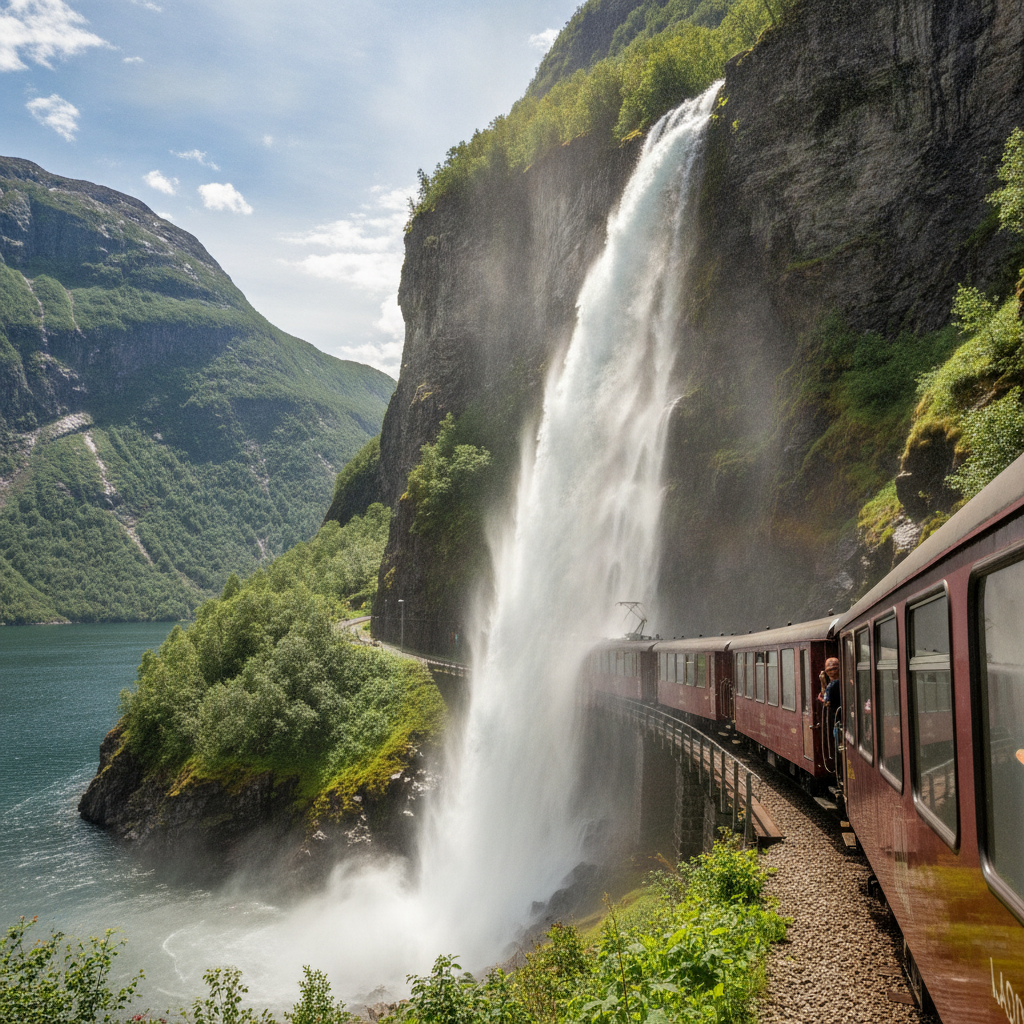
Bergen to the Fjords — the Flåmsbana Railway, Sognefjord & the Norway in a Nutshell Circuit
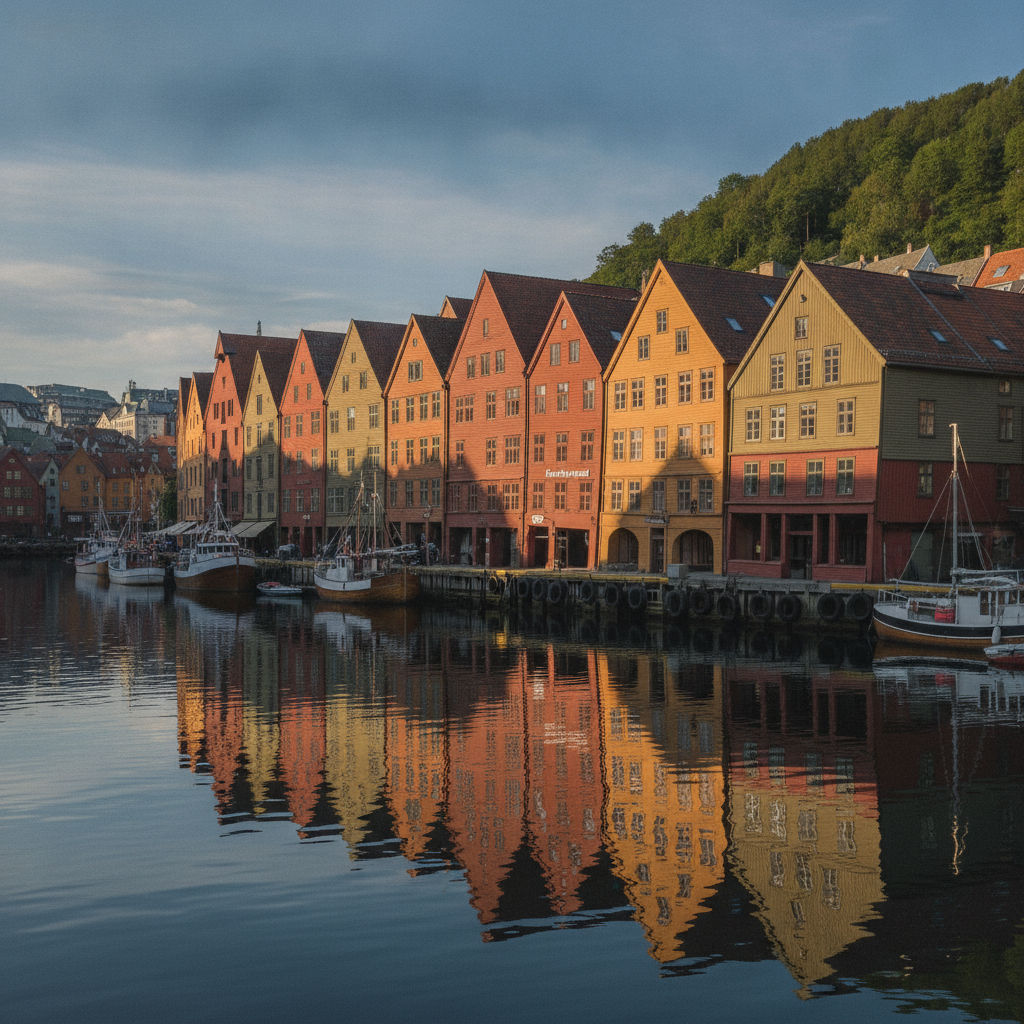
Bergen — Bryggen UNESCO Wharf, the Fish Market & the Fløibanen Funicular to the Mountain
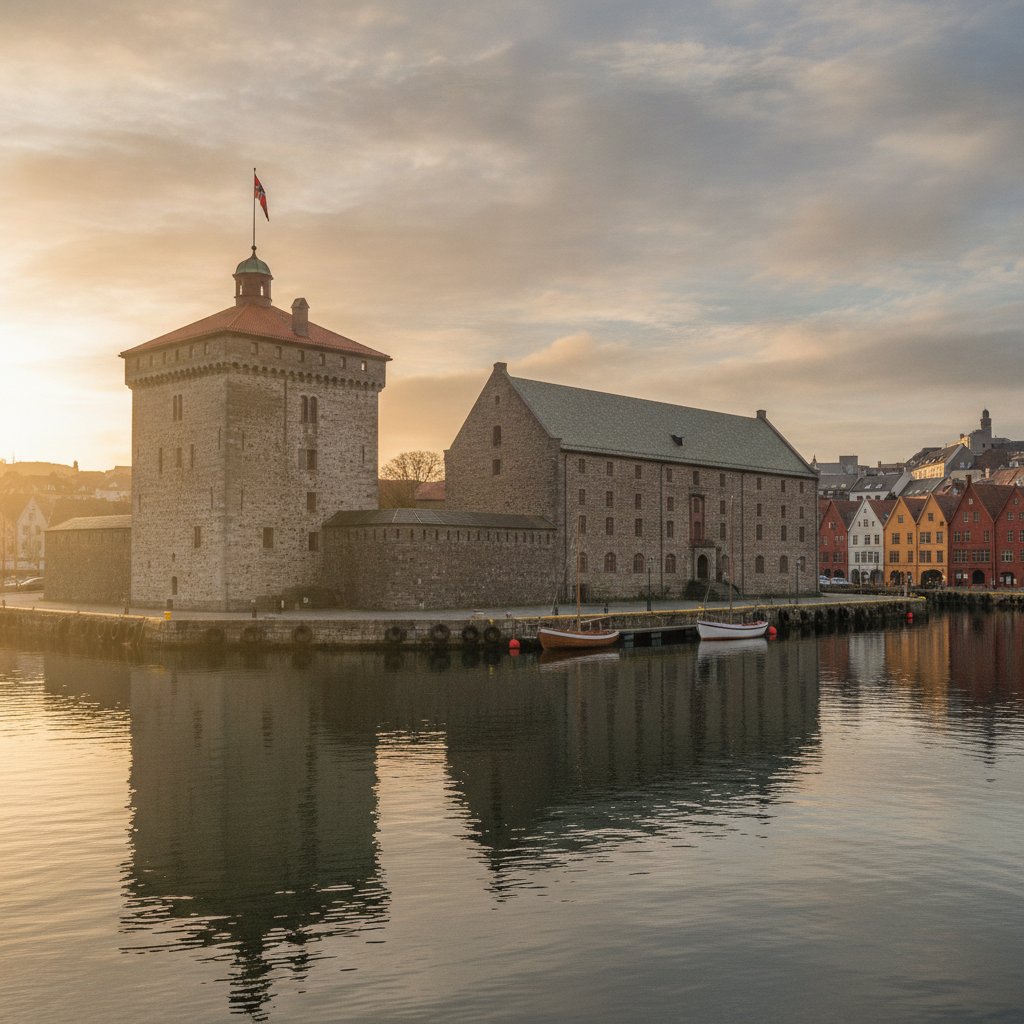
Bergen Medieval History — Bergenhus Fortress, Håkonshall & the Norwegian Royal Past
Bergen Music — Edvard Grieg, Troldhaugen & the Norwegian Musical Tradition